
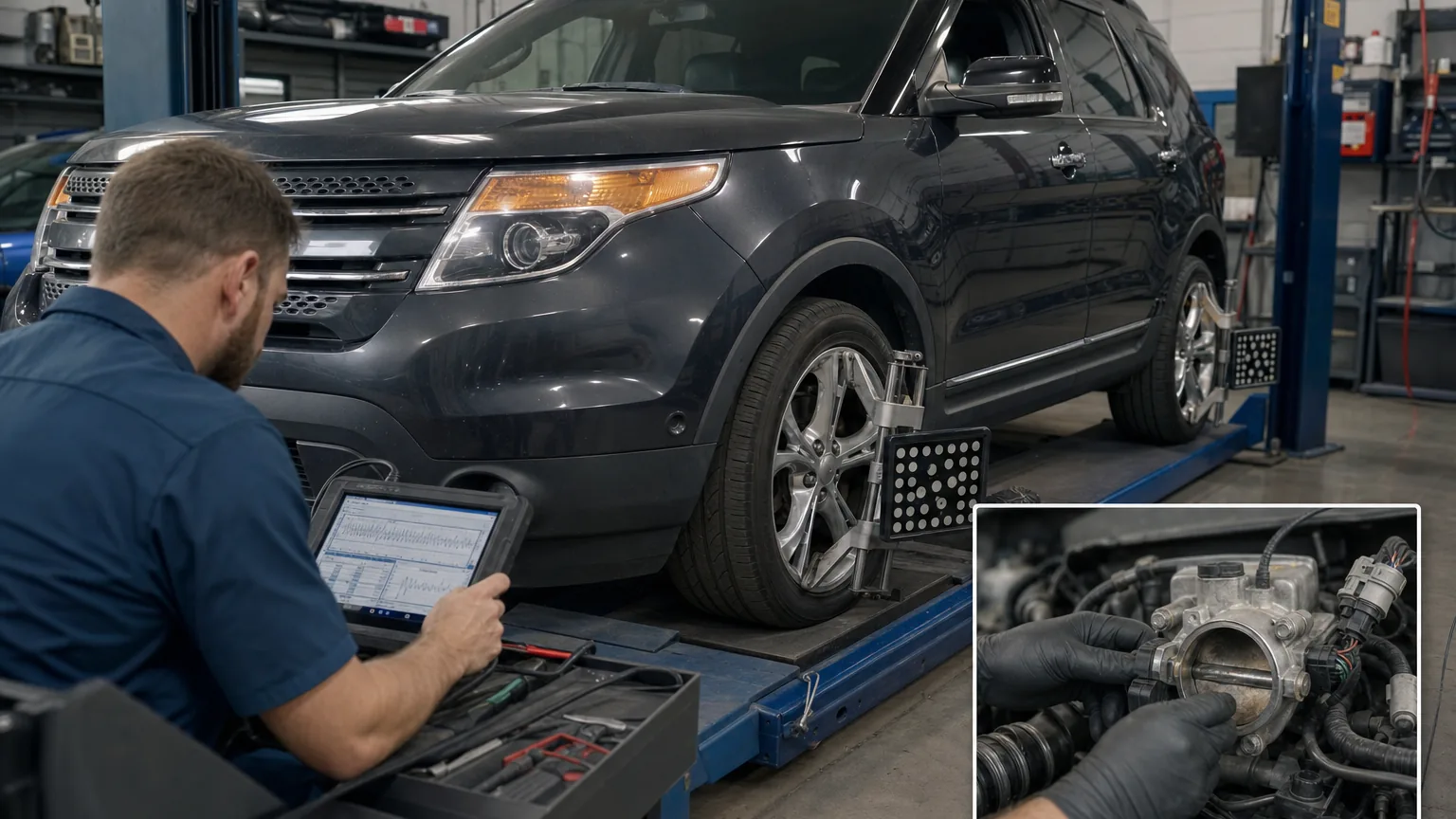
What the symptom usually means
A 2014 Ford Explorer that jerks under light acceleration with no codes often points to a vacuum leak, ignition weakness, or fuel delivery problem, but it can also indicate throttle, transmission, torque converter, mount, or driveline trouble. No codes only means the basic scanner did not find a stored generic fault.
Treat the symptom as repeatable evidence, not as proof of one failed part. The first action is to record when the jerk happens, avoid clearing data, and get an enhanced scan that checks engine, transmission, ABS, and Ford-specific modules before buying coils, sensors, fluid, or transmission parts.
Seek immediate service if the jerk becomes severe, the check-engine light flashes, the Explorer loses power, shifting becomes harsh, burning smells appear, or the symptom affects merging, hill climbing, or traffic control.
Light-acceleration jerking usually describes a brief buck, stutter, hesitation, shudder, or surge while the driver is asking for gentle power. The key detail is repeatability: when it happens, how it feels, and whether the engine speed, shift timing, or vehicle vibration changes at the same time.
- A sharp buck under gentle load can feel like an ignition misfire or lean air-fuel stumble.
- A soft shudder during steady acceleration can feel closer to torque converter or transmission behavior.
- A surge with uneven power can point toward air-metering, throttle, fuel delivery, or sensor interpretation issues.
- A clunk or shake felt through the body can involve mounts, CV axles, AWD driveline parts, or looseness rather than engine combustion.
- A symptom that appears mainly uphill or under mild load can expose weak ignition, lean operation, or fuel delivery limits before a hard acceleration test does.
Common causes
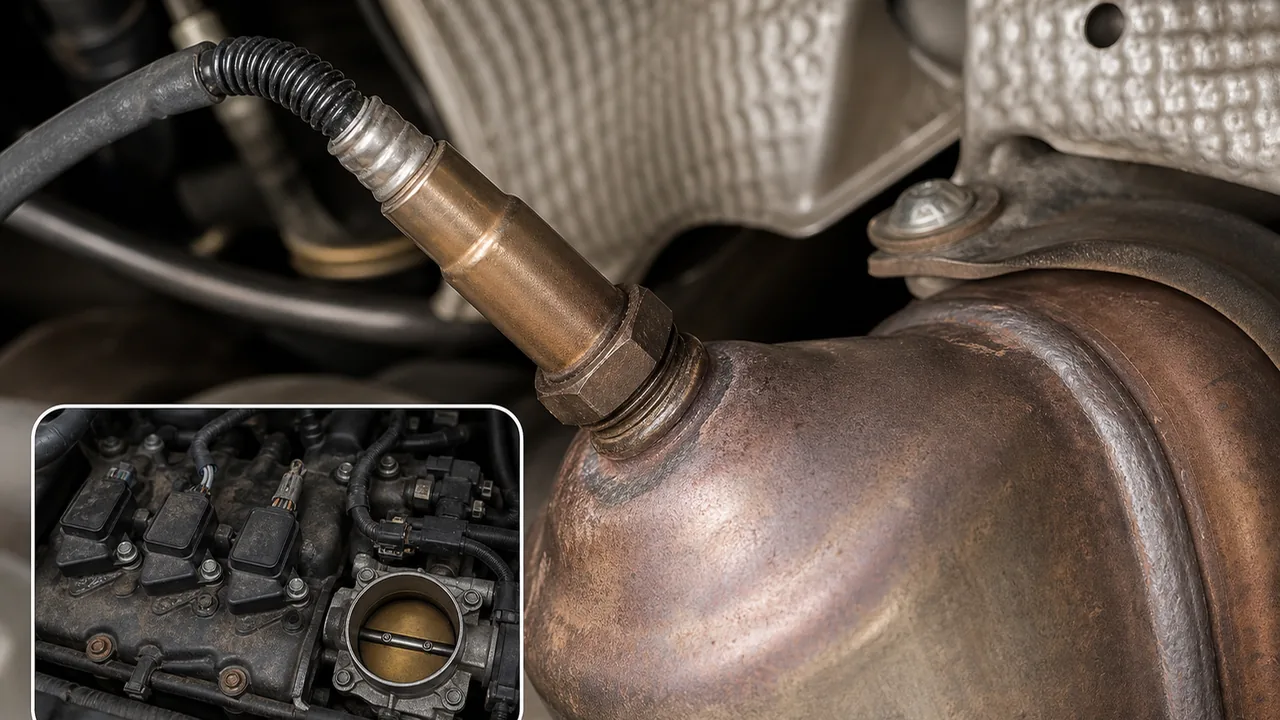
The most practical diagnostic order starts with ignition, fuel, and air control because those systems can jerk under load without immediately setting a stored code. Transmission, torque converter, mounts, and driveline faults stay on the list, but they should be confirmed by scan data and road-test behavior.
- Ignition wear: aging spark plugs, weak coils, damaged coil boots, or moisture intrusion can create a load-sensitive stumble before a clear cylinder code stores.
- Fuel delivery issue: weak delivery, injector imbalance, fuel quality problems, or restricted flow can create hesitation when the engine needs smooth low-load fueling.
- Vacuum leak or air-metering fault: intake leaks, cracked hoses, unmetered air, MAF contamination, or throttle-body behavior can lean the mixture and cause a surge or buck.
- Throttle or sensor interpretation issue: inconsistent throttle input, MAF data, or fuel-trim correction can create uneven torque without a simple generic OBD-II code.
- Transmission shift behavior or fluid condition: delayed engagement, flare, harshness, or fluid concerns can feel like a jerk and need transmission data, not guessing.
- Torque converter shudder: a vibration or tremor during light load can mimic engine misfire and should be checked with live transmission data.
- Mounts, CV axles, AWD driveline, or PTU-related concerns: body shake, clunks, or load-transfer movement can be confused with engine stutter, especially on AWD vehicles.
No codes can happen when the fault is intermittent, mild, pending, stored in a module the scanner did not check, or not severe enough to meet the monitor threshold. A low-cost generic scanner may miss manufacturer-specific Ford data, transmission data, misfire counters, and history codes.
- Pending faults may not turn on the check-engine light yet.
- Misfire counters can show activity before a P0300-series code stores.
- Transmission control data may live outside a basic engine-only OBD-II scan.
- A previous code repair can remove one fault while a related drivability issue remains.
- Fuel-trim imbalance, lean operation, or sensor drift may need live data interpretation rather than a stored code.
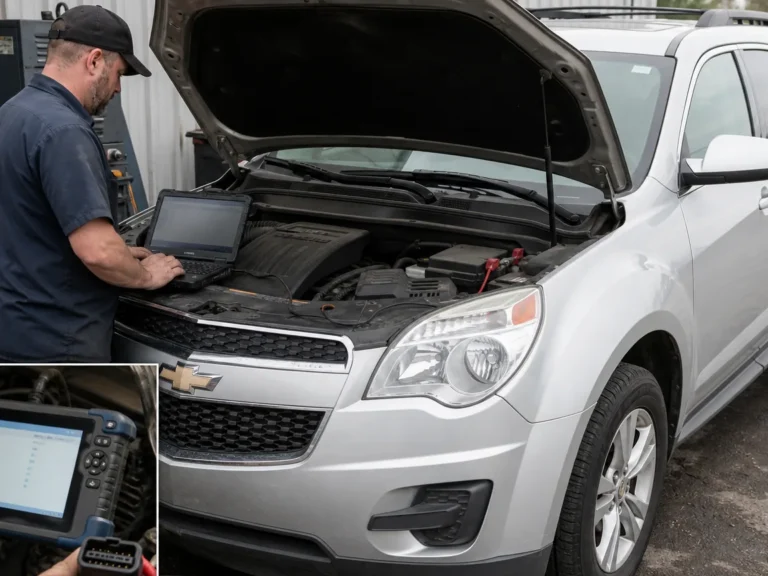
If the scanner only reports generic emissions codes, the result is incomplete for this symptom. Ask for an enhanced scan that includes engine, transmission, ABS, and Ford-specific modules.
Quick checks
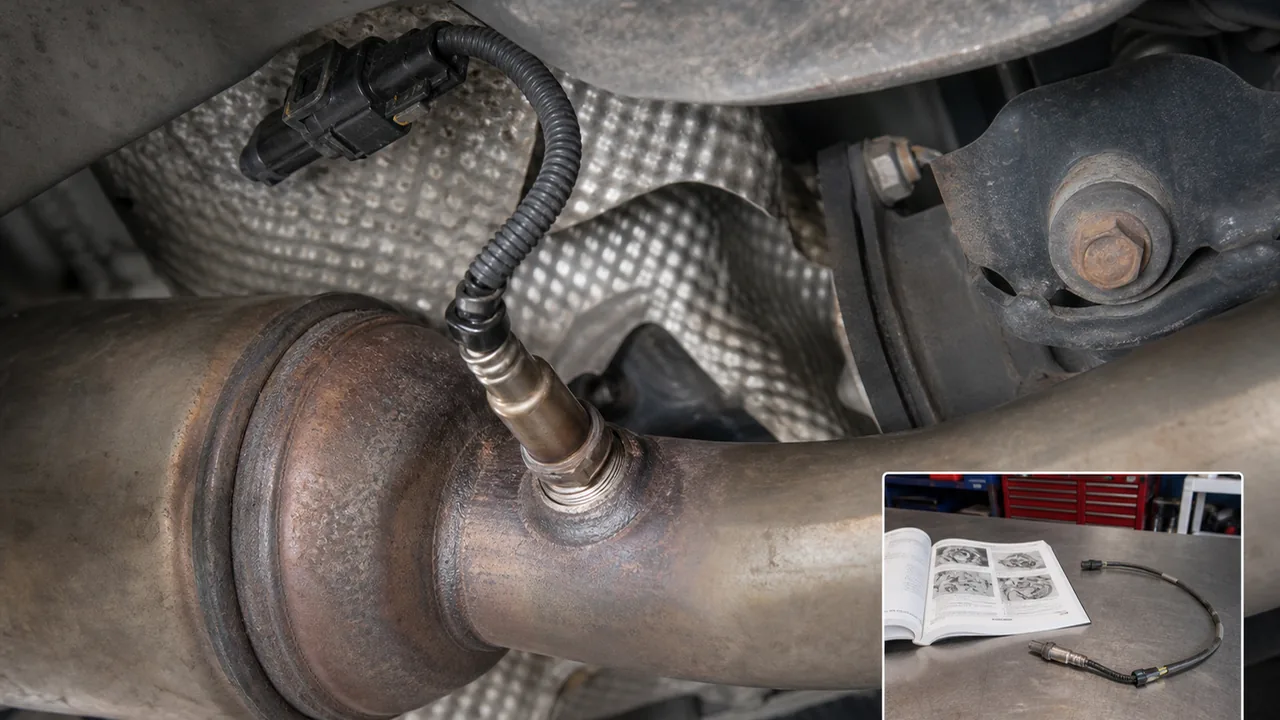
The safest owner-level check is observation plus maintenance review. Do not lift the vehicle, open the transmission, spray chemicals near hot components, or replace parts based only on a clean basic scan.
- Use the same road condition to confirm whether the jerk repeats under light acceleration.
- Write down whether it happens before, during, or after a shift.
- Check for fresh fuel problems if the symptom started after refueling.
- Inspect visible intake tubes and hoses for obvious looseness or cracks without removing major parts.
- Review spark plug and coil age against the maintenance record instead of assuming they are new or good.
- Look under the vehicle for obvious fluid spots, but leave fluid-level and condition checks to a safe service setup if access is limited.
Diagnostic order
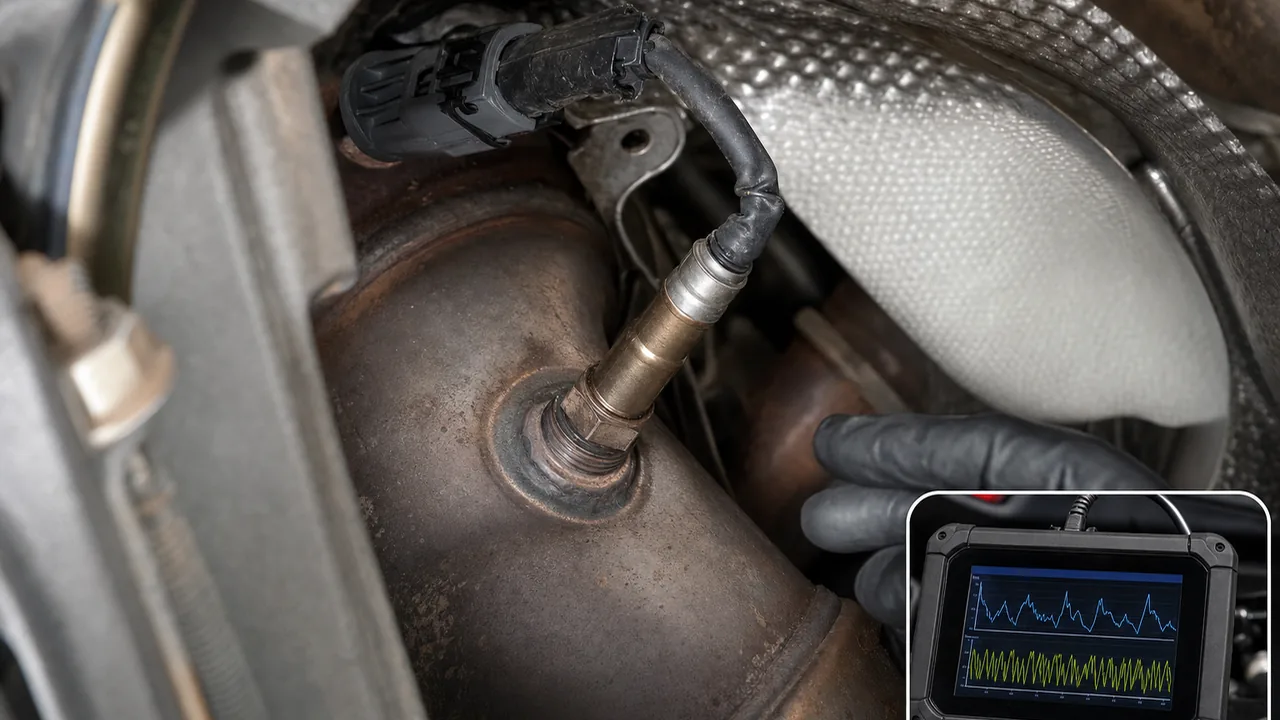
The best diagnostic path is to make the symptom happen while the technician watches live data. Guessing from the driver seat alone can confuse a lean stumble, weak spark, torque converter shudder, shift event, or mount movement.
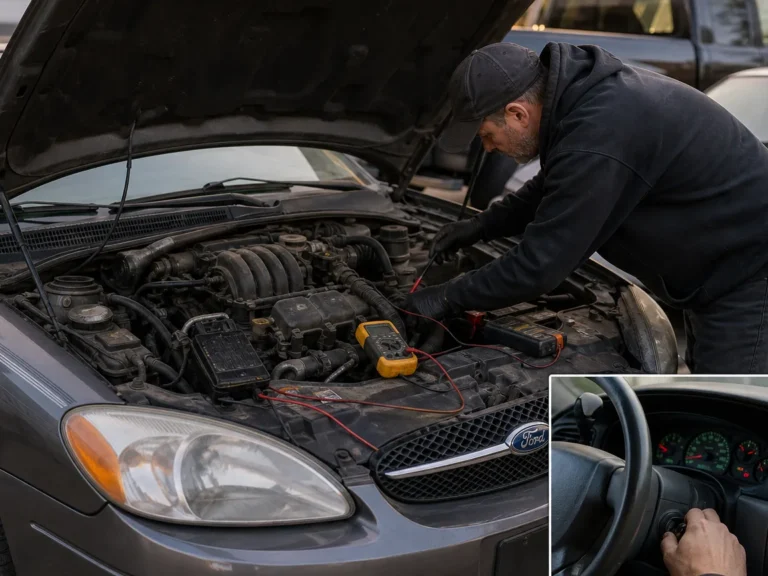
- Confirm the complaint on a controlled road test.
- Scan all modules, not just generic engine codes.
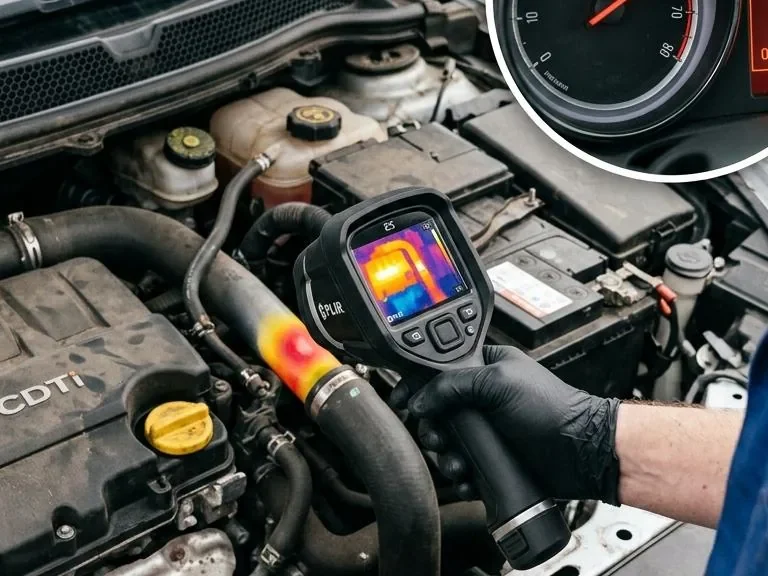
- Check live misfire data and fuel-trim behavior under the same light-load condition.
- Inspect ignition condition only after data or maintenance history points there.
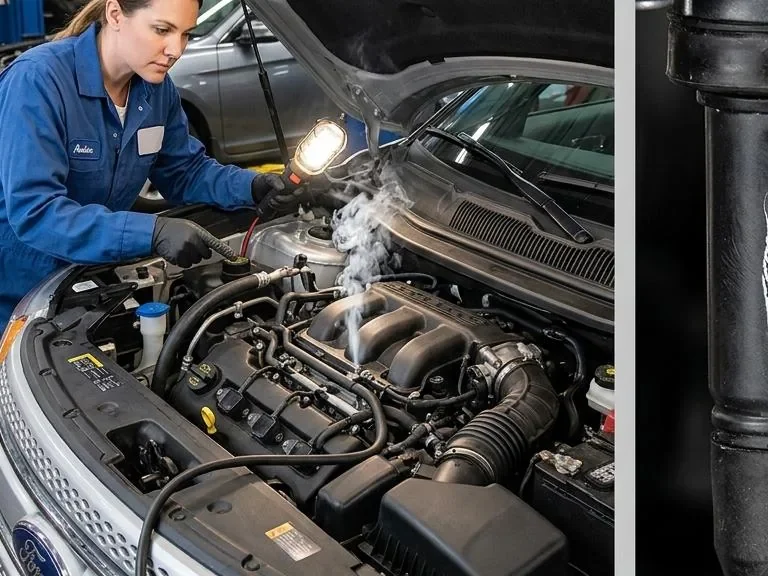
- Check air intake integrity, MAF behavior, throttle command, and vacuum-leak clues.
- Review fuel delivery evidence before condemning a pump or injectors.
- Compare transmission and torque converter data to the moment the jerk occurs.
- Inspect mounts, CV axles, and AWD driveline components when the feel is mechanical rather than combustion-related.
Parts that may be involved
Engine bucking and transmission shudder overlap in driver feel, but they do not leave the same evidence. The road test should track engine speed, gear command, shift timing, vibration path, and whether the event repeats at the same throttle demand.
| Driver feel | More likely direction | What confirms it |
|---|---|---|
| Sharp buck or stutter under mild load | Ignition, lean mixture, fuel delivery, or air-metering issue | Misfire counters, fuel trims, intake inspection, ignition condition |
| Smooth vibration or tremor during steady acceleration | Torque converter or transmission behavior | Transmission live data, converter command, fluid inspection, road-test repeatability |
| Clunk, body movement, or shake on load change | Mount, CV axle, AWD driveline, or PTU-related concern if equipped | Visual inspection, mount movement check, driveline noise pattern, technician road test |
A 2014 Ford Explorer can have different engine and driveline configurations, so the diagnostic path should confirm engine type, FWD or AWD, maintenance history, and scanner coverage first. If the vehicle is an EcoBoost model, load-sensitive spark weakness and air leaks deserve careful attention, but they still need testing.
The referenced owner case included a prior lean-code repair, remaining lean-trim concern, and visible coil-seal damage. Those details are useful clues because lean operation and ignition weakness can both create light-load stutter, but neither proves the final fault without live data, inspection, and a repeatable road test.
Do not publish claims about Ford-specific transmission, torque converter, PTU, software, recall, or service bulletin patterns unless current service information or a qualified technician verifies them for the exact vehicle.
Driving risk depends on severity and repeatability. A small occasional stumble is different from a worsening jerk that affects acceleration, shifting, or control, and a no-code result should not be used as permission to ignore the symptom.
- Limit driving if the symptom repeats under normal traffic acceleration.
- Avoid towing, hard acceleration, and long trips until the cause is known.
- Do not keep driving with a flashing check-engine light.
- Treat harsh shifts, burning smell, or loss of power as urgent.
- Have the vehicle inspected promptly if the symptom appears on hills or when merging.
Several parts can create the same no-code jerk, which is why replacement should wait until the failed system is confirmed. A good diagnosis narrows the issue to ignition, fuel, air, throttle, transmission, converter, mount, or driveline evidence before money is spent.
| Part family | Why it may be considered | Replace only if confirmed by |
|---|---|---|
| Spark plugs, coils, boots | Load-sensitive bucking or prior ignition maintenance concern | Misfire data, inspection, maintenance history, or repeatable cylinder evidence |
| Vacuum hoses, intake ducts, gaskets | Lean behavior, surge, or unmetered-air clues | Smoke test, visible defect, or fuel-trim response |
| MAF, throttle body, related sensors | Uneven throttle response or air-metering inconsistency | Live data, inspection, and connector checks |
| Fuel delivery parts | Hesitation under demand or lean operation not explained by air leaks | Fuel-system testing and injector or delivery evidence |
| Transmission fluid, converter, mounts, axles, driveline parts | Shudder, harsh engagement, vibration, or load-transfer movement | Transmission data, fluid inspection, road test, and physical inspection |
Avoid turning a no-code drivability symptom into a parts chain. Coils, plugs, sensors, fluid service, and transmission parts may all be possible, but replacing them blindly can erase clues, waste money, and leave the original jerk unchanged.
- Do not clear codes or disconnect the battery before recording scan data.
- Do not replace all ignition coils only because one looks suspicious unless testing supports it.
- Do not assume the transmission is failing because the jerk happens during acceleration.
- Do not service or replace transmission parts as a guess when the symptom may be engine-related.
- Do not ignore the symptom because a basic scanner shows no stored generic codes.
- Do not buy used sensors, coils, or driveline parts without confirming part number, condition, and the actual failed system.
The repair direction depends on what the road test and scan data prove. If the jerk repeats, worsens, or cannot be tied to recent maintenance, move to a drivability diagnostic path before ordering ignition, fuel, throttle, transmission, or driveline parts.
- Bring mileage, engine type if known, and FWD or AWD information.
- Describe whether the jerk happens hot, cold, uphill, during a shift, or during steady throttle.
- Tell the technician what scanner was used and whether it checked only generic OBD-II codes.
- Mention any recent spark plug, coil, oxygen sensor, intake, fuel, or transmission work.
- Ask for the finding in system terms: ignition, fuel, air-metering, throttle, transmission, converter, mount, or driveline.
FAQ
These questions cover the owner concerns that usually come up when a drivability problem appears without a stored code: whether the symptom is real, whether the transmission is failing, and what inspection should happen next.
Comments
Be the first to add a practical repair note or follow-up question.