

What the symptom usually means

A misfire-like or vacuum-leak-like feel under load usually means one cylinder, one air-fuel bank, or the whole engine is struggling when demand rises. The symptom may feel the same from the driver seat even when the actual cause is spark, air, fuel, sensor feedback, exhaust flow, or a drivetrain issue being mistaken for engine stumble.
A true vacuum leak is often most obvious at idle because manifold vacuum is high, but unmetered air, PCV faults, intake duct leaks, MAF errors, and lean fuel delivery can still show up during acceleration. That is why the symptom should be described as a drivability fault until scan data and tests narrow it down.
- If the stumble is strongest during gentle acceleration, suspect weak spark, lean operation, or air measurement error first.
- If the idle is rough but acceleration smooths out, a vacuum leak or idle air issue moves higher on the list.
- If the vehicle feels like it surges without engine misfire data, include transmission, torque converter, mount, or drivetrain checks.
The useful symptom details are when the stutter happens, whether it changes with throttle position, and whether the check engine light reacts. A technician can use those details to decide whether to focus first on ignition demand, lean correction, airflow measurement, fuel delivery, exhaust restriction, or non-engine vibration.
- Jerking or stuttering when going uphill or accelerating lightly
- A rough feel that does not always appear during harder acceleration
- No current engine code, a pending code, or a code history that changed after a repair
- Lean-condition behavior, fuel-trim imbalance, or oxygen sensor feedback that does not match both banks
- A prior plug or coil repair that may have left a weak boot, cracked connector, loose coil, or disturbed intake hose
A symptom can exist before a diagnostic trouble code sets. Many systems need repeatable conditions before the light stays on, so no code does not prove the engine is healthy.
Common causes
A jerking or stuttering engine under light load usually means the engine is misfiring or drawing unmetered air. On a 2014 Ford Explorer, that feeling is most often a reaction to increased engine demand, with likely areas including ignition breakdown, worn plugs, weak coils, lean fuel delivery, MAF or intake air measurement problems, vacuum or PCV leaks, injector issues, and possible exhaust restriction.
Start by checking whether the check engine light is flashing, whether any codes are stored or pending, whether a hose or intake duct is loose, and whether the symptom changed after recent plug, coil, sensor, or intake work. Severe shaking, a flashing check engine light, raw fuel smell, or major power loss should be treated as urgent.
Under load means the engine is being asked to make more torque, such as during uphill driving, gentle acceleration, or passing. Idle-only problems and acceleration-only problems can point in different directions, so the exact moment the symptom appears matters.
The most practical cause ranking starts with ignition and lean-running checks because they commonly appear under load and can feel almost identical from the driver seat. A 2014 Ford Explorer should not be diagnosed from the symptom alone, but these categories help avoid random parts replacement.
| Ignition | Weak plugs, coils, boots, moisture paths, or damaged coil seals can misfire when cylinder pressure and demand rise. | Misfire counters, plug condition, coil testing, repeatable cylinder pattern, or symptom movement after controlled component testing. |
| Air and vacuum | Loose ducts, intake leaks, PCV faults, or unmetered air can create lean operation or unstable correction. | Smoke test, visual intake inspection, fuel-trim response, and confirmation that hoses and ducting are sealed. |
| Fuel delivery | Weak delivery or injector problems may keep up at light demand but stumble as load increases. | Fuel pressure and volume testing, injector balance or contribution testing, and lean data under load. |
| Sensor and control | MAF data, oxygen sensor feedback, throttle response, or fuel-trim correction can mislead fueling strategy. | Scan-tool live data compared with expected behavior and verified wiring, connector, and sensor inputs. |
| Exhaust or mechanical | Restricted exhaust, catalyst problems, compression issues, or drivetrain faults can mimic misfire. | Backpressure checks where appropriate, mechanical testing, and comparison against misfire and fuel-trim data. |
Quick checks
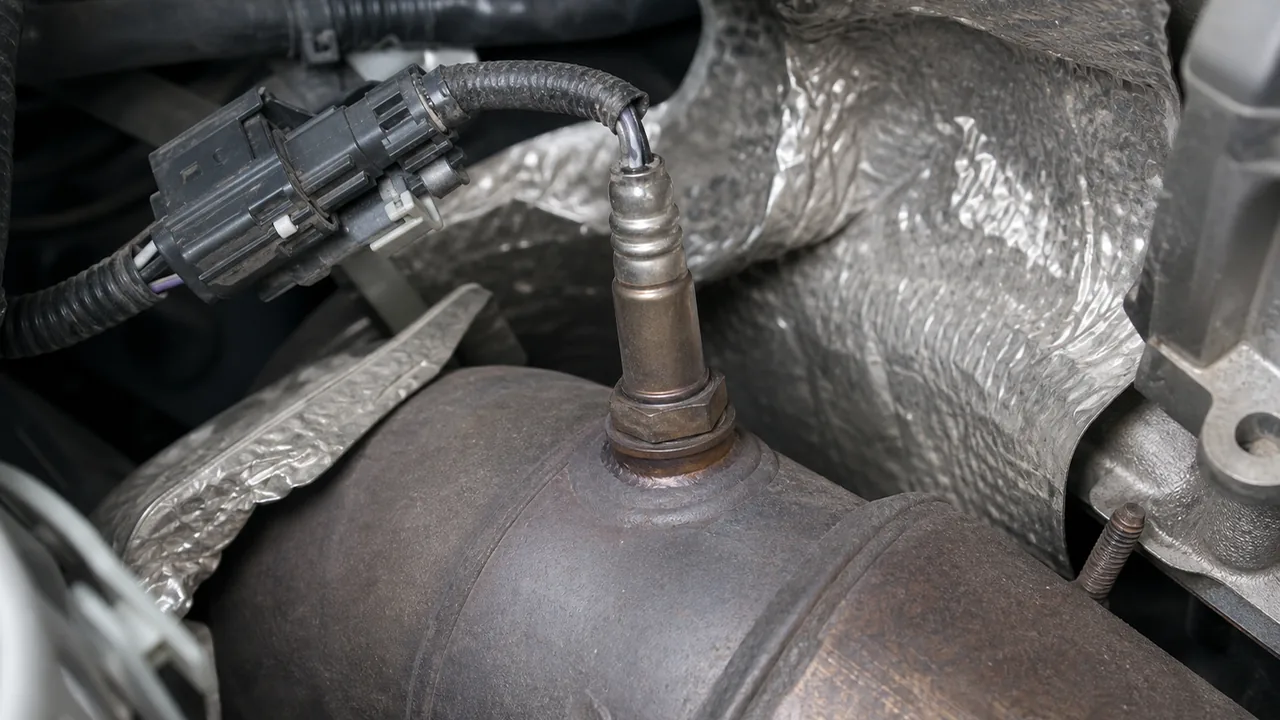
The first owner-safe checks should collect facts without disturbing evidence. Do not keep swapping coils, sensors, or intake parts until you know whether the issue follows one cylinder, one bank, fuel trim, airflow data, or load demand.
- If the check engine light flashes, stop driving hard and treat the misfire as urgent.
- If codes are present, save the exact codes and freeze-frame conditions before repair attempts.
- If a hose, duct, or connector is visibly loose after recent service, correct that before deeper diagnosis.
- If a fuel smell is present, avoid driving and inspect for leakage or incomplete combustion risk.
- If plugs were recently replaced, confirm the correct parts, coil seating, boots, connectors, and disturbed intake pieces.
Diagnostic order

A good diagnostic order separates evidence from guesses. The goal is to prove whether the 2014 Ford Explorer is losing spark, adding unmetered air, running lean from fuel delivery, misreading airflow, reacting to sensor feedback, or fighting restriction.
- Save codes, freeze-frame data, and pending-code information.
- Watch live misfire and fuel-trim behavior during the same type of load that creates the stutter.
- Inspect plugs, coils, boots, wiring, connectors, and recent repair areas.
- Smoke-test the intake and PCV side if trims or idle behavior support an air leak.
- Verify fuel delivery and injector contribution if lean operation appears under demand.
- Evaluate MAF, oxygen sensor feedback, throttle behavior, and exhaust restriction only after basic evidence is captured.
Parts that may be involved
For a 2014 Ford Explorer, keep the diagnosis vehicle-specific but not assumption-driven. Engine variant, mileage, prior repairs, stored codes, and live data matter more than a generic claim that one part commonly fails on every Explorer.
If the vehicle has a turbocharged engine, load can expose weak ignition and air-fuel issues more quickly because the engine demand changes sharply. That does not make the turbo system the confirmed cause; it only means ignition strength, measured airflow, intake sealing, fuel delivery, and exhaust flow deserve careful review.
Verify engine-specific component locations, service procedures, and any Ford service bulletin or recall information before publication or repair. Do not treat forum-origin wording as a verified diagnosis.
Driving risk depends on severity, not just the name of the suspected fault. A mild intermittent stumble and a flashing-light misfire are different risk levels, so the check engine light behavior and power loss should guide the decision.
The parts list should come after testing, not before it. A load-related misfire feel can involve inexpensive ignition parts, intake sealing parts, sensors, injectors, fuel delivery components, or exhaust components, but replacing all likely parts is a costly way to diagnose.
- Spark plugs, ignition coils, coil boots, and coil connectors
- Intake ducting, vacuum hoses, PCV hoses, intake gaskets, and related seals
- MAF sensor or contaminated air metering surfaces if testing supports it
- Fuel injector, fuel delivery, or fuel control components when lean data points there
- Oxygen sensor feedback or wiring only when scan data supports a sensor or circuit fault
- Catalytic converter or exhaust components when restriction symptoms and testing support it
Codes guide diagnosis but do not automatically identify the failed part. A lean code, misfire code, or oxygen sensor code can be caused by wiring, air leaks, fuel delivery, exhaust leaks, mechanical faults, or a sensor reacting correctly to another problem.
FAQ
These questions matter because the same under-load stutter can come from different systems. The safest answer is to use codes and live data as evidence, then confirm the suspected system with a targeted test.
Can a vacuum leak cause a 2014 Ford Explorer to stutter under load?
Yes, unmetered air or a PCV-related leak can contribute to lean operation, but many vacuum leaks are most obvious at idle. Under-load stutter also needs ignition, fuel delivery, MAF data, injector operation, and exhaust restriction checks.
Can it misfire without a check engine light?
Yes. A misfire or lean condition may be intermittent, pending, or not strong enough yet to turn on the light. Stored, pending, and history codes plus live misfire counters are more useful than the light alone.
Should I replace the coils first?
Only if testing supports ignition breakdown or a specific damaged coil, boot, connector, or plug issue. Random coil replacement can miss lean fuel delivery, air leaks, sensor data problems, or exhaust restriction.
What scan data matters most?
Misfire counters, fuel trims, freeze-frame data, MAF readings, oxygen sensor feedback, throttle data, and bank-to-bank behavior are useful. The data should be reviewed during the same type of driving that creates the symptom.

Comments
Be the first to add a practical repair note or follow-up question.