

What the symptom usually means

An overheating Vauxhall usually has a cooling system fault that needs prompt diagnosis before damage spreads. If the temperature warning is active, steam is visible, coolant is dropping quickly, or the engine starts cutting out or going into a reduced-power state, stop driving as soon as it is safe, switch the engine off, and let it cool before checking anything.
At this stage, the first owner-safe step is not to guess the failed part but to confirm the symptom and look for obvious cooling system clues only with the engine cold, such as a low coolant level, signs of a coolant leak, warning messages, or evidence that recent cooling system work may be relevant. Continuing to drive a Vauxhall that is actively overheating can turn a manageable repair into a much more serious engine problem.
This guide separates owner-safe cold-engine checks from garage-level testing. It will help you judge how urgent the overheating is, understand whether the fault points more toward coolant loss, poor circulation, or airflow trouble, and decide when a proper cooling system inspection is the safer next step.
Common causes
An overheating Vauxhall usually means the cooling system cannot carry heat away as it should, and that commonly points to a coolant loss, circulation fault, airflow problem, or a more serious internal engine issue. The first check is whether the system is full and sealed when the engine is cold, because a low level or active leak can quickly turn a minor fault into engine damage. If the temperature warning is active, steam is visible, or coolant is escaping, do not keep driving.
Do owner checks only with the engine fully cooled. A repeat overheating event, visible leak, or persistent warning light is a recovery-or-garage situation, not something to keep testing on the road.
Most likely causes, from common to more serious
- Low coolant or a coolant leak. This is one of the most common reasons a Vauxhall overheats because the system cannot transfer heat properly once the level drops. Wet hoses, staining around the radiator or expansion tank, or a sweet coolant smell are useful clues.
- A stuck thermostat. If the thermostat does not open correctly, hot coolant cannot circulate through the radiator, so the engine heats up rapidly and the upper hose temperature pattern may seem uneven.
- Radiator fan or radiator airflow problems. Overheating that is worse in traffic or at idle often points to poor airflow, whether from a fan fault, wiring issue, or a radiator that cannot shed heat efficiently.
- A weak water pump or trapped air after cooling-system work. Both problems reduce coolant circulation, and trapped air can create erratic temperature swings or poor heater performance.
- Head gasket failure or another internal engine fault. This is less common but more serious, especially if overheating repeats with coolant loss, pressure buildup, contamination, or exhaust-like gases entering the cooling system.

An overheating Vauxhall usually has a cooling system fault that needs prompt diagnosis before damage spreads. In most cases, the cause is coolant loss, poor coolant circulation, reduced airflow through the radiator, or a control fault that stops the system reacting properly. The symptom alone does not confirm which fault is present.
- Low coolant or a coolant leak reduces the system's ability to carry heat away. Owners may notice a falling coolant level, damp areas, staining, or a sweet smell after driving.
- A thermostat that sticks closed can trap hot coolant in the engine. A Vauxhall may heat up quickly from cold or show a rising temperature with weak cabin heat.
- A radiator fan fault can let temperature climb in traffic or while idling because airflow drops when the car is not moving. The issue may be the fan, relay, wiring, or control command.
- A blocked, corroded, or externally restricted radiator can limit heat transfer. Overheating may be worse under load or after repeated stop-start use when the radiator cannot shed heat effectively.
- A worn or damaged water pump can reduce coolant circulation. That can leave the engine hot even when coolant is present, especially if circulation clues are poor or heating performance changes.
- An air lock after coolant work can leave pockets of trapped air in the cooling system. That may cause unstable temperature readings, weak heater output, or repeat overheating soon after a refill.
- A pressure cap or expansion tank sealing problem can lower system pressure and encourage coolant loss or boiling. Visible overflow or repeated top-ups can point in that direction.
- A more serious internal fault, including head gasket trouble, can push gas into the cooling system or contaminate coolant. If overheating repeats, coolant disappears, or exhaust-style vapor is present, verify it promptly rather than assuming a simple external leak.
The safest next step is a proper cooling-system diagnosis rather than replacing parts by guesswork. Scan codes can support the process, but a Vauxhall that overheats still needs physical checks of coolant level, leaks, fan operation, circulation, and system pressure.
An overheating Vauxhall usually has a cooling system fault that needs prompt diagnosis before damage spreads. As a starting point, the most likely causes are coolant loss, poor airflow through the radiator, restricted coolant circulation, trapped air after cooling-system work, and then more serious internal engine faults. The ranking helps you narrow the search, but it is not proof on its own.
- Low coolant or a coolant leak is usually the first place to look because it directly reduces the system’s ability to carry heat away. Common clues are a falling coolant level, damp staining, a sweet smell, visible drips, or heat that comes and goes from the cabin heater. Owner-safe checks are for leaks and level only when the engine is cold; a technician can confirm with a pressure test.
- A radiator fan or airflow problem is high on the list when the Vauxhall overheats mainly in traffic, while idling, or after slow driving. If temperature rises at low speed but improves once moving, poor airflow is more likely than a simple leak. Confirmation usually needs scan data and fan command testing rather than guessing at the fan motor alone.
- A stuck thermostat or other circulation restriction becomes more likely when the engine overheating starts soon after warm-up or the temperature climbs despite the coolant level looking normal. The mechanism is restricted flow between the engine and radiator. Proper confirmation is a circulation and temperature-pattern check, not a parts swap based on symptom alone.
- A water pump problem, blockage, or trapped air after recent coolant work can create unstable temperature readings, weak heater output, or repeated overheating after a refill. This points to poor coolant movement or an incomplete bleed. Recent repair history matters here, and technician checks should focus on circulation, bleed quality, and system behavior under load.
- A head gasket or other internal engine fault is less common than the items above but more serious. Suspect it when overheating repeats, coolant drops with no obvious external leak, hoses seem unusually pressurized, exhaust looks abnormal, or the engine runs poorly. That needs technician-level testing such as combustion-gas checks and a full cooling-system inspection.
Use this ranking to guide the next checks, not to declare a failed part. On a Vauxhall, repeat overheating, coolant loss, or unclear symptoms are enough reason to book a cooling-system inspection before engine damage spreads.
An overheating Vauxhall usually has a cooling system fault that needs prompt diagnosis before damage spreads, and the way it overheats can help narrow the likely path. If the temperature rises mainly in traffic or with the air conditioning on, look first toward radiator fan operation, airflow through the radiator, added heat load, or the controls that should command the fan.
If engine overheating shows up more at road speed than in slow traffic, the diagnostic direction shifts toward coolant flow, radiator efficiency, pressure retention, or a deeper internal problem that still needs confirming with proper tests. A thermostat that is not regulating correctly, restricted coolant movement, or weak heat transfer across the radiator can fit that pattern, but none should be treated as proven without testing.
- Rapid overheating from a cold start can point to a coolant circulation problem or combustion gases entering the cooling system, so that pattern needs urgent follow-up.
- Overheating after coolant work often raises the chance of trapped air, an incorrect fill procedure, a loose connection, or a leak that was not fully resolved.
- Poor cabin heat, changing heater output, or gurgling can support a low-coolant or air-in-system direction rather than identifying a single failed part by itself.
Match the pattern with the recent repair history, then have the cooling system checked in that order: fan control and airflow for traffic-only overheating, circulation and radiator performance for speed-related overheating, and bleed quality or leaks after recent coolant work.
When it is urgent

An overheating Vauxhall usually has a cooling system fault that needs prompt diagnosis before damage spreads. If the warning turns severe or the heat keeps building, stop driving as soon as it is safe rather than trying to nurse the car home. Only consider brief owner checks after the engine has fully cooled, because opening the cooling system hot can cause injury.
- Stop immediately when safe if the temperature warning goes red, the gauge keeps climbing, or the engine cuts power.
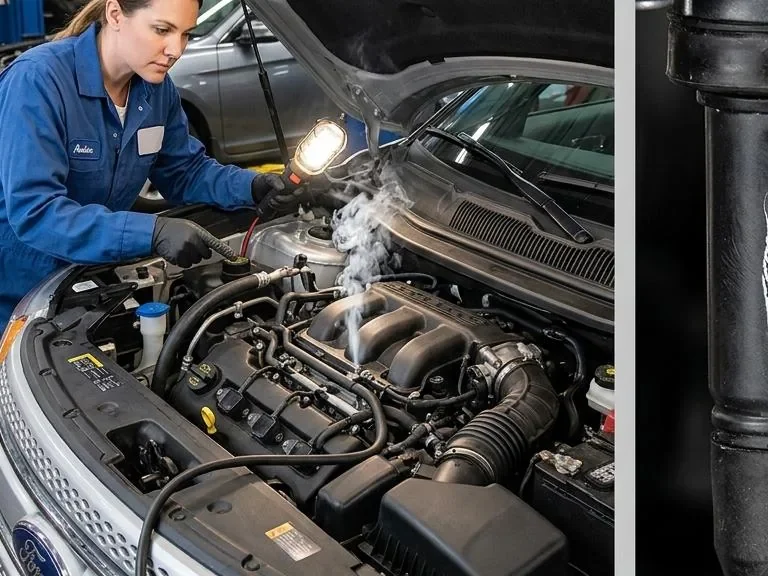
- Stop driving and arrange recovery if you see steam or persistent smoke from the bonnet area.
- Do not keep driving if there is a strong coolant smell, visible coolant loss, or a fresh puddle under the Vauxhall.
- Seek garage help if the engine starts misfiring, idling badly, or feels weak while overheating.
- Treat an overheating episode that returns after topping up or cooling down as a recovery-level problem, not a monitor-and-see issue.
- Keep checking only after a full cool-down if the warning has cleared, the coolant level appears stable, and there are no new warning lights or drivability symptoms.
- Book a cooling-system inspection promptly if the cause is unclear, because repeated overheating can point to a deeper circulation, airflow, or leak problem.
Let the engine cool completely before checking coolant level, hoses, or visible leaks. If warning lights stay on after restart, or the coolant drops again, do not rely on further short trips.
Diagnostic order
An overheating Vauxhall usually has a cooling system fault that needs prompt diagnosis before damage spreads, and replacing parts by guesswork often misses the real cause. A new thermostat, radiator fan, sensor, or water pump will not fix engine overheating if the root issue is a coolant leak, pressure loss, trapped air after recent cooling-system work, restricted flow, or an internal engine fault.
This is why repeated overheating, falling coolant, warning lights, or an unclear cause should move the car out of parts-swapping mode and into a proper cooling-system inspection. Owner wording from forums such as “it keeps overheating after I changed the thermostat” can be useful symptom context, but it is not proof that the next unchecked part has failed.
- Start with a cold-engine inspection for coolant level, visible leaks, staining around hoses or the radiator, and signs of recent cooling-system work that may point to an air lock or sealing problem.
- Use technician diagnostics to confirm the fault path: pressure testing, scan data review, radiator fan command checks, thermostat operation checks, coolant circulation checks, and combustion-gas testing where the symptoms justify it.
- Only choose the repair after the fault is confirmed. Low-risk service fixes may include correcting leaks, replacing a cap or hose, or bleeding the cooling system properly. Major repair paths belong to confirmed internal faults or severe component failure, not assumptions.
Best next step: book a cooling system inspection if the Vauxhall overheats again, loses coolant, or shows warnings, then use the findings to decide whether it needs a straightforward service repair or a deeper mechanical repair path. If the fault remains unclear after basic checks, book a cooling system inspection with a Vauxhall repair specialist.
Parts that may be involved
An overheating Vauxhall usually has a cooling system fault that needs prompt diagnosis before damage spreads, and low coolant or a coolant leak is one of the first causes to check. When coolant drops, the system cannot carry heat away properly, so engine overheating can start quickly and may return even after a refill if the loss was never found.
- Owner clues often include repeated top-ups, a puddle under the car, a sweet coolant smell, crusty staining around hoses or the radiator, damp hose connections, or weak cabin heat from the heater.
- Some owners describe this as 'losing water' or 'running hot then going back to normal.' That wording can help describe coolant leak symptoms, but it does not confirm the exact leak point.
- If the engine is fully cool, check the coolant level, look for obvious wet areas, and note whether the problem started after recent cooling-system work or a hose, radiator, or water-pump repair.
Do not remove the coolant cap when the engine is hot. If the warning is severe, steam is present, or the temperature keeps rising, stop driving and arrange recovery.
If no external leak is obvious, a technician may pressure-test the cooling system, inspect the radiator and hose joints, check circulation, and look for signs of internal coolant loss. This matters because simply topping up coolant can hide the root cause and allow repeat overheating, so a Vauxhall with falling coolant level or unclear leaks should have the cooling system inspected before damage spreads.
An overheating Vauxhall usually has a cooling system fault that needs prompt diagnosis before damage spreads, and a stuck thermostat can restrict coolant circulation enough to raise engine temperature quickly. If the thermostat sticks closed, hot coolant may stay trapped in the engine instead of moving through the radiator, so overheating can appear even when coolant level looks acceptable.
Common thermostat failure symptoms include unusual warm-up behavior, repeated temperature swings, heat building soon after start-up, or cabin heater performance that changes without a clear reason. Owners sometimes describe this as the gauge climbing suddenly, then dropping back, but that pattern alone does not prove the thermostat is the only fault.
- Owner-safe checks are limited to a cold engine: review coolant level, look for visible leaks, note whether overheating started after recent cooling system work, and pay attention to whether heater output and warning lights changed at the same time.
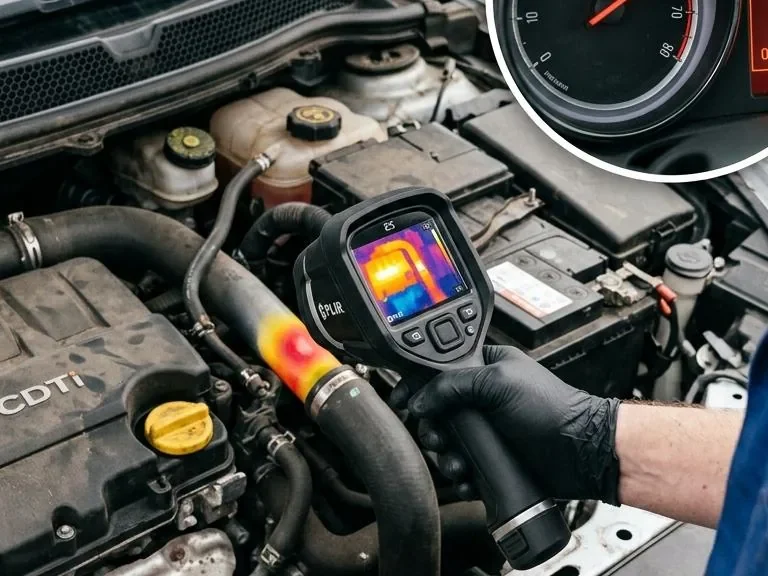
- Technician diagnosis should confirm coolant circulation rather than guess: scan data, cooling-system pressure checks, hose temperature comparison, and circulation checks help show whether the thermostat is opening as intended.
- If a Vauxhall keeps overheating or the cause is unclear, replacing the thermostat without proper checks can miss a coolant leak, trapped air, radiator restriction, or another cooling system fault.
An overheating Vauxhall usually has a cooling system fault that needs prompt diagnosis before damage spreads, and a radiator fan not working is a strong clue when temperature rises mainly at idle, in traffic, or with the AC on. If the engine runs hotter when airflow is low but settles once road speed increases, poor fan operation moves higher up the suspect list.
This pattern does not prove the fan motor itself has failed. The fault can sit in the fan motor, fuse, relay, wiring, temperature-sensor input, or the control side that is meant to switch the fan on. Owner wording such as “it only overheats in traffic” can be useful, but it still needs proper testing before any part is replaced.
- With the engine cold, check coolant level first, because low coolant can affect fan-related diagnosis and may point to a wider cooling system problem.
- Note whether engine overheating gets worse while stationary, in slow traffic, or when the AC adds heat load at the front of the radiator.
- Look for obvious fan damage, loose connectors, blown fuses, or signs of previous cooling-system work that may have introduced another issue.
- A technician should use scan data, commanded fan tests, wiring checks, and cooling-system inspection to confirm whether the radiator fan not working is the root cause or just one symptom.
If your Vauxhall overheats in traffic, the warning light appears, or the fan behavior seems inconsistent, limit driving and arrange a cooling-system inspection rather than guessing at the fan assembly.
An overheating Vauxhall usually has a cooling system fault that needs prompt diagnosis before damage spreads, and a blocked or damaged radiator is one possible cause when the cooling system cannot shed heat properly. Unlike a radiator fan problem that often shows up in slow traffic, a radiator issue may become more noticeable when the engine is working harder and heat keeps building instead of clearing.
- With the engine fully cool, inspect the front of the radiator for debris, packed dirt, bent fins, corrosion, or signs of impact damage that could restrict airflow.
- Look for wet staining, dried coolant residue, or damaged end tanks around the radiator, because a leak and a heat-exchange problem can exist together.
- Owner descriptions such as 'overheats on the motorway' or 'temperature rises after a long pull' can fit radiator restriction, but they do not prove the radiator is the only fault.
- If the warning light comes on, coolant is being pushed out, or the Vauxhall starts running rough while overheating, stop driving and arrange recovery rather than trying to push on.
A technician should confirm the cause instead of guessing. Useful checks include cooling-system pressure testing, scan data review, checking for uneven radiator temperature across the core, and verifying coolant circulation after the thermostat opens. Internal blockage, external fin damage, or poor flow through part of the radiator can all create uneven cooling behavior. If the cause is unclear, a full cooling-system inspection is the safest repair path, because replacing the radiator without diagnosis can miss another fault such as low coolant, trapped air, or a weak water pump.
An overheating Vauxhall usually has a cooling system fault that needs prompt diagnosis before damage spreads, and a weak or failed water pump is one possible cause when coolant is not circulating properly through the engine and radiator. This can make engine overheating escalate quickly, especially if the pump is leaking, the bearing is failing, or the impeller is no longer moving coolant as it should.
- Owner clues can include coolant staining or a coolant leak around the water pump area, a rough bearing noise from the front of the engine, poor heater output, or a temperature rise that feels faster than expected.
- These signs can overlap with thermostat, radiator, or air lock problems, so they should be treated as useful symptoms rather than proof that the pump itself has failed.
- With the engine cold, an owner can look for fresh coolant marks, check whether the coolant level has been dropping, and note any recent cooling system work that happened before the overheating started.
Confirmation belongs in the technician diagnostic stage. A garage can inspect for pump seepage, bearing play, belt-drive issues where relevant, and circulation problems across the cooling system while comparing scan data with real-world symptoms. If a Vauxhall overheats repeatedly, loses coolant, or has weak cabin heat along with rising temperature, booking a proper cooling system inspection is the safer move than guessing and replacing parts.
An overheating Vauxhall usually has a cooling system fault that needs prompt diagnosis before damage spreads, and trapped air after coolant work is one possible cause when symptoms start soon after a repair, hose replacement, thermostat change, or even a simple coolant top-up. An air lock can interrupt coolant circulation, reduce heater performance, and create misleading coolant level changes in the expansion tank.
- Common clues include overheating shortly after recent cooling system work, gurgling behind the dash, heat from the cabin heater coming and going, or the coolant level appearing to drop and then rise again after cooling.
- Owner-safe checks should stay limited to a fully cold engine: confirm the recent repair history, inspect the coolant level in the expansion tank, look for visible leaks around hoses and joints that were disturbed, and note whether heater output is stable or erratic.
- If the temperature warning appears, the gauge climbs quickly, or the heater suddenly blows cold while the engine is hot, stop driving and let the Vauxhall cool before arranging further inspection.
Because bleeding points, fill sequence, and warm-up procedure can vary by Vauxhall model and engine, the next step is a proper bleed using model-specific service information rather than repeated topping up. If overheating continues after correct bleeding, a technician should check for an underlying cooling system fault such as a coolant leak, weak water pump, thermostat issue, or combustion gas entering the system.
Do not treat repeated coolant loss or unstable temperature after coolant work as proof of a simple air lock. It may only be the first visible sign that another cooling system problem is still present.
An overheating Vauxhall usually has a cooling system fault that needs prompt diagnosis before damage spreads, and a faulty coolant temperature sensor or fan control issue can be part of that problem when the radiator fan comes on late, warning messages seem inconsistent, or the engine temperature shown on the dashboard does not match how the car behaves.
- Owner-safe clue: with the engine fully cool, check recent repair history, coolant level, warning-light history, and whether overheating is worse in traffic or during idling, where fan operation matters most.
- Owner-safe clue: if owners describe the fan as "not cutting in" or say the gauge suddenly jumps, treat that as useful symptom language, not proof that the sensor itself has failed.
- Technician check: compare dashboard temperature readings with live scan data and confirm whether the control module is seeing a believable engine temperature signal.
- Technician check: use fan command testing to verify whether the radiator fan, relay, wiring, and control side respond when commanded, instead of assuming a stored code identifies the failed part.
This matters because a bad temperature input can cause false overheating warnings, while a fan control fault can let real engine overheating develop with little warning until traffic or low-speed driving exposes it. A fault code may support the diagnosis, but no sensor or fan-related code alone proves the sensor is bad. If overheating repeats, the coolant drops, or fan behavior stays unclear, a proper cooling-system inspection is the safer next step than replacing parts by guesswork.
An overheating Vauxhall usually has a cooling system fault that needs prompt diagnosis before damage spreads, and a weak pressure cap or faulty expansion tank can be one reason the cooling system loses pressure and starts pushing out coolant or showing boiling symptoms.
When the system cannot hold pressure properly, coolant may escape earlier than it should, the level may keep dropping, and the engine may run hot even if the radiator, thermostat, or radiator fan are not the only suspects. This can look like a small problem at first, especially if the owner only notices a coolant smell after parking or dried residue around the tank.
- Coolant stains or crusty residue around the cap, tank seam, or nearby hoses
- Overflow marks or dampness near the expansion tank
- A repeated coolant level drop without an obvious large coolant leak
- Boiling or gurgling signs in the tank area after a hot drive
Keep owner checks visual and cold-engine only. Do not remove the pressure cap on a hot Vauxhall, because hot coolant can escape suddenly and cause injury.
If these signs appear, inspect the cap seal, the tank body, and the hose connections for visible damage, cracking, or staining when the engine is fully cool. If the Vauxhall keeps overheating or losing coolant, a technician should verify whether the cooling system holds pressure and check for a hidden coolant leak rather than replacing parts by guesswork.
An overheating Vauxhall usually has a cooling system fault that needs prompt diagnosis before damage spreads, but if the overheating keeps returning after simpler causes have been considered, a head gasket or another internal engine fault becomes a more serious possibility. In that situation, combustion gases may be entering the cooling system, or coolant may be escaping internally rather than from an obvious external coolant leak.
- Repeated engine overheating with no clear single trigger
- Unexplained coolant loss even when no obvious radiator or hose leak is visible
- White exhaust smoke or sweet-smelling exhaust after warm-up
- Milky contamination in the oil filler area or oily residue in the coolant
- Rapid pressure buildup in the expansion tank, sometimes described by owners as the system 'pressurising'
Those clues can overlap with other faults, so they should be treated as head gasket symptoms rather than proof of a failed gasket. A technician usually needs to confirm the repair path with cooling-system pressure testing, scan data, checks for abnormal coolant circulation, and combustion-gas testing where appropriate. If your Vauxhall is overheating repeatedly, pushing coolant out, or showing smoke and contamination together, stop driving and arrange a proper cooling-system inspection before internal engine damage worsens.
Do not remove the cap or disturb the cooling system when hot. Owner-safe observations are useful, but internal fault diagnosis is technician-level work.
An overheating Vauxhall usually has a cooling system fault that needs prompt diagnosis before damage spreads, but there are a few owner-safe checks you can make once the engine is fully cool. Keep this section limited to visual and basic history checks only. If the temperature warning returns, coolant keeps dropping, or the engine overheated badly enough to affect drivability, treat that as a strong reason to stop guessing and arrange a proper cooling system inspection.
- Check the coolant level only when the engine is cold, and note whether the level looks low or has dropped again since the last top-up.
- Look around the expansion tank, cap area, hose connections, radiator, and the ground under the Vauxhall for wet spots, dried coolant staining, or a sweet smell that may point to a coolant leak.
- Inspect visible hoses for obvious looseness, splits, rubbing damage, or signs that a recent repair may not have sealed properly.
- Look through the grille area for bent, blocked, or damaged radiator fins and any debris that could restrict airflow.
- Pay attention to warning lights, dashboard messages, and whether the cabin heater stopped blowing properly, because those clues can help narrow the cooling system fault.
- Think back to recent work such as coolant topping up, hose replacement, thermostat work, radiator work, or other repairs after which the engine overheating began.
Do not open the coolant cap while hot, and do not attempt pressure testing or other pressure-related checks at home. If the radiator fan does not seem to come in when the Vauxhall gets hot, or the cause is still unclear after these cold-engine checks, the next step is technician diagnosis rather than more trial-and-error.
An overheating Vauxhall usually has a cooling system fault that needs prompt diagnosis before damage spreads, and technician testing should confirm the root cause before any parts are replaced. After the cold-engine checks, the safest next step is a structured workshop inspection that separates a simple coolant leak from fan control, thermostat, circulation, or internal engine faults.
- Start with a pressure test and careful leak inspection. The goal is to see whether the cooling system holds pressure as it should and to trace external coolant loss around hoses, the radiator, water pump, expansion tank, and connections.
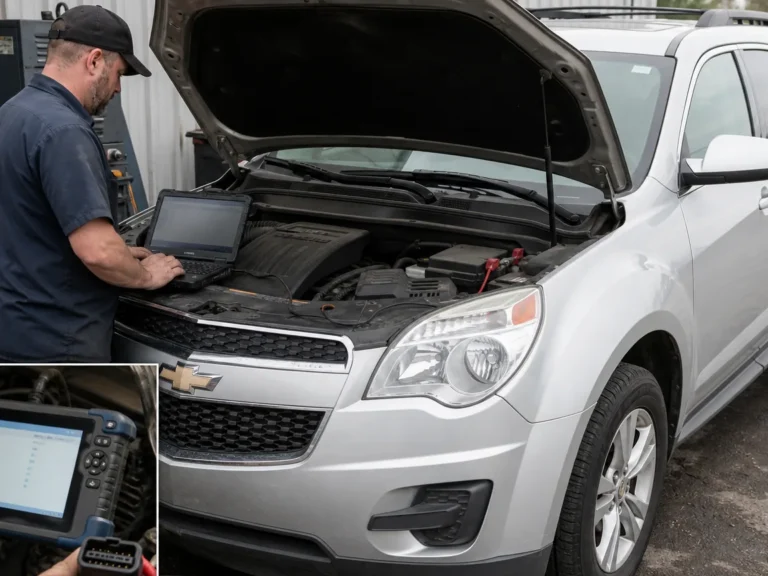
- Check scan data next. A technician should compare live temperature behaviour, warning history, and any related fault codes, while remembering that a code can support diagnosis but does not prove which part has failed.
- Command the radiator fan through the control system where possible. This helps show whether the fan, relay, sensor input, wiring, or control logic is failing to respond when engine temperature rises.
- Assess thermostat operation and coolant circulation. The aim is to confirm that coolant begins flowing properly through the radiator and heater circuit, rather than staying trapped or moving poorly.
- If overheating keeps returning, coolant disappears without an obvious leak, or there are signs of pressure buildup, contamination, or exhaust smell in the coolant, test for combustion gases to check for an internal engine problem.
If these early tests do not reveal the cause, the most sensible next confirmation step is a full cooling-system diagnosis under real operating conditions so the technician can match the overheating pattern to the actual fault instead of guessing with parts.
An overheating Vauxhall usually has a cooling system fault that needs prompt diagnosis before damage spreads, and it may or may not store a fault code. A scan can help, but many real overheating causes such as a coolant leak, trapped air after repairs, a weak pressure fault, restricted coolant flow, or a mechanical water-pump problem may not set a code at all.
- Useful code areas can include coolant temperature sensor faults, thermostat performance faults, radiator fan control faults, and broader cooling-system performance faults.
- Those codes can support the diagnosis, but no code by itself proves that one specific part has failed.
- If your Vauxhall overheats with no stored code, that still leaves several important cooling system faults on the table.
The stronger diagnostic path is to read live data alongside physical cooling system checks. A technician can compare reported temperature to actual engine behavior, confirm radiator fan command and response, check thermostat operation, inspect coolant circulation, look for leaks, and pressure-test the system before deciding on a repair. If an engine warning light is also on, treat fault finding as part of a wider engine warning light diagnosis, not as proof that the scan result alone explains the overheating.
An overheating Vauxhall usually has a cooling system fault that needs prompt diagnosis before damage spreads, so the safe answer is no: do not keep driving it with an active temperature warning or clear signs of engine overheating. If the warning stays on, the gauge continues to climb, steam is visible, coolant is escaping, or the engine has started to run badly or cut out, continued driving can turn a manageable cooling system problem into serious engine damage.
- Stop as soon as you can do so safely and switch the engine off.
- Do not open the coolant cap while the system is hot.
- Let the Vauxhall cool fully before any owner-safe checks.
- If the cause is not obvious and clearly resolved, arrange recovery rather than attempting a normal journey.
A brief restart should only be treated as a way to move out of immediate danger, such as clearing a live traffic position, and not as proof that the fault has gone away. Even if the warning light clears for the moment, repeat overheating, low coolant, heater performance changes, or fresh coolant smell still point back to the cooling system and need inspection.
If you are already roadside, the next safe step is cooling down first, then checking for visible coolant loss or obvious hose damage only once the engine is cold. If anything is unclear, recovery is the safer choice.
An overheating Vauxhall usually has a cooling system fault that needs prompt diagnosis before damage spreads. These related questions help narrow the next step, but repeated engine overheating, falling coolant, warning lights, or an unclear cause still point back to a proper cooling-system inspection rather than guesswork.
Comments
Be the first to add a practical repair note or follow-up question.