

What the symptom usually means
A Vauxhall overheating complaint usually points to heat not leaving the engine efficiently, not to one guaranteed failed part. The fault may be as simple as low coolant or as serious as combustion gas entering the cooling system, so the diagnostic path has to confirm the cause before parts are fitted.
If the overheating appears when the air conditioning is on, during low-speed driving, or after idling, fan operation and radiator airflow deserve early attention. If it happens under broader driving conditions, coolant level, leaks, thermostat behavior, circulation, and engine sealing all need to stay on the list.
- Overheating with coolant loss often points first toward a leak, weak cap, or coolant being pushed out.
- Overheating mainly in traffic or with air conditioning load often points toward fan operation or airflow.
- Overheating soon after starting or with poor heater output can indicate coolant flow, air in the system, or thermostat trouble.
- Repeated overheating after top-ups raises the risk of an unresolved leak or internal pressure problem.
Common causes
Overheating usually means the cooling system is failing to move heat away from the engine fast enough. A Vauxhall that overheats needs immediate cooling system diagnosis because overheating can quickly escalate from a coolant, fan, thermostat, or circulation fault into serious engine damage.
Stop safely, switch the engine off, let it cool, and do not open a hot coolant cap. If the temperature warning returns, steam appears, coolant is low, or the engine cuts out, arrange professional help before driving further.
Treat repeated overheating as a stop-and-check fault, not as a normal condition that can be cleared by waiting a few minutes and driving on.

The most useful way to rank Vauxhall overheating causes is to start with visible, common, and safer-to-confirm faults before moving toward internal engine concerns. This avoids guessing at expensive parts while still taking the symptom seriously.
Low coolant or an external leak
Low coolant is one of the first causes to rule out because the system cannot move heat properly if there is not enough coolant in circulation. Look for dried residue, wet areas, a sweet coolant smell, stains under the vehicle, or repeated top-ups that do not hold.
Faulty cooling fan or fan control issue
A fan issue becomes especially suspect when the temperature rises in traffic, while stationary, or when air conditioning is switched on. The fault may be the fan motor, relay, control module, fuse path, wiring, sensor input, or command strategy, so it should be tested rather than guessed.
Stuck thermostat or restricted coolant flow
A thermostat that does not open correctly or a restriction in coolant flow can trap heat in the engine. Clues may include rapid temperature rise, inconsistent heater output, or hoses that do not warm in the expected pattern, but a technician should confirm flow before replacing parts.
Radiator blockage, airflow restriction, or weak coolant cap
A radiator can lose effectiveness if airflow is blocked, fins are damaged, internal passages are restricted, or the cap cannot maintain the system correctly. These faults may not always leave an obvious puddle, so pressure testing and inspection matter.
Water pump or circulation problem
A weak or failing water pump can prevent coolant from circulating strongly enough to carry heat away. This can overlap with belt drive concerns, internal pump wear, or trapped air, so circulation checks should be part of the diagnostic sequence.
Possible combustion gas or head gasket issue
A head gasket concern should not be assumed first, but it must be considered when overheating repeats, coolant is pushed out, unexplained coolant loss continues, or there are signs of combustion gases in the cooling system. A combustion gas test is used when the earlier evidence points that way.
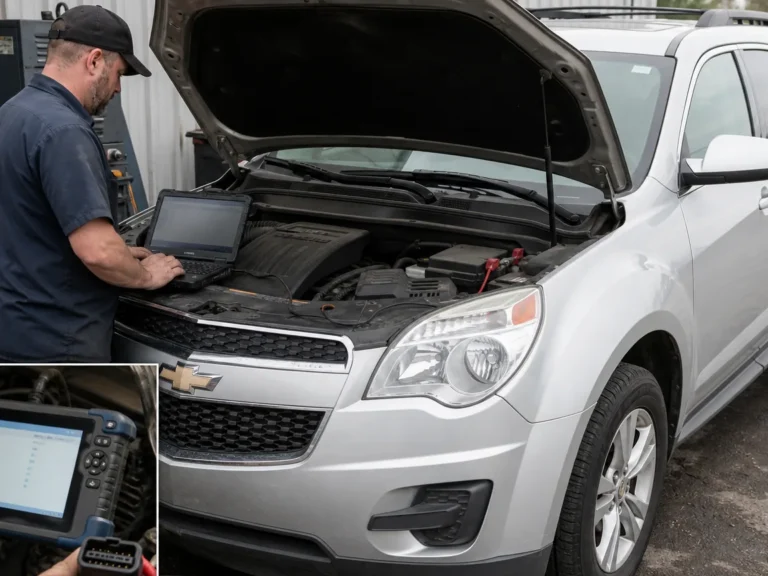
A scan tool can help diagnose a Vauxhall overheating problem, but it cannot replace cooling system testing. Overheating can happen without a stored DTC, and a code may point only to a sensor, fan command, or temperature signal rather than the actual root cause.
- A coolant temperature sensor code may explain bad data, but it does not prove the radiator, thermostat, fan, or coolant level is healthy.
- A fan control code can support a fan diagnosis, but the technician still needs to confirm power, ground, command, and fan response.
- No stored code does not rule out a coolant leak, weak cap, blocked radiator, air pocket, thermostat issue, or water pump problem.
- Live data is most useful when compared with physical symptoms and actual fan operation.
Quick checks
Owner checks should stay safe, cold, and non-invasive. The goal is to collect useful evidence before diagnosis, not to prove the fault by driving the vehicle hot again or opening a pressurized cooling system.
- Check the coolant level only when the engine is cold and the coolant cap is safe to handle.
- Look under the vehicle and around the engine bay for wet patches, stains, crusted residue, or coolant smell.
- Note whether the temperature warning light, stop message, or gauge rise happened once or repeatedly.
- Listen for radiator fan operation when the vehicle is hot, especially if the issue appears with air conditioning demand.
- Notice whether the heater blows cold when the engine is overheating, because that can support a coolant flow or low-coolant concern.
- Record any recent coolant top-ups, hose work, radiator work, thermostat work, or previous overheating episodes.
Do not continue driving just to confirm the symptom. If it overheats again, the useful evidence has already been created and the risk is increasing.
When it is urgent

A Vauxhall that overheats becomes urgent when the warning returns, steam appears, coolant is visibly low, the engine loses power, or the heater goes cold while the gauge rises. Those signs suggest the cooling system may no longer be controlling heat well enough for continued driving.
| Steam or strong coolant smell | Coolant may be escaping or boiling in an unsafe condition. | Stop safely, shut the engine off, and arrange help. |
| Temperature warning returns after cooling | The root cause is still present. | Do not keep cycling between cooling down and driving. |
| Coolant level is low when cold | The system may be leaking, pushing coolant out, or not holding volume. | Top up only if appropriate, then arrange diagnosis before further use. |
| Heater blows cold while engine runs hot | Coolant flow or coolant level may be compromised. | Stop driving and have circulation checked. |
| Engine cuts out or runs poorly when hot | Heat may be affecting drivability or protection logic. | Arrange recovery or inspection rather than restarting repeatedly. |
A single brief temperature rise that immediately clears still deserves checking soon. Repeated overheating, warning lights, steam, coolant loss, or engine shutdown moves it into stop-now territory.
Diagnostic order

A good cooling system diagnosis should prove whether the Vauxhall is losing coolant, failing to move air, failing to circulate coolant, failing to control pressure, or showing signs of combustion leakage. Scan data can support that work, but physical cooling system tests are still central.
- Confirm the complaint and record when the overheating happens, such as with air conditioning on, in traffic, after a top-up, or during normal driving.
- Inspect the cooling system cold for coolant level, visible leaks, staining, hose condition, radiator condition, and evidence of previous repairs.
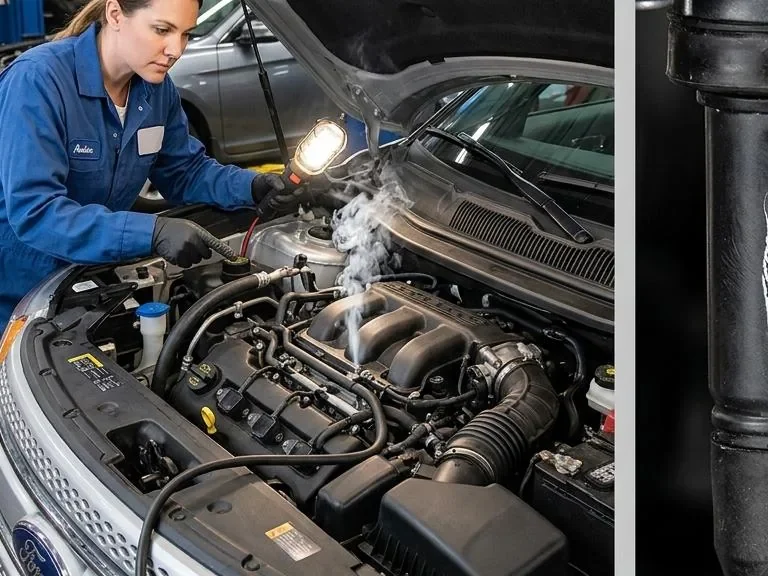
- Pressure test the cooling system to look for external leaks and pressure loss without relying only on a puddle under the car.
- Check fan operation and fan command response, including control inputs that become important when air conditioning adds heat load.
- Review scan data for coolant temperature behavior, fan command, relevant codes, and sensor readings that support or challenge the physical symptoms.
- Check thermostat behavior and coolant circulation to confirm whether coolant is moving through the engine and radiator correctly.
- Inspect the radiator, airflow path, and coolant cap because heat transfer and pressure control both affect overheating behavior.
- Use a combustion gas test when repeated overheating, coolant push-out, unexplained coolant loss, or other signs justify checking for head gasket risk.
The repair recommendation should be tied to a confirmed failed test, not only to the fact that the vehicle overheated.
The right next step for a Vauxhall that overheats is a cooling system inspection that confirms the fault before parts are bought. That inspection should focus on leak testing, fan operation, coolant circulation, radiator condition, pressure control, scan data, and head gasket screening only when the evidence calls for it.
If the temperature warning returns after cooling down or topping up coolant, arrange diagnosis before driving further. Ask for documented test results and a repair recommendation that explains why the part has failed, not just a list of parts commonly associated with overheating.
Use APW cooling system guides and part-search paths to prepare for the diagnosis, then replace parts only after the fault has been confirmed.
Parts that may be involved
The parts involved in a Vauxhall overheating repair depend on the test result, not just the symptom. A cooling fan, thermostat, radiator, cap, hose, water pump, sensor, or gasket concern can all create similar driver complaints, so replacement should follow confirmed evidence.
| Coolant hose or external seal | Coolant loss, staining, wet areas, or repeated low level. | Visual inspection and pressure testing. |
| Radiator fan or control circuit | Overheating in traffic, while stationary, or with air conditioning demand. | Fan command testing and electrical checks. |
| Thermostat | Temperature rises abnormally or coolant flow appears restricted. | Thermostat and circulation checks. |
| Radiator or airflow path | Heat cannot leave the coolant effectively. | Radiator inspection and airflow assessment. |
| Coolant cap | Coolant is pushed out or pressure control is suspect. | Cap testing and cooling system pressure checks. |
| Water pump | Coolant circulation appears weak or inconsistent. | Flow and drive inspection. |
| Head gasket-related fault | Repeated overheating, coolant push-out, or unexplained coolant loss. | Combustion gas testing when indicated. |
FAQ
Can I drive a Vauxhall after it overheats?
Do not keep driving if the warning returns, steam appears, coolant is low, or the engine runs poorly. Stop safely, let it cool, and arrange inspection or recovery if the fault repeats.
Is topping up coolant enough to fix overheating?
A top-up may restore level temporarily, but it does not explain why the coolant was low. Repeated top-ups mean the cooling system needs leak testing or further diagnosis.
Why does overheating happen when the air conditioning is on?
Air conditioning adds heat load and often requires correct radiator fan operation. If overheating appears mainly with the air conditioning on, fan control, airflow, and cooling capacity should be checked.
Will an OBD code tell me the overheating cause?
Sometimes a code helps, especially for sensor or fan control faults, but overheating can occur with no stored DTC. Physical checks are still needed.
Does overheating always mean a head gasket problem?
No. Low coolant, leaks, fan faults, thermostat problems, radiator restrictions, cap issues, and water pump problems are all possible. Head gasket testing is appropriate when symptoms and earlier checks point that way.

Comments
Be the first to add a practical repair note or follow-up question.