
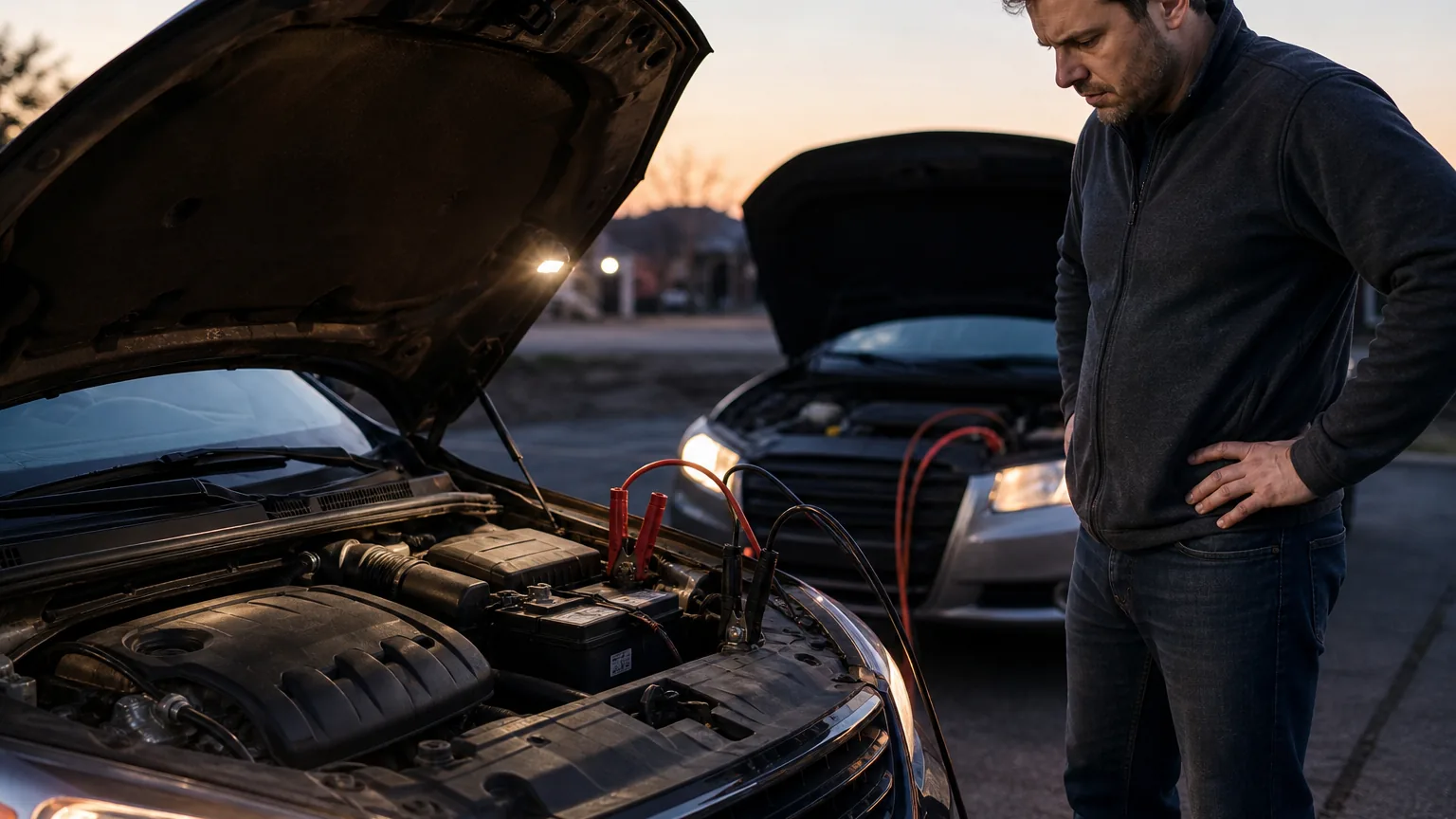
What the symptom usually means
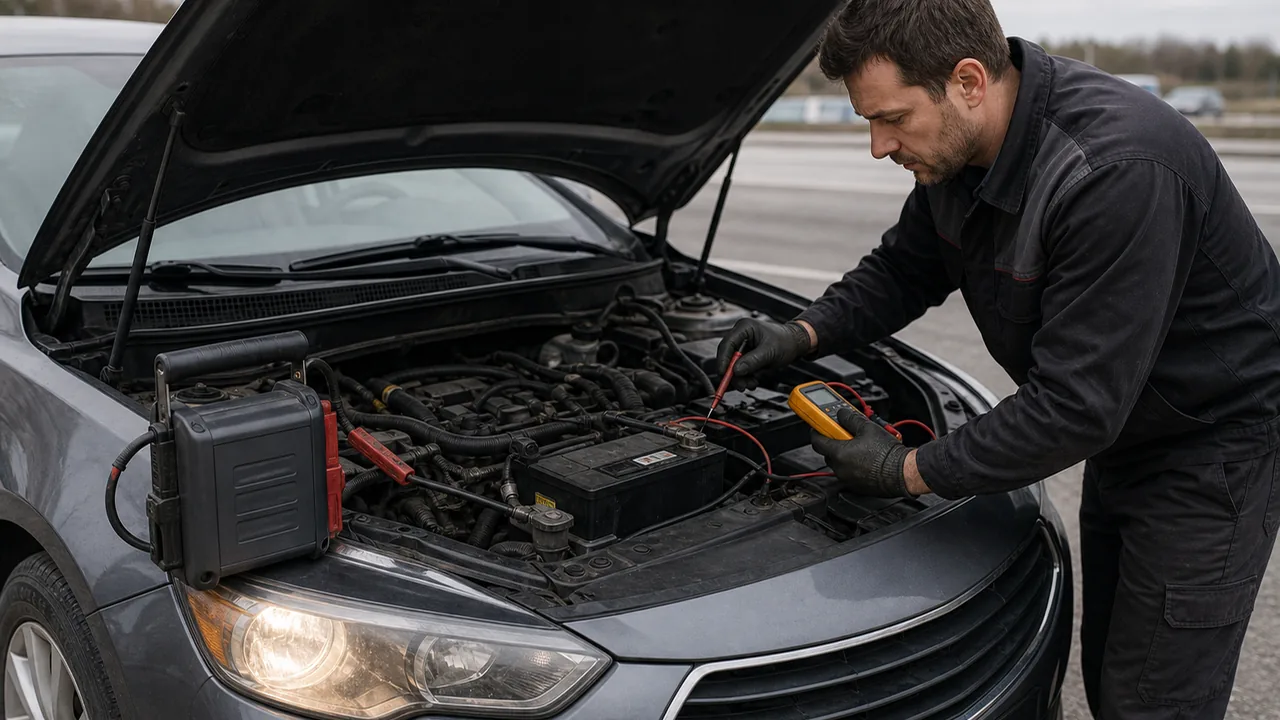
The timing of the stall is the strongest clue. A jump-start supplies outside electrical support long enough to crank and start the engine. After that, the vehicle must rely on its own battery connections, charging system, belt drive, wiring, and electronic charging controls.
It dies as soon as jumper cables are removed
This often means the car cannot support its own electrical load once the outside power source is gone. The alternator may not be charging, the belt may not be driving it, a main fuse or fusible link may be open, or a poor connection may be interrupting current.
It runs for a while but will not restart later
This pattern usually leans more toward the battery. The alternator may have kept the engine running, but the battery may be too weak, too discharged, sulfated, or damaged to store enough energy for the next start.
It dies while driving after a jump
A stall while driving after a jump can point to a charging-system fault or unstable electrical supply. It can also overlap with fuel, ignition, or engine-control issues, so avoid guessing from the symptom alone.
It starts only when connected to another battery or jump pack
If it only runs or starts while connected to outside power, focus first on battery terminals, cable clamps, grounds, main charging wiring, and the charging system itself.
Common causes
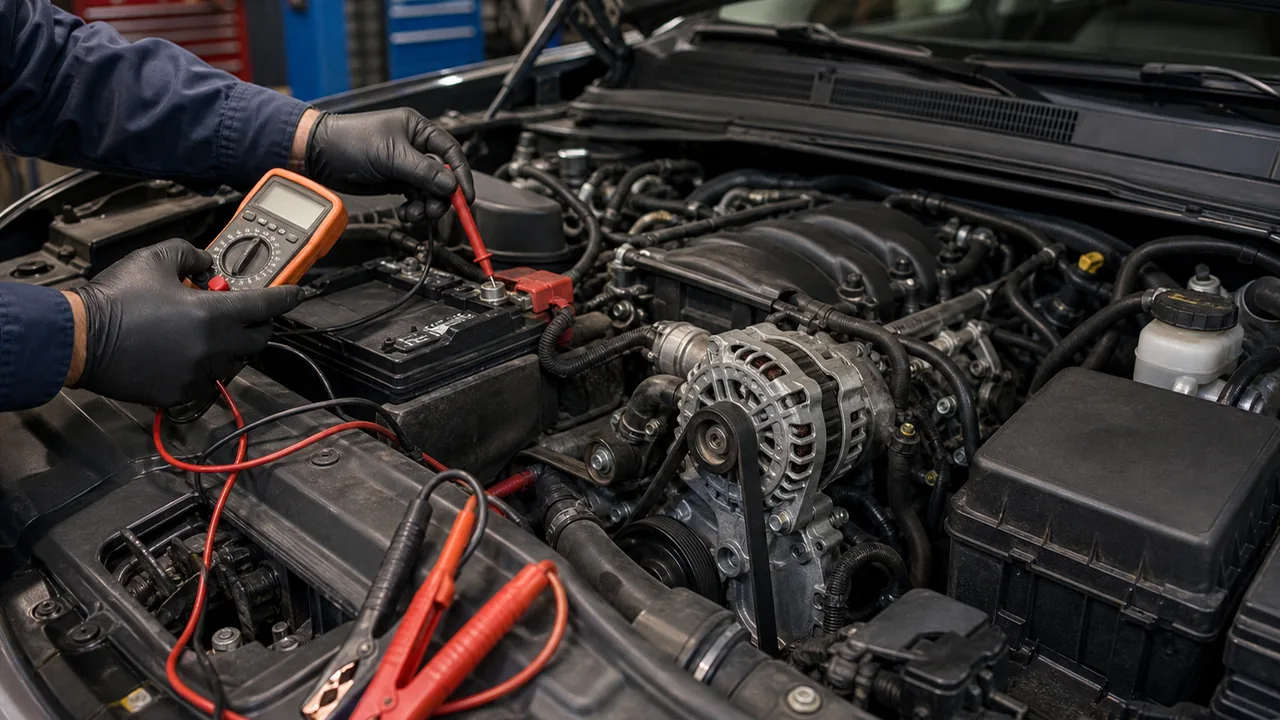
- Alternator or charging-system failure: likely when the vehicle dies soon after jumper cables are removed or the battery warning light stays on while running.
- Battery cannot hold or accept a charge: likely when the car runs after a jump but will not restart after being shut off.
- Loose, corroded, or damaged battery cables and grounds: can mimic both a bad battery and a bad alternator by interrupting current flow.
- Slipping or broken serpentine belt: can stop the alternator from being driven even if the alternator itself is not the root cause.
- Blown alternator fuse, fusible link, or wiring fault: can block charging output from reaching the battery.
- Parasitic drain or repeated short-trip discharge: can leave a good battery too low to restart later.
- Starter, ignition, fuel, or engine-control issue: can mimic a charging problem, but a starter fault does not normally make a running engine die.
- Vehicle-specific charging-control issue: smart charging, battery sensors, modules, or software logic may need OEM data and scan-tool checks.
A weak battery and a weak charging system can also appear together. Replacing only the battery may not fix the concern if the alternator is not charging. Replacing only the alternator may waste money if the real cause is a loose ground, bad cable, or failed battery.
Quick checks
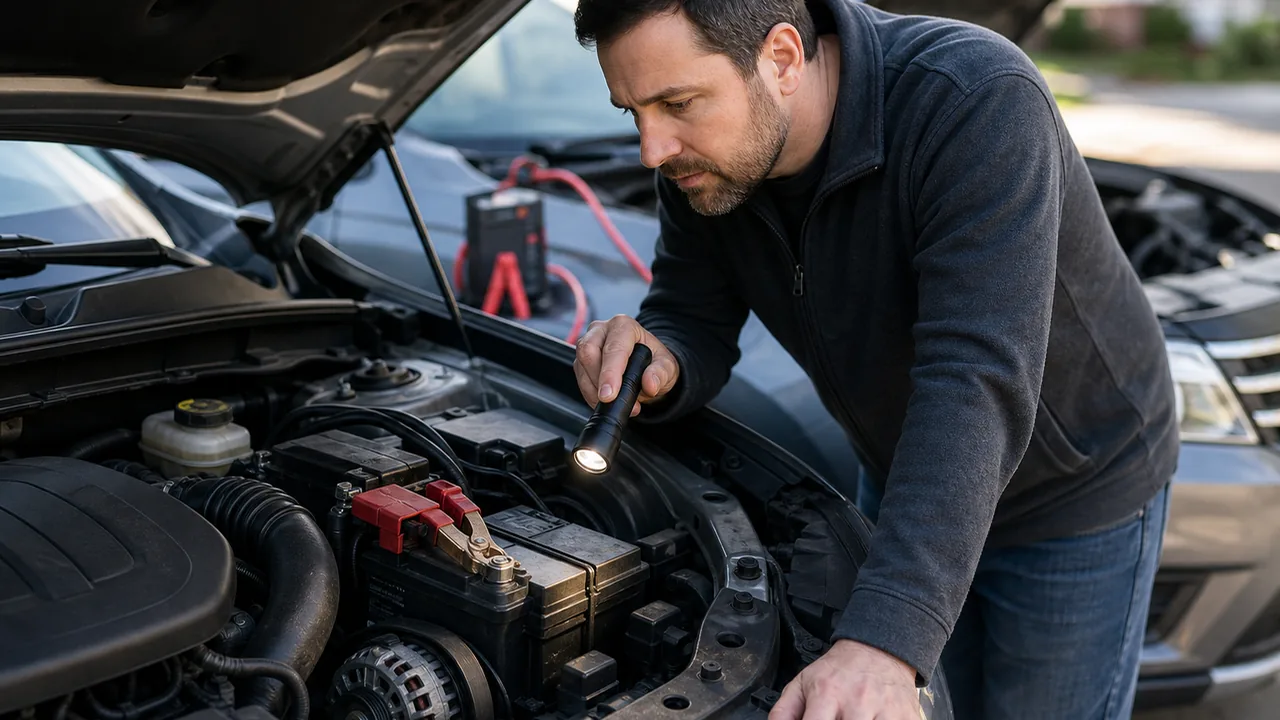
These checks are owner-safe visual and behavior checks, not a full diagnosis. Work only in a safe location, keep hands and tools away from moving belts and fans, and stop if the battery looks damaged or smells abnormal.
- Look for a battery warning light while the engine is running.
- Check whether headlights, dash lights, or interior lights dim or flicker.
- Inspect battery terminals for looseness, heavy corrosion, cracked clamps, or cables that move by hand.
- Confirm the serpentine belt is present and not visibly shredded or hanging loose.
- Look for obvious battery damage such as swelling, cracking, leakage, heat, or a strong chemical smell.
- Note whether the vehicle dies immediately, after a few minutes, during a short drive, or only after shutdown.
- Record any warning messages or scan codes before the battery is disconnected or replaced.
Do not use the old test of disconnecting the battery while the engine is running. On modern vehicles, that can damage electronics and create a safety risk.
When it is urgent
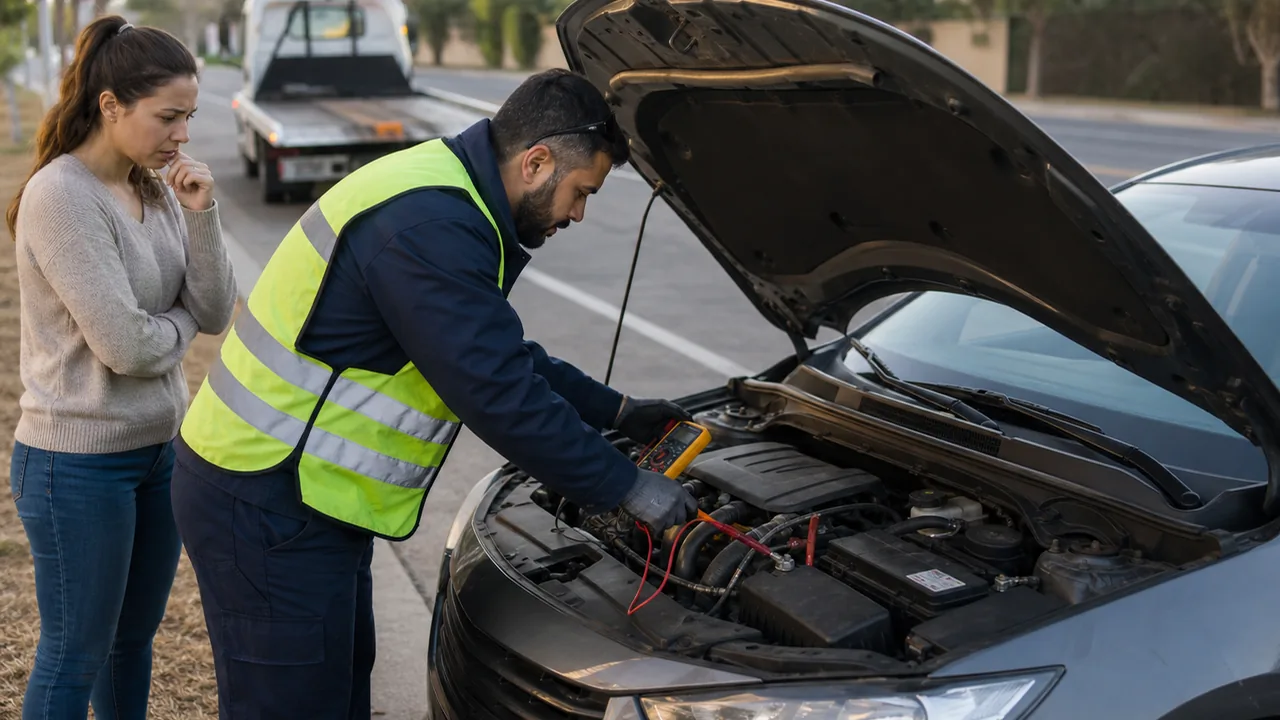
Stop driving and arrange roadside help or towing if the car stalls after the jump, dies as soon as the cables are removed, shows a battery warning light while running, loses electrical power, smells hot, smokes, or has a damaged battery.
- Do not drive a car that has already died while moving after a jump.
- Do not keep retrying jump-starts if the battery is cracked, leaking, swollen, hot, frozen, or smells unusual.
- Do not rely on a short drive to recharge the battery if the vehicle is stalling or the warning light remains on.
- Use extra caution with hybrids and EVs because the 12-volt system may be supported by a DC-DC converter rather than a conventional alternator.
Diagnostic order
- Start with safety: if it stalls, loses power, smells hot, or shows battery damage, stop and do not continue driving.
- Record the jump outcome: dies immediately, dies after several minutes, dies while driving, or only fails to restart later.
- Inspect visible battery terminals, cable clamps, grounds, belt condition, and obvious wiring damage.
- Test the battery condition with a proper battery test before assuming it only needs charging.
- Test charging-system operation with the engine running when the vehicle can be operated safely.
- Perform voltage-drop testing on battery cables, grounds, and charging circuits if the basic tests do not explain the symptom.
- Inspect alternator fuses, fusible links, belt tension, pulleys, and charging-system wiring.
- Scan for DTCs and review freeze-frame or charging-control data where available.
- If overnight discharge is the pattern, test for parasitic draw after the vehicle can run and shut down normally.
DTCs such as low system voltage or generator-control faults can support the diagnostic path, but they do not prove the alternator is bad by themselves. The technician still needs circuit checks, service information, and vehicle-specific charging data.
Many hybrids and EVs do not use a conventional alternator. The 12-volt battery may be charged through a DC-DC converter, so high-voltage-aware service guidance and OEM procedures matter.
Parts that may be involved
| Part or system | Why it matters | Replace only if |
|---|---|---|
| Battery | Stores energy for starting and stabilizes the 12-volt system. | It fails a proper battery test or cannot hold charge. |
| Alternator or generator | Supplies electrical power while the engine runs. | Charging output or control tests confirm failure. |
| Battery cables and grounds | Carry current between the battery, body, engine, starter, and charging system. | Voltage-drop or inspection confirms high resistance or damage. |
| Serpentine belt and pulleys | Drive the alternator on many gasoline and diesel vehicles. | The belt drive is slipping, damaged, missing, or not tensioned correctly. |
| Fuses, fusible links, and wiring | Protect and connect the charging circuit. | Testing confirms an open circuit, damaged link, or wiring fault. |
| DC-DC converter | Supports the 12-volt system on many hybrids and EVs. | OEM-guided testing confirms the converter or related control issue. |
For used parts, verify the exact application, connector style, pulley design, battery type, sensor setup, and any required registration or reset procedure. Some vehicles use smart charging strategies that make generic parts assumptions risky.
FAQ
Does a jump-start charge the battery enough?
Usually not by itself. A jump-start supplies power to start the engine, but a weak or deeply discharged battery still needs proper testing and may need controlled charging or replacement.
Can a bad battery kill a new alternator?
A severely weak, shorted, or incorrect battery can overwork the charging system or destabilize electrical behavior, but the exact risk depends on the vehicle and the failure. Test the battery before and after alternator replacement.
Can a bad alternator drain a battery overnight?
It can in some failure modes, but overnight drain can also come from lights, modules, accessories, wiring faults, or a parasitic draw. A parasitic draw test is the correct next step when the battery dies after sitting.
Is it safe to disconnect the battery while the engine is running?
No. That old alternator test is unsafe for modern vehicles and can damage control modules, sensors, charging electronics, and other electrical components.
Do hybrids and EVs have alternators?
Many hybrids and EVs do not use a conventional belt-driven alternator. They often maintain the 12-volt system through a DC-DC converter, so diagnosis should follow the owner manual and OEM service information.
Comments
Be the first to add a practical repair note or follow-up question.