
What the symptom usually means
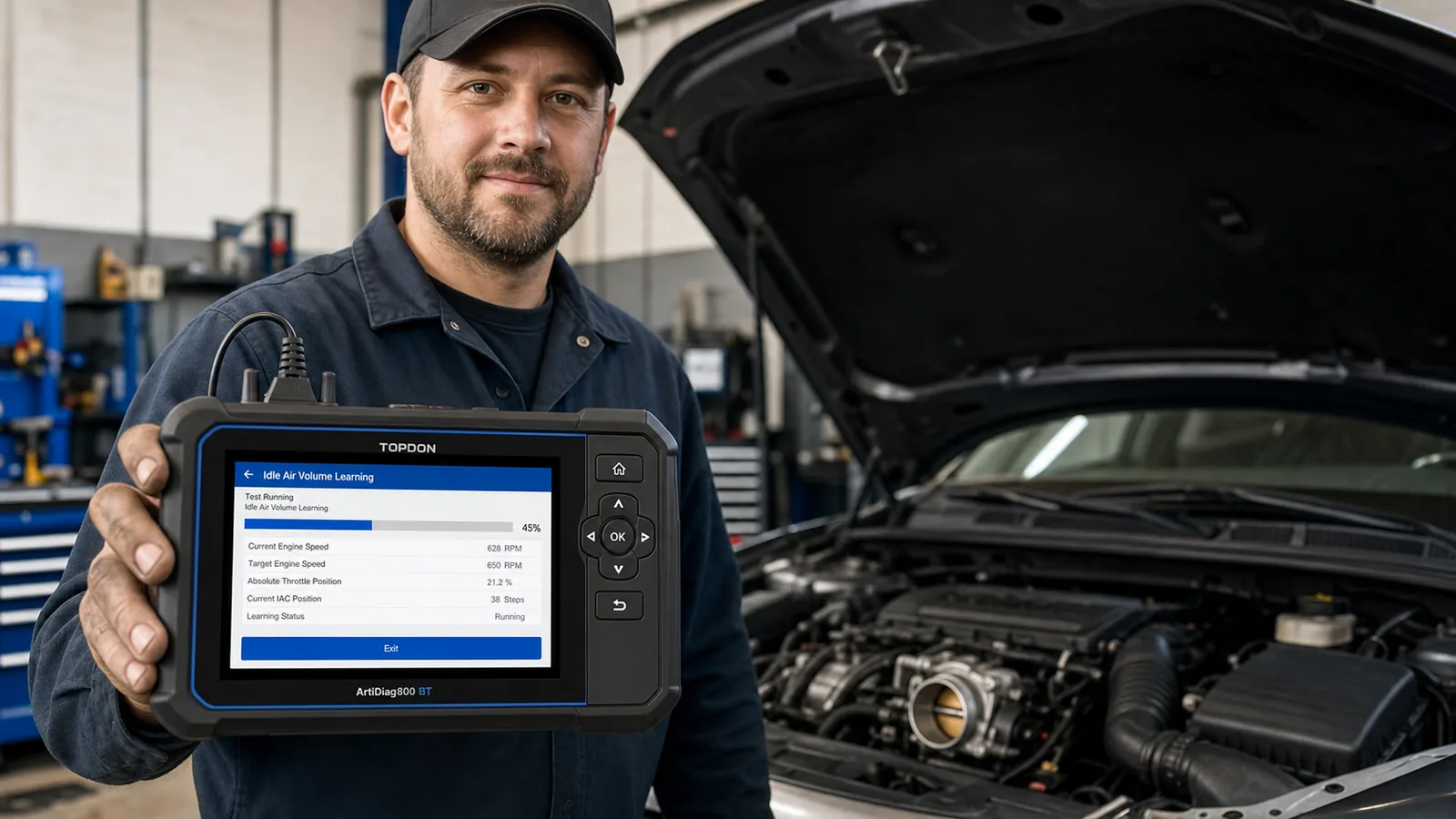
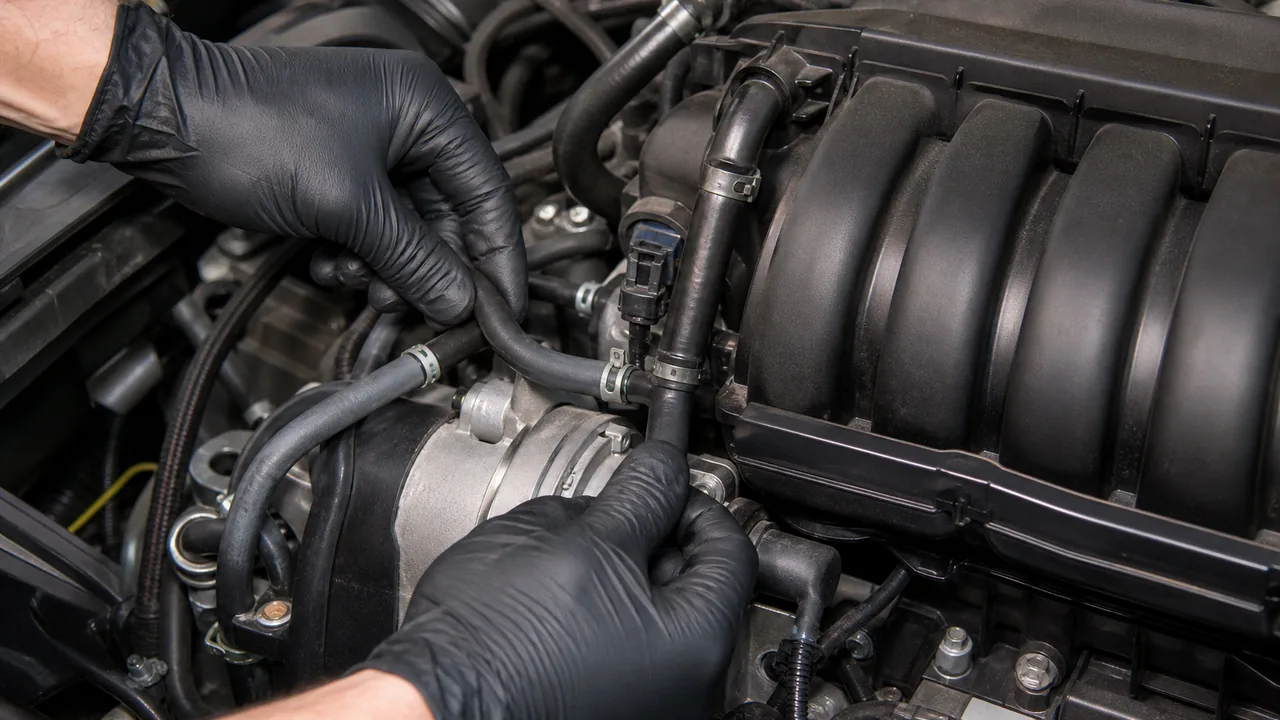
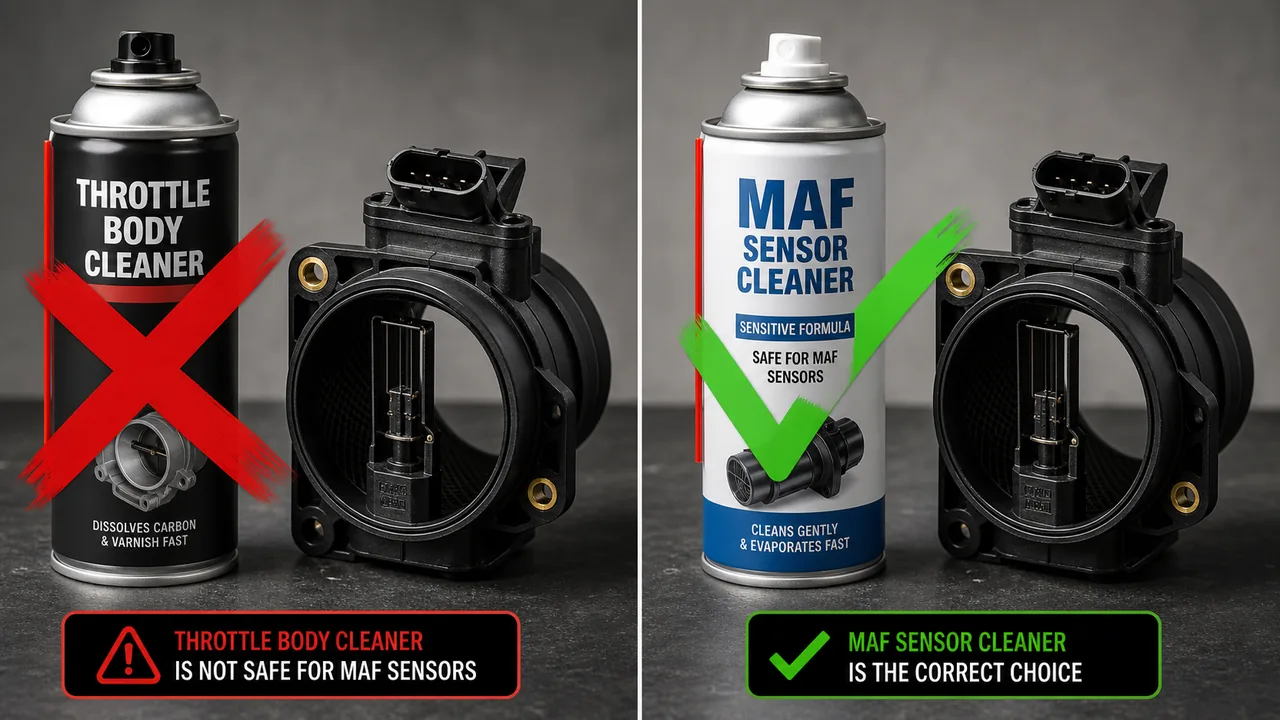
A rough idle after cleaning a throttle body usually means the engine computer needs a throttle body relearn to adjust to the newly cleaned, higher-airflow state. If the idle is surging or accompanied by a hissing sound, it points to an induced vacuum leak caused by reusing an old gasket or leaving a hose unplugged. Finally, a sudden rough idle can indicate a contaminated Mass Air Flow (MAF) sensor if you sprayed cleaner aggressively. Your immediate first action should be to ensure all hoses and clamps are securely reconnected, then attempt a manual idle relearn procedure. This is a common post-maintenance issue and is usually fixable without expensive parts replacement.
When you clean a heavily carboned throttle body, the engine control module's baseline air-fuel ratio calculations are instantly rendered obsolete. Over tens of thousands of miles, the engine computer had slowly learned to open the butterfly valve slightly more to compensate for the restricting carbon buildup and maintain a steady idle. Now that the restriction is completely gone, the previously learned throttle plate position allows too much unmetered air into the intake manifold, causing a calibration mismatch that results in erratic engine behavior. The engine expects a restricted air path, but it receives a completely clear one. This sudden influx of air leans out the fuel mixture, causing the engine to stumble, surge as the computer desperately tries to compensate, or even stall completely when the throttle is closed quickly.
Common causes
While there are many reasons an engine might run poorly, a rough idle isolated specifically to a post-cleaning event almost always narrows down to three primary culprits. Identifying which of these three causes is responsible requires a careful review of the exact steps you took during the cleaning process.
Distinguishing between cable-driven and electronic throttle bodies is vital for understanding these causes. Older cable-driven systems use a separate Idle Air Control (IAC) valve to manage idle bypass air. If a cable-driven car idles rough after cleaning, the IAC valve passages are likely still clogged, or a massive vacuum leak is present. Modern Electronic Throttle Control (ETC) systems manage idle directly by slightly opening the main butterfly valve via a digital actuator motor. This makes them highly sensitive to carbon removal and absolutely necessitates an electronic relearn procedure. Furthermore, manually pushing open the butterfly valve on an ETC unit during cleaning can strip the internal plastic gears, necessitating a complete throttle body replacement.
Quick checks
Before assuming expensive electronic damage has occurred or rushing to a mechanic, start with thorough visual inspections and a basic verification of your mechanical work. Many rough idle complaints are resolved by simply plugging a forgotten hose back into its designated port or tightening a loose clamp.
If you physically unbolted and removed the throttle body from the intake manifold to clean both sides of the butterfly valve and chose to reuse the old rubber or paper gasket, this is the absolute number one cause of post-cleaning vacuum leaks. The old gasket has already been crushed to conform to the previous clamping force and thermal cycles, meaning it will rarely seal properly a second time. A compromised gasket allows unmetered air to bypass the throttle plate entirely, leaning out the mixture and causing a hunting, surging idle that cannot be fixed by a computer relearn. Always use a brand new gasket when reinstalling a throttle body.
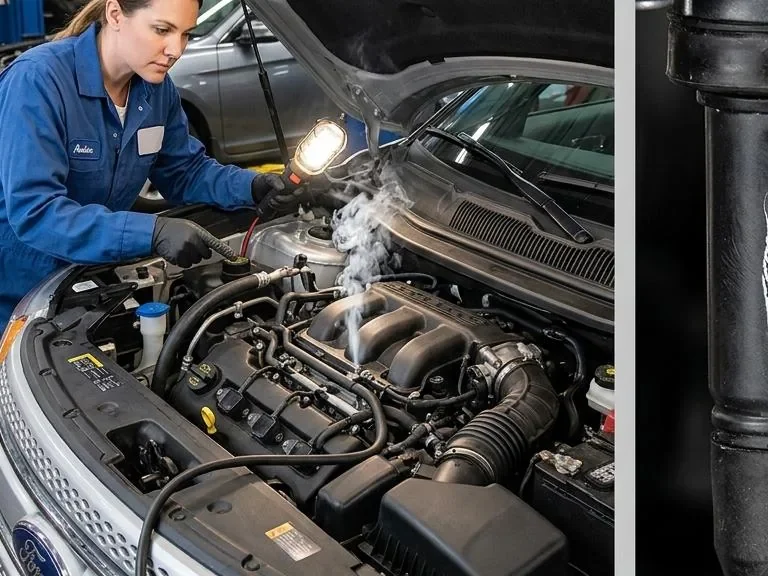
If you suspect a vacuum leak, you can carefully spray a small amount of dedicated intake cleaner or unlit propane gas around the throttle body mating surface and hose connections while the engine is idling. If the engine RPM surges or smooths out momentarily, you have pinpointed the exact location of the vacuum leak.
When it is urgent
Determine whether the vehicle is safe to drive while you attempt to resolve the calibration or leak issues. Safety must be the absolute priority, as unpredictable idle behavior can lead to dangerous situations in heavy traffic or at intersections.
If the idle is simply slightly elevated but remains steady (for example, hovering smoothly at 1000 RPM instead of the target 700 RPM), and the vehicle drives normally otherwise without stalling, hesitation, or violent surging, it is generally safe to drive carefully. In some specific cases, a few drive cycles of normal, gentle commuting will allow the engine control module to naturally relearn the idle air volume without requiring manual intervention or professional scan tools.
Diagnostic order
Follow this methodical sequence to correctly identify the exact source of the rough idle without wasting time guessing or needlessly replacing expensive, functional parts. Bypassing these steps often leads to frustrating misdiagnoses.
Be acutely aware that some manual relearn procedures, particularly on Nissan, Infiniti, and certain Honda vehicles, require highly specific timing measurements (often using a stopwatch) and strictly defined engine coolant temperature ranges to complete successfully. If the manual procedure fails repeatedly despite following the instructions meticulously, it is highly likely that a professional scan tool is required to bypass the manual triggers and command the reset directly.
Parts that may be involved
Understanding the precise functions of the components you interacted with during the cleaning process is essential for effective troubleshooting and preventing further accidental damage to complex systems.
FAQ
Will a throttle body automatically relearn its idle position on its own?
Sometimes, but it is not guaranteed. Many modern vehicles are designed to gradually relearn the base idle air volume over several long drive cycles. However, if the carbon buildup was severe prior to cleaning, the resulting idle may be too erratic, high, or prone to stalling for normal driving, thereby necessitating a manual reset sequence or a forced relearn procedure using a professional scanner.
How long does it typically take for a car to relearn its idle after cleaning the throttle body?
If you are relying on the engine control module to relearn naturally through normal driving, it can take anywhere from 20 to 50 miles of varied driving conditions, including highway speeds and stop-and-go traffic. Conversely, a successful manual relearn procedure usually takes less than five minutes to perform in your driveway. A forced relearn initiated with a high-end bi-directional scan tool takes mere seconds to complete.
Why does my car stall repeatedly after I finished cleaning the throttle body?
Stalling immediately after cleaning is typically caused by one of two major issues: a massive vacuum leak where unmetered air completely overwhelms the fuel mixture, leaning it out to the point of combustion failure, or the engine control module has completely lost its idle calibration baseline, causing it to shut the butterfly valve too far when you let off the accelerator pedal.
Is it safe to spray generic carburetor or throttle body cleaner directly onto the Mass Air Flow sensor?
Absolutely not. Standard throttle body cleaner is a highly aggressive solvent designed to dissolve baked-on carbon. It will leave behind a chemical residue that can permanently damage or coat the delicate, microscopic heated elements inside a MAF sensor, insulating them from the airflow they are designed to measure. You must only use specialized, residue-free MAF sensor cleaner for this component.
Do you need to completely disconnect the vehicle battery when cleaning a throttle body?
Yes, it is highly recommended to disconnect the negative battery terminal before beginning the cleaning process. This essential safety step prevents accidental electrical short circuits while working near sensitive sensors and often resets the engine control module's short-term fuel and idle trim memory, which can sometimes aid in facilitating the natural relearn process upon startup.
Comments
Be the first to add a practical repair note or follow-up question.