
What the symptom usually means
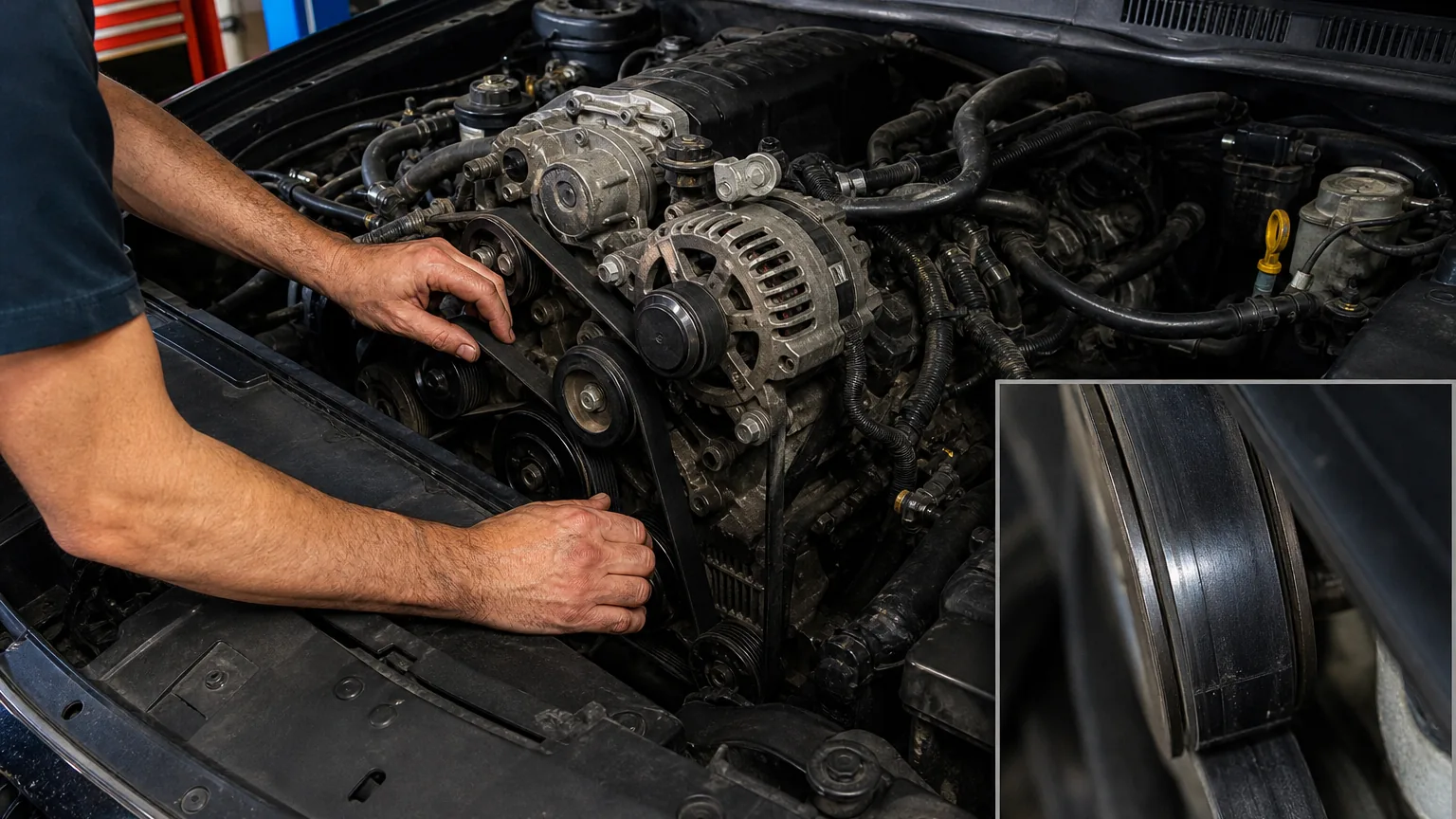
A sudden startup shake after belt or pulley work usually means an accessory-drive problem, misrouting, or a seized component. A car that shakes hard on startup after belt or pulley work most often needs the belt routing, tensioner, pulley alignment, pulley wobble, loose fasteners, and disturbed accessories checked first.
The first safe action is to turn the engine off, remove the keys, and make only a visual inspection from a safe position. Do not reach near belts, pulleys, fans, or hot parts, and do not keep driving if the belt looks displaced or the shake feels violent.
A recent belt or pulley repair is a clue, not a verdict. The correct next step is a visual and mechanical recheck before assuming an internal engine fault or replacing unrelated parts.
Common causes
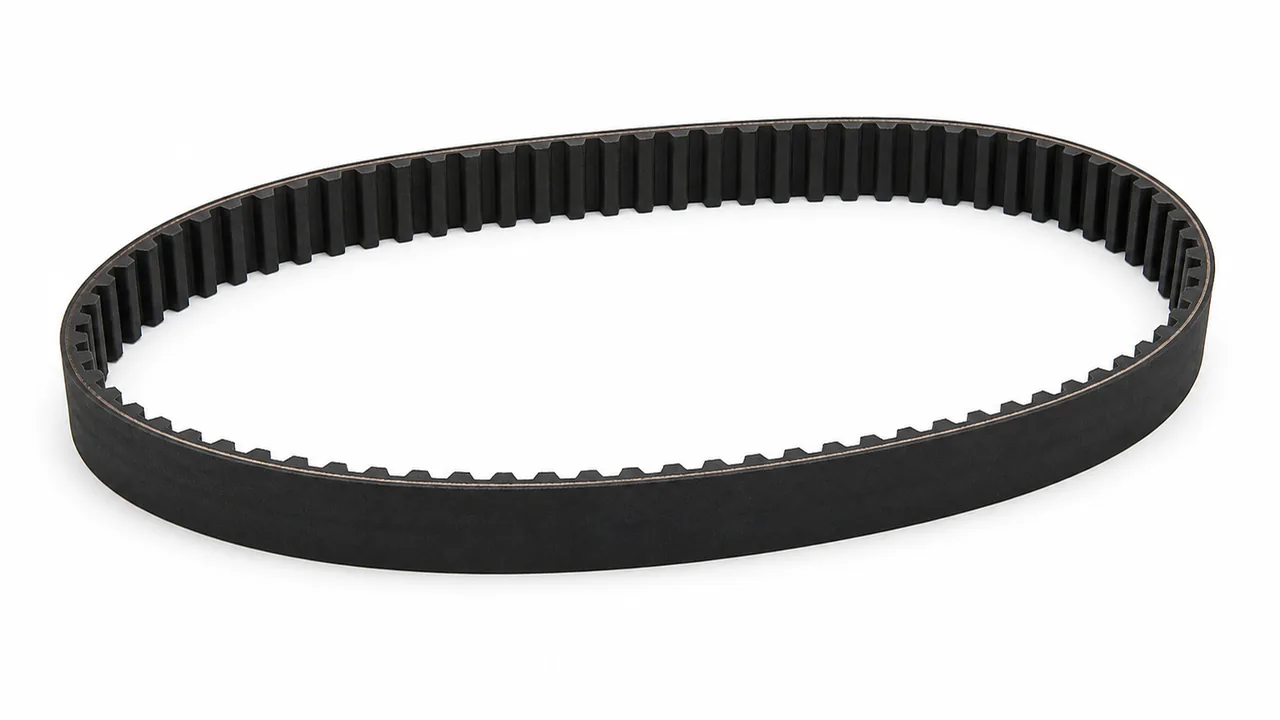
- Incorrect belt routing or a belt not fully seated in pulley grooves. This can make the belt pull unevenly, slip, or load accessories in a way that creates vibration.
- Weak, sticking, or incorrectly positioned tensioner. A tensioner that cannot hold steady belt load may allow belt slap, chirp, or a startup shake.
- Bad idler pulley or accessory pulley wobble. A pulley with bearing drag, wobble, or incorrect alignment can shake the belt drive as soon as the engine starts.
- Dragging accessory such as an alternator, air conditioning compressor clutch, power steering pump, or other belt-driven component. If an accessory is seizing or hard to turn, startup load can feel like a rough engine.
- Harmonic balancer or crank pulley concern. A failing damper or pulley can create visible wobble and engine vibration, especially when other belt-drive parts have just been serviced.
- Loose or incorrectly installed hardware. Brackets, pulley bolts, tensioner fasteners, or accessory mounting points need proper service-data verification if they were disturbed.
- Engine mount weakness. A worn mount may not cause the original problem, but it can make a startup shake look and feel much more severe.
- Misfire, vacuum leak, or fueling issue. A rough startup can coincide with belt work without being caused by it, so scan data and misfire counters matter.
- Timing-related issue when timing belt or chain service was involved. Incorrect cam or crank relationship can cause serious drivability risk and should be verified professionally.
Do not jump straight to a mount or misfire diagnosis if the shaking began immediately after accessory belt or pulley service. Recheck the disturbed belt-drive path first, then widen the diagnosis.
Quick checks
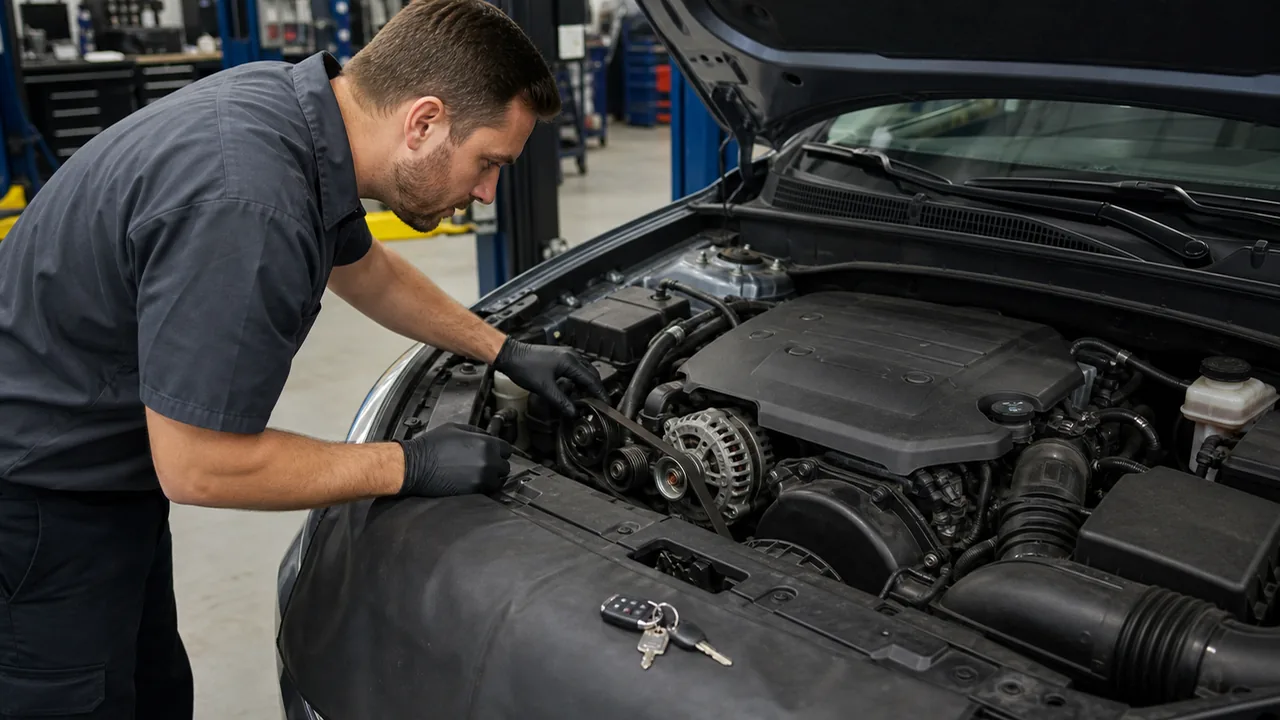
- Confirm the engine is off, the keys are removed, and no one can start the vehicle during inspection.
- Look at the belt path from above without touching moving parts or placing hands deep into the engine bay.
- Check whether the belt appears centered on each pulley rather than hanging off an edge.
- Look for obvious belt fraying, glazing, missing ribs, torn edges, or rubber dust around pulleys.
- Compare the belt routing to the under-hood diagram if one is present, or to reliable service information for the vehicle.
- Look for a pulley that appears crooked, newly damaged, loose, or out of line with the others.
- Check whether any electrical connector, intake hose, vacuum hose, or plastic duct was left loose during the repair.
- Note warning lights, new noises, burning smells, and whether the shake happens only at startup or continues at idle.
Do not try to guide, push, or listen closely to a belt while the engine is running. Belt-drive inspection near moving parts belongs to a technician using safe procedures.
When it is urgent
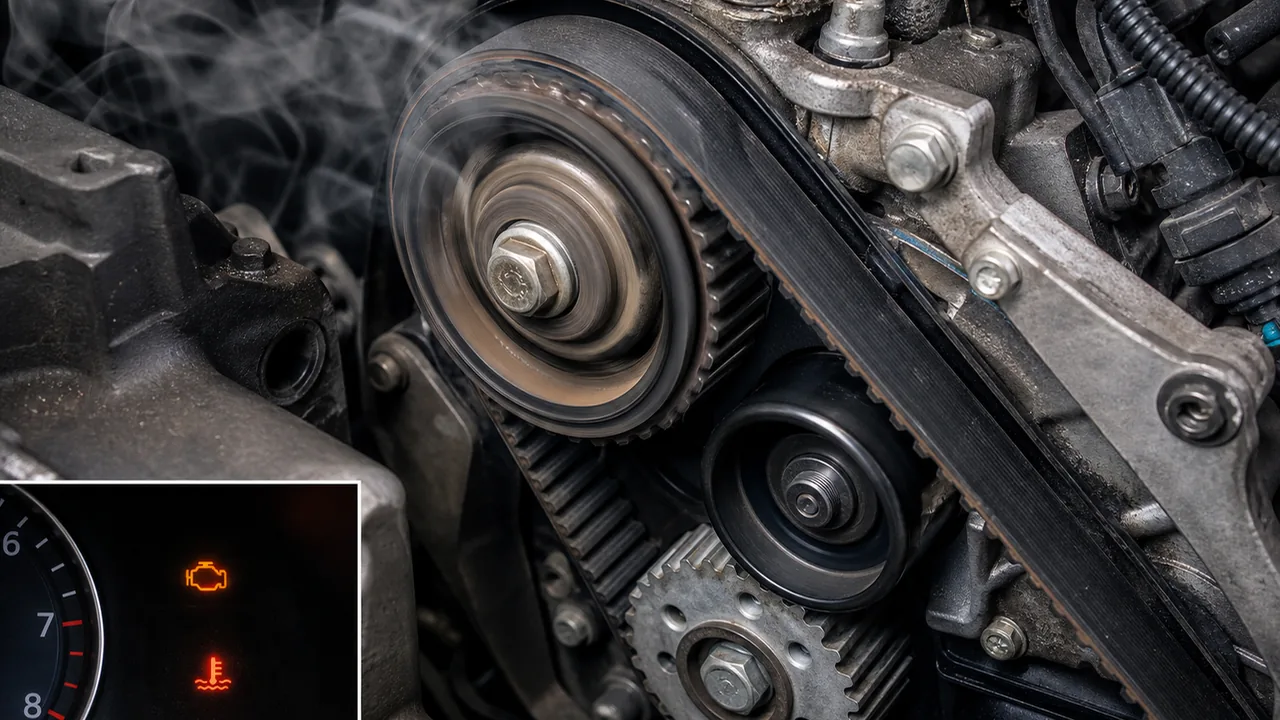
| Violent shake, loud belt squeal, burning smell, smoke, overheating, battery light, temperature warning, or belt walking off a pulley | Accessory drive failure, slipping belt, seized accessory, loose pulley, charging problem, or cooling risk | Stop driving, shut the engine off, and arrange inspection or towing if the belt path is unsafe |
| Hard shake only on startup, then smoother idle, with no warning lights or smells | Weak tensioner, loose mount, brief accessory drag, belt seating issue, or early misfire | Limit driving and schedule a belt-drive and startup vibration inspection soon |
| Mild, brief movement after repair with no noises, no lights, and no visible belt issue | Possible normal startup movement or minor mount wear, but recent work makes recheck worthwhile | Monitor briefly only after a safe engine-off inspection shows the belt is seated correctly |
- Stop driving now if the belt is squealing, smoking, fraying, or tracking toward the edge of a pulley.
- Stop driving now if the engine overheats, the battery warning light appears, or the temperature warning light appears.
- Do not run the engine with the hood open while placing hands, clothing, tools, or lights near moving belts.
- Return to the shop that performed the work if the symptom began immediately after the service.
Diagnostic order
- Verify the exact belt routing against service information, not memory or a generic diagram.
- Confirm the belt is the correct application and is fully seated in the pulley grooves.
- Inspect tensioner travel, tensioner stop position, and whether the tensioner moves smoothly instead of sticking or bouncing.
- Inspect idler pulleys, accessory pulleys, and crank pulley alignment for wobble, runout, damaged grooves, or bearing drag.
- Check recently disturbed brackets, fasteners, spacers, and accessory mounting points according to the vehicle service procedure.
- Spin accessible removed components by hand only when safely disassembled, checking for roughness or drag without forcing parts in place.
- Scan for stored, pending, and current diagnostic trouble codes, then compare them with live data and the exact startup symptom.
- Review misfire counters, idle control behavior, charging data, and sensor correlation information if the vibration is not explained by the belt drive.
- Verify timing only when timing belt, timing chain, cam, crank, or related front-engine work was part of the recent repair or the symptom suggests it.
Technician checks should include belt routing verification, tensioner travel, pulley runout, accessory bearing drag, fastener torque using service data, scan data, misfire counters, and timing verification when relevant. The order matters because belt-drive faults can mimic a rough-running engine.
Misfire codes, sensor correlation codes, charging system codes, or idle-related codes can point the technician toward engine management or timing checks. However, belt misrouting, a weak tensioner, an idler pulley problem, or a dragging accessory may not be monitored directly by the vehicle computer.
- A flashing check engine light with shaking should be treated as urgent because it can indicate active misfire.
- A battery warning light after belt work can point toward belt slip, alternator drive trouble, or charging system problems.
- A temperature warning light or overheating after belt work can mean the vehicle should not be driven until the belt drive and cooling operation are verified.
- Pending codes matter because a startup problem may not mature into a stored code immediately.
- No code does not rule out a belt, pulley, tensioner, harmonic balancer, accessory, or mount problem.
Parts that may be involved
| Serpentine belt | Wrong routing, poor seating, damaged ribs, or slipping can load the accessory drive unevenly | The belt is damaged, incorrect, contaminated, or cannot track correctly after routing is verified |
| Belt tensioner | A weak or sticking tensioner can allow belt slap, noise, and unstable accessory load at startup | Tensioner movement, position, or bearing condition fails inspection |
| Idler pulley | Bearing drag or wobble can shake the belt path and create noise | The pulley is rough, loose, misaligned, damaged, or visibly unstable |
| Alternator pulley or clutch pulley | A faulty pulley can create belt vibration, charging issues, or harsh startup load | The pulley function and alternator mounting are confirmed faulty |
| Air conditioning compressor clutch or other accessory | A dragging or seizing accessory can load the engine suddenly | Accessory drag is verified and belt-drive routing is correct |
| Harmonic balancer or crank pulley | A separated or wobbling damper can create engine vibration and belt tracking problems | Visual movement, pulley condition, and service inspection confirm the concern |
| Engine mounts | Weak mounts can amplify normal startup torque or make a small engine shake feel severe | The mount is torn, collapsed, oil-soaked, loose, or fails movement inspection |
| Ignition, fuel, air, or timing-related parts | A misfire, vacuum leak, sensor issue, or timing error can cause rough startup independent of the belt | Scan data, misfire counters, leak checks, or timing verification support it |
Do not replace the harmonic balancer, tensioner, mounts, or accessories from symptom wording alone. Confirm the failure with inspection because several faults can feel similar from the driver seat.
Say: The car started shaking hard on startup after the belt or pulley work. Please recheck the belt routing, belt seating, tensioner operation, pulley alignment, pulley wobble, accessory drag, and any fasteners or connectors disturbed during the repair.
- Tell the shop exactly which parts were replaced or removed.
- Mention whether the shake happens only on startup, continues at idle, or changes when accessories are switched on.
- Report belt squeal, burning smell, smoke, overheating, battery light, temperature warning, or check engine light.
- Ask whether they can verify the belt routing and pulley alignment against service information.
- Ask for scan results and any codes or misfire data if the vibration is not clearly belt-drive related.
- If the symptom began immediately after the repair, ask for a recheck before approving unrelated parts.
- If the belt is misrouted or not seated, the next step is correction and verification that it tracks properly.
- If the tensioner or idler is unstable, the next step is replacement of the confirmed failed component and belt condition review.
- If an accessory is dragging or seized, the next step is accessory-specific diagnosis before replacing related parts.
- If the harmonic balancer or crank pulley is wobbling, the next step is service-information-based inspection and repair planning.
- If scan data shows misfire or sensor correlation concerns, the next step is engine diagnosis rather than more belt parts.
- If timing work was involved, the next step is professional timing verification before more driving.
Ask for the failed part or inspection finding to be explained in plain terms: what was loose, what was misaligned, what was dragging, what code was present, or what test confirmed the issue.
FAQ
Can a wrong serpentine belt routing make a car shake on startup?
Yes. Wrong routing or a belt that is not seated correctly can load accessories unevenly, slip, squeal, or make the accessory drive unstable. The belt path should be checked against vehicle-specific service information.
Can a bad tensioner cause a hard startup shake?
Yes. A weak, sticking, or mispositioned tensioner can let the belt slap or lose control as the engine starts. It should be inspected with the belt-drive system, not guessed from noise alone.
Is it safe to drive if the car shakes after pulley work?
Do not keep driving if the shake is violent, the belt squeals, the battery or temperature warning light is on, the engine overheats, there is smoke or a burning smell, or the belt appears to be moving off a pulley.
Will a belt or pulley problem always turn on the check engine light?
No. Many mechanical belt-drive problems do not set a diagnostic trouble code. Codes can help if the problem is a misfire, charging issue, sensor correlation fault, or timing-related concern.
Could the shaking be an engine mount instead of the belt?
Yes. A worn engine mount can make startup movement feel severe, but after recent belt or pulley work the belt route, tensioner, pulley alignment, accessory drag, and loose hardware should be checked first.
When should timing be checked?
Timing should be checked when timing belt, timing chain, cam, crank, or related front-engine work was recently performed, or when scan data and symptoms point toward cam or crank relationship concerns.
Comments
Be the first to add a practical repair note or follow-up question.