

Common failure signs

If the AC clutch stops engaging, the most likely causes are a control fault, wiring issue, relay problem, or a failed clutch coil. On a 2010 Honda Fit, treat the symptom as a useful clue rather than proof of a bad compressor, and start by observing whether the A/C compressor clutch ever clicks or pulls in when A/C is selected, keeping hands clear of moving parts.
This symptom matters early because a warm cabin with a working blower can come from an electrical command problem just as easily as a mechanical fault. The safest first step is to separate what the driver can clearly see or hear from what still needs technician diagnosis, especially before anyone assumes the clutch, compressor, or refrigerant charge is the root cause.
- The clutch never clicks when A/C is selected: this leans toward a request, fuse, relay, wiring, sensor, or control-side issue rather than proving the compressor itself is seized.
- The pulley spins but the clutch face does not engage: this supports an A/C compressor clutch activation problem, but the exact electrical cause still needs to be verified.
- The clutch engages intermittently or only after a restart: this often points to an intermittent control signal, relay behavior, wiring fault, or a condition the PCM/ECM is allowing only part of the time.
- The blower works but cabin air stays warm: that confirms the HVAC system is responding to the driver, but not that the refrigerant circuit or clutch command is working correctly.
- Owner wording such as 'AC clutch not kicking on' or 'works after restart' is useful symptom evidence from forums and searches, but it is not proof of the failed part.
At this stage, symptom language should guide the next checks, not the repair decision. Exact electrical thresholds, pressure-related conclusions, and model-specific command logic should be verified with OEM service information and proper testing.
Before replacing it
If the AC clutch stops engaging, the most likely causes are a control fault, wiring issue, relay problem, or a failed clutch coil. The safe first move is to stop short of calling the compressor bad, confirm the symptom with the A/C switched on, and limit yourself to owner-safe visual checks before any deeper electrical or refrigerant diagnosis.
That boundary matters on a 2010 Honda Fit because an A/C compressor clutch that does not click in can be blocked upstream by the A/C fuse, A/C compressor relay, HVAC request signal, PCM/ECM command, or the refrigerant pressure sensor or switch. A no-engagement symptom alone does not prove an internal compressor failure, and it does not justify bypassing the circuit or adding refrigerant casually.
- Do not treat one fix as universal for every 2010 Honda Fit A/C clutch complaint.
- Do not state exact pressure, resistance, fuse, relay, pinout, or command thresholds unless they are verified from OEM service information.
- Do not present forum rewiring, jumper-wire tests, or clutch bypass attempts as recommended owner repairs.
- Do not move refrigerant recovery, evacuation, recharge, or compressor replacement into DIY territory without proper equipment and service data.
Owner wording such as "AC clutch not kicking on" can be useful for search precision, but it should stay symptom language, not a final diagnosis. The next section narrows repair choices only after the fault path has been separated into owner-safe checks versus technician-level confirmation.
Inspection steps
On a 2010 Honda Fit, a non-engaging AC clutch usually points to a control fault, wiring issue, relay problem, or failed clutch coil. The first pass should focus on the A/C fuse, A/C compressor relay, belt condition, and the refrigerant-pressure input before anyone assumes the compressor itself is bad.
Owner-safe checks first
- Confirm the A/C request is on and the blower is working normally.
- Check the A/C fuse and A/C compressor relay for a simple power-side fault.
- Look for a loose belt, obvious connector damage, or a disconnected plug at the compressor area.
- Note whether the clutch never clicks in at all or only works intermittently; that symptom split matters.
Technician-only checks next
- Verify the HVAC request signal and PCM/ECM command with scan data.
- Check the refrigerant-pressure sensor or switch logic before blaming the clutch.
- Test the clutch coil and compressor circuit with OEM service-manual conditions, not guesswork.
- Confirm whether a relay, wiring, or control issue is blocking engagement before replacing the compressor.
Do not treat a quiet clutch as proof of a failed compressor. Low refrigerant, a protective shutdown, or an electrical fault can stop engagement, and any refrigerant recovery, evacuation, or recharge should be handled with proper equipment.

If the AC clutch stops engaging, the most likely causes are a control fault, wiring issue, relay problem, or a failed clutch coil. On a 2010 Honda Fit, the fastest low-risk path is to confirm the A/C request is actually being made, then rule out simple power-delivery and visible hardware faults before suspecting the compressor itself.
- Start with the cabin command: set the A/C on, select a cooling mode, and confirm the blower works normally. If the HVAC request signal is not being created at the dash-control level, the A/C compressor clutch will never be asked to engage.
- Check the A/C fuse and A/C compressor relay first. A blown fuse, weak relay, or poor relay contact can interrupt clutch power without proving the compressor is bad.
- Inspect the compressor area with the engine off. Look for a damaged clutch connector, rubbed-through wiring, corrosion, or signs the harness has been pulled or heat-stressed near the front of the engine.
- Confirm the drive belt is present, correctly routed, and not obviously slipping or damaged. A belt problem can mimic an A/C compressor clutch fault or add noise that sends diagnosis in the wrong direction.
- Look for signs of a refrigerant-related shutdown rather than a dead clutch. If the system appears to request cooling but the clutch never comes on, the refrigerant pressure sensor or switch input may be preventing engagement. Do not jump to adding refrigerant or replacing the compressor from that symptom alone.
- If those checks pass, the next confirmation step is electrical testing: verify the clutch is receiving command, power, and ground when A/C is requested, then compare that with scan data for PCM/ECM command and refrigerant pressure input. That is the point where a failed clutch coil becomes a stronger conclusion instead of a guess.
Avoid hard conclusions without testing. Exact pressure values, clutch coil resistance, relay terminal behavior, and model-specific pinout checks should be verified against OEM service information for the 2010 Honda Fit.

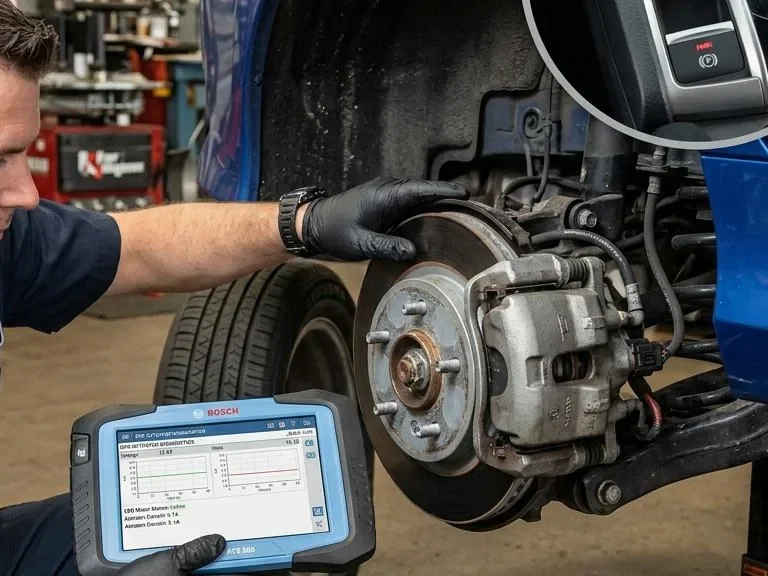
If the AC clutch stops engaging, the most likely causes are a control fault, wiring issue, relay problem, or a failed clutch coil. Before replacing parts on a 2010 Honda Fit, use the best OEM-capable scan tool available and check whether the HVAC request signal and PCM/ECM command appear when A/C is switched on, because a missing command can point you away from the compressor itself.
Codes and live data help narrow the fault, but they are support evidence, not a requirement for diagnosis. An HVAC-, PCM-, or A/C-related code can strengthen suspicion around a sensor input, control-side circuit, or command path. Just as important, no stored code does not rule out an A/C compressor relay problem, an A/C fuse issue, wiring damage, a clutch coil failure, low-pressure-related lockout, or a mechanical clutch problem.
- Look for live data that shows whether the system is seeing an A/C request from the cabin controls.
- Check whether scan data suggests the PCM/ECM is allowing or withholding clutch engagement.
- Treat any pressure-sensor or circuit-related code as a direction to verify, not as automatic proof that the compressor is bad.
- Prefer OEM-capable data over generic OBD-II alone, since generic tools may miss A/C-specific request and command information.
If scan data is limited or unclear, stay with owner-safe checks first and leave pinout testing, command verification, and refrigerant-system procedures to service information and technician-level diagnostics.
If the AC clutch stops engaging, the most likely causes are a control fault, wiring issue, relay problem, or a failed clutch coil. On a 2010 Honda Fit, the system can also block engagement on purpose when the PCM/ECM or a pressure input sees a condition that could protect the compressor.
- Confirm the symptom first. Turn the A/C on and verify whether the clutch never engages at all or tries briefly and then drops out. That split matters because a no-command problem points upstream, while a short-lived engage can point to protection logic or a weak electrical path.
- Check the command path next. Focus on the A/C request signal, PCM/ECM command, A/C fuse, and A/C compressor relay. If the relay or command path fails, the clutch may be healthy but never receive a valid engage signal.
- Verify power and ground at the clutch circuit with proper service-data-based testing. A damaged wire, poor ground, or heat-affected connector can mimic a failed compressor and lead to unnecessary parts replacement.
- Check the refrigerant pressure input with proper equipment. A low-charge condition, a faulty refrigerant pressure sensor or switch, or other out-of-range input can intentionally inhibit clutch engagement, so this branch must be ruled out before blaming the clutch.
- Only after the control path and pressure input check out should you evaluate the clutch coil itself, then move to the compressor for mechanical drag, internal damage, or a seized pulley/clutch assembly.
No DTC does not clear the system, and a stored code does not always name the failed part. If the early checks pass, the most sensible next confirmation step is a technician-level scan-data and circuit test that follows OEM service procedure before any compressor replacement.
If the A/C clutch on a 2010 Honda Fit will not engage, the safest owner-level checks are basic operating conditions, visible damage, and fuse labeling. These checks can rule out simple setup mistakes and obvious wiring faults, but they do not confirm a failed compressor or clutch coil.
- Confirm the A/C button is on, the blower is set to a working speed, and the engine is running. A request that is not actually present can look like a hardware failure.
- Listen for a brief clutch click from outside the engine bay only. Do not reach near the belt, pulley, or fan to check for movement.
- Inspect the A/C compressor connector, nearby wiring, and belt condition from a safe distance. Look for loose plugs, broken insulation, corrosion, or a belt that is visibly damaged or off-track.
- Check the owner-accessible fuse labeling against the vehicle documentation only. If a fuse is marked for the A/C or HVAC circuit, verify its condition without assuming the label alone proves the cause.
- If the clutch still never engages, note whether the blower works, whether the A/C light stays on, and whether the symptom changes after a restart. That context helps the next diagnostic step.
Do not jump wires, bypass pressure switches, open refrigerant lines, or work near rotating belts. Those steps can create safety risks and can also turn a straightforward diagnosis into a larger repair.
If the AC clutch stops engaging, the most likely causes are a control fault, wiring issue, relay problem, or a failed clutch coil. At this stage on a 2010 Honda Fit, the next step is not guesswork or compressor replacement, but OEM-guided testing that confirms whether the HVAC request signal is reaching the PCM/ECM command path and whether the clutch circuit can actually carry power and ground under the correct test conditions.
A technician should start with service information and scan data, not generic charts. That means confirming the A/C request is being seen, checking whether the PCM/ECM is allowing clutch operation, and reviewing any related fault codes or data flags that could explain an intentional no-engagement condition. No code does not automatically mean the circuit is healthy, so live data and commanded-state checks matter.
What a technician should verify
- A/C request input, blower and control-head status, and whether the PCM/ECM is issuing an A/C compressor command according to OEM service information.
- Power feed, fuse path, A/C compressor relay operation, control-side activation, and ground integrity at the relay and clutch circuit.
- Connector fit, corrosion, heat damage, rubbed-through wiring, and voltage drop under load rather than continuity-only checks.
- Clutch coil circuit condition using Honda service-manual procedures, pinouts, and pass/fail criteria for this exact vehicle, not universal resistance numbers.
- Whether the refrigerant pressure sensor or switch is preventing engagement, using scan data and service-manual test conditions rather than assumed pressure readings.
Any refrigerant recovery, evacuation, recharge, or leak testing should be done with proper equipment and certification where required. Avoid casual charging or venting, and avoid drawing conclusions from generic pressure targets or unverified online pinouts.
If the AC clutch stops engaging, the most likely causes are a control fault, wiring issue, relay problem, or a failed clutch coil. DTCs and live pressure-related data matter because they show whether the 2010 Honda Fit is refusing clutch engagement on purpose or whether the A/C compressor clutch is being commanded but cannot respond.
Pressure information changes the path early. If scan data or gauge readings suggest the refrigerant pressure sensor or switch is reporting an out-of-range condition, the system may withhold clutch operation to protect the A/C system. That does not prove the compressor is bad. It shifts attention toward refrigerant state, sensor plausibility, wiring integrity, and whether the pressure signal seen by the PCM/ECM matches reality. Exact pass or fail values should be verified in Honda service information before any conclusion.
- Clutch command present but no engagement: move toward clutch-side faults such as connector problems, poor ground, damaged wiring, excessive clutch air-gap, or a failed clutch coil.
- No clutch command present: move upstream toward HVAC request signal, A/C compressor relay control, pressure input, related sensor data, or PCM/ECM logic that is intentionally blocking engagement.
- Stored or pending DTCs help rank the next test, but the absence of a DTC does not rule out a real electrical or refrigerant-related fault.
Owner-safe takeaway: pressure readings and scan data are evidence, not guesses. Avoid casual charging, venting, or replacing the compressor before Honda service data confirms whether the fault is command-side or clutch-side.
If the AC clutch stops engaging, the most likely causes are a control fault, wiring issue, relay problem, or a failed clutch coil. On a 2010 Honda Fit, a silent A/C compressor clutch is not enough evidence to condemn the compressor itself, because the clutch only engages after the HVAC request signal, PCM/ECM command, A/C fuse, A/C compressor relay, wiring path, and refrigerant pressure sensor or switch all allow that request to go through.
This is where many misdiagnoses happen. Owners often describe the symptom as 'the compressor is not kicking on,' but that owner wording still leaves several failure paths open. A relay that does not close, a fuse issue, corroded wiring, a blocked command from the control side, or a clutch coil that no longer responds can all look like a bad compressor from outside the car. Earlier scan-data and pressure-related checks matter here because they help separate a mechanical compressor problem from an upstream electrical or system-protection issue.
- Compressor suspicion should rise only after the A/C fuse, A/C compressor relay, visible wiring condition, HVAC request signal, PCM/ECM command, and refrigerant pressure input have been checked in a structured order.
- A failed clutch coil can mimic full compressor failure because the pulley may turn while the clutch never pulls in.
- Replacing the compressor before confirming the failure path can create unnecessary cost and still leave the original no-engagement fault unresolved.
- If the diagnosis reaches clutch feed, command, or pressure-input testing beyond owner-safe checks, that is the point to follow OEM service information rather than general A/C assumptions.
Avoid casual parts swapping or refrigerant charging as a shortcut. For this symptom on a 2010 Honda Fit, better evidence means confirming why the A/C compressor clutch is not being allowed to engage before treating the compressor as the primary failure.
If the AC clutch stops engaging, the most likely causes are a control fault, wiring issue, relay problem, or a failed clutch coil. On a 2010 Honda Fit, the repair decision should come only after the fault is confirmed, because the fix may be small and electrical rather than a compressor replacement.
Before booking service, the owner should document when the A/C compressor clutch does and does not engage, whether the symptom changes with engine temperature or restart, and which visible checks were already done, such as the A/C fuse, A/C compressor relay swap, connector condition, and belt condition. That symptom record helps separate an intermittent command problem from a hard component failure.
- If relay, fuse, connector condition, or wiring damage is confirmed, the repair path is electrical and should stay focused on the affected circuit.
- If the HVAC request signal or PCM/ECM command is missing, the repair path is control-side diagnosis, not automatic compressor replacement.
- If pressure input is blocking clutch operation, refrigerant state and pressure-sensor or switch evaluation need technician confirmation before any parts decision.
- If the clutch coil or clutch assembly fails testing, clutch-related repair becomes the likely path.
- If the compressor itself is mechanically failed, noisy, or seized after earlier checks pass, then compressor replacement moves into scope.
Ask the shop for A/C clutch command testing, relay and circuit verification, pressure input review, and clutch coil evaluation. Verify exact Honda service-manual procedures and thresholds before any pinout, resistance, or pressure-based conclusion.
The practical next step is to hand over a short symptom log and request confirmation of command, circuit, pressure-input, and clutch-coil status first; once that result is clear, convert to the narrowest repair instead of approving a full compressor job on symptom alone.
If the AC clutch stops engaging, the most likely causes are a control fault, wiring issue, relay problem, or a failed clutch coil. For a 2010 Honda Fit, the best related guides are the ones that help you separate a no-cold-air complaint from a true A/C compressor clutch engagement fault before you assume the compressor is bad.
Read next
- Honda Fit A/C not blowing cold: Use this if the cabin stays warm or only cools inconsistently, especially when the A/C compressor clutch seems to engage sometimes. That helps separate airflow or temperature-control issues from a control-side clutch fault.
- How to test an A/C relay: This is the right follow-up when the clutch never clicks and the A/C fuse appears intact. Stay with owner-safe checks unless you have model-correct service information for terminal identification and test conditions.
- Low refrigerant symptoms: Read this when the HVAC request signal may be present but the system still refuses to engage the clutch. Treat pressure confirmation as a verify-first technician step, not a casual recharge decision.
- When the clutch or compressor actually fails: This supports the repair decision stage and helps avoid replacing the compressor when the clutch coil, wiring, or command side is the real problem.
- Which A/C codes matter: Useful when scan data shows climate-related or powertrain faults. No DTC does not rule out a fault, but relevant codes can narrow the diagnostic path faster.
If you move from owner checks to a shop visit, ask whether they verified the A/C fuse, A/C compressor relay, HVAC request signal, PCM/ECM command, refrigerant pressure sensor or switch, and clutch coil before recommending compressor replacement.

Comments
Be the first to add a practical repair note or follow-up question.