
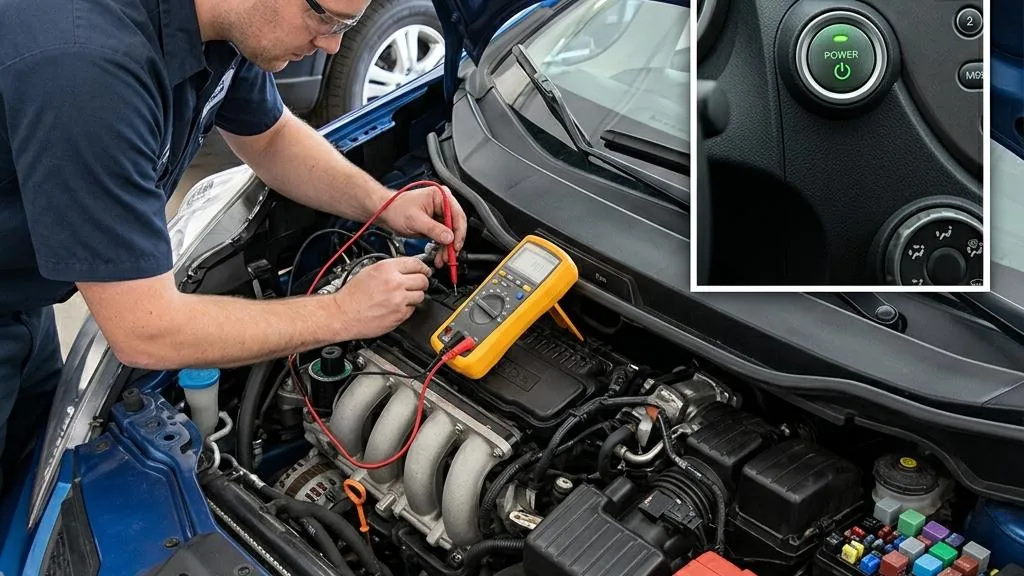
What this part does
The compressor clutch does not engage just because the dash AC button lights up. The system first needs an AC request, acceptable pressure input, operating conditions that allow compressor load, a working relay command, and an intact clutch power and ground path.
- The AC request starts at the cabin controls or defrost logic, depending on mode.
- Pressure protection helps prevent compressor damage when refrigerant state is unsafe or out of range.
- The PCM or control logic decides whether compressor load is allowed under current engine and temperature conditions.
- The relay switches the compressor clutch circuit when the control side is approved.
- The clutch coil, connector, thermal protector, ground path, pulley, and clutch plate must still be able to engage mechanically.
This is why a no-engagement complaint should be treated as a chain diagnosis. Replacing the compressor first can miss a relay control fault, while replacing the relay first can miss a pressure-protection or clutch-coil problem.
Common failure signs
The most useful first observation is whether the compressor clutch clicks and begins rotating when AC is requested. Warm air alone is too broad; the sound, fan behavior, and repeatability of the failure narrow the likely path.
- AC light or blower works, but the compressor never clicks: suspect command, relay output, clutch circuit, pressure protection, or wiring.
- No clutch click and no condenser or radiator fan response with AC request: inspect fan operation and control logic before focusing only on the compressor.
- Clutch clicks but air stays warm: the compressor may be engaging, but charge state, compressor performance, blend behavior, or condenser airflow still needs diagnosis.
- Intermittent engagement: heat-sensitive relay contacts, clutch air-gap wear, wiring movement, fan problems, or pressure changes may be involved.
- Works after tapping or swapping a same-type relay: a relay fault becomes plausible, but fuse feed and relay socket condition still need confirmation.
- Works after recharge and then fails again: suspect a refrigerant leak or improper charge process rather than assuming the compressor was the first failed part.
| Blower works, no clutch click | Blocked command path or open clutch circuit | Scan-tool command status plus relay output and clutch power/ground test |
| AC cools briefly then stops | Pressure, fan, heat-related clutch, or relay issue | Repeat test while monitoring pressure data, fan response, and command state |
| Fans do not run with AC request | Fan control, fan circuit, or inhibit condition | Fan command and circuit testing before compressor replacement |
| Clutch engages but vents stay warm | Refrigerant, airflow, compressor performance, or blend issue | Service pressure evaluation and temperature-door verification by procedure |
Before replacing it
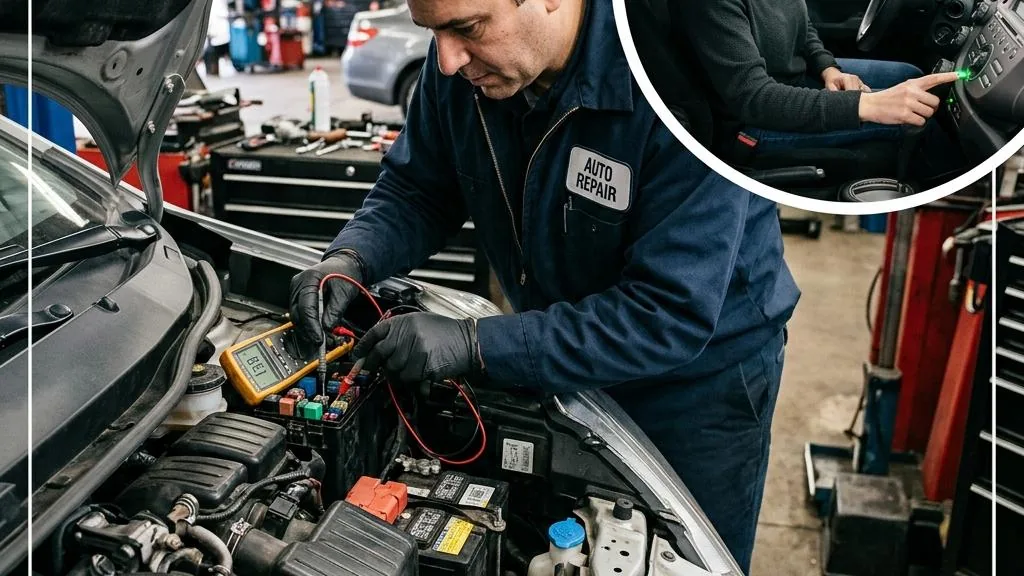
What system has power can mean
- Blower power means the cabin fan circuit can run; it does not prove compressor power.
- Control-panel illumination means the switch or panel has power; it does not prove PCM approval.
- An AC request light means the driver request may be recognized; it does not prove pressure or engine conditions allow engagement.
- Fuse power means supply exists at one point; it does not prove the relay output or ground path works under load.
- Relay output and clutch power must be checked at the correct point in the circuit by procedure.
- A good ground path matters as much as power because the clutch cannot engage through a weak or open return path.
Owner-safe first checks
- Set the fan on, request AC, and listen near the engine bay for a clutch click without placing hands near moving parts.
- Note whether air stays warm, gets briefly cool, or changes only while driving.
- Check the drive belt visually for obvious damage or abnormal pulley behavior with the engine off and safe.
- Use the fuse-box labels and owner's information to identify AC-related fuses or relays, but do not substitute parts unless the same type and rating are confirmed.
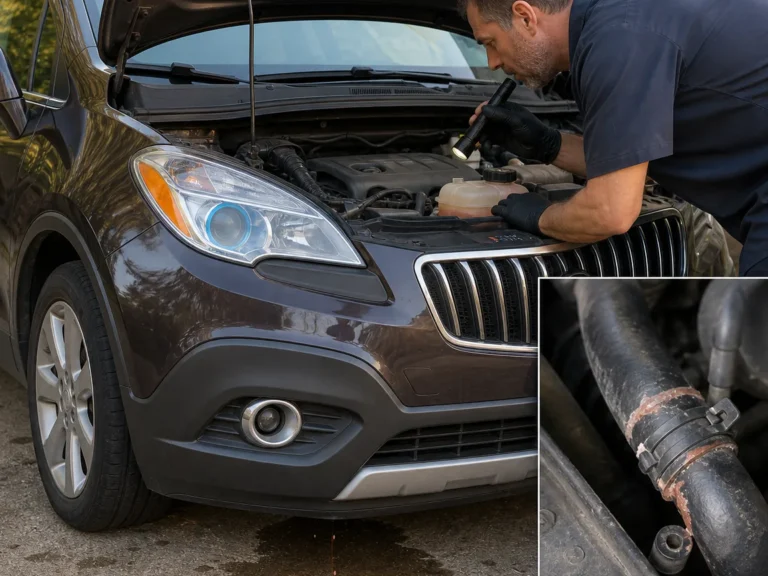
- Look for signs of refrigerant oil staining, damaged condenser area, unplugged connectors, or previous wiring repairs.
- If a shop says the computer is not grounding the circuit, treat that as a test result to verify, not an automatic PCM replacement diagnosis.
Do not vent refrigerant, keep adding refrigerant without pressure and leak verification, bypass the pressure switch, hardwire the compressor, or force the clutch to run. Those shortcuts can damage the compressor, hide the real fault, and create environmental or safety issues.
Inspection steps
If the AC clutch will not engage on a 2010 Honda Fit Sport, the fault usually means the compressor-command chain is being blocked even though the cabin controls still have power. The likely cause family is control permission, pressure protection, relay output, wiring integrity, fan operation, or the clutch circuit itself, so first verify whether the compressor is actually being commanded. This is an investigate-soon issue, and it becomes urgent if there is belt noise, burning smell, fan failure, refrigerant oil staining, or a seized pulley sign.
What has power can mean several different things: the blower motor may run, the AC button may illuminate, a fuse may have supply power, or the relay may have one powered side. None of those alone proves that the PCM has approved compressor operation or that power and ground are reaching the clutch under load.
Refrigerant recovery, pressure testing, evacuation, and charging should follow official service procedures and local environmental rules. Do not bypass pressure protection or force the compressor to run as a consumer test.

- Low refrigerant or pressure protection: a leak or incorrect refrigerant state can prevent compressor command to protect the compressor from running without proper oil circulation. Proof requires proper AC service equipment and leak evaluation, not a guess from the dash controls.
- Failed relay, weak relay contact, or fuse-feed issue: the clutch relay can have supply power yet fail to pass current reliably. Proof comes from relay testing, socket inspection, and checking whether the commanded output reaches the clutch circuit.
- Clutch coil, connector, thermal protector, or clutch clearance fault: the relay may command engagement while the clutch cannot pull in. Proof comes from circuit continuity, coil and thermal-protector testing, connector inspection, and mechanical clutch inspection by procedure.
- Bad ground or wiring fault: corrosion, rubbed insulation, collision repair, or previous rewiring can interrupt the control or load side. Proof requires voltage-drop and continuity testing on the correct circuit path.
- Pressure switch or sensor input issue: a false pressure signal can make the system act as if refrigerant state is unsafe. Proof requires pressure verification and switch or sensor circuit testing, not sensor replacement by assumption.
- Fan or overheating protection: if fans are inoperative or engine operating conditions are outside the allowed range, the system may inhibit compressor operation. Proof comes from fan command tests and engine-data checks.
- Control switch, evaporator temperature input, under-dash control path, or PCM request issue: these are possible but should be considered after basic power, pressure, relay, fan, and clutch checks are complete.
- Mechanical compressor or clutch failure: a seized pulley, noisy bearing, damaged clutch face, or internal compressor fault can be serious, but it should be confirmed before replacing the compressor assembly.
The unresolved owner question is often whether bypassing the computer would make the AC cheaper to repair. It may make the clutch move, but it also removes part of the logic that protects the compressor from unsafe pressure, engine load, temperature, and fan conditions. Correct repair means finding why the command is missing.
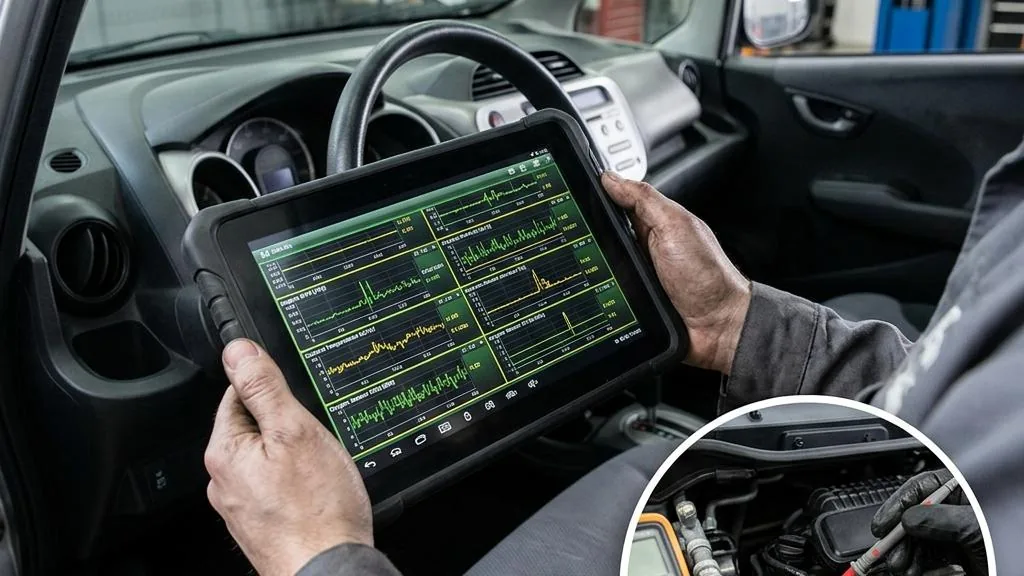
Scan data matters because the compressor can be denied for reasons that never appear as a simple check-engine code. A basic reader may report no fault, while enhanced data may show that the request is missing, pressure input is not accepted, or the clutch command is off.
- Verify the symptom: blower operation, AC request, clutch click, fan response, and vent temperature behavior.
- Check for stored powertrain information and live data where the scan tool supports model-specific AC data.
- Confirm the AC request reaches the control system before testing only the compressor side.
- Confirm whether the clutch command is being sent when the system is allowed to run.
- Inspect fuses, relay function, relay socket tension, and visible wiring condition using service information.
- Evaluate refrigerant state and leak evidence with proper recovery, pressure, and leak-test equipment.
- Test relay output to the clutch circuit and confirm the clutch has the required power and ground under command.
- Inspect the clutch coil, thermal protector, clutch clearance, pulley bearing, and connector before condemning the compressor.
- If the command path points toward PCM or under-dash control logic, verify all inputs, connectors, grounds, and circuit continuity first.
Professional AC diagnosis may require certified refrigerant handling equipment. Electrical tests around rotating belts and fans should be performed with the correct probes, service information, and safety controls.
- Use the existing part marking and vehicle details to confirm compatibility rather than relying only on a listing title.
- For compressors, check that ports are capped and the clutch, pulley, and connector are not visibly damaged.
- For relays or switches, match the exact type and avoid installing unknown substitutes into a diagnostic problem.
- For control modules, require stronger proof than one missing command; module replacement should be the last confirmed path, not the first purchase.
Any opened AC component still requires proper evacuation, leak testing, and recharge procedure after installation. A used part does not remove the need to verify the circuit and refrigerant side.
A 2010 Honda Fit Sport AC clutch that will not engage even with visible electrical power usually means the compressor is not receiving approved command through the full control chain. Common causes include low refrigerant protection, a relay or fuse-feed problem, bad clutch wiring or ground, pressure switch input faults, fan-related inhibit, or a failed clutch coil.
A generic OBD reader may not show the reason. A capable scan tool and AC service equipment can confirm whether the AC request is seen, whether clutch command is allowed, whether pressure input is believable, and whether the relay output reaches the clutch circuit.
Replacement notes
The repair decision is less about the most common part and more about the confirmed missing event. If the relay is never commanded, the clutch may be innocent. If the relay is commanded but output never reaches the clutch, wiring or relay load-side faults rise. If power and ground reach the clutch but it does not pull in, the clutch assembly becomes more suspect.
| Relay fails testing or output is unstable | Replace the correct relay and inspect the socket | Confirm consistent clutch command and cooling operation without tapping or heat-related dropout |
| Low refrigerant or leak evidence is confirmed | Repair the leak, evacuate, and recharge by proper procedure | Confirm no leak return and that compressor command is restored under normal request |
| Power and ground reach clutch but it will not engage | Inspect clutch coil, thermal protector, pulley, and clutch assembly | Confirm engagement and no abnormal noise or drag after repair |
| Fan operation is missing or engine protection is active | Diagnose fan circuit, fan motor, relay, or control cause | Confirm fans respond correctly and AC is no longer inhibited |
| Control module ground command appears missing | Prove inputs, wiring, connectors, grounds, and service-manual circuit path first | Replace a module only after the upstream circuit and inputs have been verified |
- Stop using the AC and seek diagnosis if the belt area makes noise, the pulley appears to drag, or there is a burning smell.
- Treat fan failure as more urgent because condenser airflow and engine cooling support can affect AC operation and engine temperature.
- Do not keep adding refrigerant if the system engages briefly and then stops again; leak and charge verification come first.
- Document whether the blower works, AC light behavior, clutch click, fan response, and whether the failure is intermittent before requesting diagnosis.
If the blower and AC light work but the compressor never engages, use that symptom record to guide a professional AC diagnostic path before buying a compressor, pressure switch, relay, or control module. The most useful test is the one that identifies which link in the command chain is missing.
FAQ
Can the AC have power and still not engage?
Yes. The blower, AC button, or fuse feed can have power while the compressor clutch is still blocked by pressure protection, missing relay command, wiring faults, fan logic, or a failed clutch circuit.
Will a generic OBD scanner show why the compressor is not engaging?
Not always. A generic scanner may show no engine code even when enhanced HVAC or PCM data would show AC request status, pressure input, clutch command, fan request, or an inhibit condition.
Should I bypass the pressure switch or hardwire the clutch?
No. Pressure protection and control logic help prevent compressor damage and unsafe operation. Bypassing them can run the compressor when refrigerant state, lubrication, fan support, or engine conditions are not safe.
Is low refrigerant always the reason the clutch will not engage?
No. Low refrigerant or a leak is common enough to check, but the same symptom can come from relay faults, wiring opens, bad grounds, fan issues, pressure input faults, or clutch failure.
Does a missing PCM ground command mean the computer is bad?
Not by itself. A missing command can be the result of pressure input, temperature input, fan logic, wiring, connector, or request-side problems. Module replacement should come only after the service-manual circuit path is verified.
What should be checked before replacing the compressor?
Confirm refrigerant state, leak status, relay command, relay output, clutch power and ground, connector condition, fan operation, clutch coil or thermal protector condition, and scan-tool command data where available.

Comments
Be the first to add a practical repair note or follow-up question.