
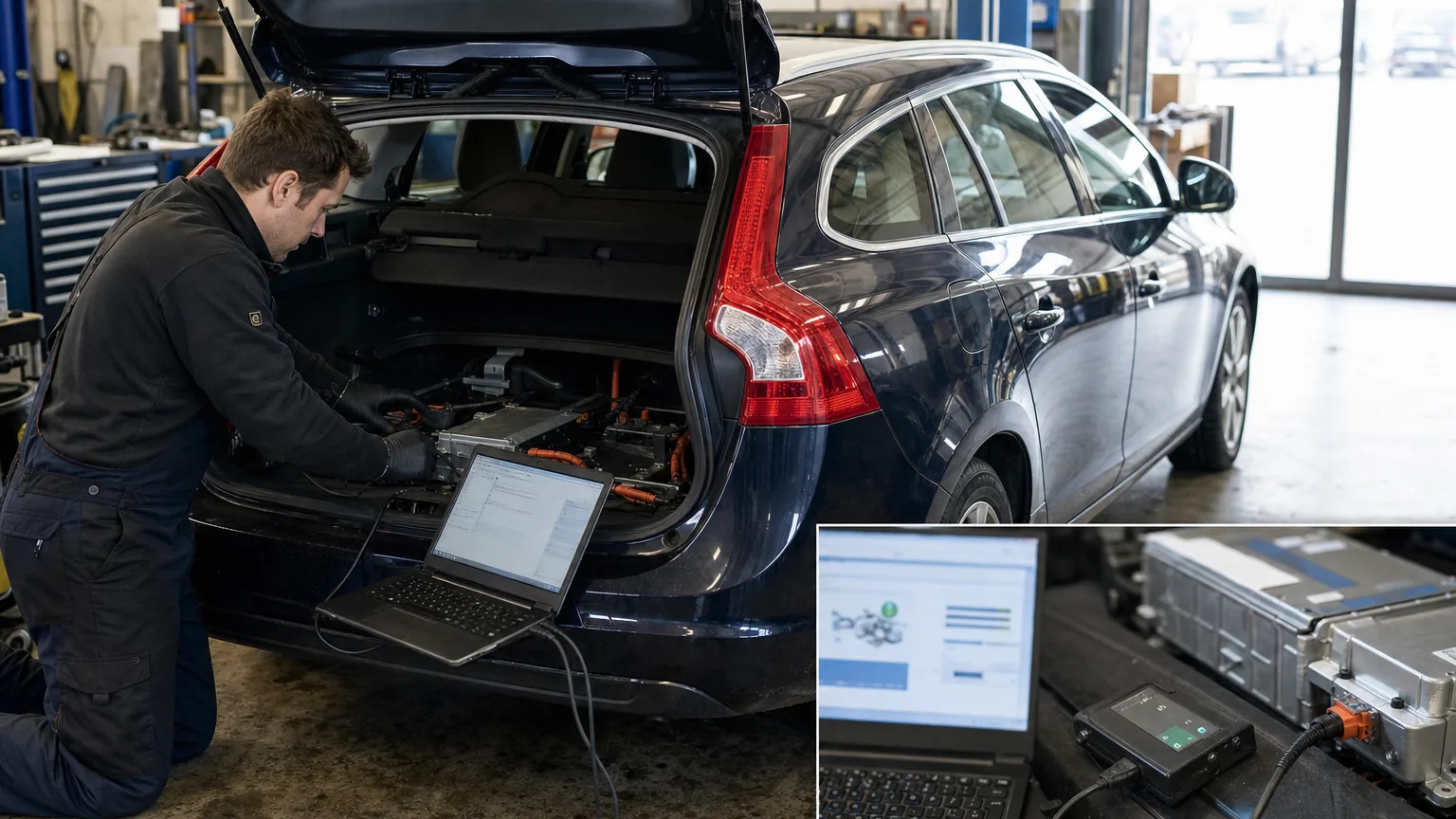
What this part does
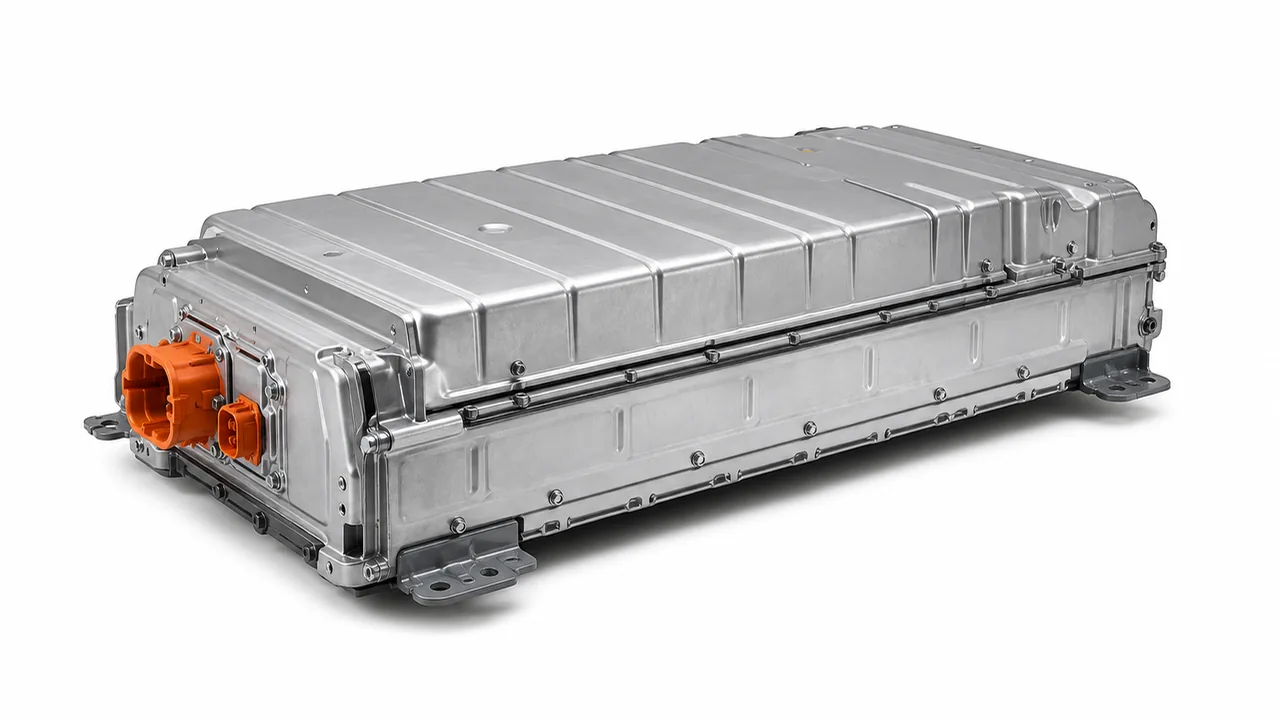
Coding or initialization may be needed when the vehicle must be told that a replacement battery, battery module, sensor, or related control unit is present and compatible. In cautious terms, the process can involve configuration data, learned values, software status, sensor interpretation, and communication checks between modules.
- Tracks battery-related operating information used by the hybrid system.
- Helps other modules decide whether charging and hybrid drive functions are available.
- Stores or uses learned values that may need confirmation after certain replacements.
- Communicates with networked modules such as central, engine, charging, and hybrid control systems.
Common failure signs
- Hybrid system warning or battery warning after the replacement.
- Plug-in charging fault, interrupted charging, or charging unavailable message.
- Hybrid mode unavailable, reduced propulsion, limp mode, or limited power.
- No-start behavior, start-stop issues, or repeated shutdown warnings.
- Recurring battery messages that return after codes are cleared.
- Multiple module communication faults after recent battery disconnection or replacement.
A recurring warning after clearing codes usually means the underlying condition is still present, the repair procedure was incomplete, or the vehicle has not accepted the replacement as valid.
Before replacing it
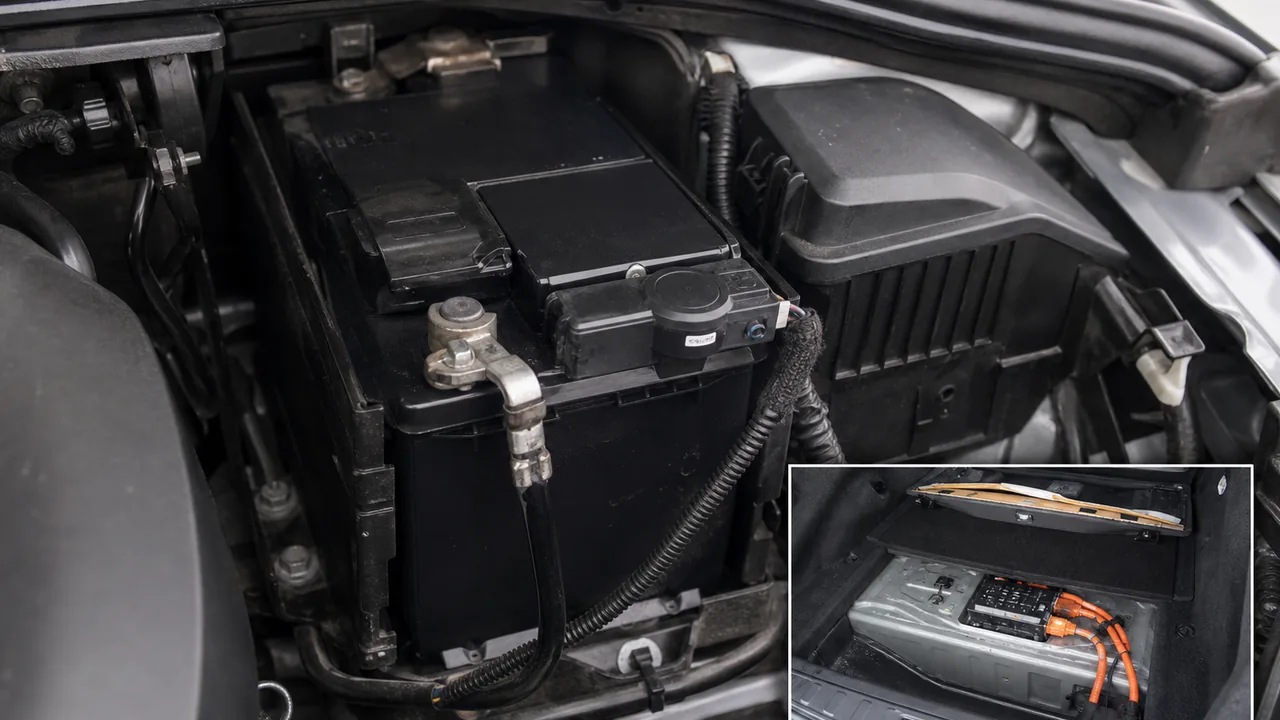
| 12-volt battery | Low voltage or disconnection can trigger misleading module faults. | Battery condition, terminal security, grounds, stored DTCs, and freeze-frame context. |
| High-voltage battery pack | The hybrid system may need configuration, safety checks, or learned-value confirmation. | OEM service procedure, compatible diagnostics, battery data, and post-repair scan. |
| Battery module or sensor | The vehicle may need correct identification, calibration, or data consistency checks. | Part compatibility, sensor data, wiring, and BECM communication. |
| Battery control hardware | Module replacement can require software, configuration, or network matching. | Software level, coding status, and all-module communication. |
Inspection steps
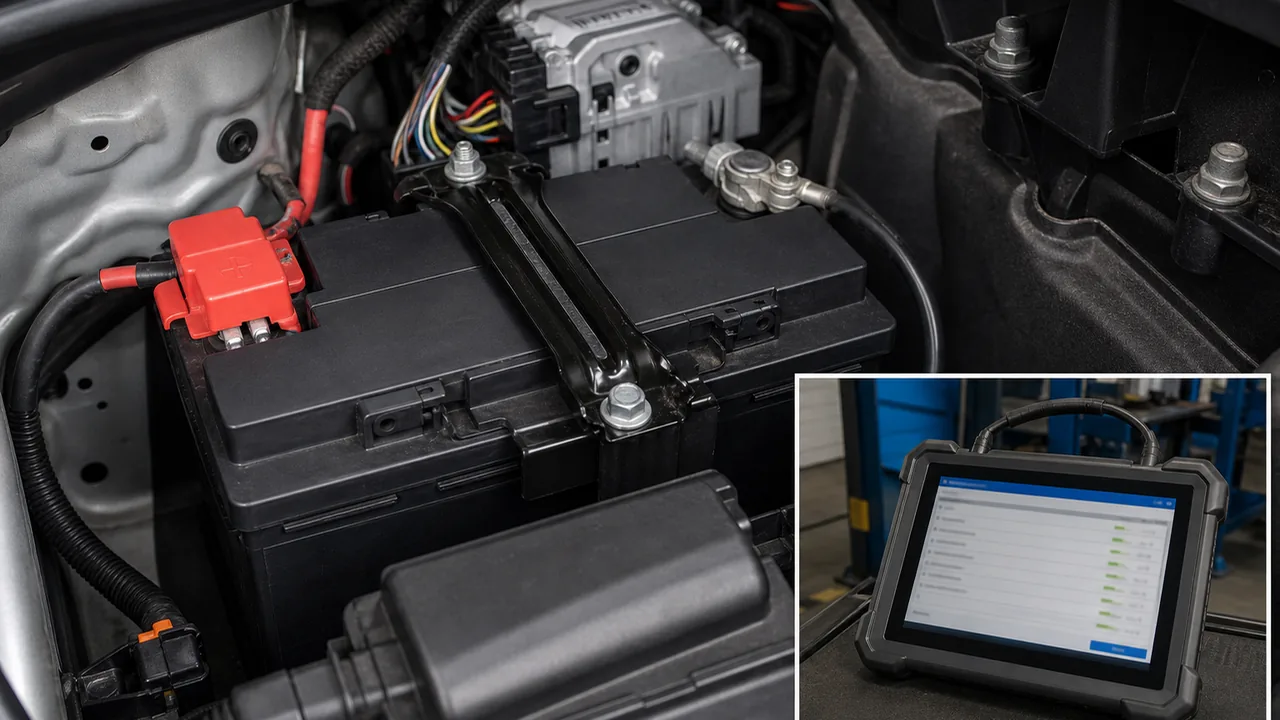
- Start with the full vehicle scan, not the part counter.
- Separate current faults from history faults and low-voltage artifacts.
- Compare BECM data with charging-system, central electronics, engine, and communication-module data.
- Confirm tool capability before promising coding; aftermarket scan-tool access varies by tool, subscription, and region.
A used BECM or battery-related module should not be treated as a plug-and-play cure unless the repair information, tooling, and vehicle data support that path.
- Investigate soon: amber warning, recurring battery message, hybrid mode unavailable, or charge behavior that changed after service.
- Urgent: red warning, high-voltage alert, repeated shutdown, overheating sign, charging fault that returns immediately, or reduced propulsion in traffic.
- Tow or avoid charging when the vehicle gives a stop-driving instruction or behaves unpredictably after the repair.
This is usually less expensive than replacing parts blindly. Diagnostic time, software access, and coding capability are part of the repair expectation, especially when a battery replacement has already happened and the vehicle still does not behave normally.
Replacement notes
This is why clearing codes is not enough. Clearing a code removes a stored message; it does not necessarily teach the vehicle about a replacement part, complete a calibration, correct a software mismatch, or repair a low-voltage or communication fault.
- Incorrect or incompatible replacement battery or module.
- Weak, discharged, or poorly connected 12-volt battery after service.
- Loose ground, disturbed connector, or wiring fault near the repaired area.
- Initialization, adaptation, coding, or software step not completed.
- Outdated software or configuration mismatch after module or battery work.
- Communication fault between BECM and related vehicle modules.
- Battery sensor data that does not match expected operating behavior.
- High-voltage interlock or safety-chain issue requiring qualified inspection.
- Actual BECM fault, confirmed only after supply, wiring, software, and compatibility checks.
FAQ
Does a 2014 Volvo V60 Plug-In always need BECM coding after battery replacement?
No. Some battery-related repairs may require coding, initialization, calibration, or software work, but it is not guaranteed for every battery replacement. The exact battery or module replaced and the OEM procedure determine the requirement.
Can a weak 12-volt battery trigger BECM faults?
Yes, a weak or disconnected 12-volt battery can create misleading module faults in many modern vehicles. Volvo-specific conclusions still require an all-module scan, low-voltage checks, and freeze-frame review.
Can a generic scanner perform BECM coding?
Usually not reliably. Generic OBD tools may read basic powertrain faults, but BECM coding or software procedures require Volvo-compatible diagnostic capability, proper access, and the correct service information.
Does clearing BECM codes complete the repair?
No. Clearing codes only removes stored messages. If the vehicle needs initialization, calibration, software reload, configuration correction, or a wiring repair, the fault can return.




Comments
Be the first to add a practical repair note or follow-up question.