

What this part does

The automatic transmission in a 2012 RAV4 depends on ATF to transfer hydraulic force, lubricate gears and bearings, support the torque converter, and help the valve body and clutch elements operate consistently. When fluid condition, level, or specification is wrong, the transmission may shift poorly even when no hard part has failed.
- Lubricates moving transmission components.
- Supports hydraulic pressure for shift control.
- Helps carry heat away from working surfaces.
- Keeps friction behavior predictable for clutch engagement.
- Carries fine wear material toward the pan and filtration path.
Because ATF affects both lubrication and shift control, a service decision should not be based on color alone. Odor, level, service history, scan data, leaks, and shift behavior all matter.
Common failure signs
Delayed engagement, harsh shifts, slipping, shudder, vibration under load, burnt odor, visible leakage, and transmission warning signs can indicate low fluid, degraded fluid, incorrect prior fluid, hydraulic control trouble, electronic control trouble, or internal wear. The risk frame changes when drivability is affected.
- Delayed engagement after shifting into Drive or Reverse.
- Harsh, flared, or inconsistent shifts.
- Engine speed rising without matching vehicle response.
- Shudder or vibration that appears during load or shift events.
- Burnt odor from the fluid or the area around the transmission.
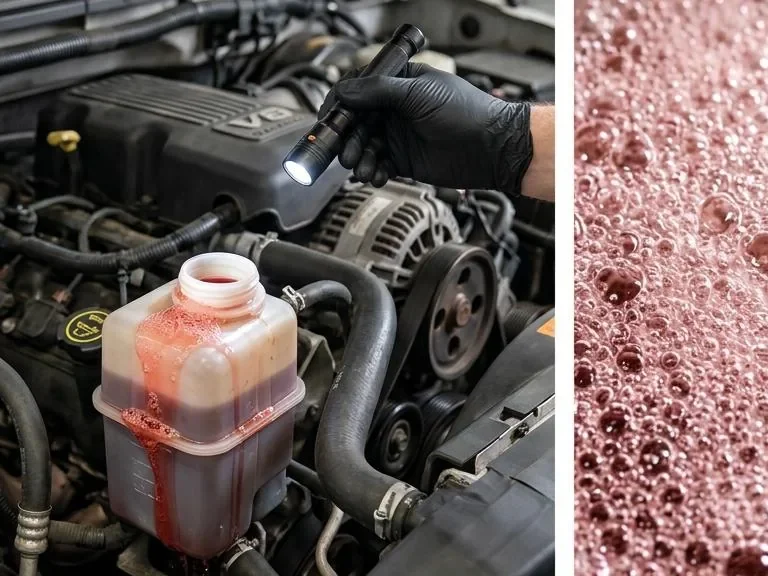
- Red, brown, or dark fluid spots under the vehicle.
- Check engine, transmission, or traction-related warnings that appear with shift complaints.
Stop driving and arrange inspection if the RAV4 slips badly, will not engage a gear normally, leaks heavily, overheats, or shows warning lights with abnormal shifting.
Before replacing it
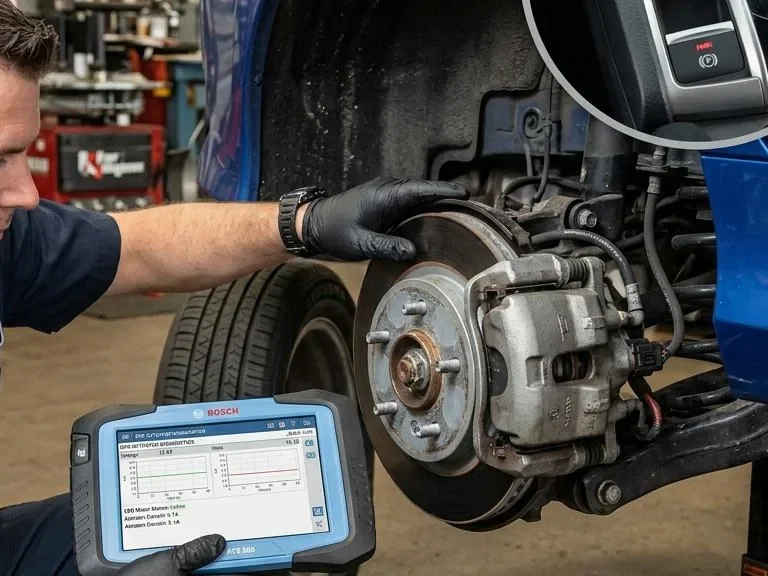
If a warning light is present, scan the vehicle first and record all current, pending, and history codes before clearing anything. A code does not automatically condemn the transmission, but it gives the technician a direction that fluid color cannot provide.
- Scan all relevant modules, not only the engine control module.
- Record freeze-frame or fault context when available.
- Check whether the code returns after a road test.
- Inspect wiring, connectors, leaks, fluid level, and fluid condition before recommending parts.
- Use OEM repair information for diagnostic flow and service procedure confirmation.
Do not approve an ATF change as the only response to a transmission code unless the diagnosis supports it. Fluid service is maintenance or a confirmed repair step, not a code-clearing strategy.
A good inspection starts with evidence the owner can gather: records, fluid appearance if safely checkable, odor, parking-spot leaks, and a clear description of shift behavior. The shop then verifies the service path with scan data, road test findings, leak inspection, fluid level, and OEM repair information.
- Do not mix generic ATF recommendations with Toyota-specific fluid requirements.
- Do not assume a flush is safer than a drain-and-fill.
- Do not ignore a leak just because the vehicle still drives.
- Do not clear codes before recording them.
- Do not use fluid color alone as proof that the transmission is failing.
Inspection steps
At 46,000 miles, a 2012 Toyota RAV4 automatic transmission fluid service usually means reviewing use, condition, service history, leaks, symptoms, and warning lights rather than changing ATF by mileage alone. The likely first check is maintenance-schedule context and fluid condition, while any delayed engagement, harsh shift, slipping, shudder, burnt odor, leak, or DTC moves the job from maintenance to diagnosis. With no symptoms or codes, this is usually an inspect-soon maintenance decision; with slipping, warning lights, or severe leaks, it becomes urgent.
First action: check the owner manual or Toyota maintenance information for the exact vehicle configuration, then compare that guidance with the service records, current fluid condition, and how the RAV4 is driven.
- Yes, service may be reasonable if the vehicle sees severe use, has unknown ATF history, shows degraded fluid condition, or has confirmed maintenance guidance calling for service.
- Maybe, inspect first if the fluid has darkened but there is no burnt odor, no overheating evidence, no codes, and no drivability complaint.
- Do not treat fluid service as the fix if the RAV4 has slipping, harsh shifts, shudder, delayed engagement, warning lights, or stored transmission-related codes.

At 46,000 miles, the schedule question is not only mileage. A RAV4 used gently with known records and no symptoms may be a good candidate for inspection and continued monitoring. A RAV4 used in harder conditions, or one with uncertain records, deserves a more careful fluid and leak evaluation before the owner decides to wait.
| Finding | What it means | Best next step |
|---|---|---|
| Known records, normal shifting, no leaks | Mileage alone may not justify immediate service | Verify schedule guidance and inspect fluid condition |
| Unknown ATF history | The owner lacks the evidence needed to safely defer | Inspect fluid, leaks, and service information before deciding |
| Severe-use driving | Fluid may age faster than a low-stress schedule implies | Compare use pattern with Toyota maintenance guidance |
| Dark fluid without burnt odor or symptoms | Color alone is not proof of failure | Inspect level, odor, debris, records, and scan results |
| Warning light, code, or shift complaint | The issue is diagnostic, not just maintenance | Scan and diagnose before replacing fluid |

| Rank | Cause family | Why it matters |
|---|---|---|
| 1 | Normal maintenance decision | The owner is deciding whether the fluid is due based on schedule, condition, and use, with no symptom proving a fault. |
| 2 | Severe-use fluid degradation | Heat, load, short trips, and stop-and-go operation can make inspection more important than the odometer alone suggests. |
| 3 | Leak or low fluid | Low level can affect shift quality and may cause damage if ignored, so leak source and level verification come before routine service. |
| 4 | Incorrect prior fluid or poor service history | Wrong fluid or undocumented service can create shift complaints and makes OEM specification confirmation important. |
| 5 | Internal wear or contamination | Debris, burnt odor, slipping, or repeated symptoms after correct service may point beyond maintenance. |
| 6 | Electronic, solenoid, or control issue | Codes or scan-data abnormalities can mimic fluid problems and require diagnosis before parts or fluid replacement. |
The unresolved owner question behind a low-mileage RAV4 with dark fluid is whether the fluid appearance is an early warning or simply a reason to inspect. Without symptoms, codes, burnt odor, overheating evidence, or debris confirmation, the correct answer is cautious inspection and documentation.
- Write down when the fluid was last changed, if known.
- Note how the RAV4 is used: short trips, heat, hills, towing, cargo, or stop-and-go operation.
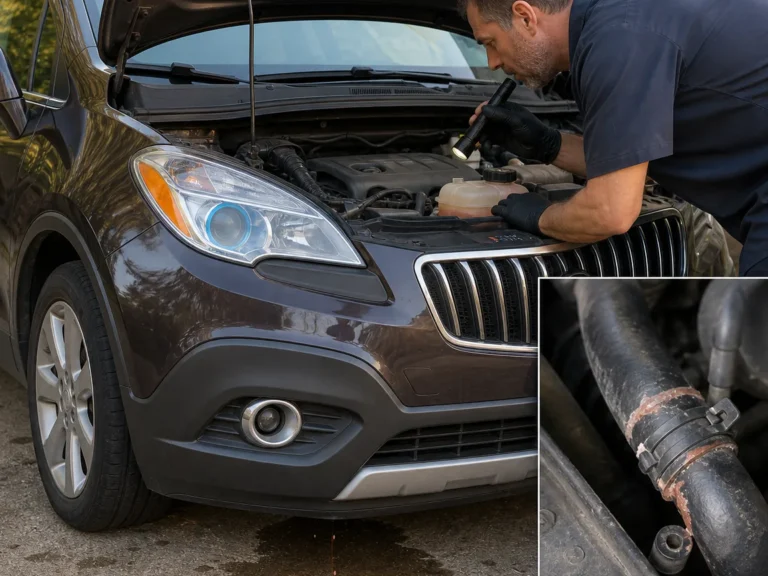
- Look under the vehicle after parking for fresh fluid spots.
- Describe the shift concern clearly: when it happens, hot or cold, light throttle or load, and whether warning lights appear.
- Ask the shop to scan before service if any warning light or drivability symptom is present.
- Have the technician verify fluid level and procedure from OEM repair information before adding or draining fluid.
Owner-safe checks should stop at observation unless the owner has the correct tools, safety setup, and service information. Lifting the vehicle, checking temperature-sensitive level procedures, or opening the pan belongs with a qualified technician when the process is uncertain.
Most owners asking about ATF service at 46,000 miles are deciding on maintenance, not replacement. If the RAV4 has no slipping, no codes, no severe leaks, and no confirmed internal failure, used-part shopping is premature and can distract from the cheaper, safer inspection path.
- Buy used transmission parts only after a confirmed diagnosis.
- Match the vehicle configuration before comparing listings.
- Do not rely on seller claims without part identification and warranty terms.
- Treat a used unit as a repair plan, not a maintenance shortcut.
A trustworthy estimate should state what will be inspected, which Toyota-specified ATF will be used, what service method is planned, how the level will be verified, whether codes were scanned, and what the shop found before the owner approves additional work.
- Written record of mileage and date.
- Fluid specification and service method.
- Leak inspection result.
- Code scan result if any warning light or symptom exists.
- Road test notes when drivability is part of the complaint.
- Next review point based on Toyota maintenance information and vehicle use.
A low-pressure service path is inspection first, service when supported, and documentation afterward. That protects the owner from both needless fluid replacement and delayed diagnosis.
Replacement notes
| Service option | When it makes sense | Main caution |
|---|---|---|
| Inspection only | No symptoms, no codes, no leaks, uncertain schedule question | Document findings and set a review point instead of guessing |
| Drain-and-fill | Maintenance is due or fluid condition supports conservative replacement | Use correct Toyota-specified ATF and verify level by the correct procedure |
| Pan service where applicable | Debris inspection, gasket concern, or service information supports pan removal | Do not create leaks or disturb components without a reason |
| Fluid exchange | Only when the transmission is healthy enough and the procedure is appropriate | Do not use a machine flush as the default answer for symptoms or codes |
| Diagnosis before service | Warning lights, slipping, shudder, harsh shifts, or repeated complaints | Find the fault path before selling fluid as the repair |
After any service, the technician should verify normal engagement, normal shift feel, no leaks, proper level confirmation by the specified procedure, and a written service record. A road test and recheck are more useful than assuming the job is complete once new fluid is installed.
The safest wording for publication is that the RAV4 needs the Toyota-specified ATF for its exact transmission. Fluid quantity, drain method, fill method, level check, and temperature-sensitive verification can vary by configuration and procedure, so they should not be guessed from a generic internet guide.
- Confirm the exact fluid specification before opening the system.
- Use OEM repair information for fill, drain, and level-check procedures.
- Do not add universal ATF unless it is explicitly approved for the exact specification.
- Do not publish a fixed capacity or level-check method without licensed service data.
- Record the fluid brand, specification, service method, and mileage on the invoice.
Human review should verify the exact Toyota maintenance wording, ATF specification, fill quantity, drain location, and level-check method before publication or before a DIY owner attempts service.
If the RAV4 drives normally, start with records and a fluid/leak inspection. If it has symptoms, ask for diagnosis before service. If the shop recommends fluid replacement, have it confirm the Toyota-specified ATF, the service method, the level procedure, and the written record before the work is approved.
- Collect maintenance records and note whether ATF service is documented.
- Check for leaks and record any shift complaints.
- Scan warning lights before any fluid is changed.
- Confirm the exact Toyota fluid specification and procedure.
- Choose inspection, drain-and-fill, pan service, exchange, or diagnosis based on the evidence.
- Keep the invoice as the next maintenance reference.
FAQ
Is 46,000 miles too early to service the automatic transmission fluid on a 2012 Toyota RAV4?
Not necessarily. It can be reasonable to consider service if the RAV4 has severe-use history, unknown records, poor fluid condition, leaks, or shift concerns, but mileage alone should not be treated as a universal rule.
Does black transmission fluid mean the transmission is failing?
Not by itself. Dark fluid should trigger inspection, but odor, debris, level, leaks, scan data, overheating history, and drivability symptoms are more useful than color alone.
Should transmission codes be cleared before changing the fluid?
No. Codes should be recorded and diagnosed first. Clearing them before inspection can erase useful fault context and may lead to the wrong repair.
Is a flush the best service for this RAV4?
A flush should not be the default answer. A drain-and-fill or other service method may be more appropriate depending on condition, symptoms, service history, and OEM procedure guidance.
Can an owner check anything before calling a shop?
Yes. Check records, look for parking-spot leaks, note shift behavior, watch for warning lights, and describe any odor or drivability change. Leave level verification and procedure-specific work to a technician if the method is uncertain.

Comments
Be the first to add a practical repair note or follow-up question.