
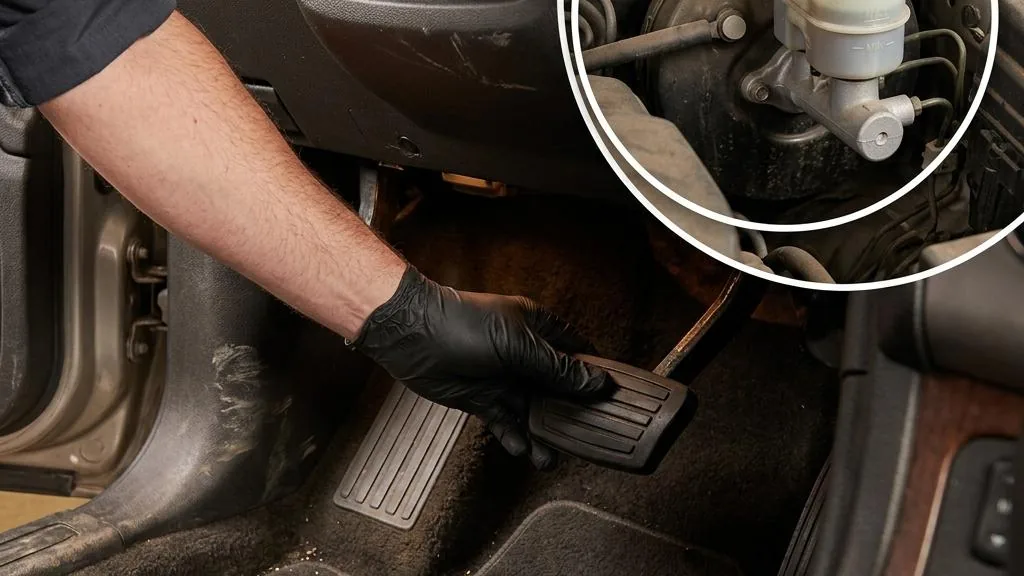
Common failure signs
A brake pedal that never firms up after bleeding usually means the hydraulic system is still compressing something, losing pressure somewhere, or not moving fluid evenly to the wheel brakes. In a healthy brake system, the master cylinder pushes brake fluid through sealed lines so the calipers can clamp consistently; brake fluid does not compress like air, so the pedal should feel stable once air is removed and the hydraulic circuit holds pressure.
Soft, low, spongy, and sinking pedal language should be treated as the same safety complaint until testing separates the cause. A pedal that pumps up and then fades can fit trapped air, a leak that keeps introducing air, hose expansion, caliper movement problems, or internal master cylinder bypass. A pedal that slowly sinks while held can point more strongly toward pressure loss, but it still needs confirmation because external leaks, internal bypass, and trapped air can overlap in how they feel to the driver.
- Recent caliper, hose, master cylinder, ABS, or line work raises the chance of trapped air or an incomplete bleed path.
- Low fluid, fresh wetness, or fluid loss shifts the diagnosis toward an external leak that may keep reintroducing air.
- A brake warning lamp or ABS light means codes and scan-tool data may be needed before the bleed result can be judged.
- If the pedal remains uncertain after bleeding, the correct next step is owner-safe inspection first, then technician isolation of the hydraulic circuit before repair.
Before replacing it
A brake pedal that will not feel firm after bleeding on a 2008 Saturn Outlook usually points to trapped air, a master cylinder bypass, or another hydraulic fault that is still preventing pressure from holding. The safest next step is to keep the vehicle out of service and check for fluid loss, visible leaks, hose expansion, and any missed bleed point before assuming the job is done. Ranked by likelihood, trapped air comes first, then a leak or low fluid, then master cylinder bypass, hose or caliper issues, and finally an ABS hydraulic problem; an owner can confirm leaks and fluid level, but a technician usually has to isolate the circuit and prove pressure retention.
- Most likely: trapped air still in the hydraulic circuit.
- Next: an external leak or fluid loss that keeps reintroducing air.
- Then: master cylinder bypass, hose expansion, caliper or bleed-point issues, or an ABS hydraulic problem.
On a 2008 Saturn Outlook, a brake or ABS warning light changes the diagnosis, but it does not prove the failed part; a soft pedal after bleeding still points first to trapped air or another hydraulic fault, and the vehicle should not be treated as road-ready until the cause is confirmed.
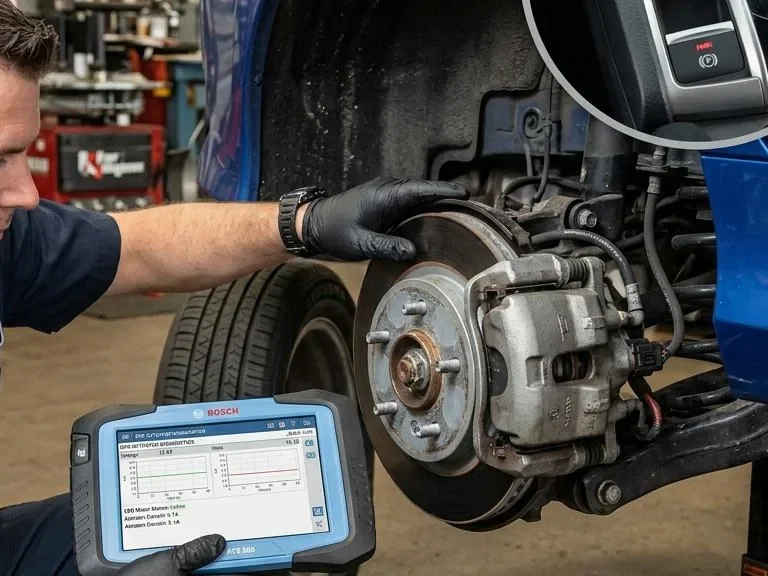
Stored DTCs help narrow the branch, not replace testing. Brake or ABS codes can point you toward wheel-speed input, pump or valve control, pressure-control behavior, or a circuit fault in the ABS hydraulic modulator, but they do not by themselves prove that the master cylinder, caliper, hose, or module is the root cause.
What the codes change
- If the brake warning lamp is on, verify fluid level and visible leaks first, then check for any code pattern that matches the symptom.
- If ABS codes are present, a scan tool may be needed to read live data and confirm whether the system is seeing wheel-speed or hydraulic control faults.
- A scan-tool bleed may be required after certain repairs only when the OEM procedure calls for it, especially if the ABS unit has trapped air that a normal manual bleed does not clear.
- Do not over-read a code as a direct part verdict; use it to guide the next confirmation test, not to justify replacing parts early.
If the pedal is still soft and either warning light stays on, the Outlook should be treated as a brake-system diagnosis, not a simple bleed repeat. At that point, the next safe step is technician verification with the correct scan data, bleed procedure, and pressure checks.
If braking feel is uncertain, stop driving and book a brake diagnosis or inspection request instead of continuing road testing.
A soft pedal after bleeding on a 2008 Saturn Outlook is still a stop-driving brake concern until the hydraulic fault is isolated; if the pedal never firms up, treat the system as unsafe and follow the branch that matches the symptom before replacing parts.
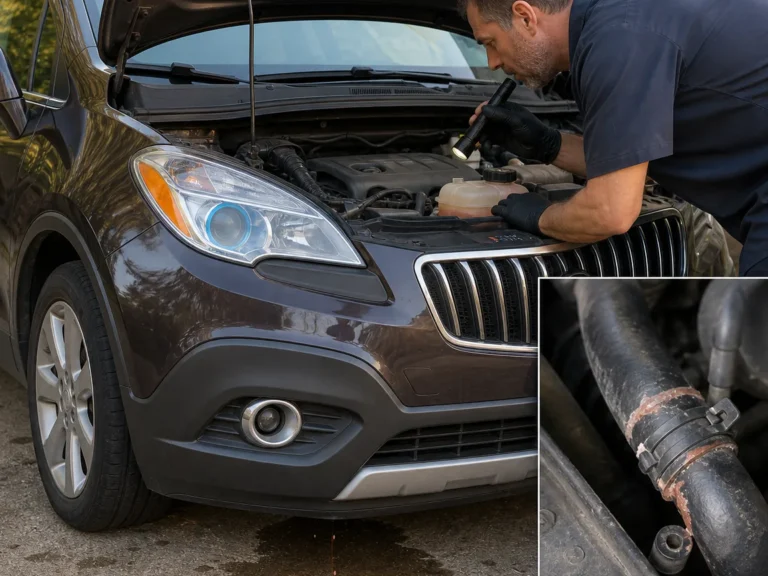
- If the fluid is low or any wetness is visible, chase the leak first. Inspect the master cylinder, lines, hoses, calipers, and bleeder points before assuming the bleed was the problem.
- If the fluid level is stable but the pedal sinks under steady pressure, suspect trapped air or internal bypass. Recheck the bleed result and use a pressure-hold style confirmation test before moving to replacement.
- If bleeding improved the pedal but did not fix it, branch to the ABS hydraulic modulator, flex hoses, and calipers. Confirm whether this Outlook needs an automated ABS bleed after component work in the OEM service information before assuming a manual bleed is enough.
- If one corner keeps reintroducing air or the pedal changes after sitting, isolate that corner. Look for a hose that expands, a caliper issue, or a bleed-point problem, and replace only the part that the test points to.
- If the pedal is firm with the engine off but drops too far with the engine running, check booster behavior only after hydraulic causes are ruled out. A booster fault changes effort feel more than it creates a spongy bleed problem.
Do not replace the master cylinder, ABS hydraulic unit, or booster just because bleeding did not solve the issue; the safer path is to confirm the fault with leak inspection, pressure retention, and the correct ABS bleed branch first.
The repair path should follow the failed branch, not the easiest part to swap. Leak present means leak repair. Pedal sink with no external loss points toward internal bypass or trapped air. Partial improvement after bleeding keeps the ABS module, hoses, and calipers in play. If the pedal is still uncertain after those checks, stop there and book a brake diagnosis before any more driving.
Inspection steps
On a 2008 Saturn Outlook, a soft pedal after bleeding is most often still trapped air, or a hydraulic fault that keeps the system from holding pressure. If the pedal stays low or uncertain after a proper bleed, treat it as a brake safety issue, not a normal feel problem.
Most likely to least likely
- Residual air in the lines or ABS hydraulic unit. This is the first suspect after recent brake work, especially if the pedal improves briefly and then turns spongy again. Whether an ABS automated bleed is required should be verified for the exact vehicle and repair path.
- External leak or low fluid. Look for wet fittings, calipers, hoses, backing plates, or a dropping reservoir level. Any leak can reintroduce air as soon as the pedal is used.
- Master cylinder internal bypass. If the pedal sinks while held steady and no external leak is found, the master cylinder may be bypassing internally. That needs confirmation before replacement.
- Flexible hose expansion, caliper issue, or ABS hydraulic fault. A hose can balloon under pressure, a caliper can stick or trap air at the bleed point, and the ABS modulator can still be the problem even when the rest of the system looks dry.
The next owner-safe step is to confirm fluid level, inspect for visible loss, and note whether the pedal firms up with repeated holds. If the pedal still cannot hold pressure, or the brake warning lamp is on, stop driving and book a brake diagnosis before more parts are replaced.
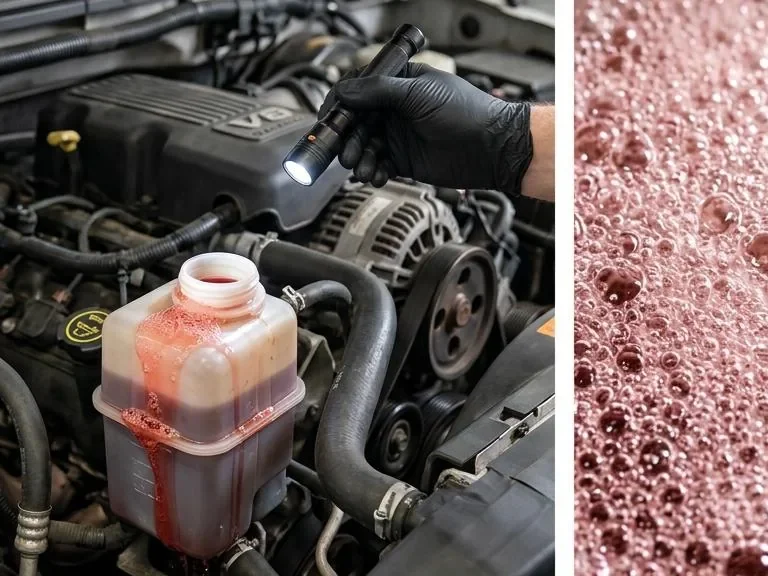
On a 2008 Saturn Outlook, a soft pedal after bleeding is still a stop-driving concern until the fluid level, leak sources, and pedal-hold behavior are checked. Start with the reservoir: verify the brake fluid is at the correct level and that the fluid does not look badly contaminated or unusually dark.
Quick owner checks
- Inspect the master cylinder, brake lines, flexible hoses, calipers, and the undercarriage for wet spots, drips, or fresh fluid residue.
- Review any recent brake work, including hose, caliper, master cylinder, or ABS-related service, because air can be reintroduced during a repair.
- With the engine off, press and hold the pedal. If it sinks gradually, that points to a remaining hydraulic problem; if it firms up only after repeated pumps, trapped air is still plausible.
Do not treat a normal-looking reservoir as proof that the system is healthy. A small external leak or an internal bypass can still leave the pedal low or unstable.
If you find low fluid, visible wetness, or a pedal that sinks under steady pressure, stop driving and move to a brake diagnosis that verifies the leak point or pressure loss. If the checks are clean but the pedal still never firms up, the next step is technician testing for trapped air, internal bypass, or an ABS bleed requirement that should be confirmed by the correct procedure for this vehicle.
On a 2008 Saturn Outlook, a soft pedal after bleeding usually means air is still trapped or a hydraulic fault is still preventing the brake system from holding pressure, so the next step is a shop-level confirmation sequence rather than parts replacement.
- Verify the system is leak-free and filled with the correct brake fluid. Check the master cylinder, line fittings, flex hoses, calipers, and the ABS hydraulic modulator for fresh wetness, seepage, or a low reservoir that points to an unresolved loss of fluid.
- Confirm or rule out master cylinder bypass. With steady pedal pressure, a pedal that slowly sinks or will not stay firm can point to internal bypass, but that result should be confirmed with OEM-guided testing before any replacement call.
- Check the wheel-end hydraulics for hose expansion, caliper drag, line restriction, and bleed-point issues. A hose that balloons, a sticking caliper, or a blocked line can make the pedal feel soft even after a normal bleed.
- If the system is dry and the basic hydraulic checks pass, repeat bleeding with OEM procedure. When ABS air is suspected or the service history suggests the modulator was opened, use the scan tool bleed routine and live data that the service manual calls for on this VIN and brake package.
- Recheck pedal feel and pressure retention after each branch. If the pedal still does not firm up, stop treating it as a simple bleed issue and move to deeper hydraulic diagnosis before the vehicle goes back on the road.
The most sensible next confirmation step, after leak and pedal-hold checks pass, is an OEM-guided ABS bleed and scan-tool verification for trapped air or modulator involvement.
On a 2008 Saturn Outlook, a soft pedal after bleeding should be repaired only after the fault is confirmed; if the brake system still will not hold pressure, keep the vehicle out of service until the leak, trapped air, or hydraulic bypass is found.
Low-risk service fixes
- Repair any confirmed leak at a line fitting, hose, caliper, or bleed point, then bleed the system again using the verified OEM sequence.
- If ABS involvement is suspected or a scan tool calls for it, follow the vehicle-specific ABS bleed path before judging the pedal again.
- Correct any bleed-procedure error, loose fitting, or incomplete bleed first; do not jump straight to parts replacement.
Confirmed mechanical repairs
- Replace the master cylinder only after a bypass or pressure-retention test confirms internal leakage, not just because the pedal feels soft.
- Service a hose or caliper when isolation tests, seepage, or expansion point there as the confirmed cause.
- Address the ABS hydraulic modulator only when scan data, bleed behavior, or technician isolation tests support that diagnosis; a warning lamp alone is not proof.
After the confirmed repair, rebleed the system, verify pedal hold, and recheck brake feel before road use. If the fault is still not isolated, the next step is a proper brake diagnosis rather than another parts swap.
On a 2008 Saturn Outlook, a soft pedal after bleeding is a stop-driving brake concern if pedal travel stays excessive or unpredictable; the hydraulic system still has air, a leak, or another fault until proven otherwise.
- Stop driving if the pedal sinks, changes height, or feels different from one stop to the next.
- Stop driving if braking power is weak enough that you need extra distance or force to slow the vehicle.
- Book service if a bleed failed to produce a firm, consistent pedal instead of repeating the same bleed indefinitely.
- Seek diagnosis if brake fluid level drops again, even slowly, after topping off.
- Treat it as urgent if a brake warning light, ABS light, or new dash message appears with the soft pedal.
- Do not keep driving if you see wet calipers, hoses, lines, or any fresh fluid under the vehicle.
- Get a mechanic involved if the pedal only improves temporarily and then goes soft again after a short drive.
The next safe step is a brake inspection and pressure test, with ABS bleed verification only if the vehicle’s configuration requires it. If you are still unsure whether the pedal is safe, assume it is not and arrange a brake diagnosis before the Outlook returns to normal use.
If the 2008 Saturn Outlook still has a soft pedal after bleeding, treat it as an unresolved brake hydraulic fault and book an inspection before further driving. A pedal that never firms up usually means air is still trapped, a leak is still present, or the master cylinder, ABS hydraulic modulator, caliper, or hose needs confirmation testing.
- Brake bleeding basics: use this if you want the standard sequence and the owner-safe steps before a shop visit.
- Master cylinder failure symptoms: useful when the pedal sinks, bypasses, or refuses to hold pressure.
- ABS bleed procedure: check this if the Outlook has ABS warning behavior or the system needs scan-tool bleeding.
- Brake fluid leak inspection: follow this when fluid level drops, wet fittings appear, or air keeps returning.
- Soft brake pedal causes: use this to compare trapped air, hose expansion, and internal hydraulic bypass patterns.
If you have already topped off the fluid, bled the lines, and the pedal is still uncertain, stop driving and schedule a brake inspection now. That is the point where diagnosis should move from owner checks to technician confirmation and repair.

Comments
Be the first to add a practical repair note or follow-up question.