
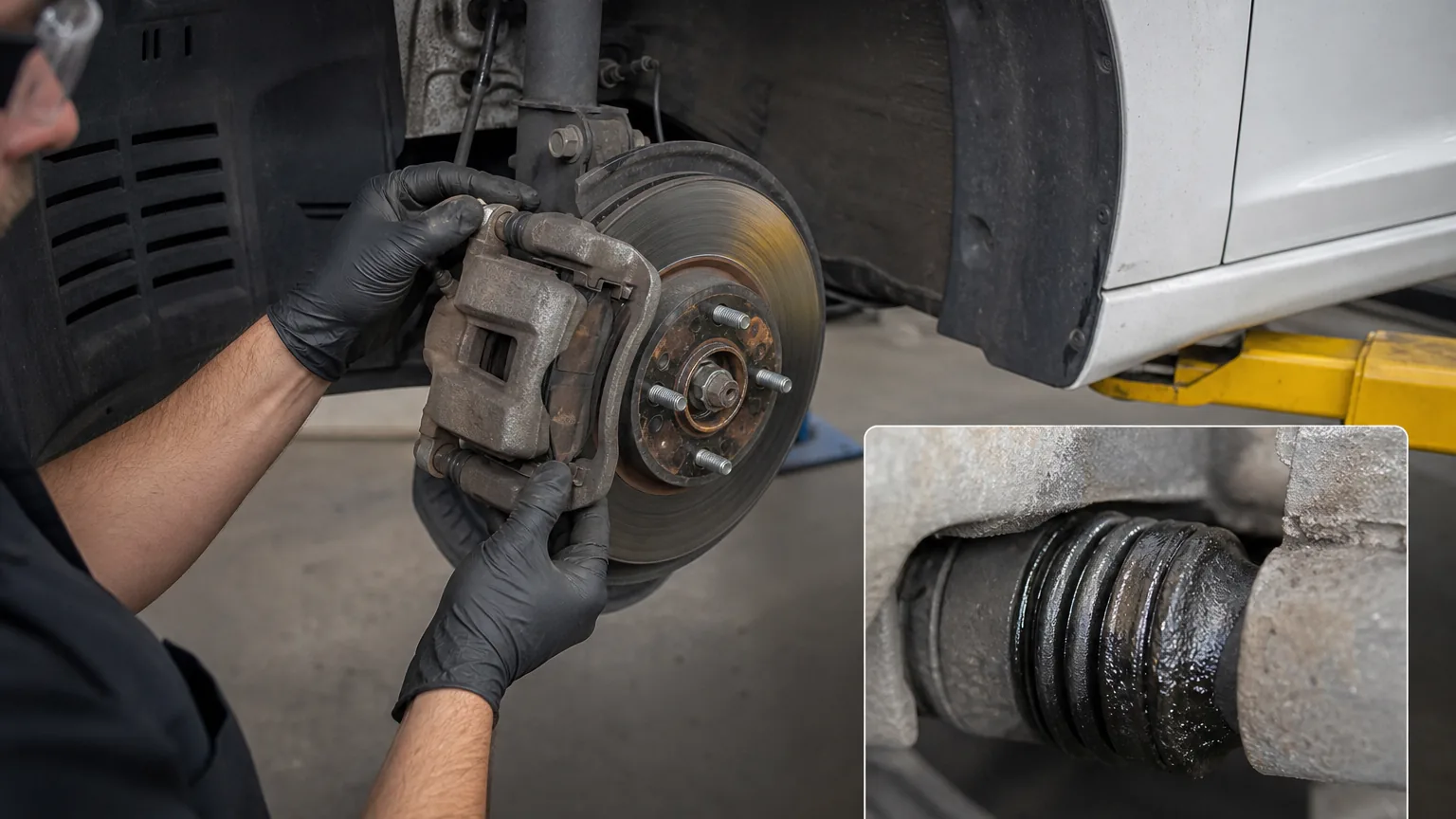
What this part does
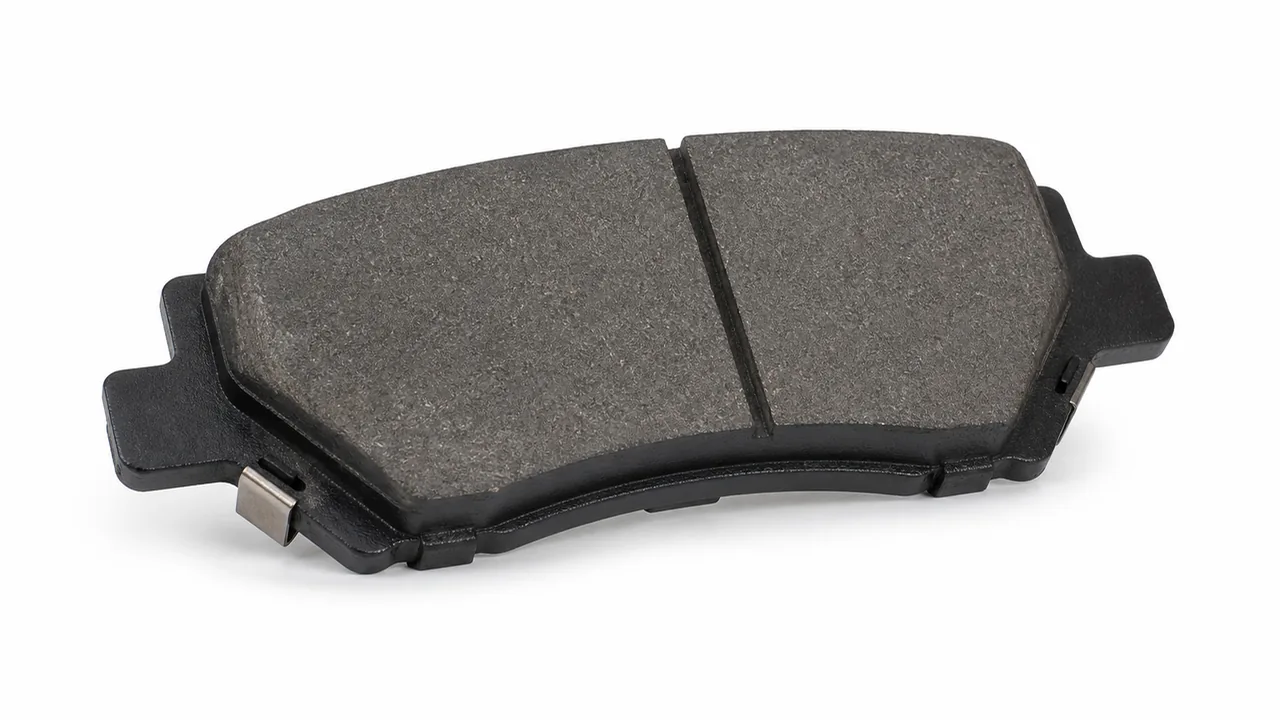
The brake caliper clamps the brake pads against the rotor to slow the Elantra, then depends on seal elasticity, clean sliding surfaces, correct lubrication, and normal hydraulic release to stop dragging. If any part of that release path is swollen, dry, corroded, contaminated, or hydraulically trapped, the wheel can stay partially braked.
- The piston applies clamp force to the inner pad.
- The piston seal helps the piston retract slightly after pedal release.
- The dust boot helps keep road grit and moisture away from the piston area.
- Slide pins allow the caliper body to center and release evenly.
- Pads and bracket abutments must move without binding.
- The flexible brake hose must allow pressure to apply and release.
A damaged outer dust boot does not automatically prove the caliper is stuck, but it is a reason to inspect the piston area, seal condition, slide movement, and nearby friction material.
Common failure signs
Common signs of a sticking caliper after possible chemical exposure include one wheel running hotter than the others, a burning brake odor, pulling, reduced fuel economy, noise, smoke, uneven pad wear, or brake pedal changes. The more severe the heat or pull, the less appropriate further driving becomes.
| Symptom | What it can suggest | Owner-safe response |
|---|---|---|
| Hot wheel or hot brake smell | Brake drag, pad friction, or overheated rotor area | Park safely, allow cooldown, and do not touch hot parts |
| Vehicle pulls to one side | One brake may be dragging or braking unevenly | Avoid normal driving until inspected |
| Reduced acceleration or lower fuel economy | A brake may be staying partly applied | Note when it happens and which wheel seems affected |
| Grinding, scraping, or squeal | Pad wear, contamination, rotor contact, or hardware issue | Inspect before further use |
| Smoke near a wheel | Severe heat from drag or friction material distress | Stop driving and arrange professional help |
| Pedal feels unusual | Hydraulic or mechanical brake behavior has changed | Treat as safety-related |
Before replacing it
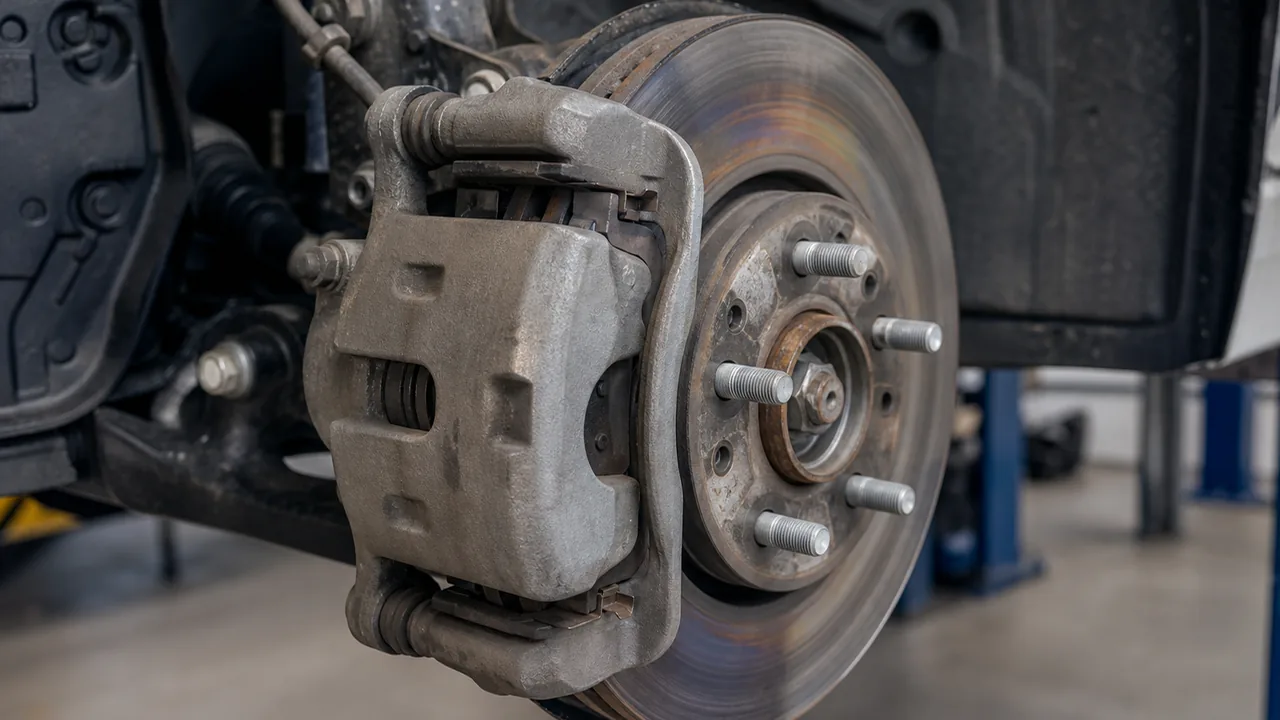
A 2023 Hyundai Elantra with severe brake drag should not be driven normally. If one wheel is very hot, there is smoke, the vehicle pulls sharply, or the brake pedal behavior changes, the safer next step is to stop in a safe place and arrange qualified inspection or towing.
- Stop driving immediately if smoke, burning odor, or unstable braking is present.
- Do not touch a hot wheel, rotor, or caliper with bare hands.
- Do not keep test-driving to see if the problem clears.
- Do not spray more solvent or cleaner onto the brake assembly.
- Record the affected wheel location, recent chemical exposure, warning lights, and how far the vehicle was driven after symptoms began.
If the symptom is mild but repeatable, limit driving and get the brake inspected soon. Brake drag can worsen quickly once heat builds.
Owner-safe checks should stay observational. Do not jack the vehicle, remove brake parts, open hydraulic fittings, or apply more cleaner unless you are qualified and following proper service information.
- Park safely and let the brake area cool.
- Note which wheel smells hot or appears affected.
- Look for smoke, residue, wetness, torn boots, or obvious pad damage from a safe position.
- Record whether the car pulls, feels held back, or makes noise.
- Check whether any ABS, stability, brake, or tire-related warnings are displayed.
- Bring the solvent name, exposure timing, and driving distance to the inspection.
If there is severe heat, smoke, or unstable braking, do not keep driving to gather more symptoms.
Inspection steps
A 2023 Hyundai Elantra brake caliper sticking after hydrocarbon solvent exposure can indicate solvent-related rubber or grease damage, because hydrocarbon solvents can damage rubber seals and cause a caliper to stick. The likely cause family is brake drag from piston-seal swelling, slide-pin lubricant loss, pad contamination, hose restriction, or ordinary corrosion. Treat severe heat, smoke, pull, or unstable braking as urgent, while milder symptoms still need inspection soon.
- A very hot wheel compared with the others after careful cooldown
- Burning odor near one wheel
- Vehicle pulling during driving or braking
- Reduced acceleration or the car feeling held back
- Smoke, grinding, scraping, or uneven braking
- Visible uneven pad wear or a brake pedal that feels abnormal
Chemical exposure is only one possible trigger. A caliper can drag mechanically from slide pins or pad binding, hydraulically from a restricted hose, or internally from piston seal problems.
The driver should focus on observations that can be verified later: the wheel location, the first drive when the problem appeared, whether the smell is from one corner, and whether the vehicle pulls without heavy braking. This helps separate symptom recognition from a final diagnosis.
- Feel: the car seems held back, vibrates, or pulls.
- Smell: hot brake lining, chemical odor, or burning smell near one corner.
- Hear: scraping, squealing, grinding, or a rhythmic drag sound.
- See: smoke, uneven brake dust, visible residue, damaged boot, or uneven pad wear.
- Notice: ABS, stability, or brake warning lights may or may not appear.
Do not diagnose by smell alone. Brake odor can come from pad overheating, contamination, rotor heat, parking brake issues, or nearby road debris.
Brake drag can occur without any ABS, stability, or brake-related DTC because a caliper can physically stick without an electrical fault. A scan tool can still be useful, but it should not replace wheel drag checks, caliper movement checks, hose checks, and friction material inspection.
- No code does not mean the caliper is releasing normally.
- ABS or stability lights may appear in some cases, but they are not required for brake drag.
- A scan can help if warning lights are present, but physical inspection is still needed.
- Codes should be interpreted with brake temperature, wheel drag, and road-test findings.
Use ABS warning light diagnosis as a parallel check, not as the only decision point for a suspected sticking caliper.
Hydrocarbon solvents are a plausible contributor when they contact rubber boots, piston seals, slide-pin boots, brake pads, or lubricated sliding points. The actual result depends on the exact solvent, exposure amount, time, rubber formulation, existing part condition, and whether the chemical reached moving or sealing surfaces.
| Area exposed | Possible effect | Why inspection matters |
|---|---|---|
| Piston dust boot | Swelling, cracking, softening, or loss of protection | A boot problem alone may not prove immediate piston binding |
| Piston seal area | Seal swelling or piston retraction change | Requires caliper inspection; do not assume from appearance only |
| Slide pins and boots | Grease washout, boot swelling, or sticky slide action | Slide movement can be checked on a lift |
| Pads and rotor | Friction material contamination or uneven transfer | Pads and rotor may need replacement or service if contaminated or overheated |
| Brake hose exterior | Chemical attack or visible damage | Hydraulic restriction still needs pressure-release and hose evaluation |
Forum-origin reports about solvent exposure should be treated as unresolved owner language, not as confirmed causation. A technician should verify whether the caliper is dragging before assigning the cause.
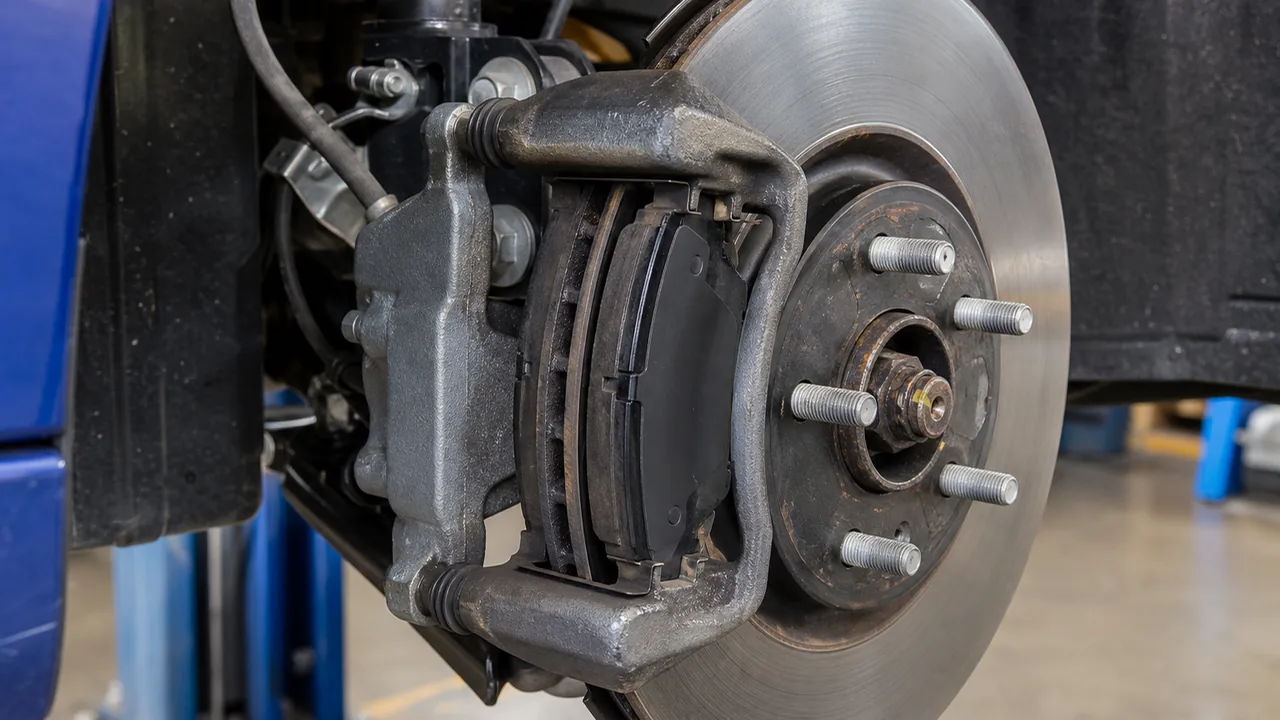
The leading causes should be checked in an order that separates mechanical drag from hydraulic drag and contamination. That prevents a chemical-exposure concern from becoming a parts guess.
- Solvent-related rubber swelling, boot damage, lubricant washout, or pad contamination, if exposure is visible and timing supports it.
- Slide-pin binding from dried grease, wrong lubricant, swollen boots, corrosion, or damaged pin surfaces.
- Piston binding from corrosion, seal swelling, damaged boot protection, heat, or internal caliper wear.
- Brake hose restriction that lets pressure apply but release slowly.
- Pad binding in the bracket from rust, debris, incorrect hardware fit, or contamination.
- Rotor heat damage or uneven pad transfer after the brake has dragged.
- Unrelated wear, prior brake service issues, road debris, or a separate brake fault that happened around the same time.
A rapid symptom onset after solvent exposure is important history, but timing alone is not enough to prove the solvent caused the caliper to stick.
The inspection should prove where the brake is staying applied. A lift inspection, wheel drag comparison, caliper slide check, piston retraction check, hose restriction evaluation, and friction material inspection are more reliable than replacing the caliper based only on a damaged-looking boot.
- Confirm the complaint with safe symptom review and wheel location.
- Inspect wheel drag with the vehicle safely lifted.
- Check whether the caliper slides freely on its pins.
- Inspect slide boots, pin condition, bracket abutments, pad fit, and hardware.
- Check whether the piston retracts normally using approved service methods.
- Evaluate whether hydraulic pressure is being trapped by a hose or upstream issue.
- Inspect pads and rotor for overheating, glazing, uneven wear, contamination, or transfer problems.
- Inspect dust boots, exposed rubber, and nearby surfaces for swelling, tearing, softening, residue, or leakage.
- Confirm any service action against Hyundai OEM repair information before final repair.
| Finding | Likely direction | Why it matters |
|---|---|---|
| Slides bind but piston releases | Slide service or hardware issue | Caliper replacement may not be the first answer |
| Piston does not retract correctly | Caliper internal or seal-related issue | Caliper service or replacement may be needed |
| Drag releases after hydraulic pressure is relieved | Possible hose or hydraulic restriction | Replacing only the caliper may miss the cause |
| Pads are contaminated or heat damaged | Friction material and rotor assessment needed | Cleaning may not restore safe friction behavior |
If a caliper replacement is confirmed, used parts should not be chosen only because they look clean. The part must match the Elantra application, include the correct related hardware if required, and pass inspection for boot damage, slide condition, bleeder condition, corrosion, and contamination.
- Verify part fitment by vehicle, axle position, and braking system configuration.
- Reject a caliper with torn rubber, swollen boots, seized slide pins, damaged bleeder, or heavy corrosion.
- Check whether the bracket, pins, boots, and hardware are included or must be transferred.
- Do not reuse pads or rotors just because a used caliper is available.
- Have the final part choice confirmed by the technician performing the brake work.
For a solvent-exposure concern, an unknown used caliper history can add uncertainty instead of removing it.
Do not try to fix a sticking caliper by spraying more solvent, using general-purpose lubricant, mixing cleaners, or driving until the smell goes away. These actions can contaminate pads, damage rubber, hide evidence, and increase the chance of unsafe braking.
- Do not drive through severe drag, smoke, or unstable braking.
- Do not spray hydrocarbon solvents onto caliper rubber, pads, rotors, or slide boots.
- Do not use petroleum grease on brake rubber or slide hardware.
- Do not sand, wash, or reuse contaminated friction material without inspection.
- Do not replace only the caliper if a hose restriction or pad binding has not been checked.
- Do not assume a warning-light-free vehicle is safe to continue driving.
Use approved brake cleaner where appropriate, keep petroleum-based solvents away from rubber components and friction material, and use brake-safe lubricants only at specified sliding points. If chemical exposure already happened, do not add more cleaner in an attempt to reverse it.
- Keep hydrocarbon solvents away from caliper boots, seals, brake hoses, pads, and rotors.
- Use brake-safe cleaners and lubricants that match the service procedure.
- Protect friction surfaces from overspray, grease, and residue.
- Replace damaged rubber parts or contaminated friction material when inspection requires it.
- Follow Hyundai repair information for approved chemicals, lubricant locations, and final brake checks.
Exact chemical compatibility, lubricant specification, brake fluid requirement, and replacement threshold should be verified from official Hyundai service information before publication or repair.
Use a brake drag diagnostic path if the Elantra has heat, odor, pulling, noise, warning lights, or known chemical exposure. If smoke, severe heat, or unstable braking is present, towing is safer than driving to a repair location.
- Use the brake drag diagnosis guide to organize symptoms before inspection.
- Use the Hyundai Elantra brake service page for model-focused maintenance context.
- Use the brake pad contamination guide if solvent or lubricant reached friction material.
- Use the brake hose restriction guide if drag appears hydraulic rather than mechanical.
Replacement notes
A serviceable slide-pin problem may call for cleaning and brake-safe lubrication, while a swollen seal, piston binding, damaged boot with contamination, or heat-distressed caliper may require caliper replacement. Contaminated pads or heat-damaged rotors should be judged by inspection, not reused by assumption.
| Repair option | When it may be considered | Caution |
|---|---|---|
| Clean and lubricate slide hardware | Slides bind but rubber and friction material are serviceable | Use only brake-safe products and OEM procedure |
| Replace pads | Pads are contaminated, overheated, unevenly worn, or damaged | Rotor condition must also be assessed |
| Rotor service or replacement | Rotor shows heat distress, scoring, or uneven braking surface | Follow vehicle-specific service limits |
| Replace brake hose | Hydraulic restriction is confirmed | Bleeding and verification are required |
| Replace caliper | Piston binding, seal damage, severe boot damage, or caliper damage is confirmed | Do not assume the hose and pads are automatically fine |
| Brake fluid service | Fluid contamination or hydraulic service need is identified | Use the correct fluid and procedure from official service information |
Do not claim a warranty, recall, campaign, or defect pattern unless it is verified from official Hyundai or NHTSA information.
FAQ
Can hydrocarbon solvent exposure make a 2023 Hyundai Elantra brake caliper stick?
Yes, it can contribute if it damages rubber, washes away brake-safe grease, contaminates pads, or reaches a sealing surface, but the brake must be inspected before assigning cause.
Does a damaged dust boot prove the caliper caused the drag?
No. A damaged boot is a serious inspection finding, but the technician still needs to check piston movement, slide pins, pads, rotor condition, hose release, and contamination.
Can brake drag happen without an ABS or stability control code?
Yes. A mechanical or hydraulic drag problem can occur without any stored DTC, so no warning light does not prove the brake is safe.
Should the caliper be replaced automatically after solvent exposure?
Not automatically. Replacement is reasonable only if inspection confirms piston binding, seal or boot damage that affects serviceability, severe contamination, heat damage, or another non-serviceable fault.
Is it safe to drive if one wheel smells hot?
A hot brake smell near one wheel should be treated as a brake drag warning. If heat is severe, smoke appears, the vehicle pulls, or braking feels unstable, stop driving and arrange inspection or towing.

Comments
Be the first to add a practical repair note or follow-up question.