Volvo S40 B5244S4 Engine Most Common Error Codes and DTC Guide
Grant WellerMay 21, 20265 min read0OBD-II Code / Engine
In brief
B5244S4-related codes should be checked by code family first: misfire, fuel trim, EVAP, oxygen sensor, catalyst efficiency, and intake-air leaks.
Symptoms
Driveability symptoms often overlap, so code context matters.
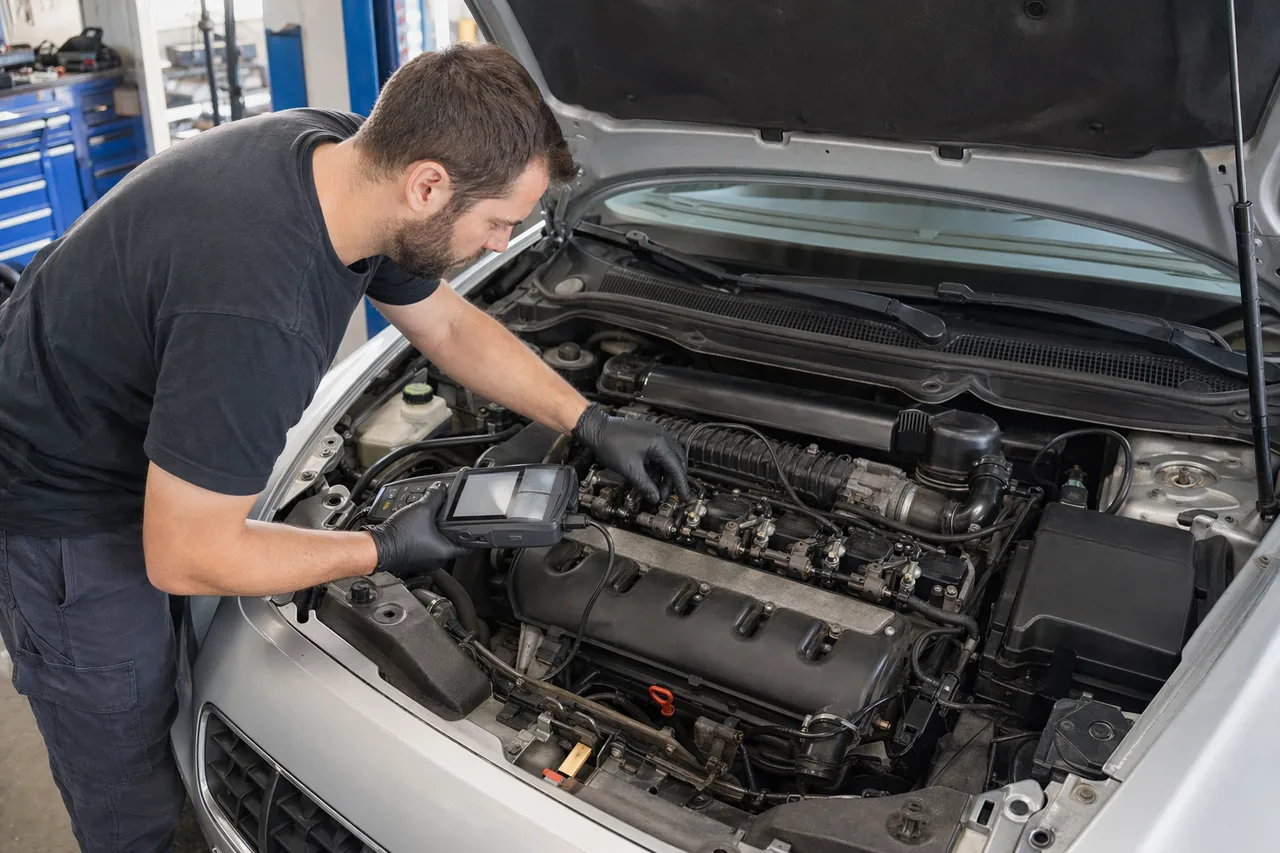
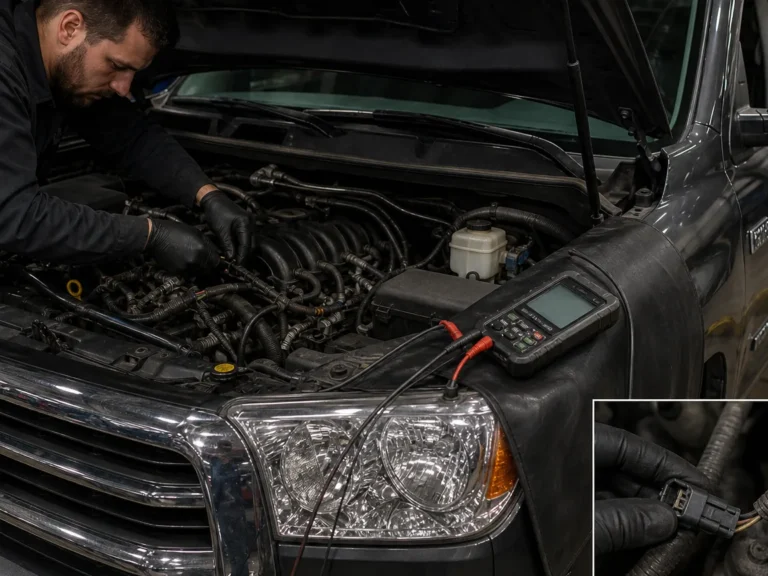
Editorial illustration for Symptom-first map for rough idle, hesitation, stall, fuel economy, and emissions warnings.
Volvo S40 rough idle
Volvo S40 misfire
Volvo S40 oxygen sensor and fuel trim
Volvo S40 EVAP leak code
Main causes
Code families are useful when ranked by likelihood and confirmation path.
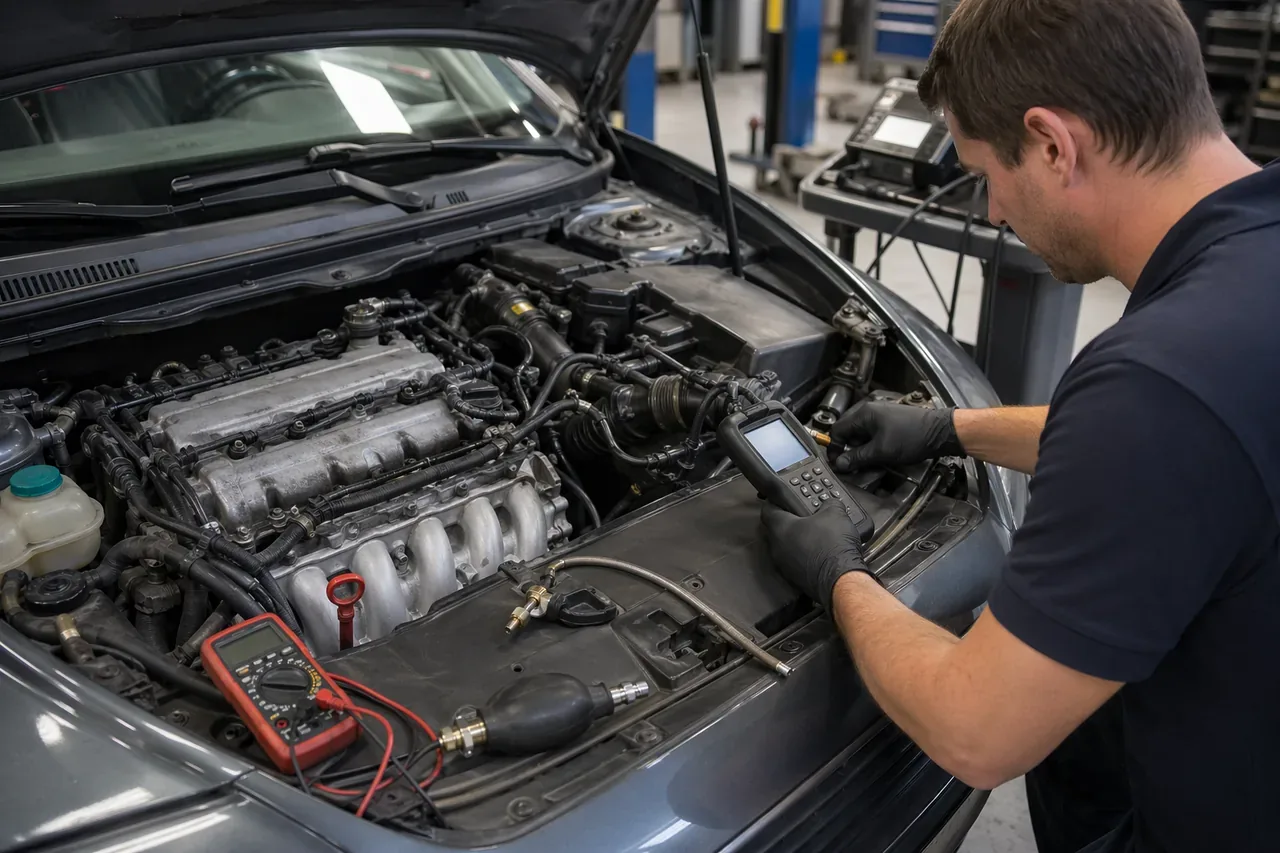
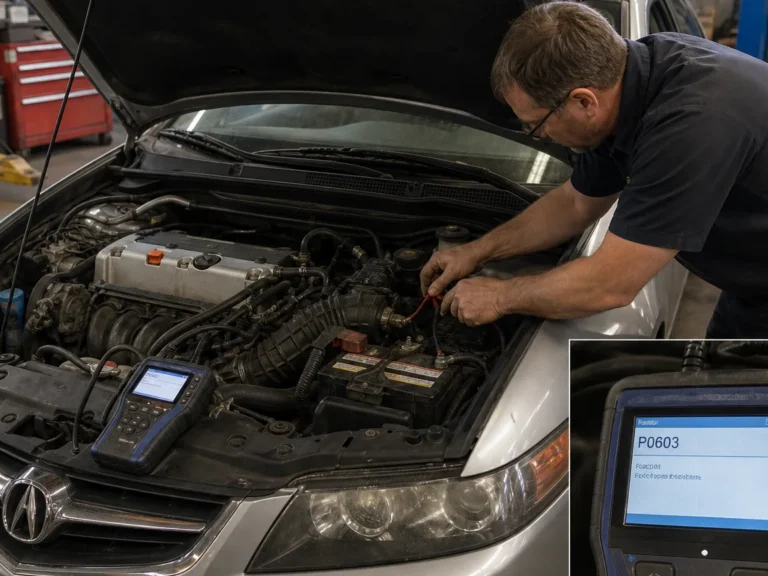
Editorial illustration for Ranked code families and the causes they can point to.
Misfire codes: P0300-P0305
Often linked to plugs, coils, air leaks, injector imbalance, or mechanical issues. Strongest when the engine shakes, the idle drops, or the MIL flashes.
Fuel trim codes: P0171-P0172
Can point to vacuum leaks, intake leaks, fuel delivery issues, MAF plausibility problems, or sensor bias. Best judged with live data and freeze-frame.
EVAP codes: P0442-P0455-P0456
Usually reflect leak detection issues in hoses, purge or vent control, or sealing faults. They may not create a strong driveability complaint.
O2 and catalyst codes: P0133-P0135-P0141-P0420
Can indicate sensor heater or response problems, exhaust leaks, mixture faults, or catalyst efficiency issues after upstream faults are ignored.
Steady light may allow caution; flashing light usually means stop.
Flashing MIL can indicate catalyst-damaging misfire
Repeated stalling is a safety issue
Overheating or strong fuel smell increases risk
Diagnostic order
Common code families are usually misfire, fuel trim, air leaks, EVAP, and emissions.
Scan first, confirm second, replace parts last.
The most common Volvo S40 B5244S4 error codes usually cluster around misfire, fuel trim, air-leak, ignition, EVAP, and oxygen-sensor or catalyst faults, but exact prevalence depends on model year, market, and calibration. A diagnostic trouble code, or DTC, is the control system's stored record of a fault condition or operating result that crossed a threshold. The MIL or check engine light is the dashboard warning tied to those records: a steady light often means the car may still drive with caution, while a flashing light can indicate active misfire and possible catalyst risk. Owner-checkable cases are usually basic scan, visual inspection, and simple intake or ignition checks. Repeated codes, multiple related codes, or poor running usually point to technician-level diagnosis rather than guessing.
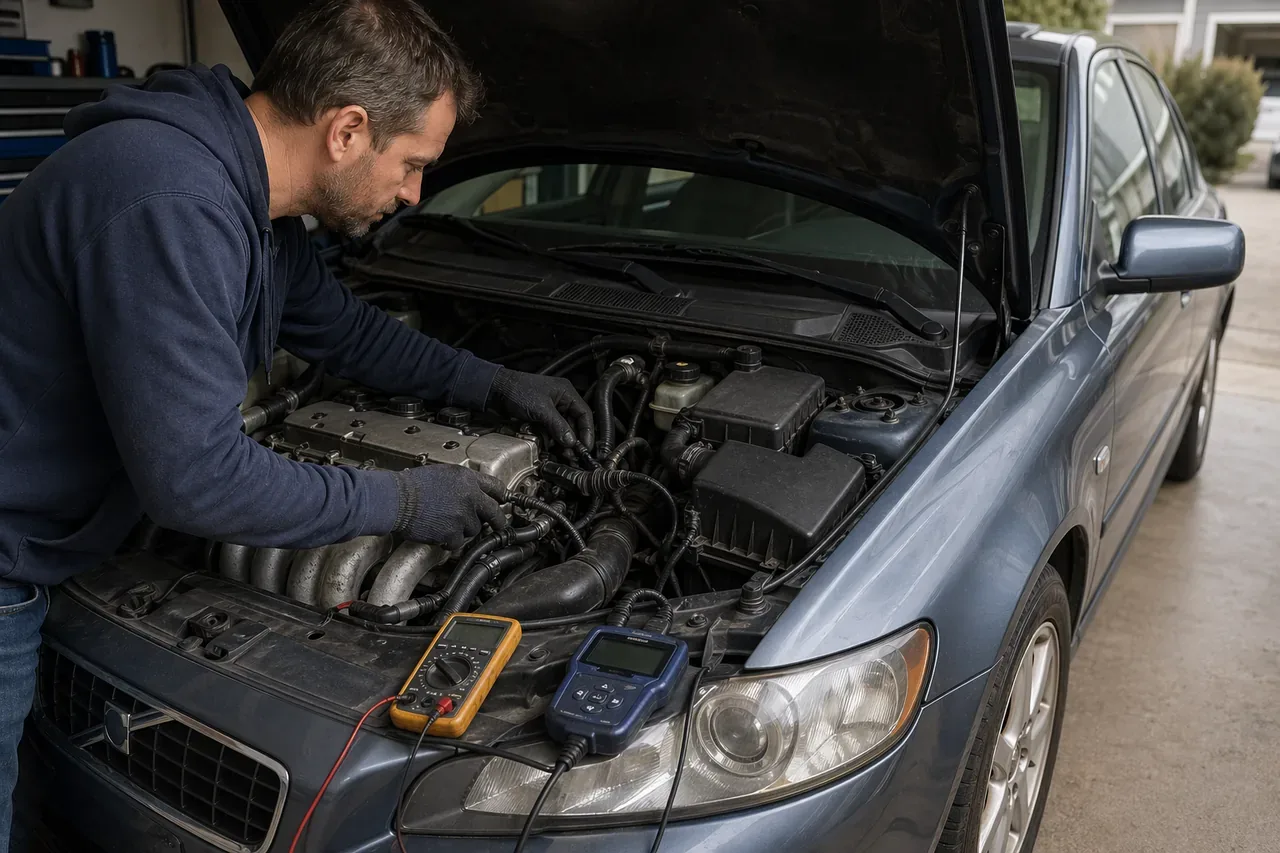
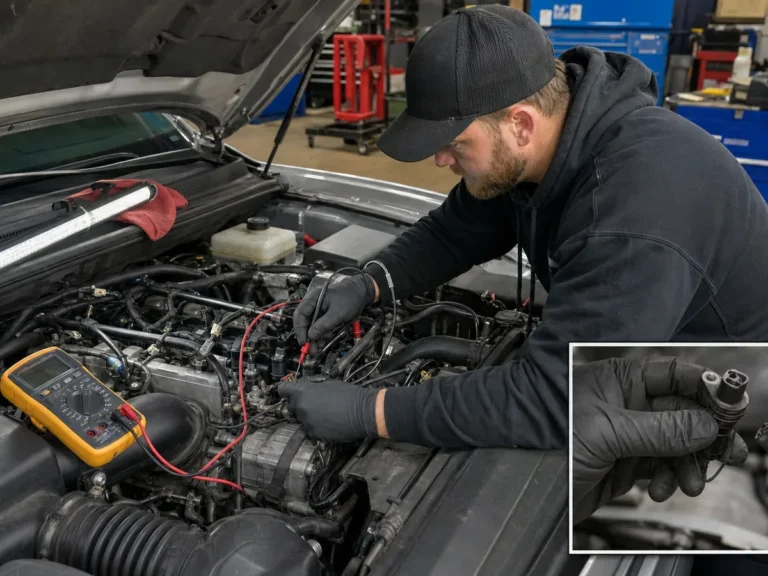
Editorial illustration for Owner-safe checks before replacing anything.
Read stored and pending codes
Note steady versus flashing MIL
Inspect intake hoses and clamps
Look for loose vacuum lines
Check ignition connectors and coil area
Review recent service work for disturbed connectors
1
Capture all codes and freeze-frame
2
Verify whether the fault is idle, load, cold, or hot related
3
Inspect intake, ignition, and wiring basics
4
Review fuel trims and oxygen-sensor behavior
5
Confirm suspected cylinders or air leaks with targeted tests
6
Treat EVAP and catalyst codes only after root-cause checks
What usually fixes it
Repair the confirmed cause, then verify return patterns.
A stored code points to a monitored problem pattern, not a guaranteed failed component. That matters on the B5244S4 because misfire, fuel-trim, oxygen-sensor, and catalyst codes can stack together, and replacing the last named sensor in the code description may not fix the cause. A sensible repair decision follows confirmation: repair the verified leak, ignition fault, wiring issue, or fueling fault first, then clear codes and confirm whether related downstream codes return. If the same code returns quickly, review freeze-frame and live data again rather than escalating to random parts swapping. If code frequency seems uncertain, or if internet lists disagree on which codes are most common, treat prevalence as vehicle-specific and validate against the exact S40 year, engine application, market, and service information before publishing or making a repair claim.
FAQ
What are the most common Volvo S40 B5244S4 code families?
Usually misfire, fuel-trim, intake air-leak or air-metering, EVAP, and oxygen-sensor or catalyst-related faults.
Does a code tell me which part to replace?
No. A code points to a monitored fault pattern and needs testing before parts are chosen.
Can I still drive with the light on?
Sometimes with a steady MIL and mild symptoms, but flashing MIL, severe misfire, stalling, overheating, or strong fuel smell raise the risk significantly.
Conclusion
B5244S4-related codes should be checked by code family first: misfire, fuel trim, EVAP, oxygen sensor, catalyst efficiency, and intake-air leaks.
Volvo S40 B5244S4 Engine Most Common Error Codes and DTC Guide
○AutoPartWise Editorial
▦1 ◎0 ▣Volvo Diagnostics / Volvo S40 B5244S4…
0
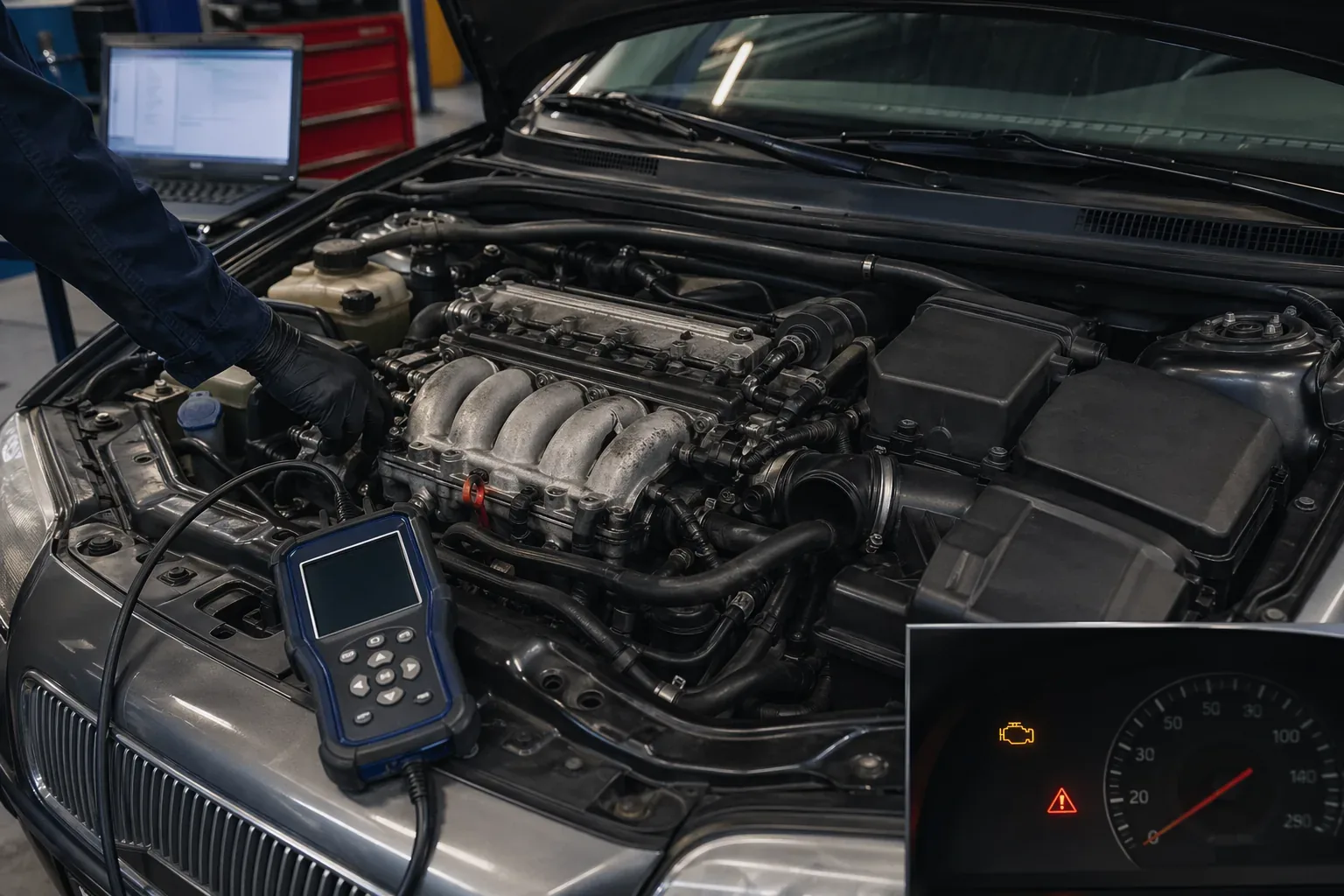
Volvo S40 diagnostic scan showing common B5244S4 engine fault codes and check engine light context
In brief
In brief: Volvo S40 B5244S4 fault codes most often fall into mixture, ignition, air metering, oxygen sensor, throttle, EVAP, and occasional cam or crank signal families. First action: read the stored codes and freeze-frame data before replacing parts, because the same code can reflect a vacuum leak, weak ignition, sensor drift, or a fuel delivery problem depending on model year, ECU, and symptoms.
In brief
Volvo S40 B5244S4 codes usually mean the engine management system has seen a mixture, ignition, air metering, sensor, or fuel-system fault, but the exact meaning depends on model year, ECU calibration, and the way the car is running. First action: scan the car, save the code numbers and freeze-frame data, then compare them with the actual symptom before cleaning sensors or replacing coils, plugs, or fuel parts.
Rough idle often points toward fuel trim, vacuum leak, MAF, or throttle-related codes.
Misfire under load commonly matches cylinder misfire codes or ignition-related patterns.
Stalling or unstable idle can indicate air leaks, throttle contamination, crank signal issues, or low fuel delivery.
Poor fuel economy often appears with lambda, fuel trim, thermostat, or air metering faults.
Limp mode is more concerning when throttle, correlation, or severe misfire faults appear together.
Owner-safe checks and technician-only confirmation steps should be separated. A generic OBD-II label is useful, but it does not prove which part has failed on this engine.
What the problem usually means
On the B5244S4, the most common code families usually involve lean or rich mixture correction, random or cylinder-specific misfire, MAF signal plausibility, front oxygen sensor feedback, throttle control behavior, EVAP flow faults, and less often cam or crank correlation signals. These codes often reflect how the engine is breathing and correcting fuel, not a guaranteed failed component.
Symptom
Code families that often fit
What they can indicate
Rough idle
P0171, P0172, P0101 to P0103, throttle or idle adaptation faults
A single code rarely tells the full story. If a lean code appears with misfire and high positive fuel trims, the fault path is different from the same lean code appearing alone with a stable idle.
Editorial illustration for Symptom-first map for rough idle, hesitation, stall, fuel economy, and emissions warnings.
Symptoms
Rough idle, cold-start stumble, uneven acceleration, reduced power, poor fuel economy, and a flashing or steady check engine light are the symptoms owners most often connect with B5244S4 fault codes. The practical pattern matters: a smooth highway pull with a poor idle suggests a different path than a car that misfires under load, stalls hot, or drops into reduced-power behavior.
Rough idle or shaky idle usually means mixture control or combustion quality is unstable at low airflow.
Single-cylinder or random misfire usually means the ECU is detecting uneven crankshaft acceleration from weak combustion.
Stalling after start or at stoplights can point to idle control instability, sensor dropout, or a major air leak.
Poor throttle response or limp behavior can indicate throttle body, air metering, or plausibility faults.
Poor fuel economy can be linked to fuel trim correction, oxygen sensor feedback issues, or an engine that is not burning cleanly.
If the check engine light flashes, treat active misfire as more urgent than a steady light because continued driving can increase catalyst risk.
Editorial illustration for Ranked code families and the causes they can point to.
Main causes
The faults most often worth ranking first are vacuum leaks, ignition wear, MAF or throttle issues, fuel delivery weakness, oxygen sensor feedback faults, and electrical or signal problems affecting crank, cam, or throttle control. Exact ranking should be verified against model-year data, but this order usually matches the way common symptoms develop on naturally aspirated five-cylinder engines of this type.
Vacuum leaks or intake leaks, especially when lean codes, rough idle, and positive fuel trims appear together.
Ignition components such as worn plugs or a weak coil, especially when the fault is load-sensitive or cylinder-specific.
MAF contamination or throttle body issues when idle quality, airflow plausibility, and adaptation behavior do not line up.
Fuel delivery weakness, including low pressure or injector imbalance, when lean correction persists beyond simple air leak checks.
Front oxygen sensor or feedback errors when fuel trims are unstable without a clear air leak or ignition trigger.
Crank, cam, or wiring faults when stalling, intermittent no-start, or implausible synchronization patterns appear.
These are ranked causes, not guaranteed repairs. A lean code caused by low fuel pressure should not be treated the same as a lean code caused by a split intake hose.
Editorial illustration for Owner-safe checks before replacing anything.
What to check first
Owner-safe checks should stay visual and basic. Look for split intake hoses, loose clamps, disconnected vacuum lines, corrosion at accessible connectors, weak battery voltage, oil contamination at plug wells if visible, and obvious service neglect. If the engine is hot, running roughly, or actively misfiring, do not probe around moving or high-temperature parts.
Owner-safe checks
Read all stored and pending codes, not just the first code shown.
Check battery condition and charging voltage history if starting has been weak.
Inspect visible intake pipes, vacuum lines, and hose connections for cracks or loose fitment.
Look for loose electrical connectors around ignition and intake metering components.
Review spark plug service history if misfire codes are present.
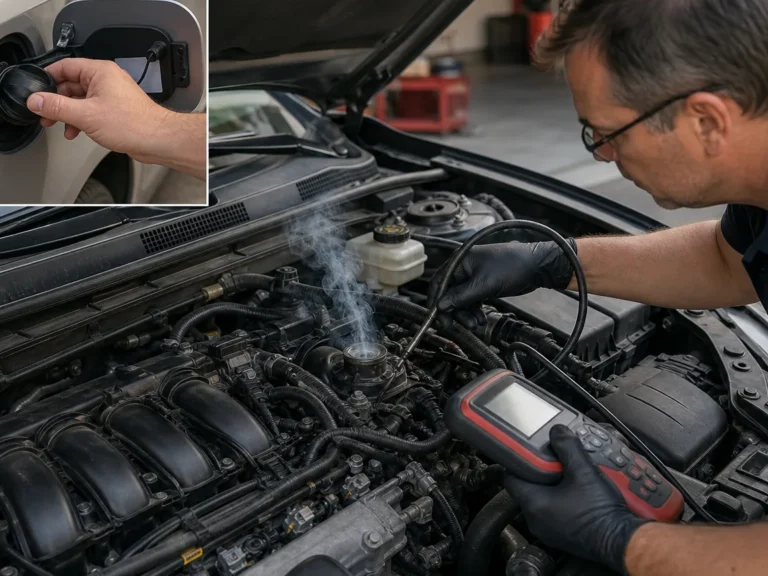
Perform a smoke test when lean codes or idle instability suggest an intake leak.
Confirm ignition output, plug condition, and cylinder contribution before swapping major parts.
Verify sensor signals and plausibility for MAF, front oxygen sensor, crank, cam, and throttle control.
Check fuel pressure or injector balance when trims or misfire data do not match an air leak pattern.
Diagnostic order
The fastest diagnostic path is to confirm the code set, read freeze-frame data, match the data to the symptom, inspect for simple air or connector faults, then confirm the suspected system with live data or a targeted test. That order reduces the chance of replacing a sensor that is only reporting the consequence of another fault.
Scan all modules that can affect engine behavior and record stored, pending, and history codes.
Read freeze-frame data for load, rpm, temperature, and fuel-trim context when the fault set.
Match the code family to the symptom pattern: idle, load, hot restart, cold start, or limp mode.
Inspect intake hoses, vacuum lines, electrical connectors, battery condition, and obvious service items.
Review live data for fuel trims, misfire counts, airflow plausibility, throttle behavior, and oxygen sensor response.
Use confirmation testing such as smoke testing, ignition evaluation, signal verification, or fuel pressure checking as needed.
Only replace parts after the suspected fault path is confirmed by data or repeatable testing.
Clear codes and verify the repair with a drive cycle only after the root cause is addressed.
If codes return immediately after clearing, or if the engine runs worse during the test, stop the sequence and move the car toward a controlled diagnostic rather than extended driving.
Model-specific notes
This article is written for the Volvo S40 with the B5244S4 engine, but exact DTC interpretation can vary by model year, software calibration, emissions package, market, and the scan tool being used. A generic scanner may translate a code differently from Volvo-specific data, and that matters when you are judging whether a fault is air metering, throttle control, lambda feedback, or a synchronization issue.
Treat generic OBD-II definitions as a starting point, not the final diagnosis.
Expect some variation in code wording and supporting subfault information between scan tools.
Use symptom context and freeze-frame data to avoid overreading a generic code label.
Verify whether any repeated code pattern matches known year-specific service information before ranking rare faults too high.
Human review is still needed for exact code interpretation, common B5244S4 fault frequency, and any market-specific service bulletins or calibration issues.
Can you keep driving?
You may be able to drive cautiously with a steady check engine light and mild running change, but you should limit driving if the car is misfiring, stalling, entering reduced-power mode, overheating, or flashing the check engine light. The reason is not just convenience. Active misfire and unstable drivability can increase catalyst risk, reduce control, and turn a manageable fault into a larger repair.
Usually safe only for short cautious driving: steady light, mild idle issue, no overheating, no severe power loss.
Drive only to diagnosis if possible: repeated misfire, severe hesitation, fuel smell, or frequent stalling.
Stop driving and investigate urgently: flashing CEL, major power loss, overheating signs, or unsafe stalling in traffic.
Urgency depends on severity. A mild mixture fault is not the same as an active misfire or a throttle-related reduced-power event.
FAQ
What are the most common Volvo S40 B5244S4 error code types?
They are usually mixture or fuel trim codes, misfire codes, air metering faults, oxygen sensor feedback faults, throttle-related faults, EVAP faults, and occasionally cam or crank signal issues.
Does a code tell me exactly which part to replace?
No. A code usually tells you which system the ECU thinks is out of range. The root cause may be an air leak, wiring problem, weak ignition part, fuel issue, or sensor drift.
What should I check first if the engine idles rough?
Start with a full code scan, then inspect visible intake hoses, vacuum lines, connector security, battery condition, and spark plug service history before moving to deeper tests.
Can poor fuel economy come from the same codes that cause rough idle?
Yes. Fuel trim, MAF, oxygen sensor, and mixture-related faults can affect both idle quality and fuel consumption, depending on how the ECU is correcting the mixture.
When should I involve a technician?
If the engine is misfiring under load, stalling, entering limp mode, flashing the CEL, or showing data that points beyond simple visual checks, a technician with live-data and confirmation-test capability is the safer next step.
Conclusion
The Volvo S40 B5244S4 most commonly sets codes that point toward mixture correction, misfire, air metering, oxygen sensor feedback, throttle behavior, and related fuel or EVAP faults. The best next step is still the same: verify the exact code, match it to the symptom, inspect the obvious air and ignition paths, then confirm the suspected system with data before buying parts.
If you only know the symptom, start with a Volvo scan and code check, then compare your result with a misfire guide, a vacuum leak test, or a fuel trim explanation. That approach gives owners a safer path and gives technicians a cleaner handoff for deeper diagnosis.
Conclusion
Volvo S40 B5244S4 codes most often point toward air-fuel mixture control, misfire, airflow measurement, throttle behavior, oxygen sensor feedback, and related fuel or EVAP faults. Treat the code as a direction, not a verdict: record the code and freeze-frame data, compare it with the symptom, inspect the obvious air and ignition paths first, and use live data or confirmation tests before replacing parts.

Comments
Be the first to add a practical repair note or follow-up question.