

What the code means
P0603 on a 2004 Acura TSX after an ECM reset usually means the control module detected a keep-alive memory problem. The first question is whether this was a one-time memory-loss event or a returning electrical fault, so save the code information first, then clear and monitor rather than jumping straight to ECM replacement. In plain English, the ECM or PCM is reporting that its stored memory was interrupted or did not behave as expected. That can happen right after an ECM reset or battery disconnect, which is why context matters. If the code does not return, the event may have been reset-related. If it comes back after a cautious drive and rescan, that is the stronger clue that you need to look at battery condition, charging performance, fuses, power supply, grounds, connectors, or a deeper control-module issue. Do not treat a successful code clear as proof of repair, and do not assume the car is safe to keep driving if you also have stalling, severe drivability problems, charging warnings, or multiple electrical faults.
- P0603 defines a keep-alive memory or internal control module memory problem in owner-friendly terms.
- After a recent ECM reset or battery disconnect, a one-time appearance can be memory-loss related rather than immediate proof of module failure.
- The key diagnostic clue is recurrence after clearing: if P0603 returns, move next to safe electrical checks and professional diagnosis before considering ECM replacement or programming.

P0603 means the control module detected a keep-alive memory problem. On a 2004 Acura TSX, the first practical step is to confirm whether the ECM was recently reset or the battery was disconnected, because a one-time memory-loss event is different from a code that comes back after driving.
In owner-friendly terms, keep-alive memory is the small portion of stored control-module information that should remain available when the key is off. On this Acura TSX first generation, you may see ECM and PCM used almost interchangeably in general repair language, but the important point is the same: the module noticed that internal control module memory was lost, interrupted, or failed a self-check.
- An ECM reset or battery disconnect can erase stored memory and trigger this code once.
- A returning P0603 diagnostic trouble code points more toward an ongoing power, ground, wiring, fuse, charging, or module-related issue.
- The code does not prove the computer itself has failed just because it appeared.
- Clearing the code without recording when it happened does not confirm the problem is gone.
That distinction matters with the Honda K24A2 engine and its electronics: after a recent reset, P0603 can reflect lost memory rather than a confirmed hard failure. If the code returns, especially with drivability complaints or other electrical symptoms, the problem should be treated as a real diagnostic issue instead of a routine post-reset artifact.
For Acura-specific wording, circuit order, and any model-specific pass or fail decisions, OEM service information should be used to verify the correct diagnostic sequence before anyone concludes the ECM or PCM needs replacement.
Symptoms
P0603 can show up as only a check engine light, but it may also come with rough idle, hard starting, or temporary driveability changes after an ECM reset or battery disconnect. If the code returns, the first practical step is to note when it appeared, whether the battery was recently disconnected, and whether any other warning lights or codes came with it.
Many drivers notice no obvious symptom at first, and that does not make the code harmless if it comes back. A one-time appearance right after a reset is less concerning than a repeated P0603, especially if the car also shows charging, communication, or other electrical warnings.
- Check engine light with no noticeable driveability change.
- Rough idle, hard start, or brief relearn behavior after a reset.
- Emissions readiness monitors that stay incomplete after clearing codes or losing power.
- Companion codes that point to battery, charging, communication, or other module issues.
If P0603 returns with stalling, severe drivability problems, or multiple electrical warnings, treat it as a diagnostic problem rather than a simple memory-loss event.
Main causes

P0603 means the control module detected a keep-alive memory problem. After an ECM reset or battery disconnect on a 2004 Acura TSX, that first code event can simply reflect lost ECM or PCM memory, so it carries less weight than a P0603 diagnostic trouble code that returns after the car is driven normally again.
That timing matters because clearing codes, disconnecting the battery, replacing a weak battery, or any interruption of ECM power can wipe stored adaptive data and reset emissions readiness monitors. In that situation, the module may log a memory-related fault as it restarts and relearns normal operating history. By itself, that does not prove internal control module memory failure.
What raises concern is recurrence. If P0603 comes back after normal starts, normal driving, and stable battery power, the issue is more likely to involve ongoing power loss, charging problems, a poor connection, a fuse or ground issue, related electrical faults, or a control-module problem that needs proper diagnosis. A one-time appearance right after memory loss is a different diagnostic situation from a repeat code with no recent reset.
- Record when the reset or battery disconnect happened.
- Note whether the battery was weak, replaced, or recently went dead.
- Scan for other stored or pending codes before clearing anything again.
- Write down any symptoms such as hard starting, stalling, charging warnings, or other electrical glitches.
If P0603 returns, or if the Acura TSX has drivability symptoms or multiple electrical faults, move from monitor-and-recheck to battery, charging, and circuit diagnosis rather than assuming the reset itself was the whole story.
P0603 means the control module detected a keep-alive memory problem. After an ECM reset or battery disconnect on a 2004 Acura TSX, the most likely first explanation is simple memory loss, but a returning code points more toward unstable power, a connection problem, or a less common ECM or PCM fault.
- Recent ECM reset, battery disconnect, or interrupted keep-alive power. This is the most likely cause when P0603 appears once right after battery service, jump-starting, or module reset. In that situation, the ECM may only be reporting that stored memory was lost, not that a hard failure exists.
- Weak battery, loose battery terminals, or poor cable contact. If battery voltage drops too low during cranking or the terminal connection opens briefly, keep-alive memory can be interrupted. Clues include slow cranking, clock or radio settings resetting, or an intermittent no-start history.
- Charging system trouble causing unstable system voltage. If the alternator is not keeping voltage steady, the ECM can see repeated memory interruptions instead of one clean reset event. A charging warning light, dimming lights, or multiple electrical complaints make this more likely and move the problem out of the monitor-and-recheck category.
- Blown fuse, intermittent power feed, poor ground, or wiring issue affecting ECM memory power. A recurring P0603 without an obvious battery event can come from a power or ground path that drops out briefly. On an Acura TSX first generation, the exact fuse and circuit path should be verified against service information before any model-specific conclusion.
- Loose, corroded, or recently disturbed ECM or PCM connector. If work was done near the module, under-dash wiring, or related harnesses, a connector that is not fully seated can interrupt memory or module communication. This becomes more suspicious when the code returns after bumps, vibration, or recent repair activity.
- Aftermarket electronics or prior wiring work. Alarm systems, audio equipment, remote-start hardware, or spliced accessory wiring can create voltage interruption or backfeed problems. This is especially relevant when P0603 appeared after an electrical modification rather than after normal battery replacement alone.
- Possible ECM or PCM internal fault. This is the least likely cause and should stay last on the list. It only becomes more credible after recurrence is confirmed and battery condition, charging behavior, power feeds, grounds, wiring, and connectors have been checked or professionally tested.
Do not treat code clearing as proof of repair. If P0603 returns, or the car has charging warnings, stalling, or multiple electrical faults, the next step is diagnosis rather than another reset.
Diagnostic order

P0603 means the control module detected a keep-alive memory problem. On a 2004 Acura TSX, that can appear once after an ECM reset or battery disconnect because the ECM lost stored memory, but a returning P0603 matters more and should not be dismissed as a harmless reset artifact. The first practical step is to record the code, note whether the battery was recently disconnected or went weak, then rescan after a cautious drive rather than assuming the reset fixed the cause.
Risk depends on what happens next: if the code does not return and the car has no warning lights, stalling, hard starting, or other electrical symptoms, the event may have been tied to memory loss alone. If P0603 comes back, appears with companion codes, or shows up alongside battery or charging concerns, the next step changes from monitor-and-recheck to electrical and module diagnosis, with owner-safe checks first and Acura-specific circuit testing verified through proper service information.
P0603 means the control module detected a keep-alive memory problem. Before paying for diagnosis on a 2004 Acura TSX, the most useful owner step is to document what happened around the code, check for obvious power-loss clues, and see whether P0603 returns after a cautious recheck.
- Write down every stored code before clearing anything. If your scan tool shows freeze-frame or similar saved data, record that too, because it helps separate a one-time memory-loss event from a recurring fault.
- Confirm the recent history. Note whether the battery was disconnected, replaced, jumped, drained, or left weak, because any of those can fit the first appearance of a P0603 diagnostic trouble code after ECM memory was lost.
- With the vehicle off and safe, inspect the battery terminals for obvious looseness, corrosion, or a poor clamp fit. Do not assume a recently installed battery means the connections are good.
- Check only owner-accessible fuses, and only in the way the owner manual allows. A visual inspection is reasonable; probing ECM or PCM circuits is not an owner-level step without proper tools and service information.
- If the car starts and drives normally, complete a cautious drive cycle, then rescan. Note whether P0603 returns by itself or comes back with charging, voltage, communication, or other engine-related codes.
- Track symptoms in plain language: hard start, stalling, rough running, warning lights, or emissions readiness not complete. That symptom pattern matters as much as the code itself when a technician decides the next test.
Do not keep driving just to "see what happens" if the Acura TSX has stalling, severe drivability problems, a charging warning, or multiple electrical faults. Those signs move the problem out of simple owner-check territory and into prompt diagnosis.
P0603 means the control module detected a keep-alive memory problem. On a 2004 Acura TSX, a qualified diagnosis should first separate a one-time memory-loss event after an ECM reset or battery disconnect from a code that returns because the ECM or PCM is losing stable power, ground, or memory support.
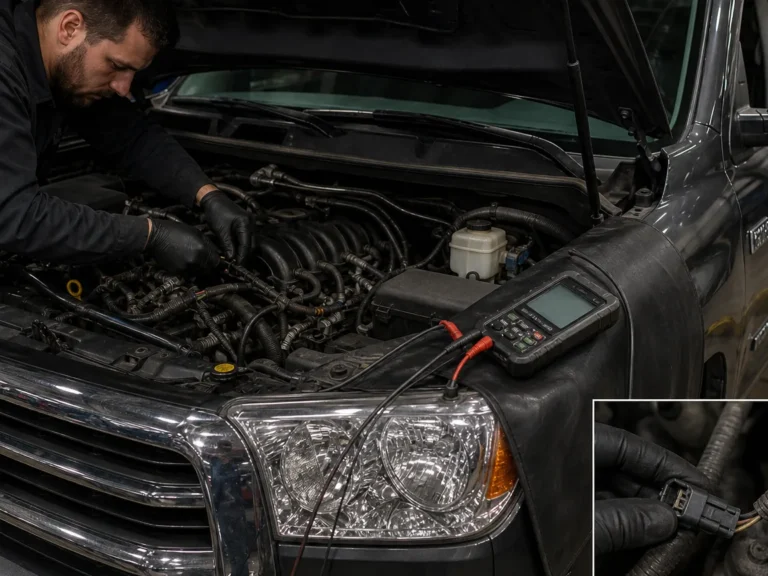
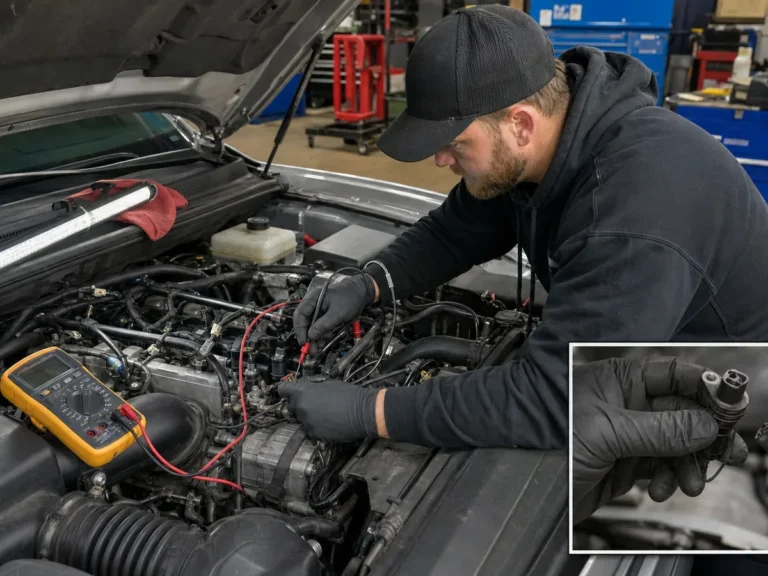
- Start with the electrical foundation, not the module. A technician should perform a battery load test and a charging-system test, then confirm the battery connections are clean and tight. If battery condition or charging performance is questionable, that problem needs to be corrected before P0603 is judged as an ECM fault.
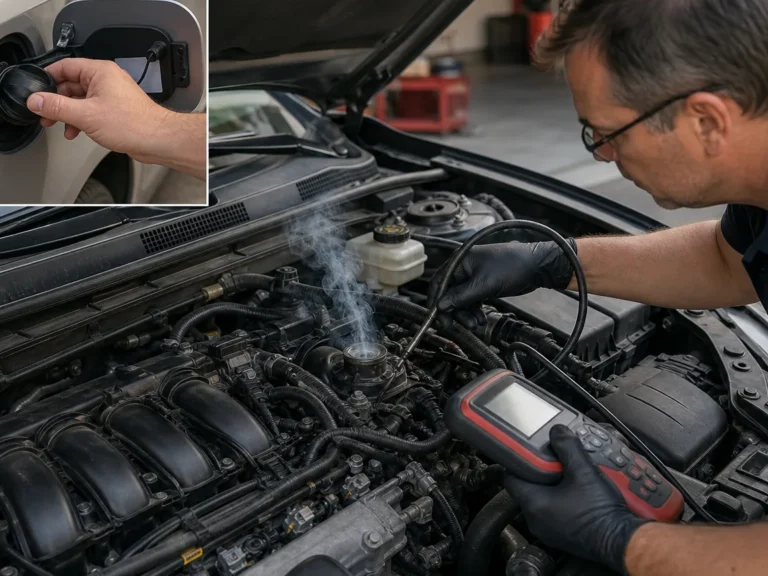
- Review the full scan-tool picture before clearing anything. That means checking stored codes, pending codes, companion codes, and permanent code data if the scan tool and vehicle report it. Other voltage, communication, or sensor-reference faults can change the direction of the diagnosis.
- Save freeze-frame and note the exact conditions around the fault. If the code appeared only after memory loss, that context matters. If it set during normal driving and returns after being cleared, that points toward an active electrical or module-related issue rather than a simple reset event.
- Follow the OEM diagnostic path for P0603 on the 2004 Acura TSX using proper Acura service information. Acura-specific fuse locations, connector views, terminal checks, and circuit values should be verified in service data rather than assumed from generic code charts.
- Inspect ECM or PCM power feeds, ground integrity, connector condition, and the related keep-alive memory circuits. The technician should also look for wiring damage, corrosion, loose grounds, signs of previous repair, and any aftermarket electrical equipment that could interrupt memory power or create voltage instability.
- Only after the code is documented should it be cleared for confirmation. The vehicle can then be driven cautiously and rescanned. If P0603 does not return, the event may have been tied to the reset or a past power interruption. If it returns and the support circuits test correctly, the next sensible step is deeper OEM-guided module confirmation, not immediate replacement by assumption.
If the Acura TSX also has stalling, charging warnings, hard starting, or multiple electrical faults, technicians should treat those symptoms as part of the same diagnostic branch rather than isolating P0603 by itself.
P0603 means the control module detected a keep-alive memory problem. On a 2004 Acura TSX, the ECM or PCM becomes more suspect only after the code returns despite stable battery and charging results, and after the usual power-loss causes have already been checked rather than assumed.
That matters because a one-time code after an ECM reset or battery disconnect does not prove an internal module failure. A recurring P0603 is different. If a qualified diagnosis has already verified battery condition, charging performance, power supply, grounds, connector fit, and visible wiring condition, the focus can reasonably narrow toward the module itself or the circuits directly tied to its memory function.
Signs the module deserves closer scrutiny
- P0603 comes back after codes were recorded, cleared, and the vehicle was rescanned following a cautious drive cycle.
- No blown fuse, loose terminal, corrosion, damaged wiring, poor ground, or obvious connector issue has been found.
- Aftermarket electronics, remote-start hardware, alarms, audio equipment, or recent wiring changes have been ruled out as possible memory or power-interruption causes.
- Companion faults, especially communication or other module-related codes, are reviewed as part of the diagnosis instead of being ignored.
- The technician is following OEM diagnostic steps and those steps point away from a simple external power or wiring problem.
Even then, module replacement is not an owner-level conclusion. On the Acura TSX first generation with the Honda K24A2 engine, any decision involving ECM or PCM replacement, programming, or immobilizer pairing should be made only with verified service information and the proper equipment. If the car also shows stalling, charging warnings, or multiple electrical faults, diagnosis should move up in priority.
Verify first: Acura-specific pin tests, circuit values, fuse identifiers, programming procedures, and final replacement criteria require model-correct service information before any hard conclusion is made.
P0603 means the control module detected a keep-alive memory problem. On a 2004 Acura TSX, that matters for emissions readiness because an ECM reset or battery disconnect can erase stored monitor history, leaving OBD-II readiness monitors incomplete even if the engine now seems to run normally.
That creates a common inspection problem: the car may have no obvious drivability symptoms, no warning lights beyond the stored history, and still fail an emissions pre-check because the system is not yet ready. In other words, a one-time memory-loss event can affect inspection timing without proving there is a major mechanical failure. The safer assumption is not that the reset is finished, but that readiness needs to be verified with a scan tool before you book or attend an inspection.
- Check monitor status directly instead of assuming that a cleared code or disconnected battery has already reset everything properly.
- If the vehicle was recently serviced, had a weak battery, or had the ECM reset, expect that some monitors may still show incomplete until normal drive conditions are met.
- Record whether P0603 stays gone or comes back after driving, because recurrence changes the issue from simple reset context toward electrical or module diagnosis.
- Delay inspection planning if readiness remains incomplete or if new codes appear during the drive-and-rescan process.
If readiness will not complete, or if P0603 returns while monitors are still trying to set, further diagnosis is needed before inspection planning. At that point, the next step is not repeated code clearing, but confirming battery and charging health, checking for related faults, and following a proper diagnostic path.
P0603 means the control module detected a keep-alive memory problem, and on a 2004 Acura TSX that code by itself is not enough reason to replace the ECM. The expensive mistake is jumping to a module decision before confirming whether this was a one-time memory-loss event after an ECM reset or battery disconnect, or a code that returns after basic electrical checks. The first practical step is to record the code history and symptoms, then verify battery condition, charging performance, visible fuse condition, terminal fit, and obvious ground or connector issues before anyone orders parts.
Clearing P0603 does not fix the cause if the keep-alive memory supply was interrupted again by low voltage, a poor connection, or another electrical problem. A replacement or programmed ECM can add cost and complexity without solving the underlying fault, and it may create new setup issues if the original power, ground, wiring, or recurrence evidence was never confirmed.
- Do not buy a used or replacement ECM based only on the scan-tool code description.
- Do not assume a recent reset proves the module is bad if the code has not returned after proper recheck.
- Do not skip the lower-cost path of checking battery history, charging concerns, fuse condition, grounds, wiring, and connector fit first.
- Do not move into immobilizer, programming, or module replacement steps without OEM service information and a technician-level diagnostic process.
If P0603 keeps returning after stable battery and charging results, clean power and ground verification, and recurrence evidence, then module-level diagnosis becomes more reasonable. Until then, treat ECM replacement as a last-step decision, not a first response.
P0603 means the control module detected a keep-alive memory problem. On a 2004 Acura TSX, the practical next step depends on whether this was a one-time memory-loss event after an ECM reset or battery disconnect, or a code that comes back and points toward an electrical or module-related fault.
- If P0603 appeared once after a known reset and the car has no warning lights beyond the stored code, no stalling, and no obvious drivability change, treat it as a monitor-and-recheck situation first. Record the code data, complete a normal drive cycle so emissions monitors can begin resetting, and rescan before assuming a repair is needed.
- If the battery is older, the terminals look loose or corroded, or charging behavior has seemed inconsistent, book an Acura TSX battery and charging system test next. A weak battery or unstable system voltage can interrupt keep-alive memory and create a returning P0603 without proving the ECM itself has failed.
- If P0603 returns after the reset context has passed, move to a diagnostic inspection centered on ECM and PCM power and ground integrity. That is the point where a technician should verify the module is consistently receiving proper power and ground and inspect related connections using service information for the vehicle.
- If multiple electrical, charging, or communication codes are also present, prioritize electrical diagnostic service over parts replacement. A broader voltage supply or network issue can make P0603 look like a module problem when the real fault is upstream.
- If early checks are clean but the code still resets, book a deeper electrical inspection rather than clearing it repeatedly. Recurrent memory-loss faults need confirmation before any decision about repair direction, programming, or module replacement.
Avoid treating code clearing as a fix. If the Acura TSX also shows charging warnings, repeated no-start behavior, stalling, or several electrical faults at once, skip the wait-and-see approach and schedule diagnosis promptly.
If the simple checks pass, the most sensible next confirmation step is a professional inspection focused on battery health, charging stability, and verified ECM power and ground supply, followed by a rescan to confirm whether P0603 returns under normal operation.
Can you keep driving?
Usually yes for a short, cautious drive only if the 2004 Acura TSX starts normally, charges normally, drives normally, and P0603 appeared once right after a known battery disconnect or ECM reset. In that case, monitor it, record the code, and recheck it soon rather than assuming the fault is fixed.
- Stop driving and diagnose it now if the engine stalls or nearly stalls.
- Treat it as urgent if starting gets hard or the battery/charging light comes on.
- Do not ignore it if the TSX runs rough, surges, or loses power.
- Seek help if the check engine light returns repeatedly after clearing.
- Park it if you notice smoke, burning smell, or visible electrical damage.
- Get a mechanic involved if multiple electrical or module codes appear together.
- Avoid extended driving if the car shows fluid loss or any overheating warning.
If none of those symptoms are present, a brief monitor-and-recheck approach is reasonable. If the code comes back, or the electrical behavior changes, treat P0603 as more than a one-time memory-loss event and move to full diagnosis.
FAQ
P0603 means the control module detected a keep-alive memory problem. On a 2004 Acura TSX, that can appear once after an ECM reset or battery disconnect, but the key clue is whether the code returns after you record the data, clear it as part of a planned recheck, and rescan after normal driving.

Comments
Be the first to add a practical repair note or follow-up question.