
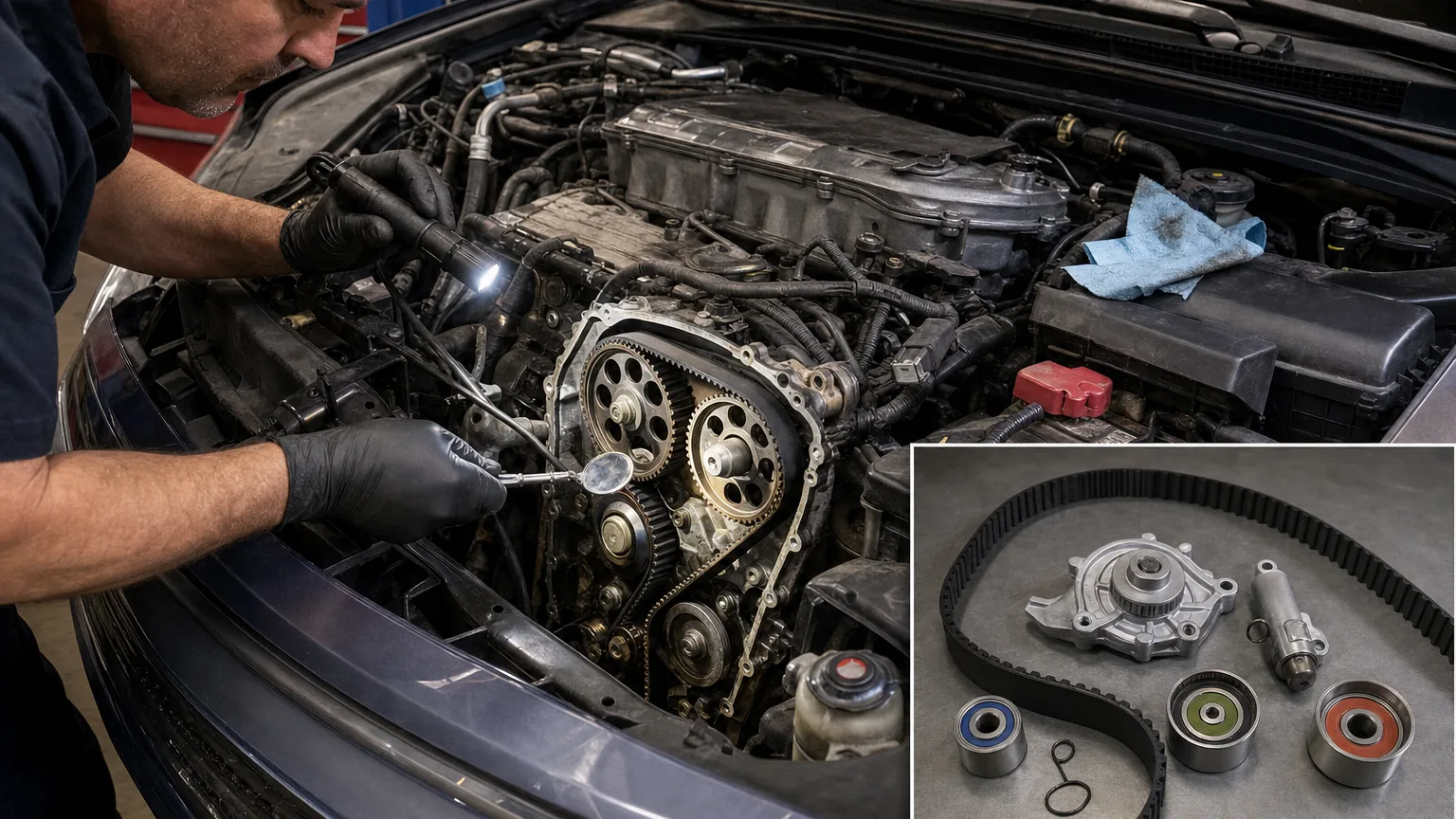
What this part does
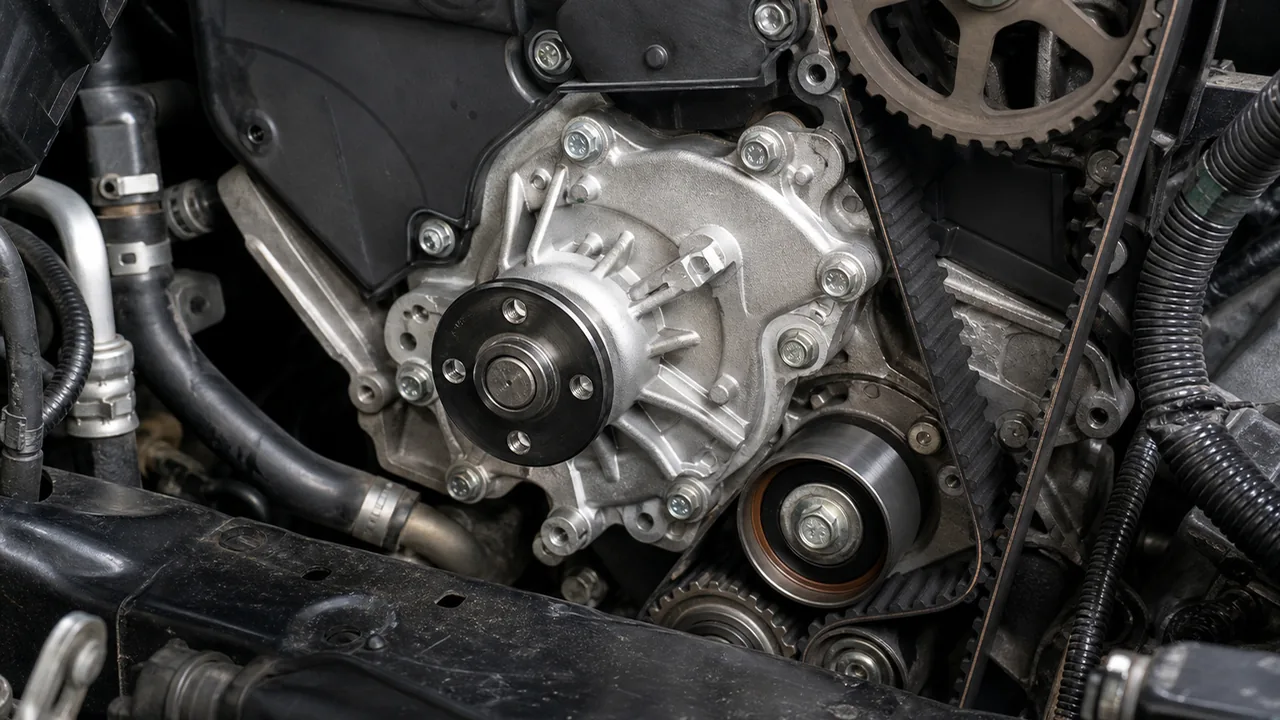
The timing belt keeps internal engine timing aligned. If the belt, tensioner, or pulley system loses control, the engine can run poorly, set timing-related faults, fail to start, or suffer serious damage depending on the failure mode.
The tensioner and idler components matter because they guide the belt and control belt movement through changing engine loads. A new belt running over a weak bearing, unstable tensioner, contaminated pulley, or oil-soaked belt path can turn a good service into repeat labor.
This is also why the service decision is not only about whether the old belt still looks intact. Rubber age, bearing wear, hydraulic or spring tension control, coolant leakage, oil contamination, and prior repair quality all influence whether the timing system can stay reliable after reassembly.
Do not confuse the timing belt with the serpentine belt. The serpentine belt is visible on the outside of the engine and drives accessories; the timing belt is part of the engine timing system and is normally behind covers.
Common failure signs
If the belt is overdue by mileage or age, service should be planned promptly. If there is noise from the timing cover area, overheating, coolant leakage, rough running, hard starting, or timing-related codes, diagnosis should happen before continued driving.
| Sign | Likely fault path to check | First practical response |
|---|---|---|
| Rattle, growl, whine, or rubbing noise near the timing cover | Timing belt pulley, tensioner, belt tracking, cover contact, or nearby rotating component | Do not assume it is only an external belt; inspect the noise source before driving further. |
| Coolant smell, staining, wetness, or repeated coolant loss | Water pump area, hoses, radiator, reservoir, thermostat area, or other cooling leak source | Find the leak path before approving a water pump as part of the timing belt quote. |
| Rough running, hard starting, stalling, or no-start | Mechanical timing concern, ignition or fuel fault, sensor issue, or misfire condition | Scan and diagnose before replacing timing parts. |
| Check engine light with cam/crank correlation or misfire codes | Possible timing relationship issue, sensor signal issue, wiring problem, or unrelated misfire | Preserve scan data and confirm the fault path before clearing codes. |
- Known overdue or unknown timing belt history
- Rattle, growl, whine, or rubbing noise near the timing belt cover area
- Coolant loss, coolant smell, staining, or repeated overheating
- Rough running, misfire-like behavior, hard starting, or stalling
- Check engine light with cam/crank correlation or misfire codes
Accessory belt squeal, alternator noise, coolant hose leaks, and ordinary misfires can imitate timing-belt concerns from the driver seat. The useful sign is not the noise alone; it is where the noise comes from and what supporting evidence appears with it.
Before replacing it
- Confirm the vehicle mileage, age, engine application, and market-specific maintenance guidance.
- Check whether the timing belt service has already been completed and documented.
- Ask for the quote to separate required timing components from recommended overlap items.
- Review visible oil leaks, coolant leaks, overheating history, warning lights, noises, and drivability symptoms.
- Confirm parts brand, OEM status, warranty terms, coolant handling, and post-service verification steps.
Owner checks should focus on evidence that changes the repair path. A clean maintenance-due vehicle needs a planned service estimate; a vehicle with coolant loss, overheating, rough running, or warning lights needs diagnosis before the quote becomes a replacement list.
- Read the maintenance history before authorizing the job.
- Look for coolant loss, overheating, oil spots, or accessory belt noise.
- Ask whether any DTCs were scanned and interpreted, not just read.
- Do not remove timing covers or attempt alignment checks without proper repair information and tools.
Inspection steps
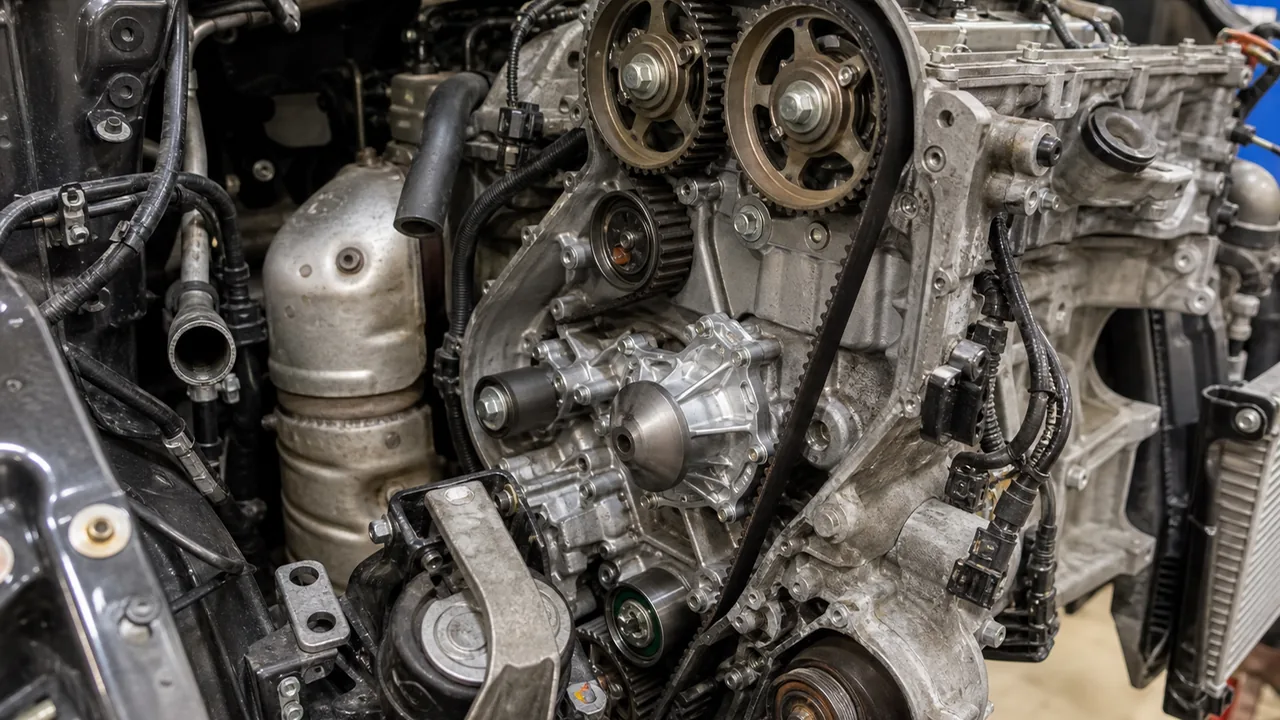
A practical quote should group parts by purpose: parts that control timing, parts commonly reached during the same access, and parts that only deserve replacement if inspection shows leakage, wear, damage, or service-history uncertainty.
Bundling is strongest when the added part shares labor access or protects the new belt. It is weaker when the added part is merely nearby and has no evidence of wear, leakage, damage, or required removal. That distinction keeps a maintenance job complete without turning the estimate into an open-ended parts list.
| Group | Typical decision | Why it matters |
|---|---|---|
| Belt control parts | Usually replaced together | A new belt should not rely on old guide or tension components if those parts are due or worn. |
| Cooling overlap parts | Commonly considered | The water pump and coolant may be tied to the same access path, but the final decision should match OEM procedure, condition, and service history. |
| Seals and hardware | Inspect first | Oil leaks, worn mounts, or damaged fasteners can affect service quality, but replacing every nearby part without evidence can inflate the quote. |
| External belt parts | Condition-based | Accessory belt noise can mimic owner concern, but it is not proof of timing belt failure. |
Ask whether the water pump is driven by or accessed during the timing belt procedure for this exact 2018 Acura RDX application. If it is in the same work area, replacing it while access is open may be reasonable when age, mileage, leakage, bearing feel, or service history supports the decision.
The risk frame is different from a simple accessory-belt part. A water pump that leaks after the timing area is closed can force repeat access, and coolant residue near the belt area can create confusion between a maintenance issue and an active cooling-system fault.
- Look for coolant staining, crust, seepage, or wetness around the pump area.
- Ask whether coolant must be drained or refilled if the pump is replaced.
- Confirm the quote includes compatible coolant and proper air bleeding after service.
- Treat overheating history as a diagnostic clue, not automatic proof of water pump failure.
- Check whether the cooling system has other leak points before blaming the pump.
If the engine has overheated or is losing coolant, diagnose the cooling system before treating the timing belt job as routine maintenance.
A timing-related code may come from mechanical timing, sensor signals, wiring, oil-control issues, misfires, or prior repair errors. Replacing the belt based only on the code risks missing the actual fault.
The important question is whether the code matches the vehicle behavior. A quiet vehicle due for service is a maintenance case; a rough-running vehicle with correlation clues after recent work is a diagnostic case; a misfire without timing evidence may belong in ignition, fuel, air, or compression testing first.
- Record all codes and freeze-frame data before clearing anything.
- Check for misfire patterns, cam/crank correlation clues, and recent service history.
- Inspect visible wiring, connectors, leaks, and obvious mechanical concerns.
- Confirm mechanical timing only when symptoms, codes, or service history justify it.
- Repair the verified cause and confirm normal operation after the work.
If the engine runs poorly after a timing belt job, recheck timing alignment and tensioner setup before assuming a new unrelated fault.
- Verify mileage, age, owner manual guidance, and documented timing belt history. If history is unknown or clearly due, move toward scheduled service planning.
- Listen for abnormal belt-area, pulley, pump, or accessory-drive noise. If the noise is external, diagnose the accessory drive before blaming the timing belt.
- Inspect for coolant residue, oil leakage, belt contamination, damaged covers, and external belt wear. If leaks are active, identify the source before reassembly decisions.
- Scan for stored, pending, and history codes if a warning light or drivability symptom exists. If no warning light or symptom exists, do not create a code-based repair path.
- Confirm timing alignment, tensioner condition, pulley bearing condition, and water pump condition using OEM-based procedures when symptoms, codes, or service history justify it.
- After service, verify engine operation, leak-free coolant handling, proper belt tracking, and no returning warning lights.
- OEM procedure and service bulletin review when applicable
- Timing alignment and tensioner operation
- Pulley bearing condition and belt path cleanliness
- Water pump leakage or bearing concerns
- Camshaft and crankshaft seal leakage
- Coolant refill, bleeding, and post-service road-test behavior
Mechanical timing confirmation is not a casual owner check. It belongs after history, symptoms, visible condition, and scan data justify opening the timing area.
The key distinction is whether the symptom belongs to the internal timing system, the external accessory drive, the cooling system, or general engine performance. A timing belt service can be due even when none of those symptoms exist, and a symptom can exist even when the timing belt is not the cause.
- A squeal during startup or steering load often points first to the serpentine belt or accessory drive, not the covered timing belt.
- A coolant leak may come from hoses, radiator, reservoir, thermostat area, or other cooling components, not only the water pump.
- A misfire code can come from ignition, fuel, air, compression, sensor, or timing issues; it needs diagnosis before parts replacement.
- A vehicle due for timing belt service may have no symptoms, which is why maintenance history matters.
- A noisy pulley outside the timing cover is not the same as a failed timing belt idler.
- A poor-quality prior repair can create timing concerns even if the belt itself is not visibly broken.
Use symptom location, service history, scan data, and inspection findings together. One clue rarely identifies the whole repair.
The used-part question should be split into wear parts and non-wear parts. A used belt, tensioner, idler, or questionable pump can turn a maintenance service into a reliability risk because its age, storage history, bearing condition, and prior load history are unknown.
| Part type | Used-part recommendation | Reason |
|---|---|---|
| Timing belt | Do not use used | The belt is a wear item and its age, contamination, and stress history may not be visible. |
| Tensioner and idler components | Do not use used | Bearing wear and tension control history are difficult to verify reliably. |
| Water pump | Use new when replacing as part of the service | Pump leakage and bearing condition can create repeat labor and cooling-system risk. |
| Covers, brackets, or non-wear hardware | Condition-based | Used parts may only make sense if fit, damage, corrosion, and fastener requirements are confirmed. |
- Do not install a used timing belt, used tensioner, or used idler component for a scheduled timing belt service.
- Avoid unknown-brand kits when the quote cannot identify part origin, warranty, or application fit.
- If buying parts yourself, verify the exact engine application, production details, and kit contents before purchase.
- For mounts, brackets, covers, or non-wear hardware, used parts may only make sense if condition, fit, and fastener requirements are confirmed.
- Keep receipts and part numbers so warranty coverage and future maintenance records are clear.
Owner-supplied parts can also affect warranty coverage. Confirm that the repairer will install them, stand behind the work, and verify fit before the vehicle is taken apart.
A quiet, normally running RDX with documented service history can be handled as scheduled maintenance. An overdue RDX with warning signs should be treated as an inspect-before-driving situation, especially if overheating or severe rough running is present.
- Overheating or repeated coolant loss
- Mechanical noise from the timing belt cover area
- Sudden rough running, hard starting, stalling, or no-start condition
- Cam/crank correlation codes after recent service or alongside drivability symptoms
- Unknown timing belt history on a vehicle believed to be past its recommended service window
- Oil or coolant contamination found near the belt path during inspection
Urgent does not mean every part is automatically failed. It means the vehicle should be inspected before routine driving continues and before a maintenance quote is treated as complete.
For a 2018 Acura RDX, ask for a complete timing belt service estimate that identifies the belt kit, water pump decision, coolant handling, parts quality, warranty terms, and post-service verification. That protects the engine and keeps the quote honest.
- If the vehicle is simply due by mileage, age, or unknown history and has no warning signs, plan a scheduled timing belt service with the belt, tensioner, idler components, and documented overlap decisions.
- If there is coolant loss, overheating, oil leakage near the belt area, abnormal timing-cover noise, rough running, or warning lights, start with inspection and diagnosis before approving a parts package.
- If a quote already exists, review whether it separates required timing parts, commonly recommended water pump and coolant work, inspect-first seals or hardware, and condition-based accessory belt work.
- If timing alignment, tensioner failure, coolant leakage, or post-service running problems are confirmed, the repair path should follow the verified fault rather than a generic maintenance bundle.
- If evidence points outside the timing belt system, such as accessory-drive noise or an unrelated misfire, repair that confirmed system separately and keep the timing belt decision tied to service history.
Low-risk service fixes are scheduled maintenance items and access-overlap parts with clear support from history, condition, or OEM guidance. Major mechanical repair paths only belong after a qualified technician confirms timing loss, severe overheating consequences, damaged components, or a failed prior installation.
Practical next step: gather service records, note any coolant loss, overheating, noises, warning lights, and rough-running symptoms, then request an itemized timing belt estimate or diagnostic inspection that matches those facts.
Replacement notes
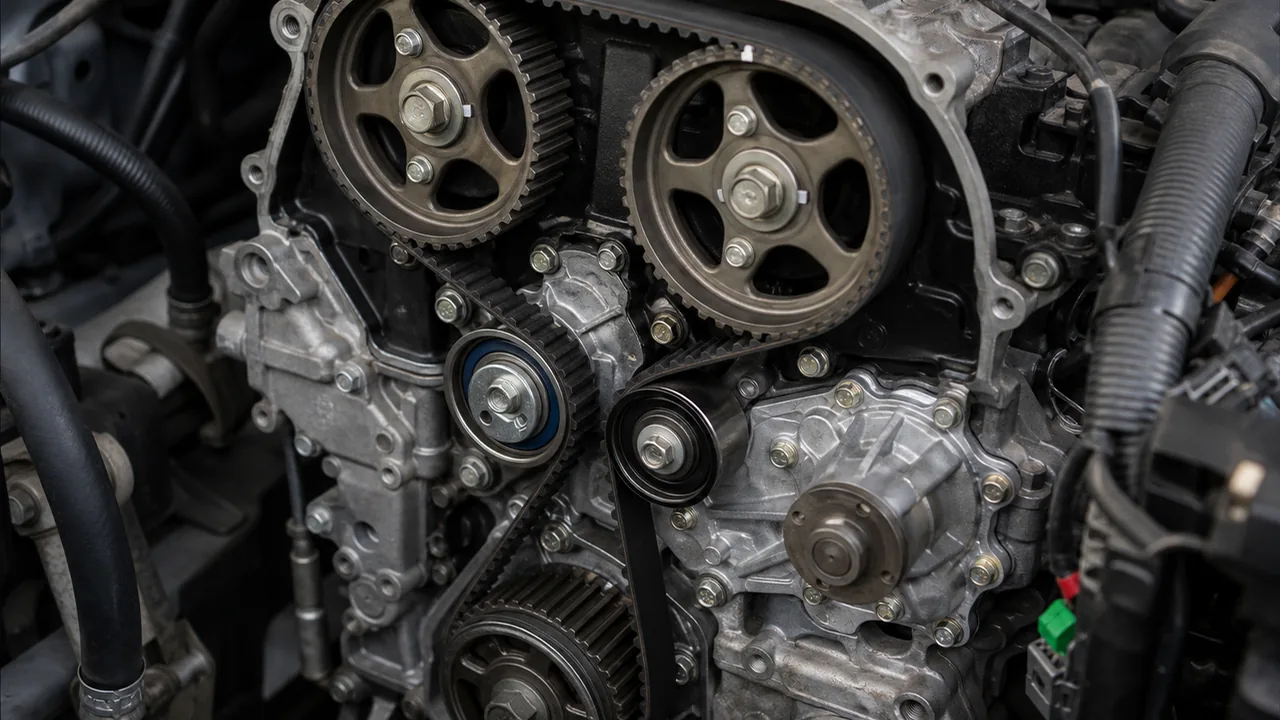
For a 2018 Acura RDX timing belt service, the quote should name the belt and the related tensioning and pulley components instead of listing a vague belt job. The exact component names should be checked against Acura service information for the engine and market.
The wear path is simple: the belt depends on correct routing, bearing support, and stable tension. If a pulley bearing becomes rough, a tensioner loses control, or the belt path is contaminated, the new belt can be stressed even though it was just installed.
- The vehicle is due by mileage, age, or unknown history.
- The estimate lists a timing belt kit with defined belt-control components.
- Pulley bearings feel rough, noisy, loose, or contaminated during inspection.
- The tensioner shows leakage, weak control, abnormal movement, or other condition concerns.
- The old belt shows cracking, glazing, edge wear, oil contamination, or tracking concerns.
A timing belt diagnostic or replacement should not rely on guesswork. Proper alignment, tensioner handling, and post-service verification are technician-level tasks.
The best estimate names the timing belt kit components, water pump decision, coolant handling, parts brand or OEM status, labor scope, removed components, warranty terms, and post-service checks. It should not hide optional seals or accessory belts inside one unclear line item.
A fair quote can still include recommendations, but each recommendation should have a reason. Access overlap, confirmed leakage, worn bearing feel, damaged hardware, unknown service history, and required coolant service are different reasons and should not be blended into one vague explanation.
| Quote item | Question to ask | Acceptable explanation |
|---|---|---|
| Timing belt kit | Which parts are included? | Belt, tensioner, idler, or related components are named clearly. |
| Water pump | Why replace or inspect it? | Decision is tied to access, leakage, bearing condition, history, or OEM guidance. |
| Coolant | Is the system opened? | Coolant type, refill, and bleeding are included if cooling work is performed. |
| Seals | Are they leaking? | Cam or crank seals are listed as inspect-first unless leakage is confirmed. |
| Accessory belt | Is it worn or removed for access? | Replacement is tied to visible wear, noise, contamination, or access overlap. |
| Warranty | What is covered? | Parts and labor coverage are described in writing. |
FAQ
Should the water pump always be replaced with the timing belt on a 2018 Acura RDX?
Not automatically. It is commonly considered because access may overlap, but the final decision should account for OEM procedure, mileage, age, leakage, bearing condition, coolant history, and whether the pump is part of the accepted service kit.
Can a check engine light prove the timing belt is bad?
No. Cam/crank correlation or misfire codes can be related to timing concerns, but they require scan data, inspection, and sometimes mechanical timing confirmation before replacing parts.
Is the serpentine belt the same as the timing belt?
No. The serpentine belt drives external accessories and is usually visible. The timing belt controls internal engine timing behind covers, so the risk and service procedure are different.
What should I ask for in a timing belt quote?
Ask for the timing belt kit components, water pump decision, coolant handling, parts brand or OEM status, labor scope, warranty terms, and post-service verification steps.
Can I keep driving if the timing belt service is overdue?
If the vehicle has no symptoms and documented history is only approaching the service window, plan the work promptly. If history is unknown or there is overheating, abnormal belt-area noise, rough running, hard starting, or timing-related codes, inspection should happen before routine driving continues.
Should camshaft and crankshaft seals be replaced during the service?
They should be inspected, not automatically added without reason. If oil seepage is found near the timing belt area, seal replacement may prevent belt contamination and repeat labor, but a dry seal does not need to be sold as a guaranteed failure.
Comments
Be the first to add a practical repair note or follow-up question.