
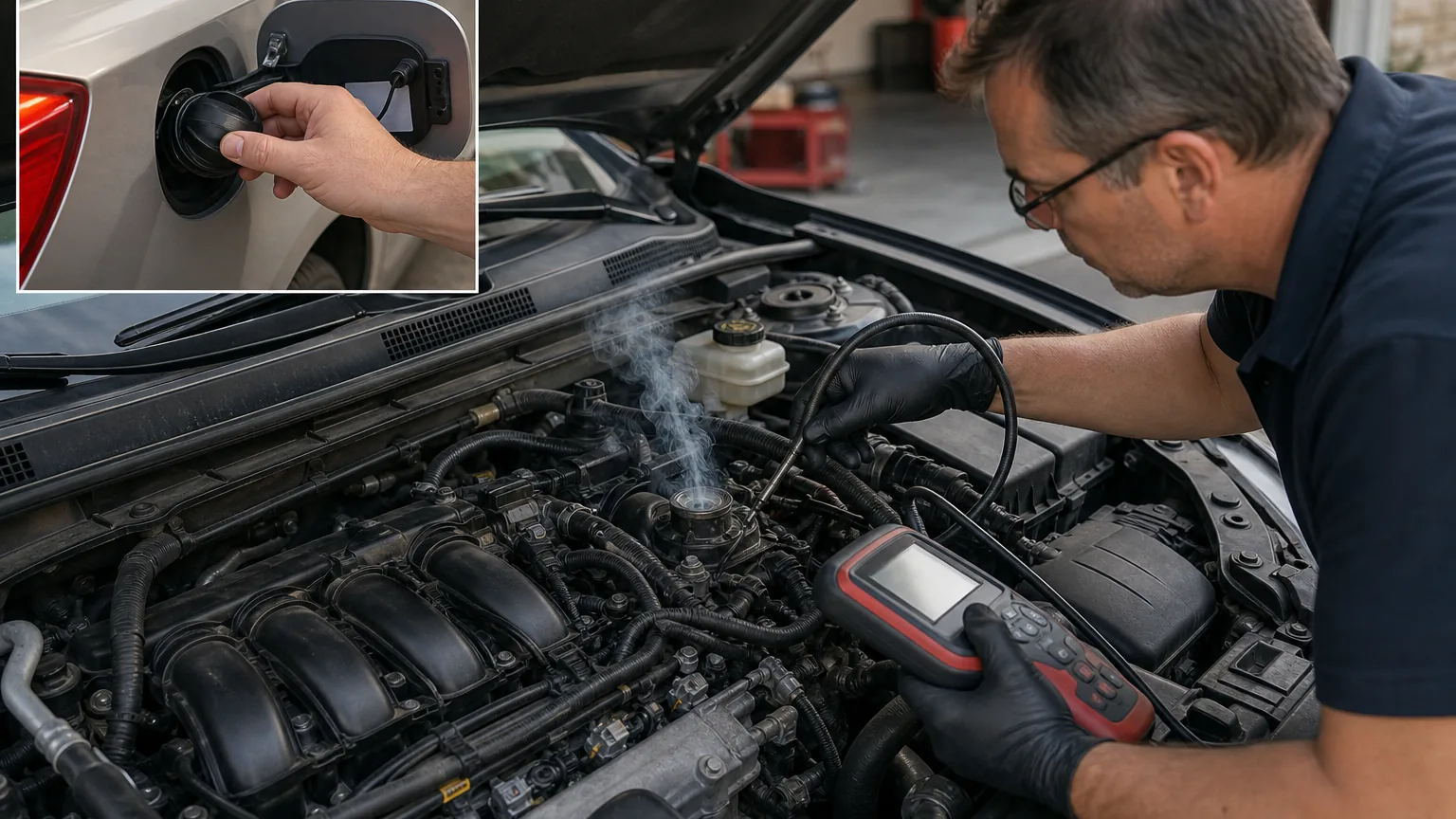
What the code means
P0456 usually means a very small EVAP leak, P0442 usually means a small EVAP leak, and P0455 usually means a large or gross EVAP leak. First action: document the stored and pending codes before clearing anything, then check whether the fuel cap is loose, damaged, missing, or incorrect for the vehicle.
| P0456 | EVAP system leak detected | Very small leak | Loose cap, worn cap seal, tiny hose crack, minor valve sealing issue | Usually not an immediate drivability fault, but it can fail emissions readiness | Re-seat the cap, inspect the seal, note fuel smell, record freeze-frame data | Smoke test and verify valve sealing using vehicle-specific service information |
| P0442 | EVAP system leak detected | Small leak | Gas cap fault, filler neck issue, cracked hose, purge or vent valve not sealing | Moderate emissions concern; diagnose if it returns after simple checks | Check cap fit, visible hoses, filler neck condition, and related codes | Smoke test, command purge and vent valves, and follow the OEM diagnostic flow |
| P0455 | EVAP system leak detected | Large or gross leak | Missing cap, disconnected hose, damaged filler neck, stuck vent valve, canister or line damage | Higher priority, especially with fuel smell or multiple EVAP codes | Confirm cap is present and tight; avoid driving if fuel odor is strong or leakage is suspected | Inspect for major leaks, smoke test the system, and verify leak detection hardware |
Symptoms
- Check engine light with no obvious drivability change
- Stored or pending EVAP leak code on a scan tool
- Fuel smell near the filler neck, tank area, or underbody
- Failed emissions inspection or incomplete OBD-II readiness
- Check engine light appearing after refueling or after a cap was left loose
A fuel smell changes the risk frame. Treat strong fuel odor, visible wetness, or unusual running symptoms as a reason to stop and inspect the vehicle safely before continuing.
Main causes
- Loose, missing, damaged, or incorrect fuel cap
- Damaged cap seal or dirty filler neck sealing surface
- Cracked, loose, disconnected, or brittle EVAP hose
- Filler neck damage or corrosion in the sealing area
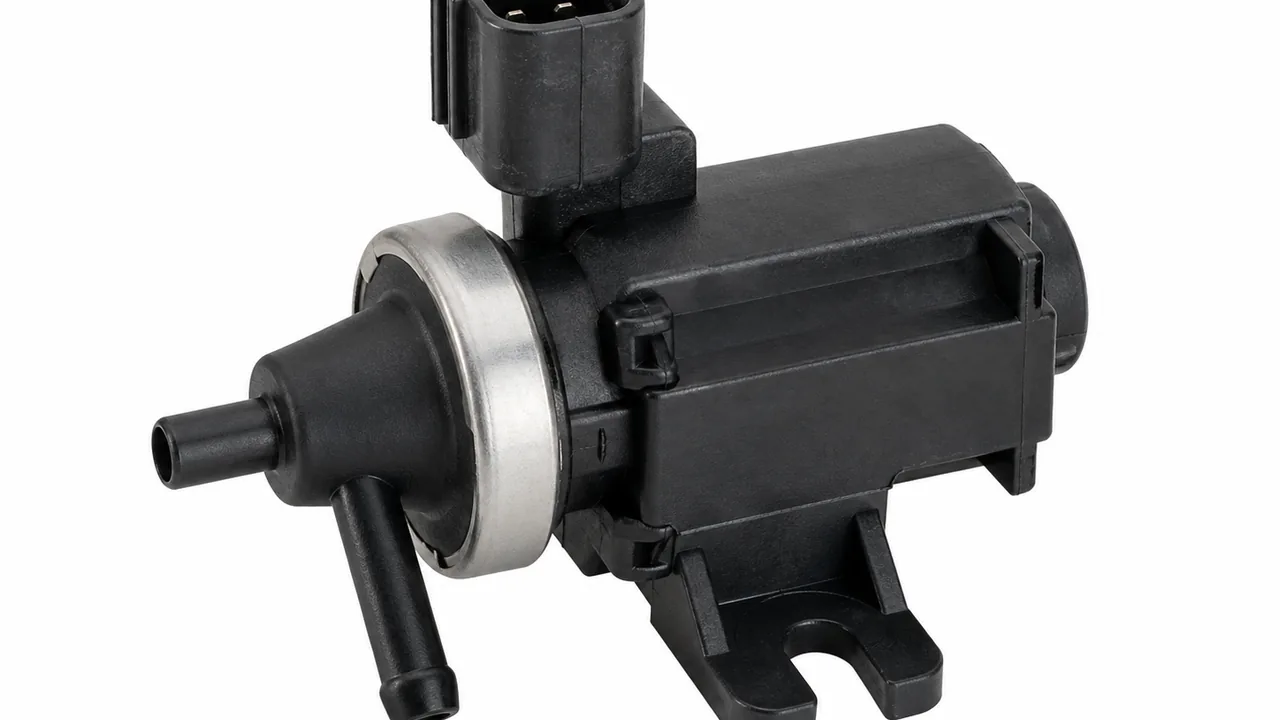
- Purge valve stuck open or not sealing correctly
- Vent valve stuck open, contaminated, or not closing during the EVAP test
- Charcoal canister damage or fuel saturation
- Fuel tank pressure sensor, leak detection pump, wiring, or monitor hardware issue where applicable
Misdiagnosis warning: P0442, P0456, and P0455 do not prove the gas cap is bad, and they do not justify guessing a purge valve, vent valve, canister, or sensor without confirming the leak path.
What to check first
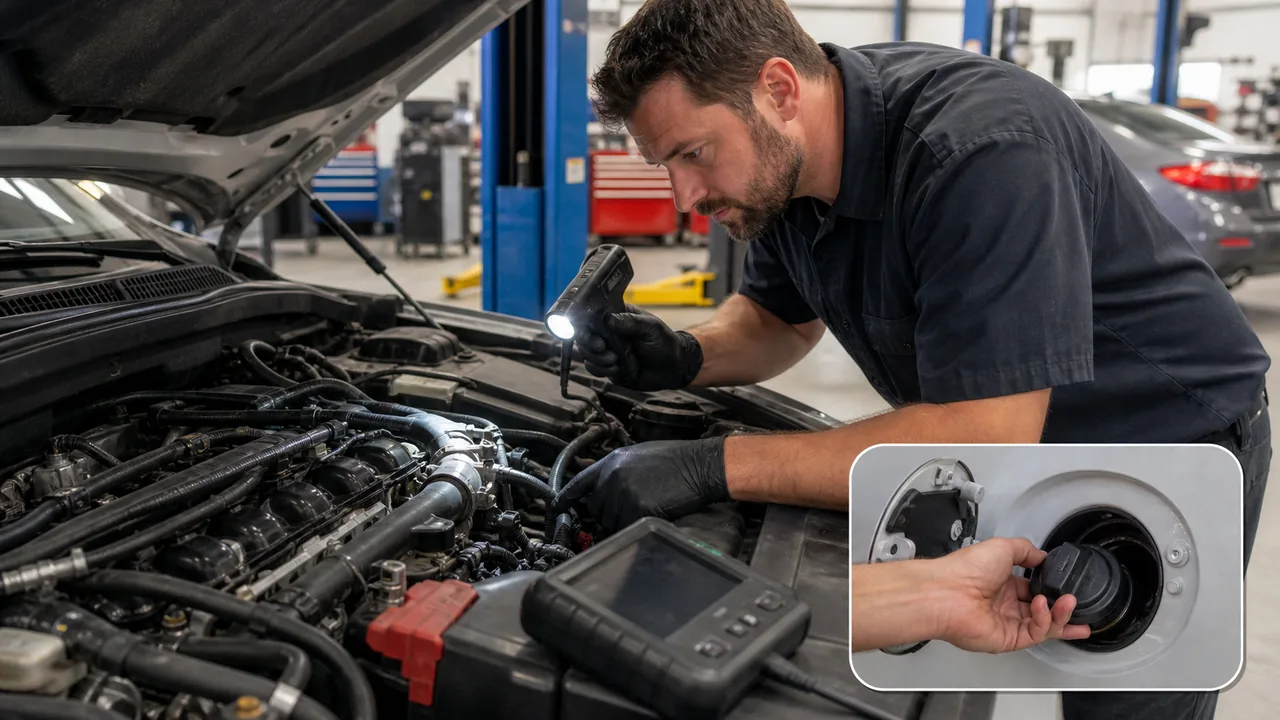
- Record all stored, pending, and permanent codes before clearing anything.
- Save freeze-frame data if the scan tool provides it.
- Re-seat the fuel cap until it locks or tightens as designed for that vehicle.
- Inspect the cap seal for cracks, flattening, missing material, dirt, or fuel contamination.
- Look at the filler neck sealing surface for rust, dents, dirt, or damage.
- Check accessible EVAP hoses for obvious cracks, disconnected ends, rubbing damage, or loose routing.
- Note whether fuel smell appears after refueling, while parked, or only during warm weather.
- If the cap is wrong, missing, or visibly damaged, use a compatible vehicle-specific replacement rather than a universal guess.
Diagnostic order
- Verify whether the code is P0456, P0442, P0455, or a combination of EVAP codes.
- Record freeze-frame data, pending codes, permanent codes, and readiness monitor status.
- Inspect the cap, filler neck, and obvious hose routing before clearing the code.
- Review related purge, vent, pressure sensor, or leak detection codes because they can change the diagnostic path.
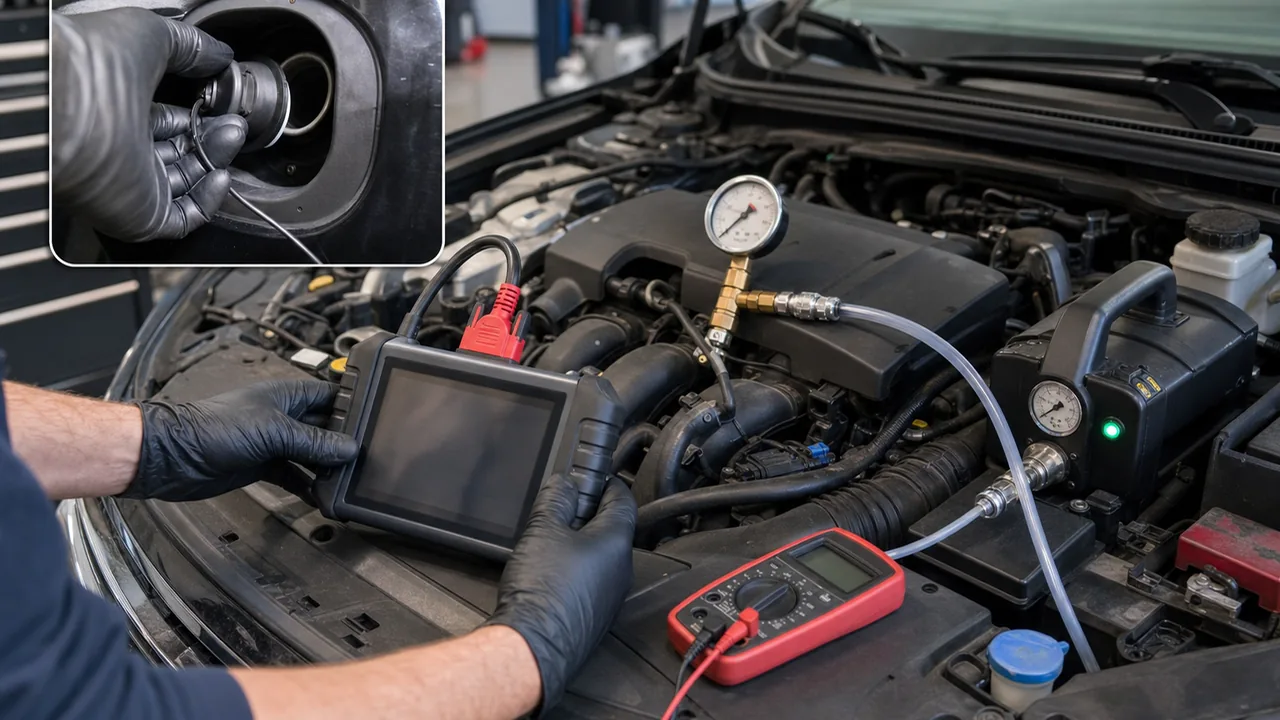
- If the code returns, perform or request an EVAP smoke test using proper equipment and safety procedures.
- Command purge and vent valves with a scan tool where supported, then confirm whether each valve seals and responds.
- Repair the confirmed fault, clear the code only after documentation, and complete the required readiness drive cycle for that vehicle.
| Smoke test | Visible leak path in hoses, cap area, filler neck, canister area, or valve plumbing | It finds leaks that cannot be seen during a basic driveway inspection |
| Bidirectional valve command | Whether purge and vent valves open, close, and seal when commanded | A stuck valve can mimic a leak even when hoses appear intact |
| Pressure or vacuum monitoring | Whether the EVAP system holds the expected change during testing | It supports diagnosis without relying on code names alone |
| OEM diagnostic flow | Vehicle-specific test order and component logic | EVAP monitor thresholds and hardware vary by make, model, and engine |
If the vehicle drives normally and there is no fuel smell, no visible leak, and no other warning light behavior, it is usually reasonable to drive carefully while arranging diagnosis. Do not ignore the code if inspection is due, because clearing it can reset readiness and delay an emissions pass.
Stop driving and inspect safely if there is a strong fuel smell, suspected liquid fuel leakage, new rough running, or multiple warning lights. Avoid open flames, improvised pressure testing, or disconnected EVAP lines around fuel vapors.
What usually fixes it
| Loose cap found after refueling | Tighten or re-seat the cap, document codes, and let the monitor rerun | Clearing codes immediately before emissions inspection |
| Cracked or wrong cap seal | Replace with a compatible vehicle-specific cap | Buying several EVAP parts without testing |
| Visible cracked hose or disconnected line | Repair or replace the confirmed damaged section | Assuming the canister or valves caused the code |
| Code returns after cap and visual checks | Request EVAP smoke testing and valve command checks | Replacing purge or vent valves based only on the DTC |
| P0455 with fuel smell or obvious damage | Inspect safely and pursue professional diagnosis promptly | Continuing to drive as if it is only a nuisance light |
FAQ
Is P0456 less serious than P0442 and P0455?
In general severity terms, yes. P0456 usually indicates a very small EVAP leak, P0442 a small leak, and P0455 a large or gross leak. The exact threshold and test logic are vehicle-specific.
Can a gas cap cause all three codes?
Yes, a loose, missing, damaged, or incorrect fuel cap can trigger EVAP leak codes, including large-leak conditions. It is a first check, not proof that the cap is the only fault.
Why did the code return after replacing the gas cap?
The new cap may be incorrect, the monitor may not have completed yet, or the leak may be elsewhere in the EVAP system. A returned code usually needs smoke testing or component command testing.
Should I clear the code before an emissions test?
Clearing the code can reset readiness monitors and delay inspection readiness. Record the code first, repair the confirmed fault, then allow the vehicle to complete its required monitor cycle.
Is an EVAP smoke test worth it?
For recurring codes, P0455, fuel smell, or no obvious cap problem, a smoke test is often the most direct way to locate a small leak without guessing parts.
Comments
Be the first to add a practical repair note or follow-up question.