
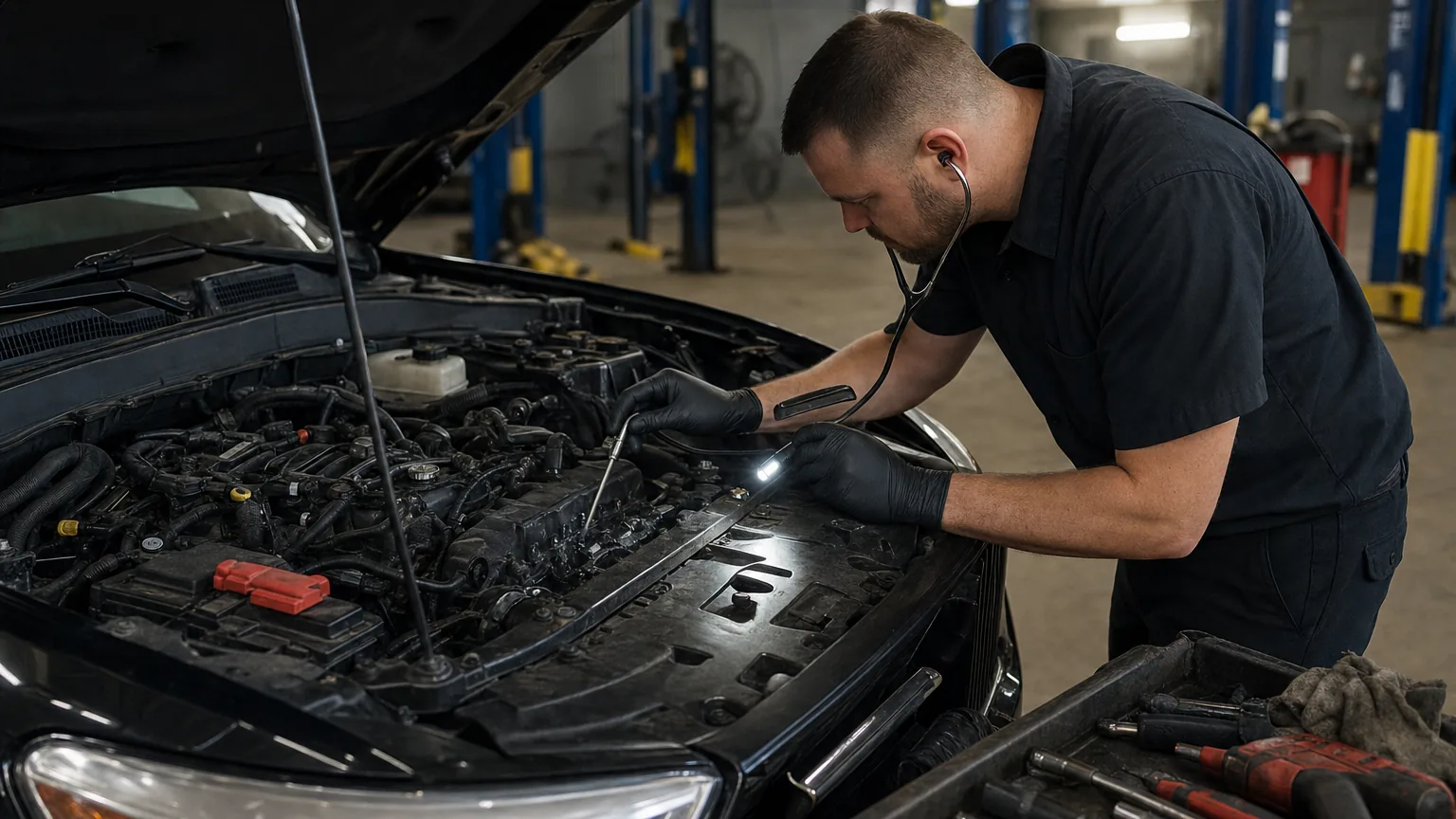
What this part does
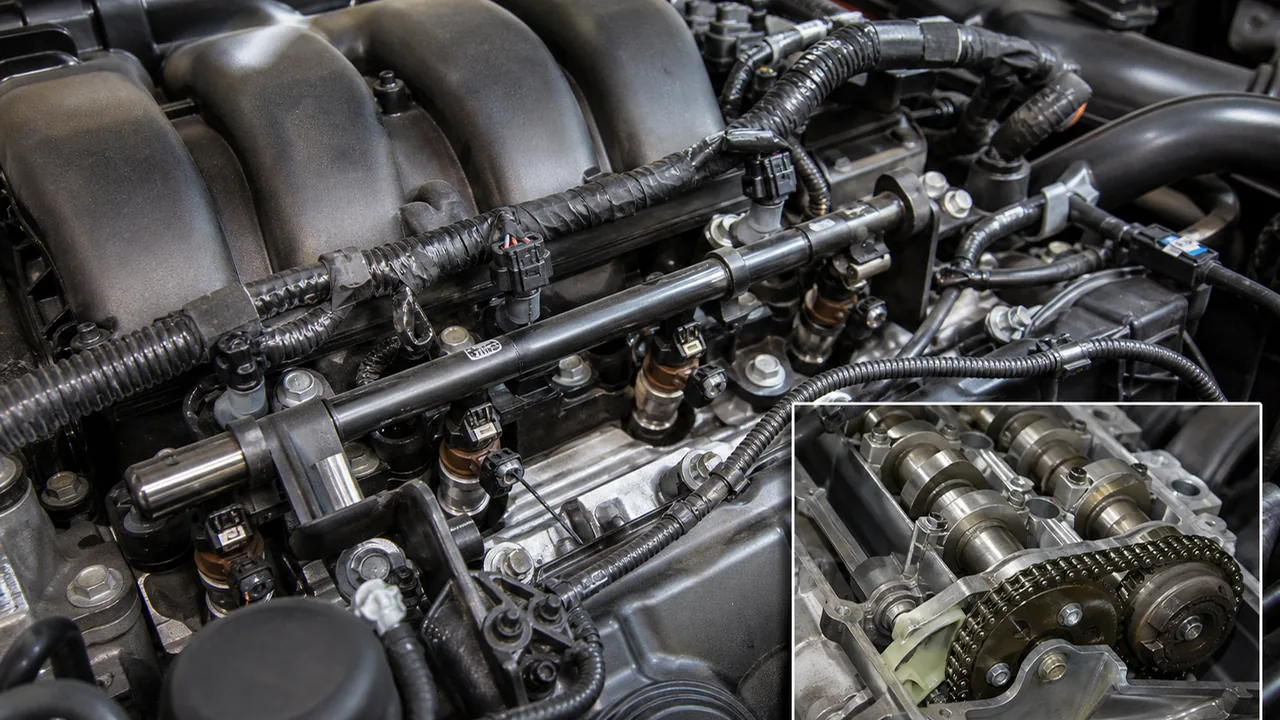
The engine depends on oil flow to separate moving metal surfaces, keep hydraulic components stable, and reduce impact noise. As the oil warms, a weak lubrication margin, worn bearing surface, sticky valvetrain component, or tensioner issue can become easier to hear. At the same time, exhaust joints expand, injector pulse noise remains rhythmic, and accessory bearings may change tone as heat reaches the front drive.
- Lubrication system: affects bearings, cam surfaces, timing components, and oil-fed adjusters.
- Valvetrain and timing drive: can create ticks, rattles, or chain-related noise when control or tension is unstable.
- Exhaust sealing: can mimic a tick, especially near manifolds or joints.
- Fuel injectors: often make a regular sharp ticking noise that can be mistaken for mechanical damage.
- Accessory drive: pulleys, tensioners, alternator, or compressor components can sound deeper than expected from outside the engine.
Common failure signs
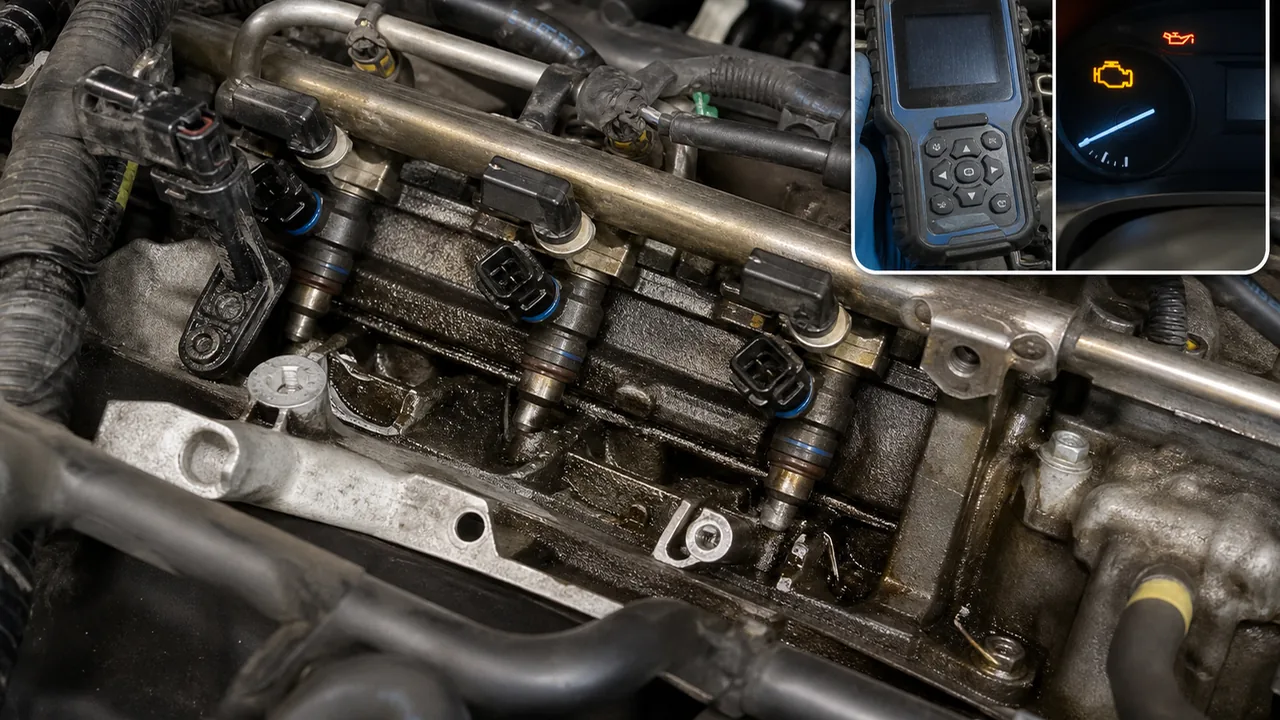
A regular light tick that does not worsen with load usually points away from a catastrophic lower-end knock. A hollow knock that becomes stronger as the engine is loaded or when oil-pressure warnings appear is more serious. A brief disappearing sound can still be real; intermittent noise often reflects temperature, oil flow, belt load, exhaust expansion, or component resonance.
- Top-end tick: often loudest near the valve covers or upper engine area.
- Timing-side rattle or tick: often seems concentrated at the front or chain-drive area, depending on engine layout.
- Exhaust leak tick: often sharper near a manifold or flange and may change after heat soak.
- Accessory noise: often loudest at the belt side and may change when electrical or A/C load changes.
- Lower-end knock: usually deeper, more metallic, and more concerning if it follows RPM and load.
This query has several search intents at once. The owner wants to know what the sound means, a technician wants a test order, and a code-focused reader wants to know whether DTCs change the path. The safest answer is to separate those layers instead of forcing one diagnosis from a video or short description.
Before replacing it
The owner-safe path is observation, not disassembly. Park on level ground, keep hands and clothing away from moving belts and fans, and do not remove caps or covers while the engine is running. If the oil warning stays on after confirming level, follow the owner-manual warning logic and do not resume driving.
- Oil level between the dipstick marks is a baseline, not proof that oil pressure is correct.
- A recent oil change raises the value of checking filter fitment, oil type, oil level, and drain-plug leakage.
- No check engine light does not rule out bearing, accessory, exhaust, or valvetrain noise.
- A video helps compare sounds, but the loudest physical location matters more than phone microphone tone.
Inspection steps
A warm-only deep knock or tick on a 2020 Ford Explorer Police Interceptor often points to an engine or accessory issue. The most important first action is to park safely, check the engine oil level by the owner manual method, scan for DTCs if available, and note whether the sound is strongest at the top, front, side, or bottom of the engine. If the oil-pressure warning is on or the sound becomes a heavy knock with load, stop driving and move to technician diagnosis.
- Investigate soon: a light, regular tick at idle with normal oil level and no warning lamps.
- Limit driving: a deeper knock that appears warm, changes with RPM, or follows recent oil service.
- Stop driving: oil-pressure warning, flashing check engine light, overheating, power loss, metallic debris in oil, or a knock that becomes louder under load.
A forum video or owner description can guide the question, but it cannot prove rod knock, timing noise, injector noise, or bearing damage without sound-source isolation and oil-pressure validation.
The practical order is to rule out common external and service-related causes before condemning the engine. A warm-only deep tick can be harmless or serious, but the repair path changes completely once oil pressure, DTCs, sound location, and recent maintenance history are known.
- Identify the exact powertrain by VIN before applying any engine-specific fault pattern.
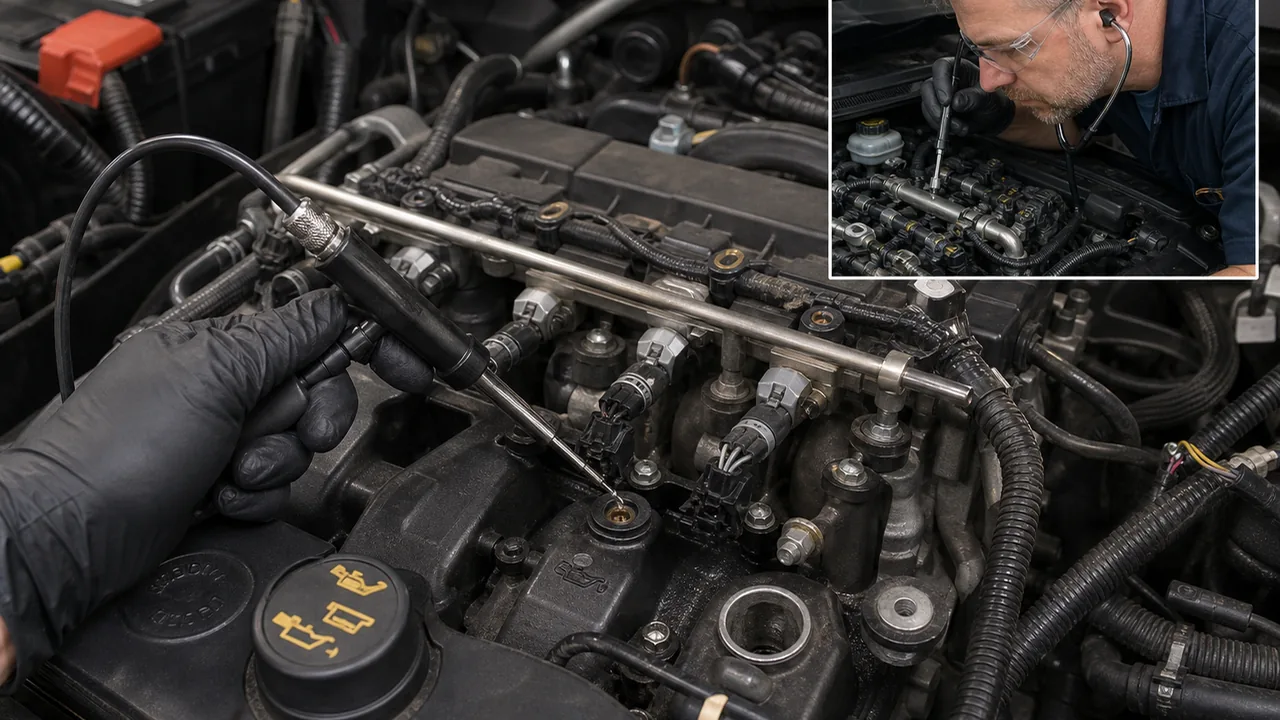
- Confirm whether the noise is top-end, timing-side, belt-side, exhaust-side, or lower-end.
- Use scan data and oil-pressure data to separate control issues from mechanical wear.
- Inspect external false positives before recommending internal engine work.
- Escalate to teardown only when measurements, location, and symptoms support it.
Do not clear codes before recording freeze-frame data. A pending misfire, cam timing, or emissions code may explain drivability symptoms even when it does not directly explain a mechanical knock.
Code-present branch
If misfire codes, cam timing or correlation codes, or powertrain fault messages are present, diagnose those branches alongside the sound. A misfire can make an engine shake and sound worse, while timing-control data may explain a rattle or uneven running. The code still needs confirmation with live data, visual inspection, and OEM tests.
No-code branch
If there are no DTCs, do not dismiss the noise. Exhaust leaks, accessory bearings, oil-pressure problems, valvetrain wear, and lower-end wear may not set a code. The no-code path should focus on oil level, measured oil pressure when indicated, sound-source isolation, and oil/filter inspection.
The safest used-part strategy is narrow: buy a used part only when the failed part has been isolated and compatibility is proven. For a police-service vehicle, idle time, fleet maintenance history, and decommissioning work can matter as much as odometer mileage, so documentation carries real value.
Use the internal diagnostic path when the noise is new, warm-only, deep, or hard to locate. If the checks point toward oil pressure, lower-engine noise, timing noise, or a flashing MIL, keep the vehicle out of regular use until a technician confirms the source.
Replacement notes
Sound labels are often misleading. A deep tick can be described as a knock, and a belt-side bearing can echo through the engine bay. The useful distinction is where the sound is loudest, whether it is rhythmic, whether it changes with load, and whether it matches warning lights or scan data.
- Accessory-drive repair: replace only the confirmed noisy pulley, tensioner, alternator, compressor-related component, or belt-drive part after verifying alignment and condition.
- Exhaust repair: repair the leaking gasket, fastener, manifold, or joint after confirming the leak source and checking for nearby heat damage.
- Injector-related path: do not replace injectors for normal rhythmic ticking; act only when noise, DTCs, balance data, or fuel-system tests support it.
- Valvetrain or timing path: verify oil condition, control data, and OEM inspection points before replacing tensioners, guides, adjusters, or related components.
- Internal engine path: if oil pressure, oil debris, lower-engine sound, and load behavior support internal wear, teardown or engine replacement evaluation may be needed.
After any repair, verify the noise cold and warm, confirm no warning lamps return, recheck fluid levels, and document DTC status before considering the job complete.
FAQ
Is a warm deep knock always rod knock?
No. A warm deep knock can come from lower-end wear, but it can also come from accessory-drive noise, exhaust leakage, valvetrain noise, timing-related noise, oil-service problems, or another source.
Can I drive if the ticking comes and goes?
Limit driving until oil level, warning lights, DTCs, and sound location are checked. Do not drive if the oil warning appears, the check engine light flashes, the engine overheats, power drops, or the knock gets heavier under load.
Do DTCs prove what caused the noise?
No. DTCs help route diagnosis, but they do not prove the physical source of a knock or tick.

Comments
Be the first to add a practical repair note or follow-up question.