
What this part does
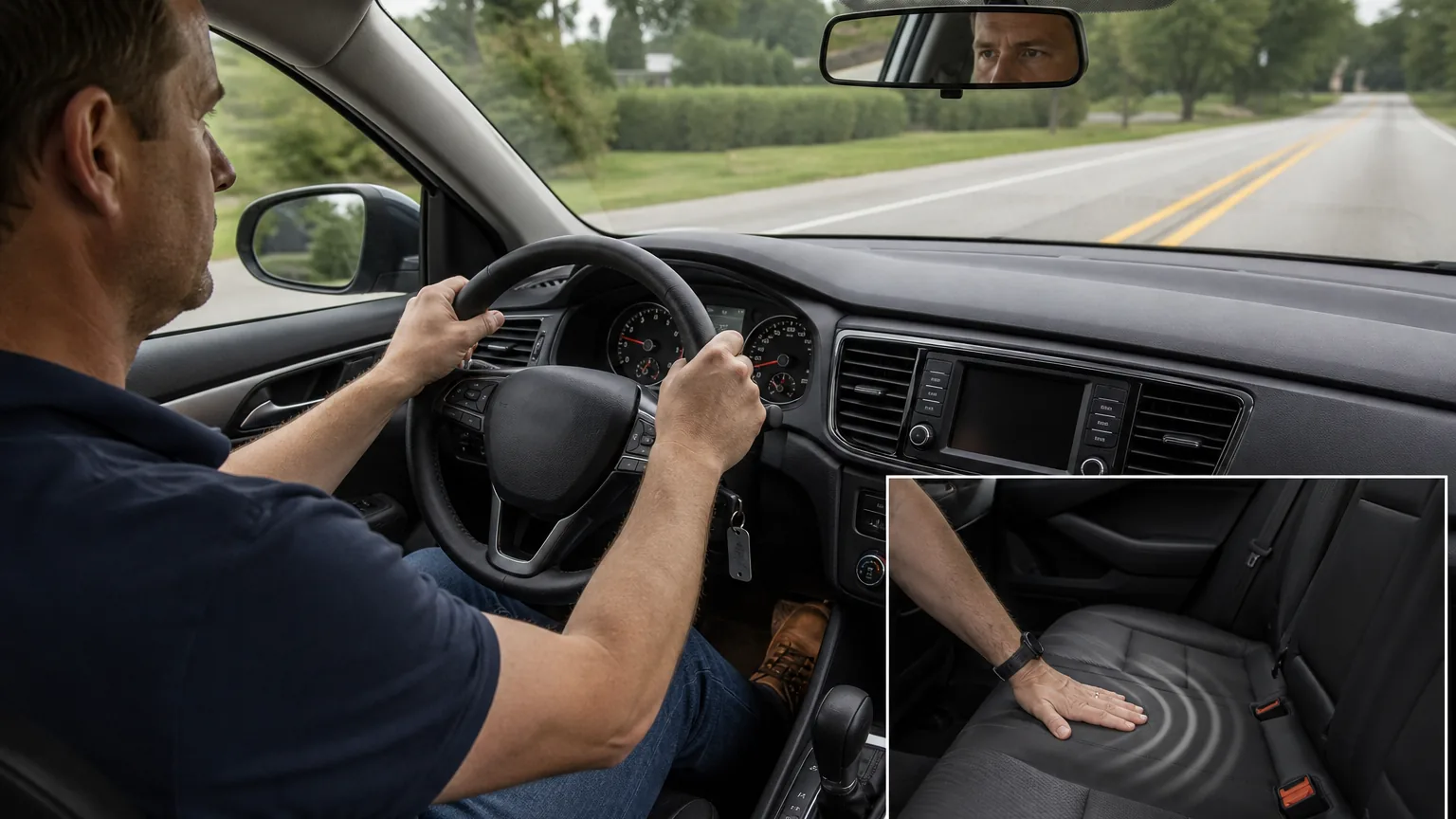
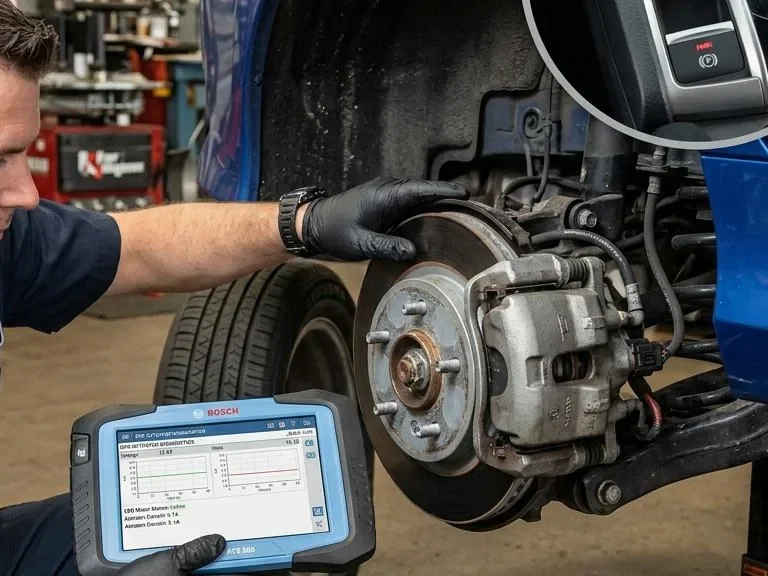
The brake rotor, pads, caliper, hub, wheel bearing, and suspension all help control how braking force reaches the tire. The caliper squeezes the pads against the rotor, the rotor turns with the hub, and the tire transfers the braking force to the road. If the rotor surface, pad contact, hub face, or caliper movement is uneven, the driver may feel vibration through the steering wheel, pedal, seat, or vehicle body.
Front brakes often carry a large share of braking load, so front brake or front-end problems are commonly felt through the steering wheel. Rear brake vibration can be less obvious at the wheel and more noticeable through the seat, floor, or vehicle shell. Because the brake system works as a connected chassis system, the feel pattern narrows the search but does not replace inspection.
Common failure signs
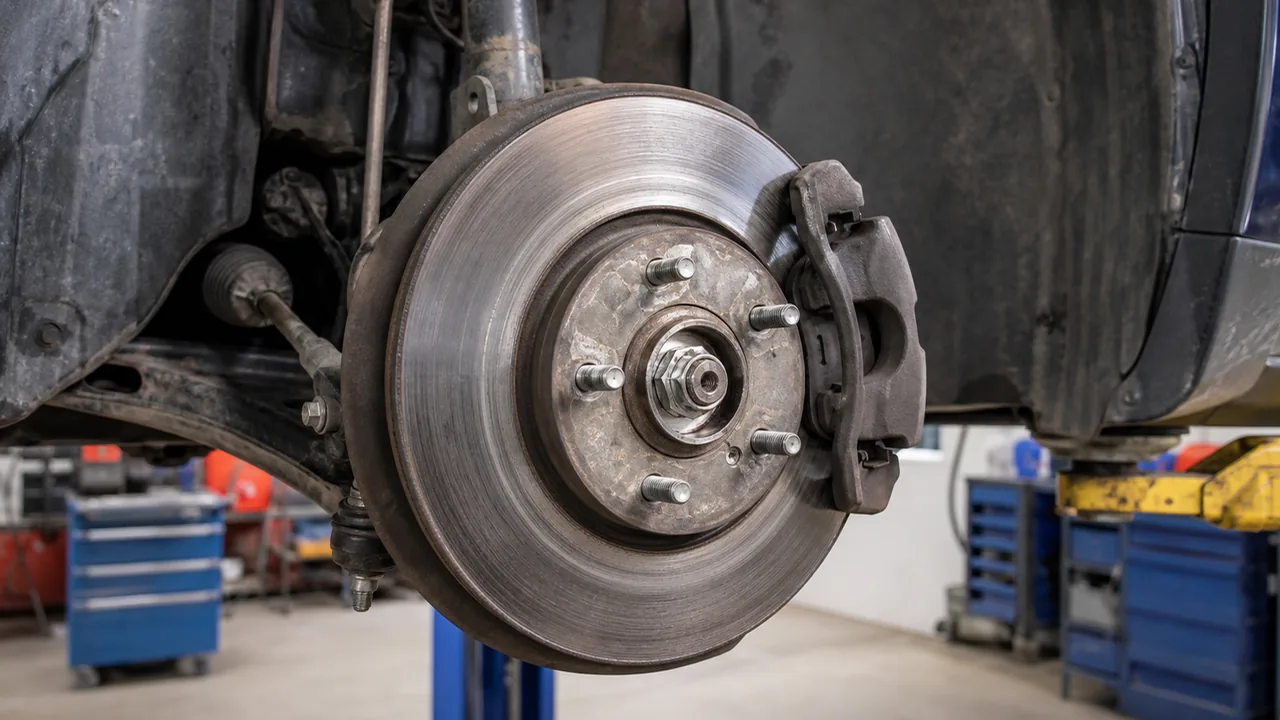
Steering wheel vibration during braking usually suggests that the first inspection should start at the front axle. Common areas include front rotor thickness variation or runout, uneven pad deposits, worn or tapered pads, sticking caliper slide pins, hub-face corrosion, wheel bearing play, or looseness in front suspension and steering links.
Seat, floor, or body vibration during braking may suggest rear brake involvement, especially if the steering wheel remains mostly calm. Rear rotors, rear pads, rear calipers, parking brake hardware, rear hubs, bearings, tires, and wheels can all create feedback that travels through the body. A tire or wheel issue can also feel worse during braking because weight transfer loads the chassis differently.
- Grinding noise: possible pad wear into the rotor, debris, or severe surface damage.
- Burning smell: possible overheated brake, dragging caliper, or parking brake issue.
- Pulling while braking: possible caliper, hydraulic, tire, alignment, or suspension problem.
- Rhythmic pedal pulse: possible rotor thickness variation, runout, or ABS activity.
- Warning lights: ABS, stability control, or brake-system diagnosis changes the path and should not be treated as a parts-only problem.
Before replacing it
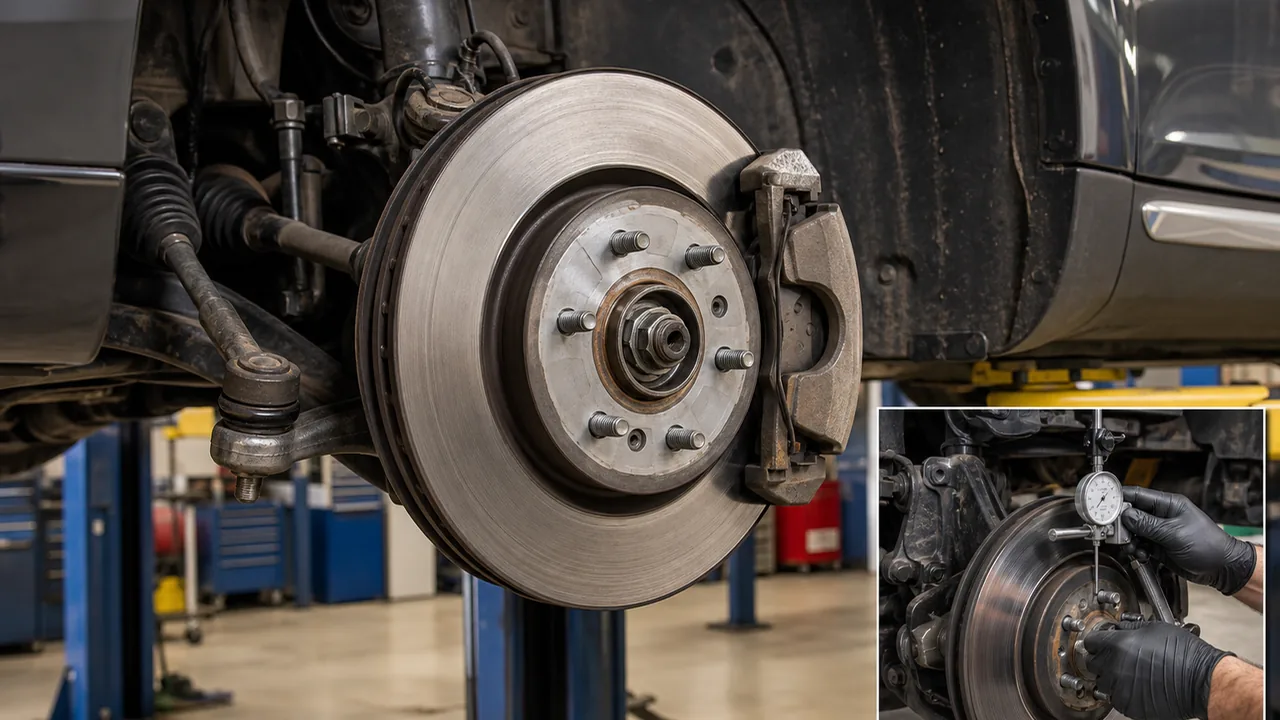
Brake vibration is often blamed on warped rotors, but that phrase can hide several different problems. Rotor thickness variation, lateral runout, uneven pad material transfer, hub corrosion, improper wheel mounting, sticking caliper slides, worn pads, bearing looseness, and tire or wheel defects can feel similar from the driver seat.
- Confirm the vibration happens during braking rather than during steady cruising.
- Identify where the feedback is strongest: steering wheel, pedal, seat, floor, or whole vehicle.
- Check whether warning lights are present before assuming it is a simple mechanical brake issue.
- Review recent brake, tire, wheel, or suspension work because disturbed hubs, wheels, or hardware can change vibration behavior.
- Use vehicle-specific fitment and service information before buying pads, rotors, calipers, or hardware.
Internal research paths that fit this step include front brake rotor symptoms, rear brake rotor symptoms, brake caliper sticking symptoms, tire vibration while driving, and wheel bearing noise vs brake noise.
Inspection steps
Steering wheel shake during braking often points to a front brake or front-end issue, while seat, floor, or body vibration may suggest a rear brake or rear axle issue. Brake pedal pulsation can come from either axle. Treat the location as a diagnostic clue, not proof, and inspect the brake system because braking performance is safety-critical.
| Driver feedback | Likely area to inspect first | Why it matters |
|---|---|---|
| Steering wheel shake while braking | Front rotors, front pads, calipers, hubs, bearings, and steering or suspension joints | The front axle sends vibration through the steering system more directly. |
| Brake pedal pulsation | Either front or rear brakes, ABS activity, rotor thickness variation, or hydraulic feedback | Pedal feel travels through the brake hydraulic system, so it is not axle-specific by itself. |
| Seat, floor, or body shake | Rear rotors, rear pads, rear calipers, parking brake hardware, rear hub, bearing, tire, or wheel issues | Rear vibration often reaches the cabin through the body rather than the steering wheel. |
| Whole-vehicle vibration | Brake, tire, wheel, bearing, or suspension issue | A broad shake needs a wider inspection before parts are replaced. |
First action: note whether the vibration happens only during braking, which part of the vehicle you feel it through, whether it changes with speed or pedal pressure, and whether any brake, ABS, or stability-control warning light is on.
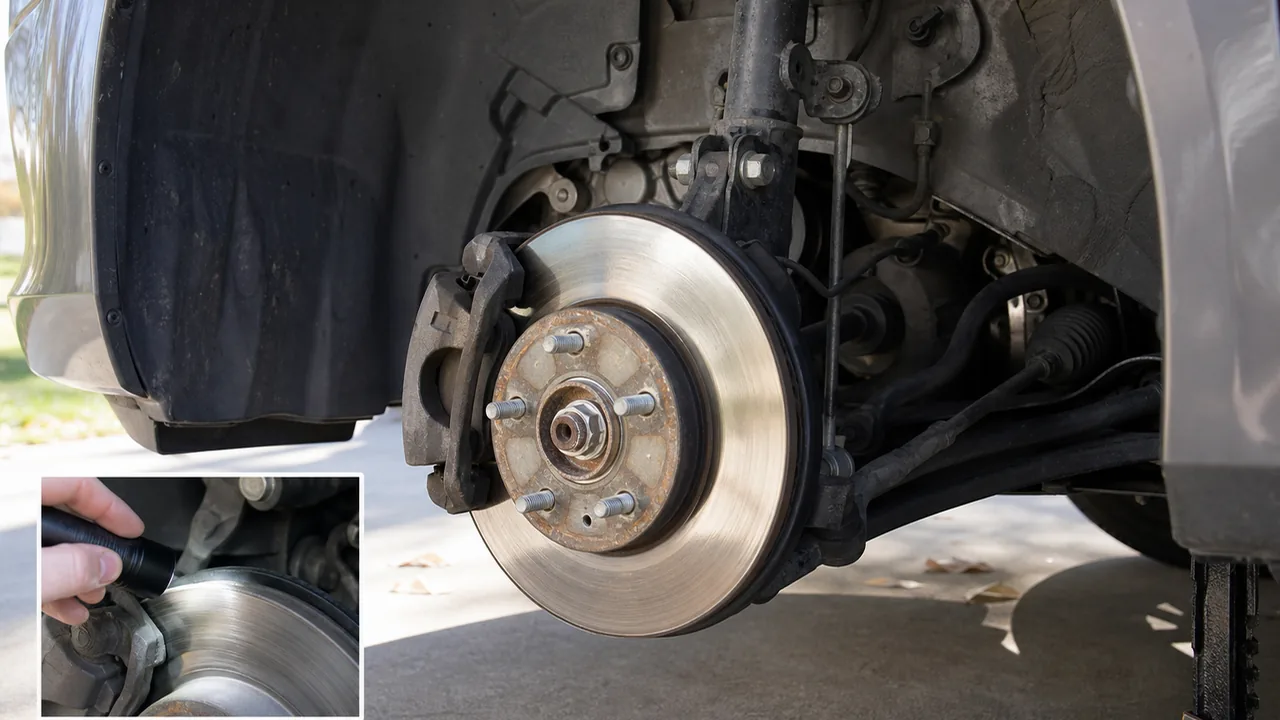
Owner checks should stay safe and non-invasive. Do not crawl under an unsupported vehicle or disassemble brake parts unless you are equipped and trained to do so. The useful owner-level goal is to collect clean symptom evidence before a brake inspection or parts lookup.
- Note whether the shake appears only when the brake pedal is applied.
- Record whether steering wheel shake, pedal pulsation, seat vibration, or whole-body movement is strongest.
- Listen for grinding, scraping, clicking, or rubbing during braking and low-speed turns.
- Look for obvious tire damage, uneven tire wear, loose wheel covers, or a visibly low tire.
- Check the dash for brake, ABS, or stability-control warning lights.
- Review whether the symptom started after brake service, tire rotation, wheel replacement, or suspension work.
Technician inspection should go beyond a quick visual check. A proper diagnostic path can include a road test, wheel removal, pad and rotor inspection, rotor runout measurement, rotor thickness measurement, hub-face inspection, caliper slide and piston checks, parking brake hardware inspection, wheel bearing checks, suspension checks, and comparison with the OEM service manual.
- Road-test the vehicle safely to confirm when the vibration appears and where it is felt.
- Inspect tires and wheels before focusing only on brake parts.
- Remove wheels and inspect pad wear pattern, rotor surface condition, hardware, and caliper movement.
- Measure rotor runout and thickness variation using the correct tools and vehicle-specific limits.
- Inspect the hub face for corrosion, debris, damage, or runout that can transfer into the rotor.
- Check wheel bearings, steering links, suspension joints, and bushings for looseness or wear.
- If warning lights are present, scan the ABS, stability-control, and brake modules and follow OEM diagnostic procedures.
Brake pedal pulsation is useful evidence, but it does not identify the axle by itself. The pedal is connected to the hydraulic system, so feedback from rotor thickness variation, runout, uneven pad contact, caliper behavior, or ABS activation can be felt at the pedal whether the problem begins at the front or rear.
ABS activation can also create a pulsing feel, especially on loose, wet, icy, or uneven surfaces. That is different from a repeatable vibration that appears during normal braking on a consistent road surface. If ABS, stability control, or brake warning lights are on, ordinary brake vibration may still not set a DTC, but the warning light changes the diagnostic path and requires scan-tool checks and service information.
- Rotor thickness variation or runout: a common mechanical source of repeatable brake vibration that must be measured, not guessed.
- Uneven pad deposits: pad material can transfer unevenly to the rotor surface and create a pulsing feel during braking.
- Worn, glazed, cracked, or uneven pads: pad condition can create noise, vibration, poor feel, or uneven braking force.
- Sticking caliper or slide pins: a caliper that does not move freely can overheat one brake, wear pads unevenly, and create vibration or pulling.
- Hub corrosion, damage, or runout: the rotor depends on a clean, true mounting surface, so hub condition matters.
- Tire or wheel issues: out-of-round tires, damaged wheels, or balance problems can overlap with brake vibration.
- Wheel bearing or suspension looseness: looseness can magnify braking forces into steering or body shake.
- ABS or electronic brake concerns: warning lights or abnormal ABS activation require diagnosis beyond pads and rotors.
Do not use universal rotor limits, torque values, or service specifications. Those values are vehicle-specific and should come from OEM service information or a verified repair database.
Brake vibration should be inspected soon when it is mild but repeatable. It becomes urgent when the symptom suggests reduced braking control, overheating, fluid loss, metal-to-metal contact, or electronic brake-system involvement. Do not continue normal driving when the brake feel changes suddenly or the vehicle becomes hard to control.
- Stop driving and seek immediate inspection if there is grinding, smoke, a burning smell, brake fluid leakage, a hard pull during braking, long pedal travel, severe vibration, or a brake warning light.
- Use extra caution and schedule prompt inspection if vibration is repeatable during braking, getting worse, paired with noise, or new after recent wheel or brake work.
- If ABS or stability-control lights are on, use diagnostic service information and scan-tool checks before assuming the repair is only pads and rotors.
Used brake friction parts are generally a poor choice because pads and rotors wear into a specific vehicle, heat cycle, and surface pattern. For safety-critical braking parts, new fitment-correct pads, rotors, and hardware are usually the more defensible path once replacement is confirmed.
- Avoid used pads and rotors for normal brake service decisions.
- If considering used calipers or brackets, inspect for corrosion, seized slides, damaged threads, torn boots, and correct fitment.
- Do not buy a used hub, bearing, or electronic brake component without confirming part number, condition, and compatibility.
- Verify whether the vehicle uses electronic parking brake procedures before disturbing rear brake components.
Steering wheel vibration during braking often suggests a front brake, hub, bearing, steering, or suspension issue, while seat, floor, or body vibration may suggest rear brake or rear axle involvement. Brake pedal pulsation can come from either axle because the hydraulic system transfers feedback. Symptom location helps prioritize inspection, but rotor runout, thickness variation, pad condition, caliper operation, hubs, tires, bearings, and warning lights should be checked before replacing parts.
Replacement notes
Repair decisions should follow the confirmed fault. If the front axle is confirmed, use vehicle-specific front pads, rotors, hardware, and related parts. If the rear axle is confirmed, use rear-specific parts and include parking brake hardware or electronic parking brake procedures where applicable. Fitment matters because brake designs vary by year, make, model, trim, drivetrain, and option package.
Paired axle service is common when both sides of an axle show comparable wear or when replacing friction parts that must work evenly side to side. That does not mean every vibration requires replacing every brake part. Calipers, hubs, bearings, and suspension parts should be replaced only when inspection confirms wear, sticking operation, looseness, damage, or service-limit failure.
A practical conversion path is simple: severe symptoms call for immediate professional inspection; mild but repeatable vibration calls for brake inspection; confirmed front or rear wear can move to fitment-specific pads, rotors, and hardware; warning lights route toward diagnostic service rather than parts-only replacement.
FAQ
Can rear brakes cause steering wheel shake?
They can contribute in some cases, but steering wheel shake during braking more commonly sends inspection toward the front brakes, hubs, bearings, steering, or suspension. Rear issues are often felt more through the seat, floor, or body, so inspection is still needed.
Does pedal pulsation always mean warped rotors?
No. Pedal pulsation can come from rotor thickness variation, runout, pad deposits, caliper behavior, ABS activation, hub condition, or other brake and chassis issues. The rotor should be inspected and measured before replacement.
Is it safe to drive with brake vibration?
Mild, repeatable vibration should be inspected soon. Stop driving and seek immediate inspection if there is grinding, smoke, burning smell, fluid leakage, long pedal travel, hard pulling, severe vibration, or any brake warning light.
Can tire problems mimic brake vibration?
Yes. Tire damage, wheel issues, imbalance, bearing looseness, and suspension wear can overlap with brake vibration, especially when braking loads the chassis. That is why tire and wheel checks belong early in the inspection path.

Comments
Be the first to add a practical repair note or follow-up question.