
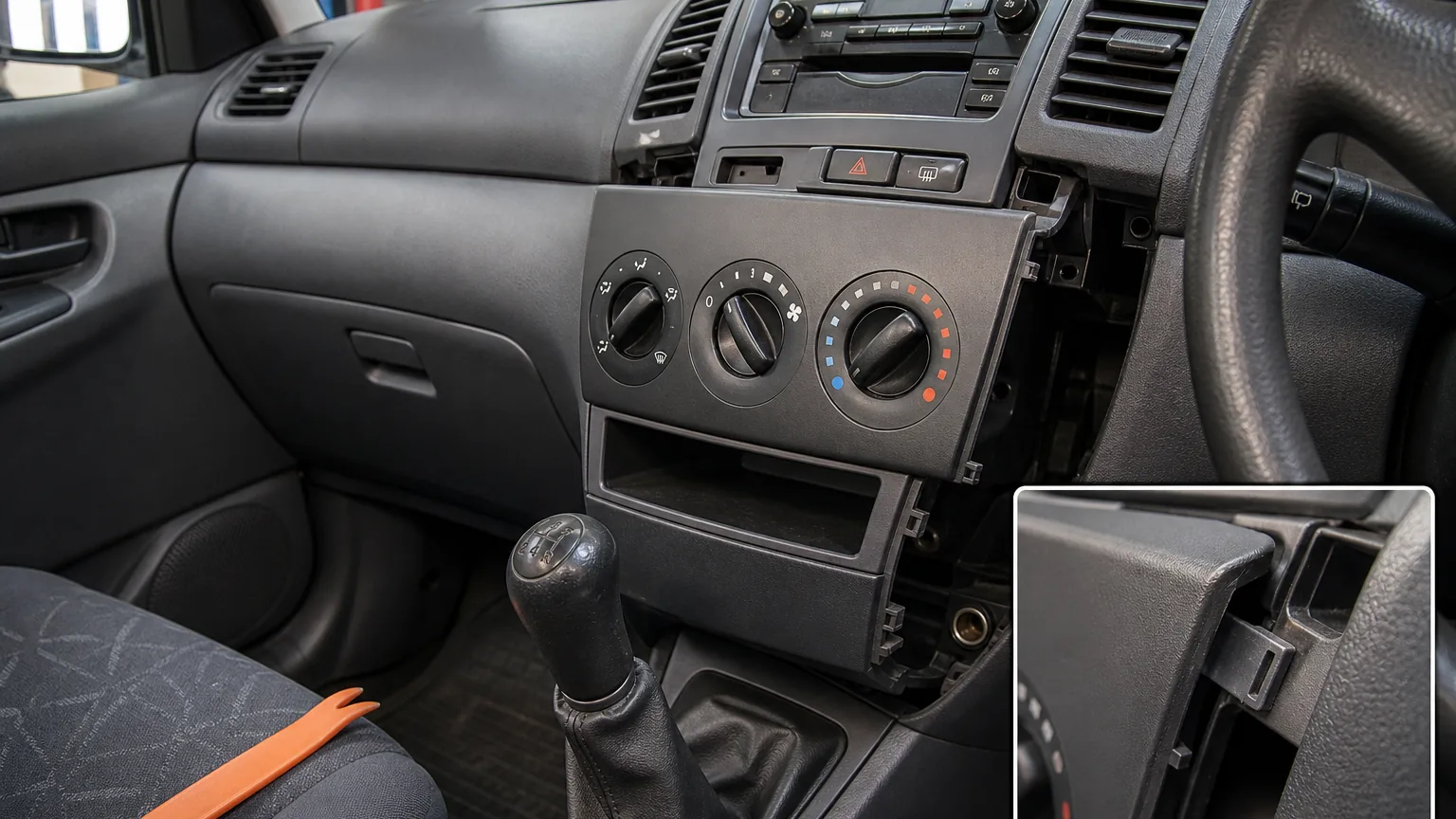
What this part does
The fascia itself is not the heater core, blower motor, air flap, or demist system. It is the access and trim layer around the manual controls. Behind it may be mechanical control cables, electrical connectors for illumination or switches, and the control unit that translates dial movement into air temperature, fan speed, and air-direction changes.
- Temperature control usually changes how much heat is requested through the manual control system.
- Fan control usually commands blower speed through the switch and related circuit, not through the fascia plastic alone.
- Air direction control changes where air is sent, including screen, face, and footwell outlets depending on the vehicle setting.
- Panel illumination lets the dials and symbols remain visible at night, so failed bulbs or lighting faults often trigger fascia access.
A broken fascia can make the controls feel loose, but poor heater performance can also come from deeper HVAC faults. Confirm what is actually failing before replacing visible trim.
- Set the vehicle safely, switch the ignition off, and protect the surrounding dashboard surfaces.
- Confirm that the panel is the manual heater dial version and compare the visible layout with the part or guide being used.
- Inspect the surrounding trim and remove only pieces that the OEM procedure or verified access path requires.
- Remove confirmed screws or fasteners and keep them organized by location.
- Ease the fascia evenly with plastic trim tools, watching for clips that release gradually rather than suddenly.
- Stop if the fascia moves only a small amount and then binds; hidden resistance may be a cable, connector, clip, or missed fastener.
- Disconnect documented connectors or cables only when their release method and routing are understood.
- After refitting, test fan speeds, heat range, air direction, recirculation if fitted, panel illumination, and windshield demist.
This is an overview, not a substitute for the exact Toyota removal sequence. The exact fastener and clip locations need expert validation against OEM repair data for the manual non-climate-control panel.
Common failure signs
The useful answer is a cautious trim-removal framework: confirm the manual HVAC version, avoid climate-control assumptions, protect the dash, and validate heater control operation after reassembly. DTC language is secondary unless the vehicle also has an electronic HVAC, blower, or control-circuit fault being diagnosed separately.
| Symptom | A stuck dial, failed backlight, loose fascia, cracked panel, or poor demist control may have led the owner to the heater dial area. | Inspect visible trim, dial feel, illumination, and control response before removing parts. |
| DTC | OBD-II codes are usually not the reason for manual fascia removal. | Do not chase codes unless a separate electrical or HVAC control complaint exists. |
| Technical | The main task is access to the non-climate-control manual heater dial fascia. | Follow OEM procedure, remove confirmed fasteners, release clips gently, and protect cables. |
| Editorial | The reader needs confidence without being pushed into risky levering. | Explain trim variation, cable caution, and stopping points clearly. |
A cosmetic crack or failed bulb is usually a low-urgency repair. A dial that will not select demist, a fan switch that does not respond, or an airflow control that no longer clears the windshield should be treated more seriously because visibility and heater control are involved.
- Heater dial backlighting is dark while other dashboard lights still work.
- The fascia is cracked, loose, or sitting unevenly after previous removal.
- A dial turns but the temperature or air direction does not change as expected.
- The control feels jammed, notchy, or unusually loose.
- A replacement radio or previous dashboard work appears to have disturbed the surrounding trim.
- Demist selection is weak, unavailable, or inconsistent after the controls have been disturbed.
Do not keep turning a stiff control aggressively. A bound cable or flap can be damaged further if the dial is forced.
Before replacing it
- Use plastic trim tools so levering force is spread more gently than with a metal screwdriver.
- Use only a suitable screwdriver for confirmed screws or fasteners; do not probe blindly into trim gaps.
- Keep a magnetic tray or labeled container for screws and small clips.
- Use a flashlight to inspect dark edges, hidden seams, and prior repair marks.
- Apply low-tack tape to nearby visible surfaces if a tool may touch them.
- Take phone photos before removal, after each trim piece moves, and before disconnecting anything.
Before starting, check for an aftermarket radio, missing trim screws, old pry marks, or mismatched fascia parts. Prior work can change how the panel sits and can hide the reason it now resists removal.
A failed bulb may require access but not a replacement fascia. A stuck dial may point to a cable or flap issue. A loose fascia may come from a broken clip, missing fastener, or previous incorrect installation. The best repair decision is made after the trim is inspected and the control movement is understood.
- Confirm whether the complaint is cosmetic, lighting-related, mechanical, or control-operation related.
- Check whether all heater functions still respond before disassembly.
- Look for mismatched trim color, uneven gaps, or broken tabs from previous removal.
- Do not order a used fascia until manual HVAC fitment and market variation are checked.
Inspection steps
The 2004 Corolla Verso heater dials fascia removal without climate control usually means releasing a manual HVAC fascia that may use a different fascia release path, so the correct removal order matters. The first check is for visible fasteners, surrounding trim movement, hidden resistance, and any cable or connector attachment before applying more force. This is normally a low-urgency interior access job, but it becomes urgent to correct if the heater, fan, or windshield demist controls no longer work.
Do not force the fascia because older dashboard plastics and retaining clips can crack. Exact screw, clip, connector, and cable handling should be verified against Toyota repair information for the 2004 Corolla Verso manual heater dial panel before publication or hands-on work.
For a 2004 Corolla Verso with manual heater dials, remove the heater dial fascia only after the surrounding trim and confirmed fasteners are free, then release clips gently and handle any manual control cables or electrical connectors according to OEM repair information.
The relevant vehicle scope is a 2004 Toyota Corolla Verso with manual heater dials and no automatic climate control. That means the fascia is part of a manual control interface for temperature, fan, and air-direction selection rather than a full climate-control module with its own display and automatic regulation.
- Look for rotary manual heater dials rather than an automatic temperature display or climate-control buttons.
- Check whether side fascia pieces have already been removed, but do not assume that side trim removal releases the center heater dial fascia.
- Compare any photo, used part listing, or forum advice against the exact manual panel in front of you.
- Treat market, trim-level, and prior-repair variation as real until the fasteners and clips are confirmed on the car.
If the photo or guide you are using shows an automatic climate-control unit, it may still be useful for general dashboard layout context, but it is not enough to confirm the manual fascia release sequence.
- Clips can hold the fascia even after nearby trim has been removed, and older plastic can crack if twisted.
- Fasteners may be hidden by adjacent trim or previous radio work, so verify before levering.
- Manual heater controls may use cables or mechanical linkages that should not be stretched or kinked.
- Electrical connectors may serve illumination, switches, or control functions and should not be pulled by the wires.
- A previously installed wrong fascia or missing clip can make the panel sit crooked and resist normal movement.
If the panel springs back, tilts, or binds on one side, assume a retained point is still present. Work around the perimeter with inspection light and reference photos before continuing.
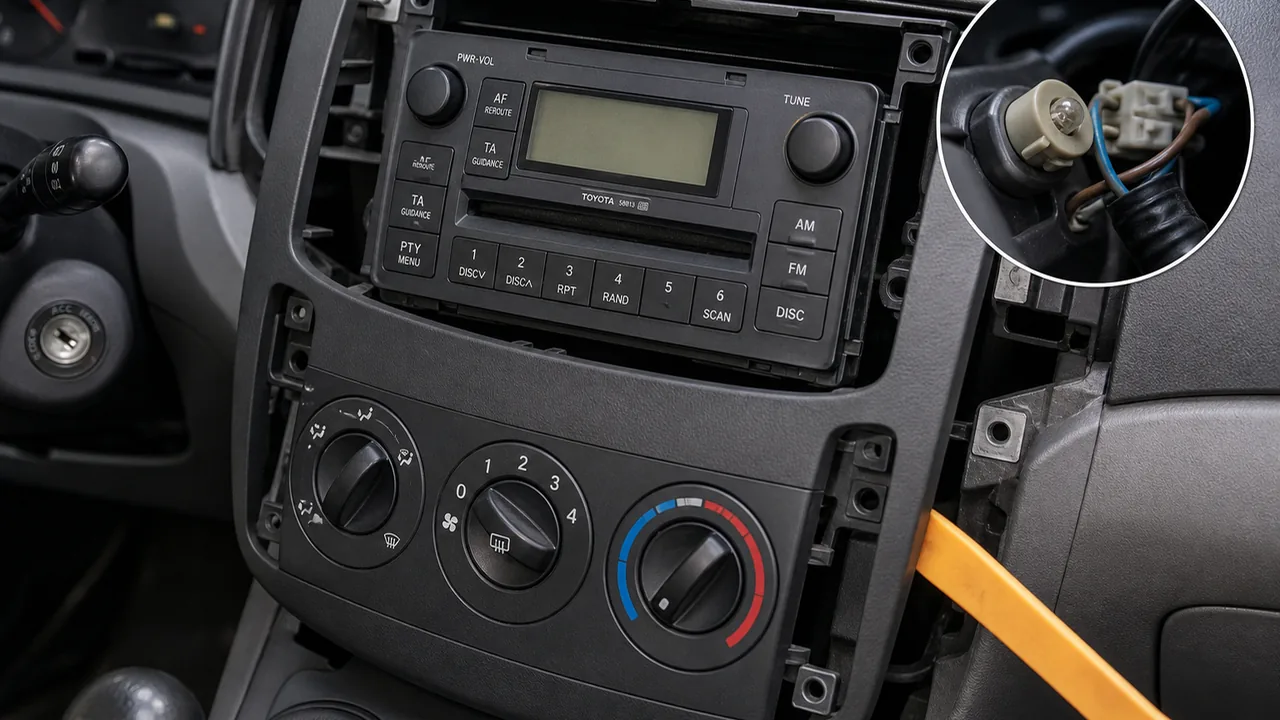
- Failed heater control bulb or panel illumination that requires access behind the fascia.
- Cracked, loose, or cosmetically damaged fascia that no longer sits correctly.
- Stuck or rough heater dial that may involve a cable, flap, or control head rather than the fascia alone.
- Access around the radio surround or center trim after audio or dashboard work.
- Broken clip, missing fastener, or previous incorrect installation causing uneven panel fit.
- Incorrect replacement fascia or market-specific trim mismatch discovered during a repair.
A failed bulb or cracked plastic is generally a straightforward access reason. A stuck dial, heater performance issue, or demist fault needs more careful diagnosis because the problem may be behind the control panel or inside the HVAC air-distribution system.
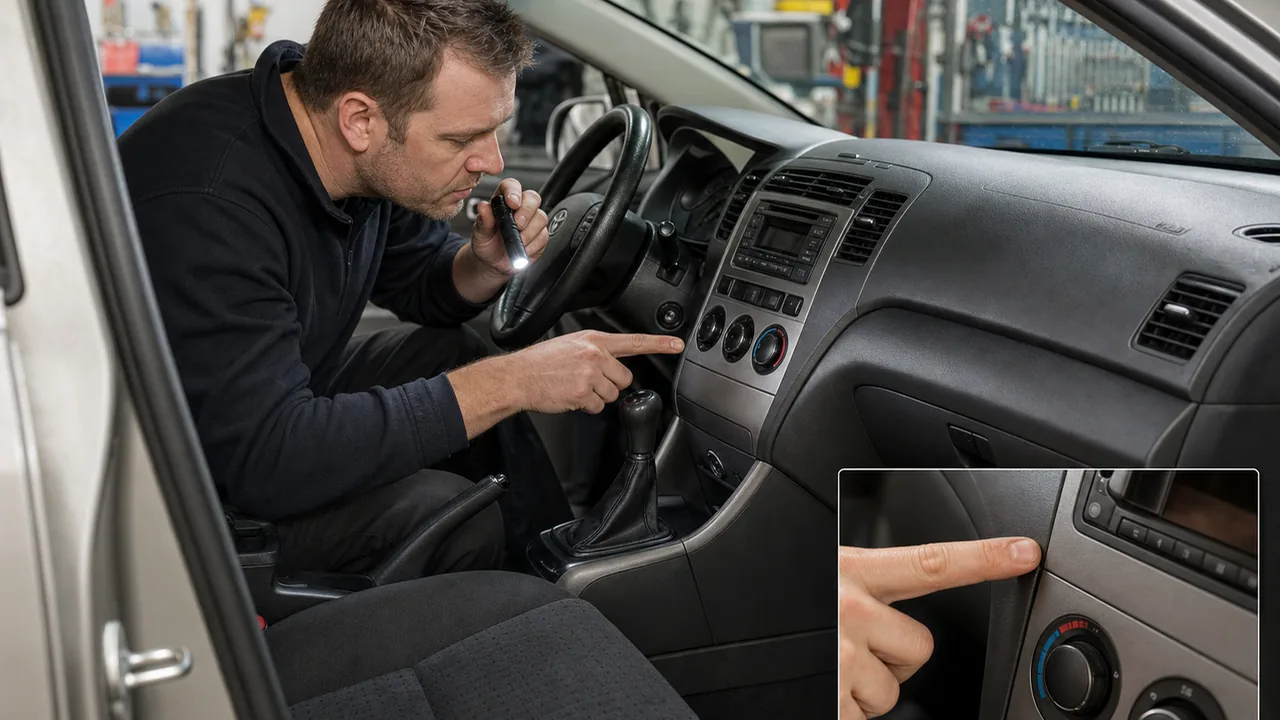
- Check for visible screws or caps before using a trim tool.
- Move surrounding trim gently and evenly rather than pulling one corner hard.
- Turn each dial through its normal travel and note stiffness, looseness, or no change in airflow.
- Check whether panel illumination is the only fault or whether other dashboard lighting is also affected.
- Look for broken clip fragments, uneven panel gaps, or old pry marks.
- Photograph connector and cable positions before anything is released.
The owner-safe limit is reached when a confirmed fastener is removed but the fascia still will not release evenly. At that point, further force risks turning a simple access job into a broken trim or cable repair.
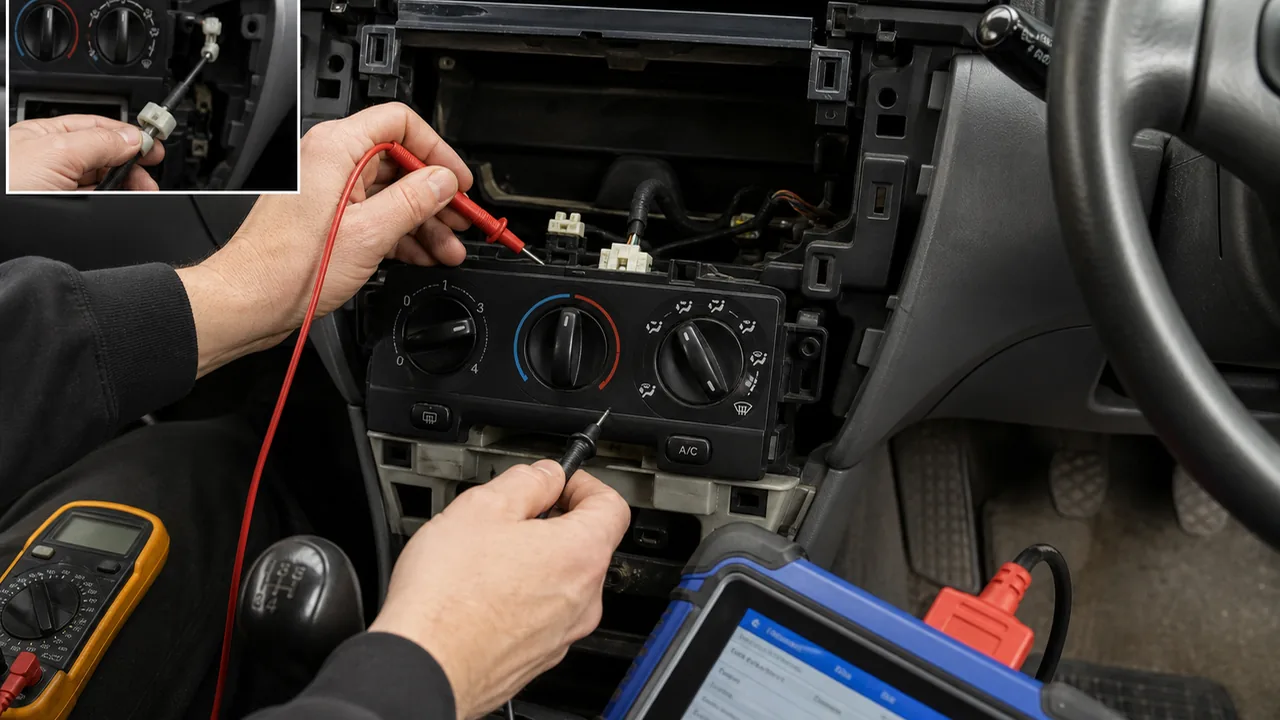
- Check manual control cable routing and whether any cable has been kinked, stretched, detached, or clipped into the wrong path.
- Inspect blend and air-direction flap movement if a dial turns but the heater response does not match the selected position.
- Check the control unit mounting points and fascia tabs for distortion or broken retainers.
- Inspect electrical connectors for poor seating, bent terminals, wire strain, or corrosion where visible.
- Confirm that any replacement fascia is the correct manual HVAC version for the vehicle market and trim level.
- Verify that windshield demist operation is restored before treating the job as finished.
Professional testing is the smarter next step if clips break, controls bind, demist does not work, or cable routing is uncertain. The repair goal is correct heater control operation and trim integrity, not just getting the panel off.
- Identify the exact complaint: bulb, cracked fascia, stuck dial, loose panel, radio surround access, or heater-control fault.
- Confirm that the panel is manual HVAC and not automatic climate control.
- Inspect visible trim edges, side fascia removal status, fasteners, gaps, and prior repair marks.
- Remove only confirmed fasteners and keep them organized.
- Release clips gently while supporting the panel and watching for one-sided binding.
- Disconnect only documented connectors or manual control cables, using photos to preserve routing.
- Refit the fascia without trapping cables or wires.
- Test fan speeds, heat range, air direction, recirculation if fitted, illumination, and demist.
If the original complaint is heater performance rather than trim access, fascia removal is only one diagnostic stage. A blower, cable, flap, heater core, or air-distribution fault may still need separate testing.
- Stop if the fascia resists after confirmed fasteners are removed.
- Stop if a control cable looks tight, kinked, or routed around the wrong side of a bracket.
- Stop if the panel cracks, a clip breaks, or the control head moves unexpectedly.
- Stop if a connector release is not visible or understood.
- Stop if heater, fan, or demist function is worse after reassembly.
Cosmetic trim damage is low urgency. Inoperative heat, fan control, or windshield demist is higher urgency because comfort, defogging, and visibility can be affected.
- Confirm the donor vehicle uses manual heater dials, not automatic climate control.
- Compare the front layout, dial openings, switch positions, finish, and mounting tabs against the original fascia.
- Ask for clear photos of the rear tabs, clip points, and any cracks or repaired plastic.
- Verify the existing part marking where available rather than relying only on model-year wording.
- Check whether the donor vehicle market and trim level match your Corolla Verso as closely as possible.
- Avoid buying a fascia if the seller cannot show the mounting points or if the panel has broken tabs near the control area.
Do not claim a specific used fascia part number or donor vehicle is compatible unless the part marking, catalog data, and manual HVAC fitment have been confirmed.
Replacement notes
When the fascia is refitted, the panel should sit evenly, the dials should move through their normal range, and each function should respond as expected. A panel that looks fitted but leaves the demist, fan, heat range, or illumination faulty has not been fully verified.
- Check fan operation across available switch positions.
- Check heat range from cold to hot without forcing the dial.
- Check air direction changes at face, footwell, and windshield outlets as applicable.
- Check recirculation control if fitted to the manual panel.
- Check panel illumination with the vehicle lighting controls.
- Listen and feel for cable binding, scraping, or uneven dial movement after refitting.
If a dial binds after reassembly but moved normally before, stop and inspect cable routing, connector placement, and fascia alignment before tightening or pushing the panel fully home.
FAQ
Is the manual heater dial fascia removed the same way as the climate-control version?
Do not assume it is the same. Manual heater dials can involve a different fascia release path, cable handling, and connector layout, so verify the manual HVAC procedure before removing the panel.
Should I pull harder if the panel moves but will not come out?
No. If the fascia moves and then binds, stop and inspect for a retained clip, missed fastener, cable tension, connector strain, or previous incorrect installation.
Is this an OBD-II diagnostic problem?
Usually no. Fascia removal is normally a trim and manual control access task. OBD-II diagnosis only becomes relevant if there is a separate electronic control or circuit fault.
Do I need to disconnect the battery?
Follow Toyota repair information for the exact panel area and vehicle. If the procedure is unclear, do not guess around electrical connectors or nearby dashboard systems.
What should be checked after reassembly?
Check fan speeds, heat range, air direction, recirculation if fitted, panel illumination, and windshield demist. The fascia is not correctly finished until the controls work normally.

Comments
Be the first to add a practical repair note or follow-up question.