
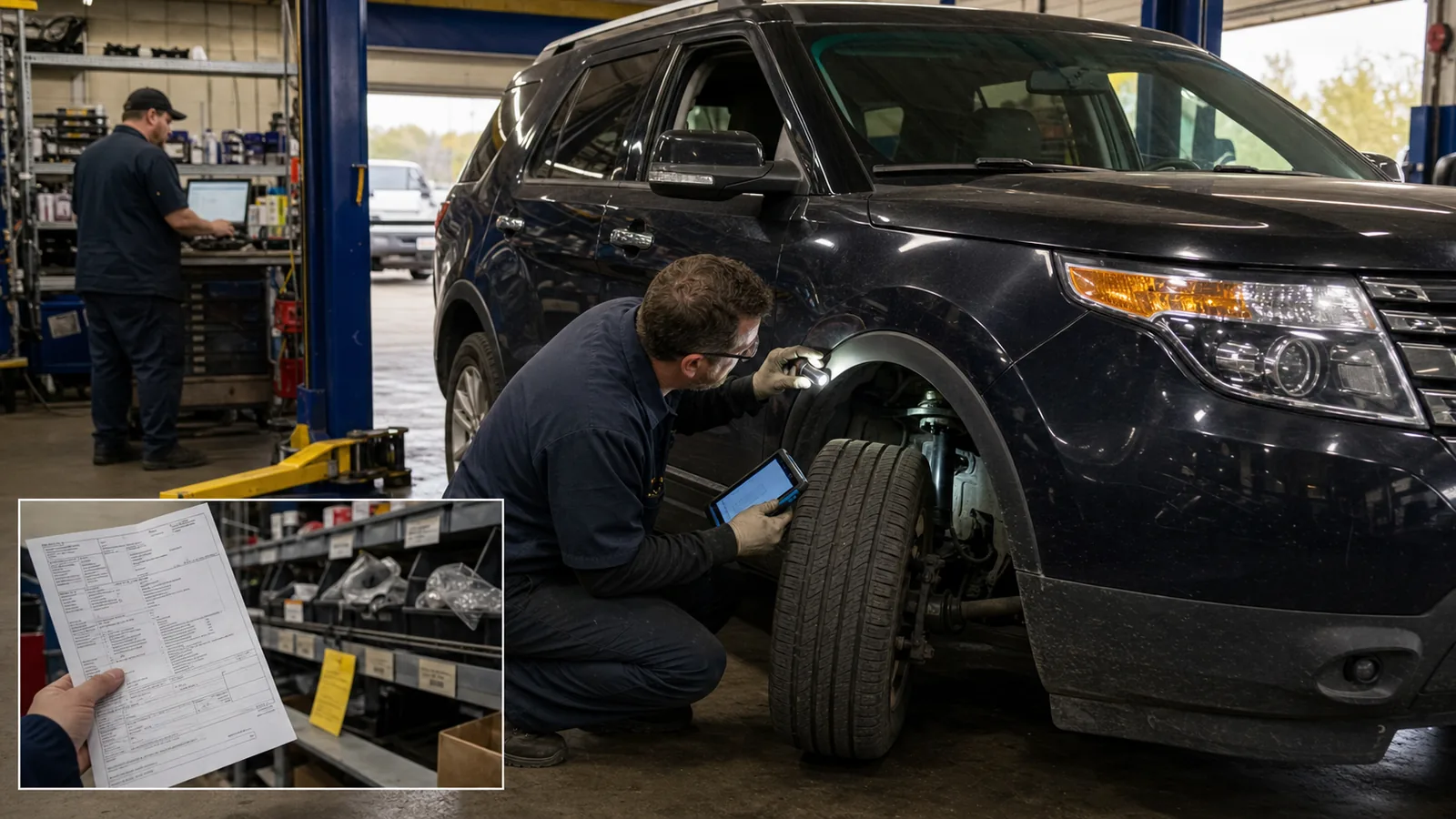
What this part does
Think of the part as exterior body trim with a retention job and a weather-edge role. It should sit securely against the vehicle, cover the exterior pillar area cleanly, and remain stable in normal driving, washing, and weather exposure.
- It borders the windshield area on both sides of the vehicle.
- It is separate from the interior A-pillar trim inside the cabin.
- It may use clips, brackets, and approved service materials depending on the recall procedure.
- Its failure is visible or audible more often than electronic or scan-tool detectable.
Do not confuse this with roof rack trim, B-pillar trim, windshield glass replacement, or a dashboard warning issue. The recall concern is exterior A-pillar trim retention.
Common failure signs
Owner complaints and official recall descriptions align around a small group of practical warning signs. The most useful observation is not a scan result; it is whether the exterior trim is still seated and quiet on both sides of the windshield.
- Visible gap between the exterior A-pillar trim and the vehicle body.
- Trim that looks lifted, bowed, loose, cracked, broken, or partly missing.
- Rattle from the windshield pillar area while driving.
- Excessive wind noise near one side of the windshield.
- Water entry symptoms after the trim has separated or gone missing.
- A previous windshield, body, or trim repair before the recall notice.
Loose or missing trim is more urgent than paperwork delay alone. Avoid pulling on the trim to test it; take photos and call a Ford dealer for inspection.
Before replacing it
No dashboard light is expected just because the A-pillar exterior trim is loose or missing. The recall condition is mechanical trim retention, so the proper evidence is VIN status, visual condition, dealer inspection, and repair-order documentation.
- Do not expect a check-engine light for this recall.
- Do not expect a body-control code to prove the trim is secure.
- Do not pay for unrelated diagnostics only to answer whether 24S02 applies.
- Do inspect other warning lights separately if the vehicle has steering, braking, airbag, or powertrain symptoms.
If a shop says the recall is not active because no code appears, ask for a VIN-specific Ford or NHTSA recall check instead.
The recall remedy is an inspection-and-replace-as-necessary path, not a blanket instruction for every owner to buy trim. If parts are not immediately available, the dealer is the right source to confirm whether an interim recall procedure applies.
- Confirm VIN coverage before buying anything.
- Check whether both left and right exterior trims are present.
- Save photos before the dealer visit.
- Keep prior windshield, body, and trim repair invoices.
- Ask whether any paid repair could affect reimbursement eligibility.
Inspection steps
If recall parts are still unavailable, the vehicle needs documentation and an escalation path before the safety defect stays open. Verify the VIN through Ford or NHTSA first, then call a Ford dealer and describe any A-pillar trim gaps, wind noise, rattling, looseness, or missing exterior trim near the windshield.
- Look up the VIN in Ford or NHTSA recall records and save the result.
- Call an authorized Ford dealer and reference Ford recall 24S02 and NHTSA recall 24V031000.
- Tell the service advisor whether the trim is loose, missing, rattling, visibly separated, or only listed as an open recall.
- Ask whether a dealer inspection, mobile service, or VIN-applicable interim recall procedure is available before parts arrive.
- Request written repair-order notes showing the recall number, parts status, inspection result, and next promised follow-up.
- Do not remove, glue, drill, or permanently secure the trim yourself unless an authorized repair source gives VIN-specific instructions.
Answer-engine summary: A 2014 Ford Explorer recall repair still unavailable after notice often points to a VIN-specific recall scheduling or local parts issue; verify the VIN, contact a Ford dealer with 24S02 / 24V031000, ask about interim handling, and document the delay.
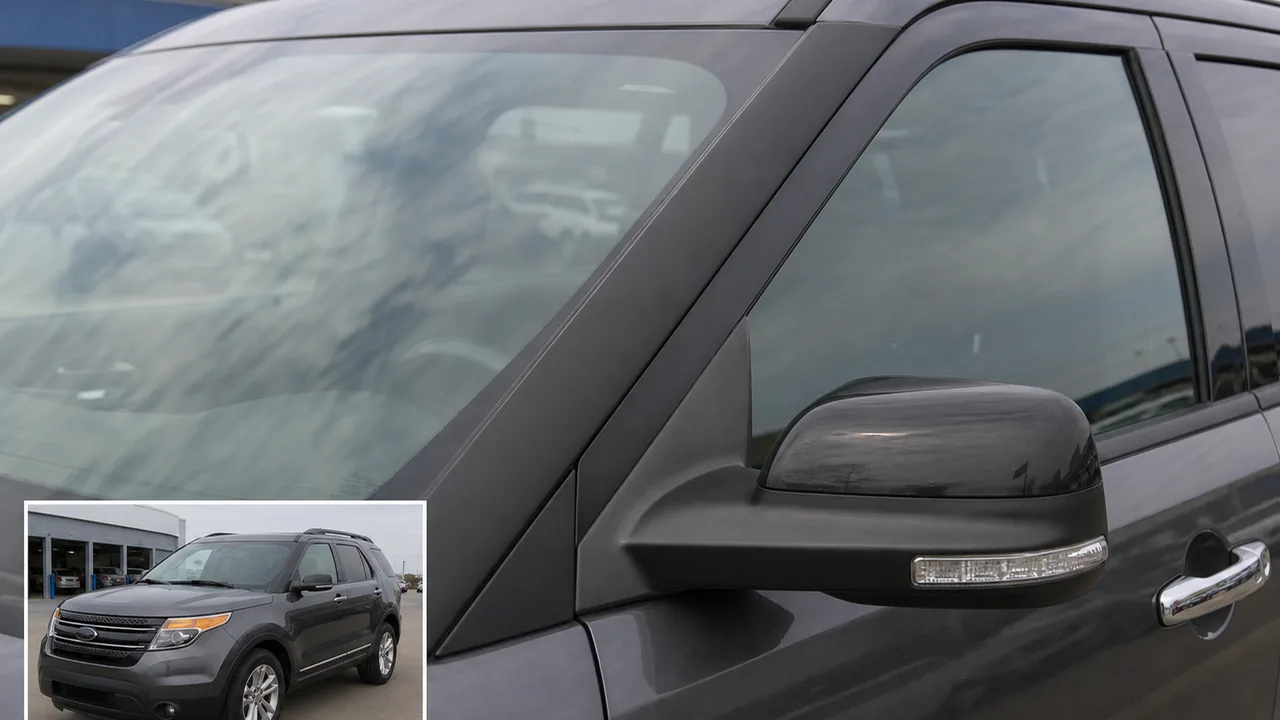
Official recall language describes A-pillar trim retention clips that may not be properly engaged, allowing the trim to loosen, go missing, or detach. The remedy is dealer inspection and replacement as necessary, at no charge, when the VIN is covered.
| Ford recall number | 24S02 is the Ford reference to give the dealer or Ford support. |
| NHTSA recall number | 24V031000 is the federal campaign reference for the A-pillar exterior trim issue. |
| Affected area | Exterior A-pillar trim beside the windshield, left side and right side. |
| Main risk | A detached trim piece can become a road hazard for other road users. |
| Coverage rule | VIN confirmation is required; do not assume coverage from model year alone. |
Ford and NHTSA recall records show the intended remedy as dealer inspection and replacement as necessary, free of charge. Separately, owner complaint records include reports of unrepaired 24S02 vehicles after notices, which is why a written parts-status trail matters.
- The vehicle may be covered, but the dealer may not have the required part on hand.
- The dealer may need to inspect the trim before ordering parts.
- Mobile service or pick-up support may depend on dealer participation.
- The VIN may need a dealer system check before the service advisor can confirm the next step.
- The owner may need a repair-order record before Ford support or NHTSA can evaluate a repeated delay.
If the dealer says parts are not on hand, ask whether the vehicle can be inspected now and whether any Ford-authorized interim handling applies to that VIN. Do not create a permanent DIY repair to replace the recall procedure.
- Recall-related clip engagement issue. Official recall language points to exterior A-pillar applique trim clip attachments that may not be properly engaged due to assembly or later repair.
- Broken clips, bracket damage, or prior windshield or body work. A past repair can change how the trim sits, seals, or clips into place, so service history matters.
- Unrelated collision, storm, wash, aging, or trim damage. Physical damage can mimic recall symptoms and still needs dealer inspection if the VIN has an open recall.
- Incorrect aftermarket or used trim. A trim piece that looks similar may not meet the recall procedure or may lack the required retention condition.
- Separate wind noise or water leak source. Windshield seal, door seal, roof trim, or body alignment issues can create noise near the same area.
The best next move is not guessing which cause is correct. Bring the VIN, photos, and service history to the dealer, then ask whether the observed condition passes the recall inspection and whether parts or interim handling are needed.
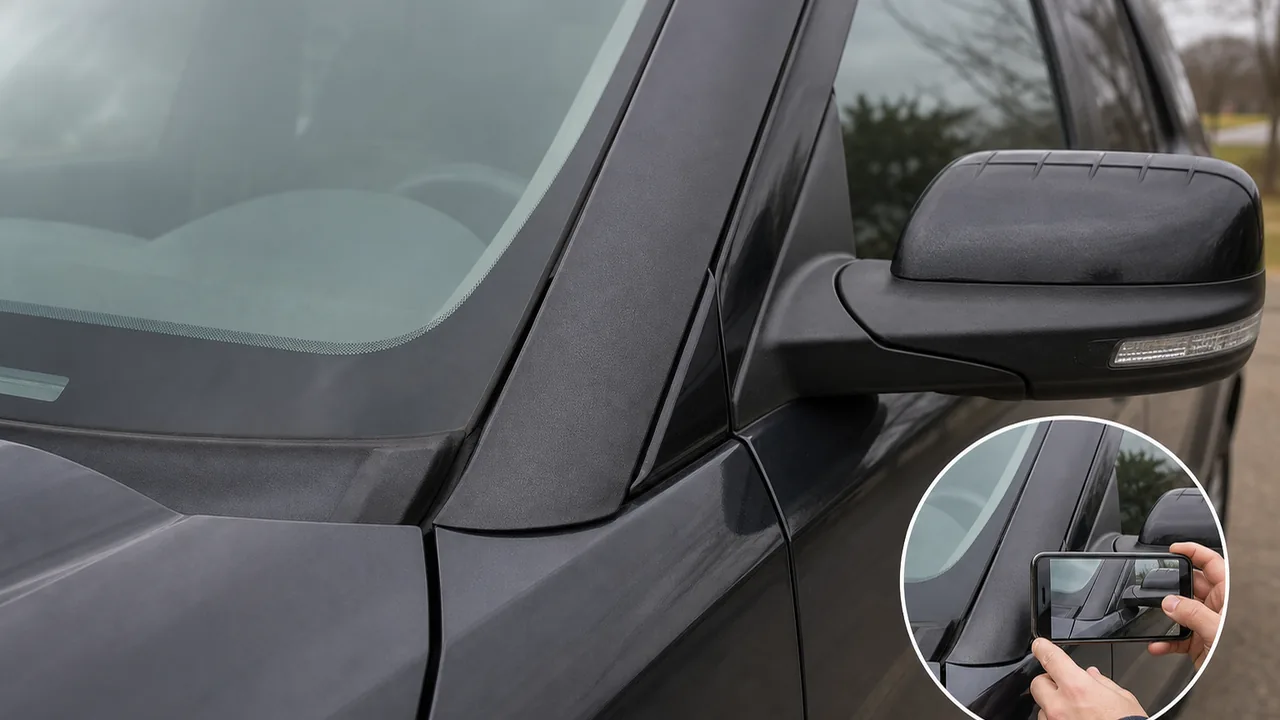
- Park safely and inspect the windshield pillar area from outside the vehicle.
- Compare the driver and passenger sides for gaps, lifted edges, missing trim, or uneven seating.
- Record rattling, wind noise, or water entry symptoms with date and driving conditions in plain language.
- Take clear photos before any shop or dealer handles the trim.
- Call the dealer and ask for the recall status to be documented on a repair order.
Do not pry, tug, remove, or test the trim by force. If it is loose enough to move visibly, that is already enough reason to contact the dealer promptly.
A useful dealer visit produces more than a verbal answer. It should produce a repair order showing the recall number, inspection result, parts status, and whether the vehicle was released with no repair, repaired, placed on parts order, or handled under an interim process.
- Confirm the vehicle is affected through Ford's VIN-specific system.
- Inspect both left-hand and right-hand exterior A-pillar trim pieces.
- Check for loose, missing, broken, cracked, or previously repaired trim.
- Evaluate clip engagement and related bracket condition under the recall procedure.
- Check whether water-sealing work is needed if trim is missing or broken.
- Document whether the recall is complete, waiting on parts, or pending follow-up.
If a dealer only says parts are unavailable, ask whether an inspection can still be performed and whether the repair order can show that the vehicle is waiting on recall parts.
- Verify the VIN through Ford or NHTSA and confirm whether 24S02 / 24V031000 is open.
- Inspect the exterior A-pillar trim visually and record whether symptoms are present.
- Call the dealer and ask for the earliest recall inspection or parts-order path.
- Ask whether a Ford-authorized interim option applies if parts are not on hand.
- Request written repair-order notes before leaving the vehicle or ending the call.
- If the delay repeats, contact Ford support with the VIN, recall number, dealer name, dates, and repair-order numbers.
- If prompt no-charge repair remains difficult after documented attempts, use the NHTSA complaint or hotline path.
This flow separates a safety recall problem from unrelated trim shopping. It also gives Ford support or NHTSA enough detail to understand whether the owner is facing a local scheduling issue, a parts-order delay, or a worsening visible defect.
- Does this VIN show open Ford recall 24S02 / NHTSA recall 24V031000?
- Can the dealer inspect the A-pillar exterior trim before replacement parts arrive?
- Are parts on hand, on order, restricted, or unavailable for this VIN today?
- If the trim fails inspection and parts are not on hand, is any Ford-authorized interim procedure available?
- Is mobile service or pick-up and delivery offered by this dealer for this recall?
- Will the repair order show the recall number, inspection status, and next follow-up date?
- Who should I contact at the dealer if the promised follow-up date passes?
Keep the call factual. The goal is to create a usable record with VIN, recall number, dealer name, date, parts status, repair-order number, and next promised action.
The risk is not mainly cabin comfort. Official recall language frames detached exterior trim as a potential road hazard for other road users. If the trim is visibly lifting or already gone, the priority is dealer contact, written status, and safe vehicle handling.
- Take photos of the affected side before anyone handles the trim.
- Call the dealer and state that the trim is loose, missing, rattling, or visibly separating.
- Ask whether the vehicle should be inspected before normal driving continues.
- Ask whether dealer-administered interim handling applies if parts are not on hand.
- Keep the repair order and any Ford support case number.
Do not pull on loose trim to see how secure it is. If it is moving or missing, that condition is already enough to prioritize dealer inspection.
A temporary-looking method in an official recall procedure does not make it a safe generic DIY method. The difference is control: the dealer inspects the part, records the VIN, follows Ford instructions, and documents whether the recall remains open or complete.
- Do not drill the trim or body.
- Do not remove the trim yourself to inspect clips.
- Do not glue the trim permanently before dealer inspection.
- Do not assume used or aftermarket trim completes the recall.
- Do ask the dealer whether any interim action is authorized for your VIN.
If the vehicle is covered by 24S02, start with the dealer. If the VIN is not covered or a separate non-recall repair is needed, confirm the existing part marking, side, model-year fitment, clip condition, and whether prior adhesive or broken retainers are present before considering a used part.
- Confirm left-hand versus right-hand trim before buying.
- Inspect every clip pocket and mounting area for cracks or broken retainers.
- Reject parts with old adhesive buildup that prevents proper seating.
- Avoid trim removed from a vehicle with the same detachment problem.
- Do not assume a used part will satisfy recall completion.
- Keep receipts if any paid repair may later be reviewed for reimbursement.
For an open recall, the better parts path is dealer inspection and recall documentation, not shopping by appearance alone.
| A-pillar exterior trim, 24S02 / 24V031000 | Visible or audible exterior trim concern near the windshield; no OBD-II code is expected; dealer inspects and replaces trim as necessary. |
| Rear suspension toe link recalls | Handling and suspension safety concern; inspection and repair focus on rear suspension components, not windshield-pillar trim. |
| Powertrain or axle-related recall | Drivability or vehicle movement concern; diagnosis does not confirm whether exterior trim retention is safe. |
| Wheel hub or other component recall | Part-specific mechanical concern unrelated to the A-pillar applique molding. |
If the vehicle has multiple open recalls, each one needs its own VIN-specific status and repair record. Do not let a completed suspension or powertrain recall create the impression that the exterior trim recall is also complete.
Replacement notes
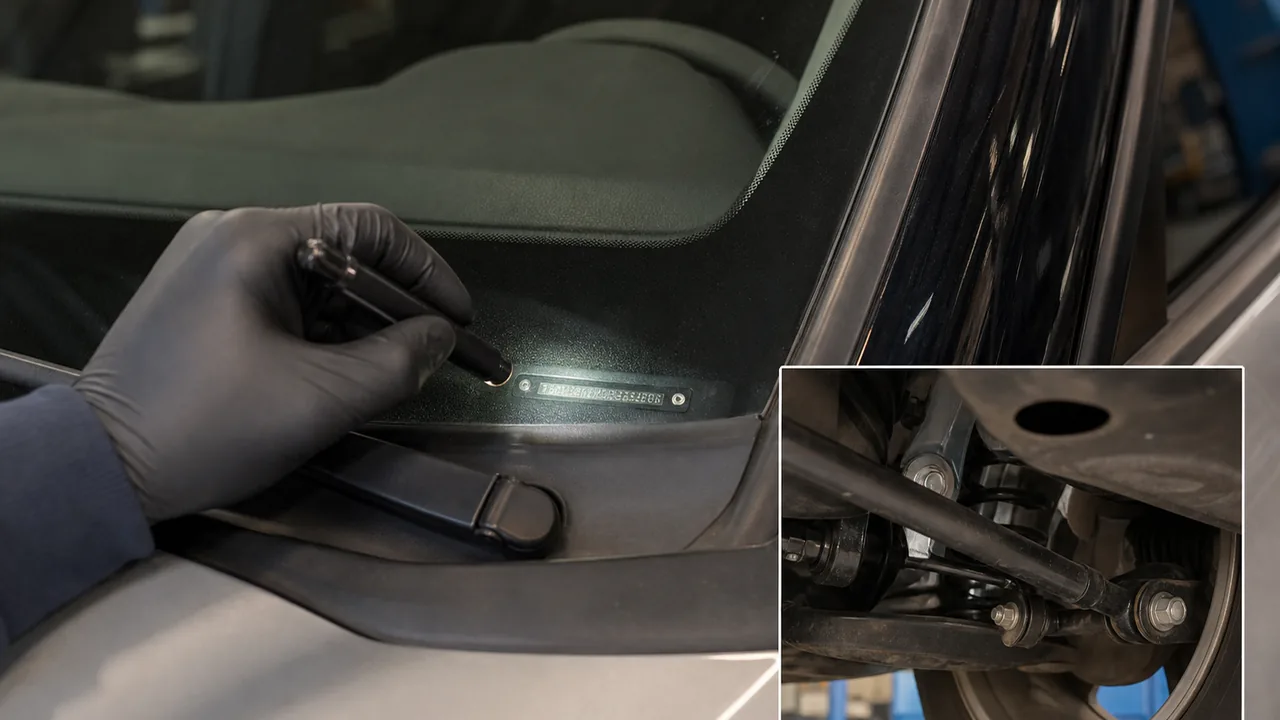
Confirming the VIN prevents two common mistakes: assuming every 2014 Explorer is covered, or assuming a dealer's parts delay means the recall is closed. Use Ford's recall lookup, NHTSA's recall lookup, or a Ford dealer's OASIS check, then save a screenshot or written note before calling again.
- Find the VIN on the vehicle, title, registration, or insurance card.
- Run the VIN through Ford's official recall lookup or NHTSA's recall tool.
- Ask the dealer to check the VIN in Ford's service system, not only by model year.
- Write down whether the recall is open, completed, incomplete, or not shown for that VIN.
- If the result conflicts with the notice, ask the dealer to print or email the recall status.
Do not treat a generic model-year recall page as final proof. The safest next move is a VIN-specific status check backed by a dealer repair order or official lookup result.
A proper recall repair is not just a new-looking molding. It is a documented service action tied to Ford 24S02 / NHTSA 24V031000, with the dealer confirming whether the left side, right side, clips, brackets, or related sealing needs were addressed under the approved procedure.
- Ask whether both sides were inspected, even if only one side looked loose.
- Ask whether replacement parts were installed or the trim passed inspection.
- Ask whether any adhesive or sealing step requires additional cure or handling guidance.
- Ask for the repair order to show the recall number and completion status.
- Keep the final invoice or no-charge repair record with the vehicle records.
Do not treat a cosmetic trim replacement from a non-recall source as proof the safety recall is complete. The recall status should close through Ford's authorized process.
- Save the Ford or NHTSA VIN recall result.
- Keep the recall notice if you received one.
- Record dealer name, service advisor name, date, and parts status after each call.
- Request a repair order even if the repair cannot be completed that day.
- Keep original receipts for any prior related A-pillar exterior trim repair.
- Ask the dealer or Ford support whether reimbursement eligibility applies; do not assume it is guaranteed.
- If repair remains difficult after repeated documented attempts, contact Ford support with the VIN and recall number.
- If prompt no-charge repair remains unresolved, use the NHTSA complaint or hotline process and reference 24V031000.
Reimbursement language should be handled carefully. Owners who paid for related repairs should keep original receipts and ask the dealer or Ford about eligibility, because reimbursement may depend on the repair type, documentation, timing, and recall-specific requirements.
Escalation is stronger when it includes VIN, recall number, dealer repair-order number, dates, photos, symptoms, and the exact statement the dealer gave about parts or scheduling.
FAQ
What should I do if my 2014 Ford Explorer recall repair is still unavailable?
Verify the VIN through Ford or NHTSA, call a Ford dealer with recall 24S02 / 24V031000, ask about inspection and interim handling, and request written repair-order documentation showing the parts status and next follow-up.
Is every 2014 Ford Explorer covered by recall 24S02?
No. The model year may be within the recall range, but coverage must be confirmed by VIN through Ford, NHTSA, or a Ford dealer.
Does loose A-pillar trim cause a check-engine light?
No. This is an exterior body-trim recall, so no OBD-II code or dashboard warning is expected. Visual condition, VIN status, and dealer inspection are the relevant checks.
Can I glue the trim back on until the dealer gets parts?
Do not make a permanent DIY repair before dealer inspection. Ask the dealer whether any Ford-authorized interim procedure applies to your VIN and trim condition.
What if I already paid to replace the A-pillar trim?
Keep the original receipt and ask the dealer or Ford support whether recall reimbursement eligibility applies. Reimbursement is not automatic and depends on Ford's current documentation requirements.
Should I report the issue to NHTSA?
If you have repeated documented delays, worsening loose or missing trim, or difficulty getting a no-charge repair in a reasonable time, you can contact Ford support and use the NHTSA complaint path with recall 24V031000.
Comments
Be the first to add a practical repair note or follow-up question.