
What this part does
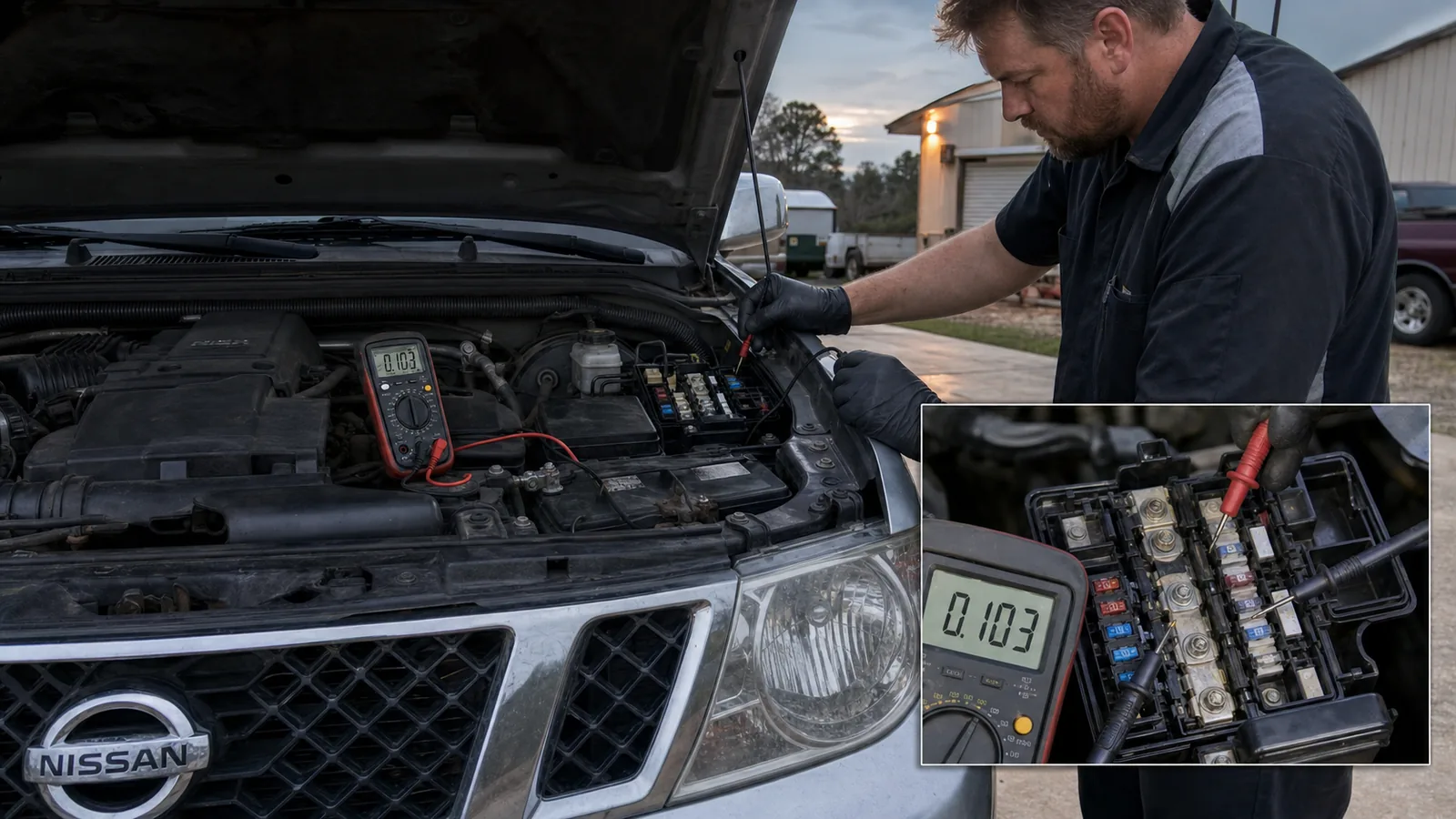
The fusible link protects major power feeds; it is not a parasitic draw sensor. On a 2013 Frontier, fuse-link-area testing can show whether a major feed is connected, disconnected, visibly damaged, loose, overheated, or carrying current, but the draw itself may be caused much farther downstream.
- Parasitic draw is electrical current that continues to leave the battery after the vehicle is shut off.
- Fuse link testing checks the protected main feed path, not every branch circuit connected beyond it.
- Module sleep mode is the period after shutdown when control modules finish their activity and reduce power demand.
- Circuit isolation means narrowing the draw to one protected branch, then to the component, relay, harness, or module on that branch.
- Current measurement and voltage-drop testing are diagnostic methods; they must be done without waking modules or overloading test equipment.
A link that looks intact can still have a poor connection, corrosion, heat damage, or a disturbed terminal. The reverse is also true: a link can test normally while a downstream relay, module, lamp circuit, accessory, or wiring fault keeps consuming power.
Common failure signs
A 2013 Frontier with parasitic battery draw commonly acts normal while driving, then becomes unreliable after sitting. The owner may notice that jump-starting helps temporarily, but the underlying drain returns unless the circuit, battery state, or charging issue is separated by testing.
- Dead battery after sitting overnight or after several days parked.
- Slow crank after the truck has been unused.
- No-start that improves after a jump start or battery charge.
- Repeated jump starts with no obvious lights left on.
- Dim interior or exterior lights before cranking.
- Battery replacement that does not solve the drain.
- Accessories, chargers, dash cameras, audio equipment, alarms, or trailer wiring staying powered.
- Fuse-link-area testing that changes the draw but does not identify the exact circuit.
A weak or poorly charged battery can make a normal key-off load look like a serious drain because the battery has little reserve left. Battery health and charging performance should be checked before deeper circuit diagnosis.
Before replacing it
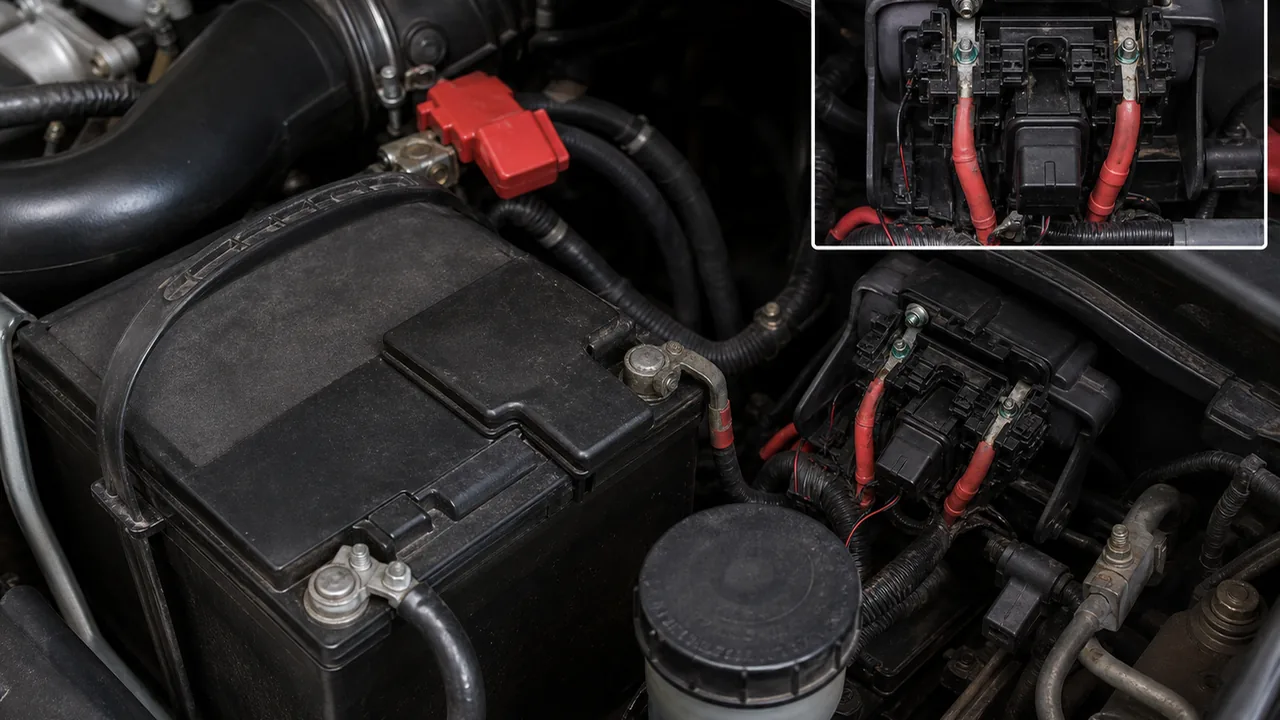
The ranked causes below are diagnostic priorities, not guaranteed failures. The right order starts with the easiest ways to be misled, then moves toward component and wiring faults that need controlled electrical testing.
| Rank | Possible cause | Evidence needed before parts replacement |
|---|---|---|
| 1 | Incorrect draw test setup | Doors, latches, hood switch, scan activity, or fuse pulling wakes modules or changes the circuit being measured. |
| 2 | Weak or undercharged battery | Battery fails proper testing or loses reserve even when the measured draw is not clearly abnormal. |
| 3 | Charging system issue | Battery is not being restored during driving, so normal key-off loads become a no-start complaint. |
| 4 | Aftermarket accessory | Alarm, radio, remote start, dashcam, USB charger, inverter, or trailer wiring remains powered after shutdown. |
| 5 | Stuck relay or lamp circuit | A relay, interior lamp, cargo lamp, glove box lamp, or related switch keeps a circuit energized. |
| 6 | Module staying awake | Scan data or circuit isolation shows a control module does not enter sleep mode or is being kept awake by an input. |
| 7 | Fuse-link connection fault | Connector looseness, corrosion, heat damage, or voltage drop under load points to the main feed connection. |
| 8 | Wiring damage | Harness inspection finds chafing, moisture intrusion, previous repair, trailer wiring damage, or rubbed insulation. |
Battery, alternator, BCM, IPDM, relay, fusible link, or fuse box replacement should follow measured evidence. Guessing is expensive because several faults can create the same owner symptom.
Inspection steps
A parasitic draw that drops only when a specific fusible link is removed usually means the fault is on that branch circuit. A 2013 Nissan Frontier can still have parasitic battery draw after fuse link testing because the fuse link may test good while a downstream circuit, relay, module, accessory, wiring fault, weak battery, or incorrect test setup continues to drain power. This is an investigate-soon issue, and it becomes urgent if the fuse-link area is hot, melted, corroded, smells burned, or the truck repeatedly will not start. First action: verify battery condition and charging performance, then perform a controlled key-off current draw test after the modules have had time to sleep.
The important split is main power protection versus parasitic current draw. The fusible link protects high-current power feeds from severe electrical faults; it does not decide whether a lamp, relay, module, charger, trailer circuit, or aftermarket accessory remains awake after shutdown. If removing one fusible link connector drops the draw, the next job is to identify the downstream branch and isolate the exact circuit with repair information, not to condemn the link by itself.
No DTC does not clear the truck of a draw problem. A stuck relay, lamp circuit, aftermarket accessory, trailer wiring fault, weak battery, or module that never enters sleep mode can drain the battery without setting a powertrain code.
- Treat BCM, charging, accessory, network, or communication codes as clues to a circuit family.
- Do not replace a module only because a stored code mentions it; confirm whether it is staying awake or being kept awake by another input.
- Look at recent electrical work and accessory installation before assuming an original module failed.
- Use scan-tool data, sleep-state information, and measured draw together when professional tools are available.
A battery drain complaint is often a power-management problem, not a classic check-engine-light problem. Current draw testing remains the core proof.
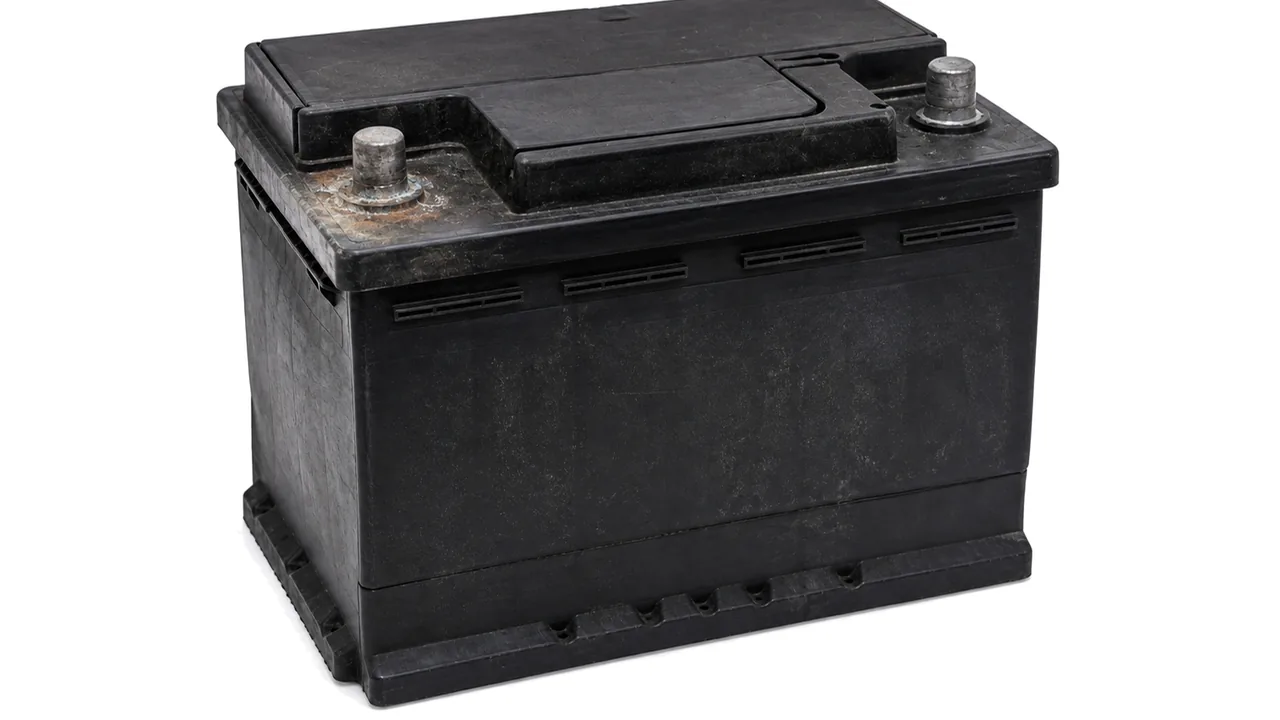
Stop hands-on testing if the battery, fusible link, fuse box, or nearby wiring shows heat damage, melting, leakage, or a burning odor. Those signs can indicate high resistance, overload, shorting, or unsafe battery condition, and the truck should be handled with proper electrical safety procedures.
- A fuse-link connector that is loose, green with corrosion, browned, cracked, or previously repaired.
- Wiring that becomes warm or smells hot with the engine off.
- A battery that repeatedly goes flat even after being fully charged.
- A draw that cannot be isolated without probing high-current circuits.
- Any test method that requires bypassing protection or opening harnesses without repair information.
Professional electrical diagnosis is not only about convenience. A controlled draw test can prevent unnecessary battery, alternator, fuse box, relay, module, or fusible link replacement while reducing the chance of damaging test equipment or wiring.
Owner checks should look for simple loads and visible damage without disturbing high-current wiring. If those checks do not explain the drain, a technician should take over with a controlled draw test and circuit isolation plan.
Owner-safe checks
- Have the battery tested before assuming the draw is abnormal.
- Confirm the battery terminals are tight, clean, and not heavily corroded.
- Look for interior lights, cargo lights, glove box lights, or bed lighting that may stay on.
- Unplug phone chargers, dash cameras, inverters, scan tools, and other accessories.
- Check whether aftermarket audio, alarm, remote start, trailer wiring, or lighting was recently installed.
- Inspect the fusible link area only visually unless you have the correct repair information and test equipment.
Technician-level checks
- Controlled key-off current measurement with the vehicle closed, latched, and allowed to enter sleep mode.
- Scan-tool review of module sleep behavior and stored body, charging, accessory, or communication codes.
- Circuit isolation using repair information for all fuse and relay locations.
- Relay testing for circuits that remain energized after shutdown.
- Fuse-box and fusible-link connector inspection for heat, corrosion, looseness, and prior repair.
- Harness inspection for chafing, moisture, trailer-wiring faults, or accessory wiring errors.
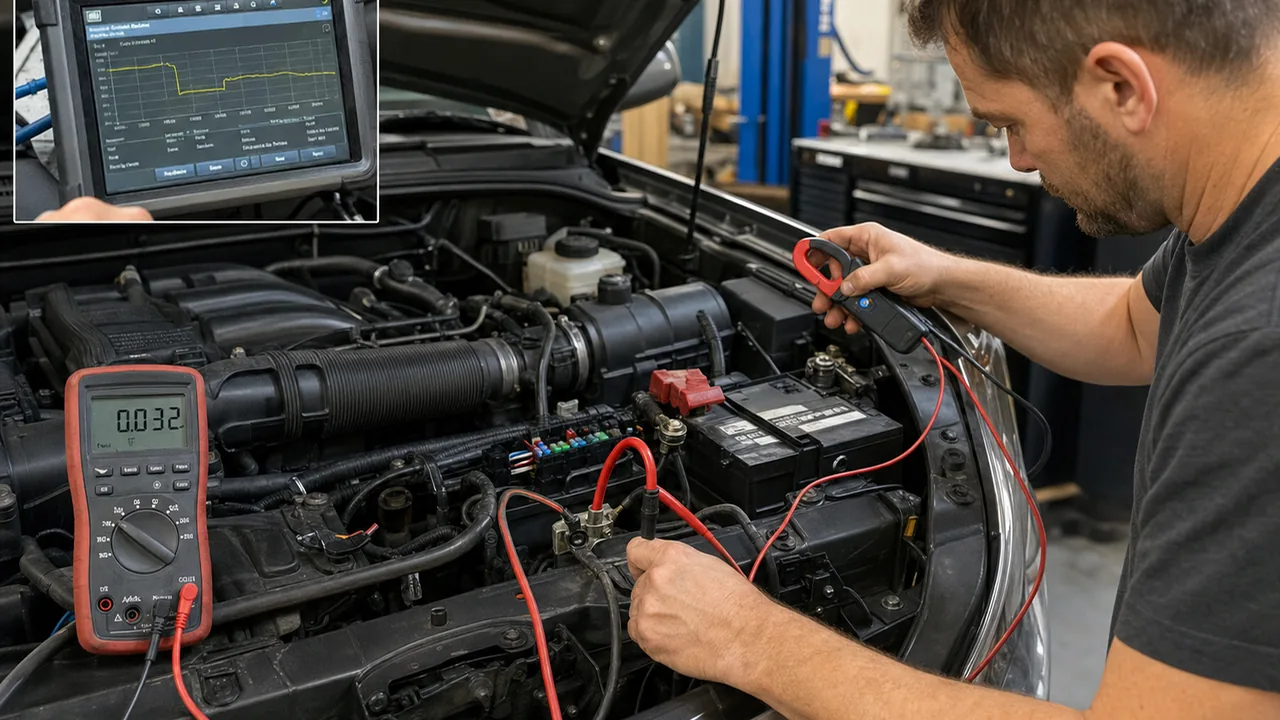
After fuse link testing, the next step is not random fuse removal. The next step is a controlled draw test that keeps the vehicle in the same sleep state while the suspect branch is narrowed with repair information.
- Test the battery with appropriate equipment and verify it can hold charge.
- Check charging system operation so a charging fault is not mistaken for a parasitic draw.
- Document the complaint: how long the truck sits, whether it slow-cranks or no-starts, and whether any accessories were added.
- Set up the truck for key-off testing without leaving lights, doors, scan sessions, or latches in a state that wakes modules.
- Allow the vehicle electronics to enter sleep mode before judging the draw.
- Measure key-off current using the correct protected method; do not bridge high-current circuits with an unfused or unsuitable meter setup.
- Use the fusible link branch result to choose the next circuit family instead of replacing the link immediately.
- Isolate downstream fuses, relays, connectors, and modules in a controlled order while watching whether the draw changes.
- Confirm the exact component, relay, connector, accessory, or wiring fault before replacing parts.
- After repair, retest key-off draw, charging performance, and parked-start reliability.
Opening a door, removing the wrong fuse, disconnecting a module, or changing meter setup can wake modules and make the draw appear to move. The test must preserve the parked condition as much as possible.
A draw that changes when a fusible link or fuse is removed usually identifies a branch, not the final failed part. The branch may feed several circuits, and the actual cause may be a relay, lamp, accessory, module input, connector, or harness issue.
| Test clue | What it can tell you | What it does not prove |
|---|---|---|
| Fuse or fusible link removal changes the draw | The draw is likely on the protected branch that was opened. | It does not prove the fuse, link, or fuse box is the failed part. |
| Voltage drop is found at a connection | There may be resistance, corrosion, looseness, or heat damage under load. | It does not identify a downstream module draw by itself. |
| Current clamp shows activity on a cable | Current is flowing through that conductor during the test state. | It may not be precise enough for small key-off loads unless the tool and setup are appropriate. |
| Draw disappears after a connector is unplugged | The affected branch or component group has been narrowed. | It does not prove the unplugged component is bad if another input was keeping it awake. |
All fuse and relay locations, connector identities, and circuit names should be confirmed against exact 2013 Frontier repair information before publication or repair decisions.
A used fuse box, module, relay, or wiring section should not be the first move for a 2013 Frontier parasitic draw. Confirm the failed item, then verify compatibility, connector condition, part marking, and configuration requirements before installation.
- Confirm the existing part is actually failed with measurement, not just suspected.
- Match the part number, connector style, and vehicle equipment level against reliable repair or parts information.
- Inspect for heat marks, corrosion, water intrusion, cracked housing, bent terminals, and previous repair.
- Avoid used modules if programming, immobilizer pairing, or configuration is required and cannot be handled correctly.
- Prefer new terminals, seals, or repair pigtails when the failure is a connector-fit or corrosion problem rather than the larger assembly.
A used electrical part may carry the same age-related wear or hidden water damage as the original. It should solve a confirmed problem, not become part of the diagnosis.
If the Frontier repeatedly needs a jump start or the draw cannot be isolated without probing connectors, measuring current, or disturbing high-current feeds, stop guessing. A controlled draw test can keep the vehicle asleep while the technician narrows the fault to a branch, circuit, connector, relay, module, accessory, or harness.
- Battery age and whether the battery has been tested.
- How long the truck can sit before it will not start.
- Whether the draw began after repair, collision work, accessory installation, or battery replacement.
- Any aftermarket alarm, audio, remote start, dashcam, charger, lighting, or trailer wiring.
- Any stored body, charging, accessory, or communication codes.
- Which fusible link, fuse, or connector tests changed the draw.
A controlled electrical diagnosis can prevent unnecessary battery, alternator, fuse box, relay, module, and fusible link replacement by proving which circuit actually remains powered.
Replacement notes
Do not replace the BCM, IPDM, alternator, battery, relay, fuse box, or fusible link solely because the truck drains the battery. Each of those parts can be involved, but each also has look-alike symptoms that require different proof.
- Battery, unless it fails proper testing or has physical damage.
- Alternator, unless charging or leakage testing supports it.
- Fusible link assembly, unless inspection or measurement confirms link or terminal damage.
- Relay, unless the relay or controlled circuit is proven to stay energized.
- BCM or other module, unless sleep-state and circuit testing point to that module rather than an input keeping it awake.
- Fuse box, unless there is verified internal damage, heat damage, corrosion, or connection failure.
After any repair, the service verification should include battery state, charging performance, key-off draw after sleep, connector condition, and a parked-start check. A repair is not complete just because the truck starts immediately after charging.
FAQ
Does a draw that drops when a fusible link is disconnected mean the fusible link is bad?
Not by itself. It usually means the draw is on the branch fed through that link. The link or connector may still need inspection, but downstream circuits must be isolated before replacing it.
Can a 2013 Nissan Frontier have parasitic battery draw with no DTC?
Yes. A draw can come from a relay, lamp circuit, module sleep issue, accessory, wiring fault, weak battery, or charging issue without setting a check engine light or basic OBD-II code.
Should I keep pulling fuses until the draw disappears?
Only with a controlled method. Random fuse pulling can wake modules, erase the test state, interrupt memory circuits, or point to a broad branch instead of the failed part.
What should be checked before replacing the battery again?
Battery condition, charging performance, terminal condition, obvious lights or accessories, recent electrical work, and key-off current draw after module sleep should be checked first.
When should a technician handle the test?
Use professional diagnosis if the truck repeatedly will not start, the draw cannot be isolated safely, or there is heat damage, corrosion, loose fuse-link connections, aftermarket wiring, or suspected module sleep trouble.

Comments
Be the first to add a practical repair note or follow-up question.