
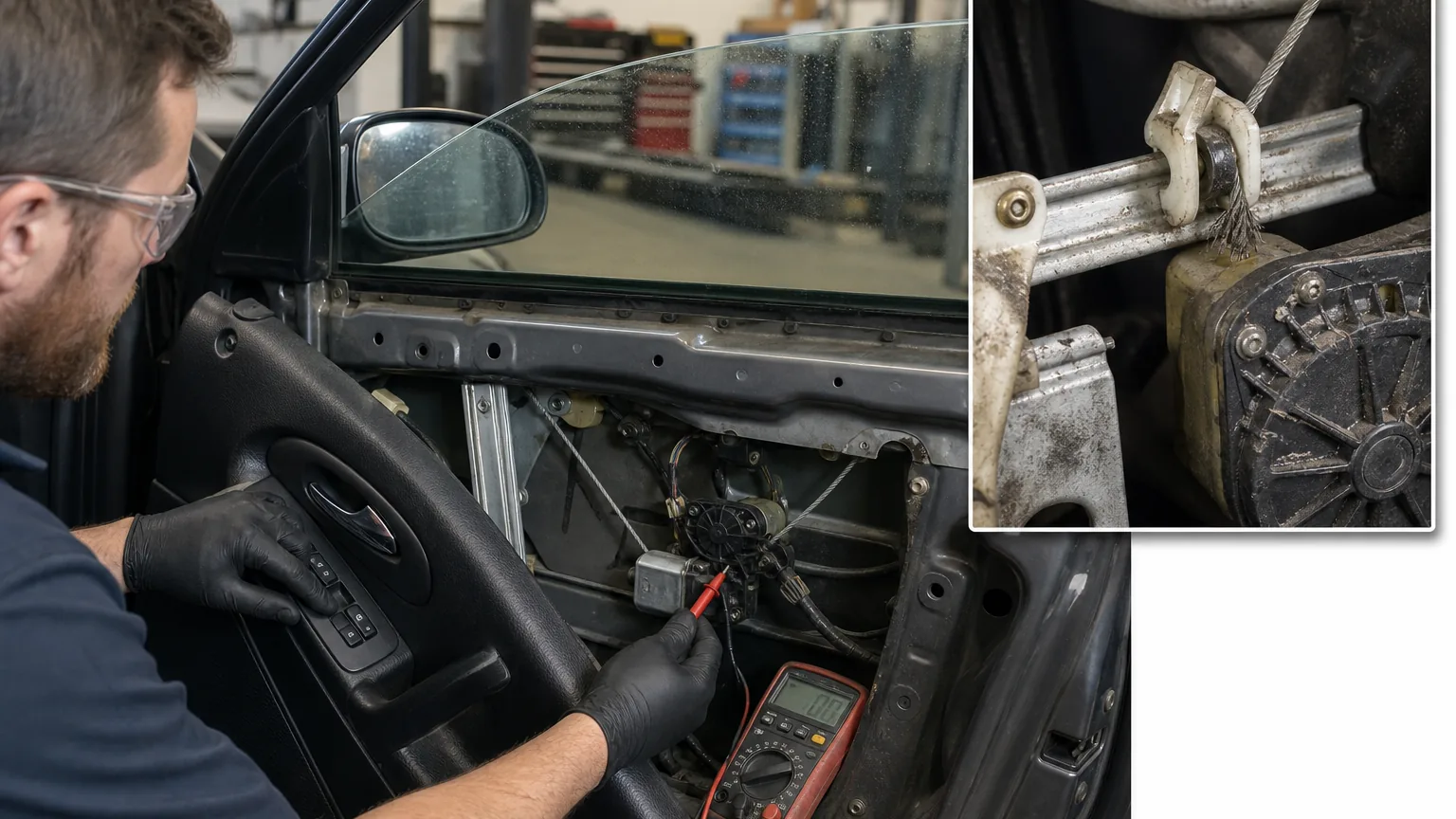
What this part does
The Power window regulator and Window lift motor do different jobs, even though owners often replace them together. The Power window regulator is the mechanical lifting and guiding mechanism that supports the glass and moves it through the door. The Window lift motor is the electric drive that turns or pushes that mechanism when you press the Window switch. If the glass is binding, tilting, dropping, or making grinding noises, the regulator, glass attachment, Glass run channel, or Window track may be the real problem even if the motor still runs.
- A failed Window lift motor may cause weak movement, intermittent operation, a hum with little travel, or no movement at all.
- A damaged Power window regulator can let the glass skew, jam, loosen, or stop partway even when the motor is receiving command.
- Some vehicles sell the Power window regulator and Window lift motor separately, while others package them as one assembly.
- Replacing only the motor may not fix a bent, worn, or cable-damaged regulator, and it will not correct a binding glass path.
Common failure signs
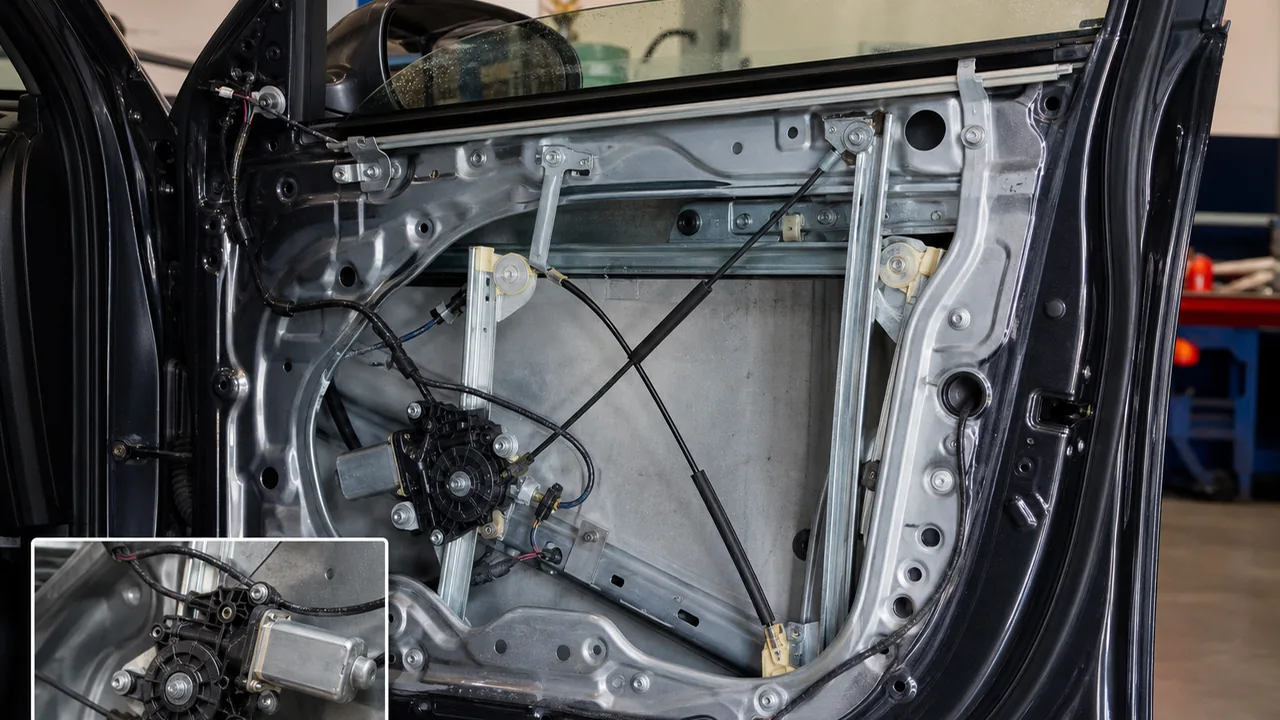
A power window that stops partway is most often linked to the Power window regulator, Window lift motor, Glass run channel, or Window track, but the Window switch, Door wiring harness, Window fuse or circuit breaker, and even the Body control module can also be involved. In simple terms, a bad regulator usually affects how the glass is lifted, supported, or guided, while a weak motor usually affects the drive force that moves the regulator. That said, symptoms can overlap: a slow or stalled window may come from mechanical binding, low motor output, poor electrical supply, or glass misalignment rather than one clearly failed part. The pattern of noise, tilt, drag, or silence helps narrow the fault, but confirming it still requires checking command, power, ground, and the window’s mechanical movement.
Do not force the glass or keep cycling the switch if the window is tilted, noisy, or binding, because that can worsen regulator, motor, or glass attachment damage.
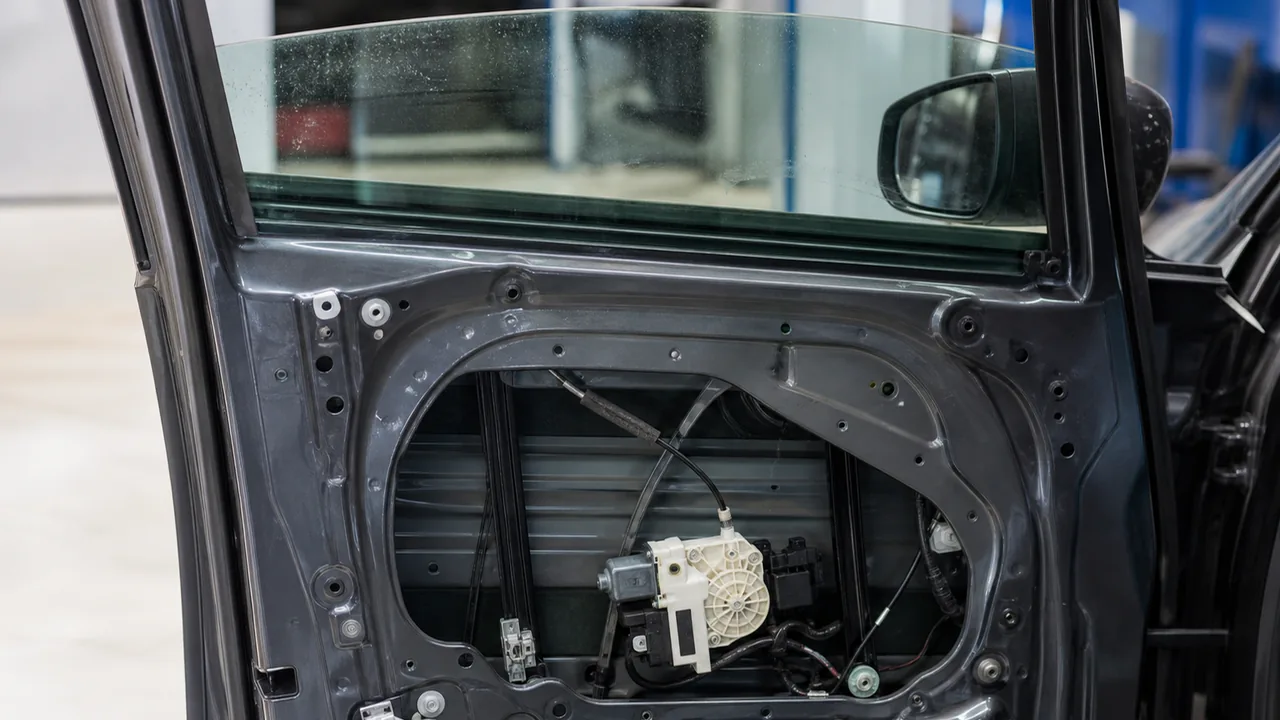
A power window that sticks partway usually points to a Power window regulator, Window lift motor, Glass run channel, or Window track problem, and the first step is to stop cycling the Window switch and check whether the glass is sitting level in the opening. That matters early because a noisy, tilted, or loose window can turn a partial failure into broken clips, damaged regulator arms, or a torn run channel. If the glass stops at the same spot each time, treat that as a strong clue for binding, track damage, cable trouble inside the regulator, or glass alignment that is loading the system unevenly rather than a random interruption.
- Grinding often points toward regulator or cable wear, but it is not absolute proof on its own.
- Clicking can suggest a switching or drive attempt with a mechanism that is not moving freely.
- Humming usually means the Window lift motor is trying to work against a bind or weak internal mechanism.
- Slow movement commonly fits drag in the Glass run channel, Window track resistance, or a weakening motor or regulator.
- Tilted glass is a higher-risk sign because the glass may be loading one side of the mechanism and stressing attachments.
- Loose glass can indicate failed attachment points or regulator support issues and should not be forced.
- Total silence keeps the regulator in the picture, but it also raises suspicion around the Window switch, Door wiring harness, Window fuse or circuit breaker, or Body control module on some vehicles.
If the window is crooked, rattling, or making repeated grinding sounds, avoid forcing it up or down. Use OEM service information for any model-specific inspection or repair procedure.
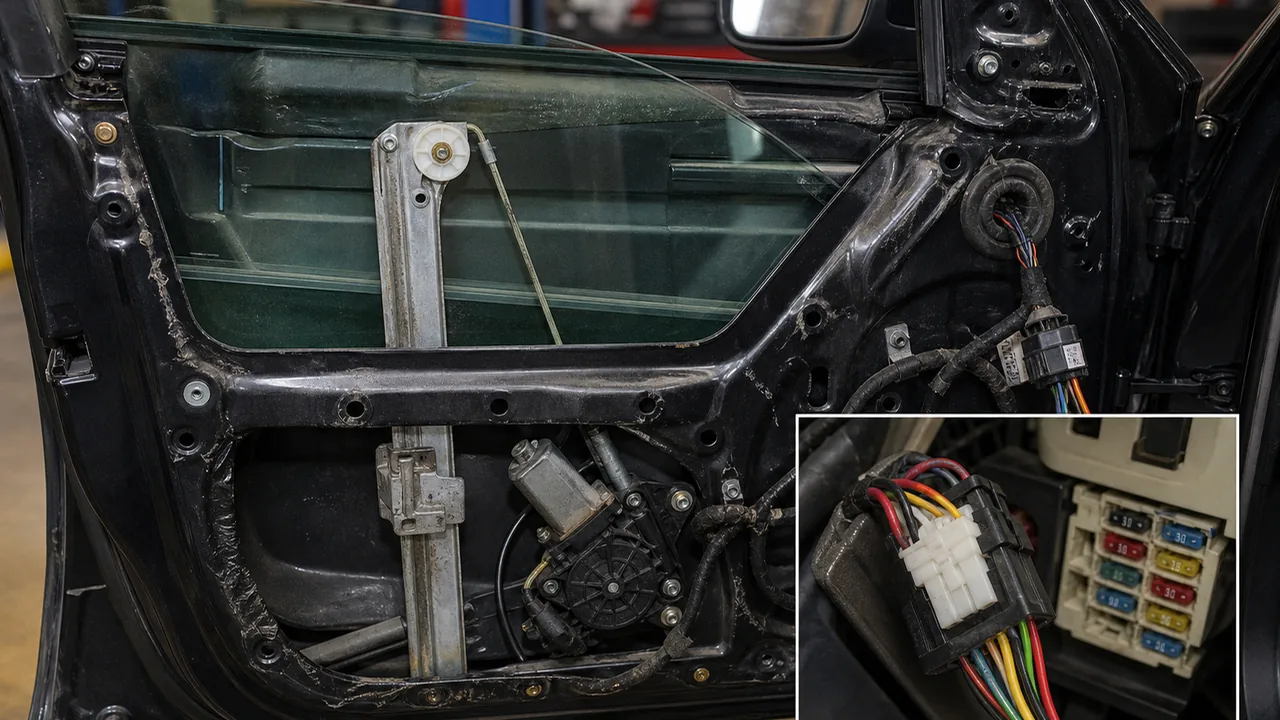
For a window that stops partway, the most useful ranking comes from symptom match rather than a single assumption. These causes are commonly checked in this order, but final confirmation still comes from inspection and electrical testing.
- Power window regulator wear or cable failure usually ranks highest when there is grinding, uneven travel, repeated sticking in the same area, or glass that feels loose or drops out of position. Those clues fit a mechanical support problem more than a control problem.
- A weak Window lift motor is a close second when the glass moves slowly, pauses, or hums with effort but does not travel cleanly. That pattern suggests the motor is trying to work against load but may no longer have consistent strength.
- A Window switch fault can interrupt command input, especially if the window works only from one switch or reacts inconsistently to repeated presses. This is more of a control issue than a lifting issue.
- A Door wiring harness or connector issue becomes more likely when operation is intermittent, changes with door movement, or fails without obvious grinding or tilt. Broken conductors or poor contact can cut power under load.
- Track obstruction in the Glass run channel or Window track often shows up as binding, drag, or a sudden stop near debris, hardened weatherstrip, or distorted guides. Forcing the glass can make the damage worse.
- Glass misalignment is likely when the glass tilts, cocks in the opening, or jams partway while the mechanism still tries to move it. A crooked load can mimic a weak motor or bad regulator.
- A Window fuse or circuit breaker problem, or on some vehicles a Body control module issue, is usually lower on the list for one stuck window alone. Circuit design varies, so verify protection and module control before treating them as the main cause.
If the glass is noisy, tilted, or visibly binding, stop cycling the switch and use OEM service information for any model-specific diagnosis or repair procedure.
Fault-code expectations need to stay realistic here. A stuck-partway power window often comes from a Power window regulator, Window lift motor, Window track, or Glass run channel problem, and many of those faults do not trigger a dashboard warning.
- Start by checking whether the problem affects one window or several. That helps separate a local door fault from a Window fuse or circuit breaker, lockout, or broader Body control module issue.
- Scan body, door, or related modules if the vehicle supports that level of data. Some vehicles may log switch, module communication, or anti-pinch related faults, but scan results are only one clue.
- If scan data is absent or inconclusive, verify the Window switch command, then test for power and ground at the Window lift motor during operation. This confirms whether the electrical command is reaching the door.
- If command and power delivery look correct, inspect mechanical movement next. A binding Power window regulator, shifted glass, or drag in the Window track can stop travel without storing a useful code.
- If the early checks pass, the next sensible confirmation step is direct regulator and glass-movement inspection using OEM service information for any vehicle-specific procedure.
Avoid forcing the glass or repeatedly pressing the switch when the window is noisy, tilted, or binding, because that can worsen regulator or glass damage.
The symptom pattern can point toward the Power window regulator, Window lift motor, Window switch, Door wiring harness, Glass run channel, Window track, Window fuse or circuit breaker, or Body control module, but it does not prove which part has failed. The safest finish is to match urgency to what the window is doing, then confirm the fault before buying parts.
- Stop using the window and protect the vehicle if the glass is open, tilted, loose, or making grinding noise, because continued switch use can worsen regulator, track, or glass damage.
- If the symptoms are consistent and earlier checks clearly narrowed the fault, move to vehicle-specific confirmation with proper inspection and electrical testing rather than replacing parts on sound alone.
- If confidence is still low after the basic checks, use OEM service information or a qualified technician for model-specific diagnosis before ordering a Power window regulator or Window lift motor.
Before replacing it
After basic checks and technician testing, the priority shifts from diagnosis to preventing more damage. Treat a power window that is open, loose, tilted, or grinding as more than a convenience issue: it can expose the interior to rain, reduce security, and turn a worn Power window regulator or binding Window track into broken glass or a failed Window lift motor. Keep hands clear of the opening, because movement can become unpredictable and create a pinch risk. Avoid repeatedly pressing the Window switch when the glass is noisy, slow, or misaligned.
- Seek prompt service if the glass is stuck open or partly open, since weather exposure and theft risk rise immediately.
- Stop operating the window if the glass tilts, drops into the door, rattles loosely, or no longer sits square in the Glass run channel.
- Do not keep cycling the switch if you hear grinding, cable noise, heavy binding, or worsening motor strain; repeated operation can damage the regulator assembly further.
- Treat any sudden reversal, jumpy movement, or unpredictable closing as a pinch-risk condition and keep passengers away from the opening until repaired.
- Driving is usually acceptable only if the glass is fully closed or securely supported, visibility is clear, and there is no burning smell or smoke from the door.
- Arrange mechanical diagnosis quickly if symptoms worsen, the window fuse or circuit breaker appears to trip again, or you notice smoke, heat, or other door-electrical warning signs.
Inspection steps
Before moving to trim removal or electrical testing, use a short owner-safe check sequence to separate a simple control issue from a likely Power window regulator, Window lift motor, Window switch, or Glass run channel problem. Keep switch use brief, especially if the glass is already partway open or feels uneven.
- Confirm the window lockout switch is not engaged, and check child-lock related behavior where applicable. A lockout setting can mimic a failed Window switch on one door.
- Operate the other windows. If they work normally, the fault is more likely isolated to that door, such as the Window switch, Door wiring harness, Power window regulator, Window lift motor, Window track, or Glass run channel rather than a broader Window fuse or circuit breaker or Body control module issue.
- Press the switch briefly and listen. A hum or strained sound can point toward a weak Window lift motor or binding mechanism, while grinding is a strong clue toward regulator or cable trouble. A click or total silence can shift suspicion toward the Window switch, Door wiring harness, or control side of the circuit.
- Inspect the visible weatherstrip, Window track entry area, and exposed glass edge for debris, folded rubber, or obvious misalignment. Do not force the glass by hand or keep cycling the switch if the window tilts, drops, grinds, or binds hard.
If these checks do not reveal an obvious obstruction and the problem remains isolated to one door, the next sensible confirmation step is a technician-level test of switch command, motor power and ground, and regulator movement using OEM service information for the specific vehicle.
After the owner-safe checks, a technician should follow a controlled sequence that separates a command problem from a mechanical bind. The goal is to confirm whether the Window switch or Body control module is calling for movement, then determine whether the Window lift motor and Power window regulator can move the glass without binding.
- Verify command input first. Confirm that switch operation or module command reaches the affected door circuit, and compare the response with the other windows before condemning the motor or regulator.
- Check the motor connector and the Door wiring harness next. Look for loose pins, corrosion, heat damage, or intermittent wiring, then verify power and ground at the Window lift motor using vehicle-specific service information.
- If command and circuit integrity are present, inspect regulator movement. Check the Power window regulator cables, arms, sliders, clips, mounting points, and glass attachments for breakage, distortion, or partial separation.
- Inspect the Glass run channel and Window track for drag, debris, misalignment, or a tilted glass condition that can stop travel partway.
- If the hardware checks pass, confirm whether the vehicle requires window initialization, anti-pinch relearn, or auto-up calibration after service or battery interruption.
If the early electrical and mechanical checks do not reveal the fault, the next sensible confirmation step is model-specific diagnosis with OEM service information and, where supported, Body control module scan data.
Replacement notes
A power window stuck partway usually means a failing regulator, weak motor, switch or wiring fault, track obstruction, or misaligned glass is interrupting normal glass travel. The first risk is a binding glass or damaged regulator that can worsen if the switch is held, so stop cycling the window if it strains, tilts, pops, or grinds. Regulator problems often create grinding, popping, tilted glass, or movement that does not keep the glass stable in its track. Motor problems often show up as slow movement, clicking, humming, or no movement even when power is reaching the motor. Owners can safely check whether the switch responds, listen for motor noise, look for crooked glass, and inspect the visible run channel for debris or obvious obstruction. Do not force the glass by hand or keep pressing the switch against resistance. Professional diagnosis is appropriate when the window is loose, stuck open, repeatedly binds, or requires door-panel removal, circuit testing, regulator inspection, or vehicle-specific initialization after repair.
Used part buying checks
Once urgency is under control, avoid ordering a Window lift motor or Power window regulator on symptoms alone. The correct part depends on what testing confirmed: a mechanical failure in the regulator, an electrical fault at the motor or Window switch, or drag from the Glass run channel, Window track, or glass alignment. That distinction matters because a weak-moving window can come from a binding system just as easily as a failing motor.
- Use a vehicle-specific parts lookup before ordering a motor, regulator, or combined assembly, since design and fitment vary by door, body style, and equipment.
- If testing points to minor drag or alignment issues, schedule service aimed at track, channel, or glass correction before replacing major parts.
- If inspection confirms regulator damage, loose glass attachment, or cable failure, plan the mechanical repair path rather than a motor-only replacement.
- If command, power, or ground is inconsistent, review related diagnostics for Window switch testing, Door wiring harness checks, and Body control module input before buying hardware.
- Related guides should support the next step: regulator replacement, motor symptoms, switch testing, wiring diagnosis, and service scheduling.
Professional diagnosis can prevent replacing a good motor when the real fault is a damaged regulator or binding track. The practical next step is to match the confirmed fault to a vehicle-specific parts lookup or book diagnosis if that confirmation has not been made yet.
FAQ
After the repair decision, these common questions help connect specific symptoms to the right next check without assuming the Window lift motor or Power window regulator is the only fault.

Comments
Be the first to add a practical repair note or follow-up question.