
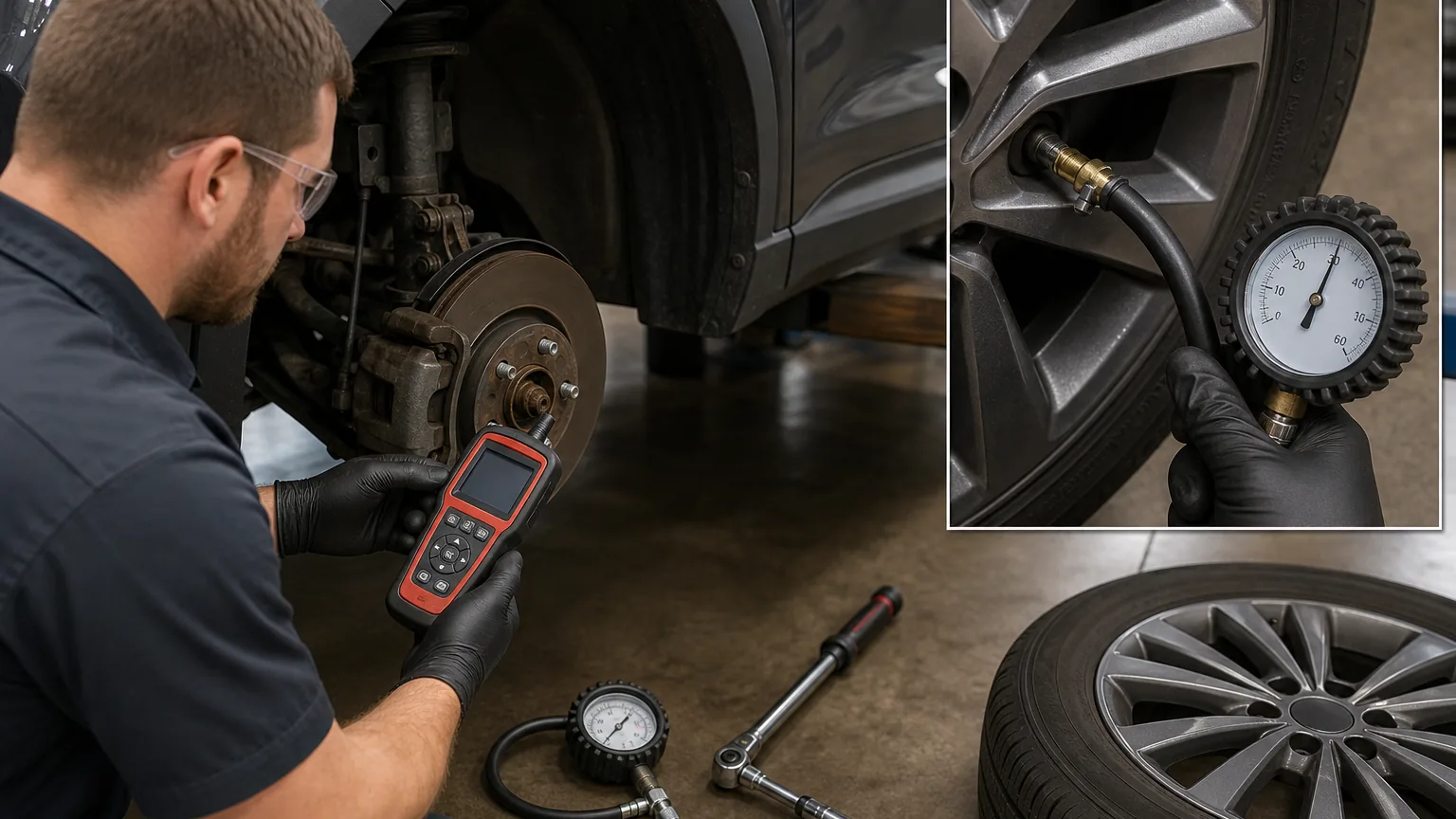
What this part does
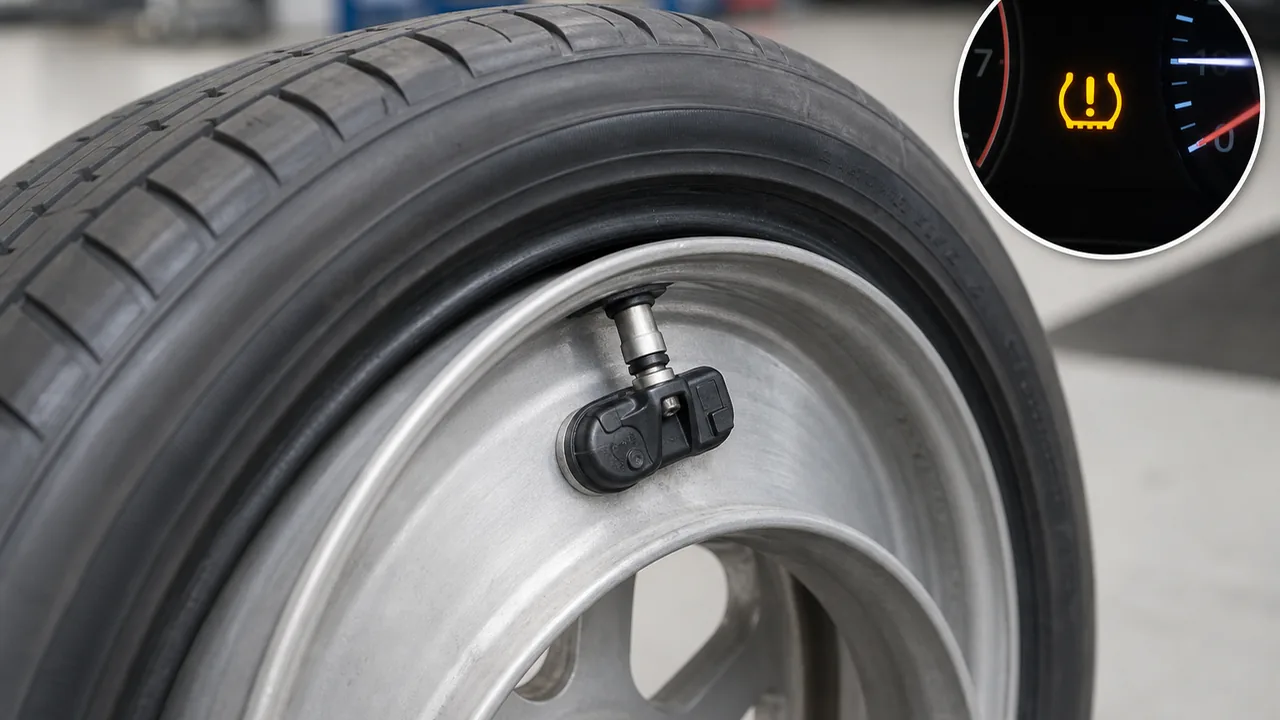
TPMS is a tire pressure monitoring system that warns the driver when tire pressure appears unsafe or when the monitoring system cannot confirm tire status. Direct TPMS uses electronic sensors mounted at the wheel or valve stem. Indirect TPMS estimates pressure loss by comparing wheel-speed behavior through existing chassis data.
That difference matters after tire rotation or new tire installation. A direct system may need sensor IDs or wheel positions learned by the vehicle. An indirect system may need a calibration reset after correct tire pressures are set. Neither system replaces manual pressure checks, because TPMS is a warning system, not a precision tire gauge.
- Direct TPMS can identify sensor signal, battery, registration, or location problems.
- Indirect TPMS can be affected by tire size, pressure differences, wheel-speed sensor data, and calibration state.
- Some vehicles show individual tire locations; others only display a general warning.
Common failure signs
The timing and behavior of the warning light helps separate pressure issues from relearn or sensor faults. Treat the light as useful evidence, not a final diagnosis. Tire service can expose an existing weak sensor, disturb a valve-mounted sensor, or leave the system waiting for a relearn.
| Symptom | What it suggests | Best next check |
|---|---|---|
| Steady TPMS light | Low pressure, incorrect set pressure, or calibration not completed | Check all tires cold against the door placard |
| Flashing TPMS light | Commonly points to a system fault, sensor communication issue, or registration problem | Have the sensors and TPMS codes scanned |
| Light immediately after rotation | Possible location relearn, pressure difference, or display mismatch | Confirm pressure and vehicle-specific relearn requirement |
| Light after driving for a while | System may be detecting pressure change, sensor dropout, or incomplete calibration | Inspect tire condition and scan if pressure is correct |
| Light after new tires | Reused sensor issue, damaged valve/sensor, incompatible sensor, or missed registration | Return to the installer for sensor verification |
Before replacing it
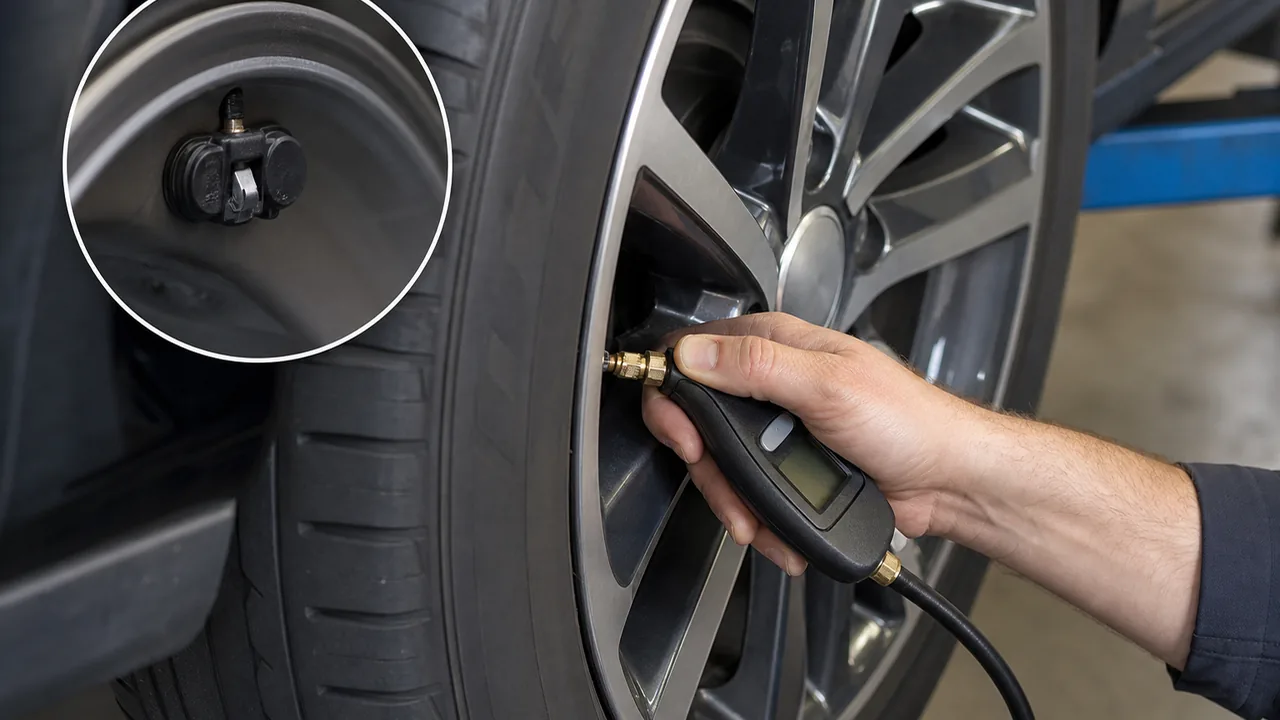
Do not assume a TPMS sensor is bad just because the light came on after tire work. Pressure, calibration, and sensor registration should be verified first. New tires do not automatically mean new sensors, and tire rotation does not always require relearn on every vehicle.
- Check all tires cold with a reliable gauge and use the driver-door placard, not the tire sidewall, as the pressure reference.
- Confirm whether the spare tire is monitored on your vehicle and check it if the owner manual indicates it can trigger warnings.
- Use only the owner-manual-approved TPMS reset or calibration process.
- Look for visible tire damage, a leaking valve stem, or a wheel that appears underinflated.
- If the light flashes or returns after pressure correction, move to sensor and code diagnosis.
If the vehicle has a tire pressure display, a wrong corner reading after rotation may indicate a location relearn issue rather than a pressure problem.
Inspection steps
A TPMS light after tire rotation or new tires usually points to incorrect pressure, a missing relearn, sensor ID/location confusion, or a weak or damaged sensor. The first action is to check every tire cold against the driver-door placard, including the spare if your vehicle monitors it. A steady light often means a pressure warning or calibration issue; a flashing light commonly suggests a TPMS system fault that needs diagnosis. After rotation, some vehicles need location relearn so the display knows which sensor is at each corner. After new tires, reused sensors, damaged valve stems, incompatible replacement sensors, or missed registration can keep the light on. If pressure is correct but the light remains after the vehicle-specific reset or drive cycle, return to the tire shop or have the sensors scanned.
Do not deflate or overinflate tires to force a reset. TPMS procedures vary by year, make, model, and system type.
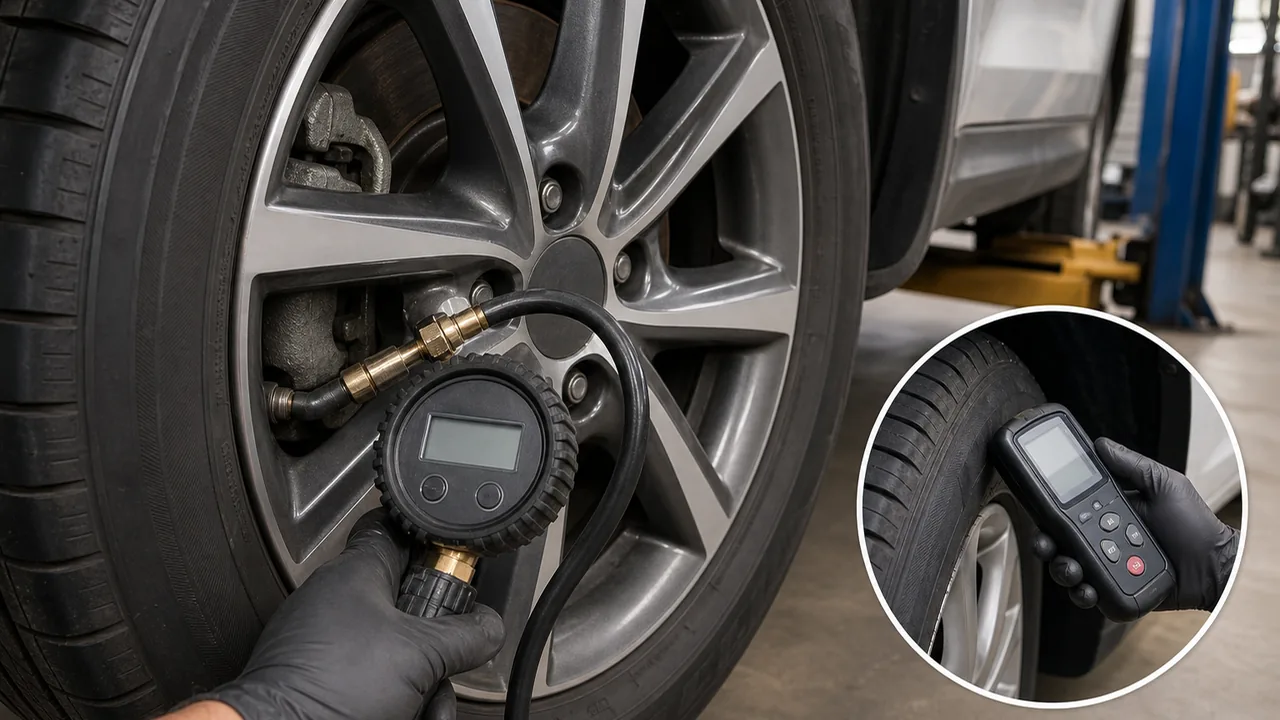
A clean diagnostic path starts with the simple checks and moves toward tool-based confirmation. This prevents replacing sensors when the real cause is pressure, calibration, or a missed relearn after tire service.
- Check all tire pressures cold against the vehicle placard and correct them as needed.
- Inspect each tire and valve stem for visible damage, leakage signs, or an obviously low tire.
- Review the owner manual to identify whether the vehicle uses an owner reset, calibration, or service-tool relearn.
- Perform only the approved reset or calibration process for that vehicle.
- Drive only as allowed by the owner manual procedure, then recheck whether the light clears.
- If the light flashes, returns, or does not clear, scan TPMS sensor data and related codes.
- Confirm sensor IDs, wheel locations, battery status where available, signal response, and module communication before authorizing parts.
TPMS codes can tell a technician which sensor, antenna, module, communication path, or calibration state may be involved, but they are not universal across vehicles. A code description still needs OEM service information, live sensor data, and the tire service history to avoid a bad call.
The most likely cause depends on what changed during service and how the light behaves afterward. This ranking is cautious because TPMS strategy varies widely, but it reflects the practical order most owners and shops should rule out.
- Incorrect tire pressure after service, especially when pressures were set warm or not matched to the door placard.
- Incomplete reset, calibration, or location relearn on vehicles that require it after rotation or tire work.
- Sensor location mismatch, where the vehicle still thinks a sensor is at the old wheel position.
- Weak sensor battery that became obvious during service or after driving.
- Damaged valve stem or TPMS sensor from dismounting, mounting, corrosion, or age-related fragility.
- Incompatible or unregistered replacement sensor after new tire installation or wheel changes.
- Monitored spare tire pressure issue on vehicles that include the spare in TPMS logic.
- Less common module, antenna, wiring, or network issue that requires scan-tool diagnosis.
Used TPMS sensors are risky unless compatibility and condition can be confirmed. A sensor may physically fit the wheel but still fail to communicate with the vehicle, carry the wrong protocol, have a weak internal battery, or require registration that the vehicle will not accept.
- Match the sensor by vehicle application and existing part marking when possible.
- Avoid sensors with damaged stems, cracked housings, corrosion, or unknown history.
- Confirm the sensor can be read by a TPMS tool before installation.
- Expect programming or registration to be required on many replacement sensors.
- Do not buy based only on visual similarity.
Driving briefly may be acceptable when the tires look normal, the vehicle handles normally, and cold pressures match the placard, but the warning still needs resolution. TPMS exists because underinflation can affect handling, tire heat, wear, and braking margin.
Stop and inspect the tire immediately if one tire looks low, the vehicle pulls, steering feels unstable, a tire is damaged, you hear air leaking, or the warning appears with a noticeable handling change. In those cases, treat it as a tire safety issue before thinking about relearn or sensor replacement.
Return to the tire installer when the TPMS light started right after rotation or new tire installation, pressures are correct, and the vehicle-specific reset or relearn has not cleared it. The shop should verify sensor response, valve condition, wheel location data, and whether any replacement sensor was programmed correctly.
Book TPMS diagnosis when the light flashes, returns repeatedly, shows a missing tire reading, or stores TPMS codes that cannot be resolved with pressure correction and the approved relearn. That visit should be diagnostic first: scan the system, identify the failed or unregistered component, then decide whether a sensor, service kit, or module-level repair is justified.
A separate shake, vibration, or pull after tire work may involve balance, alignment, tire condition, or wheel installation rather than TPMS itself.
Replacement notes
Sensor replacement makes sense only after pressure, relearn, and scan checks point to a sensor problem. A tire shop or repair technician should trigger each sensor with a TPMS tool, compare sensor IDs to the vehicle data, verify that the correct sensor type is installed, and confirm that the module accepts the registration or relearn.
When new tires are installed, the existing TPMS sensors may be reused if they are compatible and functioning. Service kits, valve hardware, or seals may still need attention depending on sensor design and condition. After any confirmed repair, the shop should verify that the light clears, the displayed locations are correct when applicable, and no TPMS codes return.
Should every TPMS sensor be replaced with new tires?
No. Sensors are often reused if they respond correctly, match the vehicle, and are in good condition. Replace only when testing confirms failure, damage, incompatibility, or a service need.
FAQ
How long does a TPMS relearn take?
It depends on the vehicle. Some systems relearn after an approved drive cycle, some use an owner calibration menu, and others require a TPMS tool or scan tool.
Can new tires cause a TPMS light?
New tires can coincide with a TPMS light if pressure was set incorrectly, sensors were disturbed, a valve-mounted sensor was damaged, or a replacement sensor was not registered.
Does a flashing TPMS light mean low tire pressure?
A flashing TPMS light commonly suggests a system fault rather than a simple low-pressure warning, but pressure should still be checked before deeper diagnosis.
Can the spare tire trigger the TPMS light?
On some vehicles, yes. Check the owner manual to confirm whether the spare is monitored and whether it should be included in the pressure check.
Do I need a scan tool for TPMS?
Many owner checks do not require one, but sensor registration, sensor ID checks, fault codes, and some relearn procedures require a TPMS tool or scan tool.
Comments
Be the first to add a practical repair note or follow-up question.