
What this part does
| System area | Why it matters |
|---|---|
| Intake boot and ducting | A split after the airflow sensor can let unmetered air bypass measurement. |
| PCV system | A failed valve or split hose can create a vacuum path the engine cannot control. |
| Brake booster line | A leak can affect idle quality and may reduce power brake assist. |
| EVAP purge circuit | A purge valve stuck open can act like an unwanted air or vapor path, but it is not the same as an EVAP leak. |
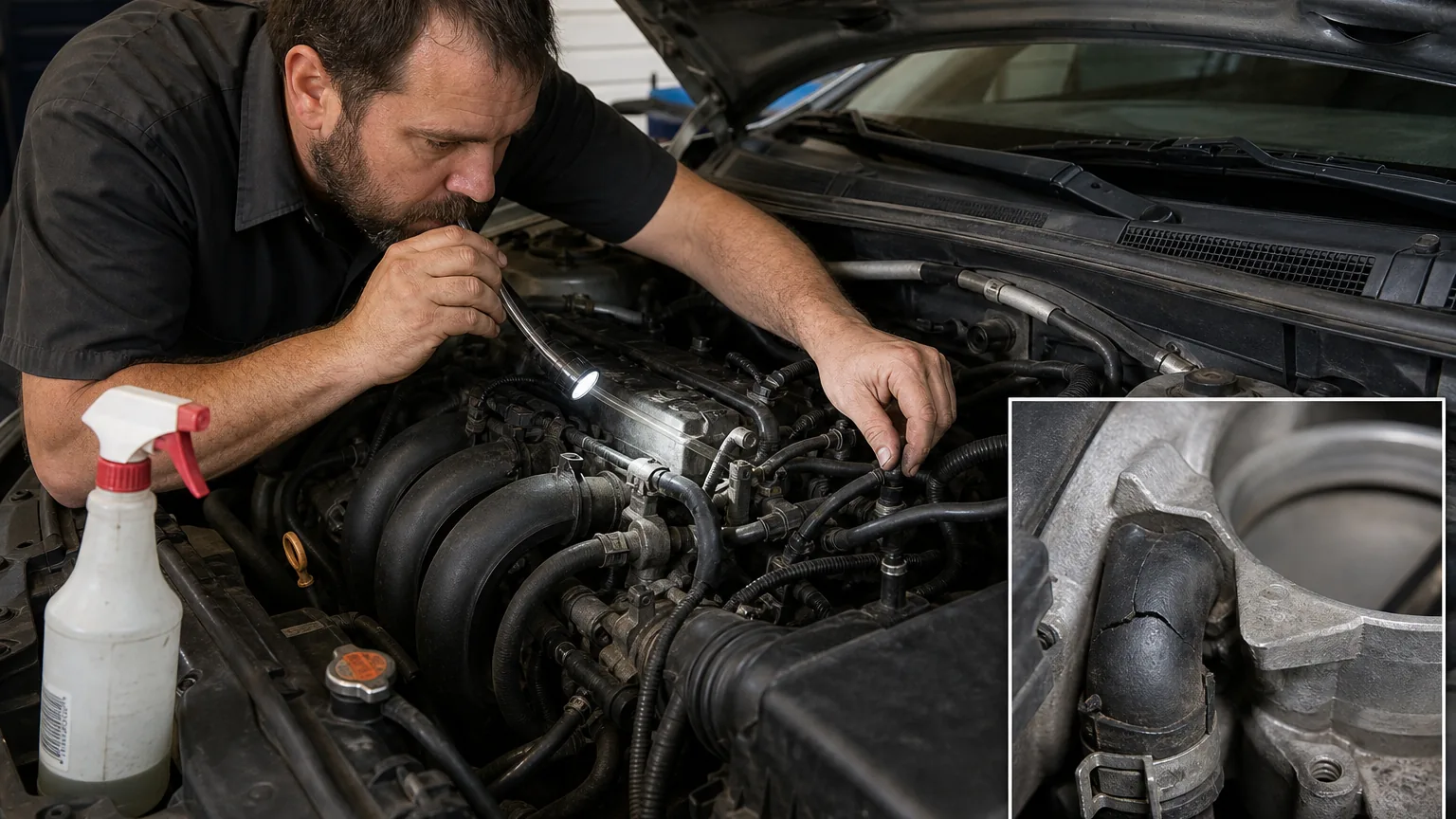
You can find many vacuum leaks without a smoke machine by inspecting hoses and intake boots, listening for hissing, checking PCV and brake booster lines, reviewing OBD-II fuel trims, and using cautious external checks such as light water mist on suspected areas. Small, hidden, or vehicle-specific leaks may still require a shop smoke test or OEM diagnostic procedure. Avoid flammable sprays and stop driving if stalling, severe misfire, fuel smell, overheating, or brake-assist symptoms are present.
Common failure signs
- Rough or surging idle can point to unmetered air, throttle control issues, ignition faults, or fuel delivery problems.
- High idle may happen when extra air bypasses normal throttle control, but electronic throttle faults can look similar.
- Stalling or hesitation under light throttle can occur when the air-fuel mixture becomes unstable.
- Lean codes such as P0171 or P0174 may involve vacuum leaks, but they do not prove one by themselves.
- A hissing sound is useful evidence only when it can be traced to a hose, gasket area, boot, or vacuum device.
- Rough idle, especially when the engine is warm and accessories are off.
- Idle speed that hangs, surges, or takes too long to settle.
- Stalling when shifting into gear, braking, or coming to a stop.
- Hesitation or stumble during light throttle input.
- Hissing, whistling, or sucking noise near the intake, hoses, or firewall.
- Poor fuel economy from the computer adding fuel to compensate for extra air.
- Random or cylinder-specific misfire codes when the mixture becomes unstable.
Before replacing it
Do not replace the MAF sensor, oxygen sensors, injectors, throttle body, or fuel parts just because the engine is lean or the idle is unstable. Confirm whether unmetered air is likely first. A simple inspection often finds a cracked hose, loose clamp, missing cap, disconnected PCV line, or intake boot split that would be missed by parts swapping.
- Use the flashlight to inspect folds in the intake boot and the underside of hoses.
- Use the mirror to see fittings behind the throttle body and near the firewall.
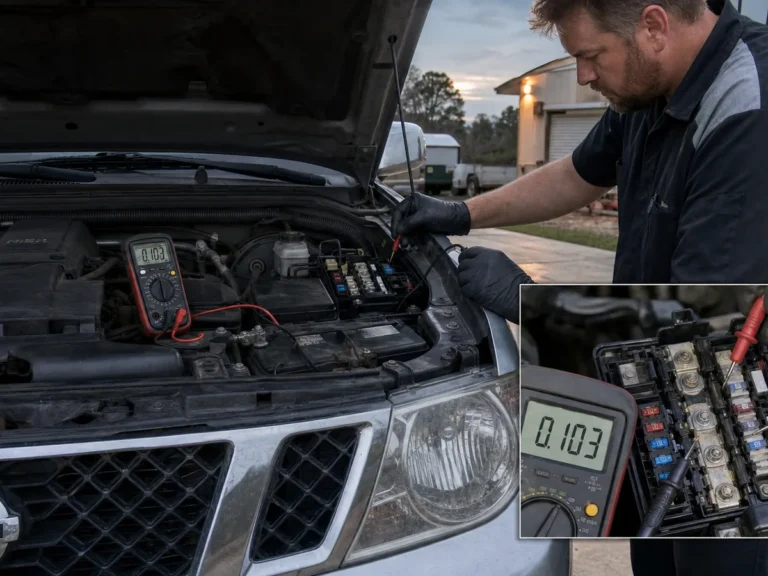
- Use the scanner to compare idle behavior, stored codes, pending codes, and fuel trim trends.
- Use water mist only as a cautious external check on suspected leak areas.
- Use routing diagrams to avoid mistaking EVAP, PCV, brake booster, and accessory lines for one another.
Inspection steps
- Do not spray flammable chemicals near hot exhaust, ignition arcs, alternators, belts, or electric fans.
- Do not pinch or disconnect brake booster hoses as a casual test.
- Do not force brittle hoses, plastic tees, purge lines, or intake fittings.
- Do not work around a running engine without stable footing, lighting, and eye protection.
- Do not assume a changed idle speed proves the exact failed part unless the leak location is confirmed.
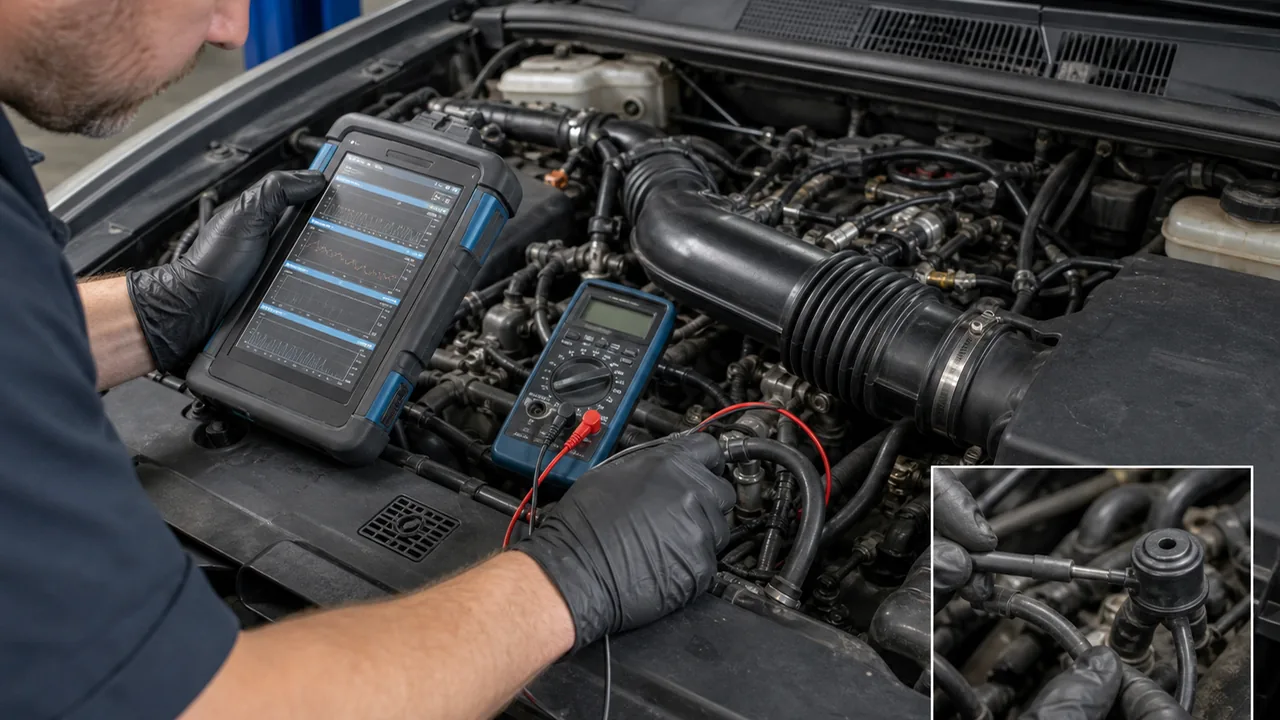
- Confirm the symptom pattern and note when it happens: cold start, warm idle, braking, light throttle, or after a recent repair.
- Scan the vehicle and record freeze-frame information if available.
- Perform a cold visual inspection before touching hot or moving parts.
- Listen near the intake, throttle body, PCV system, brake booster line, and firewall without reaching across moving components.
- Use scan data to decide whether the evidence points to unmetered air, sensor reporting, ignition, fuel delivery, or another system.
- Cracked or disconnected vacuum hoses near the intake manifold.
- Loose, split, or poorly seated intake boot after the airflow sensor.
- Failed PCV valve, torn PCV diaphragm, or collapsed PCV hose.
- Missing or cracked vacuum cap on an unused intake port.
- Intake manifold gasket leak, especially when symptoms are strongest at idle.
- Brake booster hose, check valve, or booster-related leak.
- EVAP purge valve stuck open or purge plumbing fault that mimics a vacuum leak.
- Throttle body gasket or mounting leak after cleaning or service.
- Hidden model-specific fittings under covers or behind the manifold.
- Inspect PCV hoses for splits, collapsed sections, loose elbows, and oil-softened rubber.
- Verify the PCV connection is fully seated before replacing the valve.
- Inspect the brake booster vacuum hose for cracking, loose clamps, or a damaged check valve.
- Treat hard brake pedal, hissing during brake application, or reduced assist as a safety concern.
- P0171 may indicate a lean condition on bank 1, but the cause still needs testing.
- P0174 may indicate a lean condition on bank 2, often relevant on V-style engines.
- P0507 can appear with idle speed higher than expected, but throttle control and learned idle also matter.
- P0300 or cylinder misfire codes can appear when the mixture becomes unstable, but ignition and compression checks may still be needed.
- Choose a visible suspect area such as an intake boot fold, hose connection, or gasket edge.
- Keep clear of belts, fans, pulleys, and exhaust parts.
- Apply a light mist rather than a stream.
- Watch for a temporary idle change or sound change.
- Stop if the engine runs worse, electrical components are exposed, or the suspected area cannot be reached safely.
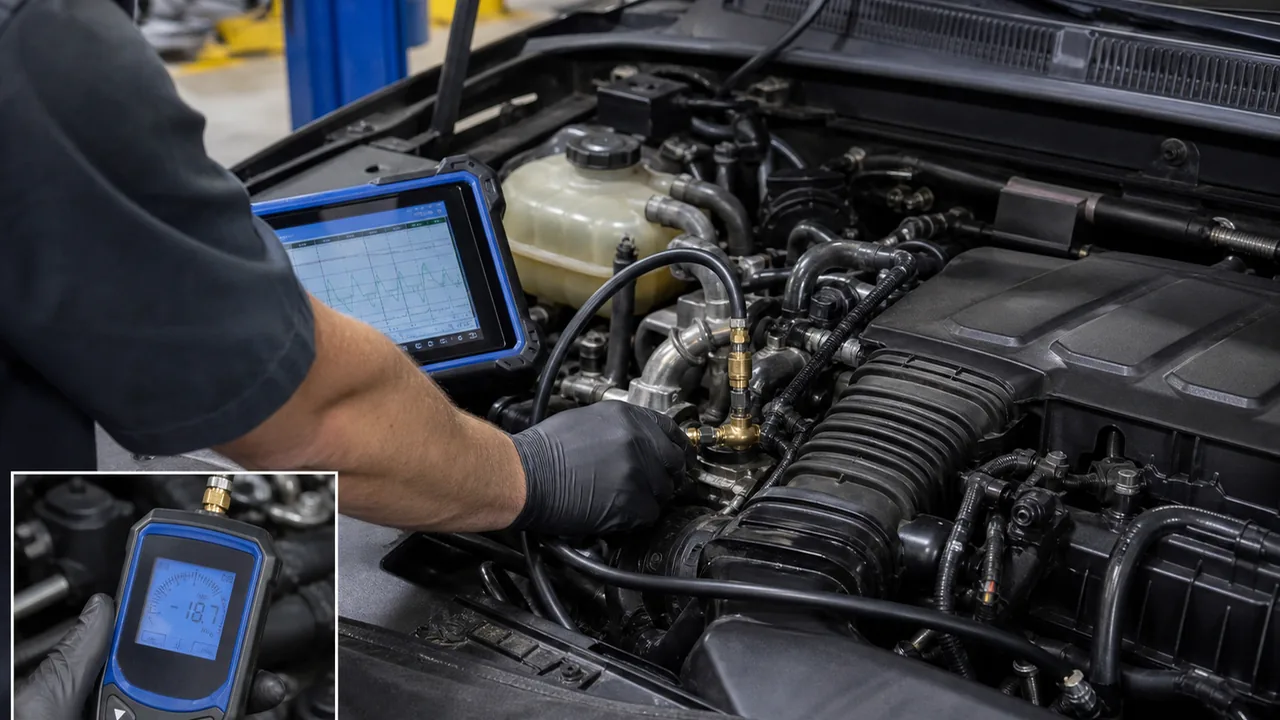
Some leaks are not practical to confirm in a driveway. A repair shop can use smoke testing, vacuum gauge testing, bidirectional scan-tool commands, intake sealing checks, purge valve tests, and OEM diagnostic trees to separate an intake leak from fuel, ignition, sensor, or emissions faults. Professional testing is often faster than replacing parts when the leak is small, hidden, or intermittent.
- Stop driving if the brake pedal becomes hard or assist feels inconsistent.
- Stop driving if the engine stalls when braking or shifting into gear.
- Avoid driving with severe misfires or a flashing check engine light.
- Do not continue if fuel odor, smoke, overheating, or electrical arcing is present.
- Tow or arrange safe inspection if the vehicle cannot idle reliably.
Used parts can make sense for some hard plastic intake tubes, brackets, or discontinued fittings, but they are risky for rubber hoses, PCV valves, check valves, gaskets, and brittle vacuum caps. Age, heat, oil exposure, and removal damage can make a used vacuum part fail soon after installation even if it looks acceptable in a photo.
Replacement notes
- Use formed hoses or molded boots when the original part shape matters.
- Replace brittle vacuum caps instead of reinstalling them.
- Avoid temporary tape repairs on intake boots and vacuum lines.
- Confirm PCV and EVAP connections are routed correctly after service.
- Recheck clamps and ducts disturbed during air filter or throttle body work.
FAQ
Can I drive with a suspected vacuum leak?
Only if symptoms are mild and the vehicle remains controllable. Do not drive with stalling, severe misfire, fuel odor, overheating, or brake-assist concerns.
Can an EVAP problem look like a vacuum leak?
Yes, especially if a purge valve is stuck open or purge plumbing allows unwanted flow. That is different from an EVAP leak code, which needs its own diagnosis.
Comments
Be the first to add a practical repair note or follow-up question.