
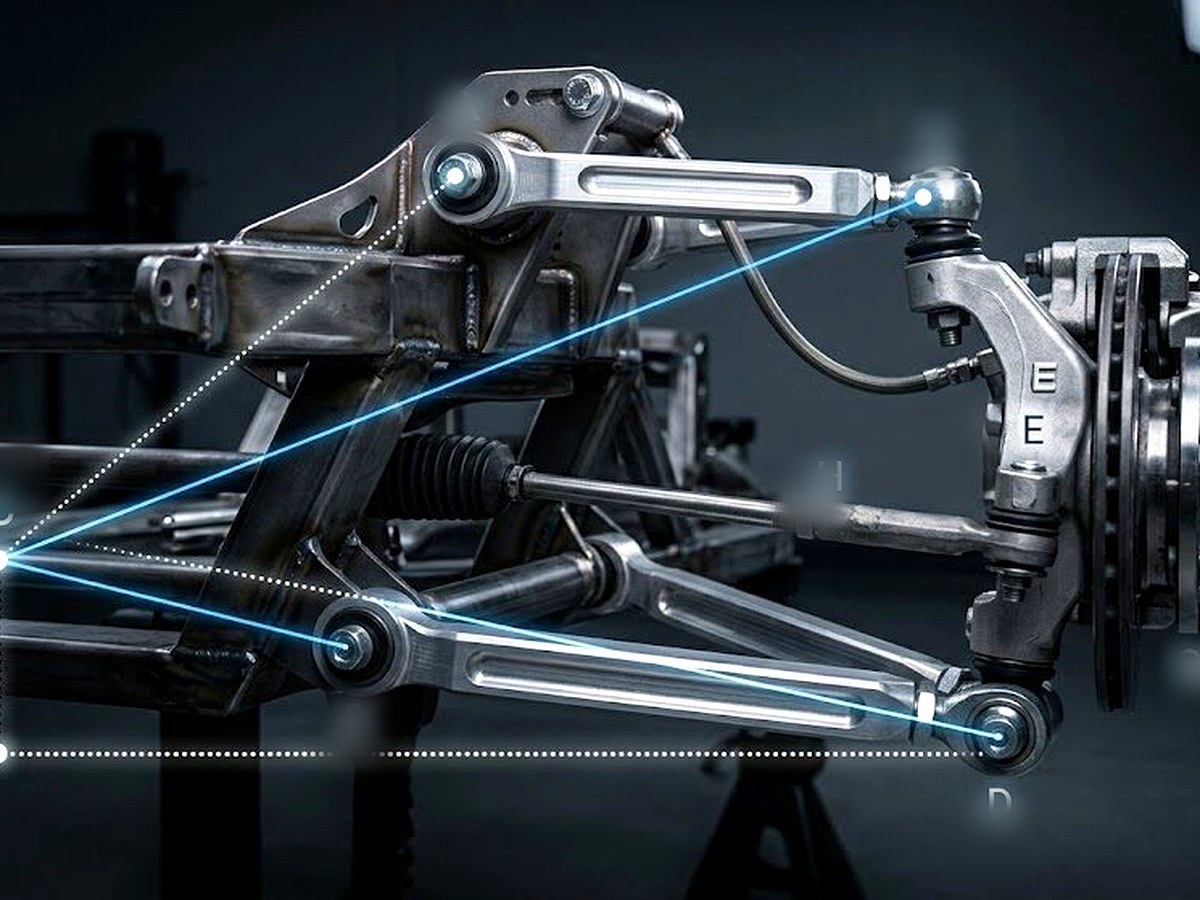
What this part does
In plain English, suspension kinematics explains the path the wheel follows and the leverage the suspension creates as the body and tire move relative to each other. That is why a car can feel flatter, more nervous, more planted, or less consistent after a ride-height change even if the springs and dampers themselves are unchanged.
Roll center matters because it helps describe how the chassis reacts in cornering. A higher or lower roll center does not automatically mean better handling; it changes how roll forces are managed through geometry versus springs and bars. Center of gravity is the mass location of the vehicle, while roll center is a suspension geometry reference. Those are related ideas, but they are not interchangeable.
Anti-squat matters under acceleration because rear suspension geometry can create a force path that resists some of the rearward weight transfer that compresses the rear suspension. In practice, more anti-squat can reduce visible squat and sharpen launch feel, but too much can also make behavior harsher or less forgiving on some setups. This is one reason platform layout and intended use matter more than generic internet advice.
Common failure signs
Geometry-related handling changes often show up as symptoms rather than hard failures. A car that suddenly feels unstable after lowering, lifting, alignment work, spring changes, bushing work, or collision repair may be reacting to changed control-arm angles, altered toe curves, shifted ride height, or mismatched tire and load conditions rather than to one bad part alone.
- More body roll than expected after a suspension change
- Rear squat that feels excessive during acceleration
- Poor traction on corner exit or during launch
- Steering that feels nervous, darty, or less self-centering
- Uneven tire wear, pull, or new sensitivity to road crown
- Stability-control or chassis warnings after ride-height or sensor changes
- A different left-versus-right response after impact, curb strike, or uneven spring settling
These symptoms can indicate geometry changes, but they can also come from worn dampers, weak springs, tire issues, bushing compliance, load differences, or poor alignment settings. The symptom alone does not prove a roll center or anti-squat problem.
Before replacing it
Unexpected squat, roll, or traction changes after suspension work are often caused first by setup errors or changed geometry conditions, not by a defective premium part. Before replacing springs, dampers, control arms, or bushings again, separate what changed in the setup from what actually failed. That saves money and avoids chasing theory instead of evidence.
- Check whether ride height changed from stock or side to side after the recent work.
- Confirm tire size, pressure, age, and wear pattern before drawing handling conclusions.
- Review the alignment printout, especially if toe, camber, or thrust angle changed with ride height.
- Inspect for loose fasteners, shifted subframe position, damaged bushings, or bent components after impact or installation.
- Compare the current setup with OEM procedures before assuming the platform likes more rake, less rake, or a lower rear roll center.
| Rank | Cause | Why it changes the feel |
|---|---|---|
| 1 | Ride height and alignment change together | Control-arm angles, toe behavior, and load balance can all shift at once. |
| 2 | Tire condition or pressure issue | A tire problem can imitate geometry problems or magnify them. |
| 3 | Spring and damper mismatch | Body control changes can be mistaken for roll center or anti-squat effects. |
| 4 | Worn bushings or loose hardware | Compliance changes can alter how the car takes a set under load. |
| 5 | Bent or incorrectly installed parts | Pickup points and arm angles may no longer match intended geometry. |
Inspection steps
Owner-safe checks should stay simple and observational. Record ride height at all four corners on level ground, note tire pressures and wear, inspect for obvious loose hardware or leaking dampers, and compare wheel gap and stance side to side. If the problem appeared after a recent modification, write down every part added, removed, or adjusted, including preload or perch changes where applicable.
- Measure and record approximate ride height consistently at each corner.
- Check tire pressures, tire sizes, and wear patterns before driving conclusions.
- Look for witness marks, loose fasteners, damaged bushings, or leaking dampers.
- Review the latest alignment printout and compare it with the vehicle's intended use.
- If warning lights appeared, note exactly when they came on and whether any ride-height or sensor work was performed.
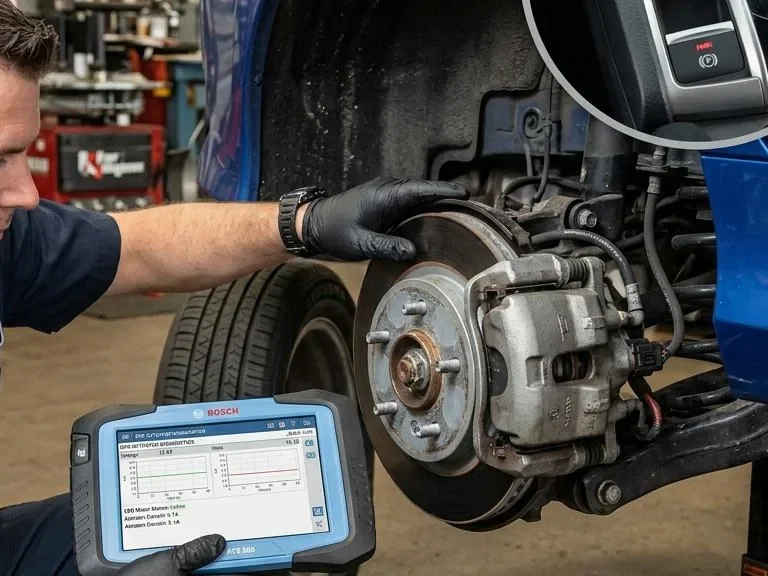
Technician-level checks go further. A lift, alignment equipment, and platform knowledge may be needed to verify control-arm angle changes, pickup-point condition, subframe position, corner height consistency, sensor linkage position, and whether the current setup still matches OEM assumptions. This is also where a technician checks whether chassis or stability systems need calibration after geometry or height changes.
If the vehicle feels unstable, pulls sharply, shows abnormal tire wear, or triggers chassis warnings after suspension work, do not keep adjusting parts by guesswork. Verify the geometry and the procedure path first.
Used suspension parts can make a geometry problem harder to read if their history is unknown. A used control arm, knuckle, subframe, spring, or damper may look serviceable but still carry slight bends, worn bushings, sag, or side-to-side mismatch that changes how the car sits and responds. That matters when the discussion already involves roll center, anti-squat, or handling balance.
- Check for impact damage, elongated holes, cracked welds, or distorted brackets.
- Compare left and right used parts for matching numbers, shape, and bushing condition.
- Avoid mixing unknown-rate springs or unknown-valving dampers across the axle.
- Inspect used adjustable parts for seized threads, damaged lock rings, or missing hardware.
- Verify that any used sensor brackets or link mounts match the platform and suspension version.
If the goal is to correct a handling change after suspension work, used parts should be treated cautiously unless they can be verified against OEM dimensions or trusted supplier data. A bargain part can easily add another variable to a problem that already needs careful measurement.
Replacement notes
Platform differences change the answer more than most enthusiasts expect. A front strut car, a double-wishbone setup, a multilink rear, and a solid axle layout do not move through travel the same way. The same ride-height reduction can improve feel on one chassis, upset bump-steer or camber behavior on another, and change anti-squat or traction behavior differently again on a third.
That is why suspension correction parts, relocation brackets, adjustable arms, top mounts, and revised bushings should not be treated as universal upgrades. They may help when the geometry problem has been identified, but they may also introduce side effects if they are installed to solve the wrong problem. OEM service data, supplier instructions, and a platform-specific review should lead the decision whenever safety, alignment, or drivability is at stake.
If a modification affects ABS, stability control, ride-height sensors, or headlamp leveling on the platform, the review should include calibration and system checks rather than mechanical geometry alone.
FAQ
What is suspension kinematics in simple terms?
It is the way the suspension guides wheel movement as the vehicle moves through bump, rebound, roll, dive, and squat. In practice, it helps explain why handling changes when ride height, arm angles, alignment, or hardware positions change.
Is roll center the same as center of gravity?
No. Roll center is a geometry reference created by the suspension layout. Center of gravity is the mass location of the vehicle. They interact, but they are not the same concept.
What does anti-squat usually mean?
Anti-squat usually means rear suspension geometry that resists some rear suspension compression during acceleration. It can change launch feel and traction behavior, but the effect depends on platform and setup.
Can lowering a car change roll center and handling?
Yes. Lowering can change control-arm angles, alignment behavior, and geometry references, which can alter body motion and steering feel. The result is not universal, so platform-specific review is important.
What should an owner check first after a suspension modification feels wrong?
Start with ride height, tire pressure, tire wear, visible hardware condition, and the alignment printout. Then compare the current setup with OEM procedures before assuming a more complex geometry fault.
When should OEM service information be consulted?
Consult OEM information before making vehicle-specific claims about acceptable geometry, correction hardware, sensor calibration, or post-mod alignment targets. It is especially important when safety and drivability are affected.



Comments
Be the first to add a practical repair note or follow-up question.