
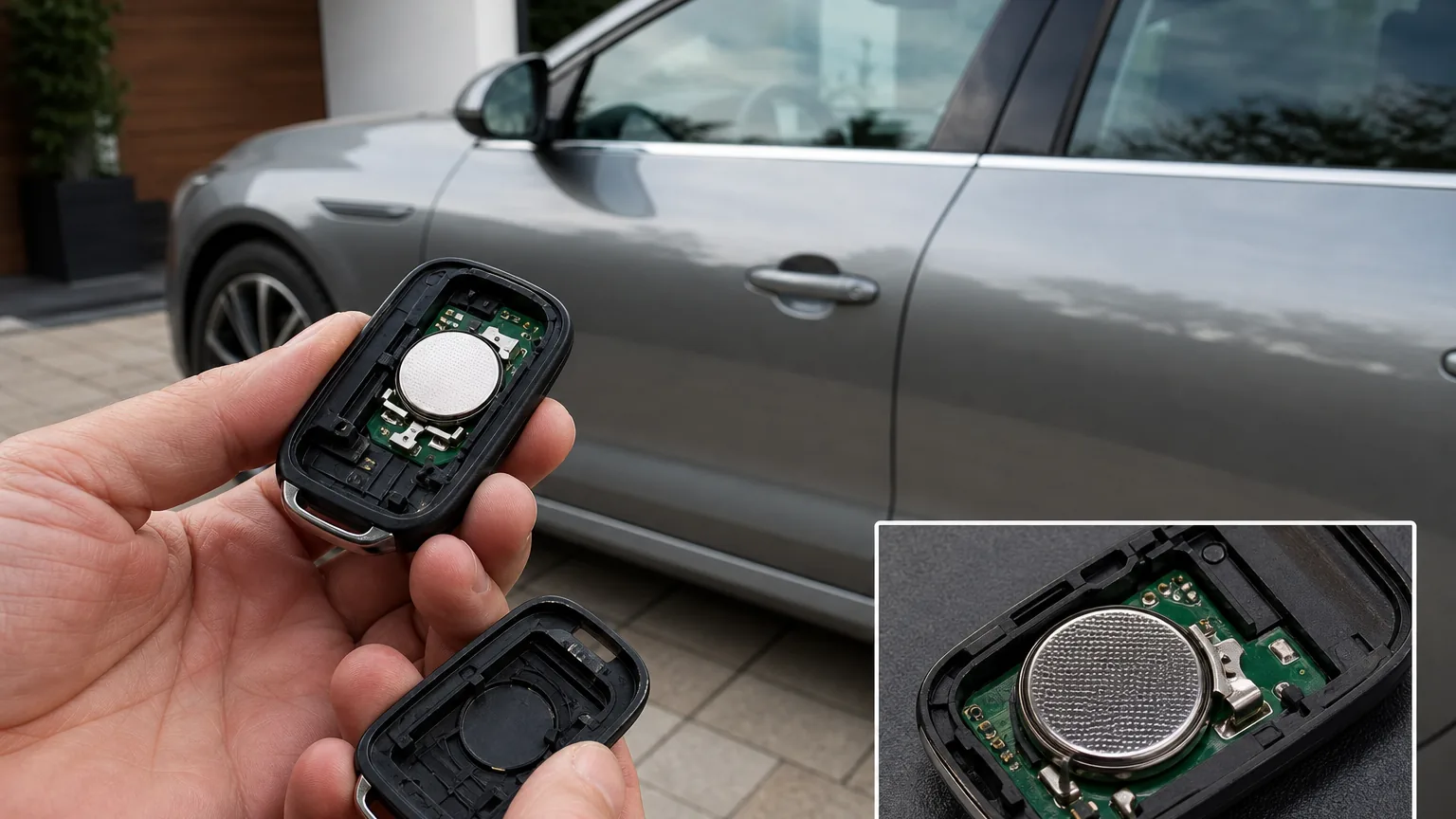
Inspection steps
The practical rule is simple: do not wait for the fob to fail completely if the vehicle already needs the key held closer than normal or shows a low-key-battery message. A fresh, correct battery is the lowest-risk first fix, but persistent symptoms after replacement should move the diagnosis beyond the battery.
Do not assume every smart fob uses the same coin-cell size. Verify the owner manual, the existing battery marking, or a trusted parts lookup before buying a replacement.
- The doors lock or unlock only when the fob is close to the vehicle.
- Button presses work sometimes but not every time.
- Passive entry works at one door but not another, or stops working until the fob is moved.
- A dashboard message says the key battery is low or the key is not detected.
- Push-button start works only when the fob is held near the backup start area described in the owner manual.
| Short range | Weak fob battery or RF interference | Replace the correct coin cell, then retest away from heavy electronics |
| Intermittent buttons | Weak battery, worn button pad, or poor internal contact | Check battery orientation and inspect the fob for damage |
| Key not detected | Weak fob battery, backup-start issue, weak vehicle battery, or keyless-entry fault | Try the spare fob and the manual backup start location |
| Both fobs act weak | Vehicle-side power, antenna, receiver, or interference issue | Compare fobs, then check vehicle battery health and scan data if needed |
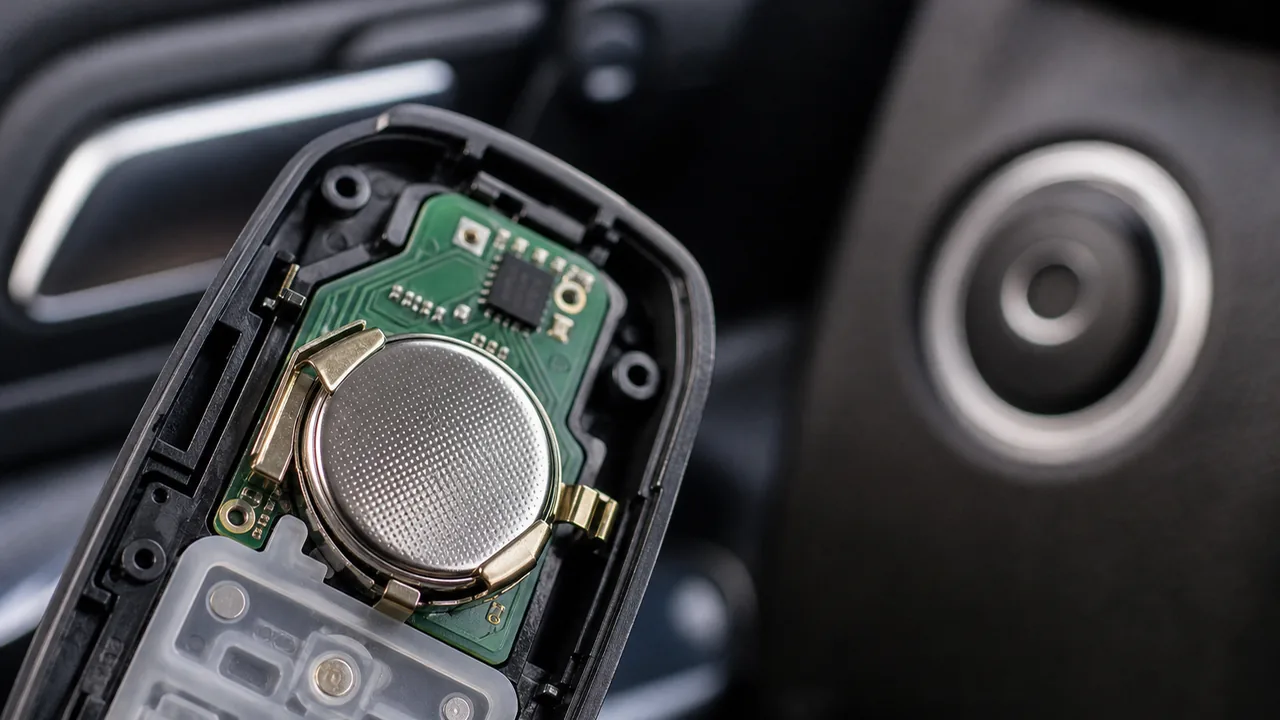
- Weak fob battery from normal age, daily use, poor storage, or low-quality replacement cells.
- Poor battery contact, reversed polarity, loose terminal tension, or an incorrectly seated coin cell.
- Worn buttons, cracked case, water damage, or contamination inside the fob.
- RF interference near the vehicle, home, garage, charger, building entrance, or other electronics.
- Weak vehicle 12-volt battery causing modules or antennas to behave inconsistently.
- Key antenna, receiver, or passive-entry sensor fault on the vehicle side.
- Immobilizer, body control module, or key registration issue that needs diagnostic equipment.
Technical factors that change battery life
Coin-cell batteries lose useful capacity with age, temperature exposure, storage conditions, and fob design. Passive-entry systems may wake or listen differently than simple button-only remotes, and some fobs reduce radio activity when stored or not moved. Storing a fob near the vehicle can also increase communication activity on some systems, so the owner manual is the best source for model-specific storage advice.
The safest habit is to replace the battery at the first clear warning instead of waiting for a lockout. Drivers who park far from home, have no working spare, or rely on push-button start should be more proactive because a weak fob can turn a minor battery change into an access problem.
Keep coin-cell batteries away from children and pets. They are small, easy to swallow, and should be handled and disposed of with care.
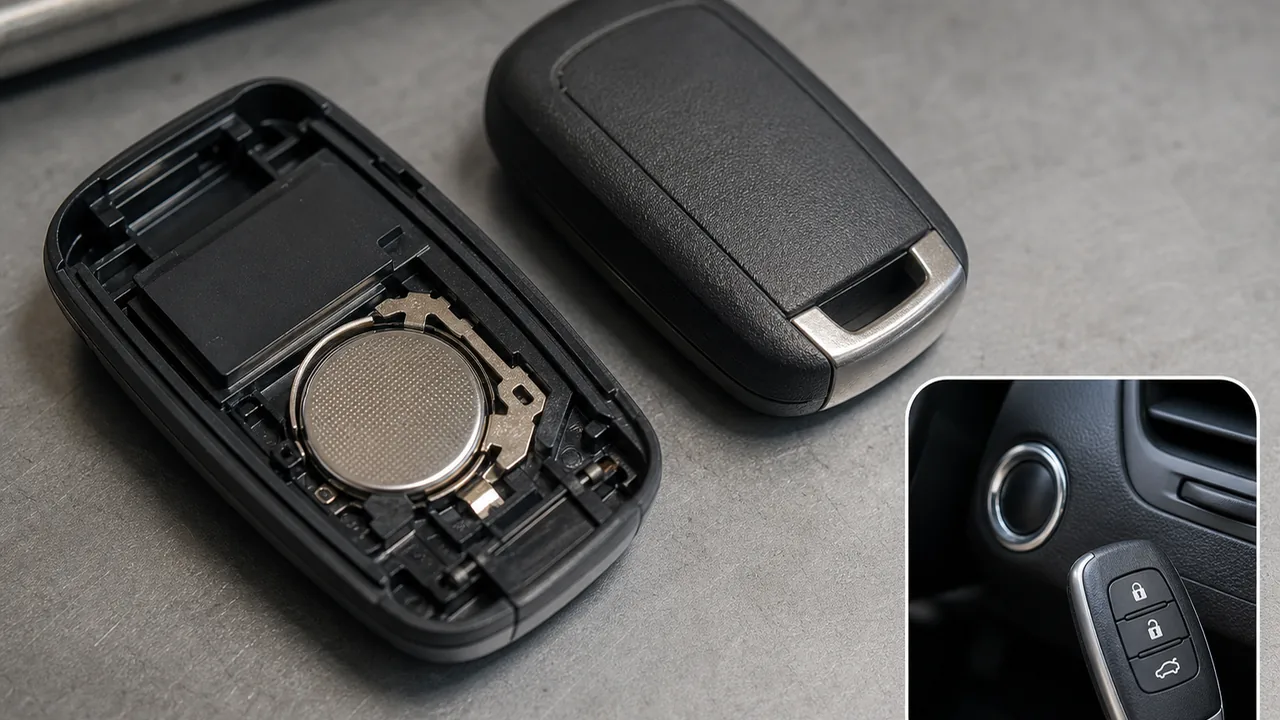
- Read the owner manual section for smart key battery replacement and emergency start behavior.
- Replace the coin cell with the correct type from a reputable battery source.
- Confirm polarity before closing the fob so the contacts are not bent or forced.
- Retest lock, unlock, passive entry, and push-button start from normal use positions.
- Compare the result with the spare fob, if one is available.
- If both fobs remain unreliable, shift attention to vehicle power, antennas, receiver modules, or interference.
Avoid prying aggressively on a fob shell. Damaged clips, seals, or contacts can turn a simple battery replacement into a fob repair.
If the vehicle is already running, follow the owner manual and avoid shutting it off in an unsafe place until you know you can restart it. If you are locked out, use the mechanical key blade procedure if available, then consider roadside support, a qualified automotive locksmith, or dealer support depending on the vehicle and key type.
DTCs are usually secondary
Low fob battery complaints are often diagnosed by symptoms, fob comparison, and direct testing rather than a code. If symptoms remain after a verified battery replacement, a scan tool review may look for low-voltage history, immobilizer communication concerns, body control module faults, key antenna faults, or receiver-related data where the vehicle supports it.
Professional checks
- Fob signal output or button function testing.
- Key registration or programming status check when a replacement or used fob is involved.
- Vehicle 12-volt battery and charging-system health check.
- Scan tool review for immobilizer, BCM, antenna, receiver, or low-voltage clues.
- Inspection for damaged fob contacts, corrosion, water intrusion, or worn switch pads.
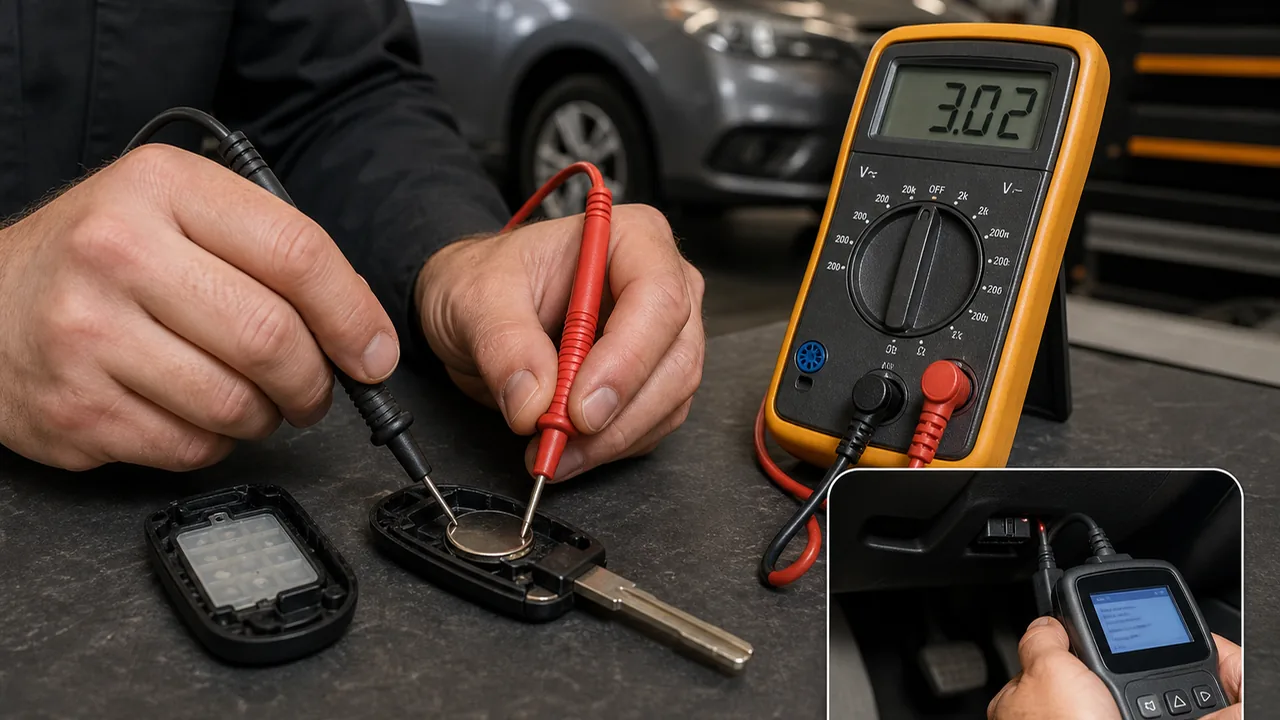
- If one fob improves after a fresh battery, treat the issue as normal battery wear.
- If one fob does not improve but the spare works normally, inspect the problem fob for damage, contacts, buttons, or programming status.
- If both fobs fail the same way, inspect the vehicle battery, receiver path, antenna system, and relevant modules.
- If the vehicle will not recognize a known-good fob, use professional diagnostics rather than buying random parts.
Replacement notes
- Replace after a low-key-battery warning appears.
- Replace when range drops or button response becomes inconsistent.
- Replace before a long trip if the fob is several years old and used daily.
- Replace if the spare fob is missing, dead, or untested.
- Replace after confirming the correct battery type rather than assuming a common size.
A stored spare fob may last longer than a daily-use fob, especially if the vehicle supports a documented power-saving or deactivation mode. That feature is model-specific, so verify it in the owner manual before relying on long-term storage behavior.
Used part buying checks
- Use the battery replacement guide when the fob still works but range or response is fading.
- Use the short-range troubleshooting path when the fob only works close to the vehicle after a new battery.
- Use the programming path for replacement fobs, used fobs, or keys that are not recognized after compatibility is confirmed.
- Use the mobile automotive locksmith path for lockout, lost-key, or access problems where local help is needed.
- Use dealer diagnosis when the vehicle-side smart-key system, immobilizer, or module communication needs make-and-model-specific tools.
FAQ
Can a smart key fob battery last more than three years?
Yes. Many smart key fob batteries last for several years, and storage habits, fob design, climate, battery quality, and daily use all affect lifespan. Replace it when symptoms appear rather than relying on a fixed calendar.
Will a low fob battery stop the car while driving?
It usually will not stop a vehicle that is already running, but it can create an access or restart problem after the vehicle is turned off. Follow the owner manual for emergency start behavior.
Does every smart key fob use the same coin-cell battery?
No. Do not assume the size. Check the owner manual, the old battery marking, or a trusted vehicle-specific parts source before installing a replacement.
Can a new battery fail to fix the key fob?
Yes. If a fresh, correct battery does not help, the issue may be poor contact, fob damage, worn buttons, interference, weak vehicle 12-volt power, a receiver issue, or a key programming problem.
Should a used replacement fob be programmed before use?
A replacement or used fob usually needs compatibility confirmation and programming support before it can operate the vehicle. Check part compatibility, key blade needs, and programming eligibility before buying.
Comments
Be the first to add a practical repair note or follow-up question.