

What drivers usually notice

If your Toyota has a turbo V6, check the VIN against the latest recall notice before driving it long distances. Start with five checks in this order: confirm VIN status, assess current symptoms, review any owner notice, contact a Toyota dealer, and save documentation such as warning messages, scan results, and service records. Treat recall scope and remedy status as VIN-dependent and subject to change as Toyota and NHTSA update campaign details.
Safe-to-drive guidance is straightforward: if the engine is running normally and you have no urgent symptoms, move to VIN lookup and dealer scheduling before assuming anything else. If you have knocking, rough running, a no-start condition, stalling, or loss of motive power, stop driving and speak with the dealer about the safest next step, including whether towing is the better choice. Scan codes can support diagnosis, but they do not prove or rule out recall involvement on their own.
- Stop driving if you hear new knocking, banging, or other heavy internal-engine noise.
- Stop driving if rough running suddenly worsens or the vehicle begins stalling.
- Seek immediate dealer guidance if the engine will not start or restarts unpredictably.
- Stop and reassess if warning lights appear together with reduced power or abnormal engine behavior.
- Do not continue driving if you see smoke that is getting heavier or does not clear quickly.
- Stop driving if you notice active fluid loss, a burning smell, or signs of overheating.
If your Toyota has a turbo V6, check the VIN against the latest recall notice before driving it long distances, and if it is already showing symptoms, contact a Toyota dealer before treating it like a routine drivability issue. The owner-facing warning signs that deserve immediate attention are engine knocking, rough running, a no-start condition, stalling, or sudden loss of motive power. Those symptoms do not confirm recall eligibility by themselves, but they do raise the urgency of getting VIN-specific dealer guidance and documented next steps.
- Treat stall or loss of motive power as the highest safety concern because the vehicle may stop responding normally in traffic or while merging.
- Treat persistent knocking or rough running as a stop-and-call signal, especially if the symptom is getting worse rather than staying occasional.
- Treat a no-start event as a dealer-contact issue even if the vehicle later restarts, because symptom history still matters for recall and warranty documentation.
- Before calling, gather the VIN, current mileage, active warning messages if any, and a short written timeline of what happened and when.
- Use Toyota or NHTSA recall information plus dealer confirmation as the decision path, not forum guesses or a DIY conclusion.
Owner-safe action here is documentation and dealer contact, not fault confirmation. If the vehicle is symptomatic, ask the dealer what they want documented and whether they recommend towing based on your VIN, symptoms, and current recall status.
If your Toyota has a turbo V6, check the VIN against the latest recall notice before driving it long distances, then review any owner notice, note whether symptoms like knocking, rough running, no-start, stall, or loss of motive power are happening now, contact a Toyota dealer, and document what changed.
- An open, VIN-matched recall plus matching symptoms is the highest-priority scenario. In the V35A engine context, official concern centers on possible machining debris and bearing damage, so a new knock, rough operation, stalling, or a sudden drop in drivability should be treated as a dealer-level event rather than as routine troubleshooting.
- A VIN-matched recall with no current symptoms is still important, but it is not the same as an active drivability event. The key point is that recall status is VIN-dependent and campaign details can change over time, so the next step is dealer confirmation and scheduling, not guessing from model year, trim, or forum posts.
- A non-recall mechanical engine problem can look similar. Bearing noise is one possibility, but oil-related wear, internal damage, or another engine fault can also create knock-like sounds, rough running, or reduced power. Similar symptoms do not prove recall eligibility, which is why dealer campaign lookup and diagnosis stay separate.
- Fuel, ignition, or air-metering faults can mimic recall anxiety. Misfire-related behavior, poor combustion, sensor errors, or fuel delivery problems may trigger rough running, hesitation, warning lights, or a no-start, even when the vehicle is not included in the recall. Codes can help the technician, but they do not confirm or rule out recall involvement by themselves.
- Do not confuse the engine-debris recall discussion with unrelated Toyota Tundra recall campaigns. Other recalls may involve different systems, different symptoms, and different remedies, so owners and used buyers should verify the specific VIN, open campaign list, prior recall completion history, and dealer records before drawing conclusions.
Toyota and NHTSA recall information has expanded over time and may change again, so treat campaign scope, remedy timing, and next steps as verify-first items tied to your exact VIN.
That ranking helps separate urgency from uncertainty: first confirm VIN status and current symptoms, then move into owner-safe checks versus dealer-only diagnosis and campaign handling.
Why it happens
If your Toyota has a turbo V6, check the VIN against the latest recall notice before driving it long distances. A scan code or warning light can support diagnosis, but it does not prove a recall applies, and the absence of a code does not rule the issue out.
Knocking, rough running, no-start, stall, or loss of motive power should be treated as urgent dealer-contact signals. Codes can describe what the engine is doing; recall eligibility still depends on the specific VIN, current campaign status, and dealer confirmation.
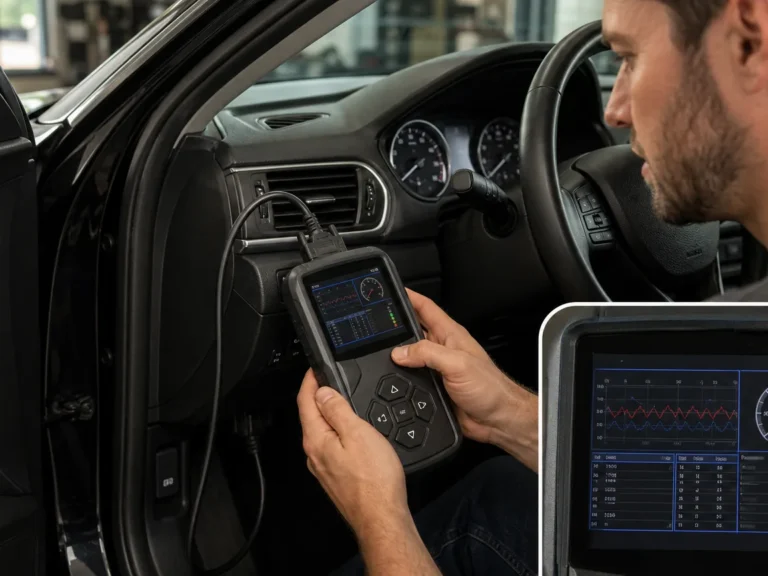
If you can safely scan the vehicle, record every DTC and any freeze-frame data before clearing anything. That helps the dealer separate a current fault from stored history that may be unrelated to the recall condition.
What To Record
- All stored and pending DTCs
- Freeze-frame details, if available
- When the warning light appeared
- Whether the symptom was intermittent or constant
- Any recent repairs, reset events, or battery disconnects
On the technical side, Toyota’s concern has involved internal engine wear tied to manufacturing debris and main-bearing damage, which can worsen under heavier load. That is why the recall conversation stays VIN-specific and date-sensitive, and why official Toyota and NHTSA information should be checked again before drawing a conclusion.
Leave To The Dealer
- Campaign lookup and eligibility confirmation
- Dealer diagnosis of the stored codes and symptoms
- Recall remedy execution if the VIN is covered
- Towing discussion if the vehicle is already symptomatic
- Documenting service history for a used purchase
If you are buying used, also check open recalls, completed campaign history, repair invoices, warranty status, and VIN-specific dealer records. If your site supports it, upload service documents and schedule the recall visit after the VIN check is confirmed.
Safe driving advice
A Toyota turbo V6 recall question usually means the first step is to check your VIN against the latest Toyota or NHTSA notice before driving it long distances. The likely cause family is the V35A or V35A-FTS machining-debris and main-bearing recall path, and the first risk check is whether the vehicle already shows knocking, rough running, no-start, stalling, or loss of power.
Keep the scope tight: this is a practical recall-check guide, not a blanket claim about every Toyota Tundra, every Toyota turbo V6, or every V35A engine. Official recall information has expanded over time and remains VIN-dependent, so owner-safe verification and dealer confirmation matter more than forum guesses or a single warning light.
- Look up the VIN on Toyota.com/recall or NHTSA.gov/recalls and save the result so you have the exact campaign wording tied to your vehicle.
- Write down any symptoms you have noticed, especially knocking, rough running, no-start, stall, or loss of power, plus when they happen and whether they are getting worse.
- Read any owner notice carefully to see whether your VIN shows an open recall, a pending remedy, or a completed campaign rather than assuming all trucks are handled the same way.
- Pull together service records, prior recall paperwork, and any engine-related invoices so the dealer can see whether campaign work or related repairs were already done.
- Book a dealer appointment with the VIN in hand and ask the dealer to confirm open campaigns, remedy status, and the correct next step for your specific truck.
- If the vehicle runs poorly, stalls, or loses power, stop treating it as a routine research issue and ask the dealer whether it should be brought in by pickup or towing rather than driven.
Scan codes or warning lights can help the discussion, but they do not prove or rule out recall eligibility. Leave campaign lookup, inspection, and final remedy decisions to the dealer.

If your Toyota has a turbo V6, check the VIN against the latest Toyota or NHTSA recall notice before driving it long distances. The clean first-action order is VIN lookup, current symptom check, notice review, dealer contact, and documentation so you can confirm whether your exact vehicle is included without guessing from engine name, model year, or owner reports alone.
- Run a VIN search through Toyota or NHTSA. If the tool also allows a license-plate lookup, use it as a backup, but treat the VIN result as the better record.
- Review any recall letter, Toyota app alert, email, or dealer message you have already received. Recall scope and remedy timing can change, so older notices may no longer tell the full story.
- Write down what the vehicle is doing right now: any knocking, rough running, no-start, stall, loss of motive power, warning lights, and the recent driving conditions when it happened.
- Save any scan-code results if you already have them, but treat codes as evidence only. They can support diagnosis, but they do not prove recall eligibility and they do not rule it out.
- Contact a Toyota dealer with the VIN and your symptom notes. Ask them to confirm open campaigns, next inspection steps, and whether a symptomatic vehicle should be brought in normally or discussed for towing first.
Owner-safe checks stop at lookup, notice review, symptom documentation, and code capture. Leave campaign confirmation, dealer inspection, and any remedy decision to Toyota and NHTSA guidance because recall information has expanded over time and remains VIN-dependent.

If your Toyota has a turbo V6, check the VIN against the latest recall notice before driving it long distances. In practice, owners should treat recall numbers as timeline markers, then confirm VIN status, current symptoms, owner notice details, dealer guidance, and service records before assuming their Toyota Tundra, Lexus LX, or other V35A-FTS vehicle is included.
The headline many people first saw was 24V381, which became the main public reference point for the earlier engine-debris discussion involving the V35A engine family. That recall matters as historical context, but it does not mean every Toyota turbo V6, every i-FORCE or i-FORCE MAX setup, or every later model year is automatically part of the same campaign.
| Recall | Why owners mention it | What to verify |
|---|---|---|
| 24V381 | Earlier major engine-debris campaign context tied to the broader V35A/V35A-FTS discussion. | Check whether your exact VIN shows an open or completed campaign, not just whether your engine name matches online reports. |
| 25V767 | Expanded the discussion to certain 2022-2024 Toyota Tundra, 2022-2024 Lexus LX, and 2024 Lexus GX vehicles. | Review the owner notice and dealer campaign lookup because scope and remedy status are VIN-dependent. |
| 26V320 | Later added certain 2024 Toyota Tundra non-hybrid vehicles after further investigation. | Do not assume all 2024 Tundra trucks are affected; confirm the specific VIN and campaign status with Toyota or NHTSA. |
Headline overlap is not proof of eligibility. Official Toyota and NHTSA recall information has expanded over time and can change, so the safe next step is VIN-level confirmation and dealer record review, especially for used buyers or owners reading mixed forum symptom reports.
If your Toyota has a turbo V6, check the VIN against the latest recall notice before driving it long distances, then review any owner notice, note current symptoms, contact a Toyota dealer, and keep your documentation together. In plain terms, the issue described in official reports centers on machining debris that may have remained in some engines during production, and VIN status remains the deciding factor for whether a specific vehicle is included.
The concern is not that every Toyota turbo V6, every V35A engine, or every Toyota Tundra is automatically affected. The technical explanation is narrower: leftover debris can circulate with engine oil and gradually contribute to wear at the crankshaft main bearings. Those bearings help support the crankshaft as the engine runs, so if they wear abnormally, the engine may stop running smoothly, especially when it is working harder under load.
That helps explain why owners may describe rough running, knocking, loss of power, stalling, or in some cases a no-start condition. Those symptoms do not prove recall eligibility by themselves, but they do fit the kind of mechanical trouble Toyota and NHTSA have described around this issue. Because recall scope and remedy status have expanded over time and can still change by VIN and campaign update, the owner-safe next step is dealer confirmation rather than a DIY conclusion or teardown.
If your Toyota has a turbo V6, check the VIN against the latest recall notice before driving it long distances, then review any owner notice, note current symptoms, contact a Toyota dealer, and keep your documentation together. For a Toyota Tundra, Lexus LX, or another model using the V35A engine family, that owner-first sequence is more useful than trying to decide from sound alone whether a V35A-FTS or 3.4-liter twin-turbo V6 problem is recall-related.
Owner checks you can safely do
- Run a VIN lookup through Toyota and NHTSA, because campaign scope and remedy status are VIN-dependent and can change over time.
- Read any notice you already received and compare it with your exact vehicle, engine, and current symptom status.
- Log unresolved owner-language symptoms such as knocking, rough running, no-start, stall, or loss of motive power, and treat those as urgent dealer-contact signals.
- Photograph warning lights and capture scan codes if you have a basic scanner, but do not treat a code as recall proof or recall exclusion.
- Gather service records, prior dealer invoices, and any earlier campaign paperwork before you call or schedule service.
Checks that should stay with the dealer or technician
- Confirm the active campaign and VIN-specific remedy path in Toyota's system.
- Perform formal diagnosis and inspection rather than relying on symptom wording alone.
- Decide whether the condition matches a recall, a separate mechanical fault, or another issue with similar symptoms.
- Document findings, determine repair execution, and advise whether towing is the safer next step if the vehicle is symptomatic.
- Preserve the evidence trail; do not disassemble parts, clear stored information, or try to self-diagnose bearing failure from noise alone.
Owners can document; technicians diagnose. That distinction matters here because official Toyota and NHTSA recall information has expanded over time and remains subject to VIN-level updates.
If your Toyota has a turbo V6, check the VIN against the latest recall notice before driving it long distances. Start with VIN lookup, then note whether any symptom is active, review the owner notice, contact a Toyota dealer, and save your records.
If knocking, rough running, no-start, stall, loss of motive power, overheating, smoke, or fluid loss is present, do not assume it is safe to keep driving. Ask the dealer whether the vehicle should be driven in or towed. If no symptoms are present, schedule service and keep monitoring rather than guessing.
- Stop and call the dealer if the engine starts knocking or sounding harsher than before.
- Treat rough running, stall, or a no-start as urgent.
- Treat any warning light plus drivability change as a dealer-contact signal, not recall proof.
- Stop driving if smoke, burning smell, or visible fluid loss appears.
- Do not keep loading the vehicle if symptoms worsen on acceleration, grades, or highway driving.
- Use scan codes only as diagnostic clues; they do not confirm or exclude a recall.
The technical concern centers on possible machining debris and main-bearing wear, which is why higher-load operation may matter. Toyota and NHTSA recall information has expanded over time, so VIN-specific dealer guidance remains the final word.
If your Toyota has a turbo V6, check the VIN against the latest recall notice before driving it long distances, then call the dealer with the VIN, current symptoms, and any owner notice in hand. This is the fastest way to confirm whether your specific vehicle is included, how urgent the next step is, and whether Toyota has an active remedy path for that VIN right now.
Keep the conversation focused on dealer-confirmed status rather than assumptions from warning lights, scan codes, or forum symptom reports. If you have unresolved owner-language symptoms such as knocking, rough running, no-start, stall, or loss of motive power, say that clearly at the start of the call and ask for Toyota-specific interim guidance for your VIN.
- Ask whether your VIN shows an open recall or service campaign, and which campaign number applies.
- Ask whether the remedy for that VIN is active now, still pending, or being phased in.
- Ask what documents will help the visit, such as your owner notice, recent service records, photos of warnings, or scan results if you already have them.
- Ask whether current symptoms change the visit plan, including whether the dealer wants the vehicle brought in, left parked, or handled another way under Toyota guidance.
- Ask what the dealer can confirm during intake: recall eligibility, campaign status, symptom documentation, and the next official step if parts or remedy timing are still VIN-dependent.
Scan codes and warning messages can support the appointment, but they do not prove recall inclusion or rule it out. VIN-level dealer lookup remains the key decision point.
If your Toyota has a turbo V6, check the VIN against the latest recall notice before you buy it, and do not rely on the seller’s word alone. Treat any knocking, rough running, no-start, stall, or loss of motive power as urgent dealer-contact signals before you commit to the car.
The recall concern centers on internal wear that can follow contamination or machining debris, which can accelerate main-bearing damage under load. That is why seller opinions about “it runs fine” are not enough; the only reliable starting point is a VIN lookup plus the owner notice and dealer record trail. Official Toyota and NHTSA recall information has expanded over time and can still change by VIN and campaign status.
- Check for open recalls by VIN before purchase.
- Confirm whether any earlier campaign remedy was completed, and ask for invoices or dealer records.
- Review service history for engine work, warning lights, drivability complaints, and recall-related visits.
- Separate recall facts from the seller’s reliability opinion; scan codes can help diagnosis, but they are not proof of recall status or proof the vehicle is clear.
For a used buyer, the safest next step is to schedule dealer verification, request campaign lookup, and keep all documentation tied to the exact VIN. If the vehicle is symptomatic, discuss towing instead of assuming it is safe to drive far, and upload or quote-request the service records if the site supports that workflow.
If your Toyota has a turbo V6, check the VIN against the latest recall notice before driving it long distances. From here, the most useful next move is to keep the process in order: confirm VIN status, note any active symptoms, review any owner notice, contact the dealer, and save your documentation.
- Use the site’s Toyota recall lookup guide first so you can confirm whether your Toyota Tundra, Lexus LX, or other Toyota turbo V6 vehicle is currently included at the VIN level.
- If a warning light is on or you are chasing unresolved owner-language symptoms such as knocking, rough running, no-start, stall, or loss of motive power, open the general check-engine light diagnostic guide and the engine-knocking explainer for context. Treat those as symptom aids, not as recall proof or recall exclusion.
- For broader ownership planning, continue to the site’s Tundra maintenance or ownership resources rather than generic recall summaries. That helps you separate routine service questions from recall-specific dealer action.
- If this site supports recall-service scheduling or service-document upload, use those tools only after you have the VIN result, dealer contact notes, and any invoices or prior campaign records in hand. That keeps the case organized if remedy availability is still VIN-dependent or pending.
Next step: open the Toyota recall lookup guide, run the VIN, and then either schedule the dealer conversation with your symptom notes attached or upload your service documents if the site provides that option.


Comments
Be the first to add a practical repair note or follow-up question.