
What the problem usually means
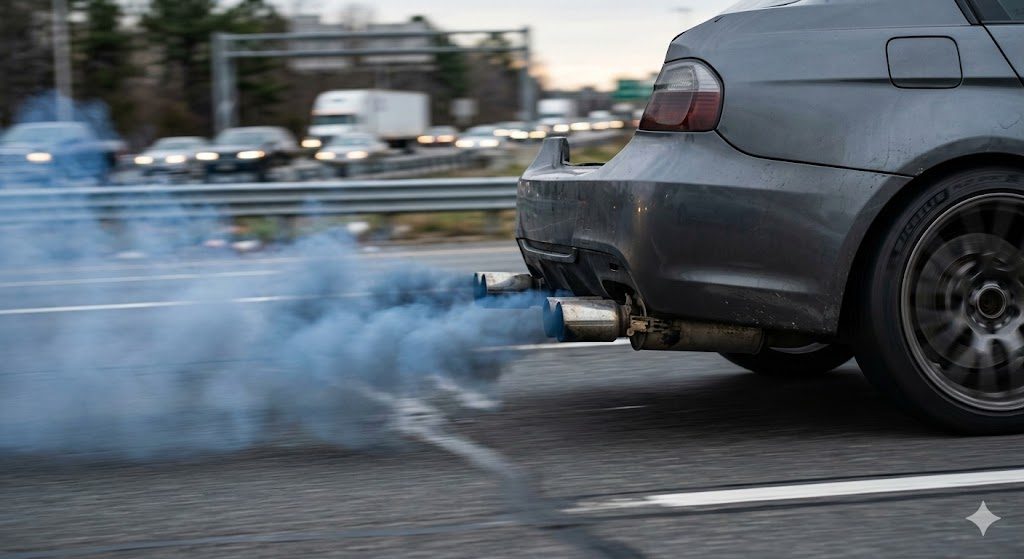
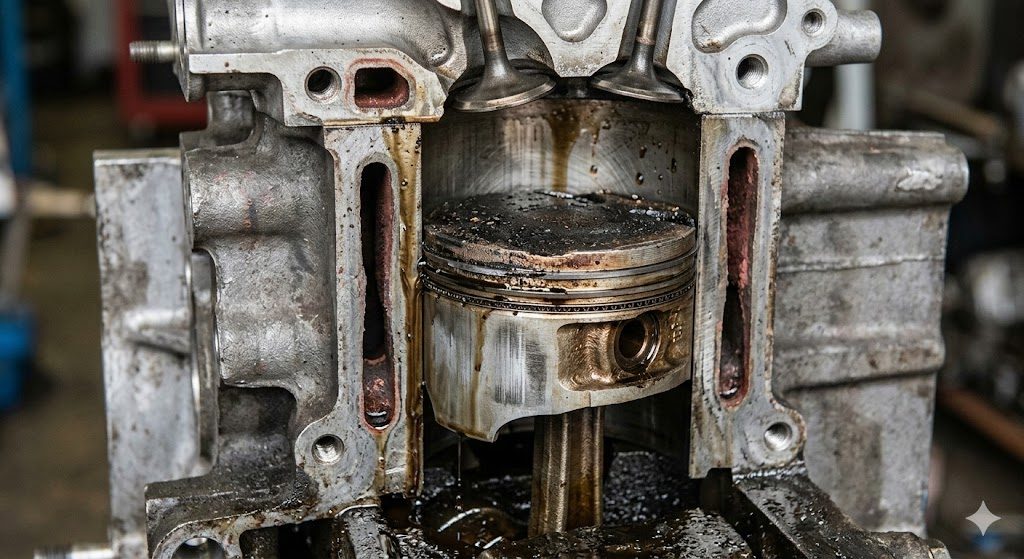
Blue smoke from the tailpipe usually means oil is entering the combustion chamber and burning with the air-fuel mixture. That can happen through the top end, such as worn valve seals allowing oil down the valve guides, or through the lower end, such as worn piston rings allowing oil past the pistons. On turbocharged engines, oil may also enter through failing turbocharger seals, while some engines can smoke because of a stuck or restricted PCV system.
The key distinction is pattern. Startup smoke after the car has been sitting often suggests oil draining into the cylinders from above. Blue smoke during long deceleration, then a puff when you get back on the throttle, also often fits valve seal leakage. Blue smoke during hard acceleration, uphill load, or sustained throttle can indicate ring wear because cylinder pressure exposes weak oil control more clearly. None of these patterns proves the cause by itself, but they are useful diagnostic direction.
| Smoke timing | What it can indicate | What it does not prove |
|---|---|---|
| Cold start puff | Valve seals, oil pooling after shutdown | That piston rings are definitely good |
| Idle then throttle blip | Valve seals, PCV issue, pooled oil | That the cylinder head must be rebuilt |
| Acceleration or load | Piston ring wear, turbo seal leakage | That the engine always needs overhaul |
| Long deceleration then throttle | Valve seals or oil drawn past guides | That only one part is responsible |
Main causes
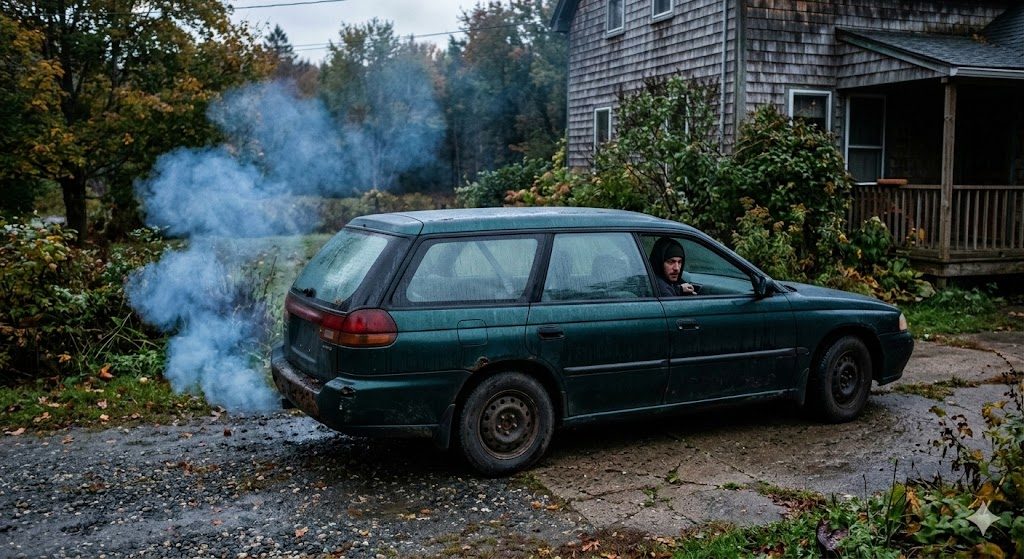
The most likely causes are usually ranked by symptom pattern and engine layout, not by one universal failure rate. Worn valve seals are a common suspect when the smoke is strongest at startup or after a long deceleration. Worn piston rings move higher on the list when smoke increases under load, oil consumption is heavy, and crankcase blow-by is present. PCV faults can push oil into the intake and imitate internal wear, while turbocharger seal leakage matters most on turbo engines that smoke after boost or leave oil in charge pipes.
Worn valve seals
- Often shows as a startup puff after the engine sits.
- Can appear after downhill deceleration and then reapplying throttle.
- May burn oil without severe power loss early on.
Worn piston rings
- More concerning when smoke appears under acceleration or sustained load.
- Often overlaps with high oil consumption and reduced compression.
- May come with noticeable blow-by or fouled spark plugs.
PCV system issues
- Can pull excess oil vapor or liquid oil into the intake.
- May mimic ring or seal wear if the valve sticks or passages clog.
- Should be checked early because it is cheaper and easier to confirm.
Turbocharger seal leakage
- Relevant on turbo engines with smoke after boost or long idle.
- May leave oil residue in intake plumbing or intercooler pipes.
- Needs confirmation because not every smoky turbo car has a failed turbo.
Less common causes
- Overfilled engine oil
- Poor previous repair work
- Severe engine wear affecting multiple oil-control paths
Diagnostic order
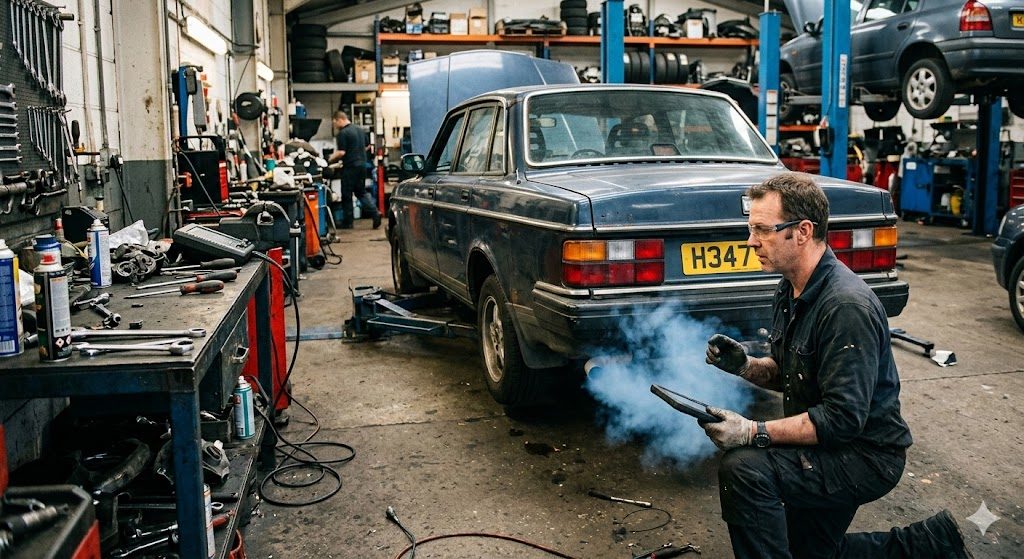
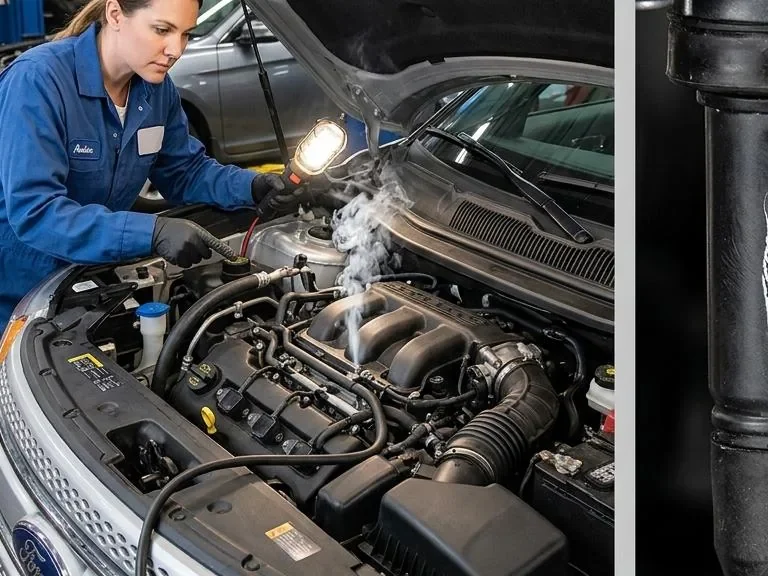
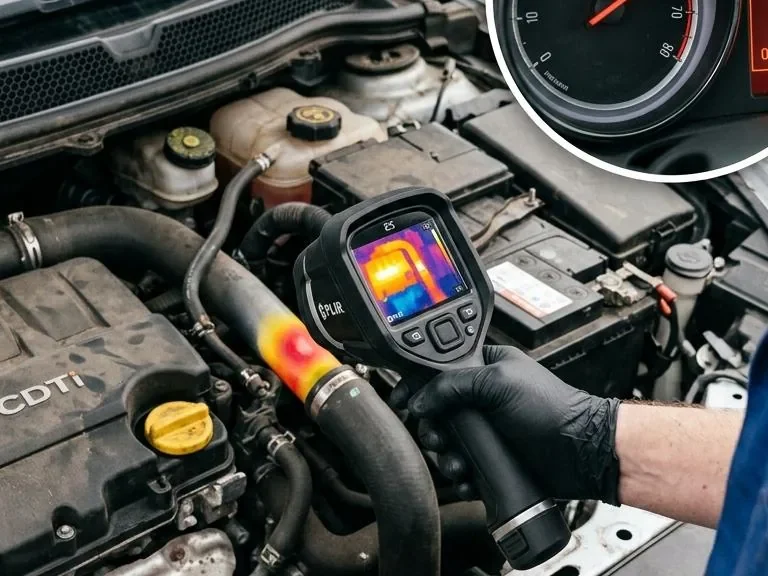
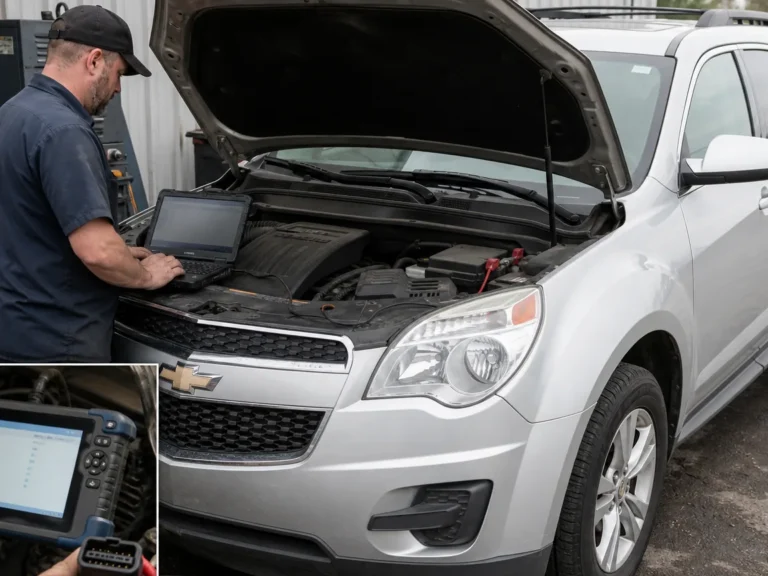
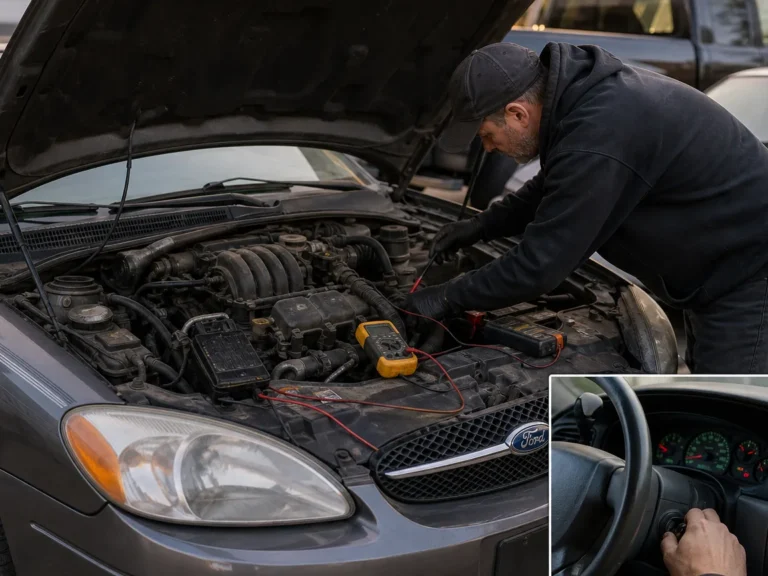
A good diagnostic sequence starts with symptom verification, not parts replacement. First record when the smoke appears and whether oil consumption is measurable. Next scan for codes, but understand that this symptom often appears without a direct oil-burning DTC. Then inspect the PCV system, intake tract, and on turbo engines the charge pipes and compressor side for oil evidence. After that, move to compression testing and then a leak-down test if the cause remains unclear.
- Verify oil level, smoke timing, and oil-use pattern.
- Scan for codes and freeze-frame data if a check engine light is present.
- Inspect the PCV system and intake path for oil entry.
- Inspect spark plugs for oil fouling or uneven cylinder clues.
- Run a compression test.
- Follow with a leak-down test to separate ring sealing issues from other paths.
- Use borescope or further teardown only if earlier evidence points that way.
Compression and leak-down interpretation depends on the engine, mileage, and test conditions, so results should be read in context. Valve seals may smoke badly even when compression is still acceptable, which is why a normal compression result does not automatically clear the top end.
Model-specific notes
There are several owner checks that are useful and safe before deeper diagnosis. Start with the oil dipstick and confirm the level is correct, because low oil changes the risk and overfilled oil can also create smoke. Then watch the exhaust under consistent conditions: first cold start of the day, warm idle, gentle rev, deceleration, and loaded acceleration. A pattern recorded on video is often more useful than memory.
- Check whether oil level is low, overfilled, or dropping between drives.
- Look for oily deposits on the tailpipe, but do not treat that alone as proof.
- Inspect for smoke timing at startup, idle, acceleration, and deceleration.
- Check for rough running, misfire, or a check engine light.
- If accessible, inspect intake hoses for pooled oil that could suggest a PCV or turbo path.
Do not remove hot components or continue repeated throttle tests if the smoke becomes heavy, oil pressure seems abnormal, or the engine begins to misfire.
The repair path depends on what the tests actually show. Valve seals may be the leading suspect when smoke timing fits and lower-end test results do not strongly suggest ring wear. Piston rings move up the list when compression and leak-down results support cylinder sealing problems, especially if blow-by and oil consumption are obvious. PCV parts are often worth checking early because they are comparatively inexpensive, while turbocharger-related repairs only make sense when the engine and induction layout support that conclusion.
- Valve stem seals and related top-end service parts
- Piston rings and possible cylinder or short-block work
- PCV valve, hoses, and crankcase ventilation components
- Turbocharger seals or the complete turbo assembly on affected engines
- Spark plugs if oil fouling has developed
- Catalytic converter risk if oil burning has been ongoing
Cost sensitivity is high here because the difference between a ventilation fault and a lower-end engine repair can be dramatic. That is why a proper diagnosis can prevent unnecessary teardown or repeated parts replacement. If you are comparing options, start with the least invasive confirmed path first, then weigh engine condition, mileage, and oil use before committing to major work.
Can you keep driving?
Blue smoke becomes urgent when it is heavy, continuous, or paired with other warning signs. If the oil level is falling quickly, the engine runs rough, oil pressure warning appears, or the exhaust smoke is dense enough to follow the car, continued driving can raise the risk of catalytic converter damage, plug fouling, poor combustion, and eventually engine damage from oil loss. A brief startup puff is not in the same category as a car that smokes under load every time it accelerates.
- Stop driving and recheck oil if the smoke is heavy or constant.
- Stop sooner if the oil warning light appears or oil consumption becomes rapid.
- Use extra caution if misfire, knocking, overheating, or low power appear with the smoke.
- Limit driving if the symptom worsens noticeably within a short time.
A vehicle can still run and drive while burning oil, but that does not make it low-risk. The real threshold is how fast the oil is being consumed and whether other warnings appear.
FAQ
Does blue smoke always mean worn piston rings?
No. Blue smoke often means oil is burning, but that oil can enter through worn valve seals, piston rings, the PCV system, or on some vehicles turbocharger seals. Smoke timing helps, but testing is what separates them.
Can bad valve seals cause blue smoke only at startup?
Yes, that is a common pattern. Oil can seep past valve seals while the engine sits, then burn off when the engine starts. It is still not a standalone confirmation, because some engines can show overlapping patterns.
Will blue smoke always trigger a fault code?
No. Many oil-burning problems appear without a direct DTC. Codes are more likely if the smoke leads to misfire, catalyst efficiency issues, or oxygen sensor-related side effects.
What test best separates piston rings from valve seals?
A compression test and especially a leak-down test are the usual next steps when smoke persists. Plug condition, PCV inspection, and on some engines borescope findings also help build the case.
Can I keep driving with blue smoke?
Sometimes for a short distance, but only if the smoke is mild, the oil level is stable, and no other warning signs appear. Heavy or constant smoke, fast oil loss, or an oil warning light should change that decision quickly.
Comments
Be the first to add a practical repair note or follow-up question.