
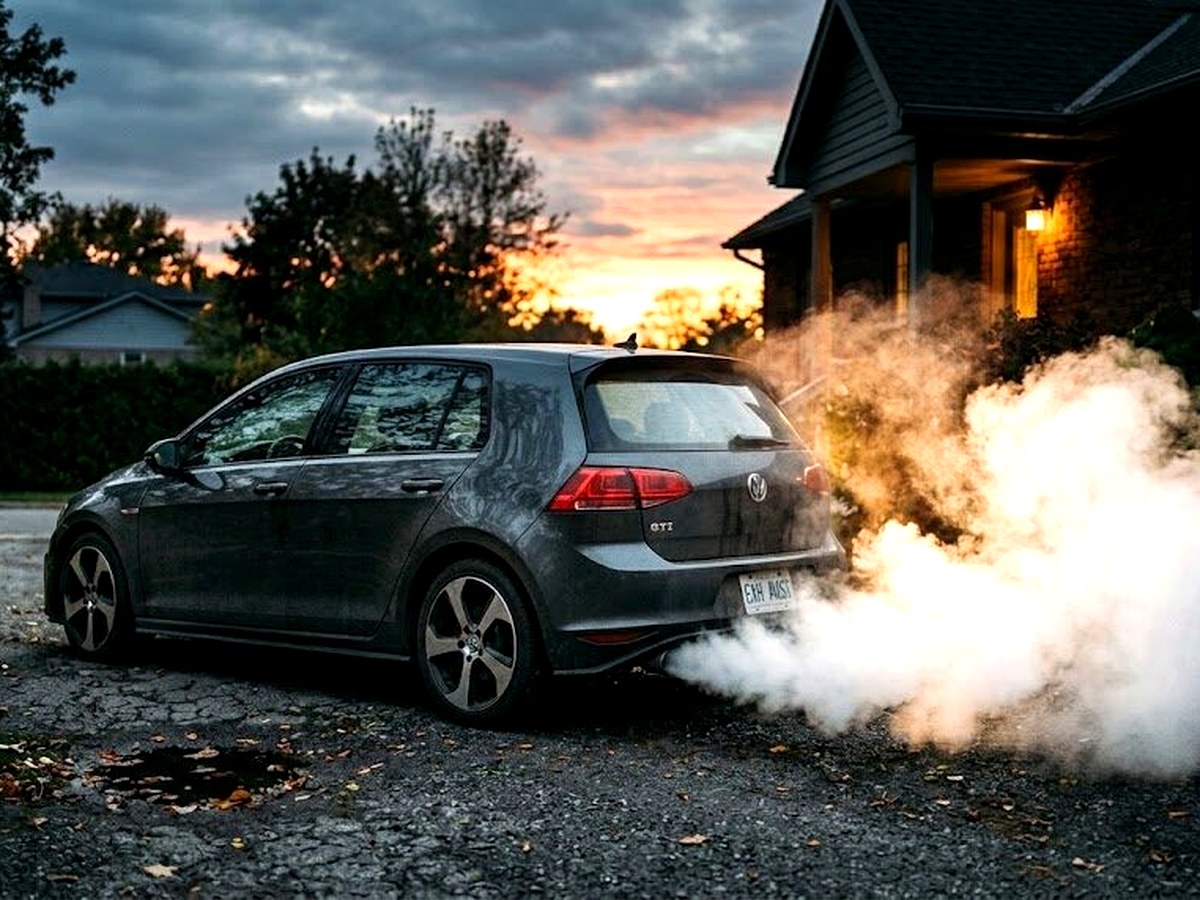
What the problem usually means
In most cases, the key question is whether the smoke is brief vapor or persistent smoke. Brief vapor usually reflects condensation. Persistent smoke can indicate coolant intrusion, and on some vehicles it may also be linked to overfueling, injector issues, or turbo-related faults.
A useful rule is this: if the engine reaches normal operating temperature and the white smoke still hangs in the air, keeps returning at idle, or is paired with fluid loss, treat it as an abnormal condition rather than a weather effect.
- Usually harmless: cold-start vapor that clears quickly
- Usually abnormal: warm-engine smoke that remains dense or continuous
- Extra clues: sweet smell, rough idle, misfire, coolant drop, overheating, or a check engine light
Main causes
Cold-Weather Condensation
Light white vapor on startup that disappears as the exhaust warms is normal in many climates. It is more visible in cold air, high humidity, and short-trip use where the exhaust never gets fully hot.
Coolant Leak or Head Gasket Issue
Persistent thick white smoke with a sweet smell, repeated coolant loss, overheating, or milky contamination can point to coolant entering the combustion process. A head gasket is one possibility, but not the only one.
Turbo Seal, Fuel, or Injection Problems
On some diesel, direct-injection, or turbocharged engines, white smoke can reflect poor atomization, injector leakage, timing-related combustion issues, or fluid passing through the turbo system. These cases usually need scan data and inspection rather than guesswork.
- Most likely: condensation if the smoke is brief and weather-related
- Most urgent: coolant intrusion if the smoke is persistent and the coolant level drops
- Platform-dependent: injector, fueling, timing, or turbo issues on certain engines
Diagnostic order
- Confirm whether the smoke is only at cold start or persists at operating temperature
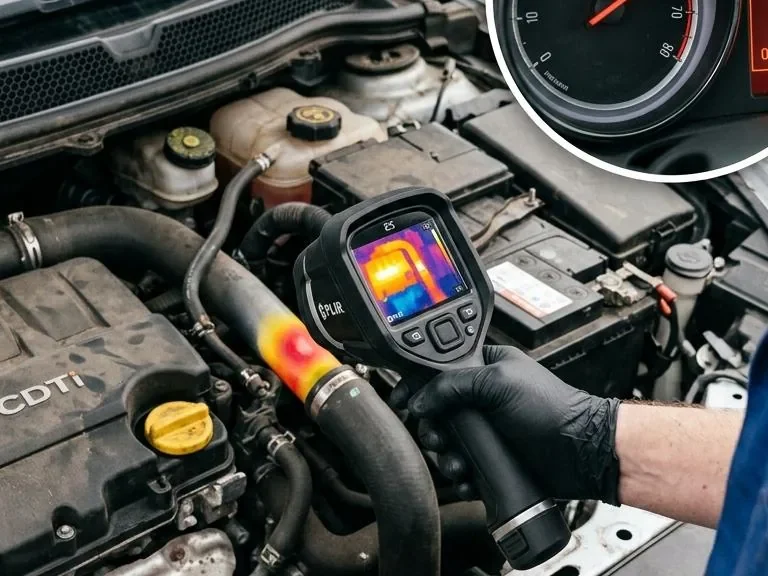
- Check coolant level history, temperature behavior, and any warning lights
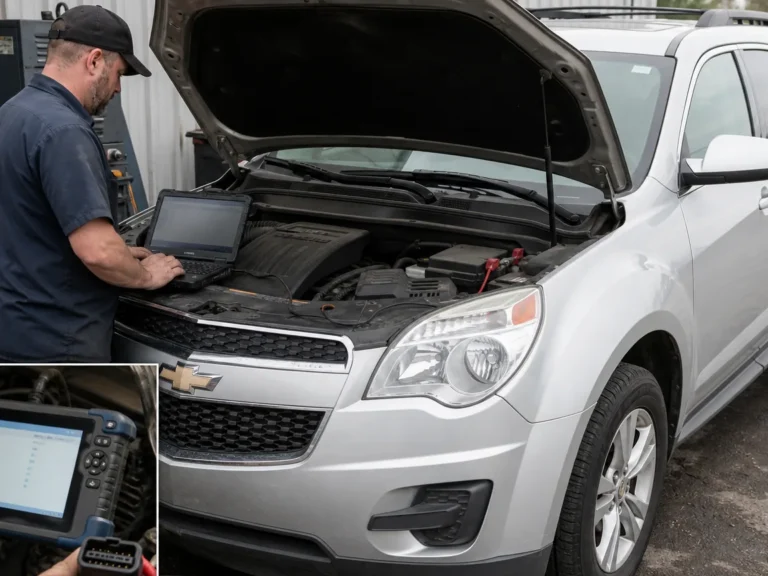
- Scan for DTCs and review related data such as misfire counts or fueling clues
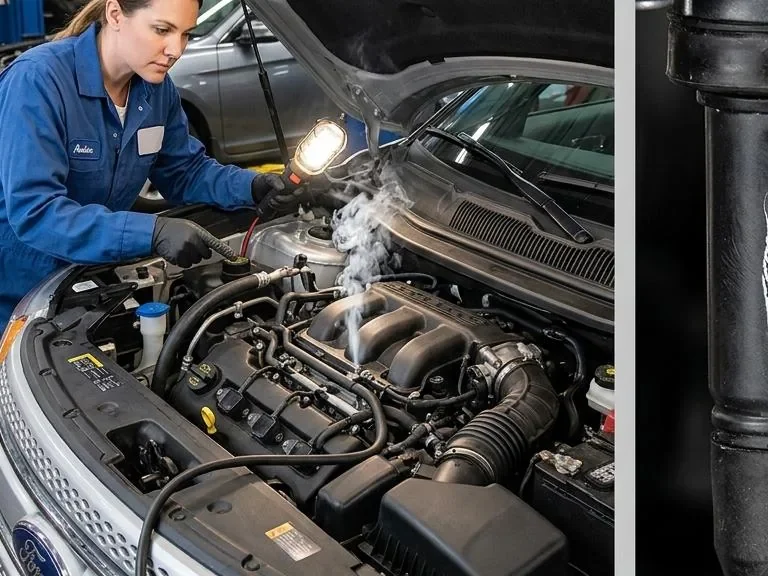
- Pressure test the cooling system if coolant loss is suspected
- Use combustion-gas testing, compression testing, or leak-down testing when sealing failure is possible
- Inspect turbo and fueling components on turbocharged or diesel vehicles if the symptom pattern fits
| Diagnostic clue | What it can point to | What it does not prove |
|---|---|---|
| Brief vapor only on cold mornings | Condensation | A mechanical fault |
| Persistent smoke with coolant loss | Coolant intrusion | A head gasket specifically without further testing |
| White smoke with rough idle or misfire | Combustion problem or coolant contamination | A single failed component without scan and test results |
| White smoke on certain diesel or turbo setups | Injector, timing, turbo, or combustion issue | That every white-smoke case is coolant-related |
Model-specific notes
- Check coolant level only with the engine cold
- Look for repeated coolant loss, not just one low reading
- Inspect the oil condition for milky contamination or foaming
- Notice whether the smoke smells sweet, raw-fuel rich, or mostly like steam
- Watch for overheating, rough idle, misfire, or a flashing warning light
- See whether the smoke disappears after several minutes or stays visible
A single clue rarely proves the cause. Coolant level, oil condition, smoke duration, and temperature behavior are more useful together than any one symptom by itself.
- Cooling-system parts if coolant loss is confirmed
- Head gasket or sealing-related components if testing supports internal leakage
- Injectors or fuel-system components on vehicles with combustion-related white smoke
- Turbocharger-related parts on applications where turbo faults fit the smoke pattern
- Ignition or misfire-related parts only if scan data and testing point there
Typical fixes range from no repair at all for condensation, to leak repair and coolant-system service, to deeper engine work if sealing failure is confirmed. The right path depends on evidence, especially fluid loss, temperature history, and test results.
Used parts can be risky for turbo and injector-related repairs unless condition and compatibility are verified carefully.
Can you keep driving?
You can usually keep driving only if the smoke is brief, the engine reaches normal temperature without overheating, coolant level stays stable, and there is no rough running or warning light.
You should stop driving if the smoke stays dense after warm-up, the coolant level drops, the engine misfires, the temperature climbs, or the vehicle begins to smell strongly sweet from the exhaust.
- Monitor: short-lived vapor, stable coolant, normal gauge, no drivability change
- Inspect soon: repeated white smoke with no overheating yet
- Stop driving: overheating, coolant loss, misfire, flashing warning light, or heavy persistent smoke
FAQ
Is white smoke from exhaust always a blown head gasket?
No. Brief white vapor is often normal condensation. Persistent thick white smoke can indicate coolant intrusion, but it does not prove a head gasket by itself without supporting symptoms and testing.
How long should normal white vapor last?
Usually only a short time after a cold start. If the engine is fully warm and the smoke remains dense or continuous, it is less likely to be normal condensation.
Can I drive with white smoke coming from the exhaust?
Only if it is brief vapor and the vehicle has no overheating, coolant loss, rough running, or warning lights. Thick persistent smoke with heat or coolant loss is a stop-driving condition.
What does sweet-smelling white smoke usually mean?
A sweet smell often points toward coolant being burned or passing through the exhaust stream, which raises concern for an internal coolant leak or related cooling-system fault.
Will a scan tool always show a code for white smoke?
No. White smoke is a symptom, not a universal code. Some vehicles may store misfire, fueling, or coolant-related clues, while others may show no decisive DTC at all.
Comments
Be the first to add a practical repair note or follow-up question.