
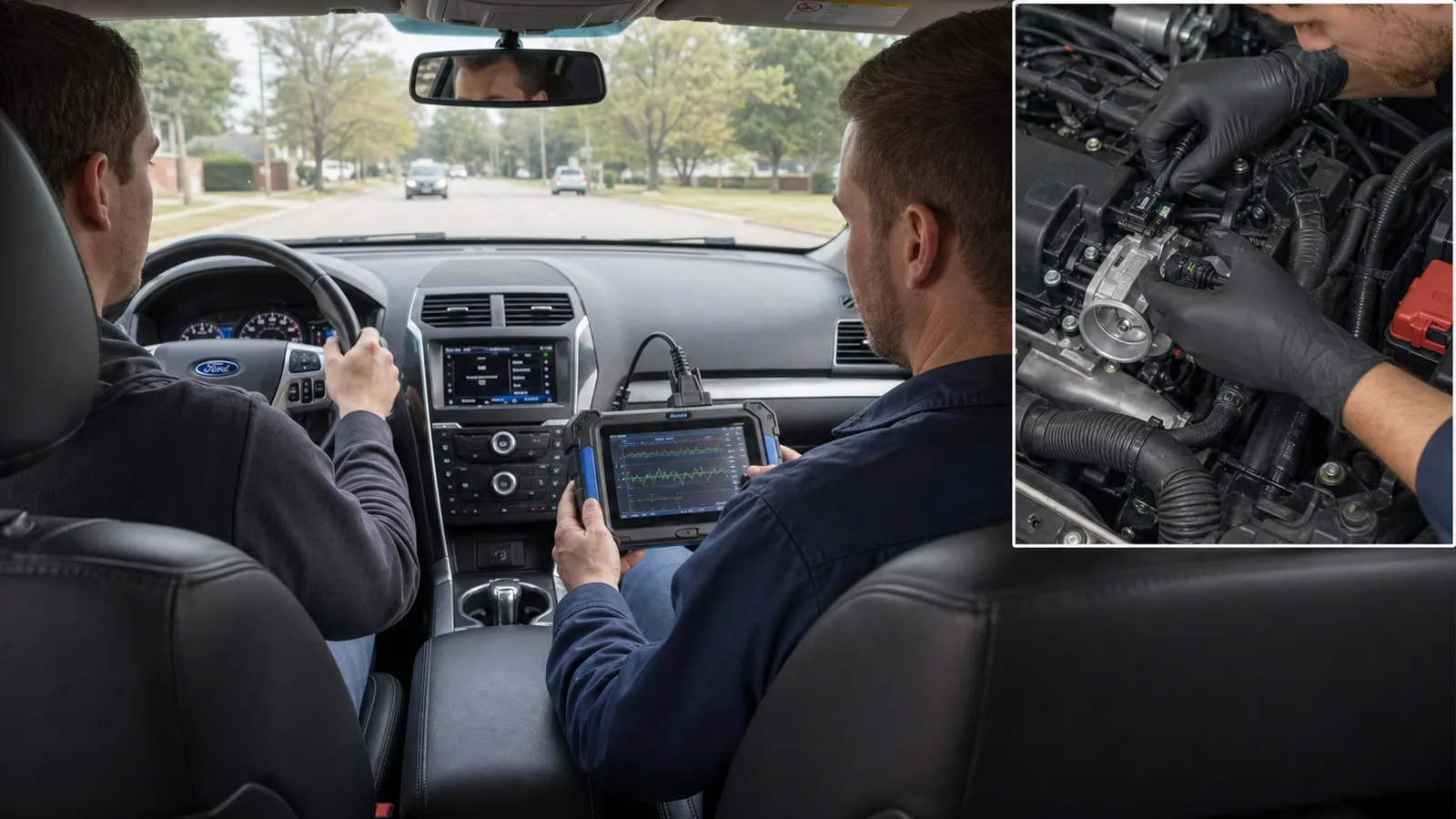
What this part does
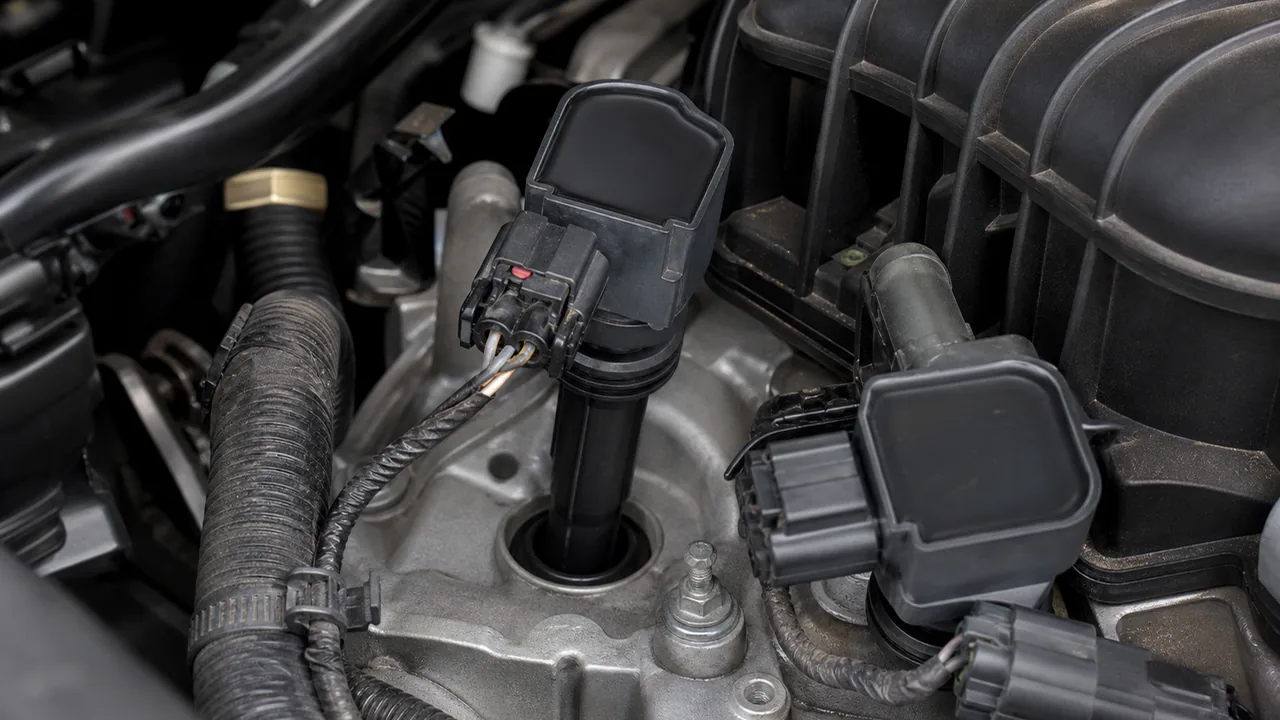
This complaint is not controlled by one part. Smooth light acceleration depends on clean combustion, stable air and fuel control, predictable electronic throttle response, correct transmission torque converter behavior, and driveline parts that can hold load without excessive movement.
Under light throttle, the engine is asked to make a modest but steady amount of torque. The powertrain control system adjusts spark timing, fuel delivery, throttle opening, airflow calculation, and transmission behavior. At the same time, mounts, axles, tires, wheel balance, and driveline components have to absorb load changes without creating a shake or clunk.
- Ignition function: spark plugs and coils must fire consistently when cylinder pressure rises under load.
- Air and fuel function: intake air, throttle movement, fuel delivery, and sensor feedback must stay stable enough for smooth combustion.
- Transmission function: the transmission and torque converter must transfer power without shudder, delayed engagement, or abrupt shift feel.
- Driveline function: mounts, axles, tires, and PTU-area components must keep movement controlled as load is applied.
Because several systems overlap at light acceleration, the diagnosis should separate engine misfire, air or fuel instability, converter or shift behavior, and physical driveline movement. That separation is more reliable than choosing a part based only on how the jerk feels from the driver seat.
Common failure signs
The pattern of the jerk often matters more than the absence of codes. A light-throttle buck can feel similar across several fault families, but the timing of the symptom helps separate an engine event from a transmission event or driveline movement.
| Brief buck when load increases | Ignition weakness, fuel inconsistency, or air leak behavior | Review misfire counters, fuel trims, spark plug condition, coil behavior, and intake/vacuum condition. |
| Shudder-like feel at steady light throttle | Torque converter clutch behavior or transmission fluid condition concern | Compare torque converter command, slip behavior, shift timing, and fluid condition during the event. |
| Jerk during a gear change | Shift timing, adaptation, fluid condition, mount movement, or internal transmission concern | Road-test while logging gear command, RPM change, load, and shift feel. |
| Clunk or thump when throttle is applied or released | Mount, axle, suspension, or driveline movement | Inspect mounts, CV axles, driveline play, tire condition, and PTU-area leak or noise signs. |
| Vibration that changes with road speed | Tire, wheel, axle, or driveline balance issue | Check tires, wheels, axle boots, suspension play, and whether the vibration follows vehicle speed rather than engine load. |
Useful owner notes include whether the jerk happens cold, warm, during gentle throttle, during a shift, on hills, after refueling, or only with passengers or cargo. Those observations do not diagnose the vehicle by themselves, but they make the road test more likely to reproduce the exact complaint.
Before replacing it
The worst path is to guess at the most familiar part. Coils, plugs, throttle body parts, transmission fluid, and torque converter components can all be involved, but each one needs evidence before replacement.
| Ignition coils | A jerk can feel like a misfire even when the cause is converter, mount, fuel, or driveline related. | Cylinder-specific misfire data, plug condition, coil test results, or repeatable cylinder pattern. |
| Spark plugs | Plug wear may contribute, but replacing plugs without checking data can miss fuel, air, or transmission causes. | Maintenance history, plug inspection, misfire counters, and load-related symptom match. |
| Throttle body | Cleaning or replacing throttle parts may not address ignition, fluid, converter, or mount movement. | Throttle behavior, airflow data, fuel trim clues, and visible contamination or sticking evidence. |
| Transmission fluid | Fluid service can be appropriate in some cases, but it is not a guaranteed fix for shudder, wear, or mechanical failure. | Fluid condition, service history, shift behavior, converter data, and technician judgment. |
| Torque converter | Converter repair is a larger decision and should not be approved from symptom feel alone. | TCC command and slip behavior, road-test logging, fluid findings, and transmission specialist evaluation when needed. |
Replacing parts without evidence can hide the original pattern and create a second diagnostic problem. The more repeatable the symptom is, the more valuable it is to capture it before parts are changed or codes are cleared.
Inspection steps
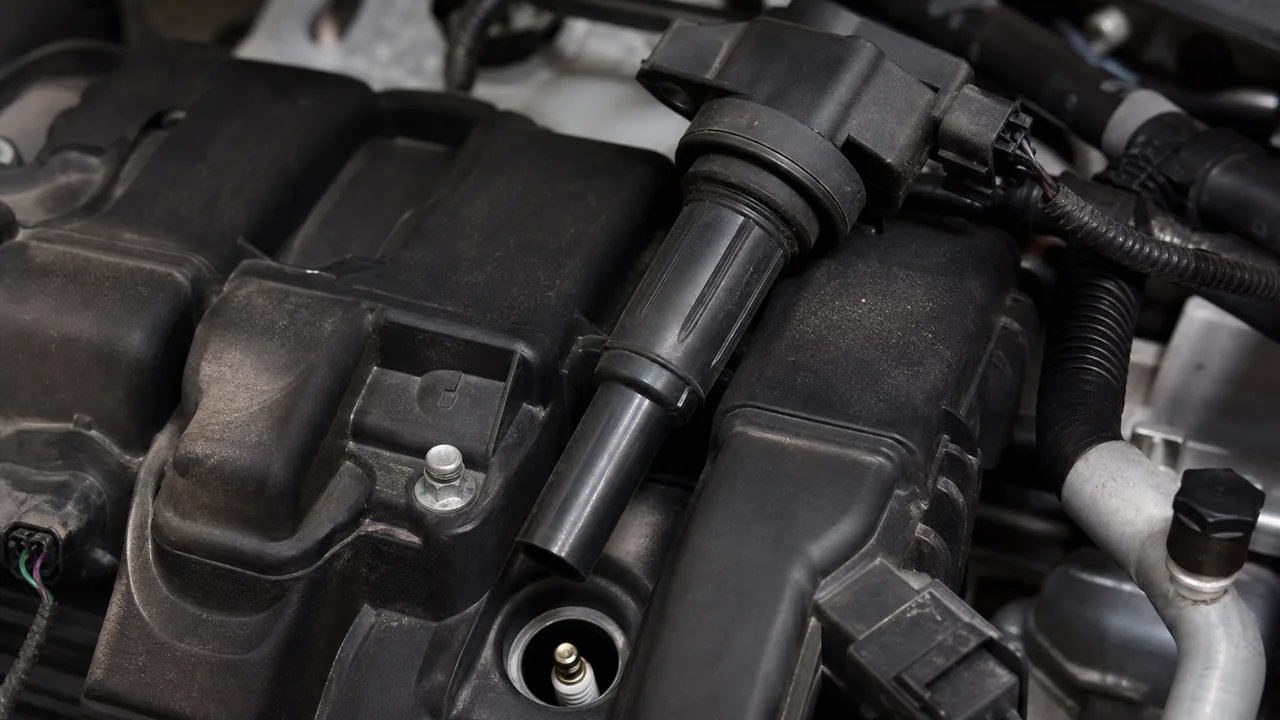
A no-code jerk under light acceleration is not automatically a sign of major transmission failure, but it should not be treated as harmless. The risk level depends on how often it happens, whether it changes with load, and whether it comes with vibration, power loss, slipping, burning smell, leaks, or harsh shifting.
| Mild | A brief hesitation, light buck, or single jerk that happens rarely and does not come with warning lights, noises, or fluid leak signs. | Record when it happens, check fuel quality and maintenance history, and schedule diagnosis if it repeats. |
| Moderate | Repeatable jerking during light acceleration, light shudder at steady throttle, or a symptom that appears during the same driving condition. | Have the vehicle road tested with live data, misfire counters, fuel trims, and transmission behavior reviewed. |
| High | Harsh shift feel, severe vibration, loss of power, burning smell, visible fluid leak, repeated stalling, or a jerk that makes merging or crossing traffic uncertain. | Limit driving and arrange professional inspection before the symptom causes a safety problem or secondary damage. |
The important distinction is repeatability. A single vague event may not leave enough evidence, but a repeatable jerk under the same load gives the technician a diagnostic target. If the event can be captured while misfire counters, fuel trims, throttle data, and torque converter clutch behavior are visible, the repair path becomes much clearer.
A clean dashboard does not prove the vehicle is safe to ignore. Use symptom severity, repeatability, smell, leak signs, vibration, and shift quality to decide how urgently to inspect it.
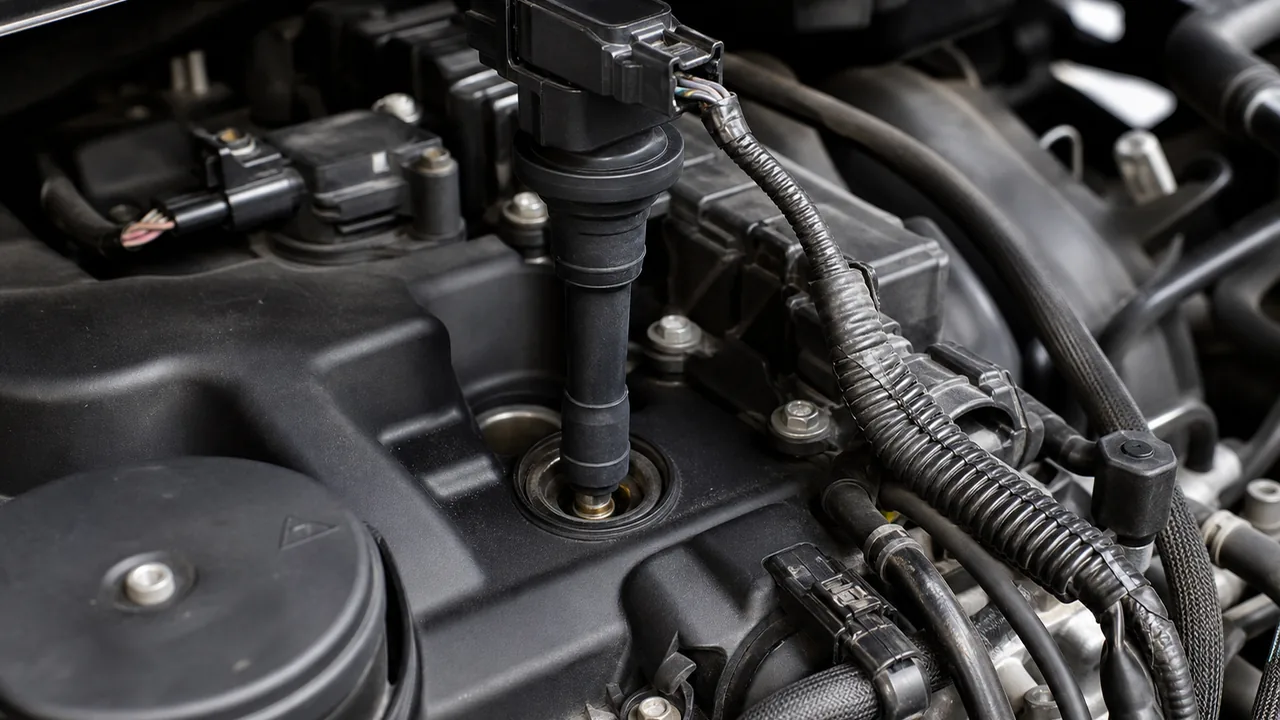
The most useful ranking starts with causes that can create load-related jerk symptoms without immediately setting a code. The order below is a diagnostic priority, not a guarantee; the confirmed cause depends on what the road test, scan data, and inspection show.
- Intermittent ignition misfire from spark plugs or coils: suspect this when the jerk feels like a quick buck under load, especially if misfire counters move even without a stored code.
- Torque converter clutch shudder or transmission behavior under light load: suspect this when the symptom feels like a steady shudder or occurs during converter apply or light-load shift behavior.
- Dirty throttle body, air metering issue, or fuel trim instability: suspect this when idle quality, throttle response, or fuel trims look unstable during the road-test event.
- Transmission fluid condition, adaptation, or shift timing issue: suspect this when the jerk lines up with a shift, delayed engagement, or inconsistent shift feel.
- Engine mount, PTU, CV axle, or driveline movement: suspect this when the symptom feels like a thump, clunk, vibration, or load-change movement rather than a combustion miss.
- Fuel delivery or sensor signal issue that has not set a code: suspect this when power feels uneven and scan data shows unstable load, airflow, oxygen sensor feedback, or fuel correction during the event.
Intermittent ignition misfire from spark plugs or coils
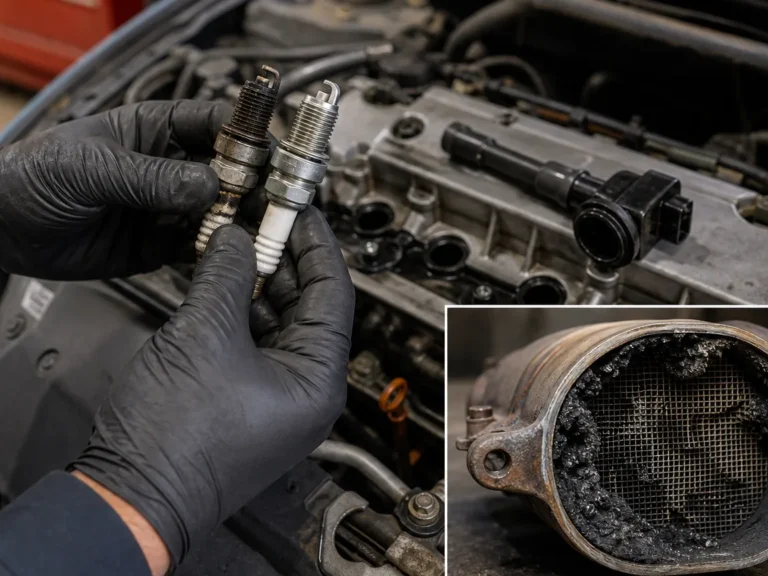
A weak ignition event can show up first under light acceleration because cylinder pressure rises when the engine is loaded. The vehicle may jerk before a code appears if the event is intermittent or below the threshold needed to store a misfire DTC. Confirmation should include plug condition, coil condition, misfire counters, history data, and whether the same cylinder pattern appears during the road test.
Torque converter clutch shudder or transmission behavior under light load
A torque converter clutch concern can feel like a repeated shudder or small jerk during steady light throttle. It should be evaluated with scan-tool data rather than assumed from feel alone. The technician should compare converter command, slip behavior, gear command, RPM change, and fluid condition during the exact event.
Dirty throttle body, air metering issue, or fuel trim instability
Air and throttle issues can create uneven torque delivery without a clear fault code. Intake leaks, throttle contamination, air metering errors, or unstable fuel trims can make the engine surge, hesitate, or buck. The check is not just visual; scan data should show whether commanded and actual airflow, throttle behavior, and fuel correction stay consistent.
Transmission fluid condition, adaptation, or shift timing issue
Fluid condition and shift adaptation can influence how the transmission applies torque under light load. A fluid service may be appropriate only when the fluid condition, maintenance history, and diagnostic findings support it. If the symptom points to internal wear, harsh engagement, or converter behavior, further transmission evaluation may be needed before service decisions are made.
Engine mount, PTU, CV axle, or driveline movement
Mechanical movement can feel like a powertrain jerk even when engine data looks normal. Worn mounts, axle issues, driveline play, PTU-area leak signs, or tire and wheel vibration can appear when torque is applied. These checks need physical inspection because many mechanical faults are not directly monitored by the engine control system.
Fuel delivery or sensor signal issue that has not set a code
Fuel delivery and sensor issues may be intermittent enough to avoid a stored code at first. The concern becomes more credible when the road-test event lines up with unstable fuel trims, changing load calculation, uneven oxygen sensor feedback, or hesitation that does not match converter or shift behavior.
No active code does not prove the Explorer is healthy. A fault may be intermittent, below a monitor threshold, stored only as a pending or history code, visible only in Mode 6 or misfire counter data, or mechanical enough that the engine computer is not directly watching it.
- Pending codes may exist before the dashboard light turns on, so the scan should include pending and history data, not only active codes.
- Mode 6 and misfire counters can reveal marginal cylinder events that have not matured into a stored DTC.
- Live data can show fuel trim changes, throttle behavior, load calculation shifts, or torque converter behavior during the symptom.
- Mechanical issues such as mounts, axles, tires, wheel vibration, or some driveline movement may not create an electrical fault code.
- A fault that only appears briefly under one load condition may disappear before the scan tool sees a steady failure pattern.
This is why a parked scan is often incomplete for this complaint. The useful information usually comes from reproducing the jerk while the tool records engine load, RPM, fuel trims, misfire counters, gear command, torque converter behavior, and related transmission data.
The absence of a code should change the diagnostic method, not end the diagnosis.
Owner checks should focus on observation and obvious external clues, not unsafe testing or parts swapping. Good notes can shorten the diagnostic process because they tell the technician when to reproduce the event and which systems to watch first.
- Fuel quality: note whether the symptom appeared soon after refueling, using a different station, or after the vehicle sat for a period.
- Maintenance history: check whether spark plugs, ignition coils, air filter, throttle cleaning, or transmission fluid service are overdue, unknown, or recently performed.
- When it happens: write down whether the jerk occurs cold, warm, during gentle throttle, during a shift, uphill, with air conditioning load, or at steady cruise.
- Visible intake or vacuum concerns: look for disconnected hoses, loose intake ducting, cracked rubber parts, or obvious air leaks without putting hands near moving components.
- Fluid and leak clues: check for new spots under the vehicle, burning smell, dampness around drivetrain areas, or fluid level concerns only where the owner manual supports a safe owner check.
- Tire and wheel clues: inspect for uneven tire wear, low tire appearance, wheel damage, or vibration that seems tied to vehicle speed rather than engine load.
- Drivability notes: record whether the symptom is a buck, shudder, clunk, hesitation, vibration, or harsh shift feel.
Avoid testing the vehicle in traffic just to force the symptom. If the jerk affects acceleration confidence, happens with a burning smell, causes severe vibration, or comes with a fluid leak, stop treating it as an owner-check item and arrange inspection.
Do not clear codes before the shop visit. Pending, history, and freeze-frame information can be useful even when no warning light is on.
Inspection should move from symptom reproduction to data comparison, then to physical checks. This order reduces the chance of replacing ignition or transmission parts before proving whether the jerk is coming from the engine, transmission, or driveline.
- Confirm the complaint: reproduce the jerk under controlled conditions and note throttle position, load feel, shift timing, vibration, noise, and whether the event is a single buck or repeated shudder.
- Scan completely: check active, pending, and history codes, then review Mode 6 or misfire counter data where available.
- Log live engine data: compare RPM, load, fuel trims, airflow, throttle behavior, oxygen sensor feedback, and misfire activity during the exact event.
- Log transmission behavior: compare commanded gear, shift timing, torque converter clutch command, slip behavior, and RPM change during the jerk.
- Inspect fluid condition: look for signs that fluid condition or contamination may be relevant, while avoiding promises that a fluid change alone will repair the symptom.
- Inspect physical components: check mounts, axle joints, tire condition, wheel issues, PTU-area leak signs, suspension play, and driveline movement.
- Choose the branch: if engine data moves with the event, pursue engine controls; if converter or shift data moves with the event, pursue transmission diagnosis; if data stays stable but movement or vibration is present, pursue mechanical driveline checks.
A structured inspection also protects the owner from unnecessary parts replacement. The symptom should be tied to a measurable data change, visible wear, fluid evidence, or a repeatable mechanical movement before a repair is approved.
A proper diagnostic flow uses the road-test event as the anchor. The technician should identify whether the jerk lines up with a cylinder event, fuel trim change, throttle or airflow instability, torque converter clutch behavior, shift command, mount movement, axle movement, or tire and wheel vibration.
Reproduce the symptom on a controlled road test
The first goal is to make the complaint happen safely and repeatably. The technician should note whether it occurs during throttle tip-in, steady light acceleration, a shift, torque converter apply, deceleration followed by re-acceleration, or road-speed-related vibration. Without reproducing the event, later tests can become guesses.
Check pending codes, history codes, Mode 6, and live data
The scan should not stop at active codes. Pending codes, history codes, Mode 6 results, misfire counters, freeze-frame records where present, and live data trends may show a developing fault. This is especially important when the complaint is intermittent and the dashboard warning lamp is off.
Compare engine load, RPM, misfire counters, fuel trims, and TCC slip
During the event, engine and transmission data should be compared side by side. If misfire counters or fuel trims move sharply with the jerk, an engine-control path becomes more likely. If the event lines up with torque converter clutch command, slip behavior, gear command, or a shift event, the transmission path deserves closer testing.
Inspect fluid condition, mounts, axles, PTU area, and driveline play
Physical inspection is required when the data does not fully explain the symptom or when the feel suggests movement. Mounts can allow the powertrain to shift under load, axles can create vibration or clunking, tires and wheels can mimic drivetrain concerns, and PTU-area leak or noise signs can point toward driveline inspection rather than engine parts.
- If misfire counters increase during the jerk, inspect plugs, coils, wiring condition, and cylinder-specific patterns before replacing parts.
- If fuel trims or airflow readings become unstable during the jerk, inspect intake sealing, throttle condition, air metering, fuel delivery clues, and sensor feedback.
- If torque converter or shift data aligns with the jerk, inspect fluid condition and evaluate converter, adaptive shift behavior, and transmission operation.
- If scan data stays stable but the vehicle clunks, shakes, or vibrates, inspect mounts, axles, tires, wheels, suspension, PTU area, and driveline play.
- If multiple clues overlap, repair the best-supported fault first, then road test again before approving additional work.
Used parts should not be the first answer for a no-code drivability complaint. If a used component is considered after diagnosis, the part number, configuration, condition, mileage history when available, warranty terms, and compatibility should be checked before purchase.
- Match the exact application and configuration using reliable parts information, not only visual similarity.
- Avoid used electrical or electronic parts when programming, calibration, unknown damage, or compatibility risk is not clear.
- Inspect used mounts, axles, and driveline parts for wear, torn rubber, damaged boots, leaks, corrosion, impact marks, or excessive play.
- Treat used transmission or torque converter parts as high-risk unless a specialist confirms the diagnosis and fitment path.
- Ask for return terms before buying because a no-code jerk can have more than one overlapping cause.
For this symptom, the better value is usually diagnostic certainty before parts sourcing. A cheaper part does not help if the actual cause is a fuel trim issue, converter behavior, tire vibration, or mount movement that was never confirmed.
A diagnostic inspection makes sense when the jerk is repeatable, worsening, tied to a shift or converter event, paired with vibration, or unclear after basic owner checks. The stronger the symptom pattern, the more useful a scan-tool road test becomes.
- Book soon if the jerk happens repeatedly under light acceleration, even with no dashboard light.
- Book soon if the symptom is paired with hesitation, rough running, reduced confidence while merging, or an uneven throttle response.
- Book soon if the jerk feels like a shudder during steady throttle or seems to happen during the same shift pattern.
- Avoid continued driving if there is burning smell, visible fluid leak, severe vibration, repeated stalling, loss of power, or harsh slipping behavior.
- Ask for road-test logging, pending and history code review, Mode 6 or misfire counter checks, fuel trim review, transmission behavior review, fluid inspection, and driveline inspection.
The appointment should be framed as a drivability and transmission-behavior diagnosis, not as a request to replace a specific part. That gives the technician room to separate engine, transmission, and driveline causes before recommending repair.
A 2014 Ford Explorer that jerks under light acceleration but has no codes can indicate an intermittent ignition, air, fuel, throttle, torque converter, transmission fluid, mount, or driveline issue that has not met the threshold for a stored DTC.
The right first check is a controlled road test with scan-tool live data, pending and history codes, Mode 6 or misfire counters, fuel trims, throttle data, torque converter clutch command and slip behavior, fluid condition, and driveline inspection.
Do not assume the transmission is failed, and do not assume no codes means the Explorer is safe to ignore.
Replacement notes
Replacement or service should follow the confirmed fault path. The same symptom may lead to a tune-up correction, intake repair, sensor diagnosis, fluid service where appropriate, software or adaptation checks, mount repair, axle work, tire correction, or transmission specialist evaluation.
| Ignition misfire pattern | Inspect and service spark plugs, coils, boots, wiring, or related ignition components based on the tested fault. | Road test under the same load and confirm misfire counters no longer track with the jerk. |
| Air, throttle, or fuel trim instability | Repair intake leaks, clean or service the throttle system when supported, address air metering issues, or diagnose fuel delivery concerns. | Confirm stable fuel trims, throttle response, and airflow behavior during light acceleration. |
| Torque converter or shift behavior | Evaluate fluid condition, transmission adaptive behavior, converter operation, and shift control before deciding on service or specialist repair. | Confirm the shudder or jerk no longer aligns with converter command or shift events. |
| Fluid condition concern | Consider fluid service only when the condition, maintenance history, and transmission evaluation support it. | Confirm improved shift quality and no worsening signs after service. |
| Mount, axle, tire, wheel, or driveline movement | Repair the worn mount, axle, tire, wheel, suspension, or driveline component confirmed by inspection. | Confirm the same load change no longer creates the clunk, vibration, or jerk. |
| Software or adaptation concern | Check for applicable service information and adaptation procedures through proper service resources. | Confirm shift timing and drivability are improved after the approved procedure. |
The repair should be followed by a repeat road test, not just a parked idle check. The original condition should be reproduced as closely as safe and practical so the technician can confirm the symptom is corrected and no new behavior was introduced.
FAQ
These are common owner questions that fit this symptom. The answers are visible on the page so any FAQ structured data, if used, should match the actual page content.
Can a 2014 Ford Explorer jerk under acceleration with no check engine light?
Yes. A 2014 Ford Explorer can jerk under light acceleration with no check engine light if the fault is intermittent, below the DTC threshold, stored only as pending or history data, or mechanical rather than directly monitored.
Does no code mean the transmission is not the problem?
No. No active code does not rule out torque converter behavior, shift timing, fluid condition, adaptation concerns, mounts, axles, or driveline issues. It only means a stored active DTC has not been confirmed by the scan.
Should I replace spark plugs or coils first?
Not without evidence. Spark plugs and coils are possible causes, but they should be checked with maintenance history, plug inspection, misfire counters, and road-test data before replacement.
Can bad fuel cause a light acceleration jerk?
Fuel quality or fuel delivery inconsistency can contribute to hesitation or bucking, especially if the symptom began after refueling. The check should include fuel history, live data, trims, and whether the symptom repeats.
Can a torque converter shudder feel like an engine misfire?
Yes. A torque converter clutch shudder can feel like a light buck or vibration, which is why the technician should compare misfire data with torque converter command, slip behavior, RPM change, and shift timing during the event.
When should I stop driving it?
Avoid continued driving if the jerk becomes harsh, is paired with power loss, burning smell, visible fluid leak, severe vibration, repeated stalling, or slipping behavior. Those signs raise the risk beyond a simple owner observation.


Comments
Be the first to add a practical repair note or follow-up question.