
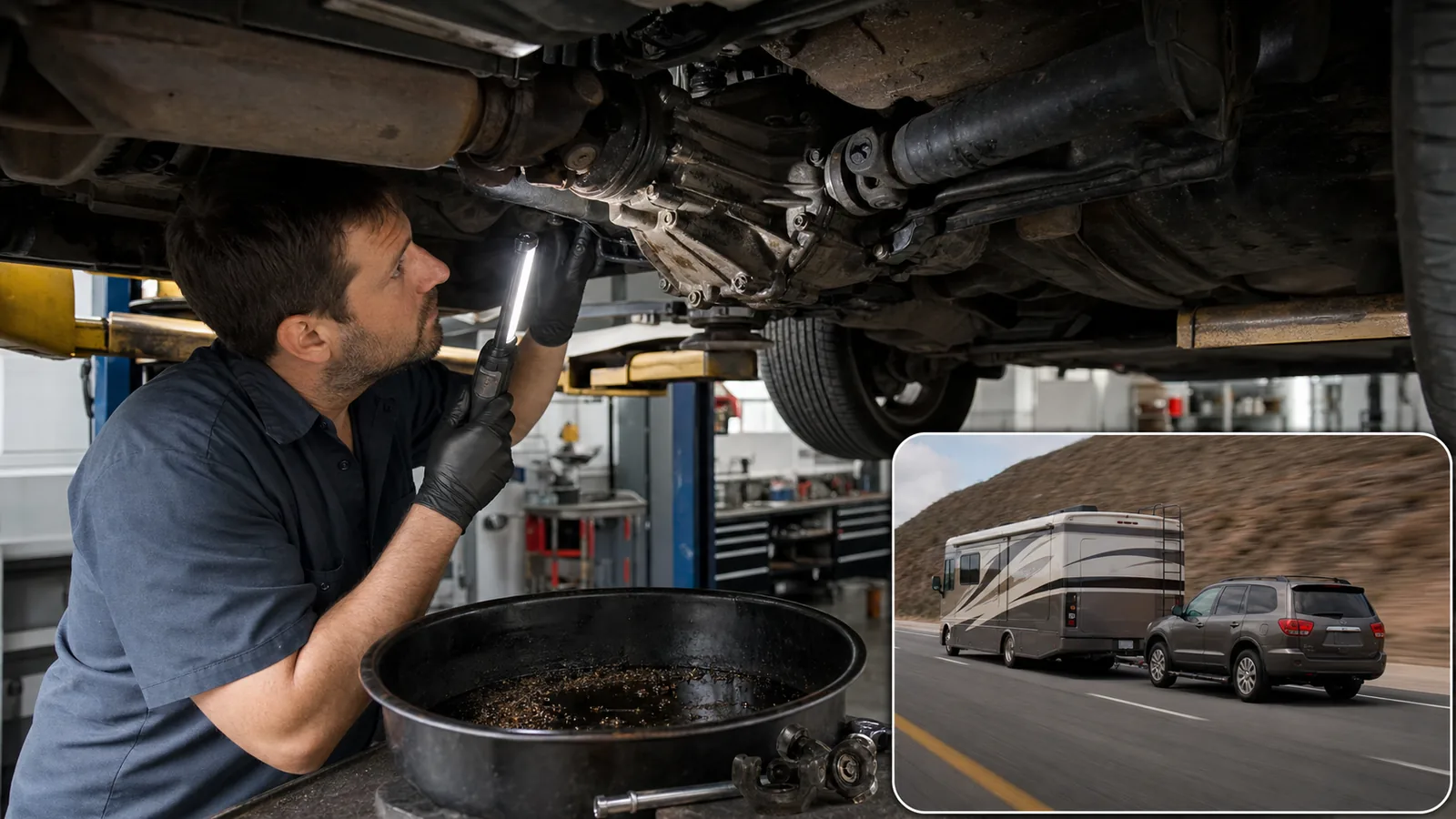
What this part does
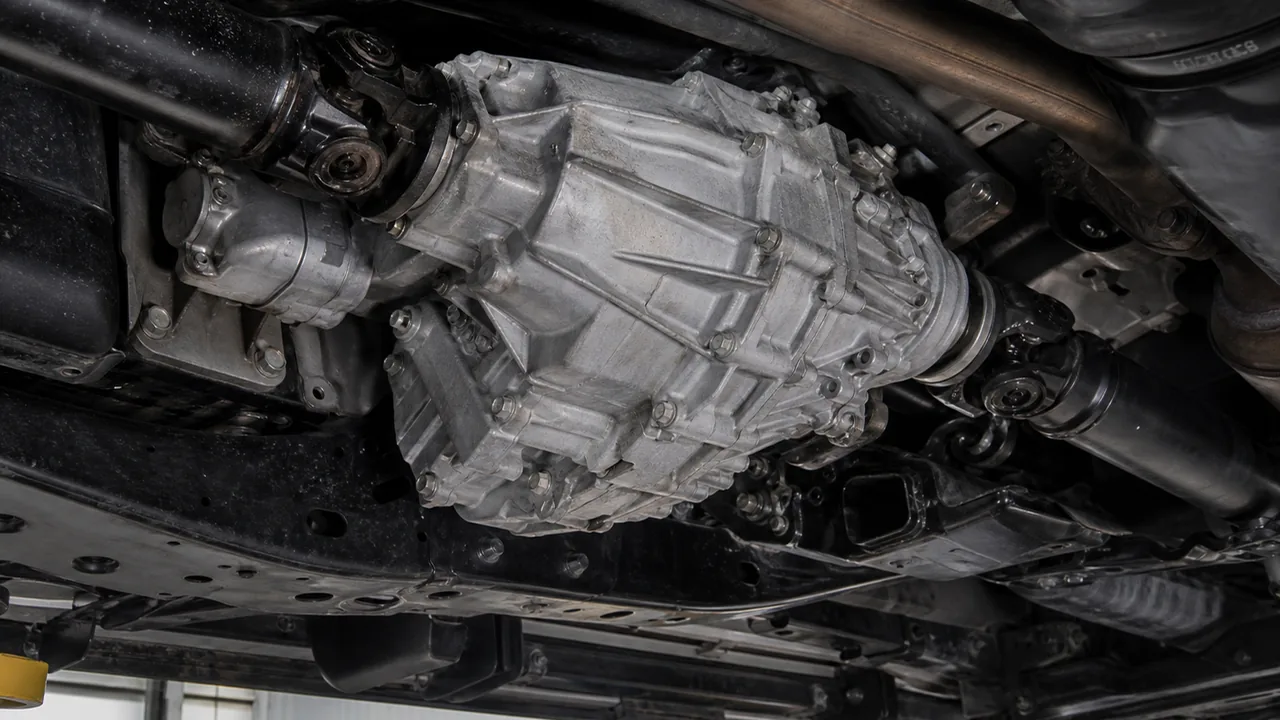
A transfer case is not just another gear selector. In many four-wheel-drive SUVs, it connects the transmission output to the front and rear driveshafts and may offer two-wheel drive, four-wheel drive high range, four-wheel drive low range, and a Neutral or towing mode depending on the design. The exact control can be a lever, switch, button sequence, or electronic mode.
For recreational flat towing, the goal is usually to let all four wheels roll without forcing the automatic transmission internals to be driven in a way they cannot lubricate. That is why the OEM procedure may call for transfer case Neutral, a specific ignition state, a specific transmission selector position, or a confirmation message. Transmission Neutral alone is not the same thing as transfer case Neutral.
- The wheels turn the tires, hubs, axles, differentials, and driveshafts while the SUV is being towed.
- If the transfer case is not in the required state, that rotation may continue into the transfer case or transmission output side.
- If the engine is off, normal automatic transmission lubrication may not be available in the same way it is while driving.
- Electronic transfer cases may need a confirmed mode shift, not just a switch movement or assumed setting.
All-wheel-drive, selectable four-wheel-drive, full-time four-wheel-drive, and two-wheel-drive SUVs do not follow one universal flat-tow rule. The exact owner manual and OEM recreational towing instructions control the answer.
Common failure signs
The most important symptom rule is simple: if the SUV behaves differently after the tow, do not keep driving to see whether it clears up. Drivetrain failures can worsen quickly once a damaged bearing, gear, seal, clutch, or shaft is placed under load again.
- Burning smell after the tow, especially near the transmission, transfer case, or underbody.
- Fresh fluid leaks under the transmission, transfer case, driveshaft seals, or differentials.
- Grinding, whining, humming, clunking, or clicking that was not present before the tow.
- Vibration on takeoff, while coasting, or during light throttle after the incident.
- Delayed engagement, harsh engagement, slipping feel, or refusal to move when Drive or Reverse is selected.
- Transfer case mode lights, 4WD/AWD warnings, transmission warnings, traction warnings, or check-engine lights.
- Metallic debris in accessible fluid or on a drain plug if the component has one and inspection is appropriate.
- No-drive condition, binding, or a feeling that the SUV is fighting itself when moved.
A new battery, cleared codes, or a short idle check cannot prove the drivetrain is safe. The decision should be based on symptoms, fluid condition, scan data, physical inspection, and the correct OEM procedure.
Before replacing it
A scan tool may reveal transmission, transfer case, 4WD, AWD, ABS, wheel speed, range sensor, or communication codes after a towing mistake. Those codes can point the technician toward a module, sensor, range state, slipping event, or mode-selection problem, but they are not a full mechanical inspection.
Mechanical damage can exist without an immediate dashboard light because overheated fluid, worn bearings, gear scoring, stretched chains, damaged bushings, or driveline vibration may not be directly monitored. A vehicle that has no warning light but now smells burnt, leaks, whines, vibrates, or engages harshly still needs inspection.
- Use codes to guide diagnosis, not to declare the SUV safe.
- Record freeze-frame data and warning messages before clearing anything.
- Compare scan data with the transfer case mode the owner manual says should be active.
- Inspect fluid and rotating parts even if the scan report is clean when symptoms are present.
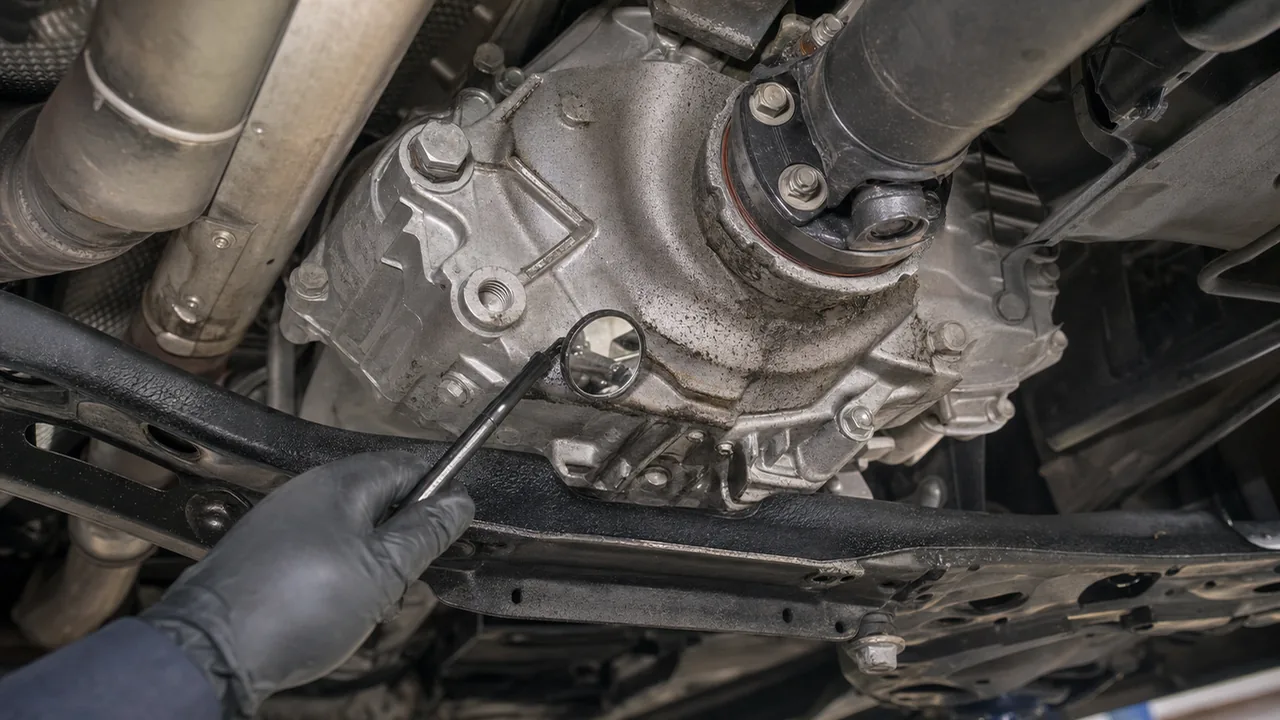
The inspection should begin with facts, not parts. The technician needs to know the vehicle configuration, transfer case position, transmission selector position, towing distance, towing conditions, whether the engine was run, whether the battery died, and what symptoms appeared afterward. Those details change the diagnostic path.
- Check the owner manual and OEM service information for that exact vehicle.
- Look for leaks, burnt smell, abnormal noise, vibration, and mode-selection problems.
- Scan modules before clearing codes or disconnecting power again.
- Inspect fluid condition where service access is available and appropriate.
- Inspect driveline joints, shafts, mounts, and differentials before blaming only the transmission.
If the SUV has burning smell, leaks, grinding, harsh engagement, vibration, or loss of drive, do not road test it as an owner check. Have it towed for inspection.
Inspection steps
Flat towing an automatic SUV without disengaging or correctly placing the transfer case usually means the driveline may have spun parts the OEM procedure intended to isolate, and it can damage the transmission, transfer case, bearings, gears, or driveshaft components even if the SUV seems normal at first. Treat it as investigate-soon at minimum and urgent if there are warning lights, leaks, burning smell, grinding, harsh engagement, vibration, or loss of drive.
- No obvious damage may be found at first, especially if the tow exposure was short and the transfer case was not heavily loaded.
- Overheated or stressed fluid can occur before a hard failure is obvious, so smell, color, debris, and leak checks matter.
- Transfer case wear can show up as noise, binding, mode-selection problems, or metal debris in the fluid.
- Transmission output-side damage may occur on some layouts if rotating parts were driven without normal lubrication support.
- Bearing, gear, U-joint, CV joint, driveshaft, or differential damage can appear as vibration, whining, clunking, or grinding.
- A severe case can leave the SUV with no drive, harsh engagement, fluid loss, or internal failure that needs professional teardown or replacement.
The first safe action is to stop further driving if symptoms are present, write down the towing distance, estimated speed range, transfer case position, transmission selector position, and any warning lights, then verify the owner manual procedure before moving the SUV again.
| 1 | No obvious damage found | The SUV starts, shifts, and drives normally, with no leaks, smell, noise, vibration, or warning lights. | Still document the incident and verify the manual procedure; consider inspection if exposure was significant. |
| 2 | Fluid overheated or stressed | Fluid may smell burnt, appear dark, contain debris, or leak from seals after drivetrain stress. | Do not treat a normal-looking filter alone as full proof; have the fluid and service data reviewed. |
| 3 | Transfer case wear or mode problem | The case may whine, grind, bind, leak, or fail to enter the expected mode after towing. | Avoid repeated mode cycling under load; inspect fluid, operation, and driveline rotation on a lift. |
| 4 | Transmission output-side damage | Some automatic layouts can be damaged when output components are rotated without the intended lubrication path. | Scan and inspect, then verify fluid condition and engagement before any road use if symptoms are present. |
| 5 | Bearing, gear, or driveline failure | Noise, vibration, clunking, metal debris, or harsh engagement can point to rotating component damage. | Tow the SUV to a qualified shop instead of trying repeated road tests. |
| 6 | No-drive condition | The SUV may not move, may engage harshly, or may have severe internal damage. | Stop driving and pursue professional diagnosis, repair estimate, and vehicle-specific procedure review. |
A normal first look does not erase risk because some damage is internal, heat-related, or only audible under load. At the same time, it is not accurate to claim every automatic SUV is destroyed instantly. The correct conclusion depends on the tow setup, transfer case position, drivetrain design, fluid condition, symptoms, and inspection results.
When an SUV is driven under its own power, the engine, transmission pump, transmission geartrain, transfer case, driveshafts, and axles are working in the direction and lubrication state the vehicle was designed to use. During flat towing, the wheels are the source of rotation. That reverse path can spin the axles, driveshafts, transfer case, and sometimes transmission-related components even though the engine is not running.
Many automatic transmissions rely on pump-driven fluid circulation when the engine is running. If the SUV is towed with components turning but the pump is not providing normal lubrication, friction surfaces, bushings, bearings, and gear interfaces may be exposed to heat or oil starvation. The exact risk depends on the transmission and transfer case design, which is why generic advice can be dangerous.
- Wheel rotation can turn the driveshafts and differentials even when the engine is off.
- A transfer case left engaged may pass that rotation toward components the towing procedure was meant to isolate.
- Transmission Neutral does not always stop transmission output components from rotating during flat towing.
- Heat can build before the driver sees a dashboard warning or feels a drivability problem.
- A transfer case that was partly shifted, not confirmed in Neutral, or electronically mis-set can create a higher-risk condition.
Do not infer that a procedure for one SUV, one drivetrain, or one model year applies to another. The safe source is the exact OEM owner manual or service information for the vehicle being towed.
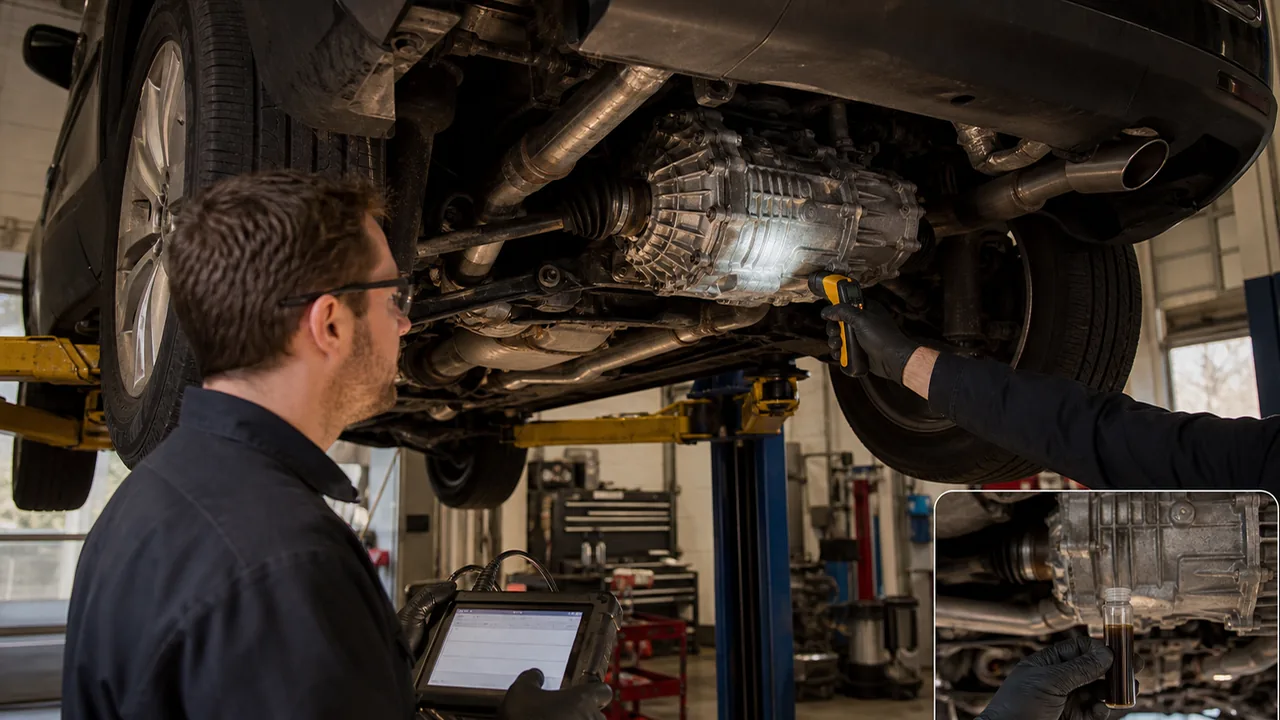
- Write down the vehicle year, make, model, drivetrain, transfer case type, towing distance, towing conditions, transfer case position, transmission selector position, and symptoms.
- If there are leaks, burning smell, grinding, vibration, harsh engagement, or loss of drive, stop driving and arrange transport to a qualified shop.
- Check the exact owner manual and OEM recreational towing instructions, including any transfer case Neutral, tow mode, ignition, battery, or shift-sequence requirements.
- Perform a visual inspection for fresh leaks, overheated odor, damaged shields, loose driveline parts, and abnormal underbody marks.
- Scan all relevant modules and save codes, messages, and freeze-frame data before clearing anything.
- Inspect accessible fluid condition and drain plug debris where the service design allows it; do not use a clean filter alone as the only proof of safety.
- Lift the SUV and inspect driveshaft rotation, joints, output seals, differentials, transfer case operation, mounts, and obvious binding or noise.
- If the vehicle passes initial checks, perform only a controlled technician test that can be stopped immediately if noise, slip, vibration, or warning lights appear.
- Compare findings with OEM service procedures and estimate repair or further teardown only for confirmed faults.
A controlled shop test is not the same as an owner repeatedly driving around the block. If symptoms are severe, the controlled test may be skipped until fluid, metal debris, and lift inspection are complete.
The right way to think about a short mistake is exposure plus evidence. A brief roll at low load with no symptoms is different from a longer tow at road speed with the transfer case engaged, but neither situation can be cleared by assumption. The manual procedure and inspection results decide the next step.
- Higher concern: the SUV was towed a long distance, at road speed, with the transfer case not in the required state.
- Higher concern: burning odor, leaks, noise, vibration, delayed engagement, warning lights, or no-drive behavior appeared afterward.
- Moderate concern: the SUV seems normal but the owner cannot confirm the transfer case was in the required towing mode.
- Lower concern: the mistake was brief, the correct mode was quickly restored, and a careful inspection finds no symptoms, leaks, codes, or fluid concerns.
Do not add an invented distance or speed threshold to the article later unless it comes from the exact OEM manual or service information for that vehicle.
- Do not keep driving if the SUV smells burnt, leaks, grinds, vibrates, shifts harshly, or loses drive.
- Do not assume a clean dashboard proves the transmission, transfer case, or driveline is unharmed.
- Do not use another owner's towing procedure unless the year, model, drivetrain, and transfer case match and the OEM manual confirms it.
- Do not drain and refill fluid before documenting its condition if a warranty, insurance, or repair review may be involved.
- Do not install used drivetrain parts without matching the exact application and inspecting the part before installation.
Warranty and insurance decisions are case-specific. Keep towing records, inspection notes, photos of fluid or debris, scan reports, and the owner manual procedure. Those records are more useful than a verbal guess about whether damage must have happened.
A used transfer case, transmission, driveshaft, or differential must match more than the badge on the liftgate. Drivetrain parts can differ by model year, engine, transmission, four-wheel-drive system, output flange, electronic actuator, sensor package, and control strategy. The existing part marking and OEM catalog data matter.
- Verify the exact part number or casting identification where available.
- Inspect for leaks, cracked housings, damaged connectors, stripped splines, and abnormal shaft play before installation.
- Check whether the replacement needs programming, adaptation, calibration, or service information procedures.
- Replace only the component that testing has confirmed, and recheck operation after installation.
Replacement notes
A serviceable-fluid finding may lead to fluid replacement and recheck if the OEM procedure supports it and no internal debris or symptoms are found. A noisy, leaking, binding, or debris-filled transfer case needs deeper inspection. A transmission that has delayed engagement, slipping feel, abnormal noise, burnt fluid, or no-drive behavior needs transmission-specific diagnosis before any repair decision.
- Transfer case service may include fluid inspection, mode operation testing, leak repair, or internal diagnosis.
- Transmission service may include scan review, fluid and filter inspection where serviceable, engagement checks, and output-side diagnosis.
- Driveline service may include driveshaft, U-joint, CV joint, mount, differential, and output seal inspection.
- Repair verification should include confirming the correct transfer case mode operation and checking that no abnormal noises, leaks, warning lights, or engagement problems remain.
Do not present a cost range unless it is added later from current local market data and clearly labeled as an estimate. Internal drivetrain repairs vary too much by vehicle and failure confirmation.
- Confirm the exact year, make, model, drivetrain, and transfer case against the owner manual before assuming it can be flat towed.
- Follow the OEM recreational towing procedure in order, including transfer case Neutral or tow mode confirmation when required.
- Do not substitute transmission Neutral for transfer case Neutral unless the manual specifically says that is the correct state.
- Use a written RV dinghy towing checklist so battery, ignition, steering, parking brake, transmission, transfer case, and tow bar checks are repeated the same way each time.
- After setup, confirm the SUV rolls freely according to the manual procedure and that no warning message indicates an incomplete mode shift.
- After towing, follow the OEM return-to-drive procedure before normal driving.
If the manual is missing, use OEM owner resources or dealer service information. Do not rely on generic internet lists for a specific SUV without confirming the exact configuration.
FAQ
Is it safe to drive an automatic SUV after it was flat towed with the wrong transfer case setting?
Do not keep driving if there are warning lights, leaks, burning smell, grinding, harsh engagement, vibration, or loss of drive. If there are no symptoms, verify the exact OEM towing procedure and consider inspection before normal use, especially if the tow exposure was significant.
Does a clean scan mean the transmission or transfer case is fine?
No. Codes can help diagnosis, but no stored code does not rule out overheated fluid, bearing wear, transfer case damage, gear damage, driveline damage, or other mechanical problems that require physical inspection.
Is checking the transmission fluid enough after incorrect flat towing?
Fluid inspection is useful, but it is not enough by itself. A technician may also need to inspect transfer case fluid, metal debris, seals, driveshafts, differentials, mode operation, scan data, and OEM service procedure requirements.
Can transmission Neutral protect the SUV during flat towing?
Not by itself unless the exact owner manual says that is the required procedure. Transfer case Neutral, tow mode, ignition state, and other steps can be separate from the transmission selector position.
Should the owner manual override generic flat-towing advice?
Yes. Flat-tow approval and setup are vehicle-specific. The exact year, make, model, drivetrain, transfer case, and OEM recreational towing instructions should override generic lists, forum comments, or advice for a different SUV.
Comments
Be the first to add a practical repair note or follow-up question.