
What this part does
The RAV4's braking and propulsion behavior is managed by overlapping systems. The service brake system slows the vehicle, stability and ABS logic help manage wheel slip, driver-assistance systems may request braking in certain collision-risk situations, and the powertrain or hybrid controls decide whether the vehicle can keep delivering propulsion.
- Brake control system: interprets pedal, wheel-speed, stability, and hydraulic or actuator feedback.
- Forward collision or pre-collision system: uses camera, radar, and software logic to warn or intervene when it detects a possible impact.
- Powertrain control: manages engine torque, throttle response, transmission behavior, and failsafe operation.
- Hybrid control on hybrid models: coordinates engine, motor, battery, and ready-state logic.
- 12-volt electrical system: powers control modules, relays, sensors, network communication, and startup logic.
- Electronic parking brake and hold functions: can affect brake release or brake-applied status depending on module commands and vehicle state.
Because these systems share data, a braking complaint can be caused by a power or communication problem, and a shutdown complaint can appear with brake warnings even when the physical brake hardware is not the root cause.
Common failure signs
A sudden autonomous brake event with engine shutdown in a 2025 Toyota RAV4 usually means a serious safety fault that needs immediate diagnosis. The likely cause family can involve ADAS braking intervention, brake control faults, powertrain or hybrid control faults, weak 12-volt supply, sensor errors, wiring issues, or software-related control behavior. This is urgent, not normal behavior.
The first action is to stop normal driving if the event repeats, if warning lights stay on, or if braking or propulsion feels unpredictable. Move the vehicle to a safe location, record what happened, and have a Toyota-capable scan tool read every affected module before codes are cleared.
| Sudden braking | The vehicle decelerates sharply without the driver intending that brake input. | This can point toward ADAS intervention, brake control logic, wheel-speed data, or a brake command issue. |
| Engine shutdown | The engine stops or the vehicle leaves a normal ready-to-drive state. | This shifts diagnosis toward powertrain control, low-voltage supply, hybrid control on hybrid models, or module communication. |
| Reduced power | The vehicle stays on but will not accelerate normally. | This can be a failsafe strategy, powertrain fault, hybrid system warning, or electronic throttle issue. |
| Brake lock or hard pedal | The brakes feel applied, the pedal is hard, or the parking brake indicator behaves abnormally. | This puts ABS, brake actuator, electronic parking brake, power supply, and control-module data near the top of the inspection list. |
| ADAS event | The pre-collision or forward collision system may believe a collision risk exists. | This must be proven from scan data, driver-assistance status, camera or radar inputs, and road conditions, not assumed. |
A sudden brake event feels different from a stall, a reduced-power mode, or an ADAS warning. Clear symptom language helps the shop decide which control modules and live-data streams matter most during the first scan.
- The vehicle slows abruptly as if the brakes were applied without pedal input.
- The engine stops, the ready indicator changes, or the vehicle displays a not-ready message.
- The accelerator does not respond normally after the event.
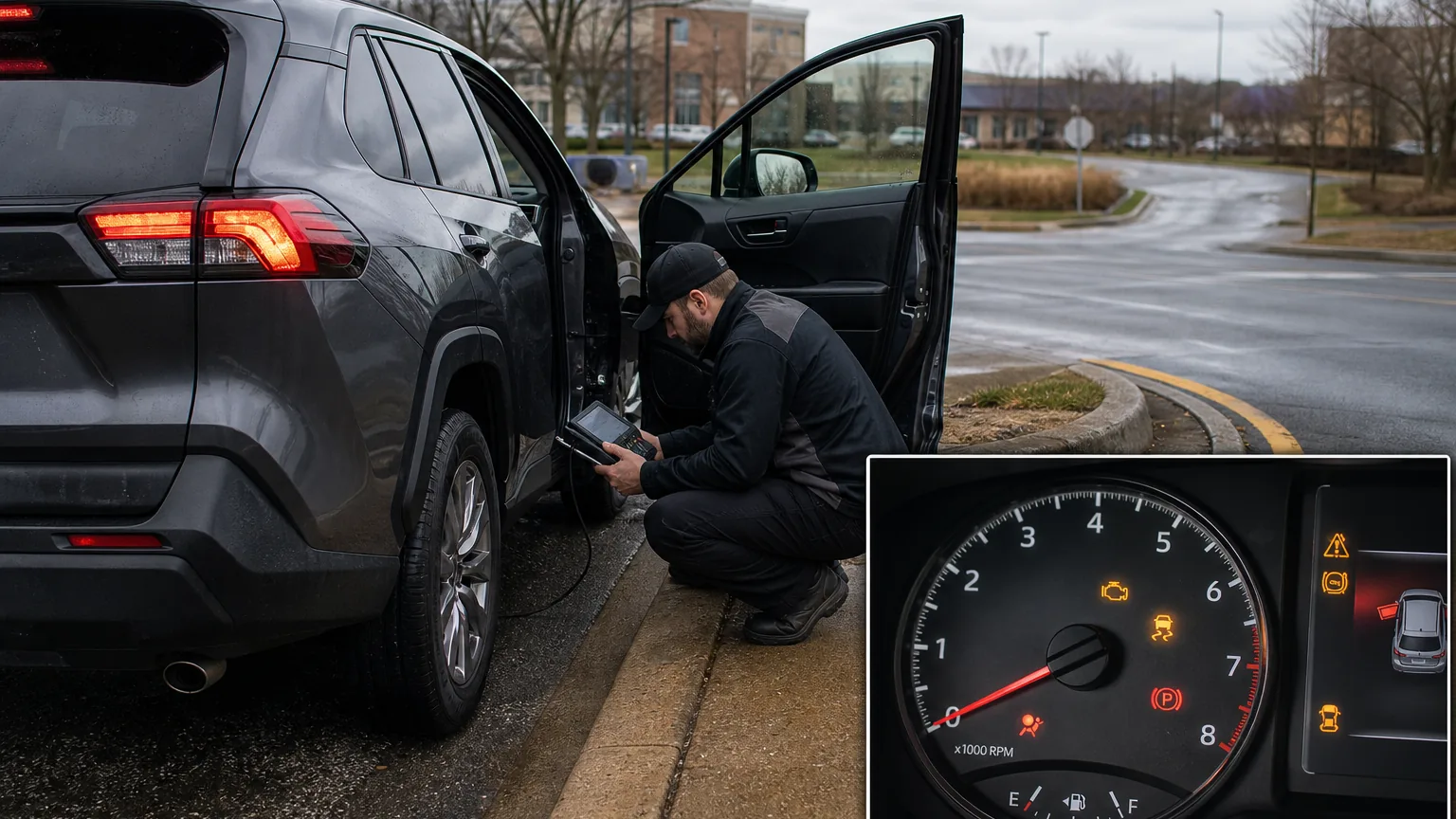
- Brake, ABS, traction, steering, battery, check engine, hybrid, or pre-collision warnings appear together.
- The brake pedal becomes hard, the brakes feel locked, or an electronic parking brake indicator flashes.
- The vehicle restarts after a key cycle but the event cannot be trusted as resolved.
- The event happens near lane markings, shadows, reflective objects, weather contamination, heavy traffic, or uneven road surfaces.
| No warning before hard braking | ADAS input, brake control command, or sensor interpretation may need review. | Do not assume a confirmed defect without data. |
| Many warnings at once | Low-voltage supply, module communication, or shared power/ground paths move higher on the list. | Do not replace every warned system. |
| Engine stopped or not ready | Powertrain, starting, immobilizer, hybrid control, or low-voltage checks become important. | Do not treat it as only a brake problem. |
| Brakes locked or park indicator flashing | Electronic parking brake, brake actuator data, brake switch inputs, and module states need inspection. | Do not force the vehicle to drive against an applied brake. |
Before replacing it
The best scan is a complete vehicle health report before any code clearing. Freeze-frame data can show module state, vehicle conditions, warning triggers, sensor values, and whether the failure was current, intermittent, or history-only.
- Read all modules, not only the engine computer.
- Save stored, pending, current, and history DTCs.
- Capture freeze-frame and event data before clearing anything.
- Check whether brake, ADAS, steering, body, powertrain, and hybrid modules report communication or low-voltage faults.
- Compare codes with warning messages and the driver's timeline.
- Clear codes only after the first report is saved and the diagnostic plan calls for a reset.
No single generic code should be presented as proof that a 2025 RAV4 suddenly braked and shut off for one specific reason. A code identifies a circuit, sensor, module, or operating condition that still needs validation.
A safety-system symptom can look like a failed part even when the root cause is a weak supply, connector issue, software state, sensor alignment issue, or module communication problem. The repair path should be evidence-led.
- Do not replace the brake actuator only because the vehicle braked unexpectedly.
- Do not replace a camera or radar sensor only because the event felt like automatic braking.
- Do not condemn the hybrid system on a hybrid model without hybrid-control data.
- Do not assume the 12-volt battery is good because the vehicle restarted once.
- Do not clear codes before a full report is saved.
Inspection steps
Start with systems that can influence braking or propulsion directly, then work outward to power supply, sensor integrity, wiring, and software state. This is a diagnostic hierarchy, not a claim that one known part fails on every 2025 RAV4.
| ADAS or pre-collision braking intervention | A forward collision or pre-collision system can request braking if it interprets a collision risk. | Driver-assistance status, camera or radar data, road conditions, warning history, calibration status, and module DTCs. |
| Brake control, ABS, or electronic parking brake fault | Brake commands, wheel-speed interpretation, actuator data, or parking-brake state can affect stopping behavior. | ABS or brake-control codes, wheel-speed correlation, brake switch data, actuator data, and parking-brake status. |
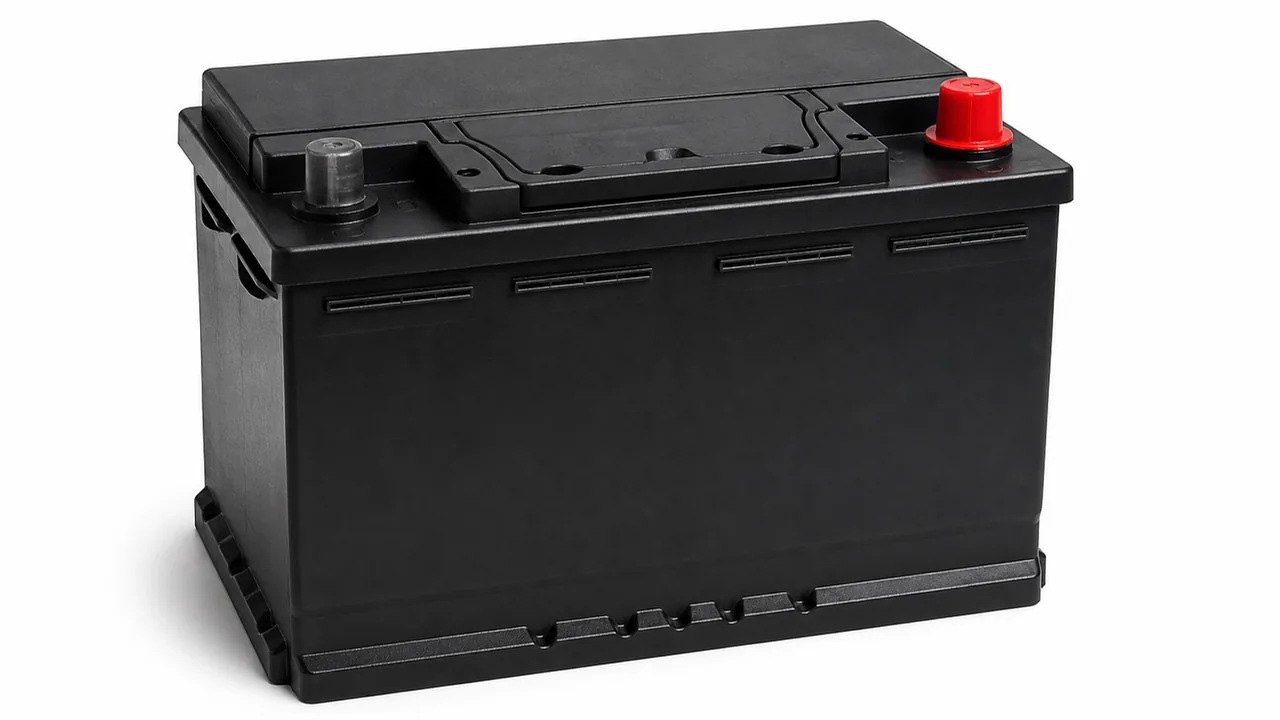
| Weak 12-volt supply or charging irregularity | Low or unstable module power can create multiple warning lights, module resets, no-restart events, or communication faults. | Battery condition test, charging check, power and ground inspection, and stored low-voltage or communication codes. |
| Wheel-speed, steering, yaw, brake pedal, or acceleration sensor error | Incorrect vehicle-state data can mislead stability, braking, and ADAS logic. | Live-data comparison across sensors, connector inspection, and freeze-frame values from the event. |
| Powertrain or hybrid control issue | Loss of propulsion, engine shutdown, not-ready messages, or hybrid warnings can make the vehicle slow or stop unexpectedly. | ECM, transmission, and hybrid-control codes, fuel or emissions faults, ready-state data, and official service procedures. |
| Wiring, connector, water intrusion, or module communication issue | Intermittent signals can create sudden module decisions that disappear after restart. | Harness inspection, connector fit, corrosion checks, network codes, and fault duplication under controlled conditions. |
| Software calibration or VIN-specific campaign | Some symptoms require software inspection or update status review rather than mechanical replacement. | VIN-based campaign lookup, dealer service history, calibration IDs, and Toyota service information. |
NHTSA owner complaint data can show reported incidents involving service brakes, forward collision avoidance, engine shutdown, battery drain, or loss of propulsion, but an owner complaint is not a defect finding or a diagnosis for a specific vehicle.
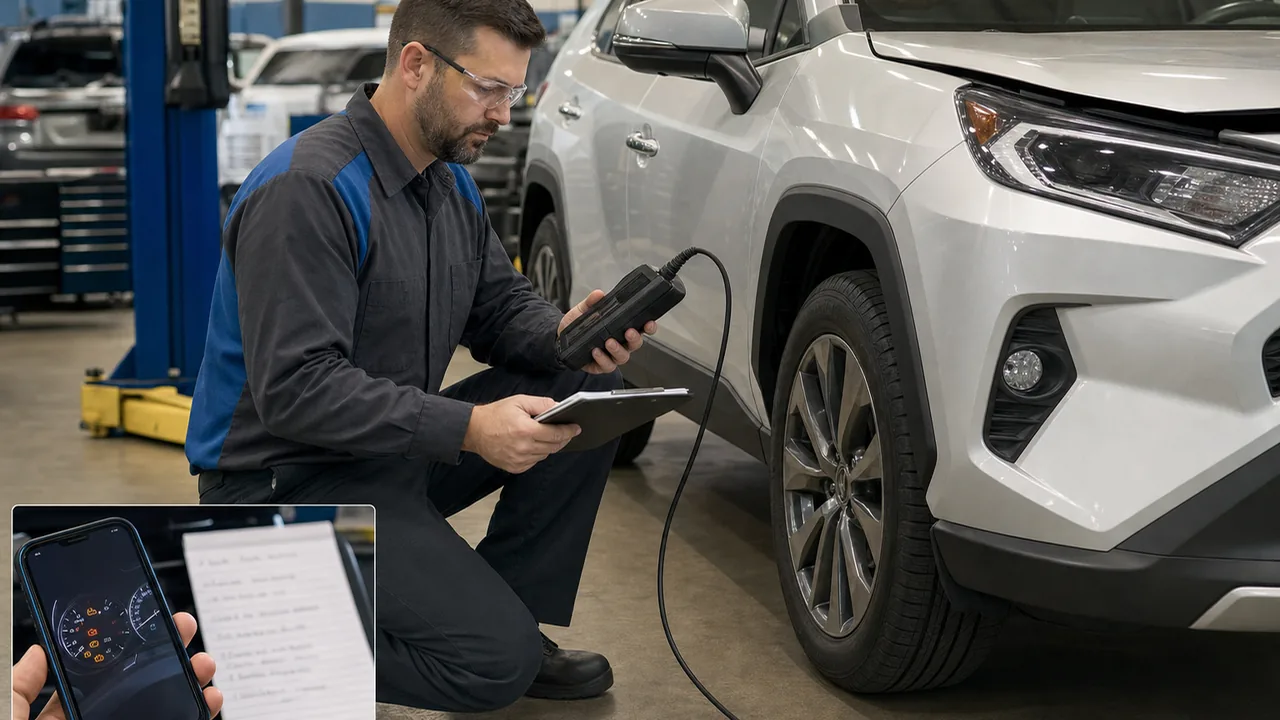
The most useful owner evidence is a clear timeline: what happened first, what the vehicle displayed, what the driver did, and whether the symptom repeated. Avoid repeated test drives to recreate the problem if braking or propulsion feels unpredictable.
- Location and road type.
- Weather, glare, rain, snow, fog, or dirty sensor areas.
- Cruise control, lane assistance, brake hold, or pre-collision status.
- Dash messages, warning lights, and sounds.
- Whether the brake pedal felt normal, hard, pulsing, or locked.
- Whether the accelerator responded after the stop.
- Whether the vehicle had to be towed.
- Any recent service, windshield replacement, bumper work, battery work, or electronic accessory installation.
If you have a dashcam clip, save the original file. A video showing road conditions, warning timing, and traffic position can be more useful than a later written description.
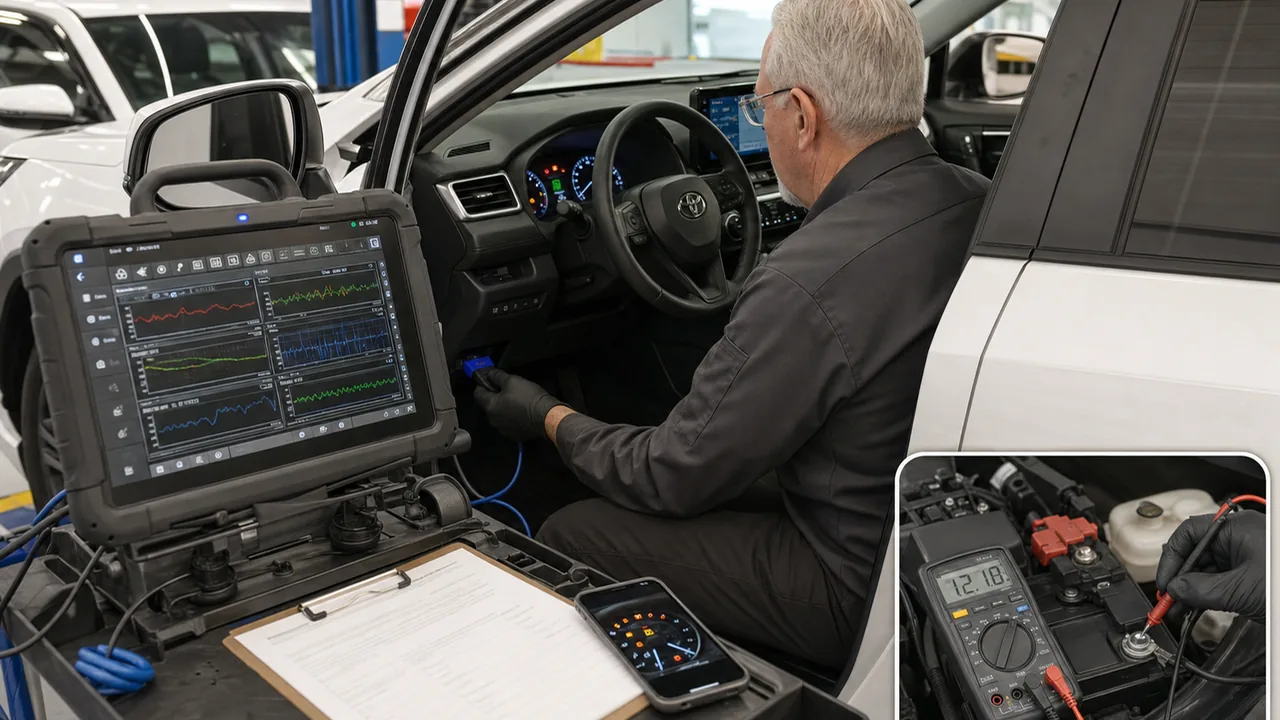
The safest diagnostic order is static first, dynamic last. A road test should not be the opening move if the customer reports harsh braking, loss of propulsion, no restart, or a brake-applied condition that could recur in traffic.
- Perform intake documentation and confirm whether the complaint involved gas-only or hybrid operation.
- Check VIN-specific recalls, service campaigns, software history, and prior warranty visits.
- Run a complete module scan and save all results.
- Inspect 12-volt battery health, charging behavior, grounds, and power supply paths.
- Review brake-control, ABS, electronic parking brake, and stability-control data.
- Review ADAS camera and radar status, sensor blockage history, calibration state, and related body repairs.
- Review ECM, transmission, and hybrid-control data if the engine stopped, ready state changed, or propulsion was lost.
- Inspect harnesses and connectors tied to the affected modules.
- Use official pinpoint tests before replacing a module, actuator, sensor, or battery.
- After repairs, confirm no active faults remain and perform any required calibration or initialization according to service information.
Road-test caution matters. If the event was severe, repeatable, or involved loss of control confidence, diagnostic driving should be limited, planned, and performed only after static checks reduce the risk.
If a part is confirmed, the safest buying check is exact compatibility. A 2025 RAV4 may vary by gas or hybrid configuration, production details, driver-assistance equipment, and calibration requirements.
- Match part numbers and markings from the original component when possible.
- Confirm whether the part is tied to VIN, immobilizer, calibration, or module programming.
- Do not buy a used camera, radar, brake actuator, or ECU based only on appearance.
- Ask whether the part came from a collision-damaged vehicle.
- Plan for calibration or initialization before assuming the repair is complete.
- Keep return options open until the vehicle passes post-repair checks.
A used safety-system part that cannot be calibrated, programmed, or validated can cost more time than it saves. Confirm serviceability before purchase.
Use the VIN on the official Toyota and NHTSA recall tools before publishing or relying on any campaign claim. If a campaign appears, ask whether it relates to the symptom, whether it has already been completed, and whether it changes the diagnostic sequence.
- Check the VIN through Toyota's official recall or owner site.
- Check the VIN through NHTSA's recall lookup.
- Ask the dealer for open recalls, service campaigns, warranty extensions, and calibration updates.
- Do not assume an unrelated recall explains sudden braking, shutdown, or loss of propulsion.
- Keep recall completion records with the scan report.
Official NHTSA complaint and recall data can support research, but complaints are owner reports and recalls are campaign records. Neither replaces vehicle-specific diagnosis.
If the event repeats, if warning lights remain, or if the vehicle cannot be trusted to brake and accelerate normally, arrange towing to a Toyota dealer or qualified repair facility. A successful restart is not enough proof for normal driving.
- Tow after repeat braking events.
- Tow after a shutdown that leaves the vehicle not ready or hard to restart.
- Tow if brake warnings and steering warnings appear together.
- Tow if the brakes remain applied or the electronic parking brake indicator behaves abnormally.
- Tow if the vehicle lost propulsion in traffic.
- Tow if the driver is unsure whether the vehicle will stop or go predictably.
Tell the tow provider whether the vehicle is gas or hybrid and whether the brakes are locked, the parking brake indicator is active, or the vehicle will not enter a ready-to-drive state.
Because sudden braking and shutdown symptoms can involve safety systems, brake controls, powertrain controls, or low-voltage faults, the safest next step is a VIN-based campaign check and a full diagnostic scan before normal driving resumes.
- Which modules were scanned beyond the engine computer?
- Were freeze-frame and history data saved before codes were cleared?
- Were brake-control, electronic parking brake, ADAS, steering, body, and powertrain modules checked?
- Was the 12-volt battery and charging system tested under load?
- Were camera, radar, windshield, bumper, and calibration status inspected?
- For hybrid models, were hybrid-control codes and ready-state data checked?
- Were any open recalls, campaigns, or calibration updates found by VIN?
- What evidence supports the proposed repair?
A 2025 Toyota RAV4 that suddenly brakes and shuts off without driver input is commonly linked to a safety-critical control-system problem that needs immediate diagnosis. Possible causes include ADAS braking intervention, brake-control faults, weak 12-volt supply, powertrain or hybrid control faults, sensor errors, wiring faults, or software-related behavior.
- Do not continue normal driving if the event repeats or warnings remain.
- Save warning messages, conditions, and dashcam evidence if available.
- Request a full Toyota-capable module scan with freeze-frame data.
- Check VIN-specific recalls and service campaigns before assuming a repair.
- Tow the vehicle if braking, steering, restart behavior, or propulsion is unpredictable.
Replacement notes
Is It Safe to Keep Driving?
A 2025 Toyota RAV4 that has braked by itself and then shut off should not be driven normally until it is diagnosed. If the vehicle restarts, that does not prove the fault is gone; it may only mean the module state reset after the event.
- Move away from traffic and put the vehicle in park when safe.
- Photograph the instrument cluster, warning messages, and any active driver-assistance indicators.
- Write down weather, road surface, traffic, cruise control status, lane markings, and whether any object was near the front of the vehicle.
- If the vehicle will not restart, warning lights remain active, the brake pedal feels abnormal, or propulsion is inconsistent, arrange towing instead of another drive cycle.
- Ask the dealer or repair facility to preserve DTCs, freeze-frame data, health-check reports, and event notes.
Do not try to disable ADAS, brake control, hybrid, airbag, or safety systems to test the symptom. Diagnosis should use scan data and official service procedures, not unsafe bypasses.
The repair result should explain both sides of the complaint: why braking happened and why the vehicle shut off, lost ready state, or lost propulsion. A repair that fixes only one warning light may not resolve the owner's safety concern.
- 12-volt battery or charging repair: verify module stability and confirm related low-voltage codes do not return.
- Brake control or actuator repair: follow official procedures and confirm brake data, warning lights, and road-test behavior.
- Camera, radar, windshield, or bumper-related repair: confirm calibration and sensor alignment using Toyota service information.
- Powertrain repair: confirm throttle response, engine operation, stored codes, and failsafe status after repair.
- Hybrid-only repair: confirm hybrid ready-state behavior, warning messages, and hybrid-control data before releasing the vehicle.
- Software or calibration repair: document the previous and updated calibration status when available.
- Save the original scan report.
- Complete the confirmed repair.
- Perform required initialization, calibration, or software steps.
- Run a post-repair full scan.
- Confirm warning lights and messages are gone.
- Verify brake and propulsion behavior under controlled conditions.
Use cautious language: the event may involve ADAS braking, brake control, low-voltage stability, powertrain or hybrid control, sensor data, wiring, or software behavior. The exact cause should be based on scan data and service information.
- Say reported symptom when discussing owner complaints.
- Say possible cause family unless diagnostic data confirms a specific fault.
- Say VIN-based recall check instead of claiming a recall applies.
- Say Toyota-capable scan tool instead of implying a basic code reader is enough.
- Say tow or stop normal driving when repeat events, warning lights, no restart, or unpredictable braking occur.
FAQ
FAQ answers should stay visible on the page if FAQ schema is used. Do not create schema-only answers that are not present in the article body.
Is it safe to keep driving a 2025 Toyota RAV4 after sudden braking and shutdown?
No, not as normal driving. If the event repeats, warning lights remain, the vehicle will not restart normally, or braking and propulsion feel unpredictable, stop driving and have the vehicle towed or inspected before regular use.
Could the pre-collision system cause sudden braking?
It can request braking in certain collision-risk situations, but it should not be blamed without evidence. A technician should review ADAS codes, camera or radar status, calibration history, road conditions, and warning data.
Can a weak 12-volt battery make a RAV4 shut off or show many warnings?
A weak or unstable 12-volt supply can cause module resets, communication faults, warning lights, no-restart behavior, or odd electronic symptoms. It should be tested as part of the first diagnostic pass.
Should I clear the codes before taking the RAV4 in?
No. Clearing codes too early can erase useful history and freeze-frame data. Save a full scan report first, especially when the complaint involves braking, ADAS, powertrain, hybrid, or steering warnings.
Does an NHTSA complaint prove there is a recall?
No. NHTSA complaints are owner reports and do not prove a defect or recall. Use the official NHTSA and Toyota VIN lookup tools to check recalls and ask the dealer to check service campaigns.
Is the advice different for a hybrid RAV4?
The safety triage is the same, but hybrid models also need hybrid-control, ready-state, high-voltage system warning, and hybrid battery-related data reviewed by a qualified technician.
Comments
Be the first to add a practical repair note or follow-up question.