
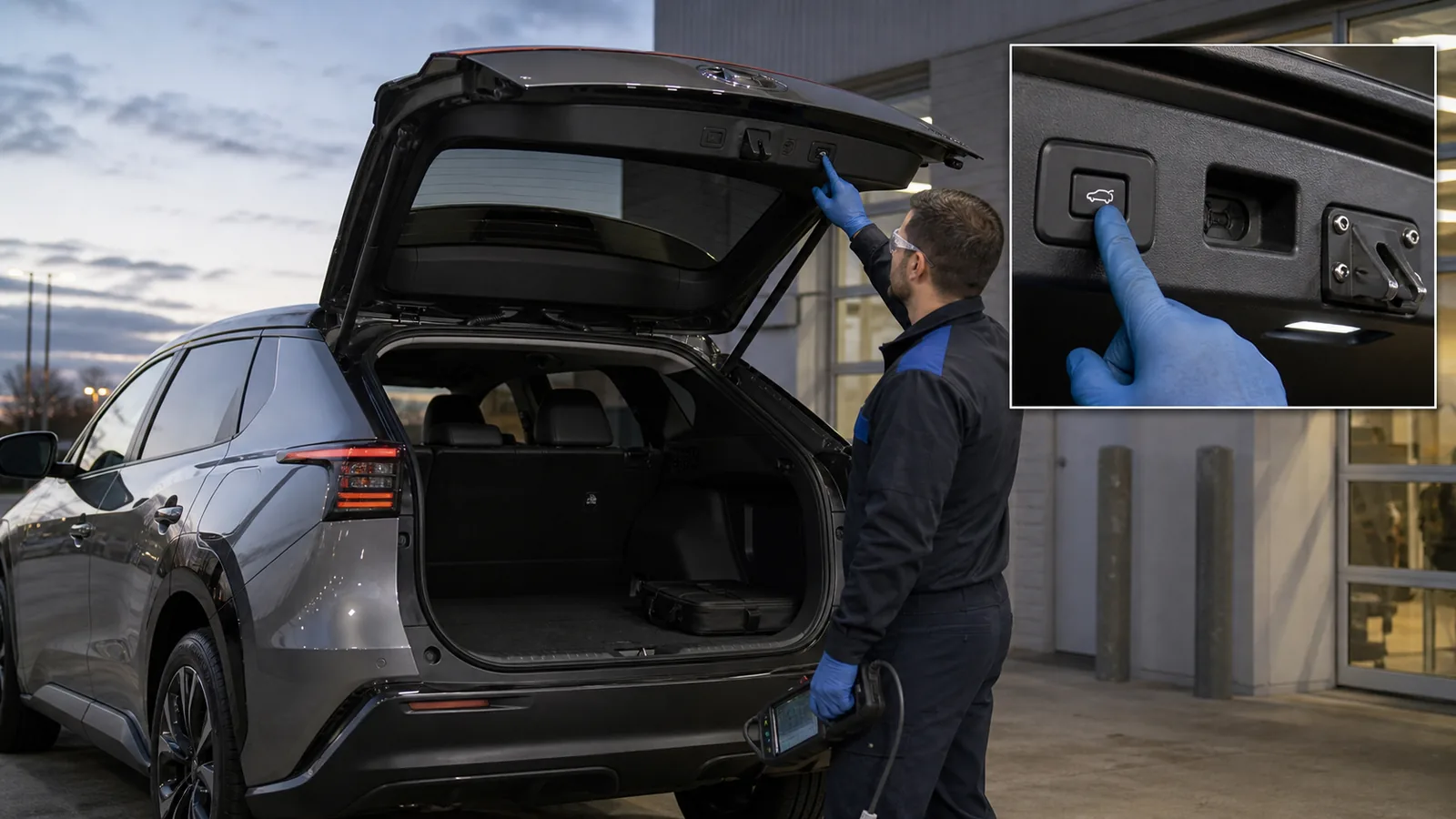
What this part does
In practical terms, the button asks the vehicle to perform two separate jobs in order. First, the power back door system must close the liftgate without seeing an unsafe condition. Second, the locking system must confirm that locking is permitted after the hatch reaches a valid closed and latched state. A failure in either half can make the combined button appear dead even when the visible rear latch is not the root cause.
- The switch is the driver's command input.
- The smart key system decides whether the request is authorized.
- The latch and door-status inputs tell the body electronics whether the tailgate is open, closing, closed, or locked.
- The power back door drive moves the hatch only when the control logic allows it.
- Jam or pinch-protection logic can cancel movement if the system sees resistance or an unsafe condition.
- Body-control data and stored DTCs may show why the request was rejected even when the dashboard shows no warning.
This is why diagnosis should not begin with a single part. A tailgate switch can fail, but the same customer-facing symptom can come from key authorization, a door-ajar input, a latch-position mismatch, cargo pressing on the hatch, a disabled feature setting, a lost learned position, poor 12-volt support, a harness fault, or a control module refusing the request because one input does not make sense.
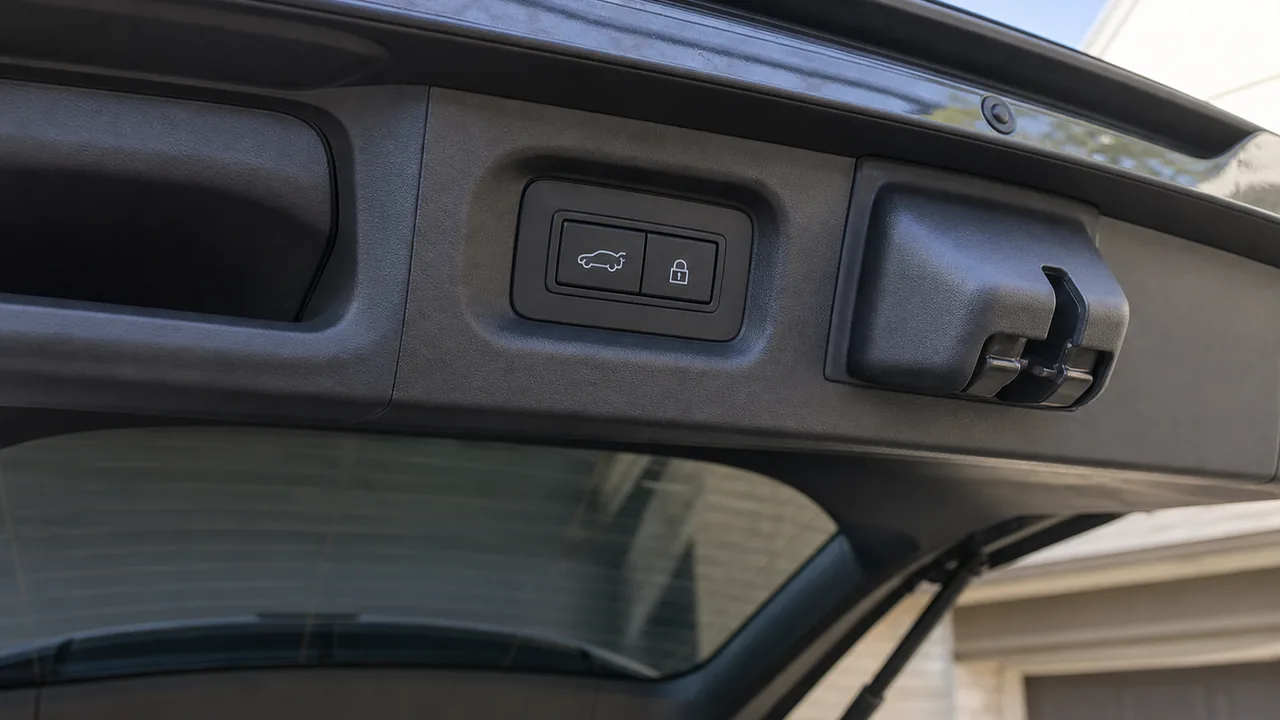
Common failure signs
| Observed sign | What it tends to suggest | What to check next |
|---|---|---|
| No chime, no click, and no liftgate movement | The command may not be reaching the control system, the function may be disabled, the vehicle may not authorize the request, or the body system may not be awake enough to respond normally. | Compare the regular close button, key fob, interior switch, other door locks, and spare key behavior. |
| Chime or beep, but no movement | The vehicle may hear the request but reject it because of key position, door status, latch state, obstruction logic, or a safety condition. | Clear the opening, close other doors, move the key to a normal carrying position, and watch for door-ajar or warning messages. |
| Tailgate closes but does not lock | The liftgate movement path may be working while the lock authorization, latch confirmation, or lock actuator path is not completing. | Check whether the vehicle locks from the fob or exterior handle after the hatch is closed. |
| Works sometimes, fails other times | Intermittent symptoms can come from key detection, marginal 12-volt support, wiring movement near the tailgate, water entry, or a switch that does not register every press. | Record when it happens, which key is used, whether cargo is present, and whether weather or parking location changes the symptom. |
A single failed attempt is less useful than a repeated pattern. If the button fails only with one electronic key, key authorization becomes more likely. If it fails only when the hatch opening is loaded with cargo, obstruction or seal pressure becomes more likely. If every lock and rear control starts acting strangely, the complaint is broader than the Close and Lock switch.
Before replacing it
Parts replacement becomes expensive and unreliable when the symptom is treated as a single failed component. The Close and Lock command crosses several systems: smart key authorization, body locking, back door control, latch feedback, obstruction protection, and power back door drive control. A failed part in any one area can imitate a failed button, and a valid safety rejection can imitate a failed part.
- Do not replace the visible button just because it is the control you pressed.
- Do not replace the latch until latch status is confirmed incorrect or the latch fails an approved test.
- Do not replace a motor, spindle, or module without checking power, ground, wiring, DTCs, and active-test behavior.
- Do not rely on dashboard warnings alone; body-system DTCs may be stored without a driver-facing warning.
The clean repair path is evidence-based: confirm the request input, confirm the authorization result, confirm latch and lock status, confirm the power back door drive can respond when commanded, and then inspect the circuit or component that fails that chain. That prevents replacing a working latch when the vehicle never received permission to lock, or replacing a switch when the module already saw the command and rejected it.
Do not assume that a clean generic code reader result means the vehicle has no useful diagnostic data. The relevant information may live in body, smart key, back door, lock, latch, or power liftgate modules. Those systems can show whether the switch press is recognized, whether the electronic key request is authorized, whether the hatch position is plausible, and whether the lock actuator or liftgate motor can be commanded.
- Read stored and history DTCs in body, smart key, back door, latch, door lock, and power liftgate systems.
- Do not publish or assume Toyota DTC numbers unless confirmed in official repair information for this exact vehicle.
- Check live data for switch input, key authorization, door status, latch status, lock status, liftgate position, and obstruction-related flags.
- Run approved active tests for the power back door motor, latch, and lock actuator if service information supports them.
- Check power and ground under load, then inspect harness routing at the tailgate hinge area and connector areas for damage or water entry.
The strongest scan-tool result is not just a code number. It is a matched pattern: the vehicle either sees the button and rejects the request for a reason, or it never sees the button, or it sees the request but cannot complete the latch, lock, motor, or feedback step. That is the difference between a serviceable condition, a switch or circuit fault, and a deeper module or actuator diagnosis.
Inspection steps
The Close and Lock button is a request, not a direct mechanical release. The vehicle must accept the button input, confirm the electronic key and door-lock conditions, read believable latch and tailgate-position information, and then complete both the close and lock parts of the sequence. If any required condition is missing, the system may ignore the request, beep, cancel movement, close without locking, or operate only intermittently.
- No sound and no movement usually points to authorization, switch input, setting, power supply, or module logic.
- A warning beep with no movement often points to an operating condition, key-location issue, latch-status mismatch, obstruction logic, or cancellation of the close-and-lock request.
- Movement without locking separates the liftgate motor path from the lock authorization or latch and lock confirmation path.
- Intermittent response suggests key detection, weak auxiliary power, environmental interference, a marginal switch, or wiring movement.
- Failure with one key, one location, or one cargo setup is important diagnostic evidence.
Before requesting parts, note whether the regular close-only button, key fob tailgate button, interior controls, exterior door locks, and manual closing behavior still work. That comparison helps separate authorization, latch, power, switch, and control-system causes.
Start with conditions the vehicle can reject on purpose. A power back door system may ignore or cancel a request when it cannot confirm key location, door status, latch state, cargo clearance, lock permission, or adequate electrical support. These checks do not prove a part has failed, but they keep the diagnosis from jumping past the most common operating-condition problems.
- Carry the electronic key on your person, not in the same hand pressing the tailgate switch.
- Try the spare key or remove the phone or digital key variable if the vehicle is configured for it.
- Close all side doors and confirm no door-ajar message is present.
- Clear cargo, straps, floor mats, bags, and trim pieces from the hatch opening.
- Check for ice, dirt, seal pressure, or a cargo load pushing against the tailgate.
- Verify that other door locks work from the fob and exterior handle.
- Look for dim interior lights, slow lock response, warning messages, or other signs of weak 12-volt support.
- Confirm in the owner manual that the power back door and any hands-free or walk-away settings are enabled for that trim and market.
If one control works and another does not, do not describe the vehicle as having a completely failed tailgate. Tell the service advisor exactly which command works and which command fails.
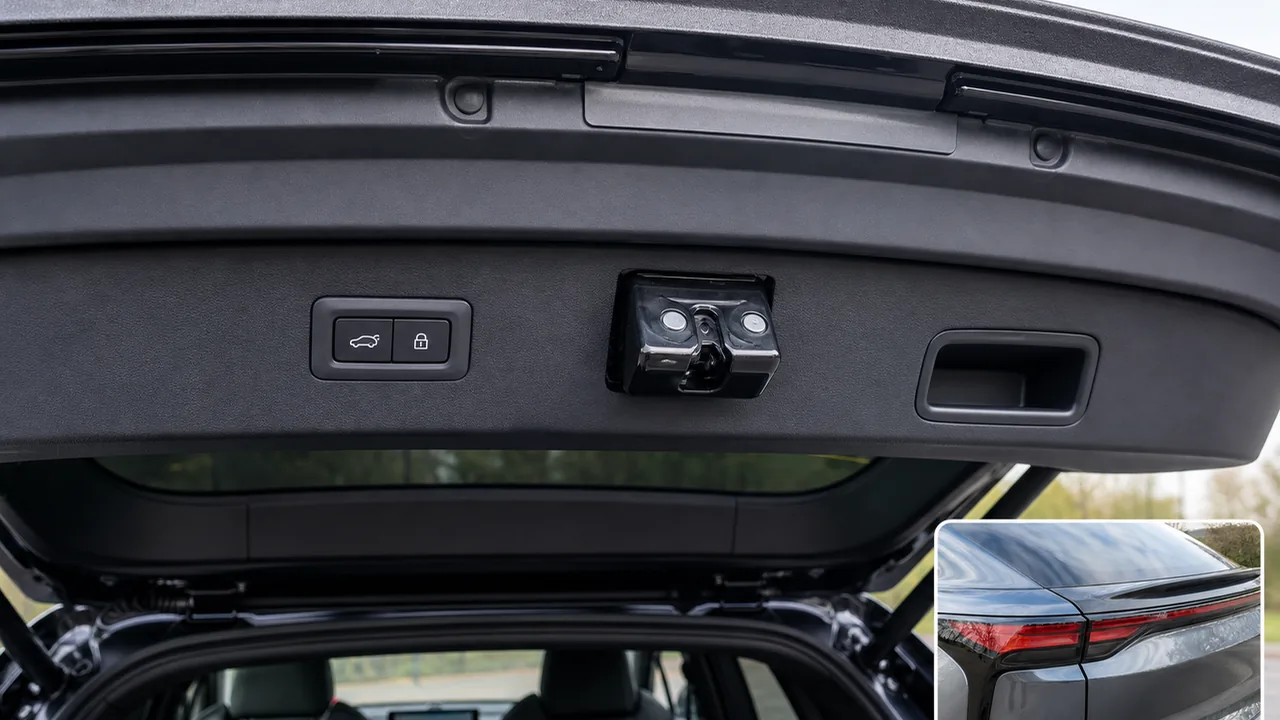
The key distinction is physical security. If the hatch is fully closed, latch status appears normal, the vehicle locks by another approved method, and no warning remains, the risk is mostly convenience and diagnosis scheduling. If the hatch cannot latch, keeps reversing, does not lock, or leaves cargo exposed, the vehicle should be secured before normal use continues.
- Safe to continue: the tailgate closes normally with another approved control, all doors lock, and no door-ajar or body-electrical warning remains.
- Secure it now: the hatch will not latch, the vehicle will not lock, cargo is exposed, or the vehicle is parked in weather or an unsafe area.
- Schedule service quickly: the button fails repeatedly, the symptom is intermittent, other locks act strangely, or the tailgate reverses, beeps, or cancels movement.
- Use roadside help or dealer advice: the tailgate is stuck open and you cannot secure it using the owner-manual procedure.
Do not drive with an unsecured liftgate or use straps, tape, or improvised pressure to hold a power tailgate shut. Those methods can damage trim, overload the mechanism, hide an open-latch condition, or create a road hazard if the hatch opens unexpectedly.
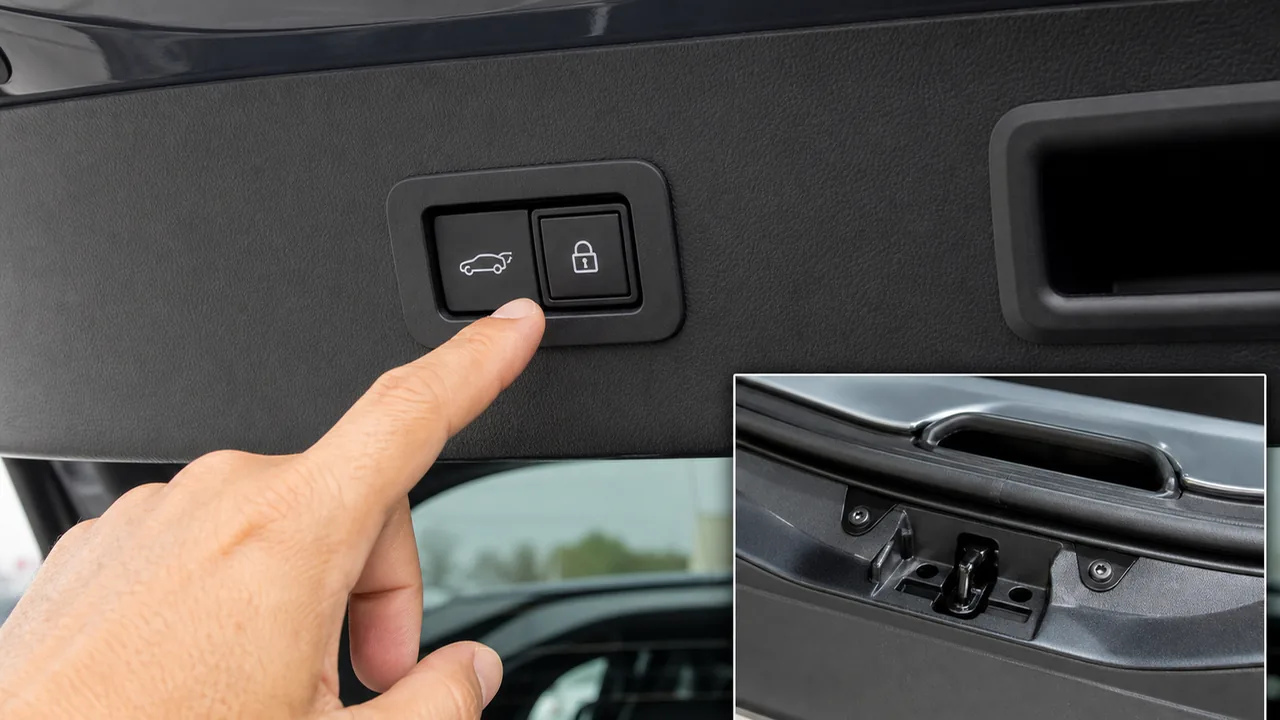
- Smart key not detected, key inside vehicle logic, or authorization condition not met. The Close and Lock function must know where the electronic key is before it can safely lock the vehicle. If the key is held too close to the switch, left inside, blocked in a bag, not carried correctly, or affected by interference, the system may cancel the request.
- Tailgate not fully open, latch state mismatch, or door status not recognized. The module needs believable information from the back door, side doors, and latch. A door-ajar input, partially latched tailgate, or inconsistent latch signal can stop the close-and-lock sequence before movement begins.
- Cargo, trim, ice, dirt, or seal pressure causing obstruction or pinch-protection logic. A power tailgate is designed to stop or reject movement when it sees resistance or unsafe conditions. Cargo against the hatch, a shifted seal, dirty latch area, ice, or trim interference can make a normal close request fail.
- Low 12-volt battery support or wider body-electrical symptoms. EVs still rely on a 12-volt system for many body functions. Weak support can create strange lock, latch, chime, and module behavior, but it must be confirmed because similar symptoms can come from control logic or a switch circuit.
- Power tailgate setting disabled or liftgate initialization needed. Some power back door functions can be disabled or require proper initialization after battery service, repair, or a loss of learned position. Verify the setting and official Toyota procedure rather than improvising a reset.
- Failed tailgate switch or switch circuit issue. If live data does not show the switch changing state when pressed, the problem may be the button, connector, water intrusion, damaged trim harness, or the circuit between the switch and the control unit.
- Latch, lock actuator, motor, spindle, wiring, or body ECU diagnosis needed. Hardware replacement belongs near the end of the process, after scan data, active tests, power and ground checks, and latch feedback prove the failed path.
This ranking is diagnostic, not a claim that one part is common or defective on the 2026 bZ4X. It reflects how a technician should narrow the fault: first remove reasons the vehicle would intentionally reject the command, then confirm whether the command is seen, then test whether the controlled outputs and feedback circuits behave correctly.
| Cause family | Typical clue | Best next step |
|---|---|---|
| Authorization or key logic | Fails with one key, key position changes the result, or locking behavior differs from normal. | Try the spare key and compare fob, exterior handle, and Close and Lock behavior. |
| Latch or door-status logic | Door-ajar messages, hatch appears closed but lock confirmation is missing, or the system beeps instead of moving. | Inspect the hatch opening and let a technician read latch and door status data. |
| Obstruction or pinch-protection logic | Fails when cargo is loaded, seals are compressed, or dirt, ice, trim, or straps are near the opening. | Clear the opening and retest without forcing the hatch. |
| Electrical support or module communication | Other locks, lights, warnings, or body functions behave oddly. | Check 12-volt condition and scan body systems, not only powertrain systems. |
| Switch, harness, actuator, or module fault | All owner checks pass but live data or active tests show a missing input or failed output. | Use service information to confirm the failed circuit or component before replacement. |
Use the same logic a technician would use, but stop at the point where owner-safe checks end. The first branch is whether the liftgate can be safely closed and secured. The second branch is whether the failure belongs only to Close and Lock or affects every rear hatch command. The third branch is whether the vehicle is rejecting a valid request or never seeing the request at all.
- Secure the vehicle first. If the tailgate is open, follow the owner manual for manual closing or closing assist behavior and do not force the mechanism.
- Compare controls. Test the close-only tailgate switch, fob, interior switch if equipped, exterior locking, and normal door-lock operation.
- Control the key variable. Carry the electronic key normally, test the spare key if available, and avoid pressing the tailgate switch with the key in the same hand.
- Check the opening. Remove cargo pressure, inspect the latch area, and clear dirt, ice, straps, trim interference, or seal distortion.
- Check for wider 12-volt or body-electrical symptoms. Slow locks, odd chimes, multiple warnings, or repeated intermittent failures move the issue beyond a single button complaint.
- Verify settings and initialization only through the owner manual or Toyota repair information. Do not invent a reset sequence.
- Scan body, smart key, back door, latch, and power liftgate systems with Toyota-compatible equipment.
- Review live data for switch input, key authorization, door-ajar status, latch open/closed status, lock status, obstruction or jam flags, and liftgate position.
- Use approved active tests to command the motor, latch, and lock actuator where service information allows.
- Inspect the switch circuit, tailgate harness, connectors, power, ground, and water-intrusion points only with the correct service information and EV-safe boundaries.
Branch guidance: if all other controls work and only Close and Lock fails, focus on that switch input and the lock-request logic. If no rear controls work, widen the diagnosis to power back door settings, power supply, latch state, module communication, and wiring.
| Owner-safe | Technician-only |
|---|---|
| Try the spare key, move the key to a normal carrying position, and compare fob, exterior handle, close-only button, and Close and Lock behavior. | Read body-system live data to confirm switch input, smart key authorization, door status, latch state, and lock status. |
| Clear cargo, loose trim, dirt, ice, straps, and seal pressure from the hatch opening without forcing the liftgate. | Remove trim, inspect tailgate harness routing, test connectors, and check power and ground using service information. |
| Observe whether the vehicle gives warning beeps, door-ajar messages, lock confirmation, or other body-electrical symptoms. | Run approved active tests for the power back door motor, latch, and lock actuator, then verify initialization or calibration requirements. |
- Do not bypass pinch or jam protection.
- Do not force the liftgate against the power drive.
- Do not probe orange high-voltage components or EV battery areas.
- Do not tape switches down or defeat latch sensors.
- Do not install parts simply because an online symptom sounds similar.
The owner boundary is simple: observe, compare, clear obvious obstruction, and follow the owner manual. Once the next step requires trim access, circuit testing, module commands, or EV safety boundaries, the job moves to a Toyota dealer or qualified EV-capable technician.
The biggest risk with used parts is solving the wrong problem. If the vehicle is rejecting the Close and Lock request because of key authorization, latch status, obstruction logic, settings, or initialization, installing a used switch or latch will not repair the command path. Used control modules add more risk because compatibility, programming, immobilizer-related requirements, and communication setup may matter.
- Verify the existing part marking before shopping.
- Confirm whether the donor part came from a vehicle with the same power back door feature set.
- Reject parts with signs of water entry, broken tabs, bent brackets, or damaged harness pigtails.
- Avoid used control modules unless programming, immobilizer, and compatibility requirements are known.
- Ask whether the seller can provide the donor VIN and return terms.
- Plan post-installation scan-tool verification; a used part is not confirmed good until the vehicle data proves it.
| Used part | Main concern | Verification needed |
|---|---|---|
| Tailgate switch | Connector damage, water entry, wrong trim fit, or a switch that was not the original fault. | Live data must show the switch input changes correctly. |
| Latch or lock actuator | Different feature set, prior impact damage, worn feedback contacts, or failed lock-status reporting. | Open, closed, and locked status must match actual hatch behavior. |
| Power back door drive component | Mechanical wear, damaged mounting, wrong side or configuration, or unresolved initialization needs. | Approved active tests and learned-position checks must pass. |
| Body-control module | Compatibility, coding, programming, security, and communication requirements. | Service information must confirm it can be installed and configured for the vehicle. |
Dealer or EV-capable service is the right move when the symptom is repeatable, intermittent in a way you cannot tie to cargo or key position, or connected to warnings, weak-lock behavior, hatch reversal, failed lock confirmation, water exposure, rear impact, battery service, or accessory installation. Those details can point the technician toward body data, tailgate wiring, initialization, or authorization logic instead of a blind parts swap.
- Tell them whether the regular close-only button works.
- Tell them whether the fob or interior switch works.
- Tell them whether one key behaves differently from the other.
- Tell them whether the vehicle locks normally after manual or close-only operation.
- Tell them whether warning beeps, door-ajar messages, or other electrical symptoms appear.
- Mention recent battery service, accessory installation, rear bumper work, tailgate impact, cargo pressure, or water exposure.
Service call script: My 2026 Toyota bZ4X tailgate Close and Lock button does nothing. The hatch can or cannot close by another method, the locks do or do not confirm, and the symptom is repeatable or intermittent. Please scan the body, smart key, back door, latch, lock, and power liftgate systems and confirm the failed input or output before replacing parts.
Replacement notes
A proper repair does more than make the hatch move once. It must restore the whole sequence: button request, authorization, controlled closing, closed-state confirmation, locking, and final confirmation that the vehicle is secure. That matters because a repaired liftgate that closes but does not report the correct latch or lock state can still leave the owner with warnings, failed lock confirmation, or a repeated Close and Lock complaint.
- After a switch replacement, verify the button press appears in live data and the Close and Lock sequence completes.
- After a latch or actuator repair, verify open, closed, and locked status feedback, not just physical closure.
- After a harness repair, verify operation with the tailgate at different positions because hinge-area wiring can fail intermittently.
- After any power back door service, confirm approved initialization or learned-position steps in Toyota repair information.
- After module work, confirm coding, calibration, and communication before returning the vehicle.
If the vehicle is still within warranty coverage, avoid authorizing speculative part replacement without diagnostic confirmation. Ask the shop to document the failed input, output, circuit, or learned-position issue and to verify both power-close and close-and-lock operation before the repair is closed.
FAQ
Can I close the 2026 Toyota bZ4X tailgate manually if the Close and Lock button does nothing?
Usually, you should follow the owner manual for manual closing or closing-assist behavior and avoid forcing the power mechanism. If the hatch will not latch securely, treat the vehicle as unsecured and get service advice before driving.
Can a weak 12-volt battery cause the Close and Lock button to fail?
It can contribute to body-electrical problems, including lock, latch, chime, and module behavior, but it should be tested rather than assumed. Similar symptoms can come from key authorization, latch status, obstruction logic, settings, wiring, or a switch circuit.
Will a DTC always show if the Close and Lock button is not working?
No. A related body, smart key, back door, latch, or power liftgate DTC may be stored without a dashboard warning, but a no-code scan does not end diagnosis. Live data and active tests are often needed.
Is it safe to keep using the power tailgate?
It is usually acceptable only if the tailgate closes, latches, and locks reliably by another approved method. Stop using the power function and seek diagnosis if it reverses, beeps, will not latch, will not lock, or behaves intermittently.
Does the Close and Lock button doing nothing prove the rear latch is bad?
No. The latch is only one part of the sequence. The same symptom can come from a rejected command, missing key authorization, a door-status mismatch, obstruction logic, low 12-volt support, switch input failure, wiring, or module diagnosis.
What should I write down before calling service?
Write down which controls work, which key was used, whether the hatch closes by another method, whether the vehicle locks afterward, whether any warning beeps or messages appear, and whether the problem changes with cargo, weather, or parking location.
Comments
Be the first to add a practical repair note or follow-up question.