
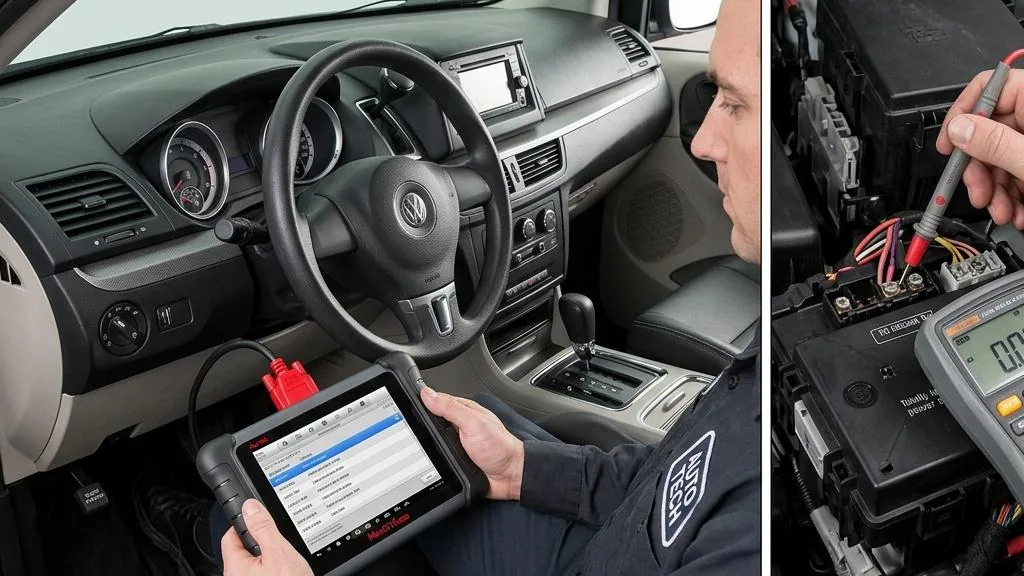
What this part does
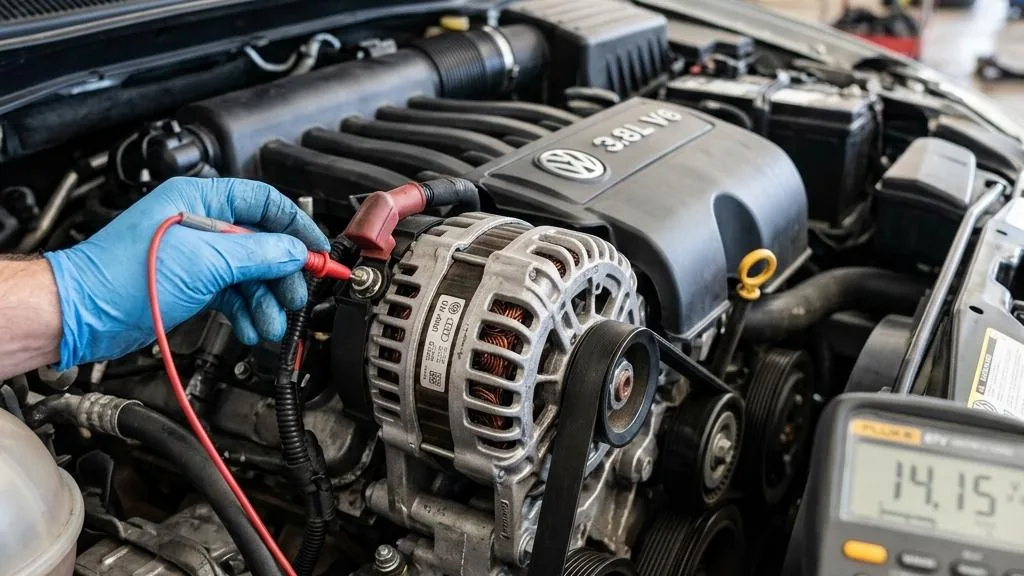
A battery provides stored power, the charging system restores that power while the engine runs, fuses protect circuits, relays switch higher-current loads, grounds complete the circuit, and modules coordinate body, starting, lighting, door, and warning functions.
- Power supply faults can make several unrelated systems fail at once.
- Ground faults can create dim lights, random warning lamps, no-crank behavior, or intermittent accessory faults.
- Communication faults can cause scan-tool errors and multiple warning lights without proving that a module itself has failed.
- A shorted wire or component can open a fuse repeatedly and should not be bypassed.
Common failure signs
| Symptom pattern | What it may indicate | First safe check |
|---|---|---|
| No power or dead dash | Battery, cable, main fuse, ground, or power distribution issue | Inspect terminals, cable condition, and main visible fuse protection |
| No crank | Battery state, starter-control circuit, relay, switch, wiring, immobilizer, or starter issue | Note whether lights dim, warning lamps behave normally, and scan codes are present |
| Intermittent lights or accessories | Loose connection, ground issue, relay fault, moisture, rubbed wiring, or switch concern | Check when the symptom appears and inspect visible wiring and grounds |
| Battery drain after sitting | Parasitic draw, stuck relay, module staying awake, lamp staying on, or accessory issue | Look for lights or accessories remaining active and avoid pulling random fuses without a plan |
| Blown fuse returns | Shorted wiring, overloaded circuit, failed component, or moisture intrusion | Stop replacing fuses repeatedly and trace the protected circuit |
| Multiple warning lights | Low system power, charging fault, ground issue, network fault, or module communication problem | Scan all modules and group codes by shared circuit or network behavior |
Before replacing it
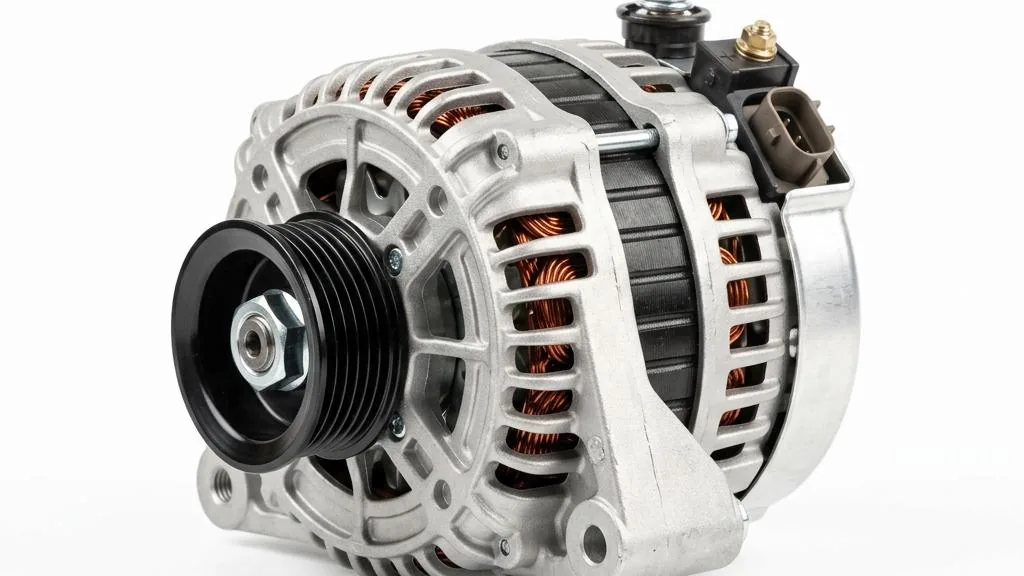
Scan all available modules, record stored and pending codes, note communication failures, and look for codes that share a common power feed, ground point, connector area, or affected circuit. Clear codes only after documenting them and only when retesting has a purpose.
- A battery or charging-related code should trigger power and ground checks before replacing the alternator.
- A starter or ignition-related code should be matched to the actual no-crank behavior before replacing the starter.
- A module communication code should prompt checks for supply, ground, network integrity, and connector condition before blaming the module.
- A fuse-related symptom should be traced on the protected circuit instead of repeatedly installing new fuses.
Use VIN-specific OEM repair information for fuse assignments, connector locations, circuit names, and module procedures. Do not guess pinouts, wiring colors, or reset steps.
Inspection steps
Diagnose a 2010 Volkswagen Routan electrical failure by confirming the exact symptom, checking battery condition and cable connections, inspecting fuses and grounds, scanning all available modules for codes, then testing the affected circuits with OEM service information before replacing modules.
- Write down the exact symptom and when it happens: start-up, driving, after rain, after heat soak, when using accessories, or after sitting overnight.
- Inspect battery terminals, cable tightness, visible corrosion, and the vehicle response with a known-good power source when safe and appropriate.
- Check main fuses, related circuit fuses, and relays without bypassing a fuse or installing a larger fuse.
- Inspect visible grounds and wiring for looseness, corrosion, rubbing, moisture, aftermarket wiring, or previous repair damage.
- Scan all available modules and group DTCs by shared power feed, ground, network, or affected circuit.
- Use symptom-specific testing for no-crank, dead dash, intermittent lights, power door faults, charging warnings, and battery drain.
- Escalate to technician-level circuit testing when the fault is intermittent, high-current, safety-related, or tied to module communication.
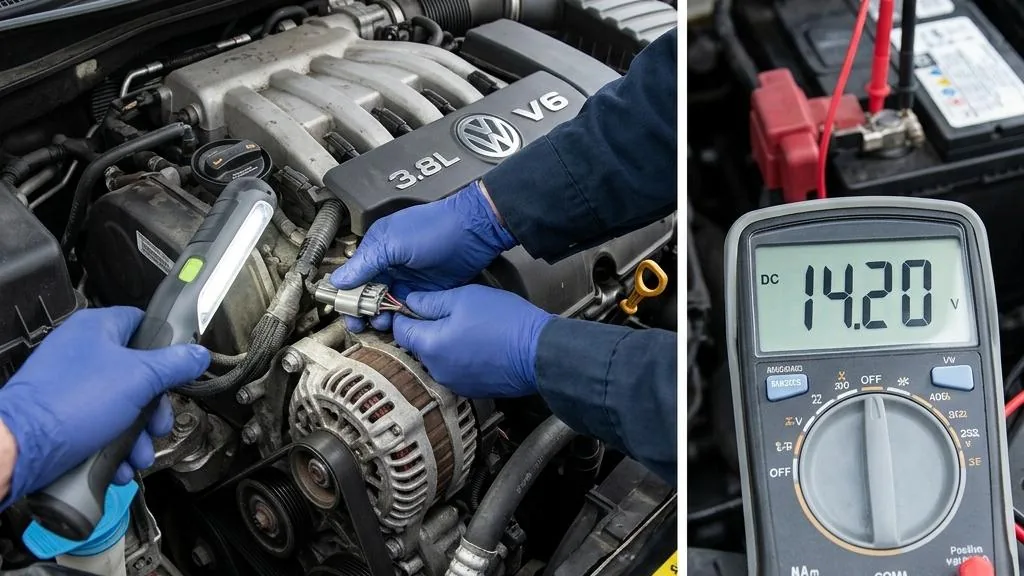
- Confirm the complaint. Record whether the fault is no power, no crank, warning lights, intermittent accessories, power sliding door trouble, charging warning, blown fuse, or battery drain.
- Check battery and cable condition. Look for loose terminals, corrosion, damaged cable insulation, poor clamp fit, or a change in behavior with a known-good power source.
- Inspect fuses and relays. Check only the related circuits and main protection points, and never bypass a fuse or install a higher-rated fuse.
- Inspect grounds and visible wiring. Look for loose ground fasteners, corrosion, rubbing, moisture, melted insulation, aftermarket accessories, and previous repair splices.
- Scan all modules. Record DTCs and communication faults, then group them by shared power, ground, network, or circuit behavior.
- Follow the symptom path. No-crank, dead dash, intermittent lights, battery drain, and repeated fuse failure each need different circuit checks.
- Use technician-level testing when needed. Voltage-drop testing, parasitic draw testing, circuit tracing, and module communication checks should follow OEM service information.
Do not casually probe airbag, immobilizer, high-current, or module circuits. If the test requires connector back-probing, network diagnosis, or circuit loading, move to technician-level diagnosis.
- Match the part by VIN-specific catalog information, not only by appearance.
- Verify the existing part number or marking when applicable before shopping.
- Avoid buying a control module to test a guess.
- Inspect used connectors, terminals, housings, and signs of water or heat damage.
- Confirm whether the part may require programming, setup, or relearn procedures before purchase.
A used part is a better decision after the circuit failure is confirmed. If the symptom is still untested, professional electrical diagnosis may cost less than replacing several guessed parts.
| Owner-safe checks | Technician checks |
|---|---|
| Record symptoms, timing, weather, accessory use, and whether the vehicle sat overnight | Perform voltage-drop tests on power and ground circuits using OEM service information |
| Inspect visible battery terminals, cable condition, corrosion, and obvious looseness | Perform parasitic draw testing without waking modules or misreading normal module behavior |
| Check accessible fuses related to the symptom without bypassing or upsizing them | Trace circuits, connectors, relays, and module communication using wiring diagrams |
| Look for visible rubbed wiring, moisture, aftermarket accessories, and damaged insulation | Diagnose airbag, immobilizer, high-current, or network circuits with proper tooling |
Replacement notes
- Weak battery: confirm the battery can support the vehicle before blaming modules or starters.
- Poor cable connection: repair corrosion, looseness, or damaged cable ends before deeper circuit testing.
- Blown fuse: identify why the fuse opened instead of repeatedly replacing it.
- Bad ground: clean, tighten, or repair the affected ground path only after confirming the circuit depends on it.
- Charging fault: test the charging system and related wiring before replacing the alternator.
- Relay issue: confirm command and load-side behavior before installing a new relay.
- Wiring damage: repair rubbed, corroded, melted, or moisture-damaged wiring with proper service methods.
- Ignition or module issue: confirm power, ground, communication, and command logic before condemning a switch or module.
After repair, verify that the original symptom is gone, warning lights do not return, related modules communicate normally, and no fuse reopens during a controlled retest. For intermittent faults, verification should include the same condition that triggered the complaint, such as accessory use, rain exposure, start-up, or sitting overnight.
FAQ
Can a scan code tell me which part to replace?
A scan code can identify the circuit, module, or condition that needs testing, but it does not automatically prove a failed part. Confirm power, ground, wiring, and communication before replacement.
Is it safe to keep driving with an electrical failure?
Do not keep driving if there is smoke, a burning odor, repeated fuse failure, loss of critical lighting, stalling, no-start behavior, or safety-system warnings. Those symptoms need immediate diagnosis.
Why does a new battery not always fix electrical problems?
A battery can be only one part of the fault. Loose cables, poor grounds, charging faults, parasitic draw, wiring damage, relays, and module communication issues can create similar symptoms.
What should I check before replacing the alternator or starter?
Check battery condition, terminals, cables, fuses, grounds, scan codes, and the affected control circuit. Alternators and starters should be replaced only after the circuit points to them.
When is professional electrical diagnosis the better value?
Professional diagnosis is often the better value when fuses keep opening, the vehicle will not start, the battery keeps draining, codes involve module communication, or basic inspections do not reveal the cause.


Comments
Be the first to add a practical repair note or follow-up question.