

What this part does
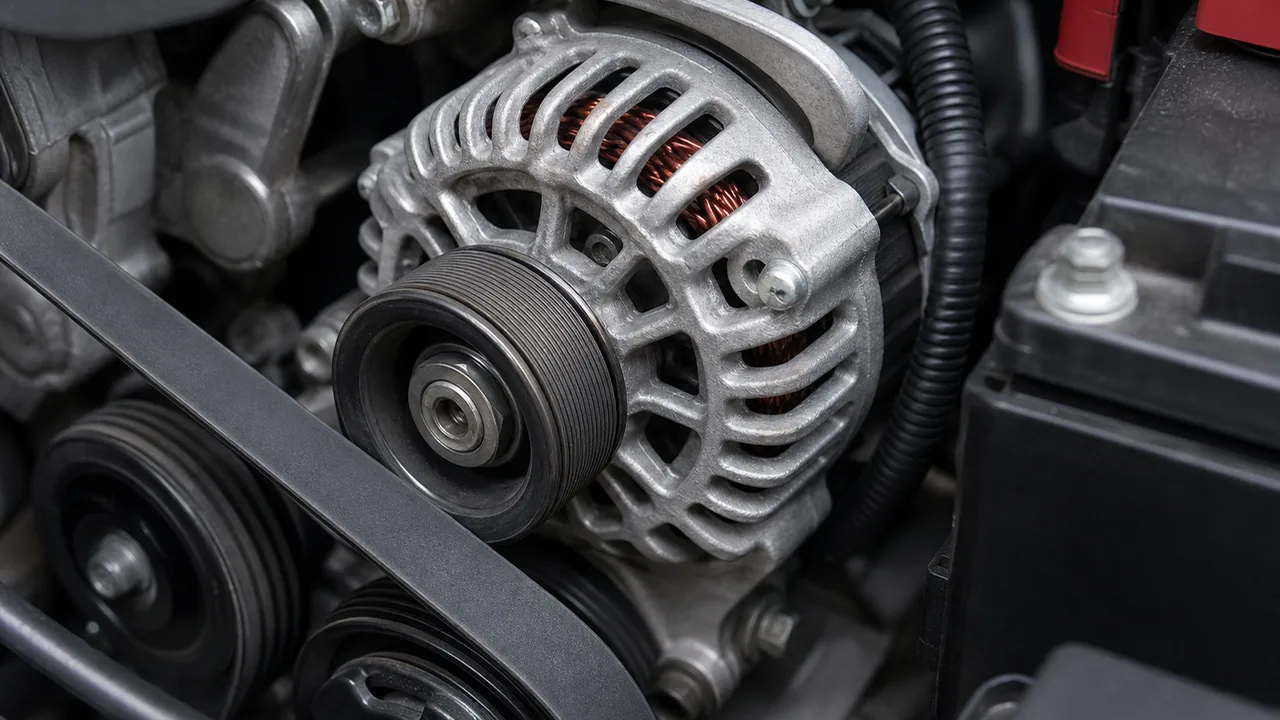
The alternator does not work alone. The battery stabilizes electrical demand, the drive belt spins the alternator, the regulator controls output, and the wiring path carries current back to the battery and vehicle loads. Because those parts share symptoms, testing should confirm the charging system rather than blame the alternator first.
On some vehicles, the engine computer or battery-management system changes charging behavior based on battery condition, temperature strategy, load demand, or fuel-saving logic. That is why general multimeter readings are screening checks, not final OEM pass-or-fail specifications.
Common failure signs
- Battery warning light or charging-system message while driving
- Dim or flickering headlights, dash lights, or interior lights
- Slow crank, no crank, or repeated dead battery after charging
- Electrical instability, repeated accessory resets, or unusual warning-light clusters
- Stalling shortly after start when the battery cannot support vehicle electrical load
- Burning smell, belt noise, or visible belt slip near the alternator drive path
Charging-system or voltage-related DTCs can support the diagnosis, but codes should be interpreted with vehicle-specific service information. A code may point to low system voltage, generator control, battery sensor data, wiring, communication, or a charging command problem rather than a failed alternator by itself.
Before replacing it
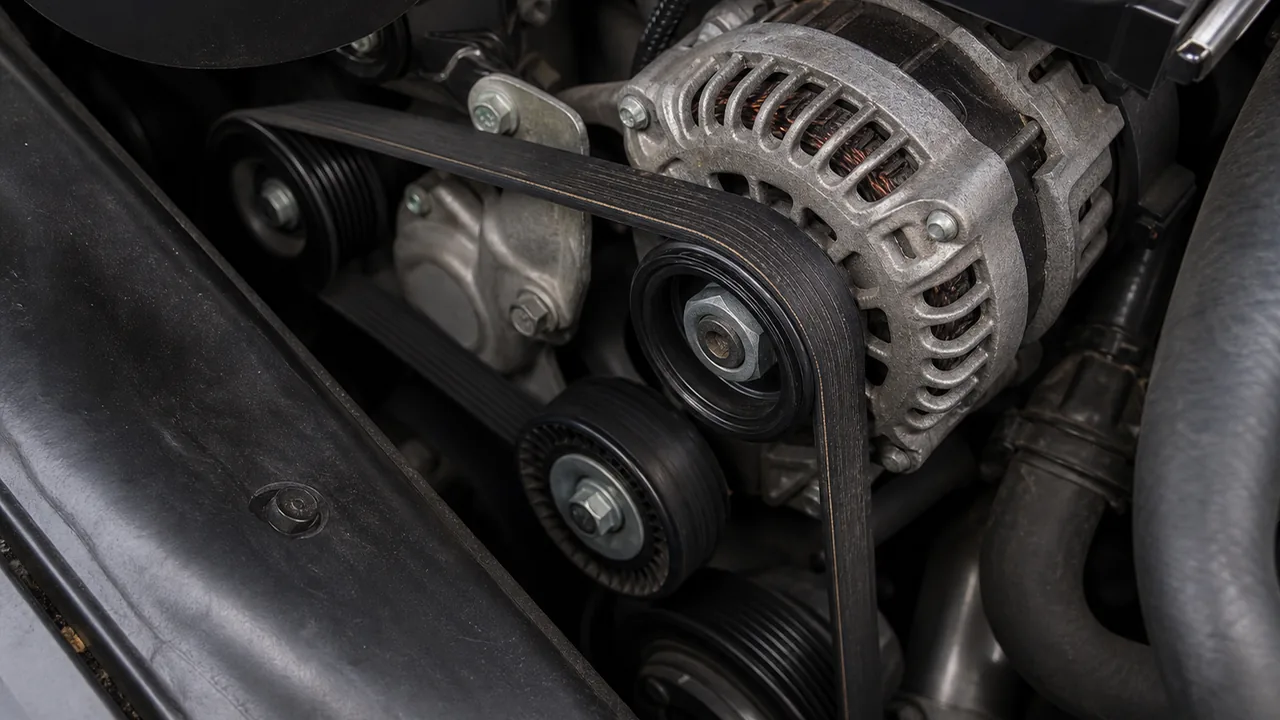
- With the engine off, inspect the battery posts and cable clamps before placing meter leads.
- Verify the belt is present, seated, and not visibly glazed, cracked, wet, or loose.
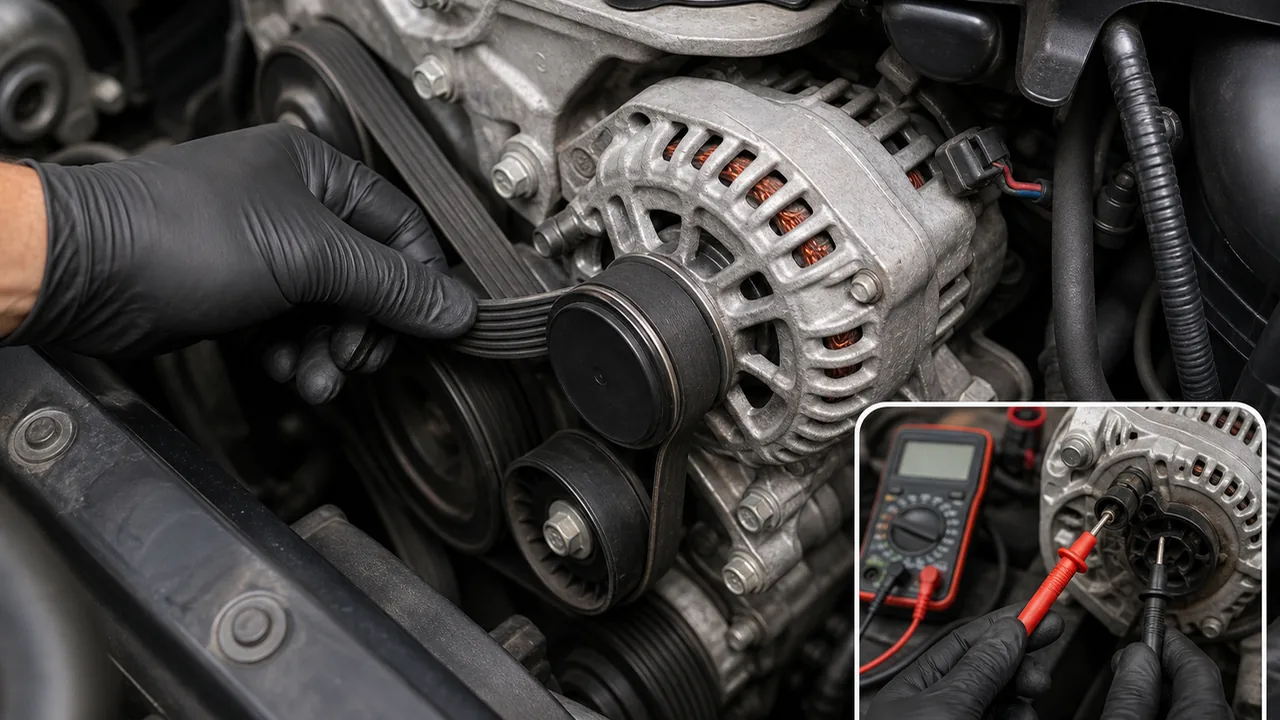
- Check accessible alternator wiring and connectors with the key off and the engine cool.
- Measure resting battery voltage at the battery posts, not just on the cable clamps.
- If the battery is clearly weak or recently dead, test or charge the battery before using charging voltage to judge the alternator.
Keep hands, clothing, hair, leads, and tools away from belts, pulleys, fans, and hot engine parts. Back-probe or alternator-output testing should be left to a technician unless safe access and service information are available.
Inspection steps
| Engine-off battery reading is weak | Battery state of charge or battery health may be misleading the alternator test | Charge and test the battery before judging alternator output |
| Running voltage is generally normal | Alternator output is less likely to be the first suspect | Check for parasitic draw, battery condition, or intermittent wiring if symptoms continue |
| Running voltage is low under normal demand | The system may not be charging enough | Inspect belt, fuses, cables, grounds, alternator output, and control circuit |
| Running voltage is high or unstable | Regulation, wiring, battery sensing, or module control may be faulty | Use OEM diagnostic flow and scan-tool data before replacement |
| Voltage drops heavily with loads on | Output, belt drive, battery reserve, or cable resistance may be poor | Perform battery test and voltage-drop testing |
Technician-level confirmation may include voltage-drop testing on positive and ground paths, amperage output testing, ripple checks, scan-tool charging command review, battery sensor data, fuse testing, and OEM diagnostic flow. These checks are especially important on smart charging systems.
- Weak, discharged, sulfated, or internally failing battery
- Corroded, loose, or damaged battery terminals and cable ends
- Poor engine or chassis ground connection
- Loose, slipping, contaminated, or worn serpentine belt and tensioner
- Blown charging-system fuse, fusible link, or poor power feed
- Damaged alternator connector, wiring, or sense circuit
- Failing alternator internal components or regulator assembly
- Battery sensor, smart charging control, or module-command issue
This ranking is not a universal probability list for every vehicle. It is a practical diagnostic order because each earlier item can imitate alternator failure and can often be checked before the alternator is removed.
Hybrid, EV, 48-volt, and some start-stop systems may use procedures that differ from a conventional belt-driven alternator check. Professional diagnosis is the safer path when the system type is unclear.
Used alternators should not be treated as diagnostic tools. If the original alternator was never confirmed bad, installing another unknown unit can leave the same battery, cable, belt, ground, or control fault untouched.
Replacement notes
- Alternator replacement is more justified when charging remains low, high, or unstable after battery, belt, cable, fuse, and ground checks.
- More diagnosis is needed when the battery has not been tested, terminals are dirty, or the vehicle uses smart charging logic.
- After replacement or repair, recheck running voltage, loaded behavior, warning lights, and stored charging-system codes before calling the job complete.
For parts selection, match the alternator by exact year, make, model, engine, mounting style, connector, pulley, output rating where specified, and any start-stop or smart charging requirements. Verify the existing part marking and OEM catalog data before purchase.
FAQ
Can I test the alternator at home?
Yes, if access is safe and you test at the battery posts with a digital multimeter. Avoid moving belts, pulleys, fans, hot parts, and exposed high-current terminals.
What should I buy next if the test is unclear?
Start with a reliable multimeter or battery tester, clean terminal supplies, and vehicle-specific fitment information before buying an alternator.




Comments
Be the first to add a practical repair note or follow-up question.