
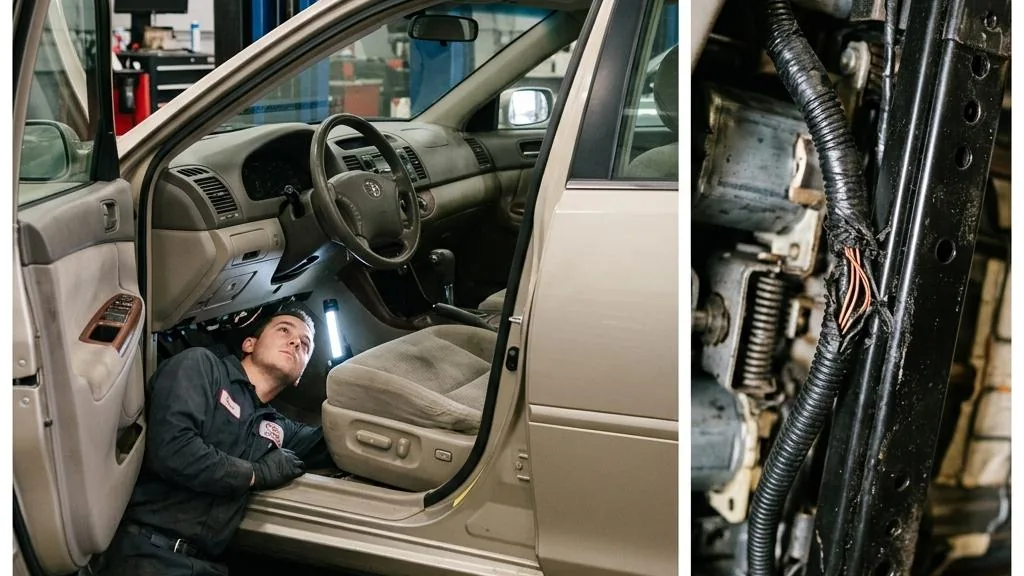
What this part does
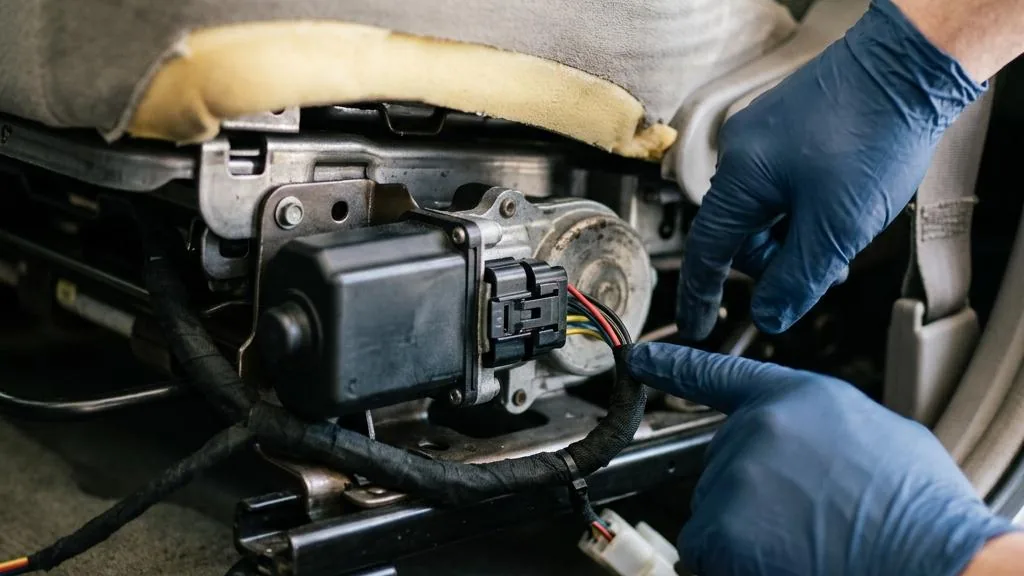
A power seat circuit should carry current only through the intended path, through properly seated connectors, protected wiring insulation, and the correct fuse protection. Movement of the seat, previous repairs, spilled liquid, loose trim, or trapped objects can disturb wiring under the seat.
Because seat-area wiring may be close to SRS, pretensioner, or occupant detection wiring, diagnosis should follow OEM repair information and proper safety procedures.
Common failure signs
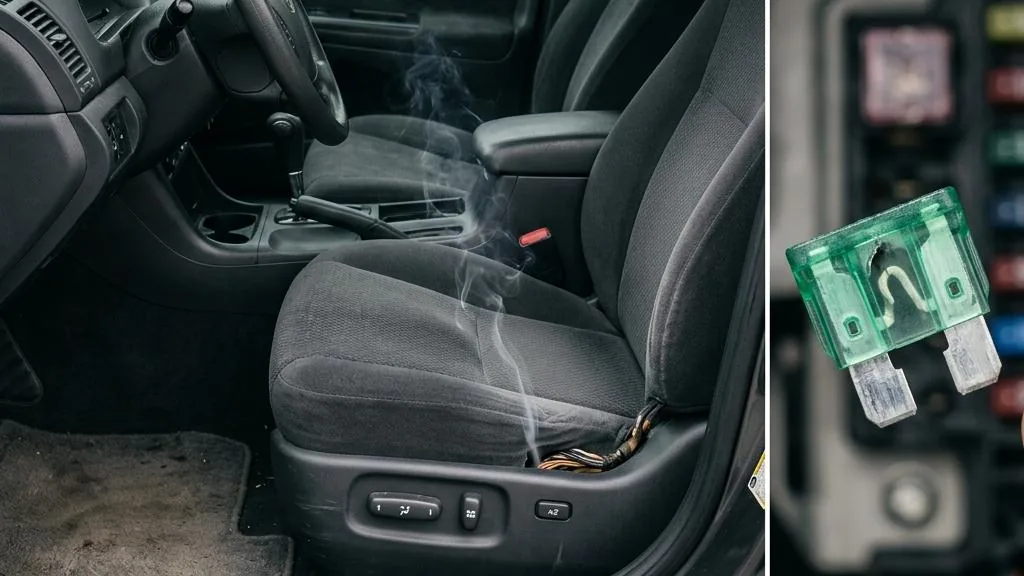
- Burning odor near the driver seat or center floor area.
- Smoke from under the seat, seat switch area, or floor trim.
- Seat switch or trim that feels unusually hot.
- Power seat not working, moving only one direction, or moving intermittently.
- A blown fuse that returns after replacement.
- Visible melted connector plastic, darkened terminals, or hardened wire insulation.
- Seat movement that changes when the harness is touched or when the seat position changes.
These signs overlap with general car electrical short symptoms, but heat, smoke, or melted insulation near a seat should be handled more cautiously because the circuit is inside the cabin and close to occupants.
Before replacing it
- Confirm the symptom: smell, smoke, heat, no movement, intermittent movement, or fuse failure.
- Identify whether the issue appears only when a specific seat direction or switch is used.
- Inspect visible wiring and connectors without disturbing SRS-adjacent parts.
- Test the circuit before installing a new fuse, switch, motor, or harness.
- Validate the repair with controlled seat operation and a final inspection for heat or odor.
If the seat wiring has melted, replacement decisions should include connector condition, terminal damage, harness routing, and whether adjacent trim or carpet was heat affected.
Inspection steps
Park safely, turn the vehicle off, and stop using the driver power seat switch. If there was smoke, active heat, visible sparking, or a smell that continues after shutdown, do not keep driving just to see if it clears.
Do not replace a blown fuse repeatedly. A fuse that opens again is evidence of an unresolved electrical fault, and installing more fuses can delay the diagnosis while the damaged area gets worse.
- Move people away from the vehicle if there is active smoke or heat.
- Avoid operating the seat, lumbar, or related seat controls.
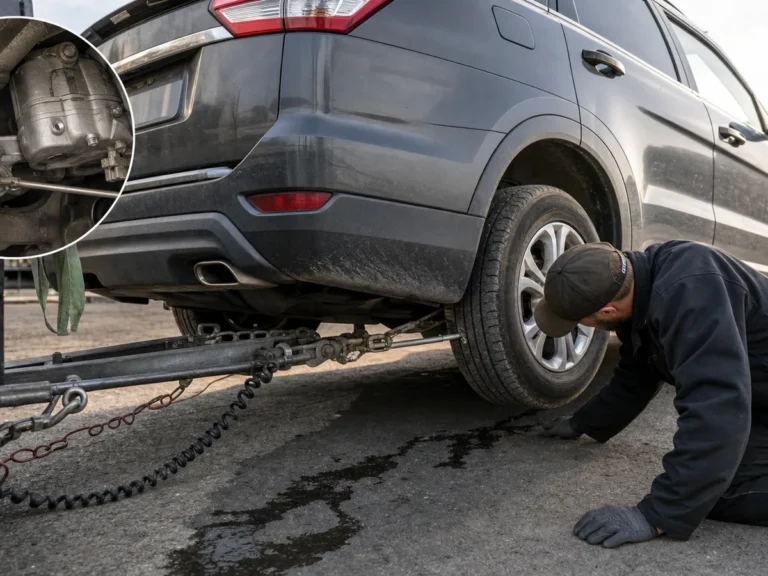
- Arrange towing if heat, smoke, or melted wiring was present.
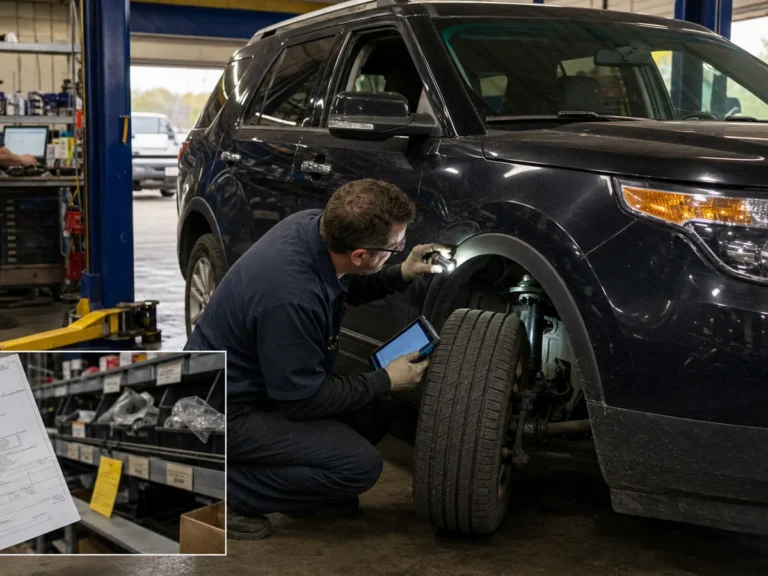
- Have the seat circuit inspected before replacing switches, motors, or trim parts.
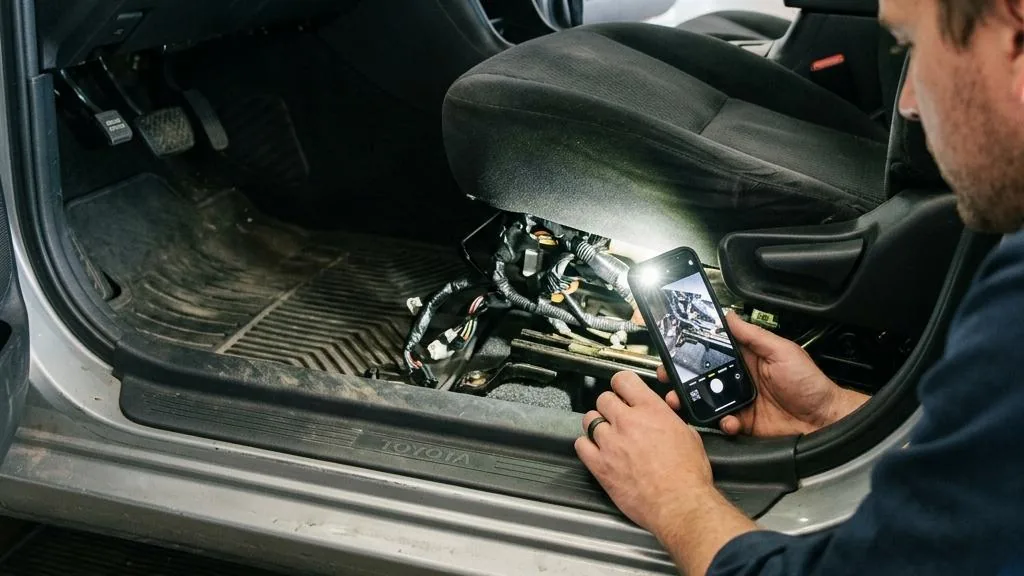
Owners should stop at visual and odor checks. A technician should handle circuit testing, connector repair, harness replacement, and any work near restraint-related wiring because incorrect handling can trigger faults or compromise safety systems.
| Possible cause | What usually confirms it | What wastes time |
|---|---|---|
| Chafed or pinched seat harness | Visible rub-through, damaged insulation, or fault changes as the seat moves | Replacing the switch before checking harness routing |
| Overheated connector or loose terminal | Darkened plastic, loose fit, heat marks, or terminal damage | Cleaning only the outside of the connector |
| Failing seat switch | Fault appears only with one commanded direction and testing confirms switch behavior | Assuming every no-move complaint is a switch |
| Seat motor or track load problem | Circuit load concern or movement bind confirmed during testing | Installing larger fuses or forcing the seat to move |
| Previous splice, accessory, or repair issue | Non-OEM wiring, poor routing, tape-only repairs, or unsecured connectors | Repairing only the visible end of the damage |
A blown fuse is a clue, not a repair plan. If the fuse opens again, the circuit needs diagnosis for a short, overloaded motor, damaged connector, or harness fault. Repeated replacement can hide the pattern a technician needs to see.
- Codes can support diagnosis when they point to seat position, occupancy, or restraint-adjacent circuits.
- No code does not mean the wiring is safe.
- Fuse behavior should be documented before parts are replaced.
- Any SRS warning light should be handled with OEM service information.
Use the VIN to check your vehicle, then keep a record of symptoms, photos, fuse behavior, whether the seat was moved before the issue appeared, and any warning lights. This helps a technician separate a safety campaign, a normal wear failure, and an unrelated electrical short.
- Check Toyota recall and service campaign status by VIN.
- Check NHTSA recall status by VIN.
- Ask the repair facility to document the inspected circuit and replaced parts.
- Use OEM repair information for connector, harness, and SRS-adjacent handling.
- Match the part by VIN, seat option, connector shape, and mounting configuration.
- Reject harnesses or switches with melted plastic, dark terminals, brittle insulation, or previous splices.
- Avoid salvage wiring from vehicles with interior fire, flood, or heavy seat-area damage.
- Confirm whether the part is for the correct driver seat configuration before installation.
A used harness should not be used to bypass proper electrical diagnosis. The original cause must be corrected before any replacement part is installed.
If active heat or smoke occurred, towing is safer than driving to a shop. If the concern is only intermittent seat movement with no heat, odor, smoke, or fuse repeat, avoid using the seat and schedule electrical diagnosis promptly.
Replacement notes
OEM-grade parts are preferred for seat electrical repairs because connector fit, terminal quality, routing clips, and circuit protection matter. A part that physically plugs in may still be wrong for the vehicle option.
FAQ
These answers separate immediate safety decisions from diagnostic work. Any answer changes if there is active smoke, heat, melted wiring, an SRS warning, or a fuse that repeatedly opens after replacement.
Comments
Be the first to add a practical repair note or follow-up question.