
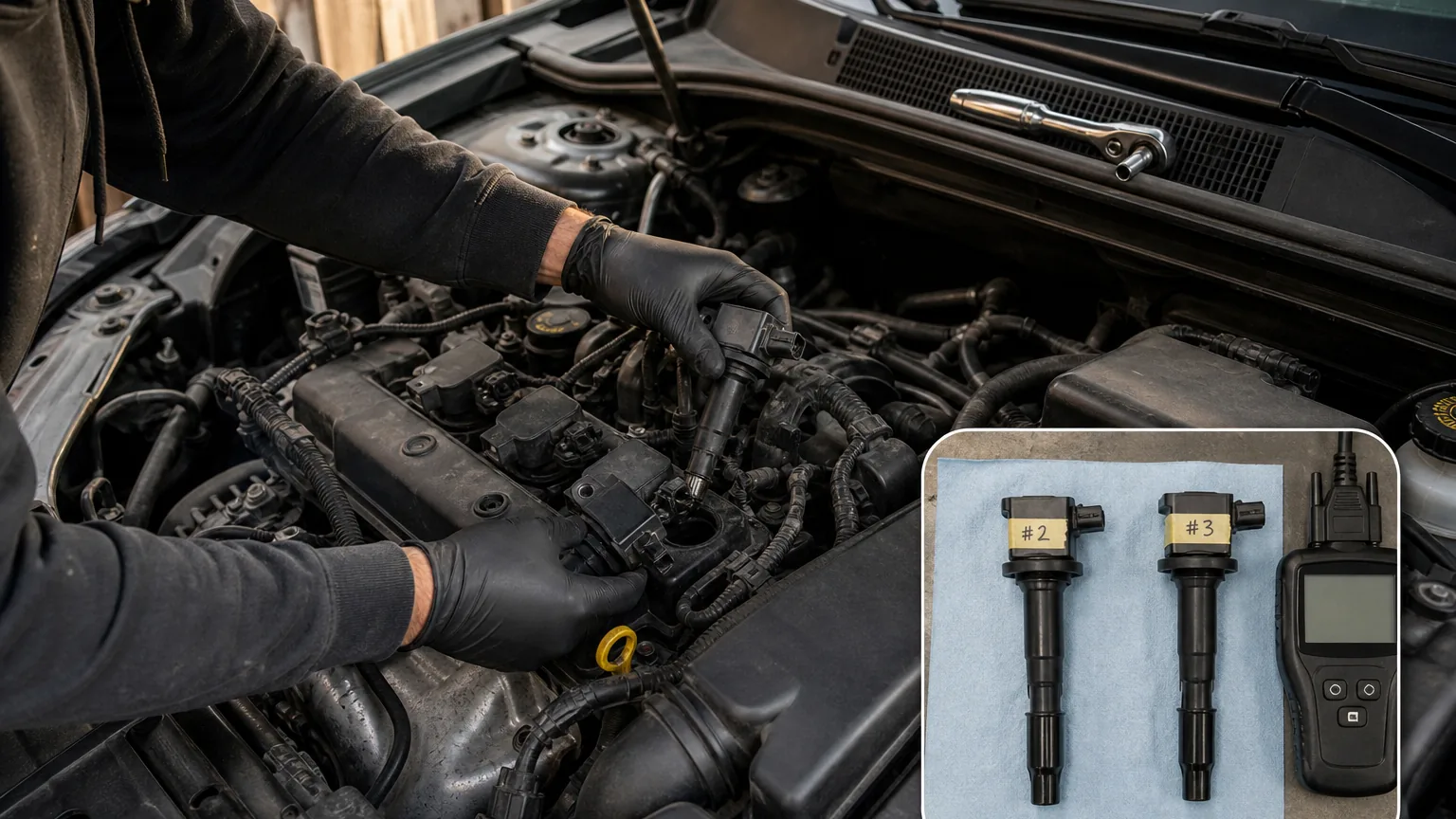
Common failure signs
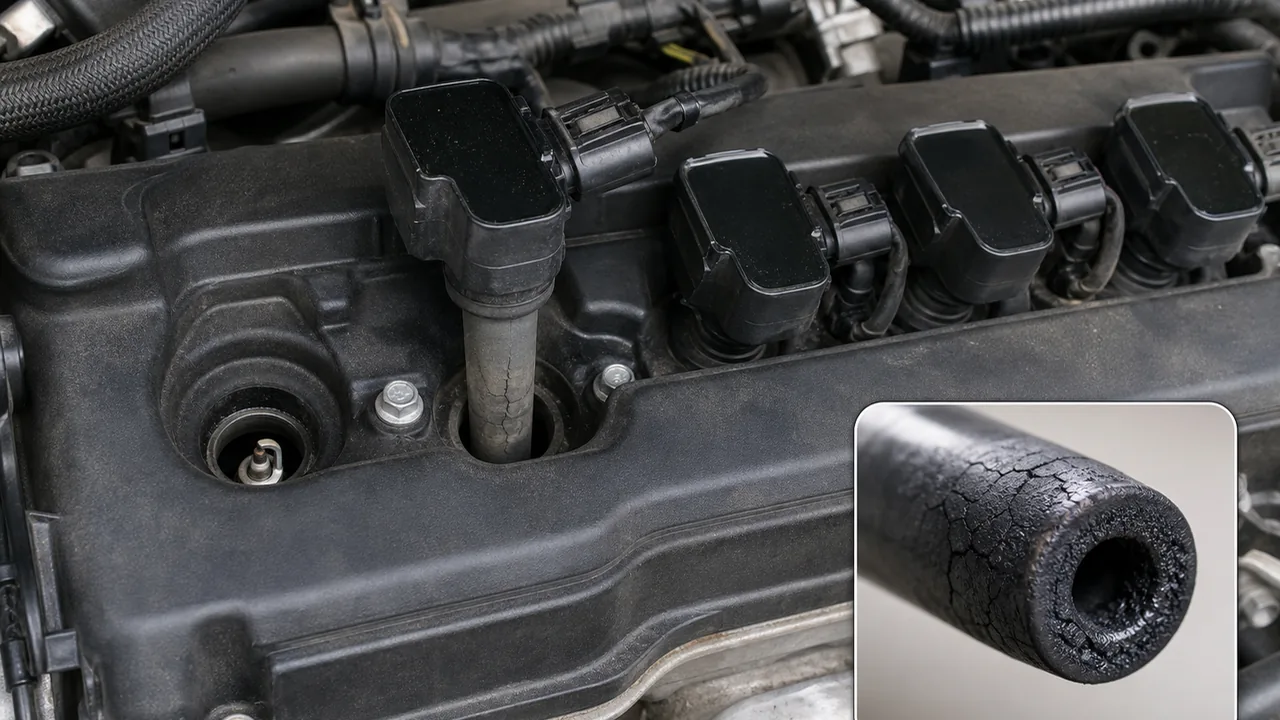
Before you even swap a coil, recognize the symptoms that typically point to an ignition coil issue rather than a fuel or mechanical problem. A failing coil often produces a misfire that is most noticeable under load—accelerating uphill or merging onto a highway—because the spark demand is higher and a weak coil cannot deliver consistent energy.
The check engine light may flash during the misfire, indicating a condition severe enough to threaten the catalytic converter. At idle, you might feel an irregular shudder or hear a popping sound through the intake or exhaust. In some cases, the misfire is intermittent, appearing only when the engine reaches operating temperature; heat causes the coil’s internal winding to expand and open a microscopic break.
- Misfire under load (acceleration, hill climbing)
- Flashing check engine light during hard driving
- Rough idle with occasional stumble
- Hard starting when the engine is warm
- Decreased fuel economy and lost power
These symptoms are common but not exclusive to coil failures; a carbon-fouled spark plug, a leaking injector, or low compression can produce similar behavior. The coil swap isolates the coil as the root cause.
Before replacing it
The most cost-effective way to diagnose a suspected ignition coil misfire is to move the coil to a different cylinder and see if the misfire follows it. This coil swap test avoids spending money on a part you may not need, but it must be done after a few essential safety checks.
Begin by connecting a basic code reader and retrieving any stored diagnostic trouble codes (DTCs). A P0300 (random misfire) often points to fuel delivery, vacuum leaks, or sensor issues—swapping coils here wastes time. The method works best with a cylinder-specific code, such as P0301 through P0308, that isolates the fault to one hole. Note the freeze-frame data when the code set: engine RPM, coolant temperature, and load conditions can reveal whether the misfire occurs only on cold starts, at idle, or under load. If the freeze frame shows the engine was cold and the misfire clears once warm, suspect carbon buildup or a sticking valve before an ignition issue. Conversely, a hot-engine, high-load misfire that follows a cylinder after a coil swap strongly points to the coil itself.
Safety and catalytic converter protection demand you stop testing and inspect the cylinder if the plug is fuel-fouled or if raw fuel is entering the exhaust. Swapping a coil onto a misfiring cylinder that is also injecting unburned fuel can push the converter past its thermal limit in seconds.
Verify the spark plug is not shorted or cracked—a single compromised plug can mimic a dead coil. Only when you have a clean, dry plug and a single-cylinder misfire code does the coil swap become a reliable, money-saving diagnostic step.
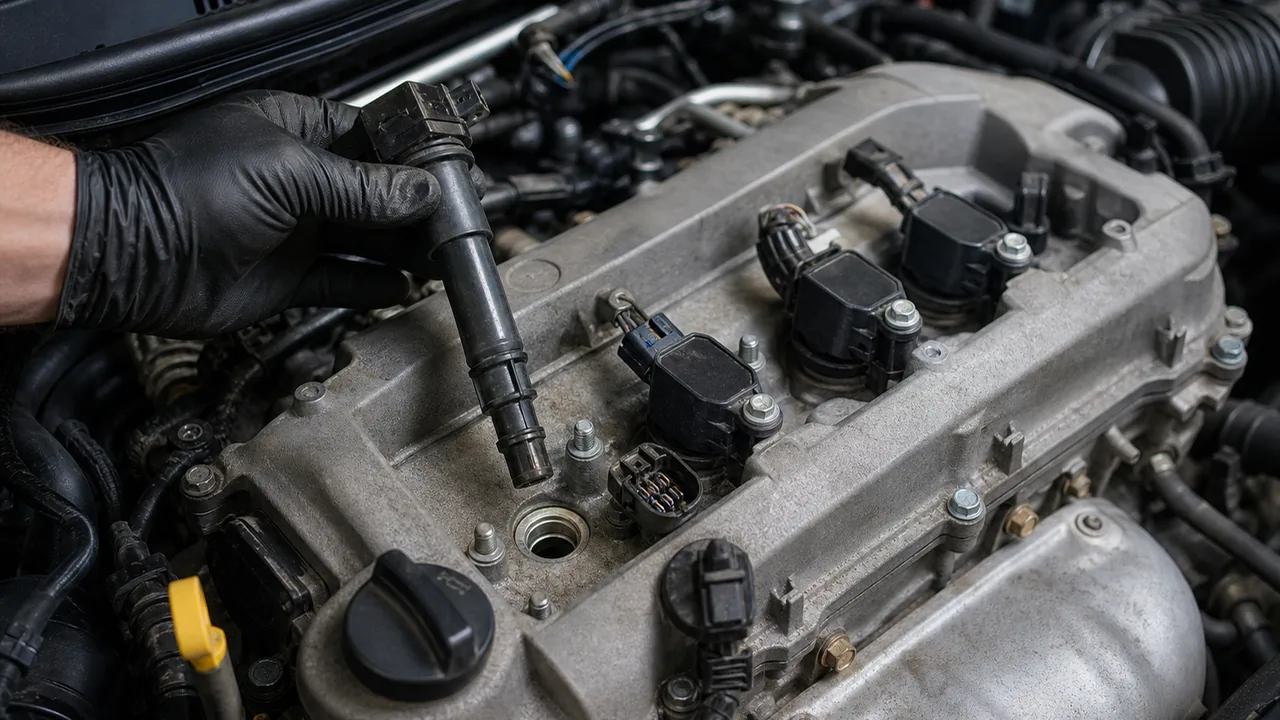
Jumping straight to a new coil wastes money if the underlying issue is something else. Before you decide to replace a coil based on a misfire code, perform these pre-swap checks to rule out simple faults.
- Remove the spark plug and check for fuel fouling, cracks, or excessive wear.
- Inspect the coil boot for tears, carbon tracking, or arcing marks.
- Verify the coil electrical connector is clean, dry, and fully locked.
- Check for oil or moisture in the spark plug tube that can short out the spark.
- If equipped, measure primary and secondary resistance with a multimeter and compare to specs.
Do not attempt a coil swap while the spark plug is fuel-fouled; that indicates a deeper fuel or compression issue that must be addressed first to protect the catalytic converter.
Inspection steps
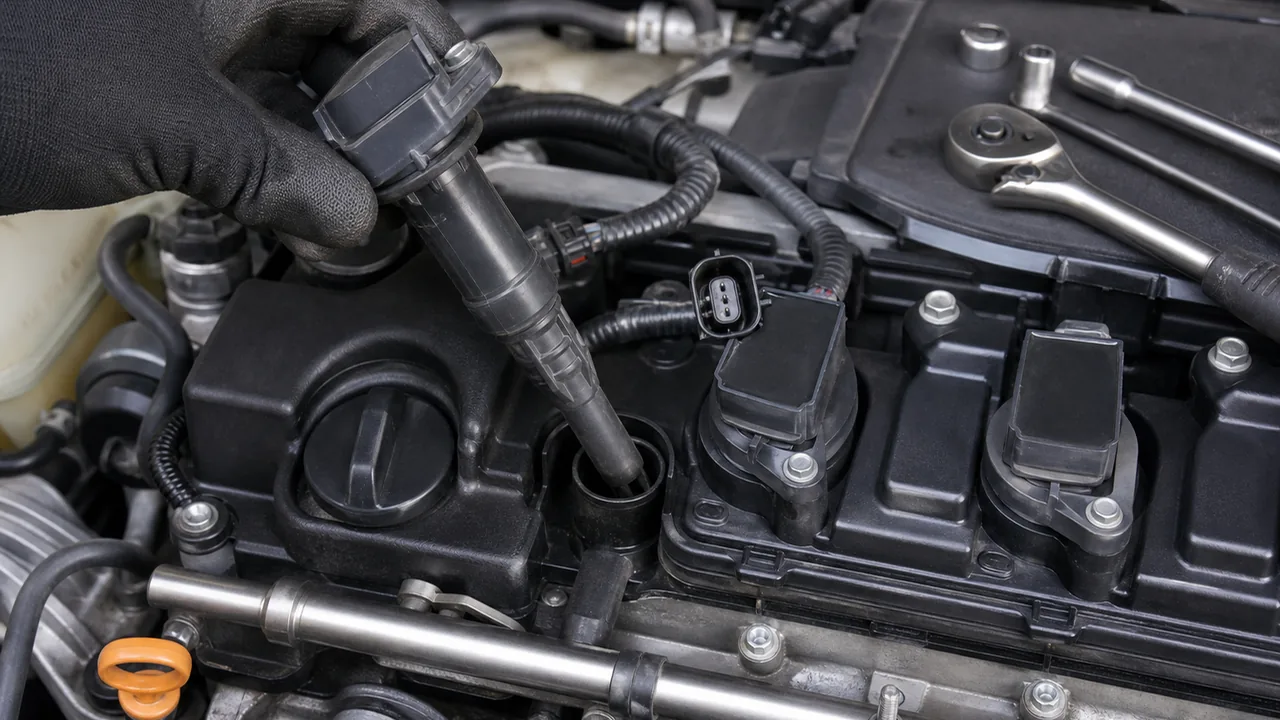
- With engine off and cool, label the suspect coil and a donor coil from a known-good cylinder using tape or marker.
- Remove any engine cover for access. Disconnect the electrical connector from the suspect coil.
- Remove the hold-down bolt and lift the coil straight out of the spark plug tube.
- Inspect the boot and spring contact for tears or carbon tracking.
- Do the same for the donor coil, then swap the two coils into the opposite cylinders.
- Apply a small amount of dielectric grease to the inside of the boot tip if specified.
- Reconnect both electrical connectors until they click, clear DTCs with a scan tool if desired.
- Start the engine and duplicate the driving conditions (RPM, load) from the freeze frame data.
- After a short drive, read pending misfire codes. If the code moved to the donor cylinder, the coil is the problem.
- Verify the part number matches your vehicle’s specifications.
- Inspect body for cracks, carbon tracking, or arcing marks.
- Check electrical connector pins for corrosion, bending, or overheating.
- Measure primary and secondary resistance; compare to a known-good coil.
- Ask about mileage and maintenance history of the donor vehicle.
- Test the used coil via a swap on your engine before permanent installation.
Avoid coils that have been steam-cleaned or repainted; these tricks can hide serious internal damage.
Replacement notes
If the misfire code moves with the coil, replace that coil and verify the fix. If the misfire stays on the original cylinder, the coil is not the cause.
- Misfire moves → replace the coil, clear codes, and confirm repair.
- Misfire stays → suspect spark plug, wiring, connector, injector, or compression.
- Intermittent code after swap → possible weak donor coil; retest with a third coil.
Never ignore a persistent misfire; even a short test drive with raw fuel entering the exhaust can ruin the catalytic converter.
FAQ
Can I swap coils from any cylinder?
Yes, as long as you mark the original positions clearly. Swapping from a non-adjacent cylinder in the firing order (for example, cylinder 1 and cylinder 3) can help avoid confusion if you later read the codes, but any cylinder works. The key is to keep track of which coil goes where.
Will swapping coils turn off the check engine light?
No. Moving a coil does not clear the stored misfire DTC. You need to clear the code with a scan tool or allow the vehicle to complete several drive cycles without a misfire. The light may go out on its own only after the fault is resolved, but the code will remain pending until the monitor passes.
Is it safe to drive with a misfire while testing?
Only for very short distances and only if you can see data to prevent converter damage. If the misfire is severe and raw fuel enters the exhaust, even a few minutes of driving can overheat the catalytic converter. If the check engine light flashes, stop immediately. Always keep the test drive brief and stay within the freeze-frame conditions.
What if I don’t have a scan tool?
Without a scan tool, diagnosis is less reliable. You can listen for a dead cylinder or feel for a rough idle, but you won’t know which cylinder set the code or if the misfire has moved. Inexpensive OBD-II Bluetooth adapters and smartphone apps can read and clear codes, and they are almost essential for confirming a swap. At a minimum, have a basic code reader that shows pending codes.
Can a bad coil damage anything else?
Yes. A coil that fails to fire allows unburned fuel to wash down the cylinder walls, diluting the engine oil and increasing ring wear. Raw fuel in the exhaust can melt the catalyst. Also, a shorted coil can overload the ignition driver in the PCM, causing a no-start condition. Prompt diagnosis prevents collateral damage.
How often do ignition coils fail?
Coils have no fixed lifespan; they can last the life of the vehicle or fail within 60,000 miles depending on heat, vibration, and quality. Modern coil-on-plug designs are subjected to extreme underhood temperatures and can develop internal breaks after many heat cycles. A swap is the only conclusive way to confirm a coil failure, regardless of mileage.

Comments
Be the first to add a practical repair note or follow-up question.