
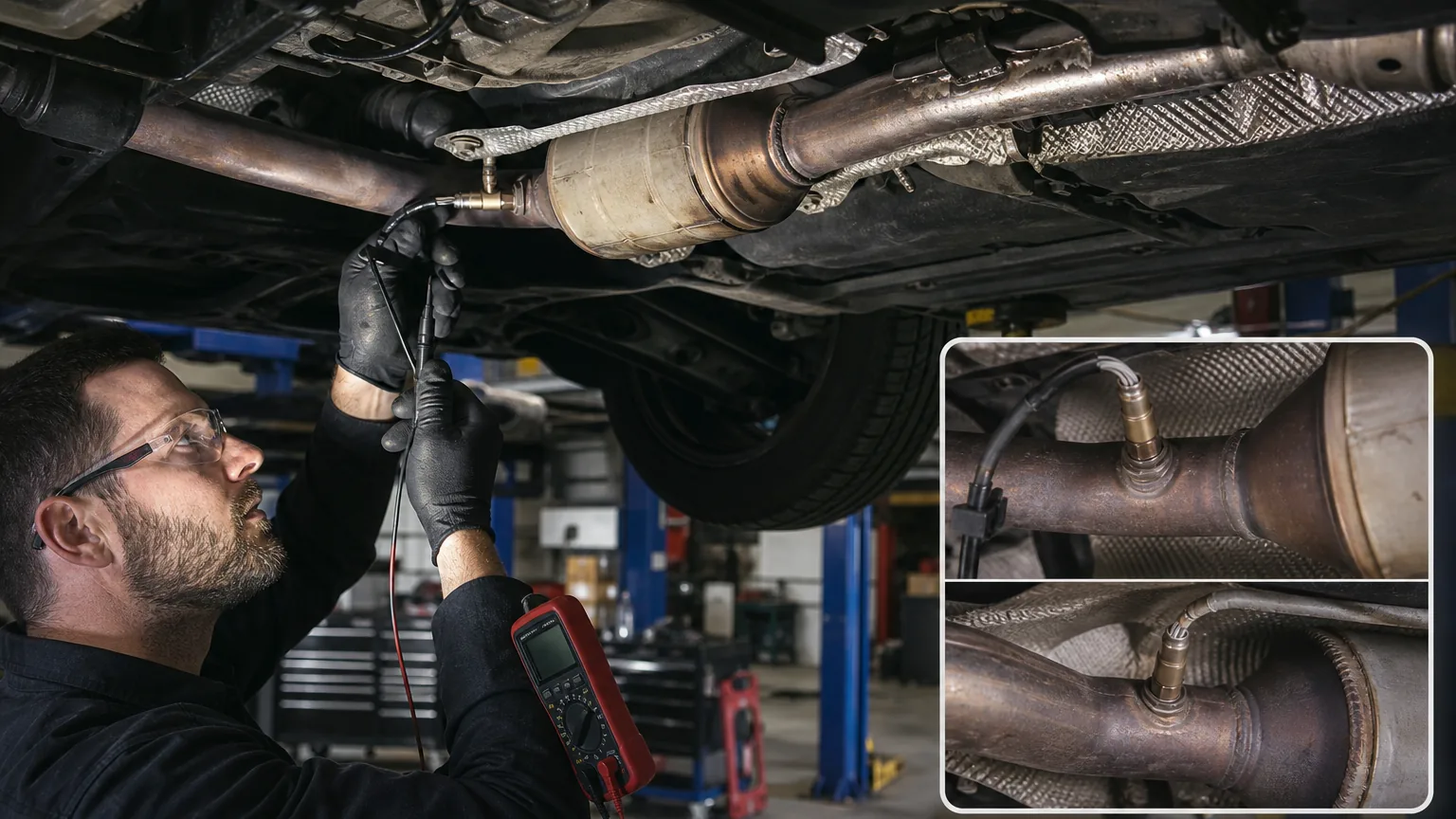
What this part does
The upstream sensor reports exhaust oxygen before the catalytic converter, helping the control module adjust fuel delivery. If that feedback is wrong because of a sensor fault, wiring issue, exhaust leak, or rich or lean condition, the engine may run poorly or set fuel-control-related codes.
The downstream sensor watches exhaust after the converter. Its main role is usually catalyst monitoring and emissions readiness, but vehicle strategies can vary, so it should not be dismissed without checking OEM information.
- Upstream sensor: usually Sensor 1 and usually tied to fuel-control feedback.
- Downstream sensor: usually Sensor 2 and usually tied to catalyst monitoring.
- Bank number: identifies the side or exhaust bank, but Bank 1 is not universally the driver side.
- Sensor type: some vehicles use an air-fuel ratio sensor, which may not behave like a narrowband oxygen sensor.
Common failure signs
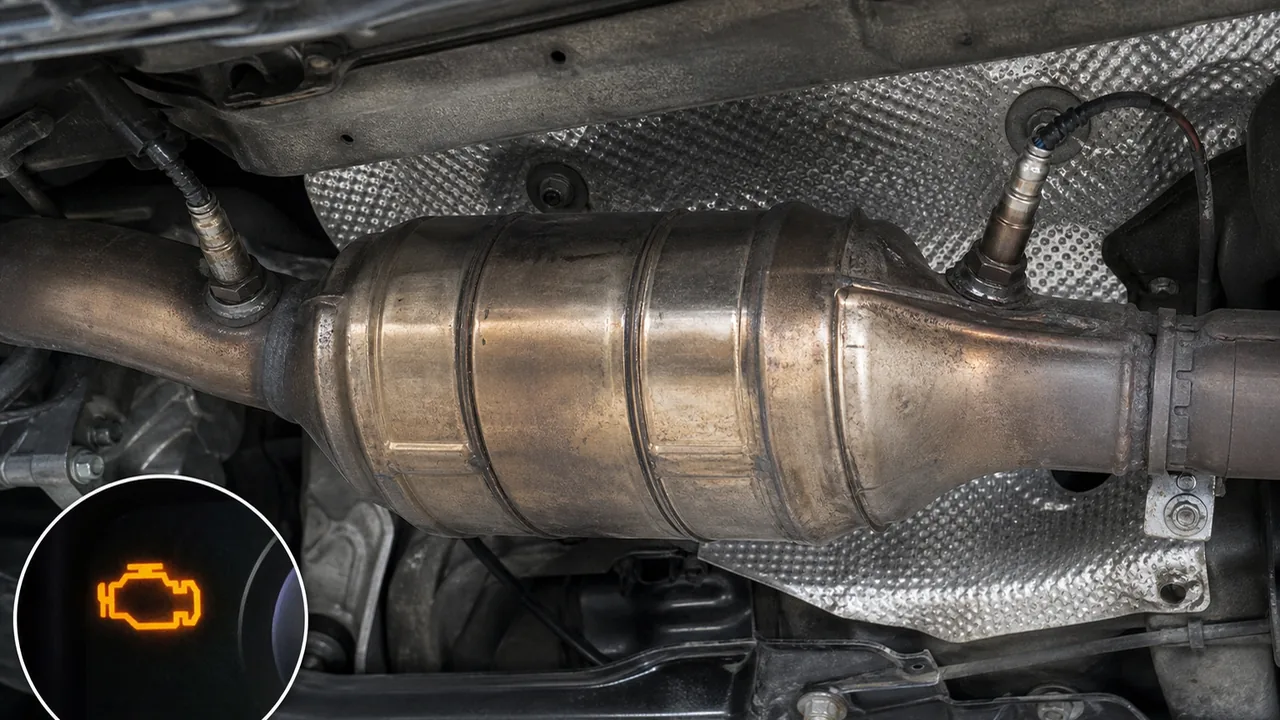
- Check engine light with codes in the P0130-P0167 range.
- Failed emissions test or incomplete emissions readiness monitors.
- Poor fuel economy that appeared with a stored code or drivability change.
- Rough idle, hesitation, or reduced performance when the engine is also running rich or lean.
- Exhaust smell, unusual heat, or catalyst-related symptoms that need broader diagnosis.
A sensor code identifies the monitored circuit, signal, heater, or response behavior. It does not prove the oxygen sensor is the failed part until the circuit, wiring, exhaust condition, and fuel-control data are checked.
Before replacing it
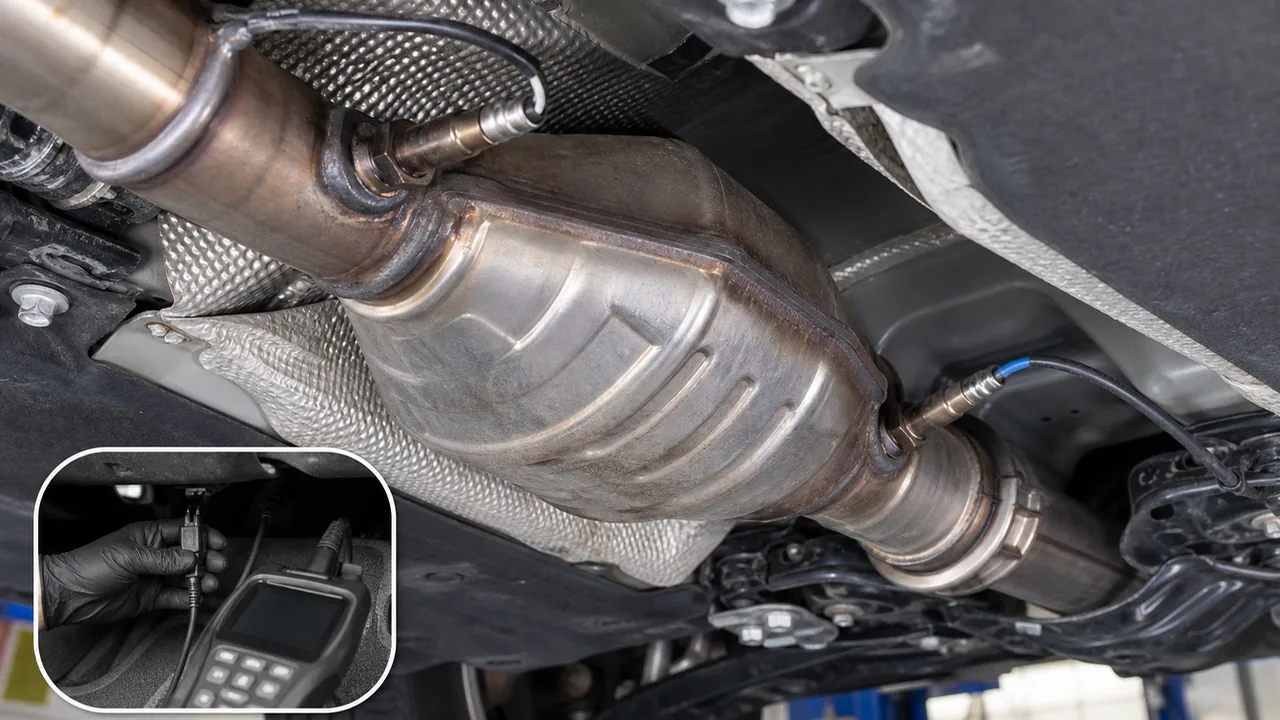
How to read the code
- Record the exact DTC, not just the phrase oxygen sensor code.
- Note whether the code says Bank 1 or Bank 2, then verify bank location for the engine.
- Note whether it says Sensor 1 or Sensor 2 before choosing upstream or downstream.
- Look for wording such as circuit, heater, signal, slow response, no activity, or catalyst efficiency.
- Check whether other codes came first, especially misfire, fuel trim, or exhaust-related codes.
| Code family | What it often points to | What not to assume |
|---|---|---|
| P0130-P0139 | Bank 1 oxygen sensor circuit, heater, signal, or response concerns | Do not assume the Bank 1 sensor itself is bad without tests |
| P0150-P0159 | Bank 2 oxygen sensor circuit, heater, signal, or response concerns | Do not assume Bank 2 is on a universal vehicle side |
| P0140-P0141 and P0160-P0167 | Often downstream sensor activity or heater-related concerns depending on the exact code | Do not skip connector, fuse, power, ground, or exhaust checks |
| P0420 or P0430 | Catalyst efficiency below expected performance by bank | Do not replace the downstream sensor as a guaranteed fix |
Inspection steps
Upstream sensor or Sensor 1 codes
- Failed upstream sensor or degraded response.
- Wiring, connector, or harness damage near heat and road debris.
- Exhaust leak ahead of the sensor causing misleading oxygen readings.
- Rich or lean running condition from intake, fuel, ignition, or engine-control faults.
- Sensor contamination from oil, coolant, silicone, or other exhaust contamination.
Downstream sensor or Sensor 2 codes
- Failed downstream sensor or heater circuit fault.
- Damaged wiring or connector near the converter.
- Exhaust leak near or ahead of the downstream sensor.
- Catalyst efficiency concern that changes downstream sensor behavior.
- Incorrect sensor fitment or connector mismatch from a previous repair.
P0420 or P0430 catalyst efficiency codes
- Catalytic converter performance problem.
- Engine misfire or fuel-control issue that affected catalyst operation.
- Exhaust leak influencing monitor results.
- Downstream sensor data issue, but only after testing supports that path.
- Recent repairs or incomplete readiness drive conditions that need proper verification.
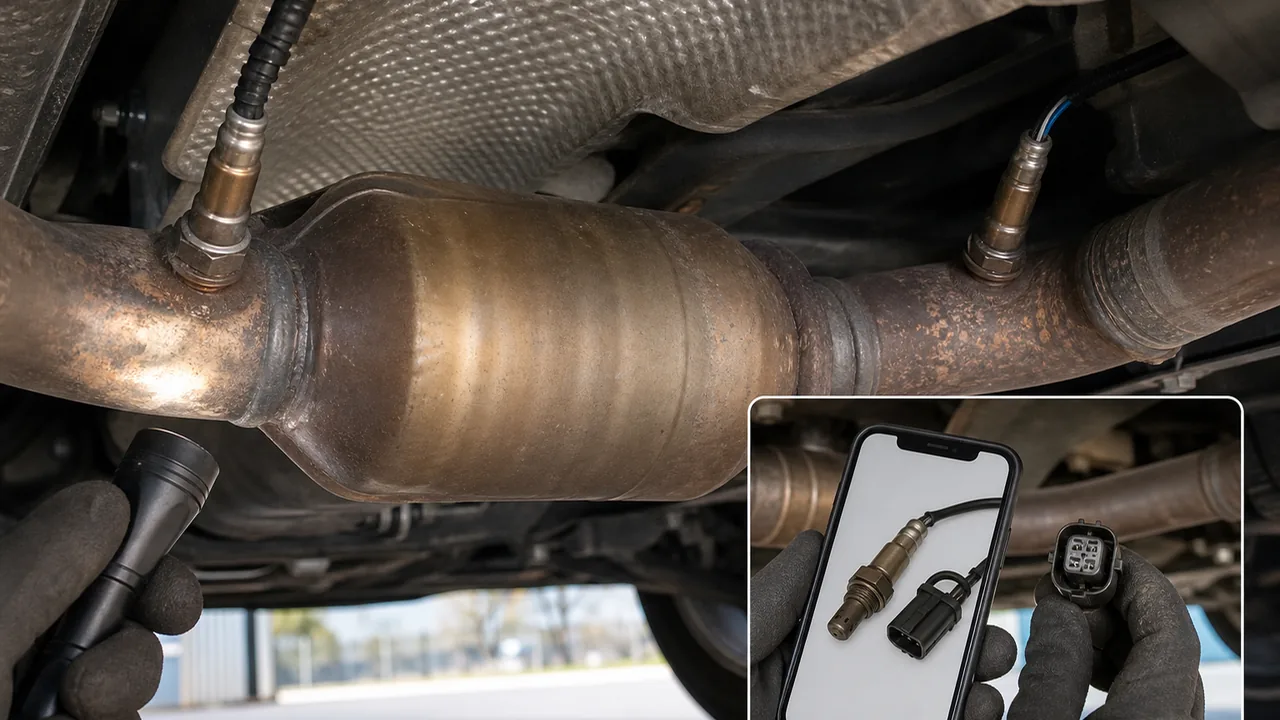
- Read and save the exact code, including pending and stored codes if available.
- Write down Bank 1 or Bank 2 and Sensor 1 or Sensor 2 exactly as shown.
- Capture freeze-frame data if your scanner displays it, especially engine load, temperature status, and driving condition labels.
- Note recent exhaust work, sensor replacement, converter replacement, battery disconnection, or engine repairs.
- With the exhaust fully cool, inspect only visible wiring, loose connectors, melted insulation, or obvious damage.
- Document symptoms such as rough running, fuel smell, failed emissions test, poor fuel economy, or loss of power.
Check your exact code and vehicle fitment before replacing an oxygen sensor. Year, make, model, engine, emissions package, bank, and sensor position can change which part fits.
- Confirm all stored, pending, and permanent codes and record freeze-frame conditions.
- Identify the correct bank and sensor position using OEM service information.
- Inspect wiring, connector locking tabs, harness routing, contamination, and exhaust damage.
- Verify heater circuit power, ground, and control according to the manufacturer procedure.
- Compare live upstream and downstream data with the engine operating correctly and no obvious exhaust leaks.
- Review fuel trims and related misfire or mixture codes before condemning a sensor.
- Check for exhaust leaks ahead of or near the monitored sensor location.
- For P0420 or P0430, evaluate catalyst monitor behavior and related engine faults before choosing a converter or sensor.
Exact electrical values, connector terminals, and test conditions are vehicle-specific. Use OEM repair information or a qualified diagnostic process rather than universal voltage or resistance shortcuts.
- Verify the exact part number or catalog fitment for year, make, model, engine, and emissions package.
- Avoid oxygen sensors with cut, spliced, melted, oil-soaked, or impact-damaged wiring.
- Do not assume an upstream sensor can be used downstream or the reverse.
- Confirm local emissions rules before buying used catalyst-related parts.
- Use new sealing hardware or service parts when the repair procedure calls for them.
A cheap incorrect sensor can create new codes, poor monitor readiness, or a repeat repair. Fitment verification matters more than choosing upstream or downstream by appearance.
- Usually safe to schedule diagnosis soon: steady check engine light, normal drivability, no fuel smell, no overheating, and no severe misfire symptoms.
- Diagnose quickly: failed emissions deadline, poor fuel economy with stored codes, recurring oxygen sensor codes, or codes returning after a previous sensor replacement.
- Stop driving or seek immediate help: flashing check engine light, severe misfire, raw fuel smell, overheating, major power loss, or obvious exhaust damage.
Replacement notes
- Replace the confirmed failed sensor, not every sensor named in a code list.
- Use the exact vehicle fitment, engine, emissions configuration, bank, and sensor position.
- Do not treat P0420 or P0430 as a guaranteed oxygen sensor repair.
- After repair, clear codes only when the repair is complete and then verify monitor behavior or road-test results as appropriate.
- If the same code returns after a sensor swap, stop replacing parts and diagnose wiring, exhaust, fuel control, or catalyst causes.
A correct repair also includes verification. The check engine light staying off immediately after clearing codes is not enough; the relevant monitor and operating conditions must be completed before confidence is high.
FAQ
Is Sensor 1 upstream or downstream?
Usually upstream, before the catalytic converter.
Is Sensor 2 upstream or downstream?
Usually downstream, after the catalytic converter.
Does P0420 mean the downstream O2 sensor is bad?
No. It is a catalyst efficiency code that needs broader diagnosis.
Should both sensors be replaced together?
Only when diagnosis and fitment information support replacing both.


Comments
Be the first to add a practical repair note or follow-up question.