
What this part does
Fuel trim is the engine computer's correction strategy. Short-term fuel trim, or STFT, reacts quickly to oxygen sensor or air-fuel sensor feedback. Long-term fuel trim, or LTFT, stores learned correction after the computer sees the same trend repeatedly.
A lean code sets when the computer has been adding fuel beyond its expected correction range for the operating conditions. The scan data matters because a vacuum leak, a weak fuel supply, a biased MAF reading, an exhaust leak ahead of the sensor, or a wiring fault can all push the computer toward fuel correction.
Closed loop means the computer is using exhaust feedback to adjust the mixture. Freeze-frame data captures the conditions when the code set, such as load state, temperature state, speed context, and trim behavior. Live data shows whether the same pattern is still present during testing.
Do not treat one fuel trim value as a guaranteed diagnosis. The useful evidence is the pattern across banks, operating modes, and repeat tests.
Common failure signs
A vehicle with P0171 and P0174 may still feel normal because the computer can sometimes add enough fuel to keep regular driving smooth. That does not mean the codes should be ignored; it means the correction system is still masking the underlying fault.
- Rough idle or idle hunting can point toward unmetered air, intake leakage, PCV leakage, or a bank-specific vacuum leak.
- Hesitation, weak acceleration, or surging under load can point toward fuel delivery limits, air measurement error, or restricted fuel flow.
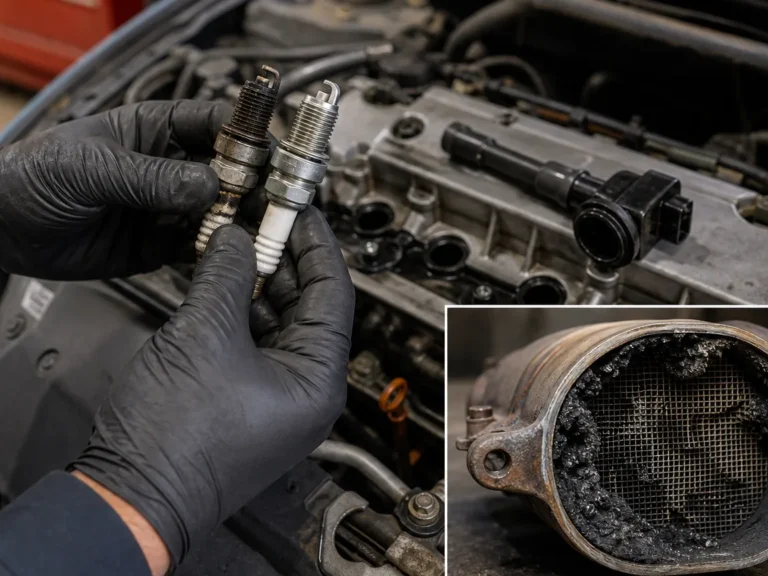
- A lean misfire, flashing warning light, or strong loss of power is a higher-risk condition because catalyst damage can become a concern.
- No obvious symptom with both codes present often points toward an early leak, mild MAF measurement error, or a condition that appears only under the freeze-frame operating state.
Symptoms should be matched to live data. A rough idle with high correction at idle is a different diagnostic path from a smooth idle with correction that climbs only during load.
Before replacing it
Fuel trim data should guide inspection before parts are replaced. P0171 and P0174 report a lean mixture correction problem; they do not identify the failed part by themselves.
- If both banks move lean together, start with shared causes: intake duct leaks, PCV faults, vacuum leaks, MAF measurement error, exhaust leakage ahead of feedback sensors, or fuel delivery problems.
- If one bank is consistently higher than the other, inspect bank-specific intake sealing, vacuum routing, injector delivery, exhaust leakage, sensor wiring, and mechanical causes before replacing shared parts.
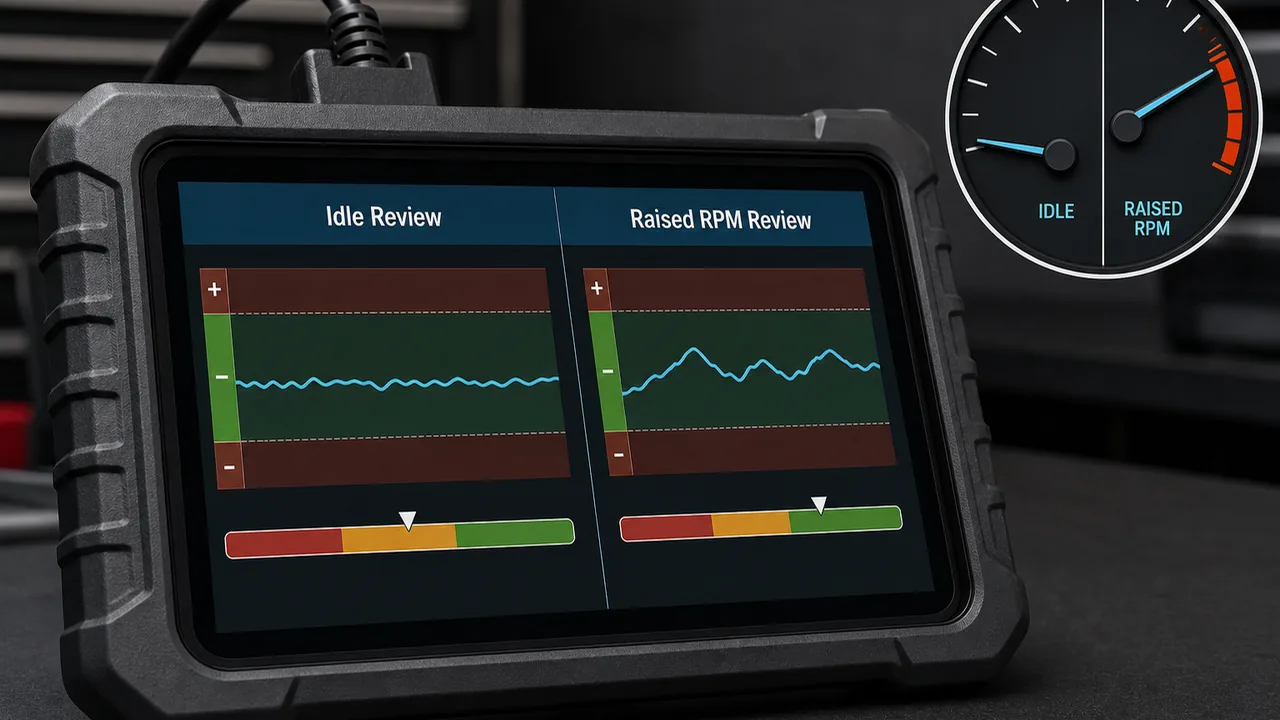
- If trims are high mainly at idle and improve as rpm rises, unmetered air or vacuum leakage becomes more suspicious.
- If trims worsen as load increases, fuel delivery, MAF reporting, intake restriction, or exhaust feedback validation deserve closer testing.
- If trims look near normal after clearing codes, use freeze-frame data and a repeat drive cycle before assuming the problem is gone.
Oxygen sensors can fail, but replacing them first is often the wrong sequence. A sensor may be accurately reporting a lean condition caused by air, fuel, or measurement problems elsewhere.
Inspection steps
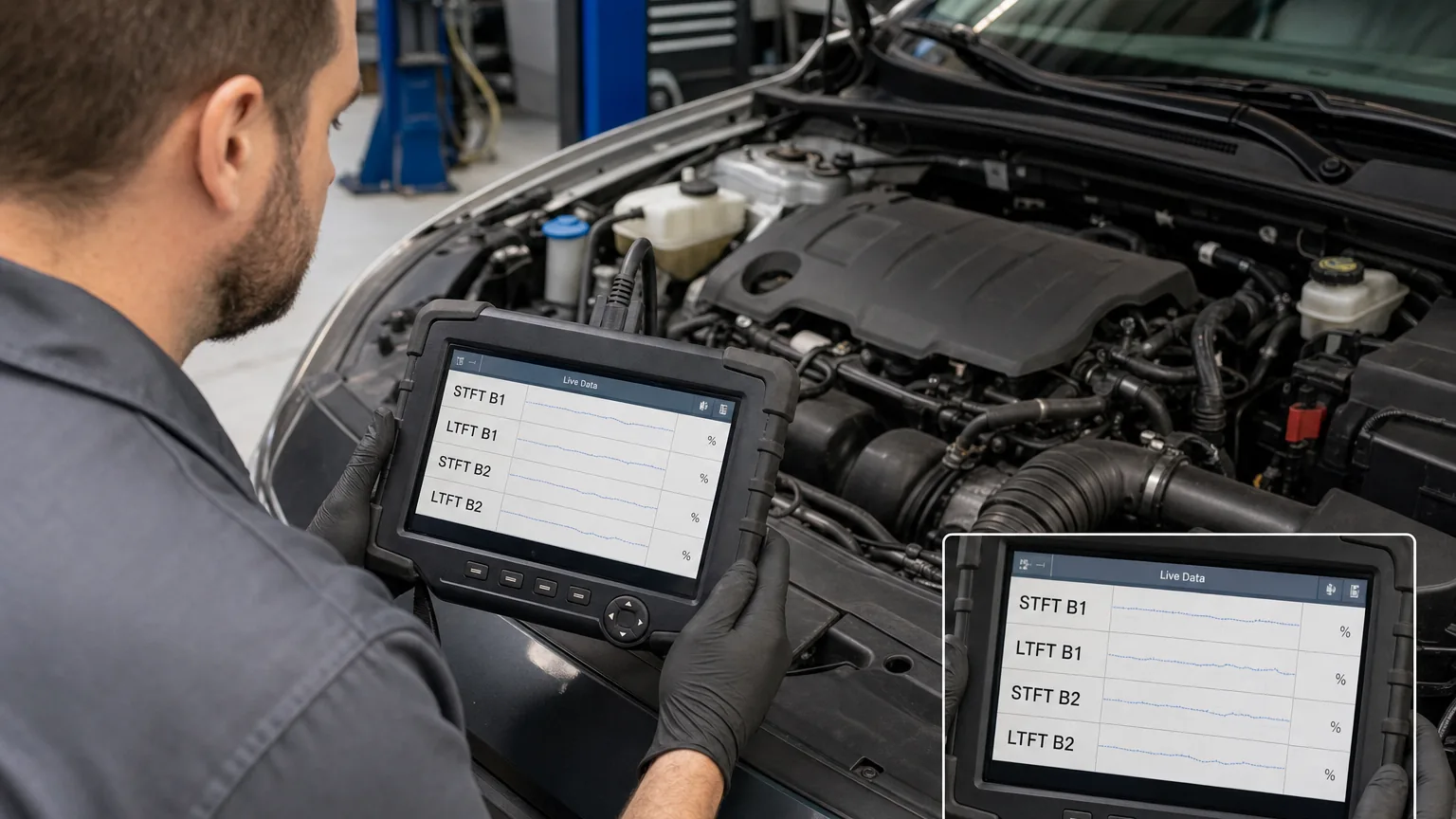
To read fuel trim live data for P0171 and P0174, confirm the engine is in closed loop, compare STFT and LTFT on both banks at idle and around 2500 rpm, then look for patterns rather than one isolated number.
P0171 means the engine computer has detected a lean condition on bank 1. P0174 means the same type of lean condition on bank 2. Bank 1 is the side of the engine that contains cylinder 1; bank 2 is the opposite side on engines that use two banks.
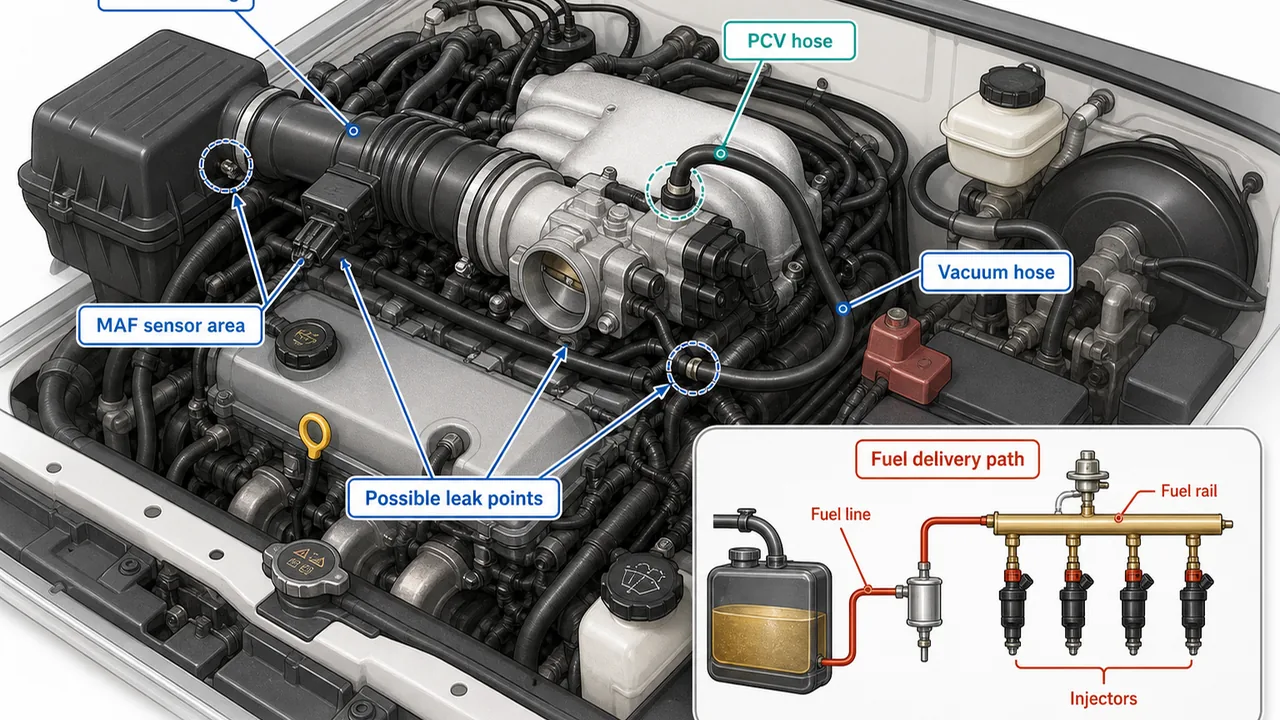
When P0171 and P0174 appear together, the fault often points to something shared by both banks, such as unmetered air, intake or PCV leakage, air measurement error, fuel delivery weakness, or incorrect sensor feedback. Live data is useful because it shows when the computer is adding fuel and whether both banks react the same way.
Use a scan tool and safe visual checks before disturbing parts. The goal is to preserve evidence, confirm the engine is in the correct operating mode, and compare how both banks respond under different conditions.
- Scan all stored, pending, and permanent codes. Save freeze-frame data before clearing anything.
- Confirm the engine reaches closed loop before judging fuel trim behavior.
- Compare STFT and LTFT for bank 1 and bank 2 at idle. Look for whether one bank or both banks show similar correction.
- Raise engine speed to around 2500 rpm with the vehicle safely stationary, then compare whether the correction improves, worsens, or stays similar.
- Review trim behavior under normal road-load conditions if it can be done safely and legally with the proper scan setup.
- If both banks are high at idle and improve off idle, inspect for vacuum, intake, PCV, brake booster, or manifold sealing leaks.
- If both banks worsen with load, validate fuel pressure and volume, MAF data reasonableness, air intake restriction, and fuel quality.
- If only one bank is consistently abnormal, inspect that bank's intake sealing, injector delivery, exhaust leaks before the sensor, and sensor wiring.
- After repair, clear codes only when appropriate, complete a confirming drive cycle, and verify trims no longer show the same fault pattern.
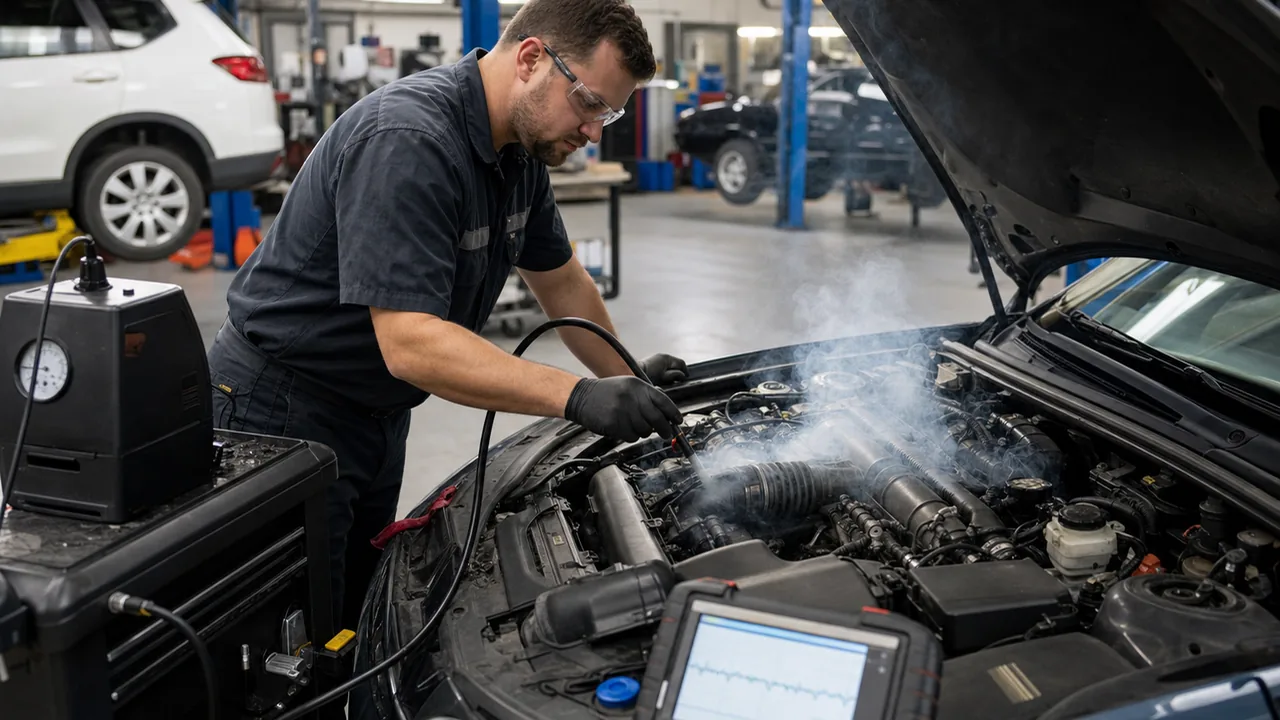
Do not spray flammable cleaners around a running engine to search for leaks. Safer leak testing and smoke testing are better diagnostic choices.
Used electronic and fuel-system parts are risky unless the part number, condition, and failure evidence are clear. A used MAF, oxygen sensor, injector, or fuel pump can introduce another unknown into a lean-code diagnosis.
- Match the exact part application using reliable catalog or service information, not appearance alone.
- Avoid used oxygen sensors and air-fuel sensors when the original fault has not been proven, because sensor response and contamination history are unknown.
- Inspect used intake parts for cracks, distorted sealing surfaces, stripped fasteners, and missing fittings.
- Do not use a used MAF to test a suspected MAF fault unless its source and compatibility are trusted.
- For injectors and fuel components, confirm cleaning, testing, sealing hardware, and installation requirements before purchase.
A confirmed leak repair or verified fuel-system fault is a better buying guide than a code description. Parts selection should follow test evidence.
Professional diagnostics make sense when both banks show persistent positive correction, the codes return after clearing, or symptoms such as misfire, severe hesitation, fuel smell, stalling, or overheating warnings are present.
- Book a smoke test when trim behavior points toward unmetered air but the leak is not visible.
- Book a fuel pressure and volume test when trims worsen under load, acceleration feels weak, or fuel delivery is suspect.
- Book scan-data review when freeze-frame and live data do not agree, or when trims swing rapidly without a clear mechanical cause.
- Stop driving and arrange service if the warning light flashes, the engine misfires heavily, power drops sharply, or the exhaust/catalyst area shows signs of overheating.
- Avoid repeated parts replacement when both-bank lean codes return after a MAF cleaning, hose inspection, or sensor replacement attempt.
A diagnostic appointment should end with a confirmed fault path: leak found, fuel delivery proven weak, sensor signal validated as wrong, wiring fault found, or another specific cause identified.
Replacement notes
The right repair depends on the pattern. P0171 and P0174 can be caused by leaks, fuel delivery faults, measurement errors, exhaust leaks before the sensor, sensor faults, wiring faults, or several small issues adding up.
| Cause | Typical live-data clue | Repair direction |
|---|---|---|
| Vacuum or intake leak | Correction strongest at idle and often more balanced off idle | Smoke test, inspect hoses and intake sealing, repair the leak |
| PCV or crankcase ventilation leak | Idle correction and unstable idle may appear together | Inspect PCV routing, valve condition, grommets, hoses, and related seals |
| MAF contamination or measurement error | Both banks may trend lean in a similar way without an obvious external leak | Inspect intake tract, air filter housing, connector condition, and validate MAF data before replacement |
| Fuel pressure or volume problem | Correction may worsen during acceleration or load | Test fuel pressure and delivery with proper equipment before replacing pump or filter parts |
| Injector delivery issue | One bank or cylinder group may show a stronger lean pattern | Use injector balance, misfire data, and service information to confirm |
| Exhaust leak before feedback sensor | Sensor feedback may falsely suggest lean operation | Inspect upstream exhaust joints, manifolds, gaskets, and sensor mounting areas |
| Sensor or wiring fault | Data may be biased, erratic, or inconsistent with other evidence | Check wiring, connectors, scan data, and OEM pinpoint tests before sensor replacement |
FAQ
Do P0171 and P0174 mean I should replace the oxygen sensors?
No. The sensors may be reporting a real lean condition. Check fuel trim patterns, leaks, fuel delivery, air measurement, wiring, and exhaust leaks before condemning sensors.
Can cleaning the MAF fix P0171 and P0174?
Sometimes, if the MAF is contaminated and the data supports a measurement problem. Cleaning is not a substitute for checking intake leaks, fuel delivery, and scan data.
Why do both-bank lean codes matter?
Both-bank codes often point toward a shared cause, such as unmetered air before the intake splits, a PCV leak, MAF error, fuel supply issue, or exhaust feedback problem.
What fuel trim numbers should I look at?
Look at STFT, LTFT, and their combined behavior on both banks. The trend across idle, raised rpm, and load is more useful than treating a single value as a fixed pass-or-fail rule.
Is it safe to drive with P0171 and P0174?
Light driving may be possible if the vehicle runs smoothly, but misfire, flashing warning light, stalling, severe hesitation, or overheating signs mean driving should stop and diagnostics should be arranged.
Should I clear the codes before checking live data?
No. Save codes and freeze-frame data first. Clearing codes can erase useful evidence about when the lean condition occurred.


Comments
Be the first to add a practical repair note or follow-up question.