
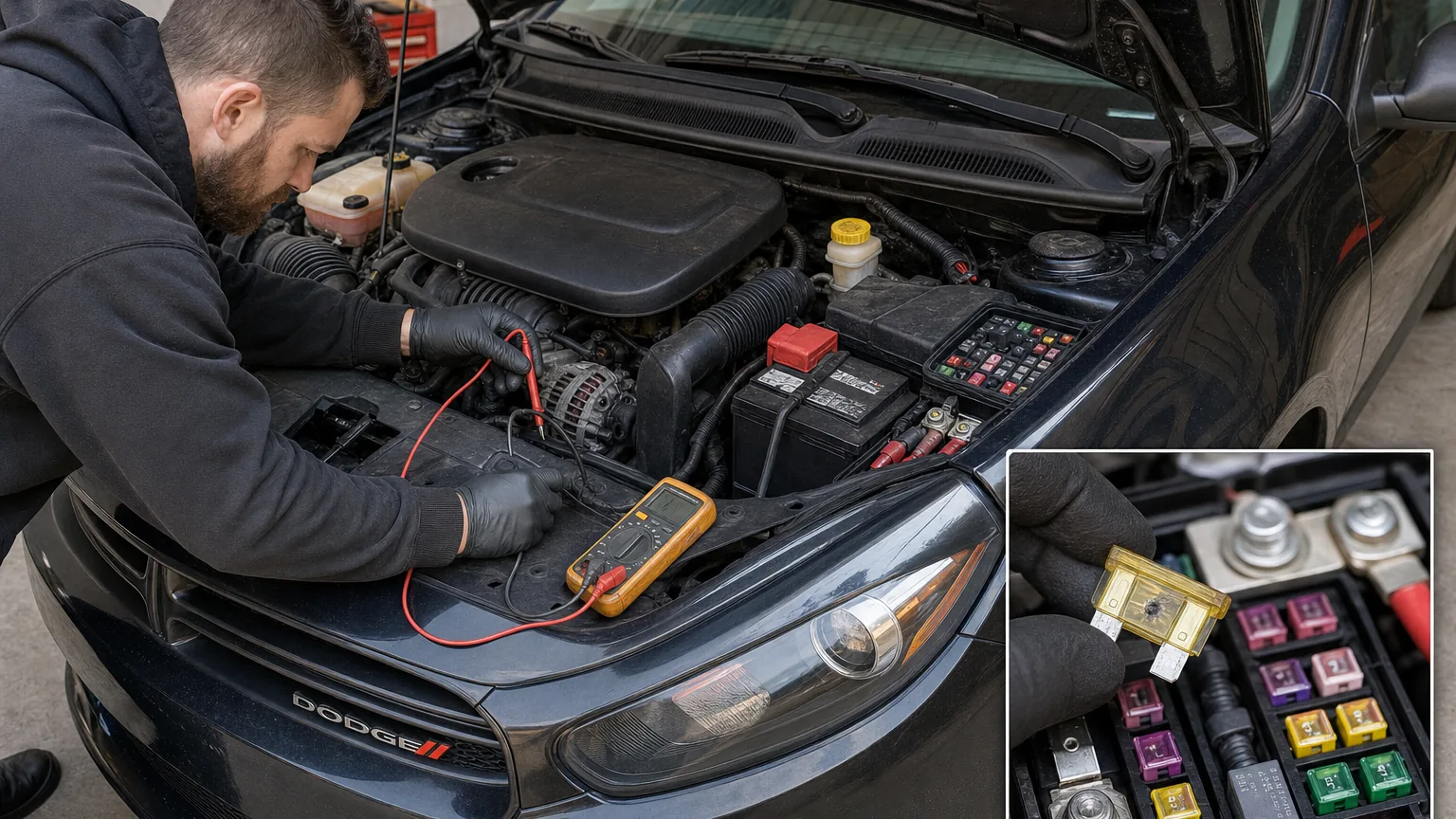
What the symptom usually means
The fuse is there to protect wiring and components from overheating when a fault occurs. When it blows again after replacement, the circuit is asking for protection again. The correct repair is to find the short, incorrect part, or failed component before another fuse is installed.
The alternator is a possible cause, especially if an internal short is present, but it should not be treated as the automatic answer. A cable rubbed through to metal, a pinched harness, corrosion at a battery connection, or an incorrect previous repair can create the same symptom.
A public owner question about this exact 2013 Dodge Dart symptom reported repeated fuse failure but did not verify the fuse name, rating, location, or service-manual routing, so those details should be confirmed before publication or repair.
- Alternator or charging-system fuse blows again after replacement.
- Battery warning light stays on or returns after the fuse opens.
- Vehicle may start once, then lose battery charge or fail to restart.
- Headlights, interior lights, or accessories may act weak because the battery is not being recharged.
- There may be a burning smell, visible heat damage, or melted insulation near the cable path.
- Charging-system or low-voltage warning codes may appear, but codes may also be absent when the high-current protection opens first.
A blown fuse can make the alternator stop contributing to the electrical system, leaving the car dependent on battery charge alone. That can lead to stalling, no-start behavior, or unstable electrical operation, so the symptom should be treated as a charging-system fault rather than a nuisance fuse issue.
Common causes
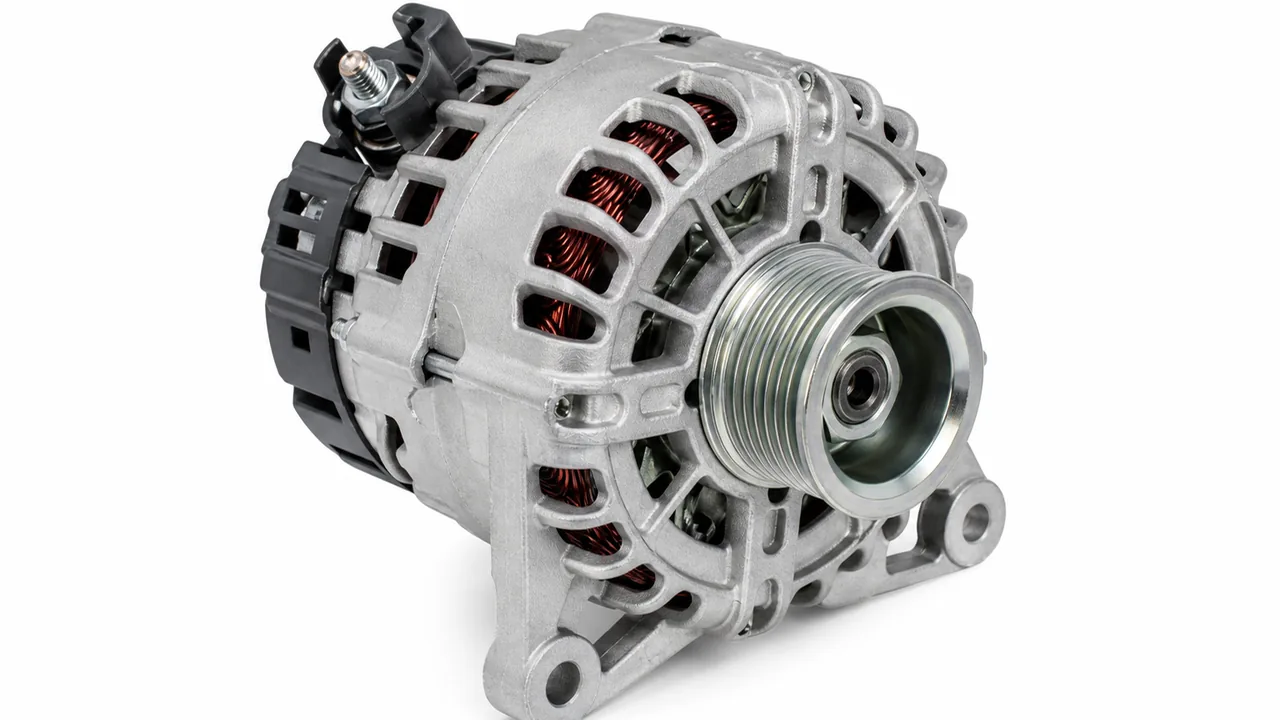
| Damaged alternator output cable | The B+ cable can short to ground if insulation is rubbed, melted, pinched, or left loose near metal. | Visible damage, heat marks, continuity-to-ground findings with power disconnected, or fuse failure when the cable is connected. |
| Shorted alternator | An internal alternator fault can draw excessive current through the protected charging circuit. | Fuse no longer opens when the alternator is isolated, or alternator testing confirms an internal fault. |
| Wrong fuse or previous incorrect repair | An incorrect fuse, wrong style, poor terminal fit, or improvised repair can create repeat failure or hide the original problem. | Owner manual or service information does not match the installed fuse or previous work shows nonstandard parts. |
| Harness damage near heat or moving parts | A smaller control or charge-related wire can chafe, melt, or contact ground after routing damage. | Harness inspection shows abrasion, pinching, melted loom, or damage near brackets, belts, fans, or hot components. |
| Battery cable fault | Corroded, loose, overheated, or misrouted battery cables can create abnormal current paths and charging instability. | Terminal damage, cable swelling, green corrosion, loose clamp fit, or excessive resistance found during testing. |
| Aftermarket wiring | Audio, remote-start, lighting, alarm, or accessory wiring can overload or short shared power paths if installed poorly. | Recent accessory installation, added power taps, unfused wiring, or nonfactory routing near the battery or fuse area. |
| Jump-start polarity damage | Reverse polarity or a poor jump-start event can damage alternator diodes, fuses, links, or connected wiring. | Fuse failure began after jump-starting, battery service, charger use, or alternator replacement. |
Quick checks
A repeatedly blowing alternator fuse usually means a shorted cable, failed alternator, or wiring fault in the charging circuit. If the alternator or charging-system fuse keeps blowing on a 2013 Dodge Dart, inspect the charging cable path and alternator B+ connection first, then verify the correct fuse rating and check for a shorted alternator or damaged harness. Treat a fuse that blows immediately or repeatedly as a stop-driving or tow-to-diagnosis condition unless a qualified technician confirms it is safe. Do not install a higher-rated fuse or keep replacing fuses without finding the short.
- Confirm the exact fuse, fusible link, or charging-system protection device using the owner manual or professional service information.
- Verify that the replacement fuse matches the specified rating and style before installing anything else.
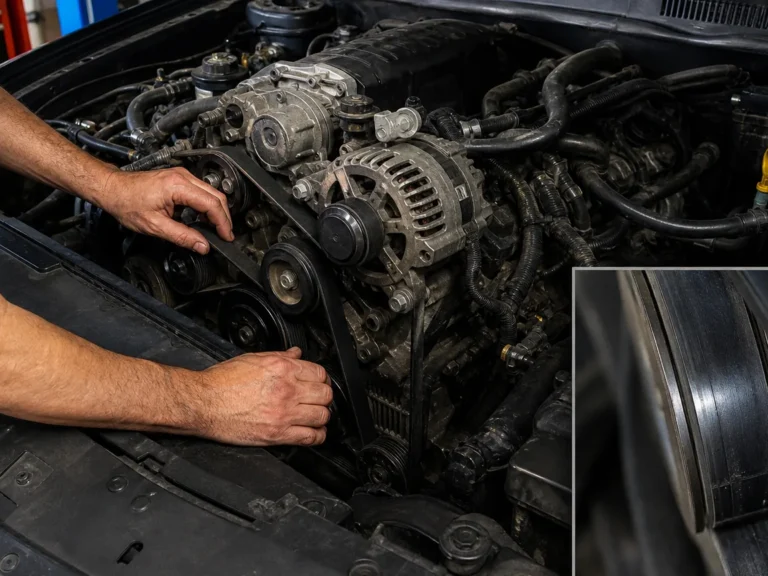
- With the engine off, inspect the alternator B+ terminal for looseness, heat damage, exposed metal, or signs that the cable has touched ground.
- Follow the alternator output cable and battery positive cable for rubbed insulation, melted sections, pinched routing, or contact with brackets, pulleys, exhaust heat, or sharp edges.
- Review recent jump-starts, battery replacement, alternator replacement, collision work, stereo wiring, remote-start wiring, or previous electrical repair.
- Stop diagnosis if the fuse blows immediately again, if there is smoke or a burning smell, or if the battery light stays on after replacement.
Owner-level checking should stay visual and low risk. Do not bypass the fuse, upsize the fuse, probe high-current alternator wiring live, or disconnect major charging cables while the battery is connected.
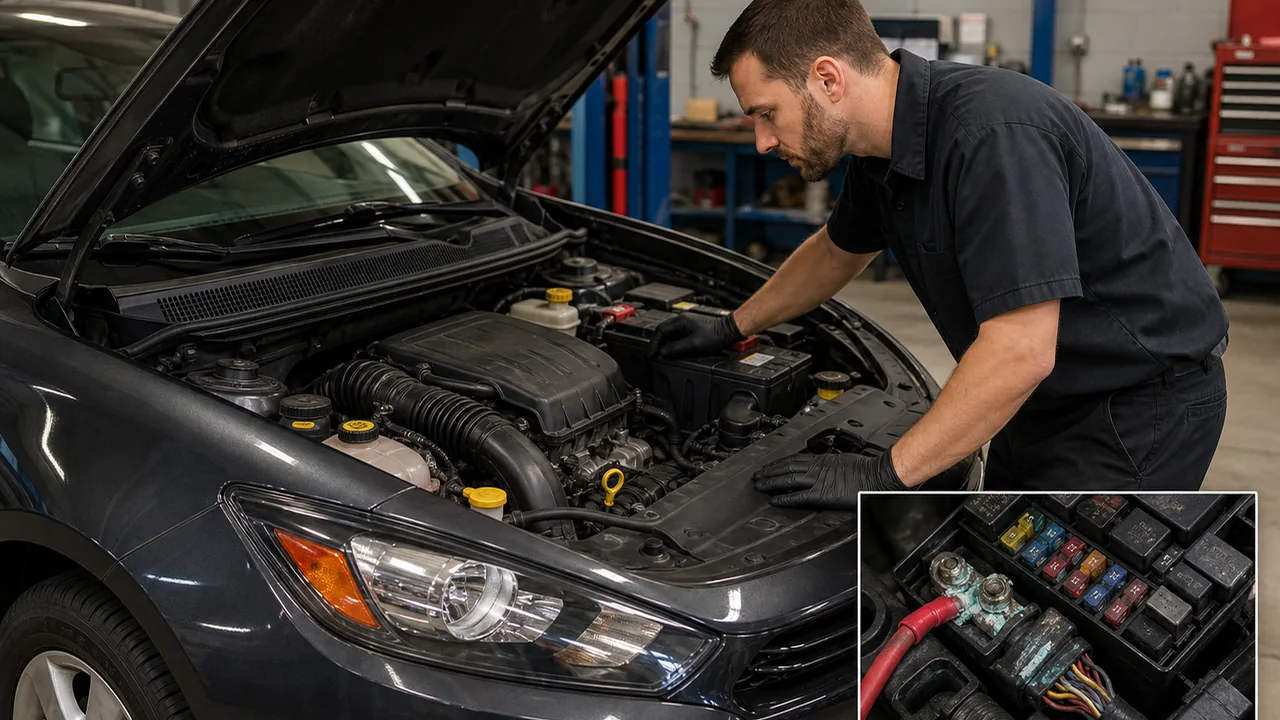
- Use a flashlight and visual inspection with the engine off.
- Do not hold a fuse in place, wrap a fuse, bridge the terminals, or install a stronger fuse.
- Do not remove or loosen alternator output wiring unless the battery is properly disconnected and the procedure is understood.
- If the fuse opens immediately, the next useful check is isolation testing, not another fuse.
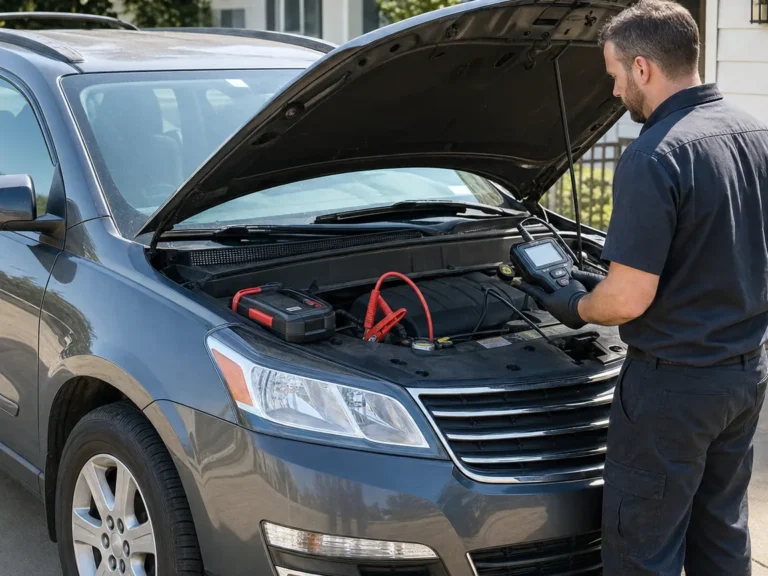
If battery condition is suspect, have it tested through a safe parts-store or technician process. A battery or cable fault can be part of the charging problem, but the repeated fuse failure still needs circuit inspection.
When it is urgent
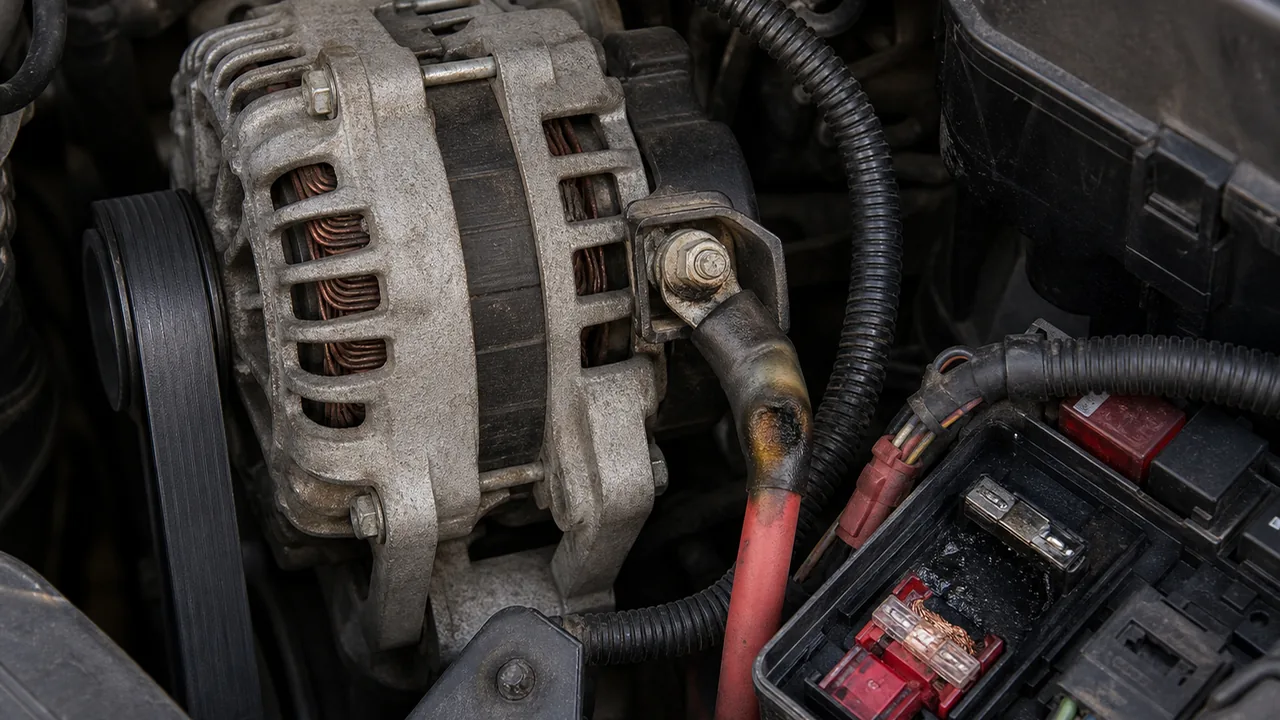
The risk is not just being stranded. Charging-system wiring carries enough current that a direct short can damage cables, terminals, fuse holders, or nearby harness sections. That is why repeat fuse failure should be handled as an electrical fault, not as routine maintenance.
Diagnostic order
- Identify the exact protection device and confirm correct replacement.
- Perform visual inspection before electrical testing.
- Test for a short-to-ground with the circuit powered down.
- Isolate the alternator and cable path instead of guessing.
- Repair the confirmed fault, install the correct fuse, and verify charging operation.
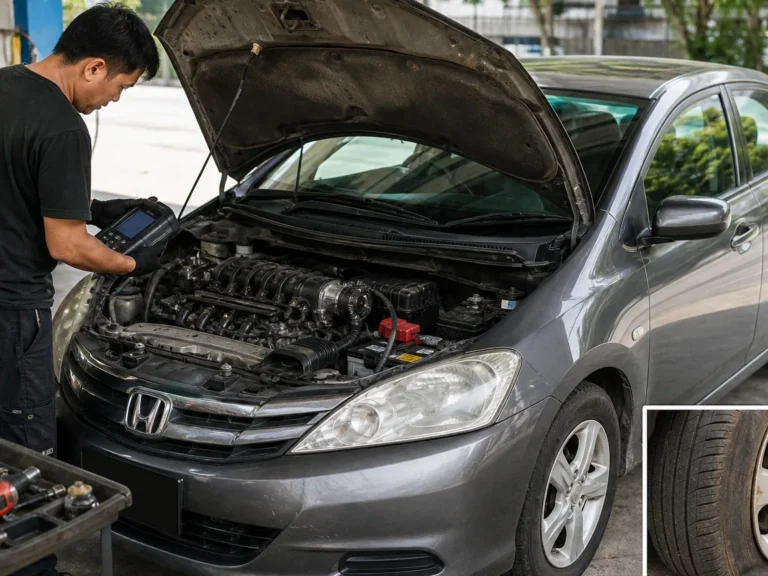
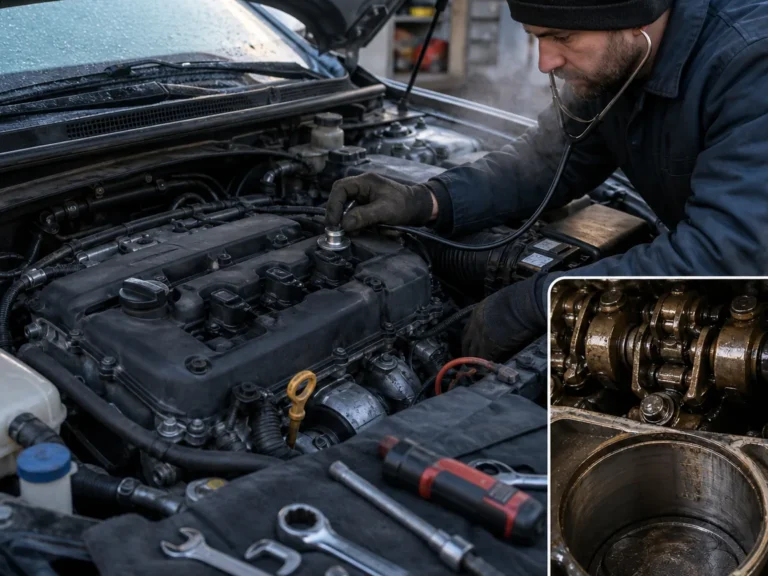
Technician testing may include isolation checks, continuity-to-ground checks with power disconnected, alternator bench or in-car testing, voltage-drop checks, scan-tool review, and repair verification. Exact service steps should follow verified Dodge service information.
A battery warning light, low-voltage symptoms, no-start condition, or charging-related code can help frame the fault. However, a high-current fuse or fusible-link problem may occur with limited code history, especially if power is interrupted before modules can store useful data.
- Use codes as supporting evidence, not as a parts order.
- Check charging-system codes, body or powertrain module voltage history, and battery warning-light behavior.
- Do not assume a control module failed unless circuit testing and service information support that conclusion.
- If scan data and fuse behavior disagree, inspect the fuse circuit first because the fuse is a direct protection event.
Parts that may be involved
Use the vehicle identity to choose correct service information and fitment, not to skip diagnosis. A Dodge Dart with repeated alternator fuse failure still needs the same disciplined checks: correct protection device, alternator output connection, cable path, harness condition, battery cable condition, and recent repair history.
Do not publish a fuse number, amperage, relay label, fuse-box location, connector pin, known-pattern claim, or recall statement unless it is verified from 2013 Dodge Dart service documentation or another reliable source.
| Correct fuse or fusible link | The original failed after the root cause was repaired and the circuit tests clean. | Verify exact rating and style from service information. |
| Alternator | Testing confirms an internal short or failed charging function after cable checks. | Match engine, connector, pulley, and charging-system configuration by fitment. |
| Alternator output cable | The cable is rubbed, melted, loose, pinched, corroded, or shorted to ground. | Repair routing and protection, not just the damaged visible spot. |
| Battery cable or terminal | The cable has corrosion, heat damage, poor clamp fit, swelling, or abnormal resistance. | Confirm positive and ground cable condition together. |
| Harness section | Chafing, heat damage, previous repair, or aftermarket wiring caused the short. | Use proper automotive wire repair practices and protect routing. |
If diagnosis confirms a failed alternator or damaged cable, compare compatible alternator, battery cable, fuse, or harness repair options with fitment verification. Do not buy the alternator first just because the fuse name says alternator.
- Replacing the fuse repeatedly without inspecting the cable path.
- Installing a higher-rated fuse to keep the vehicle running.
- Replacing the alternator before checking the B+ cable and battery cable routing.
- Ignoring aftermarket audio, lighting, remote-start, alarm, or accessory wiring.
- Overlooking jump-start polarity damage or battery charger history.
- Assuming a code will identify the short without direct circuit testing.
- Publishing or following unverified fuse location and rating information.
A correct diagnosis can prevent unnecessary alternator replacement and reduce the risk of wiring damage. The fuse should be the final replacement part after repair confirmation, not the repeated experiment that proves the short is still present.
- If the wrong fuse was installed and the circuit has no damage, install the correct fuse and verify charging operation.
- If the alternator B+ cable or battery cable is damaged, repair the cable path and insulation before replacing the fuse.
- If the alternator is isolated and confirmed shorted, replace the alternator and the correct fuse, then verify charging operation.
- If aftermarket wiring is involved, disconnect or repair the added circuit using proper fused power sources and routing.
- If the short is intermittent or hidden in the harness, move to professional electrical diagnosis with wiring diagrams and isolation testing.
A repeated fuse failure is a medium-to-high readiness repair situation because the car may not stay charged and the wiring risk is real. The safest path is to decide from evidence: fuse identity, visible damage, isolation testing, alternator test results, and verified repair confirmation.
Avoid exact repair-cost assumptions until the fault is confirmed. A fuse replacement is minor only after the circuit is repaired; an alternator, battery cable, harness section, or accessory wiring correction can vary by parts fitment, access, previous repairs, and local labor practices.
- Obvious visible cable damage usually points toward cable or terminal repair.
- A confirmed internal alternator fault points toward alternator replacement and verification.
- Hidden or intermittent harness damage usually requires more diagnostic time.
- Aftermarket wiring can add time because added circuits may not match factory diagrams.
FAQ
Is it safe to drive a 2013 Dodge Dart if the alternator fuse keeps blowing?
No, not if the fuse blows immediately or repeatedly, the battery light stays on, or there are heat, smoke, or burning-smell signs. The vehicle may stop charging, drain the battery, stall, or damage wiring.
Can a bad alternator blow the alternator fuse?
Yes. A shorted alternator can open the fuse, but the output cable, battery cable, harness, fuse rating, and recent repair history should be checked before the alternator is condemned.
Can a battery cable cause the fuse to blow?
Yes. A positive cable that is rubbed through, loose, corroded, overheated, pinched, or routed against metal can create a short or abnormal current path that opens the fuse.
Should I replace the alternator first?
Not first. Inspect the fuse identity, correct rating, alternator B+ terminal, output cable, battery cable, and visible harness damage before buying an alternator. Replace the alternator only if testing confirms it is faulty.
Can charging-system codes diagnose this by themselves?
No. Codes can support the diagnosis by showing low-voltage, high-voltage, or generator-control concerns, but a blown fuse still requires circuit inspection and isolation testing.
Comments
Be the first to add a practical repair note or follow-up question.