
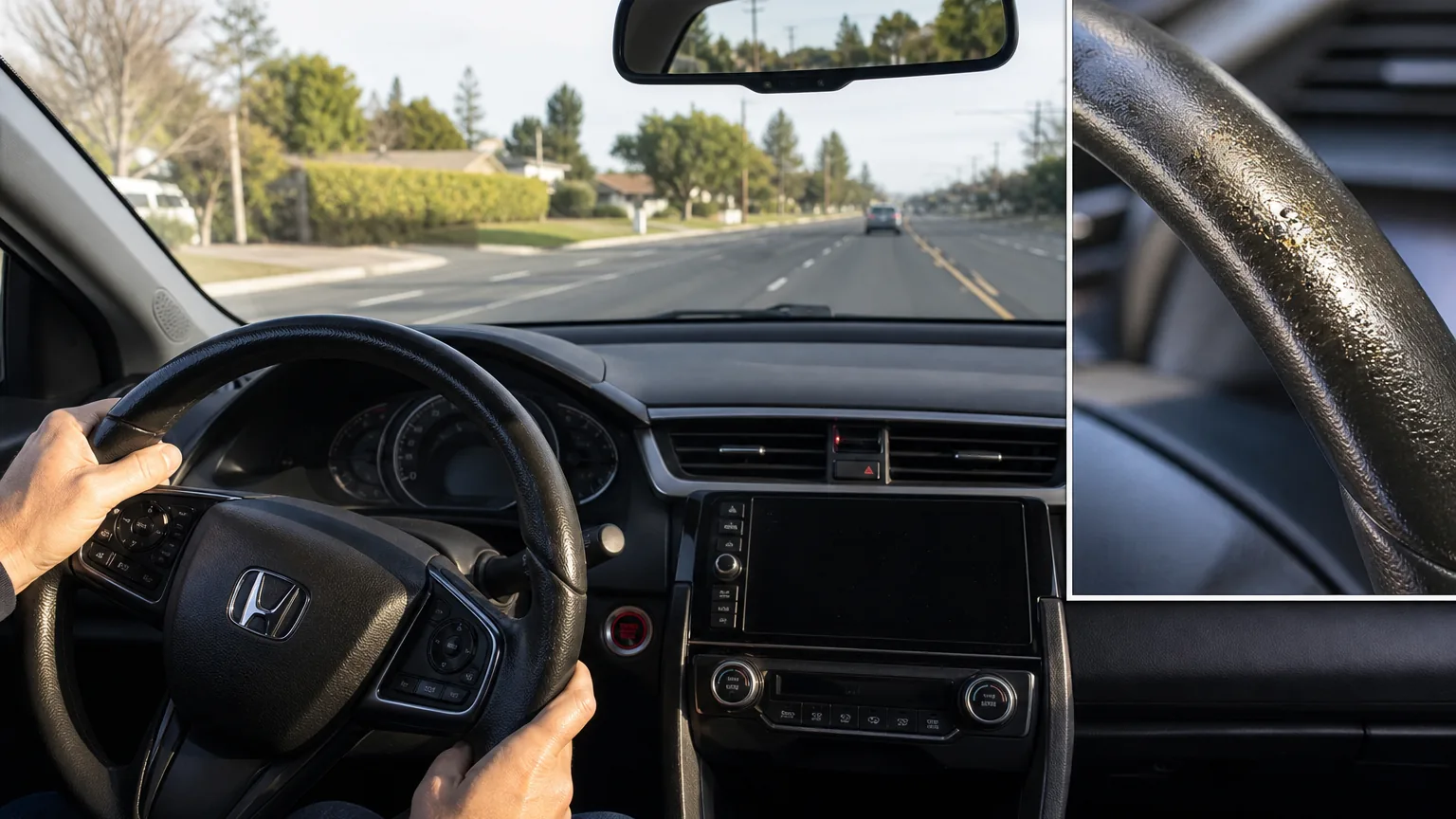
What the symptom usually means
A Honda Civic sticky steering feel or left wander while driving straight usually points to alignment, steering, or suspension issues that need inspection. The likely cause family includes tires, front-wheel alignment, brake drag, front-end wear, or electric power steering concerns, and a left drift is not automatically a steering rack failure. Sticky steering usually feels like resistance, catching, notchy movement, or delayed self-centering around center, while a left wander means the car gradually leaves its path without a clear steering input. If the bind is getting worse, the wheel suddenly feels heavy, the pull becomes erratic, or a steering warning light appears, it needs inspection before normal driving continues.
- Start with owner-safe checks: look at tire pressure, compare tire condition side to side, and check for uneven tire wear that could explain a pull or poor self-centering.
- Pay attention to signs of brake drag or front-end trouble, such as a wheel that seems unusually hot, a brake smell, or new noises while the steering feels sticky.
- If the basics do not explain it, the next step is a steering, alignment, and front-end inspection focused on alignment angles, suspension wear, brake drag, and EPS behavior.
- Reported NHTSA owner complaints can help group the symptom pattern, but they are not proof of a confirmed defect or a final diagnosis for one specific Civic.
Common causes
A Honda Civic with a sticky steering feel or left wander while driving straight is most often dealing with tires or front-wheel alignment first, while brake drag, worn steering or suspension parts, and electric power steering (EPS) or sensor faults become more likely as the behavior gets stronger, repeatable, or safety-related.
- Tires and tire pressure sit at the top because they are common, easy to check, and fully capable of causing drift, odd steering wheel self-centering, or a subtle sticky steering feel. Uneven pressure, irregular tire wear pattern, tire conicity, mismatched tires, or uneven cargo load can all bias the car left or make the wheel feel reluctant to settle naturally.
- Front-wheel alignment is the next major cause group. If toe, camber, caster, or steering wheel centering is off, the Honda Civic may track poorly, wander on flat roads, or resist returning smoothly after a turn.
- Brake drag belongs in the high-urgency tier. A sticking caliper or dragging brake can create pull, heat, smell, and a heavier or less consistent steering feel, so this moves up the list when one side seems hotter or the pull worsens after driving.
- Worn or damaged suspension and steering parts are next. Loose or binding components can produce wander, clunks, instability, or weak self-centering, especially over bumps or during lane changes.
- EPS, steering angle, torque, ABS, or VSA-related inputs matter when the feel is notchy, inconsistent, or accompanied by warning lights. These systems can influence assist behavior, but symptoms alone do not identify a failed part.
- Complaint patterns can support these symptom groups, but they do not prove a universal Honda Civic defect or confirm one root cause without inspection and scan data.
If the steering suddenly gets heavier, binds, pulls sharply, or comes with brake odor, heat, noises, or warning lights, treat that as an inspection-soon issue rather than a monitor-and-wait symptom.
Quick checks
A sticky steering feel or left wander while driving straight should be confirmed with a road test, alignment readings, lift inspection, brake checks, and EPS-related scan data before any Honda Civic parts are replaced. This step matters because poor steering wheel self-centering, brake drag, tire-related pull, and electric power steering (EPS) issues can overlap.
- Start with a road test to define the complaint precisely. The technician should separate sticky steering feel, left drift, braking pull, poor centering, vibration, and intermittent heaviness, because each pattern points to a different branch of diagnosis.
- Measure front-wheel alignment using model-appropriate specifications and compare toe, camber, caster, thrust angle, and steering wheel centering as a set. An alignment printout is more useful than a guess, especially when the car tracks differently on different roads.
- Raise the vehicle and inspect steering and suspension parts for looseness, wear, bends, binding, impact damage, or seized movement. Any worn or damaged component can distort alignment results or create a notchy return feel.
- Inspect the brakes for uneven pad wear, restricted caliper slide movement, rotor condition, drag, and signs of excess heat. A brake issue can mimic left wander while driving straight or make it worse after normal driving.
- Review EPS and chassis scan data for steering torque input, steering angle behavior, assist response, ABS or VSA context, and any stored codes. These findings support the diagnosis, but they should not outweigh the mechanical inspection or road-test pattern.
- Use all findings together. If the early checks do not reveal a clear fault, the next sensible step is a repeat road test after correcting any tire, alignment, or brake issue that was verified, then reassess whether EPS behavior still stands out.
If your Honda Civic repeatedly wanders left while driving straight, needs constant steering correction, or has a sticky steering feel near center, the next step is to book an inspection. At this stage, the goal is not to guess one failed part. The practical first appointment is a steering, front-wheel alignment, tire, brake, and front-end inspection that can separate tire-related drift, brake drag, suspension wear, and electric power steering (EPS) concerns.
When you contact the shop, describe the symptom in plain language: whether the car drifts, pulls, feels notchy, resists self-centering, or becomes heavier after turns or during normal commuting. That detail helps the technician choose the right starting checks, including tire pressure and tire wear pattern review, a visual front-end inspection, brake heat or drag checks, alignment verification, and scan data review if EPS or warning-light clues are present. This is usually more useful than asking for a single assumed repair.
Move the visit from routine to urgent if the steering suddenly becomes heavier, the pull worsens, the car no longer tracks predictably, warning lights appear, or you notice signs that suggest brake drag such as unusual heat, smell, or resistance. Those symptoms deserve prompt inspection before normal driving continues.
If the behavior is repeatable rather than occasional, use the service page to book an inspection and note that you want a steering, alignment, tire, brake, and front-end check. That keeps the request practical, safety-focused, and broad enough to catch the real cause without overcommitting to a part before diagnosis.
Diagnostic order
Scan results can help narrow a Honda Civic sticky steering feel or left wander while driving straight, but they do not prove a single bad part on their own. If the steering feels suddenly heavier, self-centering changes, or warning lights appear, the first practical step is to scan all relevant modules and compare the results with the road test and physical inspection, not diagnose from the code list alone.
- EPS-related codes can point the diagnosis toward assist problems, torque-sensing issues, motor or control faults, wiring problems, or calibration direction. They support the case for deeper steering-system testing, but they do not automatically confirm that one steering component has failed.
- Steering angle, yaw, ABS, or VSA codes matter because stability and brake-control systems can change driver feel, intervene unexpectedly, or keep warning lights on. If alignment or front-end parts were recently serviced, calibration and related system checks may be part of the next step.
- A clean scan does not rule out front-wheel alignment problems, tire wear pattern issues, brake drag, or suspension wear. Many mechanical causes of poor steering wheel self-centering or drift will not set a diagnostic trouble code.
- Stored codes, pending codes, freeze-frame details, and live data are most useful when they match the symptom timing. If the scan data and road behavior do not line up, the diagnosis should stay open until the technician confirms the cause mechanically.
Treat warning lights and DTCs as supporting evidence within the full diagnosis path. When the steering bind, pull, or heaviness is worsening or repeatable, move to a steering, alignment, and front-end inspection rather than relying on scan results alone.
Parts that may be involved
A Honda Civic with a slight, occasional sticky steering feel or mild left wander while driving straight may be reasonable to monitor briefly, but repeatable pull, poor steering wheel self-centering, or any sudden change should move quickly toward inspection. Safe to drive depends less on the label and more on whether the car tracks predictably, responds smoothly, and stays easy to control.
- Monitor only if the behavior is light, inconsistent, seems tied to road crown, and there are no warning lights, noises, vibration, brake symptoms, or unusual tire wear.
- Schedule an inspection soon if the Civic repeatedly drifts left, needs frequent steering correction, or the wheel does not return smoothly after a turn.
- Limit driving if the steering wheel feels sticky, catches mid-turn, jerks, or suddenly gets heavier than normal.
- Limit driving if the pull becomes more noticeable with braking, bumps, or higher road speed, because that can point beyond simple tire pressure or road surface effects.
- Stop driving and arrange service if you cannot hold the lane comfortably or the steering response feels unpredictable.
- Stop driving if a steering-related warning light appears, or if brake smell, heat, or possible fluid loss shows up with the steering complaint.
- Avoid calling it safe to drive if the sticky steering feel or left wander is getting worse from one trip to the next.
A Honda Civic that feels sticky, notchy, heavy, or prone to left wander while driving straight is not describing one single fault. Those patterns help separate likely cause groups before the article moves into ranked causes and inspection steps.
- Sticky steering feel usually means the steering wheel resists small corrections, then releases. That can fit front-wheel alignment issues, steering friction, or a suspension part that is not moving smoothly.
- Notchy steering feels more like the wheel moves in uneven steps rather than one smooth arc. That pattern can justify closer attention to the steering system and front-end components, especially if it is repeatable.
- Heavy steering means steering effort rises more than expected. Check simple influences first, including tire pressure, tire condition, and obvious drag, before assuming an electric power steering (EPS) problem.
- Drifting is a gradual move left or right that may change with road crown, tire wear pattern, load balance, or front-wheel alignment.
- Pulling is stronger and more deliberate than drifting. If the Honda Civic consistently favors one side, think beyond alignment alone and include tire-related causes, brake drag, and suspension imbalance.
- Poor steering wheel self-centering means the wheel does not return smoothly after a turn. That often points back toward alignment or front-end inspection rather than a normal steering feel.
If the symptom becomes sudden, erratic, or noticeably worse, or appears with warning lights, noise, heat, or brake smell, move from monitoring to prompt inspection.
A sticky steering feel or left wander while driving straight often becomes clearer with a few owner-safe checks before a shop visit. Start with tire pressure, tire condition, road-surface effects, load balance, and simple brake-drag clues, because those checks can separate a basic tire or alignment issue from a deeper steering or suspension problem.
- Check tire pressure when the tires are cold and compare it to the Honda Civic door-jamb placard. Do not use guesswork or the sidewall maximum as the target, because incorrect tire pressure can change steering wheel self-centering and make the car drift.
- Walk around the car and inspect each tire for uneven tread wear, damaged sidewalls, mismatched tire types, or one tire that looks visibly low. A clear tire wear pattern can point toward front-wheel alignment or a tire-related pull rather than an electric power steering (EPS) fault.
- Drive normally on familiar roads and notice whether the left wander while driving straight changes by lane or road surface. If the symptom shifts with road crown, that supports a road-effect or alignment clue, not automatic proof of a steering defect.
- Remove unusually heavy or uneven cargo and confirm whether the sticky steering feel remains. Extra load on one side can add noise to the diagnosis and make a mild pull feel worse.
- After a short normal drive, park safely and stay cautious around hot parts. Without touching wheels, brakes, or other heated components, note any brake smell, obvious heat difference near one wheel, or a dragging sensation that suggests a brake issue needs inspection.
Avoid aggressive testing, high-speed experiments, or hands-off driving. If steering suddenly gets heavy, binds, pulls sharply, or comes with warning lights or noise, move straight to inspection.
If these early checks do not explain the symptom, the next sensible step is a steering, alignment, and front-end inspection that confirms tire condition, brake drag, suspension play, and EPS-related scan data together.
A sticky steering feel or left wander while driving straight improves only when the confirmed fault is repaired in the right order. On a Honda Civic, the repair path usually starts with the simplest verified cause, then moves to alignment, brake, suspension, steering, or electric power steering (EPS) work based on the findings from the owner checks, technician checks, and scan results already covered.
- If tire pressure or the tire wear pattern is the confirmed problem, correct the pressure, rotate tires if appropriate, or replace damaged or unevenly worn tires, then retest tracking and steering wheel self-centering.
- If front-wheel alignment readings are off, align the car only after any worn or damaged steering or suspension parts have been addressed. Otherwise the pull or sticky steering feel can return.
- If brake drag is confirmed, repair the dragging brake first. Heat or resistance at one wheel can mimic alignment or steering problems and can distort the road test.
- If suspension or steering wear is found, replace only the confirmed worn or damaged parts, then align and road test again to see whether straight-line stability and steering return are restored.
- If EPS or sensor data points to an assist or signal issue, verify power, ground, wiring condition, calibration status, live assist data, and any relevant codes before considering an expensive module or component replacement. Codes support the diagnosis, but they do not prove a single bad part by themselves.
The expected result is smoother correction, straighter tracking, better self-centering, and less need for constant steering input. If the symptom remains after the confirmed repair, the next step is not guesswork: have the shop recheck the repair order against alignment readings, brake drag, suspension play, and EPS data before moving to the next part.
If your Honda Civic has a sticky steering feel or left wander while driving straight, the most useful related pages are the ones that help separate alignment, tire, brake, and electric power steering (EPS) clues without breaking the diagnostic flow. Place these links close to the symptom and repair-path sections so readers can branch only when a matching clue appears.
- Link to the page on a Honda Civic that "pulls to one side" or "drifts left" when the car does not track straight even after the steering wheel is centered. This supports the front-wheel alignment and cross-condition branch.
- Link to alignment content using anchor text such as "alignment signs" or "when to get an alignment" when you discuss poor steering wheel self-centering, off-center steering, or repeatable left wander while driving straight.
- Link to tire-related content with anchors like "tire pressure" and "uneven tire wear" near owner checks, especially when the tire wear pattern or inflation difference may be shaping the complaint.
- Link to brake-related content using "sticking brake caliper" or "brake drag symptoms" when the wander comes with heat, smell, resistance, or a pull that grows after driving.
- Link to EPS-related content using "EPS problems" or "steering assist issues" when the steering feels notchy, suddenly heavy, inconsistent, or when warning lights and scan results support an assist-system concern.
- Link to steering wheel vibration content only when shimmy or vibration is clearly a separate symptom, not as a default link for every sticky steering feel complaint.
Keep these internal links tightly tied to the exact symptom clue. That keeps the main Honda Civic diagnosis page focused while still helping readers move to the right next check or inspection path.

Comments
Be the first to add a practical repair note or follow-up question.