
What the symptom usually means
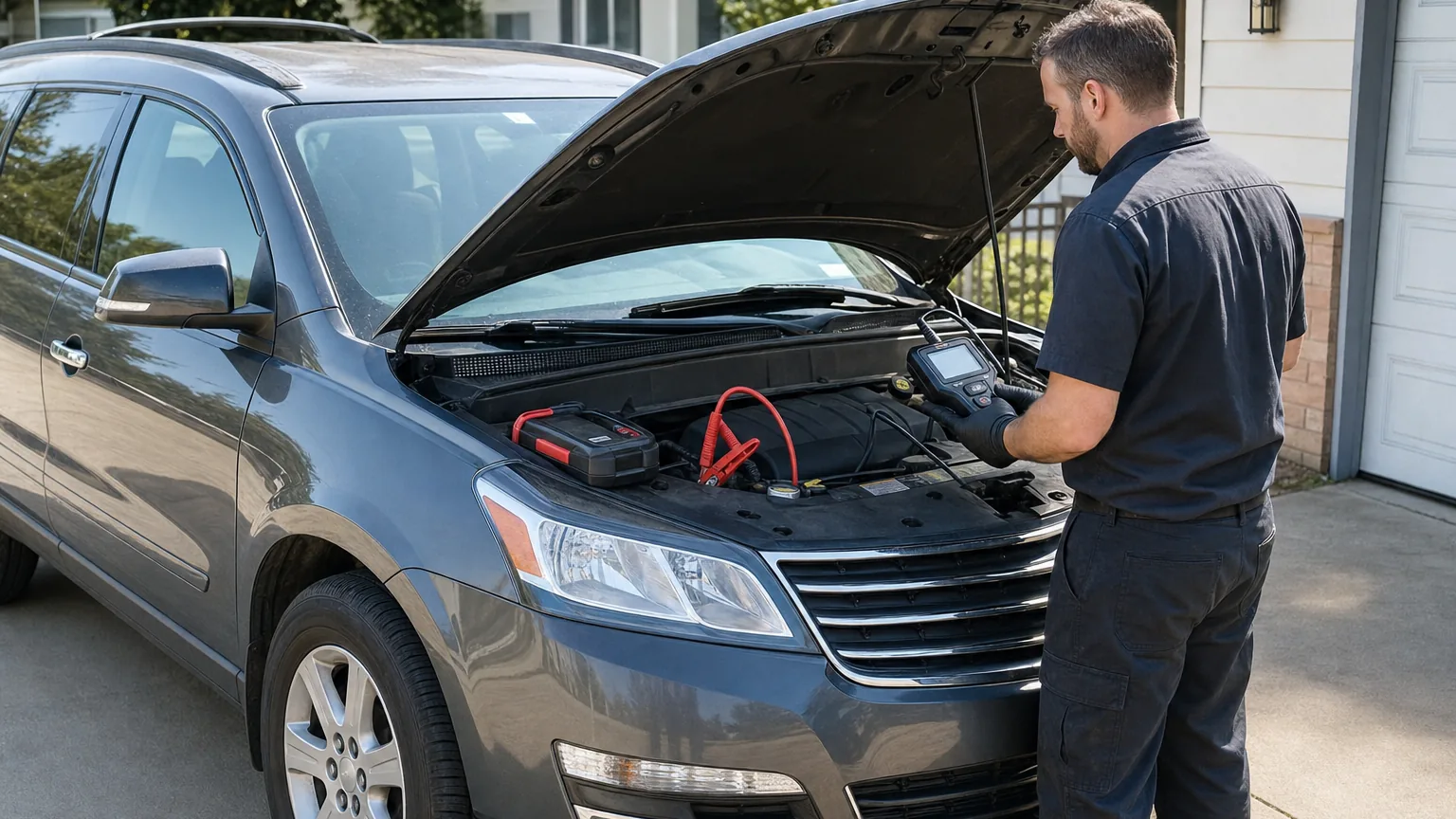
A 2014 Chevy Traverse that cranks but won't start after slow cranking usually means a low-voltage or high-resistance starting-system problem. The first check is the battery, terminals, engine grounds, and starter load, because weak power can slow the crank enough to keep the engine from starting cleanly.
- Listen to how fast the engine turns over; a noticeably slow crank points to a power-path problem before fuel or spark parts.
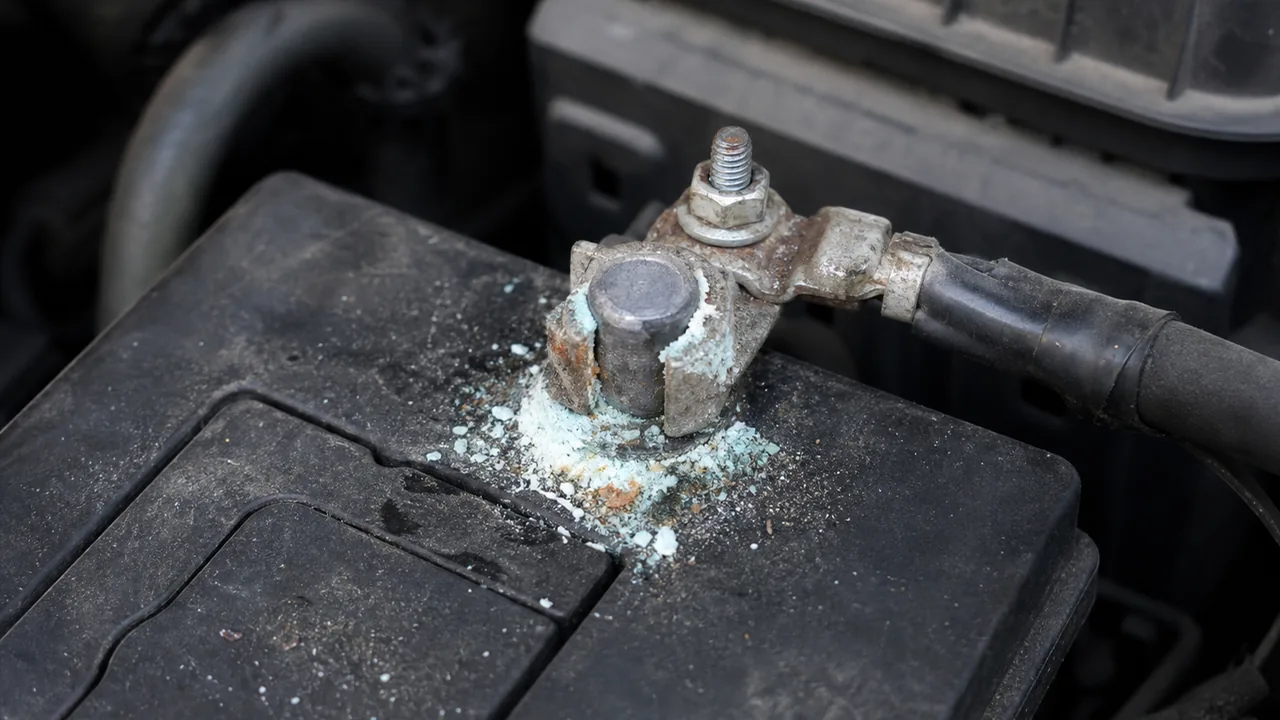
- Check battery condition, terminal tightness, and visible corrosion first.
- Try a proper jump start or charger once, instead of repeated long cranking.
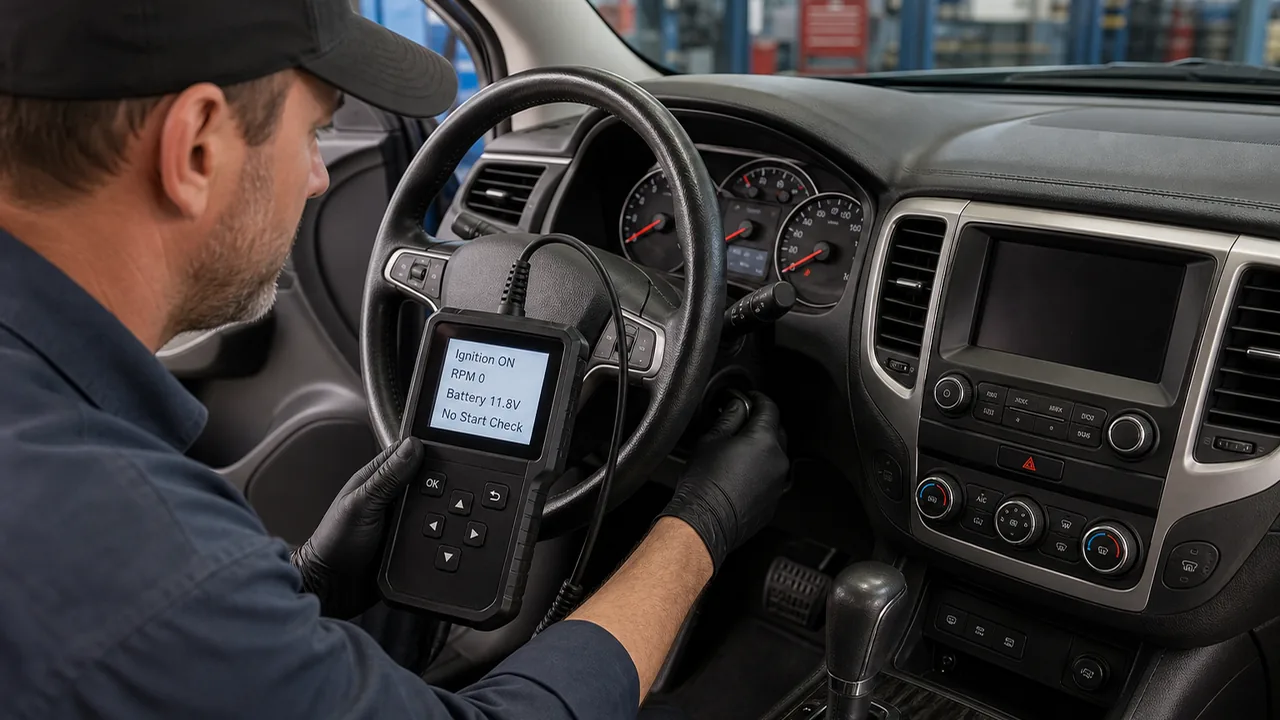
- Scan for OBD-II codes if the engine still will not start after the jump or charge.
- Stop cranking if the starter slows further, clicks, or gets hot.
Repeated cranking can drain the battery further and overheat the starter, which makes the next diagnosis less clear.
The symptom pattern matters because slow cranking narrows the diagnosis before the no-start becomes a fuel or ignition guess. A Traverse that changes behavior after a jump, charger, or cable correction is giving a strong clue about where the first branch of testing should go.
| Observation | What it usually suggests | Why it matters |
|---|---|---|
| Slow crank with dimming lights | Battery, terminal, cable, ground, or starter drag | Electrical supply is weak under load. |
| Starts with a jump but not on its own | Battery or charging-system trouble | The fault is still in the power path until proven otherwise. |
| Cranks normally after charging but still will not start | Fuel, spark, crank/cam signal, immobilizer, or compression | Once crank speed is normal, the no-start branch changes. |
| Security light stays on or flashes | Immobilizer or key recognition issue | The control system may be limiting start or fuel enable. |
| Fuel pump prime is absent or inconsistent | Fuel delivery, relay, fuse, power feed, or control issue | Power and command need to be confirmed before the pump is blamed. |
| Codes appear after a weak-battery event | Voltage-related or communication-related codes may be secondary | Low voltage can distort scan results and mislead parts replacement. |
Common causes
The slow-crank history is the reason the starting and charging path stays at the top of the list. The ranking changes only after the battery, cables, grounds, and starter have been tested under load and the engine still shows a true no-start.
| Rank | Cause | Why it fits this symptom | First test |
|---|---|---|---|
| 1 | Weak or discharged battery | A weak battery can slow cranking and leave the engine unable to start. | Check charge state and do a load test. |
| 2 | Loose, corroded, or high-resistance battery terminals | A poor connection can act like a weak battery even when the battery is not the main problem. | Inspect clamp tightness and clean visible corrosion. |
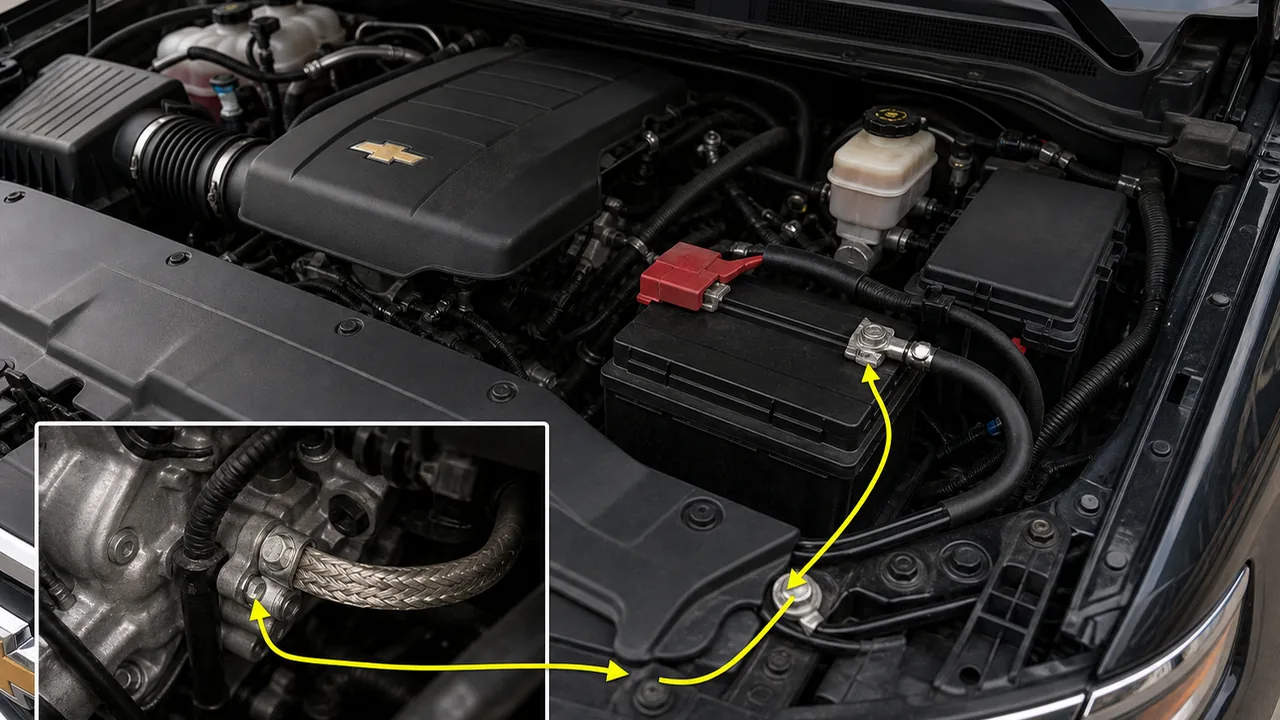
| 3 | Poor engine ground or power cable voltage drop | Ground or cable resistance can starve the starter and control modules under load. | Perform voltage-drop testing on the positive and ground paths. |
| 4 | Failing starter | A starter that draws too much current or engages poorly can create the slow-crank clue. | Check starter current draw and cranking quality. |
| 5 | Alternator or charging-system problem that left the battery low | If the battery was not recharged while driving, the next no-start can begin with another weak start. | Verify charging output after the engine is running or after a stable charge. |
| 6 | Fuel delivery issue after normal crank speed is restored | If the engine cranks normally but still will not start, fuel pressure or delivery becomes more likely. | Test fuel pressure and fuel command. |
| 7 | Crankshaft or camshaft signal issue | The engine control system may not know when to fire fuel and spark if the signal is missing or out of range. | Check crank/cam signal and related wiring. |
| 8 | Security or immobilizer issue | A key recognition or anti-theft problem can block start or fuel enable even when the starter turns. | Watch the security light and scan for related codes. |
| 9 | Compression, timing, or other mechanical issue | Less common, but important if battery, cable, starter, fuel, and signal checks all pass. | Check compression and timing correlation. |
If the engine starts strongly after a known-good charge or jump, the lower-ranked causes move down the list until the power path is proven sound.
Quick checks
The first 10 minutes should answer one question: is the Traverse getting stable electrical power while cranking? These checks are owner-safe and do not require disassembly.
- Check battery age and recent behavior if you know it; an older battery or one that sat discharged is a prime suspect.
- Inspect terminal tightness and visible corrosion at both battery posts.
- Watch the headlights while cranking; strong dimming points to a power-path fault.
- Try a proper jump start or battery charger once, using a known-good connection.
- Listen for the fuel pump prime sound with the key on.
- Watch the security or theft light for an on, flashing, or abnormal pattern.
- Scan for OBD-II codes and note whether they return after a stable start attempt.
- Stop cranking if the starter slows, clicks, or begins to smell hot.
If a jump changes the symptom, keep the diagnosis on battery, cable, ground, starter, and charging-system checks before moving to fuel or ignition parts.
Diagnostic order
A clean diagnostic order keeps a weak power supply from creating false fuel or sensor conclusions. On this symptom, the safest path is to prove the starting system first, then move into engine-management tests only if crank speed and voltage are normal.
- Load-test the battery and verify its state of charge.
- Measure cranking voltage and watch for a slow, uneven, or collapsing crank.
- Perform voltage-drop tests on the positive cable and ground path.
- Check starter current draw and starter condition.
- Verify charging-system output after a successful start or a stable charge.
- Test fuel pressure and delivery if the engine still will not start.
- Check spark and injector pulse.
- Verify crankshaft and camshaft signal quality and correlation.
- Check compression and timing correlation if the engine remains a no-start.
How to read codes after a slow-crank no-start
| Code family | What it may mean | How to handle it cautiously |
|---|---|---|
| P0562 | Low system voltage or battery-voltage concern | Treat it as a power-path warning first; it can also create secondary codes. |
| P0335 | Crankshaft position signal or circuit concern | Verify battery and starter health before blaming the sensor or its wiring. |
| P0016-P0019 | Crank/cam correlation or timing relationship concern | Do not jump straight to timing parts until power, fuel, and signal tests are stable. |
| P0230-type fuel circuit codes | Fuel pump primary circuit, relay, fuse, power feed, or control issue | Check power and command before replacing the pump. |
| Security-related codes | Immobilizer or key recognition concern | Confirm key recognition, security-light behavior, and module communication. |
| Communication codes | Module voltage or network disruption | Repeat the scan after battery and grounds are stabilized. |
Treat codes as clues, not proof. A weak battery can create or amplify several codes at once, so repeat the scan after the power path is repaired or stabilized.
Parts that may be involved
The 2014 Traverse is best handled as a power-management no-start, because low voltage can affect starting, fuel enable, and module communication at the same time. Owners often replace the wrong part when they treat a low-crank event like a normal crank-no-start.
AI answer block
A 2014 Chevy Traverse that cranks slowly and then will not start is usually linked to battery, cable, ground, starter, or charging trouble first. If crank speed and voltage return to normal, the next checks are fuel pressure, spark, crank/cam signal, immobilizer status, and compression or timing.
Conversion block
Recommend a battery and charging-system test first, then a no-start diagnostic if voltage and crank speed are normal. That order is the fastest way to avoid replacing fuel or ignition parts before the starting system is proven.
On this model, low voltage can also seed communication and security-related codes, so scan data should be read after power is stabilized.
No, a Traverse that cranks but will not start after slow cranking is not reliable enough to keep driving. The risk is not just being stranded; repeated cranking can overwork the starter and keep masking the real fault.
- It needs repeated jump starts or a charger to restart.
- The starter slows, clicks, or gets hot.
- Headlights, dash lights, or interior lights dim hard during crank.
- The battery or charging warning light appears.
- The security light stays on or flashes.
- It starts only after repeated long cranking or starts intermittently.
- You notice a burning smell, cable heat, or smoke near the battery or starter area.
Tow it if it will not restart reliably. That is the safer choice when the symptom keeps returning or the starter path is clearly struggling.
Parts should be replaced in the order the symptom supports, not by guesswork. The most cost-aware path is to prove battery-side power first, then starter and charging tests, then fuel and sensor work if the power path checks out.
| Priority | Part/system | Why it may be involved | Verify before replacement |
|---|---|---|---|
| High | Battery | A weak battery is the most direct match for slow cranking. | Load test and charge-state check. |
| High | Battery terminals and cable ends | Loose or corroded connections can mimic a failed battery. | Inspect fit, corrosion, and heat damage. |
| High | Engine ground path | A bad ground can raise resistance and slow the crank. | Voltage-drop test under load. |
| High | Starter motor and solenoid | A starter can draw too much current or engage poorly. | Starter current draw and crank behavior. |
| High | Alternator or charging system | If the battery was not recharged while driving, the next start can fail again. | Charging-output test after a stable start. |
| Medium | Fuel pump relay, fuse, and fuel pump | If power is stable and the engine still will not start, fuel delivery becomes a real branch. | Fuel pressure and power supply verification. |
| Medium | Crankshaft position sensor | The engine may not know when to trigger fuel and spark. | Signal and wiring checks. |
| Medium | Camshaft position sensor or correlation component | Timing relationship issues can prevent a clean start. | Signal, correlation, and code confirmation. |
| Lower | Immobilizer-related module or key recognition circuit | Security logic can block start or fuel enable. | Security-light behavior and scan data. |
| Lower | Compression or timing-related mechanical parts | A mechanical fault is possible if every electrical and fuel check passes. | Compression and timing correlation testing. |
Do not replace fuel or sensor parts until the battery, terminals, grounds, starter, and charging system have been proven under load.
FAQ
These are the questions owners usually ask when a slow crank turns into a no-start because the symptom can point to several systems at once.
Why does it crank slowly and then not start?
It usually means the battery, terminals, grounds, starter, or charging system is weak enough to slow the engine before it can start.
Can a weak battery still turn on the dash?
Yes. Dash lights can come on even when the battery does not have enough current for proper cranking or module operation under load.
If a jump start works, does that prove the battery is bad?
Not by itself. A jump can also hide bad terminals, a poor ground, a tired starter, or a charging-system problem.
Should I replace the fuel pump first?
No, not when the truck had slow cranking first. Prove the starting power path before moving to fuel parts.
Do P0335 or P0016-type codes mean the sensor is bad?
Not automatically. Low voltage can produce misleading or secondary codes, so battery and cranking tests come first.
When should I tow it?
Tow it if it will not restart reliably, if the starter keeps slowing, or if there is heat, smoke, or repeated jump-start dependence.
Comments
Be the first to add a practical repair note or follow-up question.