
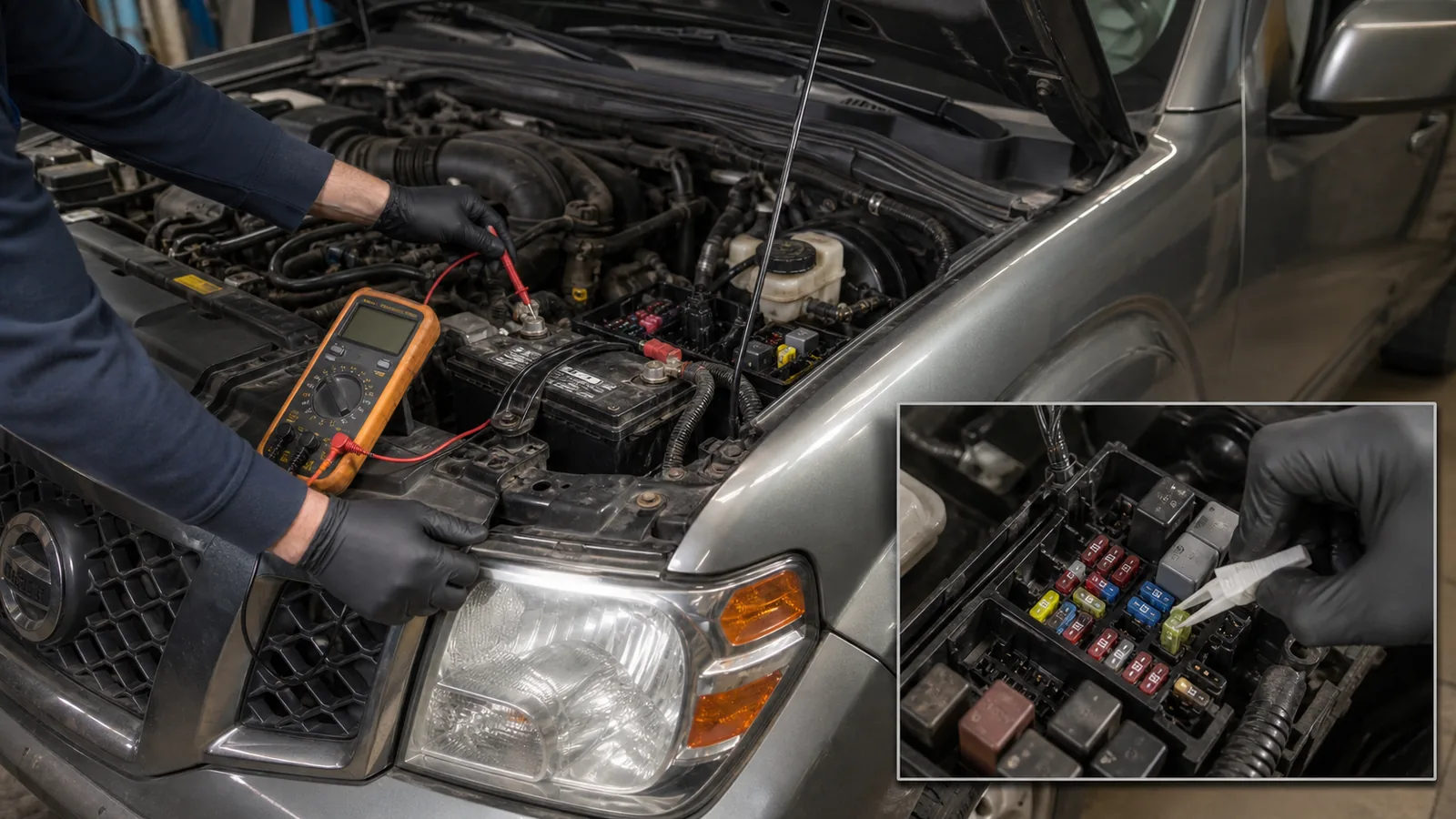
What the symptom usually means
A 2013 Nissan Frontier parasitic battery drain usually means something is staying awake after shutdown and slowly draining the battery. First, confirm the battery and charging system are healthy, let the truck enter sleep mode, measure key-off draw safely, then isolate the fuse path that changes the draw.
High-current meter mistakes can damage the meter, vehicle wiring, or electronic modules. Do not move the meter leads, crank the engine, or probe unfused high-current circuits while set up for current testing.
- Battery dead after sitting overnight or for a few days
- Repeated jump starts with no obvious lights left on
- Battery tests weak after being discharged several times
- No-start after parking, but normal cranking after charging
- Accessories, lamps, alarms, or trailer wiring that seem active after shutdown
A parasitic draw can happen with no check-engine light and no stored DTC. If body, charging, keyless entry, security, or communication codes are present, treat them as clues, not proof of the failed part.
Common causes
- Aftermarket wiring such as radios, alarms, remote starts, dash cameras, chargers, or tracking devices
- Stuck lamps, including glove box, dome, cargo, under-hood, or bed lighting
- Relays that remain energized or contacts that stick closed
- Modules that do not go to sleep because of a wake signal, network issue, or input fault
- Audio, accessory, power outlet, or infotainment-related circuits
- Trailer wiring, tow connectors, and corrosion in added harnesses
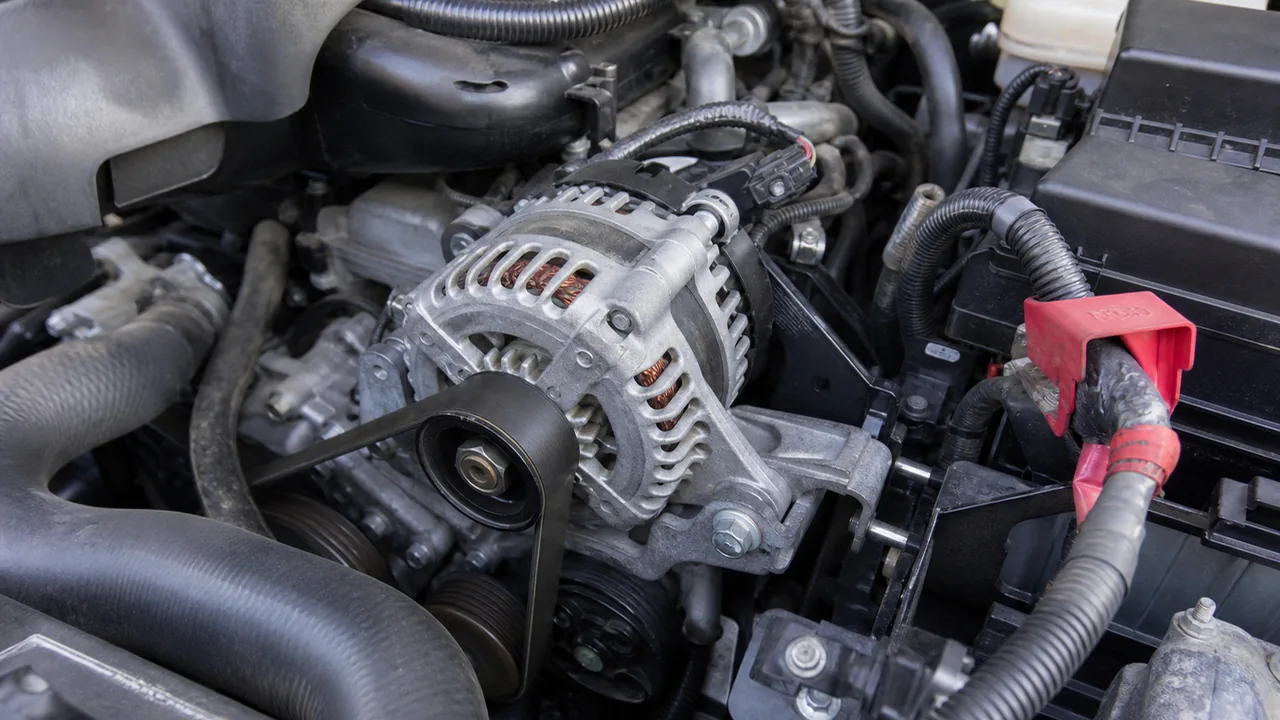
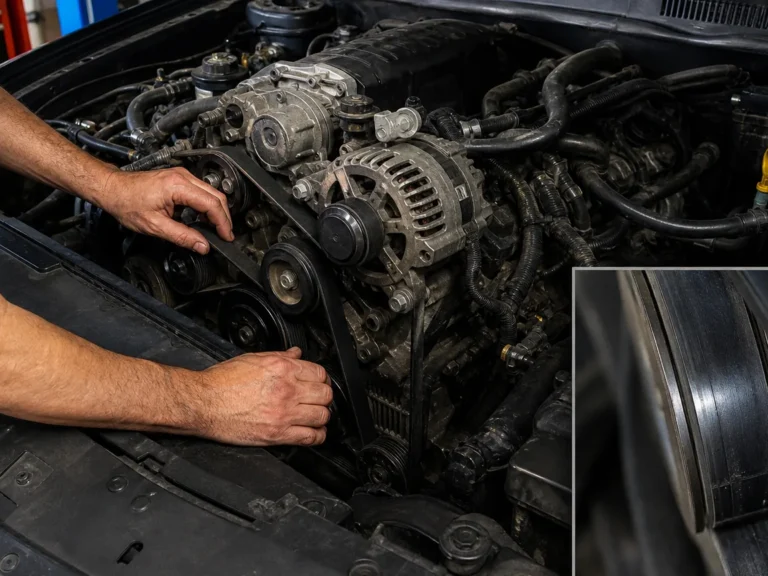
- Charging-system leakage, including alternator diode-related drain symptoms
- Harness damage, water intrusion, rubbed wiring, or prior repair splices
| Cause family | What usually confirms it |
|---|---|
| Add-on wiring | Draw changes when the added device is unplugged or its dedicated fuse is isolated. |
| Lamp circuit | A hidden lamp is warm, visible in a dark area, or loses power when the suspect fuse path is opened. |
| Module wake-up | A scan tool shows a module staying awake or repeatedly waking after the truck should be asleep. |
| Charging leakage | Battery drain remains tied to the charging circuit after normal accessory paths are ruled out. |
Quick checks
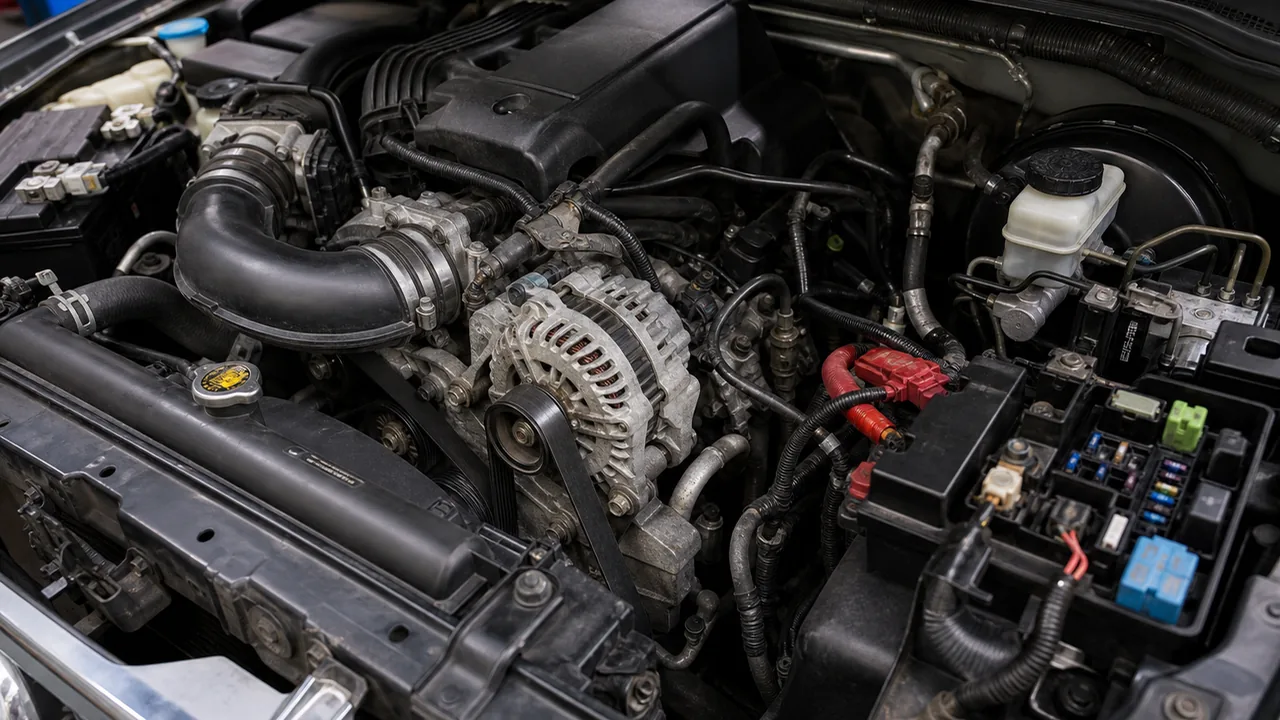
- Test or replace a questionable battery before chasing a draw.
- Clean and tighten battery terminals and ground connections.
- Check glove box, dome, cargo, under-hood, and bed lamps in a dark setting.
- Unplug phone chargers, dash cameras, plug-in accessories, and trailer adapters.
- Inspect aftermarket radio, alarm, remote-start, amplifier, or accessory wiring.
- Confirm doors, hood, and latch switches are not keeping modules awake.
Opening doors, pressing the key fob, pulling fuses, or connecting a scan tool can wake modules and change the reading. Set the truck up once, then disturb it as little as possible.
Diagnostic order
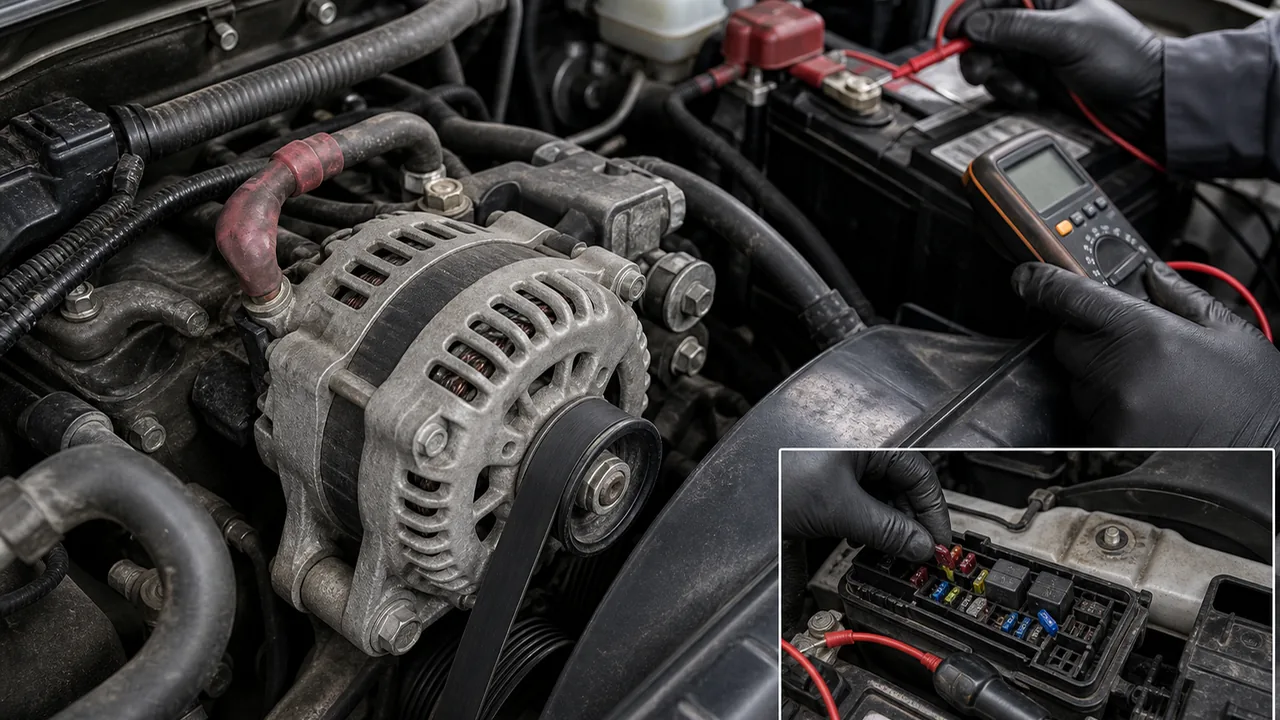
Tools needed and safety limits
- Battery tester or known-good battery check
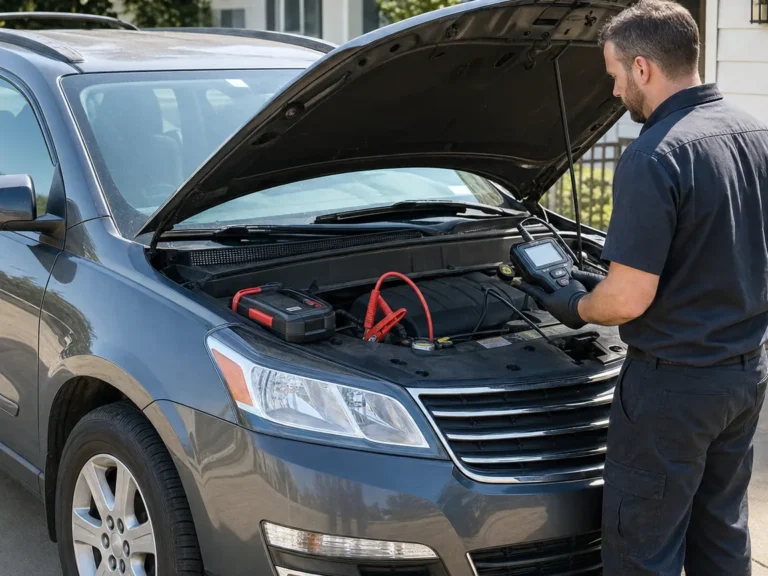
- Multimeter with current capability, used within its rated limits
- Low-current clamp meter if available
- Fuse voltage-drop chart or service information
- Scan tool for body, charging, and communication modules
- Wiring diagram for the exact truck configuration
- Confirm the battery is healthy and fully charged before draw testing.
- Check charging system operation so a weak charge is not mistaken for a parasitic drain.
- Prepare the truck for sleep mode with lights off, doors latched, and accessories unplugged.
- Connect the meter or clamp in a way that does not interrupt memory power or overload the tool.
- Wait for modules to go to sleep before judging the reading.
- Use fuse voltage-drop testing when possible, or pull fuses carefully while watching for module wake-up.
- When a fuse path changes the draw, identify every component on that circuit with service information.
- Inspect and unplug components on that circuit only when safe, then confirm the draw stays normal after repair.
Do not pull fuses randomly while guessing. Pulling the wrong fuse can wake modules, erase evidence, or lead you toward the wrong circuit.
Use an automotive electrical diagnosis path when the battery and charging system pass but the active fuse path still points to a shared circuit. The next step is controlled circuit isolation, component confirmation, and a final draw test after the repair.
Parts that may be involved
A Frontier owner may see a draw at a fusible-link or main-feed path before the fault is narrowed to a smaller circuit. That does not prove the fusible link is bad. It means downstream fuse paths, relays, modules, and add-on equipment still need to be separated and tested.
Review model-specific fuse names, panel locations, circuit labels, and current specifications before publication or repair. Do not disconnect airbag, BCM, or network module connectors as casual DIY steps.
If the truck starts normally after a full charge and the battery tests healthy, short local use may be possible while you arrange diagnosis. If the battery repeatedly dies, terminals spark heavily, wiring smells hot, fuses blow, or accessories behave unpredictably, stop DIY testing and have the electrical system checked.
FAQ
Can a parasitic draw happen with no DTC?
Yes. A parasitic draw can occur without a stored code because the issue may be a lamp, relay, accessory, wiring path, or module that stays awake without triggering a fault. If body, charging, or communication codes are present, use them to guide testing.
Can pulling fuses hide the problem?
Yes. Pulling a fuse can wake modules, reset a circuit, or temporarily stop the behavior you were trying to measure. Fuse voltage-drop testing or a carefully planned fuse-pull sequence is safer than random removal.
Can the alternator drain the battery while parked?
Yes, charging-system leakage can drain a battery while parked, including faults associated with alternator diode behavior. Confirm the battery and charging system before blaming interior modules or accessories.
Is an aftermarket radio or alarm a common place to look?
Yes. Aftermarket radios, alarms, remote starts, amplifiers, dash cameras, and chargers are practical early checks because they are often added outside the factory harness and may keep a circuit awake.


Comments
Be the first to add a practical repair note or follow-up question.