
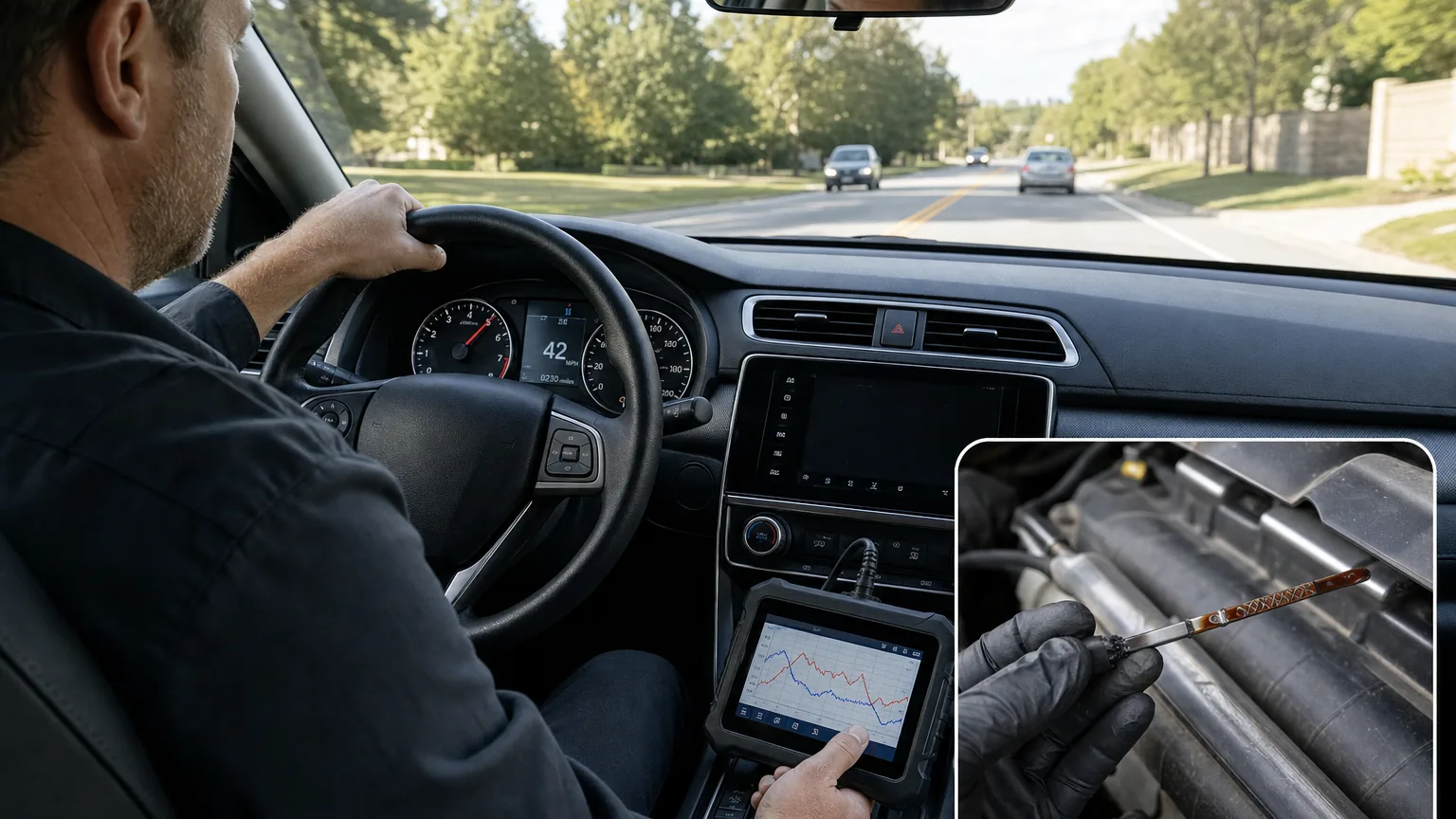
What the symptom usually means
Transmission slipping during acceleration through the gears usually means engine RPM increases faster than vehicle speed because the transmission is not holding or applying the correct gear firmly. Common cause families include low or degraded fluid, overheating, solenoid or valve body problems, torque converter issues, sensor or TCM faults, or internal clutch wear.
It often feels like the engine revs rise, the vehicle does not pull with matching force, and then the transmission catches again with a delay, shudder, or harsh re-engagement. That mismatch matters because every repeated flare can add heat and wear while also making acceleration less predictable.
First action: ease off hard acceleration, avoid towing or steep-load driving, and inspect for leaks or warning lights before driving farther. Severe or repeated slipping can add heat and wear quickly.
Common causes
Low fluid and fluid problems are first because they can directly affect hydraulic apply force. Electronic and hydraulic control issues come next because a transmission can be mechanically sound but still slip if the commanded pressure, shift timing, or converter control is wrong.
- Low fluid or an active leak can reduce hydraulic apply force and cause flare, delayed engagement, or slipping under load.
- Wrong, old, contaminated, or overheated fluid can affect clutch apply quality and valve body operation.
- Restricted fluid flow from a clogged filter or pickup issue can show up more clearly during acceleration demand.
- Shift solenoid, pressure control solenoid, or valve body faults can prevent the transmission from applying the intended clutch pack firmly.
- Torque converter clutch problems can feel like shudder, flare, or unstable lockup depending on vehicle design and driving condition.
- Speed sensor, throttle input, load signal, or TCM communication faults can cause incorrect shift timing or pressure commands.
- Software, adaptation, or relearn issues may matter after battery work, transmission service, or control module replacement.
- Worn clutches, bands where fitted, seals, bushings, or internal leakage can cause repeat slipping even when fluid level and commands look reasonable.
A ranked cause list is not a replacement for testing. It simply keeps the diagnosis in a practical order so accessible evidence is checked before internal repair is assumed.
Quick checks
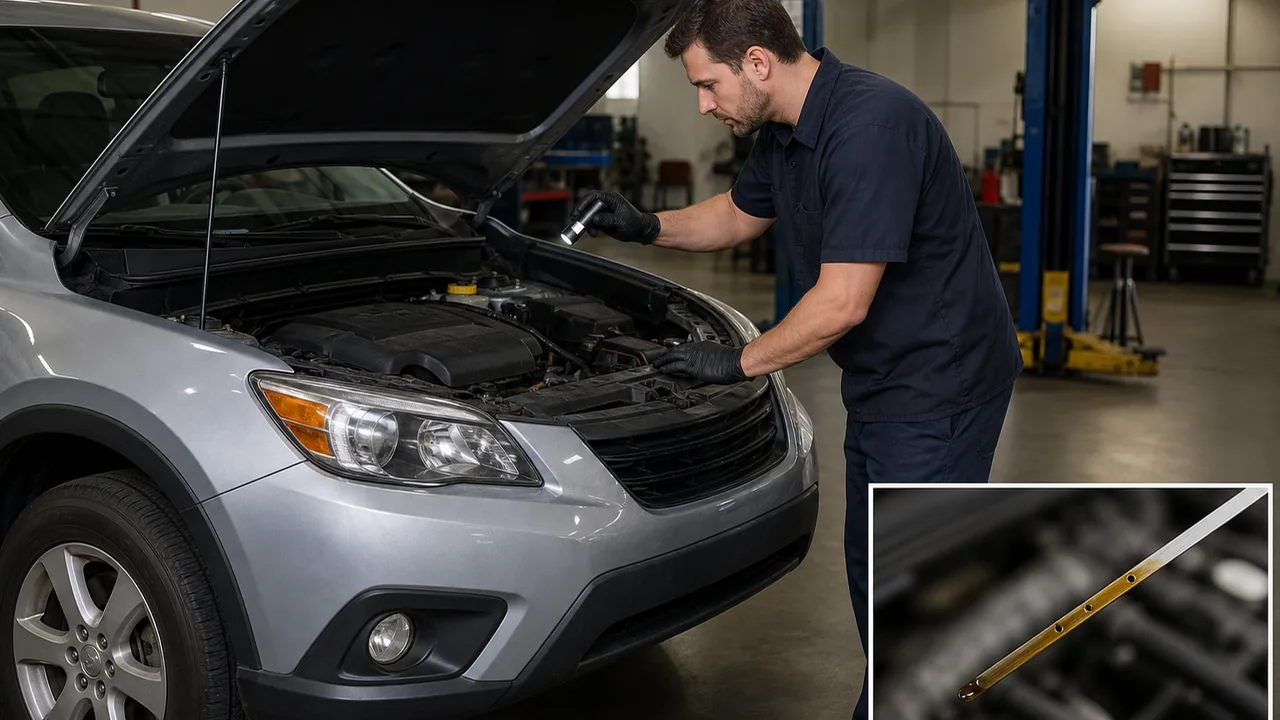
A useful owner note is simple: when the flare happens, what gear change seems involved, whether road speed catches up, and whether the vehicle later shifts normally. Those details help separate a real transmission slip from engine hesitation, traction control intervention, or normal CVT behavior.
Also note whether the symptom appears only when cold, only after warm driving, during uphill acceleration, during passing, after a recent service, or after a battery or control-module event. Pattern matters because heat-related slipping, service-related fill problems, and input-signal faults can point the diagnosis in different directions.
If the vehicle uses a sealed or temperature-dependent fill procedure, do not guess the level. A wrong fill method can create the same symptoms you are trying to diagnose.
When it is urgent
The practical question is not only whether the vehicle still moves. It is whether the transmission can apply power predictably without adding heat or forcing slipping clutches to keep working under load. If acceleration becomes uncertain, the safest next move is to stop normal driving and arrange inspection or towing.
- Stop driving if acceleration becomes unpredictable in traffic or the vehicle hesitates before moving when you press the accelerator.
- Stop driving if the transmission flares badly and then bangs into gear, because harsh re-engagement can indicate uncontrolled apply behavior.
- Stop driving if fluid is visibly leaking, dripping after a drive, or leaving fresh marks under the vehicle.
- Stop driving if smoke, burnt odor, or a strong hot-fluid smell appears with the slipping event.
- Stop driving if a transmission warning light, check-engine light with drivability change, limp mode, or no-movement condition appears.
- Schedule diagnosis soon if the symptom is mild but repeatable, especially under load, uphill, when warm, or during passing.
- Do not keep recreating the slip to prove the problem; a short description and scan data are safer evidence than repeated hard acceleration.
Drive cautiously only when the slip was isolated, the vehicle engages normally, there is no leak or burnt smell, no warning light, and the route is short enough to reach inspection without heavy throttle, towing, steep grades, or repeated test runs.
Diagnostic order
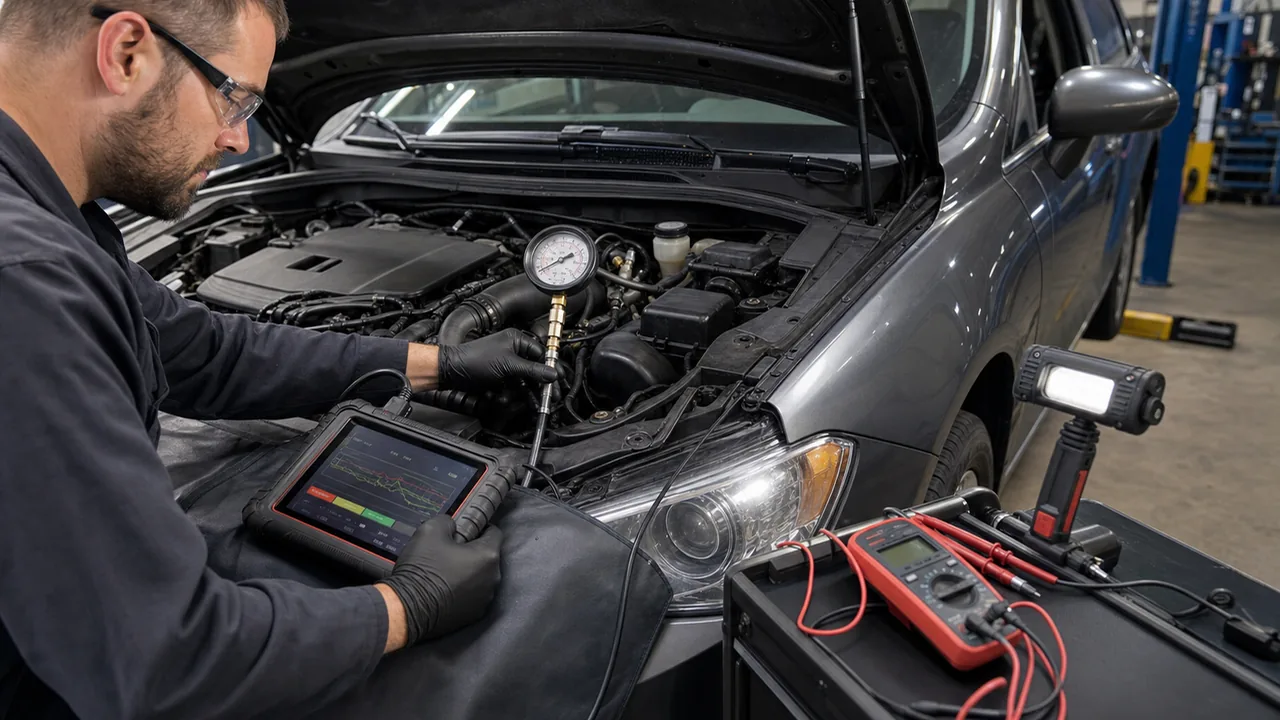
The key diagnostic split is command versus result. If the control module commands a gear and the measured ratio does not follow, testing moves toward hydraulic pressure, clutch apply, fluid condition, sensor accuracy, and internal leakage. If the command itself is wrong, input signals, software, wiring, and control logic need attention first.
- Confirm the slipping event without aggressive repeated acceleration.
- Inspect fluid and leaks using the correct vehicle procedure.
- Scan all relevant modules and save DTCs before clearing anything.
- Compare commanded gear with actual ratio during a controlled road test.
- Check torque converter clutch behavior if the symptom occurs during lockup or steady cruise.
- Use pressure, electrical, and control tests to separate hydraulic faults from command faults.
- Make the repair decision only after the failed system is identified.
A symptom tells you what the driver feels; a DTC tells you what the control system noticed. Both can be incomplete. A vehicle can slip before a code sets, and a code can point to a circuit, ratio error, or converter behavior without proving which part is physically failed.
| Code or clue | What it can mean | What still needs testing |
|---|---|---|
| P0700 or transmission control flag | The transmission control system has reported a fault. | The specific stored code, freeze-frame data, and module scan results. |
| Ratio codes such as P0730-family faults | The expected gear ratio did not match the observed ratio. | Whether the cause is fluid, hydraulic control, sensor input, or internal clutch slip. |
| Shift solenoid codes such as P0750-series faults | A commanded shift circuit or solenoid function may be abnormal. | Connector condition, wiring, solenoid command, valve movement, and hydraulic result. |
| Torque converter clutch codes such as P0741 | Converter clutch apply or release behavior may not match command. | Whether the issue is converter, fluid, valve body, electrical, or control related. |
| Pressure control codes such as P0776 | Pressure control response may be stuck, slow, or out of range. | Actual pressure behavior and whether the problem is electrical, hydraulic, or mechanical. |
Parts that may be involved
The same symptom can involve maintenance items, external seals, electrical controls, hydraulic controls, or internal friction elements. That is why a credible repair recommendation should name the failed system and the evidence behind it, not simply state that the transmission is slipping.
| Finding | Likely repair direction | Caution |
|---|---|---|
| Low fluid with an external leak | Repair the leak and correct fluid level by the vehicle procedure. | Do not assume the slip is fixed until it is retested under the same conditions. |
| Degraded or incorrect fluid | Verify correct fluid specification and service history before deciding on service. | Fluid service may not repair already worn clutches. |
| Solenoid or valve body fault | Test electrical command and hydraulic response before replacing parts. | A code alone does not prove the solenoid is the only failed part. |
| Converter clutch fault | Confirm converter apply behavior and related controls. | Shudder, flare, and lockup faults can overlap with fluid and valve body issues. |
| Confirmed internal clutch slip or leakage | Internal repair, rebuild, or replacement may be needed. | This should be based on test evidence, not only the driver’s description. |
Do not treat slipping as a condition that needs to be reproduced over and over. A few clear notes about RPM flare, road speed, shift timing, warning lights, and driving condition are more useful than repeated hard-throttle tests that add heat and wear.
- Avoid repeated hard-throttle tests, towing tests, steep-hill tests, or passing maneuvers to prove the symptom.
- Avoid guessing fluid type or fill level, especially on sealed or temperature-dependent transmissions.
- Avoid overfilling the transmission; too much fluid can create its own shifting and aeration problems.
- Avoid random additives as the main repair plan because they can mask evidence and may not match the fluid specification.
- Avoid clearing transmission or engine codes before recording them with freeze-frame or event data where available.
- Avoid adaptation resets, relearns, or module programming unless the procedure is correct for that vehicle and the mechanical condition is known.
- Avoid replacing the transmission before scan data, fluid inspection, leak checks, control checks, and hydraulic evidence support that decision.
- Avoid assuming an engine hesitation is transmission slip without comparing RPM, road speed, throttle/load signal, traction-control activity, and shift behavior.
If the vehicle smells burnt, leaks fluid, enters limp mode, or nearly stops moving, the safest response is to stop normal driving rather than trying one more drive cycle.
FAQ
Is it safe to drive with transmission slipping during acceleration?
It is not safe to continue normal driving if slipping is repeated, severe, paired with burnt smell, leaking fluid, warning lights, limp mode, or loss of movement. If the symptom is mild and isolated, drive gently only as needed to arrange diagnosis.
Can low transmission fluid cause slipping through the gears?
Yes. Low fluid can reduce hydraulic apply force and cause delayed engagement, flares, or slipping under load. The leak source and correct level procedure still need to be verified for the specific vehicle.
Can a scan tool diagnose transmission slipping?
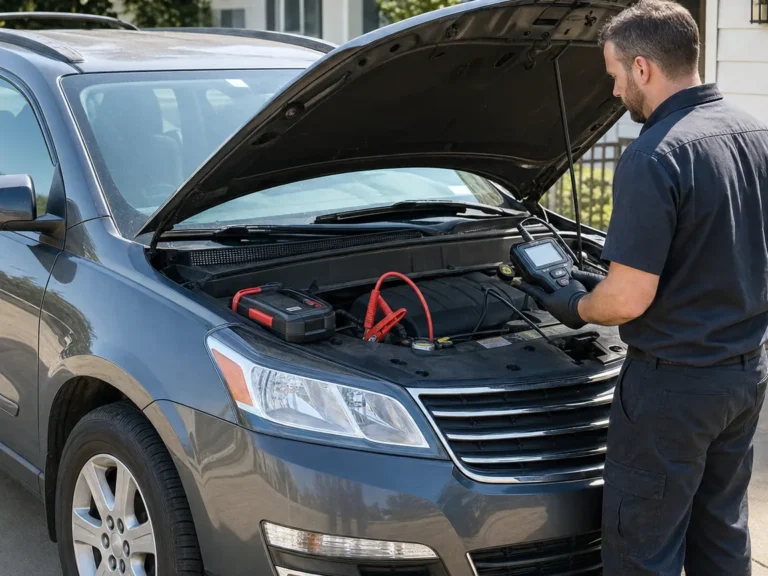
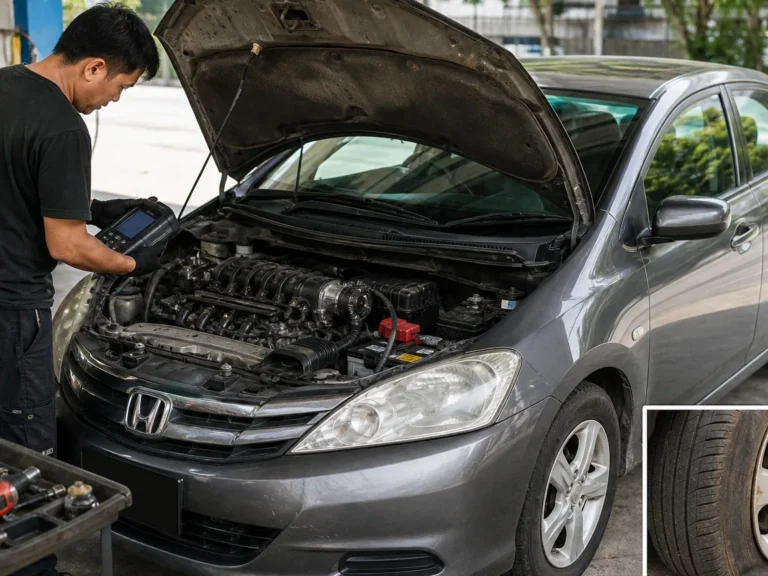
A scan tool can show DTCs, commanded gear, actual ratio, speed signals, load data, and converter behavior where supported. It helps guide testing, but it does not replace fluid inspection, road-test confirmation, and hydraulic or electrical checks.
Does slipping always mean the transmission needs a rebuild?
No. Slipping can come from low fluid, leaks, incorrect fluid, control faults, solenoids, valve body issues, torque converter faults, or internal wear. A rebuild or replacement should be considered only after diagnosis confirms internal failure.
How do I tell transmission slip from an engine misfire or fuel problem?
Transmission slip usually shows RPM rising without matching vehicle speed or pull. Misfire or fuel delivery problems often feel like stumbling, bucking, loss of power, or engine roughness without a clean gear-ratio flare.
Can traction control feel like transmission slipping?
Yes. Traction control can reduce power or interrupt acceleration when wheel slip is detected. A technician separates it by checking warning indicators, wheel-speed data, throttle command, engine torque reduction, and actual transmission ratio behavior.
Comments
Be the first to add a practical repair note or follow-up question.