
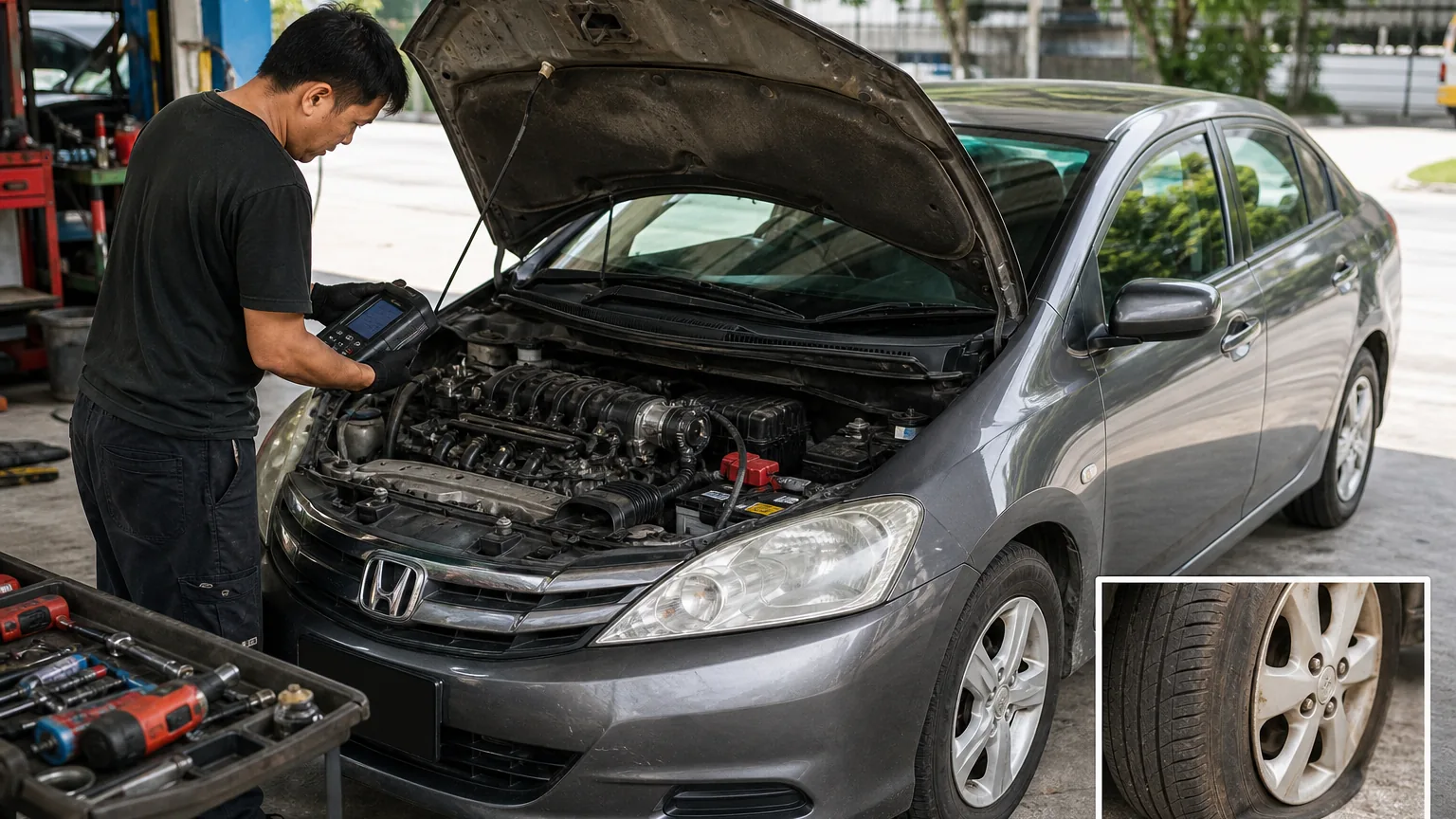
What the symptom usually means
Poor fuel economy with smooth running in a Honda City GM2 usually points to a measurement, drivetrain, or maintenance issue rather than a hard misfire. First, confirm that the fuel consumption change is real, then check for urgent warning signs such as a fuel smell, visible leaks, overheating, a strong burning smell, dragging brakes, flashing warning lights, or a sudden severe drop in economy, because those need prompt service even if the engine still feels normal.
A smooth-running engine is useful diagnostic information, but it does not rule out hidden efficiency problems. It makes a severe misfire less likely, yet poor fuel consumption can still come from low tire pressure, brake drag, short-trip use, extra load, overdue maintenance, air metering issues, oxygen sensor or fuel trim drift, incorrect temperature control, or transmission behavior that keeps the engine working harder than expected. In other words, the car can feel normal to the driver while still using more fuel than it should.
The safest path is to confirm the consumption change, inspect the simple physical causes, review recent maintenance, scan for stored and pending faults, and then use live data before replacing parts. That approach helps separate owner-safe checks from technician-level diagnosis and keeps the repair focused on evidence rather than guesswork.
Common causes
Poor fuel economy in a Honda City GM2 that runs smoothly usually points to a measurement, drivetrain, or maintenance issue rather than a hard misfire. The most likely cause family is hidden efficiency loss, so the first step is to confirm real fuel consumption, check simple owner-safe items, and then review OBD live data before replacing parts. A smooth-running engine does not rule out rich fueling, brake drag, excess rolling resistance, a thermostat or temperature-control problem, overdue maintenance, or changing route and traffic conditions. Most likely causes to check first – Tire pressure, extra load, roof accessories, and recent driving-pattern or traffic changes that quietly raise fuel use. – Brake drag, wheel resistance, or a transmission behavior issue that makes the car work harder without obvious roughness. – Basic maintenance condition, especially an overdue air filter, spark plugs, or neglected service history. – Engine temperature control, including a thermostat or sensor issue that keeps fueling richer than normal. – Air metering, oxygen sensor, fuel trim, or injector-related problems that bias mixture without creating a clear misfire. Seek prompt inspection if you notice fuel smell, visible leaks, overheating, unusual brake heat, a strong burning smell, warning lights, or a sudden sharp change in fuel consumption. Those signs can mean the problem is no longer just an efficiency issue.
Most likely causes to check first
- Tire pressure, extra load, roof accessories, and recent driving-pattern or traffic changes that quietly raise fuel use.
- Brake drag, wheel resistance, or a transmission behavior issue that makes the car work harder without obvious roughness.
- Basic maintenance condition, especially an overdue air filter, spark plugs, or neglected service history.
- Engine temperature control, including a thermostat or sensor issue that keeps fueling richer than normal.
- Air metering, oxygen sensor, fuel trim, or injector-related problems that bias mixture without creating a clear misfire.
Seek prompt inspection if you notice fuel smell, visible leaks, overheating, unusual brake heat, a strong burning smell, warning lights, or a sudden sharp change in fuel consumption. Those signs can mean the problem is no longer just an efficiency issue.
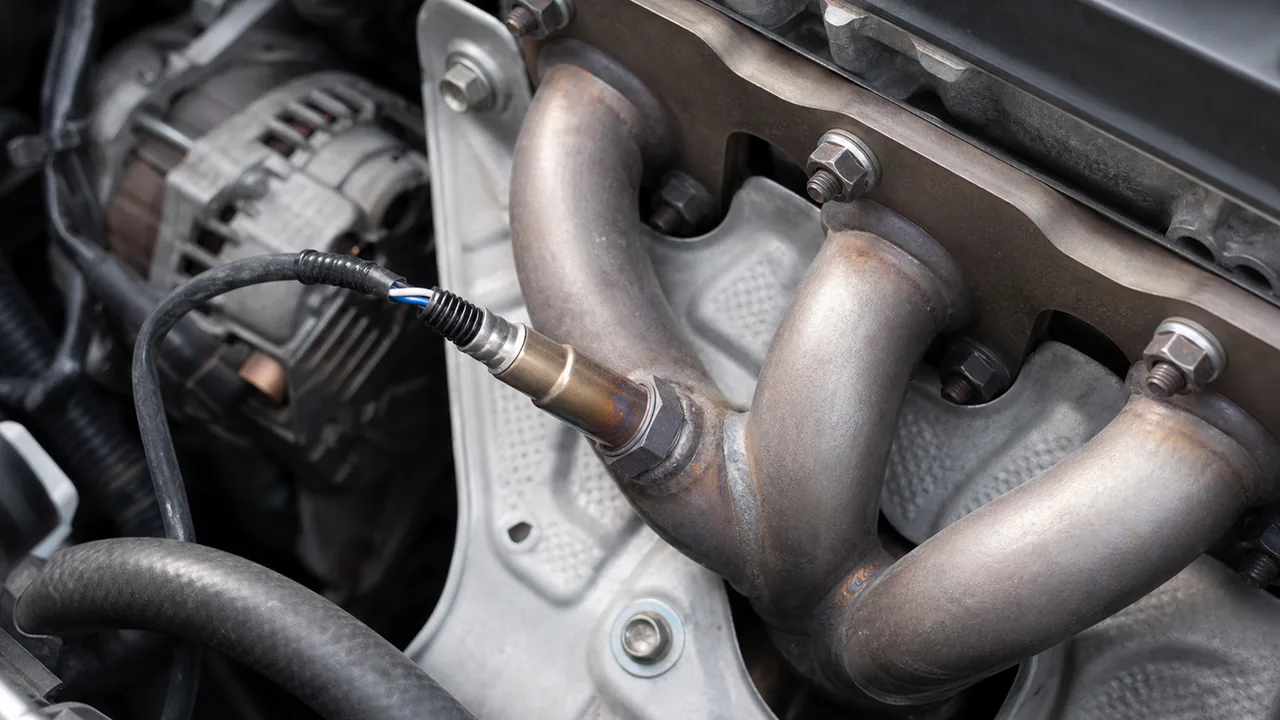
Poor fuel economy with a smooth-running Honda City GM2 usually points to hidden efficiency loss, not proof that the engine is fully healthy. A smooth idle and normal acceleration only show that the engine is compensating well enough to feel refined. They do not confirm that fuel delivery, temperature control, or drivetrain load are all operating efficiently.
One common reason is hidden rich running. The ECU can adjust fuel trim to compensate for a misleading sensor signal, a temperature-related issue, or airflow information that is slightly off. In that situation, the smooth-running engine may still feel normal to the driver while using more fuel than expected. A cold-running engine can create the same impression if the thermostat or coolant temperature signal makes the system behave as if the engine needs a richer mixture longer than it should.
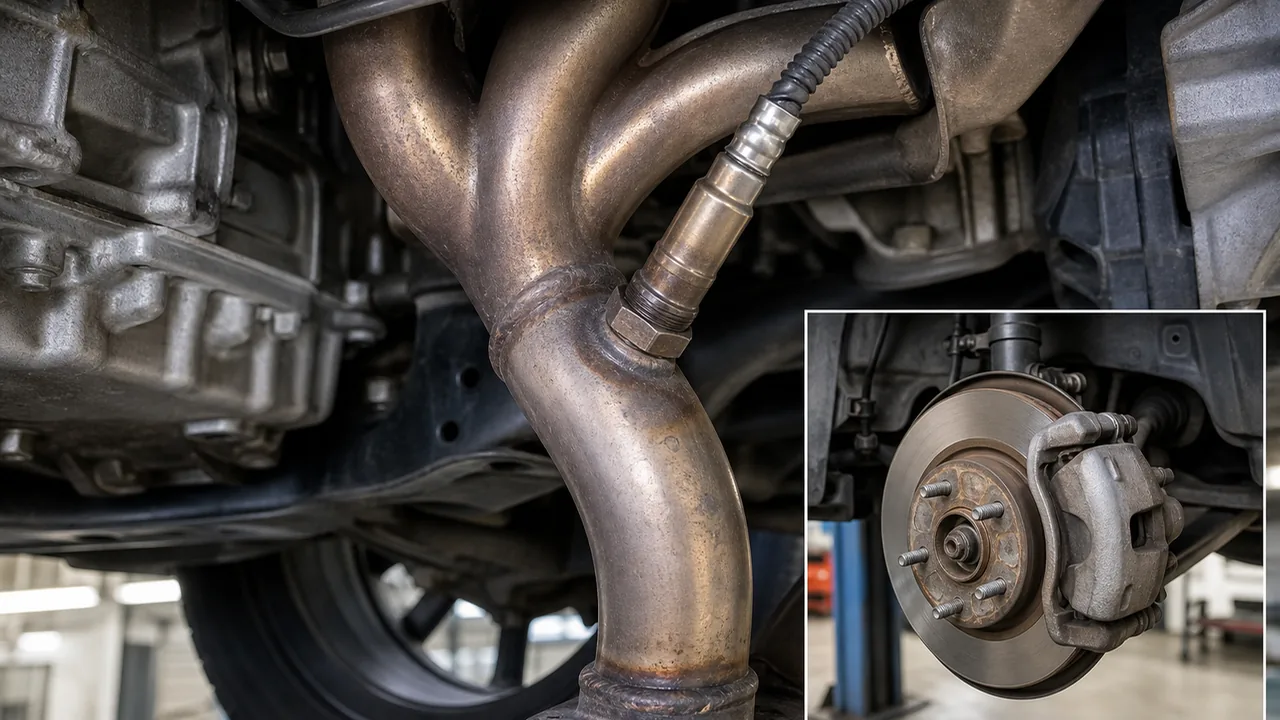
Fuel waste can also happen outside combustion quality. Extra rolling resistance from underinflated tires, alignment problems, heavy load, or a dragging brake can make the Honda City fuel economy worse without causing roughness. Brake drag is especially misleading because the car may still drive straight and feel normal, yet the engine has to work harder to keep moving.
The key point is simple: smoothness is one clue, not a diagnosis. If poor fuel consumption shows up without obvious drivability symptoms, the next step is to confirm the change, check simple mechanical loads, and then test temperature, fuel trim, and sensor behavior before replacing parts.
Poor fuel economy in a smooth-running Honda City GM2 usually comes from rolling resistance, operating conditions, overdue maintenance, or sensor drift rather than a hard misfire. In practical terms, start with the common load-related causes, then move toward temperature control and fuel-control diagnosis before considering parts replacement.
- Tire pressure, extra load, roof racks, route changes, heavy traffic, short trips, and constant air-conditioning use are the first checks because they raise fuel demand without making the engine feel rough. A car used for short cold runs or slower stop-start driving can show worse Honda City fuel economy even when nothing is broken.
- Brake drag and wheel alignment are high-value physical causes because they add resistance all the time. A dragging brake can feel normal from the driver’s seat at first, yet the car needs more throttle to keep moving. Uneven tire wear, a hot wheel area, or a burning smell after driving can point in this direction.
- Maintenance condition comes next: a restricted air filter, worn spark plugs, old oil, incorrect oil viscosity, or unclear service history can reduce efficiency without causing an obvious stumble. These issues usually show up as gradual poor fuel consumption rather than a sudden severe change.
- Thermostat or coolant temperature sensor problems are important because a smooth-running engine can still stay too cool or report the wrong temperature. That can keep fueling richer than needed, especially after startup, even if idle quality feels normal.
- Oxygen sensor, air-fuel sensor where applicable, MAP or other air-metering issues, and fuel trim drift belong in the next layer. The mechanism is incorrect mixture correction rather than a dramatic drivability fault, so scan data and live readings matter more than guessing from symptoms alone.
- Dirty injectors or a dirty throttle body can contribute later in the process. These can affect spray quality, airflow control, or combustion efficiency, but they are better treated as test-and-confirm items than first guesses.
- Transmission behavior should be checked if the engine sounds smooth but revs seem higher than expected or the car feels reluctant to settle into efficient cruising. Poor shift behavior, converter-related slip, or control issues can raise fuel use without creating a classic engine misfire feel.
If poor fuel consumption is paired with fuel smell, visible leaks, overheating, strong brake heat, or a sudden major change, move from basic checks to prompt inspection instead of continuing to drive and guess.
Poor fuel economy with a smooth-running Honda City GM2 is usually cheapest to solve when the cause is confirmed first, because random replacement of parts often misses the real issue. If the engine feels smooth, the better starting point is to check simple rolling-resistance, maintenance, fuel-control, and temperature-control clues before buying an oxygen sensor, injectors, spark plugs, a thermostat, or transmission-related parts.
| Owner-safe basic checks | Tire pressure, extra load, recent traffic or route change, fuel smell, visible leak signs, brake heat or odor, air filter condition, maintenance history | How much time it takes to inspect the car carefully and whether neglected maintenance is found | It becomes false economy if obvious checks are skipped and parts are bought anyway |
| Diagnostic scan and fuel economy review | Pending codes, fuel trim direction, coolant temperature behavior, oxygen sensor or air-fuel sensor activity where applicable | Scan quality, live-data interpretation, and confirmation time | It becomes false economy if a code alone is treated as proof and a sensor is replaced without testing |
| Targeted follow-up testing | Brake drag, injector contribution concerns, thermostat operation, transmission behavior, or other system-specific causes | Labor access, repeat testing after warm-up, and whether collateral service items are needed | It becomes false economy if multiple expensive parts are swapped before the fault is isolated |
| Blind parts replacement | Only guesses, not a confirmed cause | Total parts spend, repeat labor, and still needing diagnosis afterward | This is the costliest path when the original symptom remains unchanged |
A sensible spending order is simple: confirm the fuel use change, review maintenance records, inspect tire pressure and brake or fuel concerns, then scan live data. If those steps do not explain the poor fuel consumption, a diagnostic inspection or dedicated fuel economy check is the right next spend because it helps confirm the cause before more parts are purchased.
If the Honda City GM2 has fuel smell, visible leaks, overheating, dragging brakes, a strong burning smell, flashing warning lights, or a sudden severe drop in fuel economy, treat that as prompt-service territory rather than a budget experiment. Any repair decision beyond general inspection guidance should be verified by a qualified automotive technician.
Quick checks
Poor fuel economy with a smooth-running Honda City GM2 usually points to a measurement, rolling-resistance, maintenance, or fuel trim issue rather than a hard misfire. The most practical path is to confirm the fuel-use change, then rule out simple owner-safe causes before replacing parts.
- Check tire pressure, extra load, roof racks, and recent traffic or route changes.
- Look for visible brake heat or smell after driving, fuel odor, and any air filter or maintenance issues.
- Scan OBD live data for pending codes, fuel trims, coolant temperature, oxygen sensor behavior, and transmission data if needed.
- Remember that mixture, oxygen sensor, coolant temperature, misfire, or transmission codes support diagnosis, but should not be used alone to replace parts.
If those checks look normal, or if there is fuel smell, visible leakage, overheating, strong burning smell, dragging brakes, flashing warning lights, or a sudden severe increase in consumption, seek prompt qualified inspection. The next step is a diagnostic fuel-economy check with live data, then repair and re-measure.
When it is urgent
Poor fuel economy with a smooth-running Honda City GM2 is often a measurement, drivetrain, or maintenance issue, but it becomes urgent when the change is sudden or comes with safety signs. If the car still runs smoothly yet you notice fuel odor, heat, smoke, or warning lights, treat the fuel consumption problem as a possible safety issue rather than a routine mileage check.
It is usually safe to schedule diagnosis if poor fuel consumption is the only symptom and the car drives normally. Stop driving and arrange prompt service, or tow the vehicle, if any higher-risk symptom appears. Avoid checking leaking fuel, overheated brakes, or under-vehicle problems yourself unless you have the right equipment and experience.
- Stop driving if you smell raw fuel inside or outside the car, or if you see any visible fuel leak.
- Stop driving if the temperature warning appears, the engine begins overheating, or you see smoke.
- Seek urgent service if a strong burning smell or severe brake heat appears after a short drive.
- Treat a flashing warning light or sudden severe power loss as a higher-risk condition.
- Escalate quickly if fuel consumption worsens abruptly instead of changing gradually.
- Monitor closely and book inspection soon if new warning lights, rough shifting, or dragging-brake signs appear.
- Tow the Honda City GM2 if safety signs are present and you cannot confirm the cause safely.
Do not continue driving just because the engine feels smooth. A smooth-running engine can still hide fuel, cooling, or brake problems that need professional diagnosis before parts are replaced.
Diagnostic order
Poor fuel economy with a smooth-running Honda City GM2 usually points to a control, temperature, rolling-resistance, or transmission-efficiency problem that needs measured data, not guesswork. Once the owner-safe checks are done, a technician should follow an inspect-first sequence that confirms where the extra fuel use is coming from before any parts are replaced.
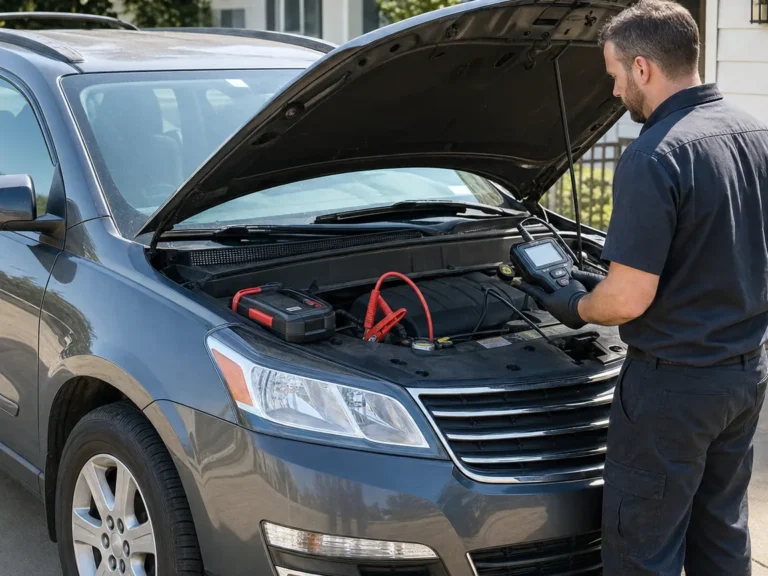
- Start with a full scan for stored and pending faults in the engine system and, where available, the transmission module. The goal is to catch mixture, temperature, sensor, misfire, or shift-related clues even if no warning light is on.
- Review live data with the engine fully warmed using proper test methods. Fuel trim, loop status, coolant temperature reporting, and oxygen sensor or air-fuel sensor behavior can show whether the Honda City GM2 is running richer than expected or staying in an inefficient operating state.
- Compare scan temperature data with actual warm-up behavior and thermostat operation. If reported temperature and real engine behavior do not agree, the engine may be using extra fuel without obvious drivability symptoms.
- Check for brake drag with safe measurement methods and proper equipment rather than wheel feel alone, because slight drag can hurt Honda City fuel economy while the car still feels normal.
- Assess injector condition only if the data points that way. Balance issues, leakage, or poor spray quality should be confirmed through appropriate testing, not assumed from fuel consumption alone.
- Review transmission data, shift behavior, lockup behavior, and fluid condition according to service information, since inefficient shifting can raise poor fuel consumption without making the engine feel rough.
If these early checks do not isolate the cause, the next sensible step is a guided diagnostic session that records live data during real driving, then confirms the repair by rechecking fuel economy after the fault is fixed.
Poor fuel economy with a smooth-running Honda City GM2 can still leave useful fault clues even when no warning light is on. A no-check-engine-light condition does not rule out pending, stored, or history codes, and those clues can help separate a fuel trim or oxygen sensor issue from temperature control, misfire, or transmission-related causes.
If a scan tool shows mixture, oxygen sensor, coolant temperature, misfire, or transmission-related codes, treat them as direction, not proof. A code usually identifies a circuit, system, or behavior the control module did not like. It does not automatically confirm that the named sensor, solenoid, or component is failed. On a Honda City GM2 with poor fuel consumption but a smooth-running engine, replacing an oxygen sensor based only on the code can miss the real cause, such as air metering drift, thermostat operation, wiring trouble, or drivetrain load.
The better approach is to read codes together with live data and basic inspection results. Fuel trim patterns, coolant temperature behavior after warm-up, oxygen sensor or air-fuel sensor response where applicable, misfire counters, and transmission data can show whether the engine is enriching fuel, staying cold, or working against extra load. Visual checks for wiring damage, intake leaks, overdue maintenance, brake drag, and fluid condition still matter because live data only makes sense in context.
Clear codes only after recording them, complete the repair, then recheck for returning codes and re-measure Honda City fuel economy. If scan results are unclear, a qualified technician should verify the diagnosis before any sensor or transmission part is replaced.
Poor fuel economy with a smooth-running Honda City GM2 usually points to a measurement, rolling-resistance, temperature-control, or fuel-control issue rather than a hard misfire. The safest repair path is to confirm the fuel use first, rule out simple physical causes, then use scan data and targeted testing before replacing parts.
- Confirm that poor fuel consumption is real by measuring fuel use the same way over comparable driving, instead of judging from a single refill, short trip, or dashboard impression alone. This prevents chasing a problem that is really a calculation or route-change issue.
- Check owner-side basics next: tire pressure, unusual cargo weight, roof accessories, traffic pattern changes, and obvious warning signs such as fuel smell, visible leaks, or brake heat after driving. If one of these changes explains the drop in Honda City fuel economy, correct it before moving deeper.
- Review maintenance history and recent repairs. A restricted air filter, overdue spark plugs, incorrect service parts, or work performed just before the mileage change can shift the diagnosis quickly and help avoid random testing.
- Scan the car for stored and pending codes, then review live data. Fuel trim, coolant temperature behavior, and oxygen sensor or air-fuel sensor response can show whether the engine is enriching fuel, warming up properly, or reacting to a sensor or air-metering problem even if the engine feels normal.
- If the scan results do not clearly explain the issue, test the likely branches in order: brake drag, thermostat operation, air intake and metering faults, injector condition, and transmission behavior. Each test should answer one question at a time so a smooth-running engine is not blamed on the wrong system.
- Repair only confirmed faults, clear codes if appropriate, and re-measure fuel consumption on similar driving conditions. If the economy improves, the repair path is supported; if it does not, return to the data and continue with the next untested branch instead of replacing more parts by guesswork.
If the early checks pass, the most sensible next confirmation step is a technician-led scan and live-data review focused on fuel trim, temperature behavior, brake drag, and transmission operation before any sensor or injector replacement.
Parts that may be involved
Poor fuel consumption in a smooth-running Honda City GM2 usually points to a measurement, rolling-resistance, or maintenance issue that you can narrow down safely before any workshop testing. The goal here is not to diagnose parts by guesswork, but to confirm whether the drop in Honda City fuel economy is real, recent, and linked to something visible or easy to verify.
- Confirm the fuel economy method first. Fill consistently, log distance, and compare similar routes and traffic conditions. If the numbers only worsen on short trips or heavy traffic, driving pattern may explain much of the change.
- Check tire pressure against the vehicle tire placard or owner manual, not a generic online number. If pressure is low or uneven, extra rolling resistance can raise fuel use even when the smooth-running engine feels normal.
- Look for any fuel smell around the car or visible dampness under the vehicle after parking. Either sign should be treated as a prompt service issue, not a watch-and-wait item.
- After normal driving, notice whether there is a strong brake smell, visible smoke, or one wheel area seems unusually hot from a safe distance. That can point to brake drag, which wastes fuel without causing an obvious misfire.
- Inspect the air filter only if access is simple and safe. A heavily dirty air filter does not prove the root cause by itself, but it supports a maintenance-related explanation.
- Review records for spark plugs, filters, engine oil, transmission fluid, and any prior thermostat or sensor work. Missed or recent changes here help frame the next diagnostic step.
- Note recent load or usage changes such as roof racks, different tires, extra cargo, more air-conditioning use, denser traffic, or repeated short trips. If the economy drop started with one of these, context may matter as much as component condition.
If you notice fuel odor, visible leaks, overheating, a strong burning smell, or signs of dragging brakes, seek prompt service and avoid replacing sensors or other parts before proper testing.
Comments
Be the first to add a practical repair note or follow-up question.