
Common causes
These are first-check areas, not confirmed causes. The ranking reflects diagnostic usefulness when the symptom is unexpected braking with possible shutdown.
- Open recall, campaign, software, or calibration action by VIN.
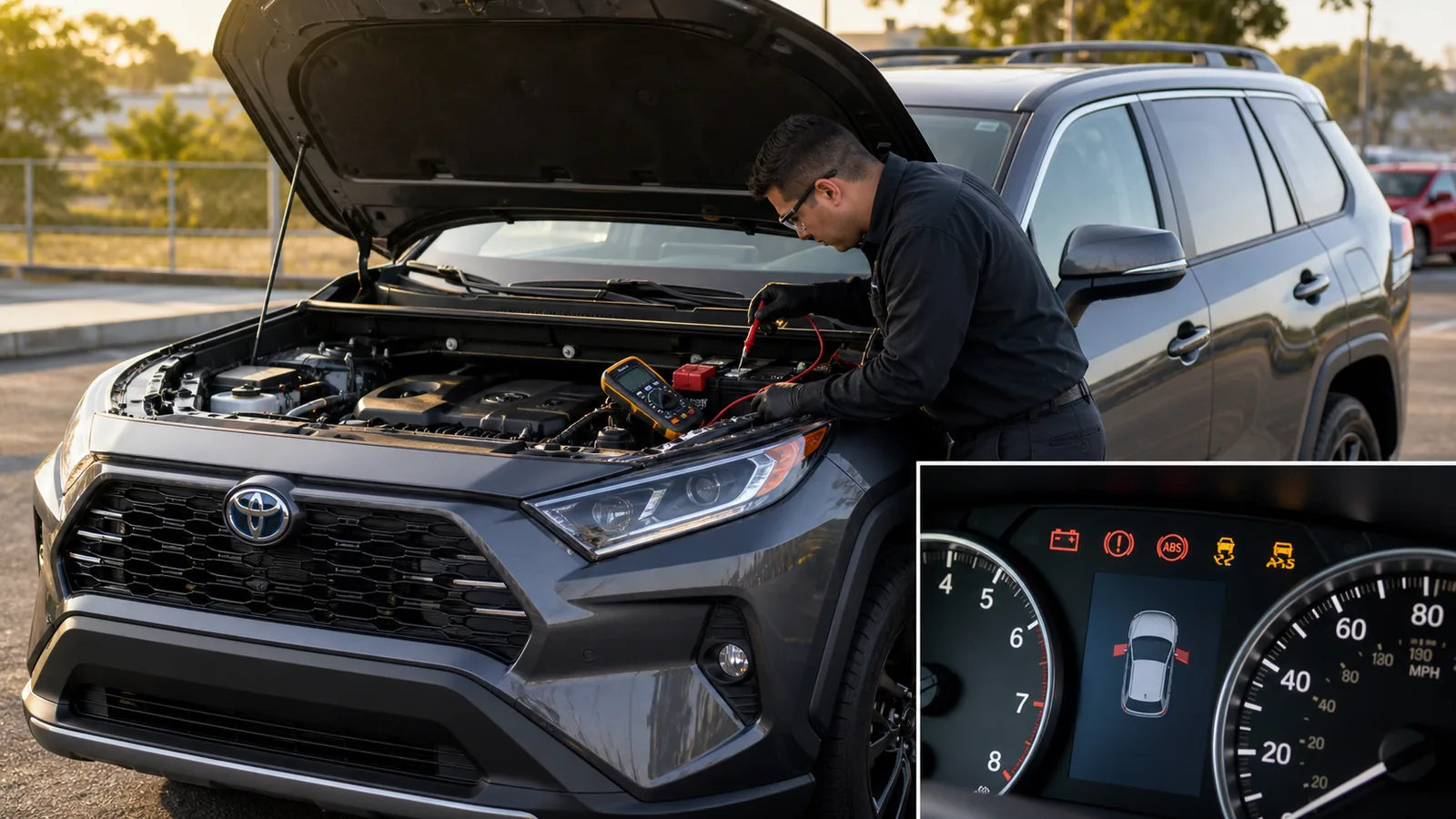
- Warning-light, instrument display, or module communication problem.
- Weak 12V battery, loose terminals, poor ground, or unstable power supply.
- Blocked camera, radar sensor, or ADAS misread.
- Floor mat, pedal obstruction, or driver input conflict.
- Brake switch, ABS, actuator, brake control, or electronic parking brake fault.
- Engine, fuel, hybrid, charging, ECM, or no-READY fault.
Shutdown, multiple warnings, or no READY state moves the case away from simple owner checks and into technician diagnosis.
Quick checks
If a 2025 Toyota RAV4 brakes unexpectedly and then shuts down, it usually means an urgent brake-control or powertrain/electrical fault must be ruled out. If it repeats, stop driving, check Toyota/NHTSA recall status by VIN, record warning lights, inspect obvious sensor, floor-mat, and 12V battery-terminal issues, then arrange dealer diagnosis.
Do not continue normal driving after a repeated shutdown, brake warning, loss of power, burning smell, fluid leak, red warning light, or no READY state.
- Park safely first and do not try to reproduce the event.
- Check Toyota and NHTSA recall status using the VIN.
- Photograph warning lights, messages, and the instrument display.
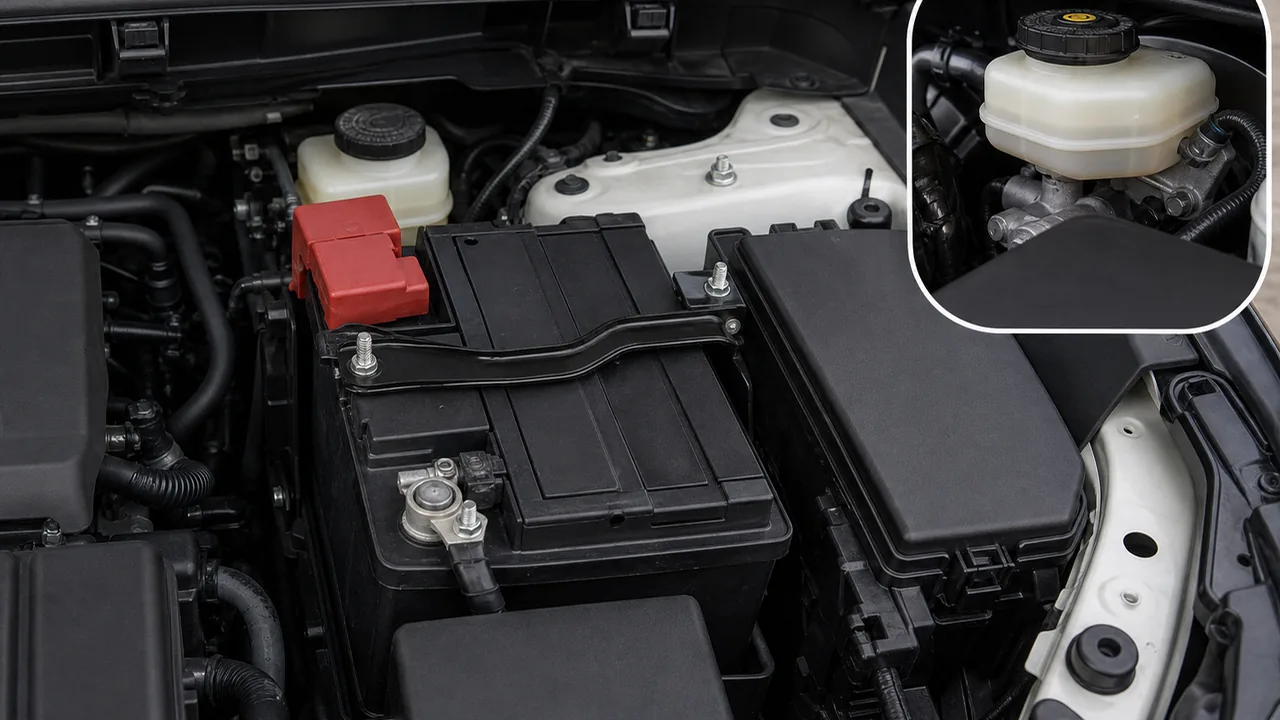
- Visually check the 12V battery terminals only if safely accessible.
- Check the windshield camera and front sensor areas for obvious blockage.
- Make sure the floor mat and pedal area are clear.
- Ask for a full-system OBD and Toyota-capable scan, including freeze-frame data.
Owner-safe checks are visual and documentation-based. Brake control, hybrid, electrical, ECM, ADAS calibration, and software diagnosis are technician-only work.
Before driving normally, check only items that do not require disassembly or live electrical testing. A clear owner check can help the dealer, but it should not replace diagnosis.
- VIN recall status through Toyota and NHTSA.
- Warning lights, instrument display behavior, and READY status.
- Visible 12V battery terminal looseness or corrosion.
- Windshield camera and front sensor blockage.
- Floor mat position and pedal-area obstruction.
- Recent service, battery work, glass work, body repair, low fuel, or low charge state.
If any warning returns or the vehicle shuts down again, stop and book dealer service.
Diagnostic order
A 2025 RAV4 unexpected braking and shutdown complaint should be treated as symptom guidance until scan data proves the cause. The event can indicate a brake-control issue, ADAS input problem, electrical supply fault, powertrain shutdown, hybrid no-READY condition, or an unrelated driver-input conflict, so the first job is to separate the symptom pattern.
Unexpected braking alone is serious, but braking followed by shutdown, loss of power, multiple warnings, or no READY state is a higher-risk pattern. Do not assume Toyota Safety Sense, a recall, or a known defect caused it without VIN-specific recall status and diagnostic evidence. The practical next step is to document what happened, avoid repeated road testing, and have a Toyota dealer or qualified shop scan all relevant systems before replacing parts.
A shop should move from evidence to testing, not from symptom to parts replacement.
- Confirm the symptom order: braking only, braking then shutdown, shutdown then braking feel, or no READY state.
- Check VIN recall, service campaign, software, and calibration status.
- Scan all relevant modules, not only the engine computer.
- Save stored, pending, and history DTCs plus freeze-frame data before clearing codes.
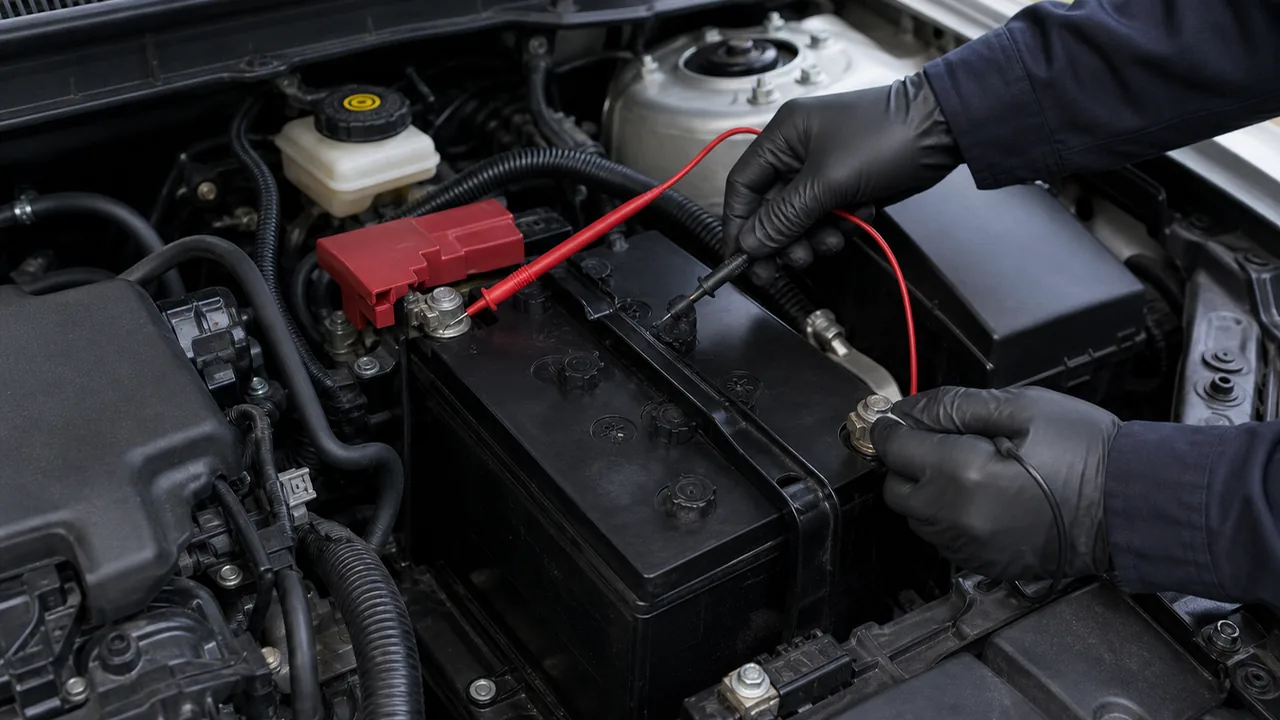
- Test 12V battery condition, terminals, cables, and grounds.
- Inspect brake-control, ABS, ADAS, ECM, hybrid, charging, and power-management data as equipped.
- If needed, perform controlled functional testing with live data and factory service information.
Toyota-specific DTCs and freeze-frame data are the bridge from symptom report to diagnosis. Without them, the cause should remain listed as unconfirmed.
Parts that may be involved
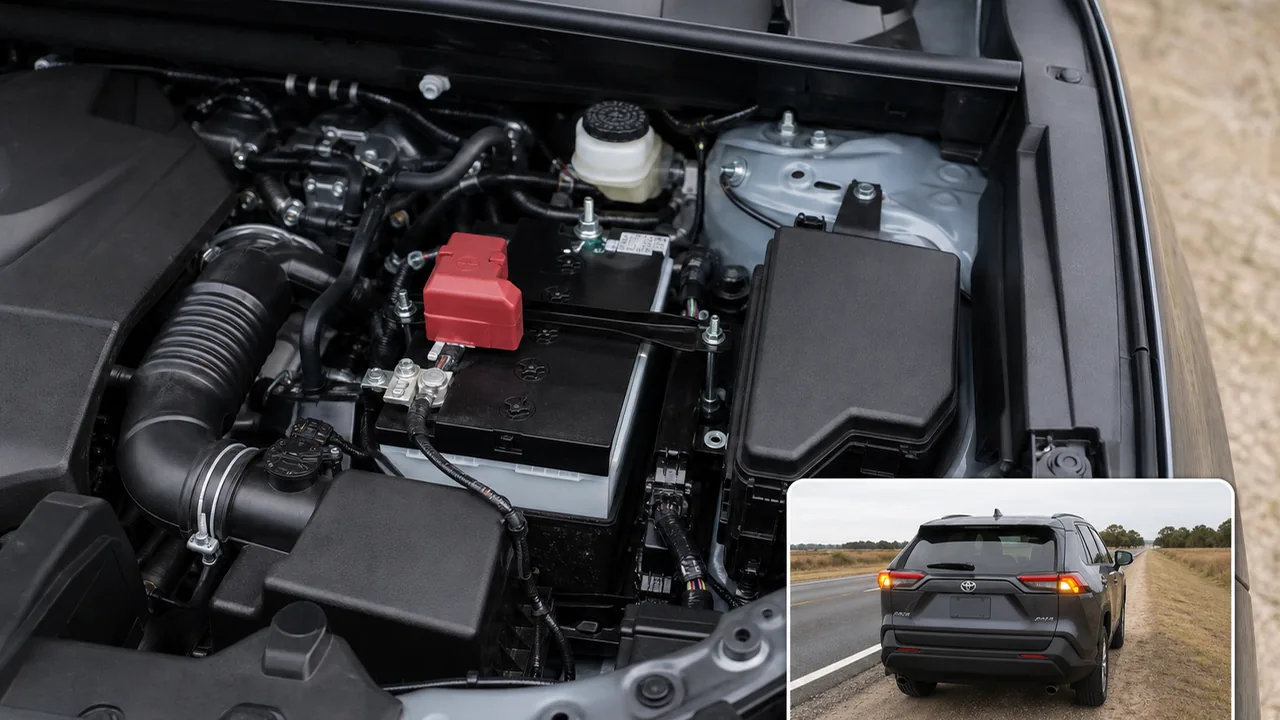
If the RAV4 brakes unexpectedly again, move out of traffic if possible, stop in a safe place, turn on the hazard lights, and keep the vehicle stationary. Do not continue the trip if the event includes shutdown, no READY state, loss of power, brake warning lights, or reduced braking confidence.
- Call roadside assistance or arrange towing if the vehicle will not restart normally or READY will not stay on.
- Save warning messages before cycling the vehicle off if it is safe to do so.
- Do not test-drive it repeatedly to collect more symptoms.
The symptom split changes the diagnostic path. Unexpected braking only may point toward ADAS input, brake-control behavior, road conditions, sensor obstruction, or pedal-area interference. Braking followed by shutdown, loss of propulsion, or no READY state can indicate a broader powertrain, hybrid, electrical, or control-module issue.
A missing or confusing dash message does not rule anything in or out. Stored codes, history codes, freeze-frame data, and module status are needed to move from driver symptom to diagnosis.
A recall lookup is not a diagnosis, but it is an early safety step. Use the exact VIN because recall and campaign coverage can vary by vehicle.
- Check Toyota.com/recall with the full VIN.
- Check NHTSA.gov/recalls with the same VIN.
- Save the result, even if it shows no open recall.
- Ask the Toyota dealer to confirm recall, campaign, software, and calibration status during the appointment.
No open recall does not mean the vehicle is safe to ignore. It only means the next step is diagnostic testing rather than recall repair.
Check this early because a VIN-specific recall, service campaign, software update, or calibration action can change the service path. It should not be treated as the cause unless Toyota documentation or scan findings connect it to the event.
- Save Toyota and NHTSA VIN lookup results.
- Ask the dealer whether any open action affects brake control, ADAS, powertrain, hybrid operation, instrument display, or software status.
- Continue diagnosis if the VIN shows no open action.
Warning messages matter because they show which systems were involved at the time. A blank, delayed, flickering, or missing display can make the symptom harder to interpret, but it does not confirm the cause.
- Photograph brake, ABS, traction, master warning, hybrid, engine, charging, and READY messages.
- Note whether the display changed before braking, during shutdown, or after restart.
- Ask the shop to preserve stored and history codes before clearing anything.
Unstable 12V power can cause multiple warnings, module communication errors, no-READY complaints, and confusing electronic behavior. It does not prove the cause of unexpected braking, but it is a practical early check.
- Owners can look for obviously loose, corroded, or recently disturbed terminals.
- A technician should load-test the 12V battery, inspect cables and grounds, and compare results with freeze-frame data.
- Do not replace control modules before basic power and ground checks are complete.
If the event felt like braking intervention without shutdown, Toyota Safety Sense inputs belong on the early checklist. A blocked windshield camera, front sensor obstruction, weather contamination, cracked glass, or recent glass/body work can affect driver-assist behavior.
- Clean only visible exterior areas and remove obvious obstruction.
- Do not disable driver-assist features as a repair.
- If braking was followed by shutdown or no READY state, scan brake, ADAS, powertrain, and hybrid modules before blaming a sensor.
The pedal area is an owner-safe check because it can be inspected without tools and without disturbing safety systems. This is not a blame assumption; it is a fast way to rule out physical interference.
- Confirm the mat is secured, correct for the vehicle, and not stacked.
- Remove loose objects near the brake and accelerator pedals.
- If no obstruction is found, do not keep driving to prove the symptom.
Brake-system faults can cause warning lights, abnormal pedal feel, brake intervention, stability-control activity, or electronic parking brake complaints. These areas require scan data and guided testing because symptoms alone cannot separate a switch issue from an ABS, actuator, wiring, or control-module problem.
- Record ABS, brake, traction, parking brake, and master warning lights.
- Ask for brake-control and ABS codes, live data, and freeze-frame review.
- Treat repeated braking-plus-shutdown as a tow-in concern.
Shutdown, power loss, or no READY state moves the concern beyond a braking-only complaint. The cause family may involve engine control, fuel delivery, hybrid control, charging, power management, or module communication.
- Record whether READY disappeared, the engine stopped, propulsion was lost, or charging/fuel messages appeared.
- Note recent service, battery work, low fuel, low charge, or charging complaints.
- Let Toyota-specific DTCs and freeze-frame data guide the repair path.
Owner-safe checks are limited to observation, documentation, and obvious visual inspection. Anything involving brake control, hybrid components, wiring diagnosis, ADAS calibration, or software decisions belongs with a Toyota dealer or qualified shop.
Owner-safe checks
- VIN recall lookup.
- Warning-message photos.
- Windshield camera and front sensor obstruction check.
- Floor mat and pedal-area check.
- Visible 12V terminal condition.
- Recent service, fuel, charge, and READY-state notes.
Technician checks
- Full-system scan and freeze-frame review.
- ABS, brake control, ADAS, ECM, hybrid, and body-module codes.
- 12V load test, cable and ground inspection.
- ADAS calibration status and software update review.
- Factory diagnostic flow before replacing parts.
When booking service, lead with the safety-sensitive symptom: the 2025 Toyota RAV4 braked unexpectedly and also shut down, lost READY state, lost power, or displayed warnings. Clear symptom order helps the advisor route the case correctly.
- Whether braking happened before or after power loss.
- Whether Toyota Safety Sense, Pre-Collision System, or cruise control appeared active.
- Exact warning messages and whether READY disappeared.
- Weather, road surface, traffic situation, and recent service.
- Photos, videos, VIN recall results, prior repair attempts, and any NHTSA complaint number.
- Request printed scan results and campaign status.
Do not treat braking plus shutdown as normal drivability behavior. The safer choice depends on whether the vehicle recovered cleanly and whether warnings returned.
- Tow it if shutdown repeats, READY will not stay on, braking confidence is reduced, a red warning appears, several warnings stay on, fluid leaks, burning smell appears, or power loss happens in traffic.
- Book dealer service promptly if the event happened once but warnings, abnormal braking, power loss, or recall results are present.
- If there are no current warnings and it has not repeated, still check the VIN and arrange a full-system scan before assuming the concern is gone.
FAQ
Is it safe to drive a 2025 RAV4 after unexpected braking and shutdown?
Not normally. If the shutdown repeats, READY will not stay on, braking feels abnormal, or warning lights remain, stop driving and tow it for diagnosis.
Can Toyota Safety Sense brake the vehicle?
Toyota Safety Sense features can warn and may apply braking in supported conditions, but that does not prove Toyota Safety Sense caused this event. Scan data and event details are needed.
Can a weak 12V battery cause warning lights or shutdown symptoms?
Yes, unstable 12V power can create multiple warnings, communication faults, and no-READY complaints. A technician should load-test the battery and inspect terminals, cables, and grounds.
Does a recall automatically explain the problem?
No. Recall status must be checked by VIN, and even an open recall must be matched to the symptom and diagnostic findings.
Could warranty apply?
It may, depending on vehicle coverage, mileage, service history, and the confirmed fault. Keep photos, VIN recall results, and printed scan data for the dealer visit.
Comments
Be the first to add a practical repair note or follow-up question.