
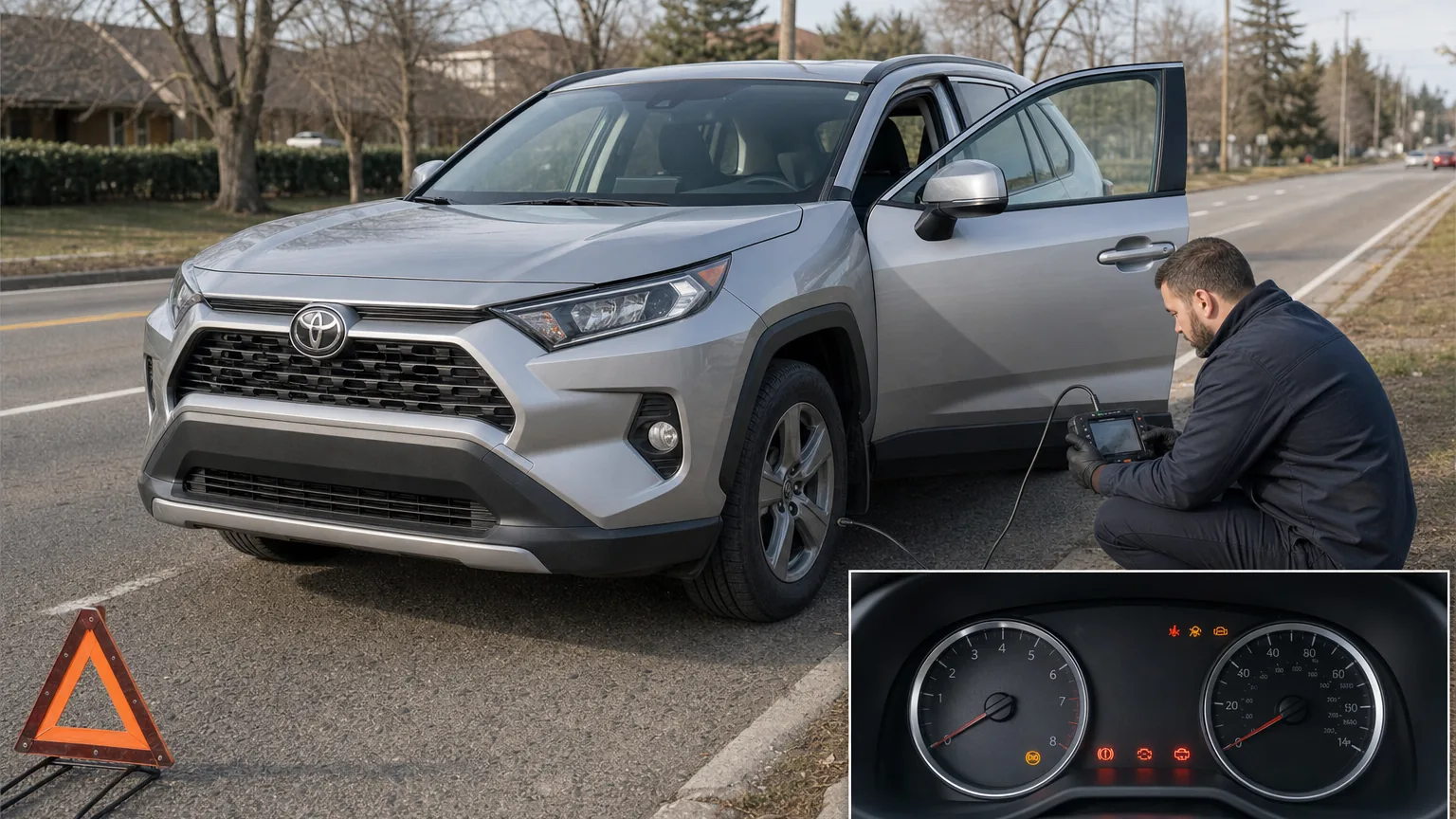
What the symptom usually means
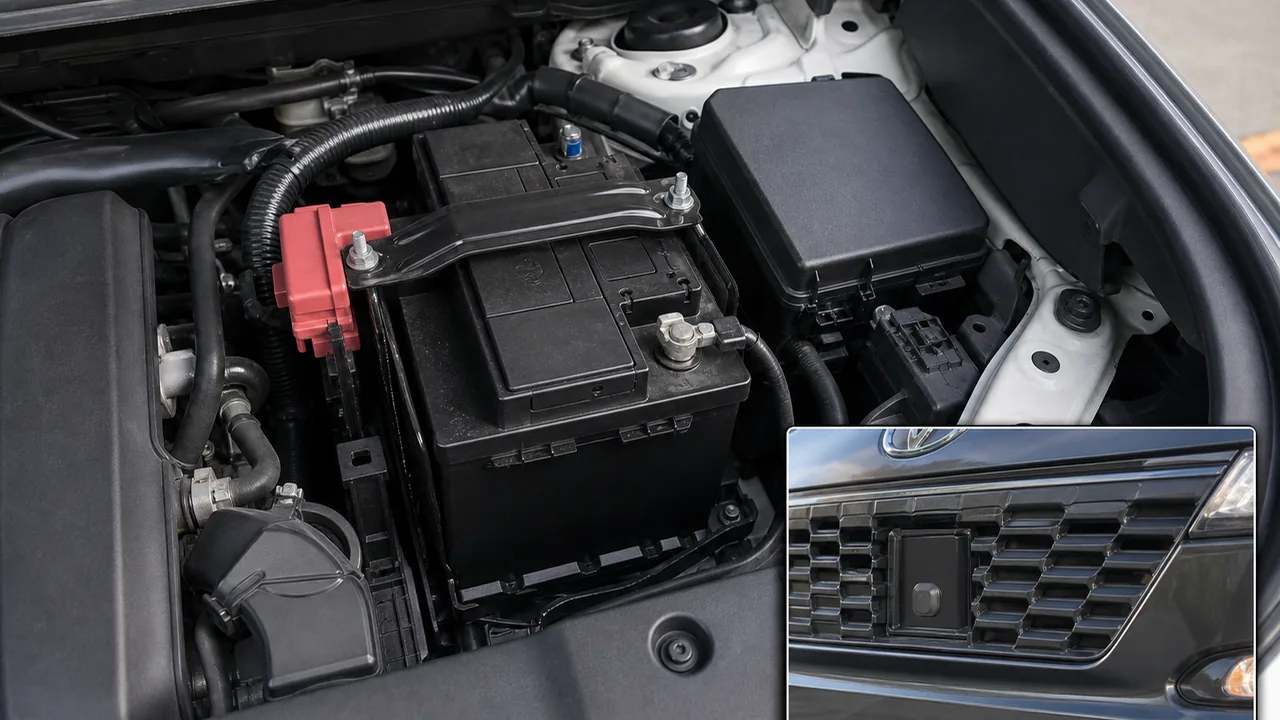
A sudden braking command can come from driver-assist logic if the front camera or radar input suggests a closing object, a vehicle crossing path, or another collision-risk condition. That does not automatically explain the vehicle shutting off. Shutdown language from an owner can mean engine stall, hybrid system ready loss, electrical reset, or a driver-assist stop followed by confusion about restart behavior.
Because those meanings lead to different repairs, the inspection should document exactly what happened: whether the engine stopped, whether READY disappeared on hybrid models, whether the brake pedal changed feel, whether the dashboard went blank, and whether the RAV4 restarted normally.
- The RAV4 braked abruptly without the driver pressing the pedal.
- The vehicle shut off, lost propulsion, or would not restart normally.
- Brake, ABS, traction, hybrid, check engine, PCS, or master warning messages appeared.
- The event occurred near a vehicle turning ahead, roadside objects, dirty sensors, glare, rain, snow, fog, or construction markings.
- A windshield, bumper, grille, radar cover, battery, or wiring repair was done recently.
Common causes
| PCS or radar cruise intervention | Hard braking with a perceived obstacle or closing vehicle | Confirm driver-assist status and stored ADAS data |
| Obstructed or misread radar/camera input | Dirt, ice, water, glare, windshield work, bumper impact, or grille damage | Inspect sensor areas and calibration history |
| Brake, ABS, or VSC control fault | Brake warnings, stability warnings, unusual pedal feel, or repeat braking events | Scan brake and chassis modules |
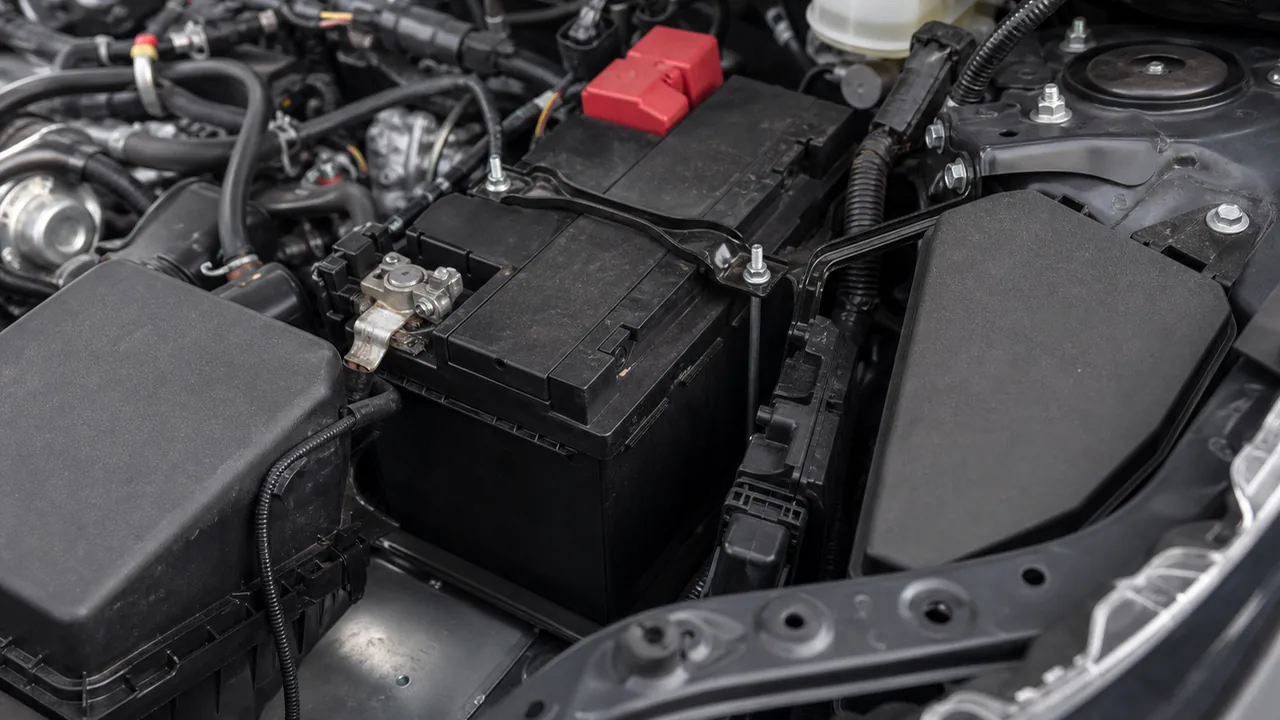
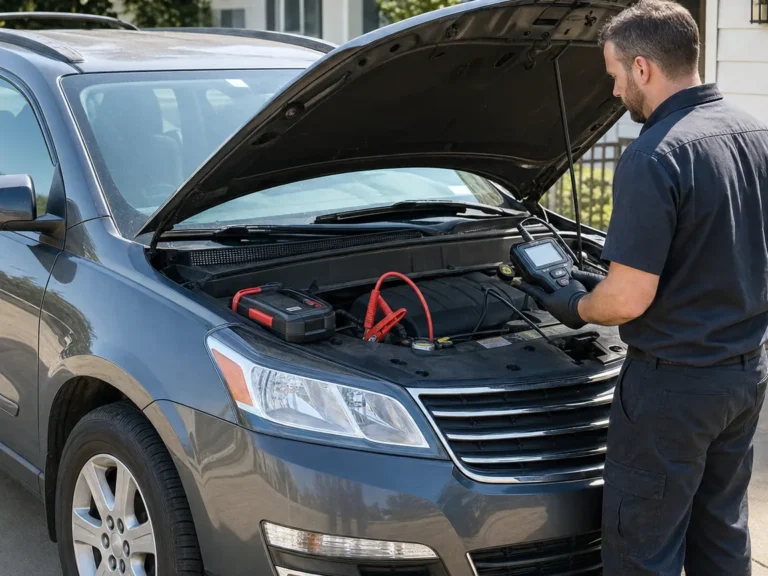
| 12-volt power instability | Multiple warnings, reset behavior, no-start, or intermittent electronics | Test battery health, connections, grounds, and charging control |
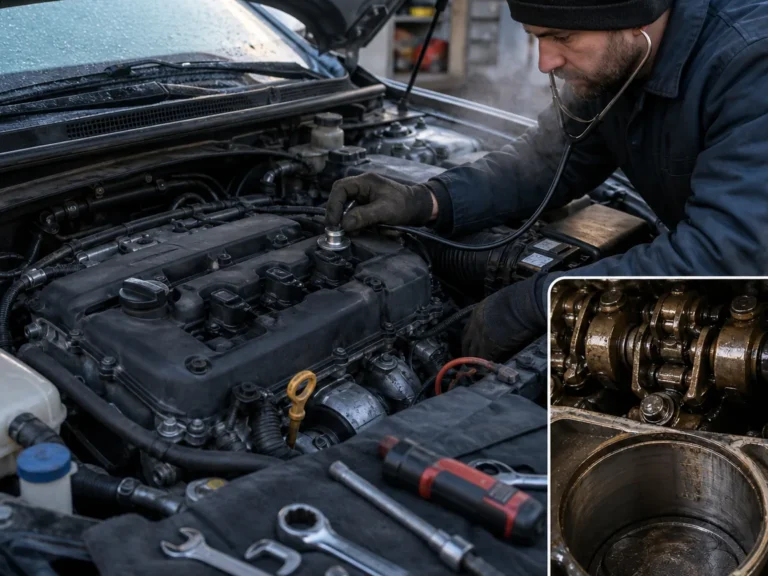
| Engine or hybrid control fault | Loss of propulsion, READY loss, check engine, or hybrid warnings | Scan ECM and hybrid control systems |
| Software, calibration, campaign, or prior repair issue | Recent service, windshield replacement, bumper work, or open VIN campaign | Verify service records and VIN-specific campaign status |
Quick checks
- Photograph the instrument cluster and infotainment warnings before cycling the ignition if it is safe to do so.
- Write down whether PCS, cruise control, lane assist, or another driver-assist feature was active.
- Check the windshield camera area and front radar/grille area for dirt, snow, ice, stickers, damage, or obstruction.
- Note recent battery replacement, jump-starting, windshield work, bumper repair, front-end impact, or water exposure.
- Check recall and service campaign status by VIN through Toyota and NHTSA.
- Do not repeatedly drive the vehicle to see if it happens again.
If a sensor area is dirty, clean it gently as the owner manual allows. Do not remove trim, aim sensors, open brake components, probe hybrid wiring, or attempt ADAS calibration at home.
Diagnostic order
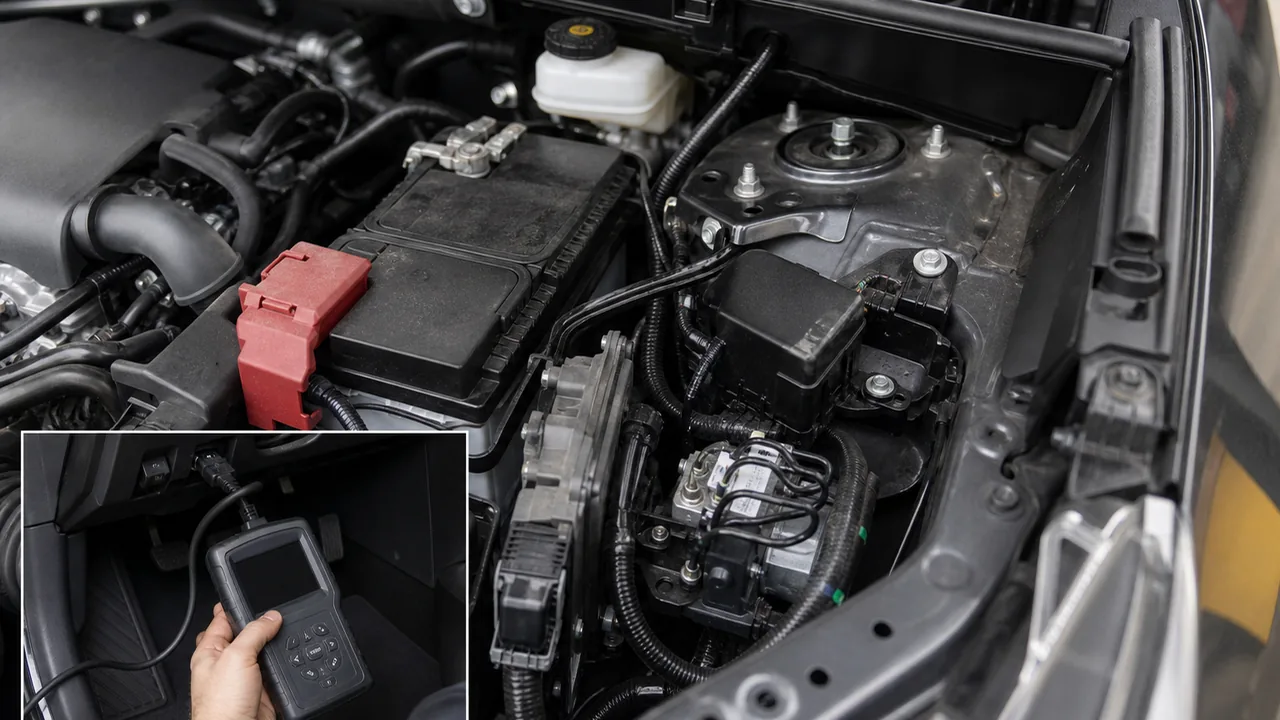
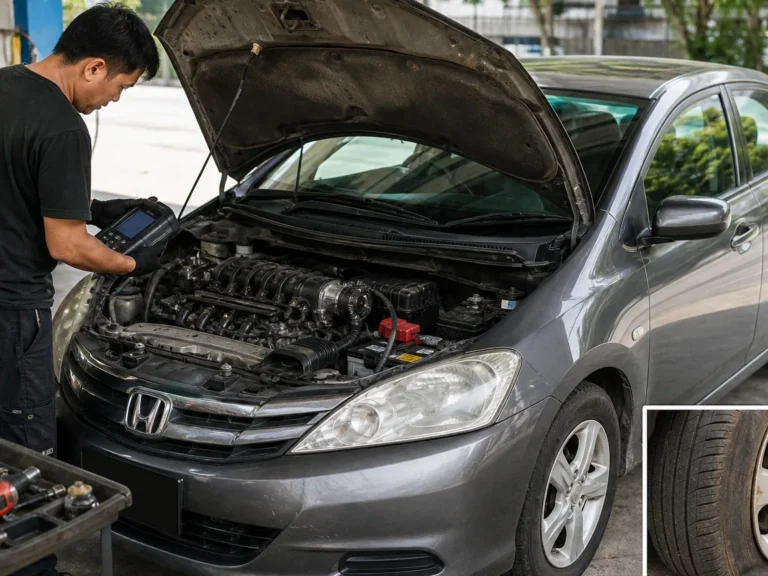
The scan should include ABS, brake control, PCS, radar, camera, ECM, hybrid control where equipped, body control, and network modules. Codes may remain stored even after warning lights disappear, so history and freeze-frame data matter.
- Confirm the exact owner complaint and operating conditions.
- Perform an all-module scan with equipment that can read Toyota body, chassis, ADAS, and hybrid systems.
- Check 12-volt health, terminals, grounds, and power stability before condemning control modules.
- Inspect sensor mounting, windshield camera view, front radar cover, bumper alignment, and calibration records.
- Evaluate brake and hybrid or engine control data before any road test.
- Confirm whether software updates, calibration steps, or VIN-specific campaigns apply.
Parts that may be involved
A 2025 Toyota RAV4 that slams on the brakes and shuts off usually points to a safety-critical event, especially if it happens while moving. The first risk frame is whether this was driver-assist braking alone or a separate loss of propulsion or control power. Your first action is to pull over when safe, shift to park, record the warning messages, and avoid driving normally again until the vehicle is inspected.
- Stop driving when safe if the event repeats, the vehicle loses propulsion, or steering and braking feel abnormal.
- Arrange towing or dealer inspection if the shutdown happened in traffic, at road speed, or with brake, hybrid, check engine, or master warning messages.
- Do not run public-road test drives to reproduce the symptom.
A single harsh automatic braking event may involve PCS or radar cruise interpretation. A braking event followed by shutdown needs broader diagnosis.
Check Toyota and NHTSA by VIN before publication, service, or parts decisions. A recall or campaign result may be unrelated to the braking-and-shutdown symptom, but it should still be printed or saved and brought to the diagnostic visit.
Tell the dealer or qualified technician the exact warning messages, whether the vehicle is gas, hybrid, or plug-in hybrid, and whether any glass, bumper, grille, battery, or collision work was performed before the event.
- Do not ignore repeat braking or any shutdown while moving.
- Do not disable PCS and treat that as a repair.
- Do not replace a radar sensor, camera, brake actuator, battery, or control module based only on a guess.
- Do not keep driving after the vehicle loses propulsion or shows brake, hybrid, or master warnings.
- Front camera, windshield camera area, and related calibration records
- Front radar sensor area, grille cover, bumper mounting, and impact history
- Brake, ABS, VSC, and actuator-related control components
- 12-volt battery, terminals, grounds, fuses, relays, and charging control
- Engine or hybrid control modules and communication networks
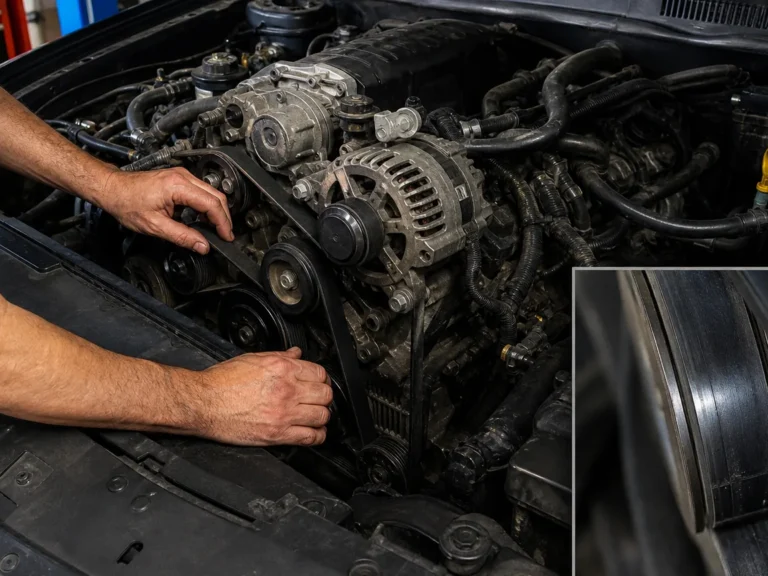
- Wiring, connectors, water intrusion points, or previous repair areas
Used electronic brake, ADAS, and hybrid-related parts can create compatibility and calibration problems. Confirm part numbers, programming needs, and calibration requirements before considering any used part.
FAQ
Is it safe to drive a 2025 Toyota RAV4 after it slams on the brakes and shuts off?
Not normally. If the vehicle shut off while moving, lost propulsion, showed brake or hybrid warnings, or repeated the event, stop driving when safe and arrange inspection or towing.
Can the Pre-Collision System brake by itself?
Yes, PCS can command braking when it believes collision risk exists, but a shutdown suggests the inspection should also include brake, electrical, engine, hybrid, and control-system checks.
Can codes be stored even if warning lights go away?
Yes. ABS, brake control, PCS, radar, camera, ECM, hybrid, body, or network modules may store current or history codes that a basic OBD-II scan can miss.
Should I disable PCS after a sudden braking event?
Do not treat disabling PCS as a repair. Follow the owner manual for temporary settings if needed, but have the cause diagnosed before driving normally.
How do I check recalls by VIN?
Use Toyota's official recall page and NHTSA's recall lookup, then give the dealer or technician the VIN result along with your warning-message photos and symptom notes.
Comments
Be the first to add a practical repair note or follow-up question.