
What the symptom usually means
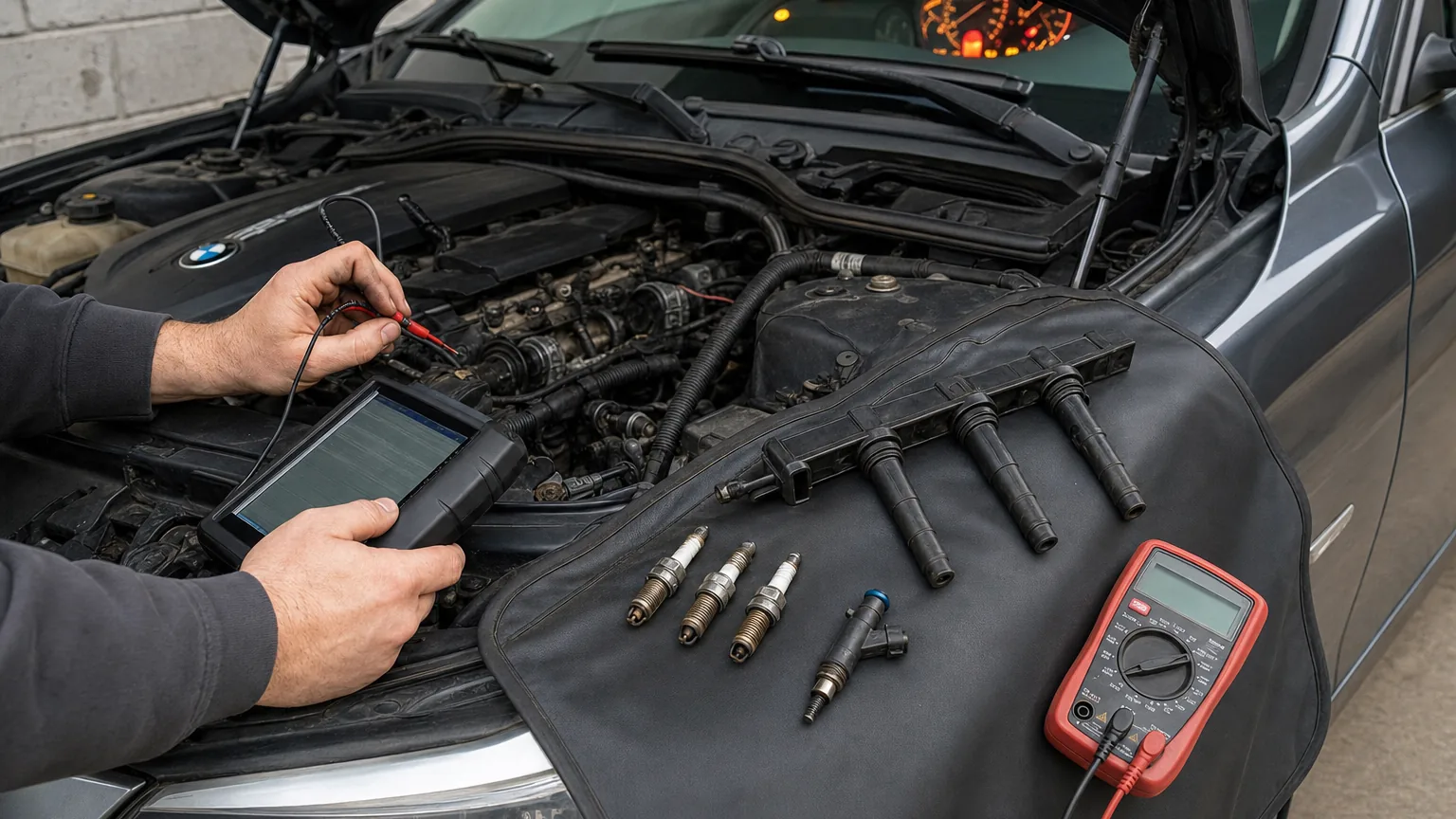
A sudden Drivetrain Malfunction warning on the iDrive screen, paired with a pronounced shudder or jerk when you press the accelerator firmly, almost always signals a load-dependent misfire. On a BMW turbocharged engine this warning is the DME’s way of telling you it has detected a combustion problem severe enough to affect emissions or engine output, and it is actively cutting power to protect the drivetrain. In most cases, the fault traces back to one of three items in the cylinder that is struggling: an ignition coil breaking down under boost, a spark plug that can no longer fire reliably, or a fuel injector that is either dribbling raw fuel or not delivering enough. The very first diagnostic step is to pull the stored fault codes. A generic OBD-II scanner will reveal which cylinder is misfiring (P0301–P0306), but a BMW-specific scan tool or app like BimmerLink can uncover shadow codes and “injector switch-off” events that point decisively to a fueling fault.
Common causes
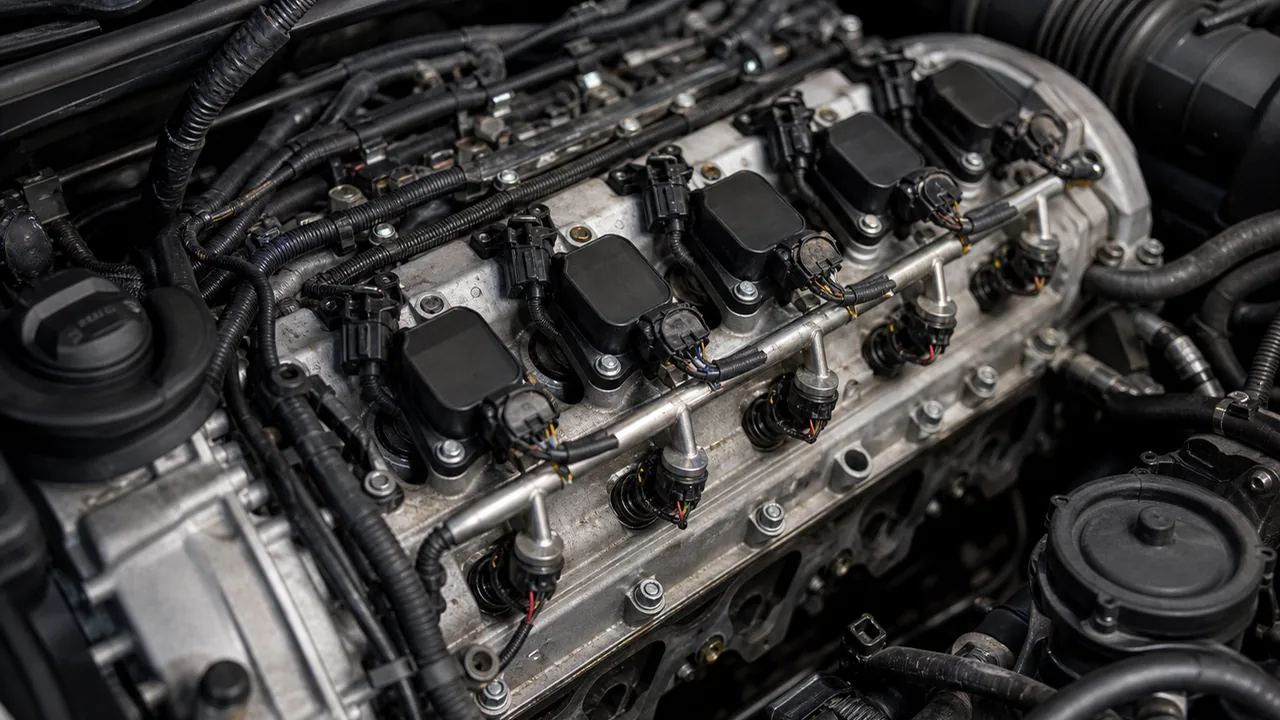
The three primary suspects behave differently when they fail, and recognizing their signatures can save you from throwing parts at the problem. The table below contrasts how the car feels, typical RPM/load windows, and what the spark plug is doing in each scenario.
| Component Failure | How It Feels | Typical RPM/Load Window | Spark Plug Appearance |
|---|---|---|---|
| Failed Ignition Coil | Sharp stutter or 'dead' miss under boost, felt as a sudden power cut | Above 2,500 RPM, wide-open throttle only | Wet fuel on plug tip (coil not firing, no combustion) |
| Worn Spark Plug | Gradual hesitation, light stumble that worsens over weeks | Any RPM, more pronounced under load | Carbon tracking on ceramic, eroded electrode, or ash fouling |
| Leaking/Faulty Fuel Injector | Jerking and raw fuel smell; may cause white smoke or flooding | Often worst at cold start, improves slightly when warm | Heavy wet fuel, sooty black deposit, possible carbon trace on boot |
Coil failures are by far the most common on older BMWs; injector issues become more likely on direct-injection engines with high mileage, especially N54 and early N63 variants.
Other Possible Causes
- Carbon buildup on intake valves – common on direct-injection engines over 50,000 miles; causes a random misfire at cold start and hesitation under light throttle, often clears as engine warms.
- Vacuum leak (split hose or intake manifold gasket) – typically causes a lean misfire across multiple cylinders, but can concentrate on one cylinder if near the leak.
- Low compression (worn piston rings, burnt valve) – produces a consistent misfire that is present at all RPMs and does not move with coil/plug swaps; requires a compression test.
- Fuel delivery issue (clogged injector, failing high-pressure pump) – may cause a single-cylinder lean misfire; often sets manufacturer-specific fuel pressure codes.
Quick checks
Before diving deep, a few zero-cost checks can often point to the culprit. Pop the hood only after the engine has cooled down. Inspect all six coil connectors—push them firmly to ensure they are clicked into place; a loose connector can mimic a dead coil. If the misfire is bad enough to be audible, open the window and listen for a sharp clicking or arcing sound from the cylinder head area, which suggests a coil boot has torn and the spark is jumping to the valve cover.
Always handle coils with care—their plastic housings become brittle with age. If the connector is stuck, use a small flathead to release the latch gently rather than forcing it.
When it is urgent
A misfire should never be ignored, but some symptoms demand an immediate stop. If the Drivetrain Malfunction is accompanied by a flashing check engine light, heavy fuel odor inside the cabin, or white smoke from the exhaust that persists, pull over and shut the engine off. A raw fuel smell or visible smoke indicates that unburned fuel is entering the exhaust, where it can quickly overheat and melt the catalytic converter—a repair that costs far more than any coil or plug. If the vehicle enters limp mode and cannot accelerate safely, do not attempt to drive it home on the highway. BMWs with a stuck-open injector can hydrolock the cylinder during a restart, causing catastrophic engine damage. In these scenarios, a flatbed to a trusted BMW specialist is the only safe move.
Diagnostic order
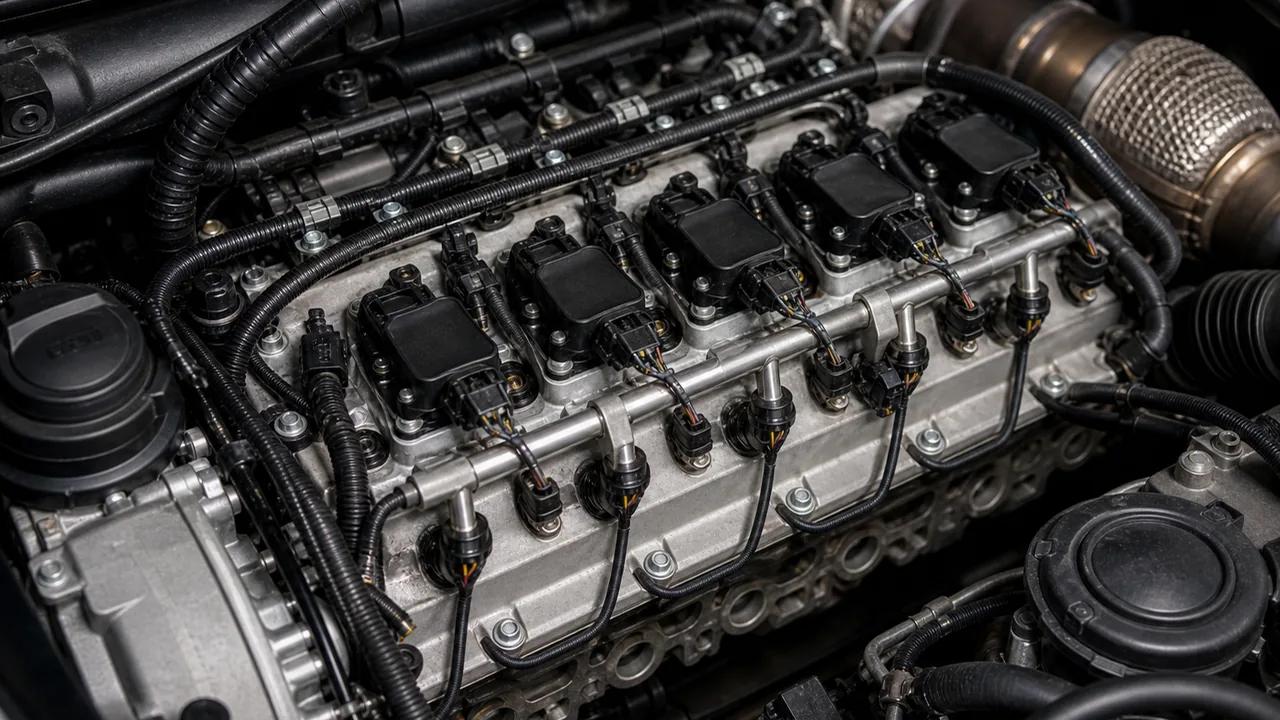
Follow this logical funnel to isolate the failing component without replacing parts blindly. Start with codes, then perform a cylinder swap test to move the fault, and inspect the spark plug to see the story it tells. Each step narrows the possibilities and prevents misdiagnosis.
1. Read and Interpret Fault Codes
Connect a scan tool. A generic OBD-II reader will show which cylinder is misfiring (P0301–P0306). That tells you where to look, but not what failed. A BMW-specific tool like BimmerLink or ISTA can retrieve manufacturer-specific codes and shadow memories. Focus on two key data points: the exact cylinder number and any “injector shut-off” or fuel-trim imbalance codes. The table below helps decode common scenarios.
| Code(s) Seen | Likely Meaning | Diagnostic Direction |
|---|---|---|
| P0302 only (generic) | Cylinder 2 misfire detected, no further detail | Swap coil first; inspect plug |
| P0302 + 2F44 (BMW shadow) | Misfire cylinder 2 with injector switch-off | Strong injector suspicion; test or swap injector |
| P0171 / P0174 (lean banks) | Air-fuel mixture too lean, often from vacuum leak | Smoke test intake; suspect valve cover gasket or PCV |
| P0300 (random misfire) | Multiple cylinders misfiring, not isolated | Check for vacuum leaks, carbon buildup, or fuel pressure |
2. Perform Quick Visual Checks
As described in the Quick Checks section, ensure coil connectors are fully seated and listen for arcing. Any loose connector or visible carbon track around the coil boot must be addressed before proceeding. If you find oil in the spark plug wells (from a leaking valve cover gasket), the coil boot may be swelling and shorting—this calls for a gasket replacement, not just new coils.
3. Cylinder Swap Test – Step-by-Step
The swap test moves the suspect component to a different cylinder. If the misfire moves with the part, that component is the culprit. Follow these steps carefully:
- Let engine cool completely. Hot components can cause burns, and high-pressure direct injection lines retain lethal pressure.
- Disconnect the ignition coil electrical connector on the misfiring cylinder (e.g., cylinder 2) only after the engine is off. Never pull on the wiring; release the plastic latch with a small flathead.
- Remove the coil by lifting it straight up. Inspect the boot for tears or carbon tracking (a black line down the rubber).
- Repeat the process for the adjacent cylinder (e.g., cylinder 1). Swap the two coils. Do not mix up the electrical connectors—label them if needed.
- Clear the DTCs with your scan tool. Do not skip this step; retained codes can mislead the DME and trigger limp mode again.
- Start the engine and go for a gentle test drive. Once clear of traffic, apply heavy throttle in a safe area to reproduce the load condition. If the misfire reappears, immediately re-scan for the cylinder that is now misfiring.
- If the misfire moved to the cylinder where you placed the suspect coil, the coil is bad. If it stayed on the original cylinder, the coil is likely good, and the problem is either the spark plug or the injector.
Warning: Under no circumstances disconnect a high-pressure fuel line or injector electrical plug with the engine running or ignition on. Direct injection operates at pressures that can inject fuel through skin, causing severe injury.
4. Spark Plug Visual Diagnostic Guide
Remove the spark plug from the misfiring cylinder and examine the tip and ceramic. The deposits and coloring provide direct evidence about the combustion event.
- Carbon tracking (thin black line on ceramic insulator): Spark is leaking along the plug body instead of jumping the gap. Often caused by a torn coil boot or oil contamination. Replace plug and coil boot/gasket as needed.
- Wet fuel on plug (raw gasoline smell): Combustion is not occurring; either the coil isn’t firing, or a leaking injector has flooded the cylinder. A dry plug after an immediate stall suggests no fuel – suspect injector clog or pump.
- Sooty black deposit (dry): Indicates rich mixture, possibly from a failing injector that stays open too long or a misfiring coil leaving unburned fuel.
- Ash fouling (white crusty deposits): Usually from oil consumption or fuel additives. May not directly cause misfire, but indicates underlying oil leak (valve stem seals, rings) that could contribute to ignition problems over time.
- Electrode erosion or melted tip: Plug is severely worn or heat range is wrong. Replace all plugs with the latest BMW recommended part.
5. Interpret the Results and Decide Next Step
If the coil swap moved the misfire, replace that coil (and consider replacing all coils if mileage is over 100,000 miles). If the spark plug shows fuel wetting and the coil is good, suspect a leaking injector; a professional injector balance and leak-down test is required. If the plug is eroded or carbon-tracked, replace the entire set of plugs and re-evaluate. If all tests indicate a healthy coil and plug and the misfire persists on the same cylinder, go to step 6.
6. When It’s Not the Coil, Plug, or Injector
Roughly the exact percentage varies of load-dependent misfires are caused by mechanical or air-related issues. If the coil swap and plug inspection were inconclusive, consider:
- Carbon buildup on intake valves – causes mild to severe cold-start misfires and stumble during acceleration. A borescope inspection through the intake port can confirm, and walnut blasting is the standard fix.
- Vacuum leaks – a split PCV hose or leaking intake manifold gasket can lean out a specific cylinder. Use a smoke tester to locate the leak.
- Low compression – perform a relative compression test with a scan tool or a manual compression gauge. A cylinder with pressure significantly below the rest indicates internal damage.
If you reach this point without a clear culprit, the diagnostic likely requires a BMW specialist with access to ISTA for activation of injectors and high-pressure pump testing.
Parts that may be involved
- Ignition coil (install the latest BMW part number for your engine; if one fails, the others are often not far behind—consider a full set if budget allows).
- Spark plug (BMW maintenance schedule calls for replacement every 60,000 miles; always replace all six as a set using the factory-recommended plug).
- Fuel injector (direct-injection engines require index- and flow-matched injectors; coding is mandatory after replacement on most models).
- Valve cover gasket or oil separator (oil in the plug wells can ruin new coils and plugs quickly).
- Carbon cleaning kit or intake valve walnut blasting (for direct-injection engines over 50,000 miles with a stubborn random misfire).
FAQ
Can I keep driving with a Drivetrain Malfunction message?
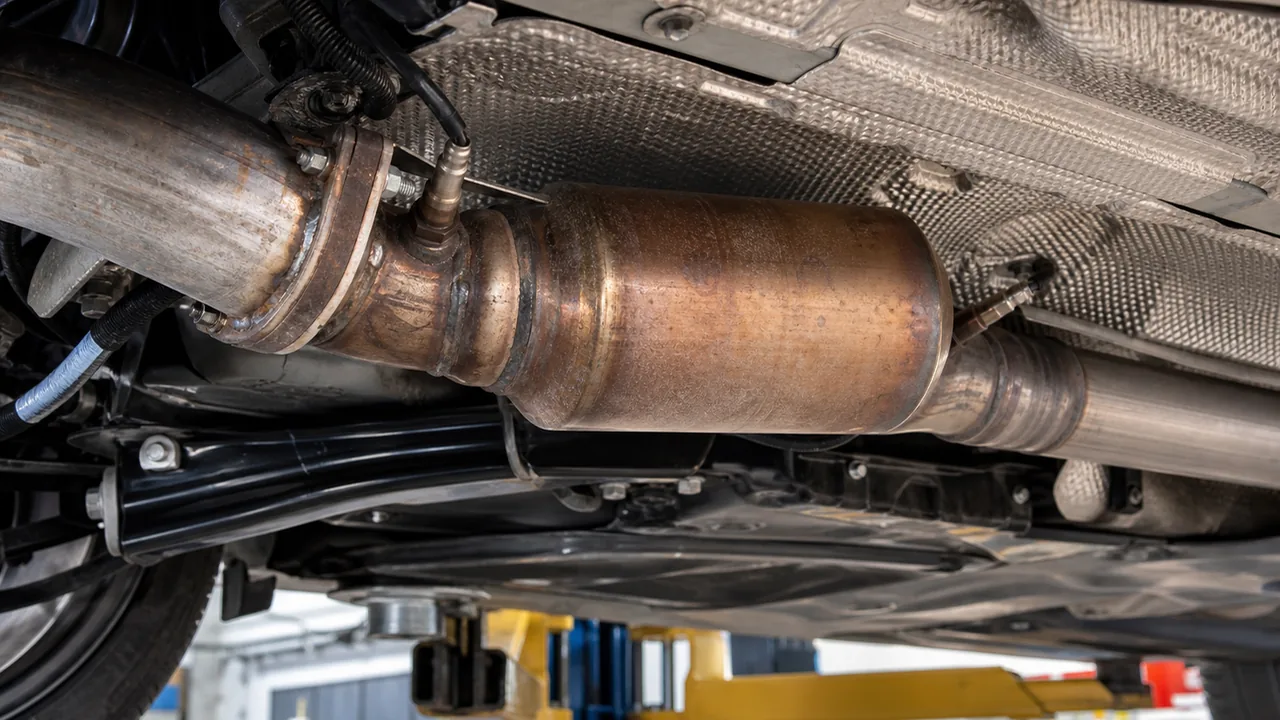
If the engine feels smooth at light throttle and the message appeared only briefly, you can usually drive gently to a safe location. But a continuous shudder or flashing check engine light means stop immediately—severe misfire will damage the catalytic converters quickly.
Is swapping coils safe for an average DIY owner?
Yes, when the engine is cold. Use care when unplugging brittle connectors and never pull on the wiring itself. A coil swap is a standard, low-risk test that even a first-timer can perform with basic tools.
Will a bad injector always set an injector-specific fault code?
Not on a generic scanner. Many BMW injector faults hide in the DME as manufacturer-specific codes, so you may need a BMW-capable scan tool or app to see them. A P0302 alone does not distinguish between a bad plug, coil, or injector.
My misfire only happens when the engine is cold. Is that still a coil?
Cold-only misfires are often fuel-related (leaking injector dripping after shutdown) or caused by carbon buildup that seals better once warm. Check the plug for a fuel smell after an overnight cold start.
What does an 'injector shut-off' code mean?
On BMWs, the DME may intentionally shut off a specific injector if it detects a severe misfire that could damage the catalyst. This code strongly points to that injector or its circuit, not the coil or plug. It’s a manufacturer-specific flag that generic scanners miss.
Can a vacuum leak cause a single-cylinder misfire?
Yes, if the leak is near that cylinder’s intake runner, it can lean out the mixture enough to cause a misfire under load. However, vacuum leaks more commonly affect multiple cylinders. A smoke test will reveal this.



Comments
Be the first to add a practical repair note or follow-up question.