
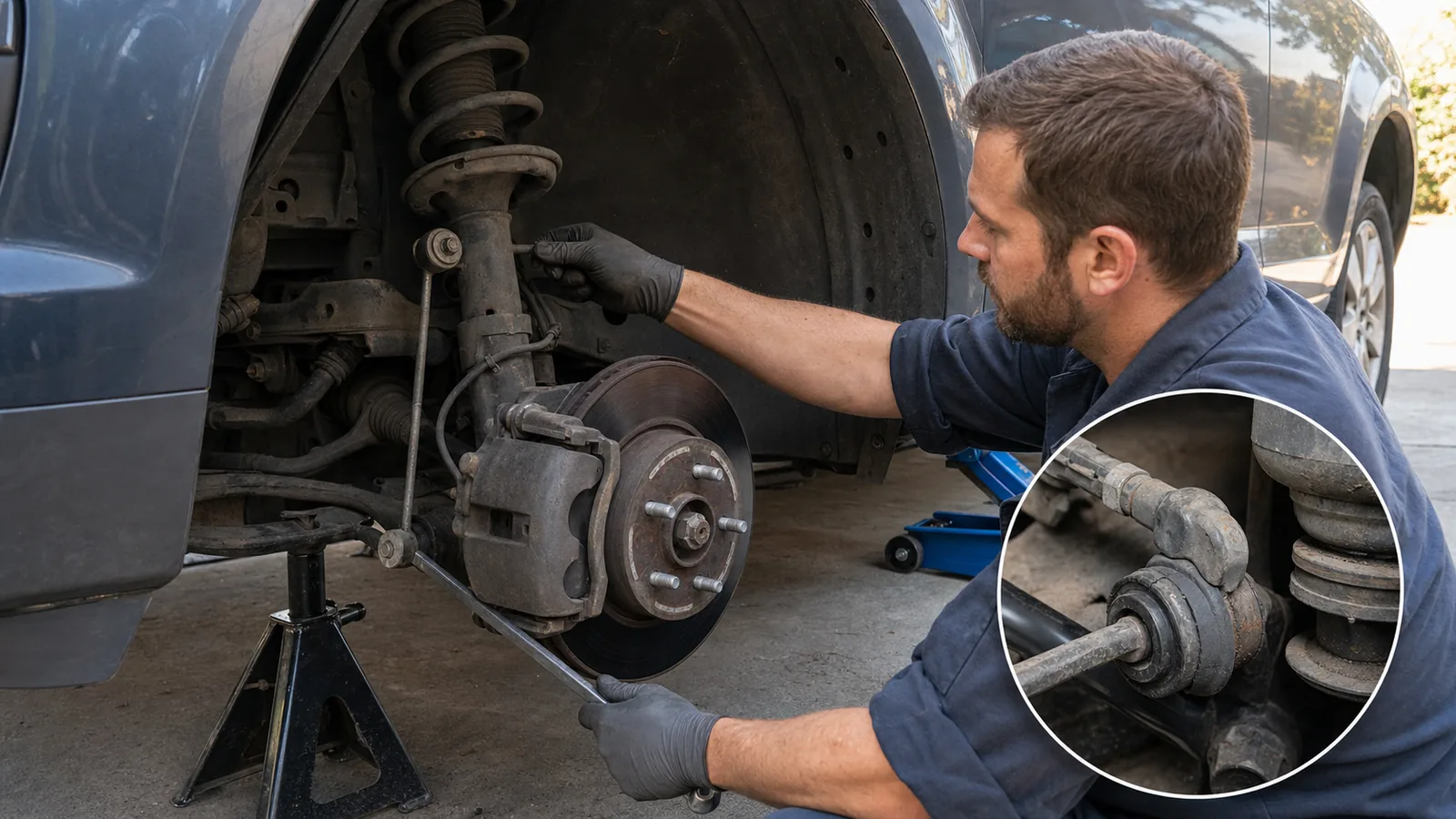
What the symptom usually means
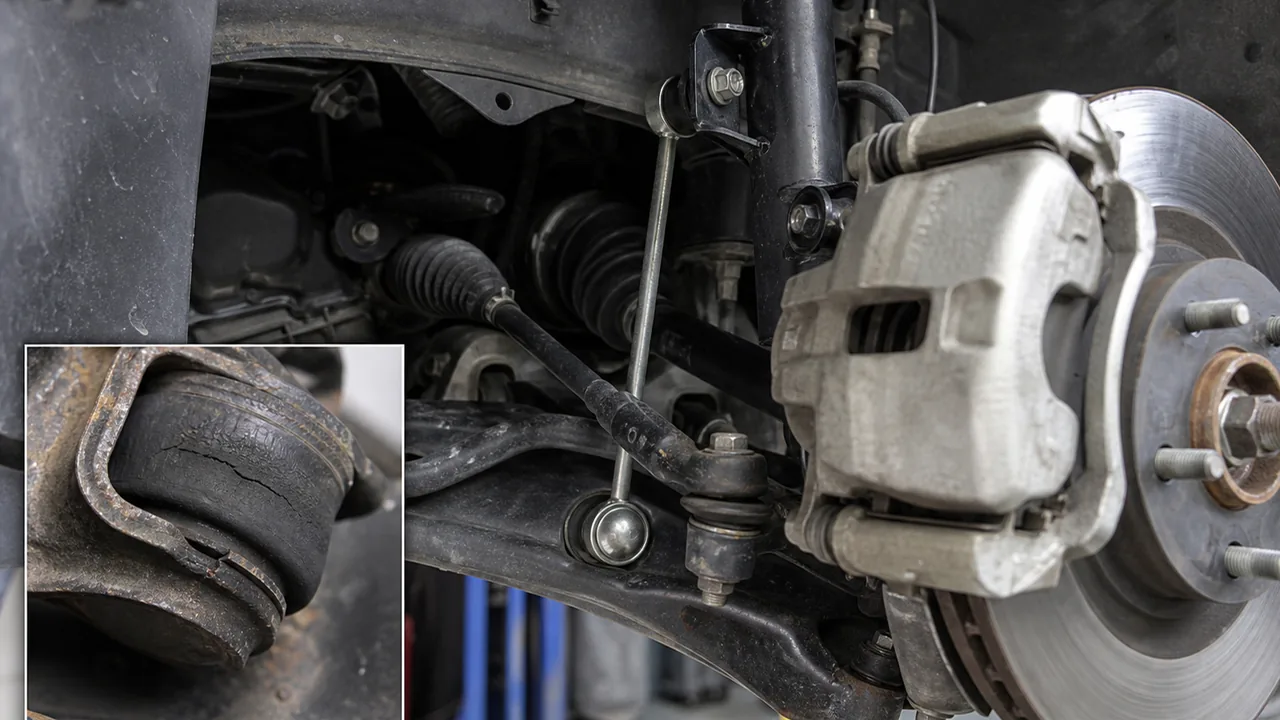
A clunking noise over bumps usually means something in the suspension, steering, brake hardware, or a mounting point is loose, worn, damaged, or shifting under load. Sway bar links are a common clue when the noise shows up on small repeated bumps, while struts or strut mounts and control arm bushings often fit a heavier clunk or a noise that changes with body movement, braking, or steering input. If the sound is mild and the vehicle otherwise feels normal, it is usually reasonable to drive cautiously to a scheduled suspension inspection. If handling, braking feel, or warning lights change, stop treating it as a routine noise.
- Schedule an inspection soon if the clunk is getting more frequent or louder.
- Stop driving and have it checked promptly if you feel steering looseness or pulling.
- Inspect promptly if you see uneven tire wear or the steering wheel no longer tracks normally.
- Treat it as inspect-now after a pothole, curb strike, or other impact.
- Stop driving if a suspension, steering, brake, or stability warning light appears.
- Stop driving if the vehicle loses fluid, starts smoking, or develops a severe drivability change over bumps or turns.
Common causes
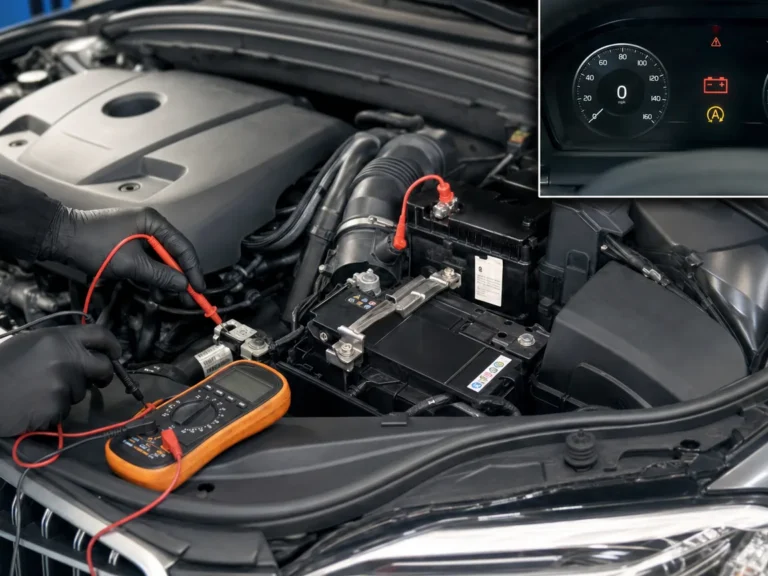
A clunking noise over bumps often stays completely separate from the vehicle’s fault-code system. Many common mechanical causes, including worn sway bar links, strut mounts, control arm bushings, ball joints, or loose brake hardware, can make a clear knock or thud without setting a diagnostic trouble code or turning on a warning light.
That matters because no warning light does not mean the suspension is safe. A part can still be loose, worn, or damaged enough to affect handling, tire wear, or steering feel even when the dash looks normal. The noise still needs a visual inspection and, if needed, a lift inspection and fastener check.
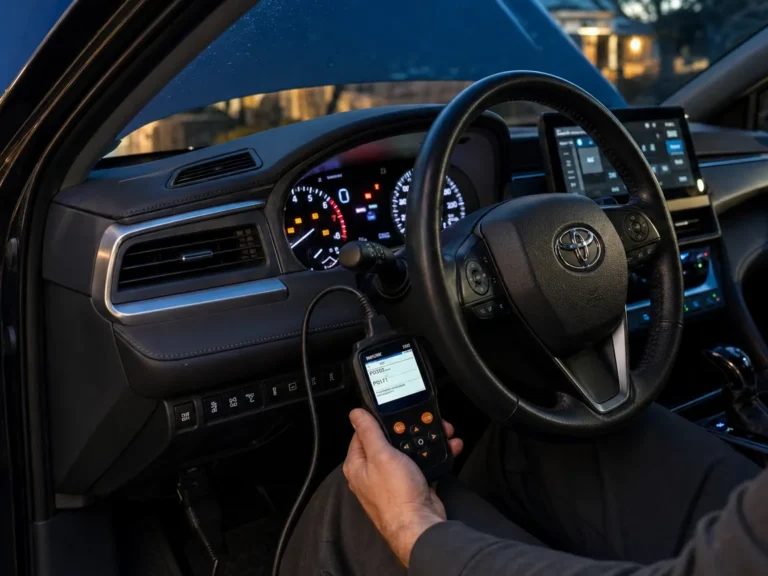
If the clunk started after a pothole, curb strike, or road-debris impact and an ABS, ESC, traction control, or chassis warning appears, the problem may extend beyond the mechanical noise. In that case, a scan tool check is the right next step to look for wheel speed sensor, steering angle, wiring, or related system faults alongside the suspension inspection.
Building on the earlier diagnostic sections, the most likely cause usually depends on when the clunk shows up and how heavy it sounds. This ranking is symptom-based, not proof, because several suspension and steering faults can overlap.
- Sway bar links or sway bar bushings are high on the list when the noise is frequent over small, uneven bumps. These parts react to quick side-to-side suspension movement, so wear here often creates a light clunk, knock, or rattle on rough roads.
- Struts, shocks, or strut mounts move higher when the sound is a heavier thud and the vehicle also feels harsh, bouncy, or unsettled. A worn upper mount can add a distinct clunk during bumps, driveway entrances, or steering input.
- Control arm bushings become more likely when the clunk changes with braking, acceleration, turning, or wheel movement. The mechanism is unwanted control arm movement under load, which can also affect handling feel and alignment stability.
- Other lookalikes include ball joints, tie rod ends, brake caliper hardware, engine or subframe mounts, loose fasteners, damaged splash shields, and post-impact bent parts. These are worth checking when the noise appeared after a pothole strike, curb contact, or recent repair work.
If the clunk comes with steering looseness, uneven tire wear, or a recent impact, move to a steering and suspension inspection rather than guessing at one part.
Quick checks
To reduce misdiagnosis, a technician should confirm the clunking noise over bumps in a fixed sequence instead of jumping to the most common part.
- Start with symptom notes, including when the clunk, knock, or rattle appears and whether braking, acceleration, or steering input changes it. Then perform a controlled road test to reproduce the same condition.
- Follow with a visual check for obvious damage, fluid leaks, shifted brake hardware, worn bushings, broken sway bar links, loose fasteners, or signs of recent pothole or curb impact.
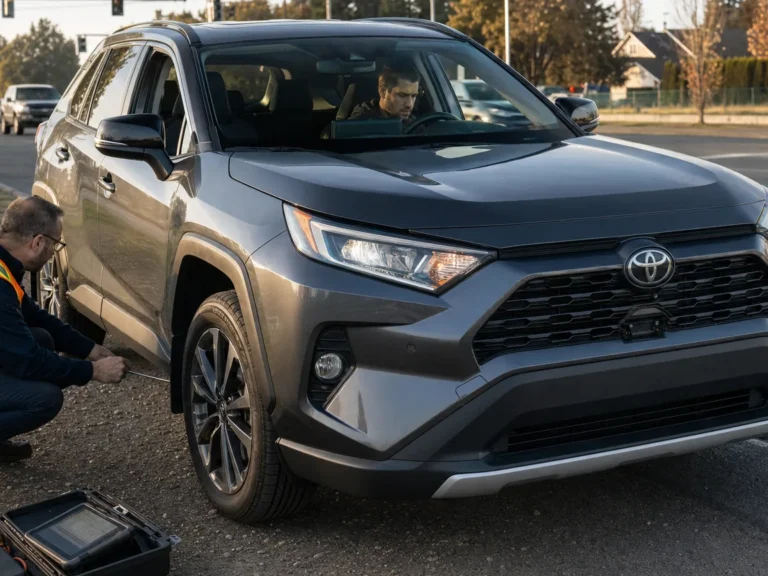
- With the vehicle on a lift, check for play in ball joints, tie rod ends, sway bar links, wheel bearings, and related joints. Use a pry bar carefully to assess bushing movement, strut mount movement, control arm deflection, and hardware security.
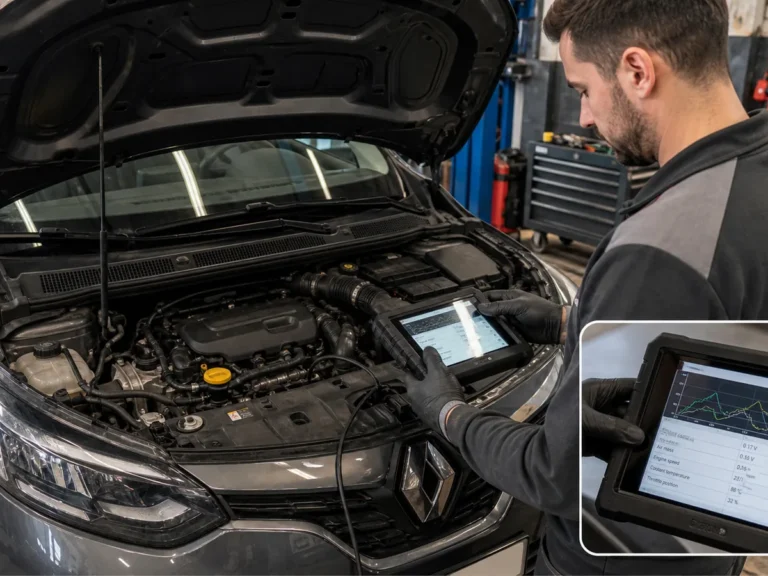
- If ABS, ESC, traction control, or chassis warnings are present, scan for faults because a mechanical suspension clunk may not set codes, but impact-related or sensor-related issues can.
- If the early checks do not isolate the source, add alignment evaluation when tire wear, pull, off-center steering, impact history, or recently replaced suspension parts suggest the geometry should be verified next.
Once the urgency is clear, the next move is a steering and suspension inspection that confirms which part is creating the clunking noise over bumps before any repair is approved. That estimate matters because it helps separate the actual fault from lookalike noises, prioritize safety-related work, and reduce the chance of repeat repairs or tire wear from an unresolved alignment change.
After the fault is confirmed
- If the issue is limited to a smaller wear item, the repair path may be relatively straightforward, such as sway bar link service, sway bar bushing service, brake noise diagnosis, or a fastener-related correction.
- If inspection shows a larger suspension fault, the estimate may shift toward strut replacement, control arm bushing replacement, ball joint repair, or pothole damage inspection for related parts affected by impact.
- When suspension geometry may have changed, wheel alignment should be verified after the repair so the new parts are not undermined by tire wear or poor handling.
Bring symptom notes from the road test, mention any recent pothole impact, and book the inspection as a steering and suspension diagnosis so the shop can confirm the failed part first and build the estimate around the verified repair path.
When it is urgent
A light, repeatable clunking noise over bumps can sometimes be safe to schedule soon if steering feel stays normal, the vehicle tracks straight, there is no warning light, no visible tire damage, and no recent pothole or curb impact. That said, a suspension clunk should not be judged by sound alone, because sway bar links, struts, control arm bushings, ball joints, brake hardware, and loose fasteners can overlap.
Safe-to-drive guidance: If control feels normal, you can usually drive cautiously to an inspection. Stop driving and arrange professional help if steering, stability, or wheel control feels abnormal.
- Seek inspection promptly if the clunk suddenly gets louder, more frequent, or changes from a light knock to a heavy thud.
- Inspect now after a pothole, curb strike, or other hard impact, especially if the steering wheel no longer feels centered.
- Limit driving and avoid highway speeds or heavy loads if the vehicle pulls, wanders, vibrates, or feels loose over bumps or during turns.
- Stop and check immediately if you see uneven tire wear, a damaged tire, or a wheel that appears to sit differently than before.
- Get the vehicle scanned and inspected if a suspension, steering, ABS, or stability warning light appears after the noise starts.
- Have it looked at quickly if you notice fluid leaking from a shock or strut area, harsh bottoming, or obvious wheel movement.
Parts that may be involved
A clunking noise over bumps usually means a suspension or steering part is worn, loose, damaged, or shifting under load, commonly from sway bar links, struts or strut mounts, or control arm bushings. The first risk frame is whether the vehicle also pulls, feels loose, shows uneven tire wear, or the noise followed a hard impact, because those signs call for inspection before continued driving. Sway bar links are often heard on small sharp bumps, struts or mounts may make a heavier knock, and control arm bushings may add movement during braking, acceleration, or turning, while loose ball joints, tie rods, brake hardware, and fasteners can sound similar.
| Rank | Likely area | Typical clue |
|---|---|---|
| 1 | Sway bar links | Light clunk or rattle on small repeated bumps or rough patched pavement |
| 2 | Struts or strut mounts | Heavier knock over larger bumps, potholes, driveway transitions, or steering input |
| 3 | Control arm bushings | Clunk plus extra movement during braking, acceleration, or turning |
| 4 | Other lookalikes | Ball joints, tie rods, brake hardware, wheel-related parts, or loose fasteners can sound similar |
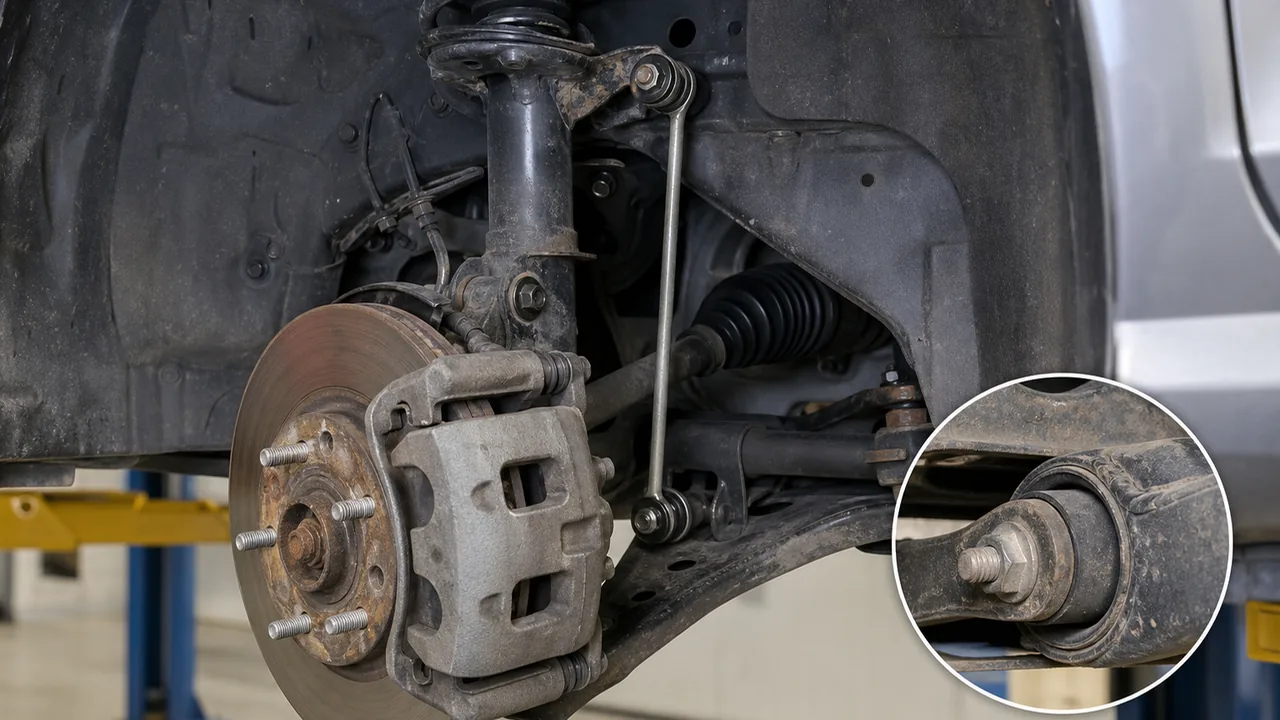
Before getting deeper into diagnosis, it helps to compare the usual sound patterns. A clunking noise over bumps often points to a part that is loose, worn, or shifting under load, but the sound alone does not confirm which part has failed.
- Sway bar links often make a sharper clunk, knock, or light metallic rattle over small repeated bumps, rough pavement, or driveway edges.
- Struts or strut mounts usually sound heavier or duller and may come with extra symptoms such as bounce, harshness, steering noise, or noticeable front-end movement.
- Control arm bushings can add clunking when the suspension loads and unloads, especially during braking, acceleration, turning, or when the wheel shifts after a bump.
Treat these as patterns, not proof. Sway bar bushings, ball joints, tie rod ends, brake hardware, loose fasteners, or other front-end parts can create very similar noises, which is why a proper inspection matters before replacing parts.
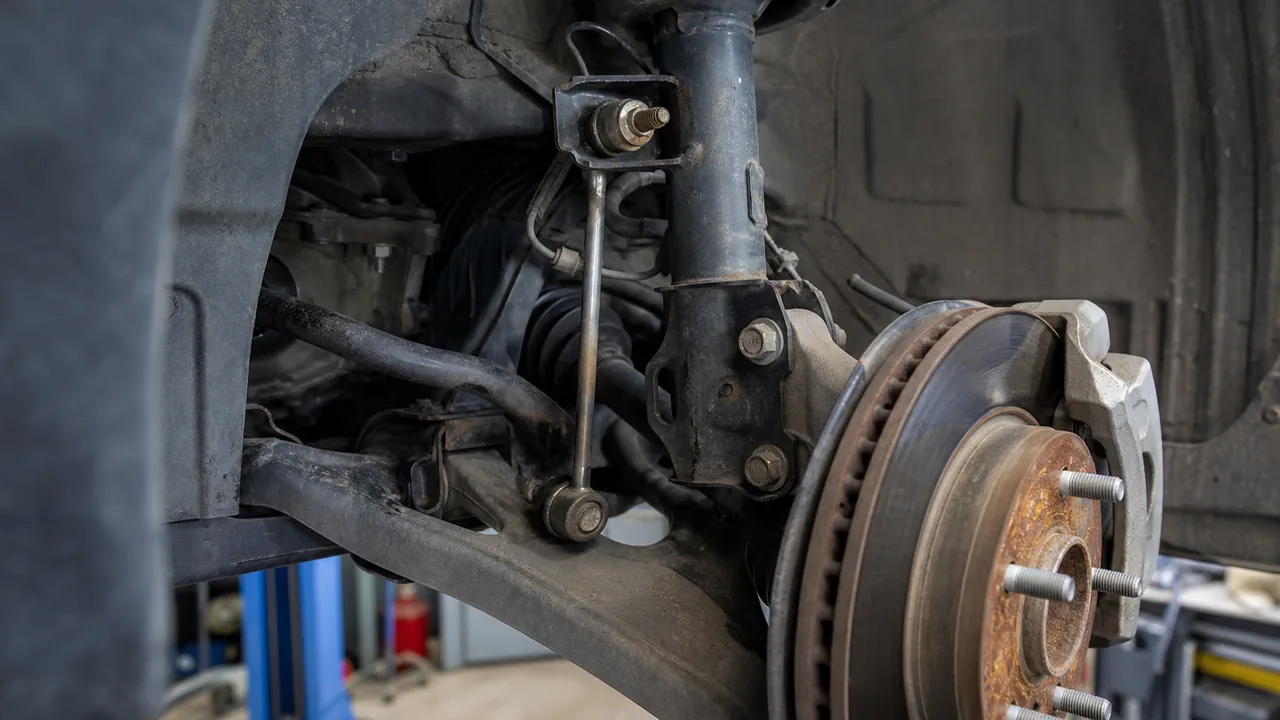
The way a clunk changes with bump size, steering input, braking, and acceleration helps show which suspension or steering parts are moving under load, so the first practical step is to note exactly when the noise happens. That matters early because a noise-only complaint is one thing, but a clunk with steering looseness, pull, vibration, uneven tire wear, or a recent pothole strike raises the urgency and supports a prompt inspection.
- Small repeated bumps often point toward lighter link or bushing movement, while a single large bump or pothole can expose a strut, mount, control arm bushing, subframe issue, or loose fastener.
- A clunk during low-speed driveway entries or uneven approaches suggests suspension twist and body roll are part of the pattern, which can make sway bar links, sway bar bushings, and strut mounts more relevant.
- A noise that changes during turning, braking, or acceleration is useful because direction and load transfer can shift stress between control arms, ball joints, tie rod ends, and brake caliper hardware.
- If the sound stays isolated to bumps with no change in steering feel or tire behavior, the fault may still need repair, but the symptom pattern is usually less alarming than a clunk paired with handling changes.
In short, the pattern is the clue: when it happens, what kind of bump triggers it, and whether the vehicle also feels loose, unstable, or recently impacted. That symptom map makes the next inspection more accurate and helps avoid guessing at parts.
This is where diagnosis moves past the sound itself. A technician tries to reproduce the clunking noise over bumps in a controlled road test, then checks the suspension and steering with the vehicle safely supported so parts can be inspected both at rest and while loaded or unloaded as needed.
- Repeat the noise under similar conditions, noting whether it changes with small bumps, driveway entrances, braking, acceleration, or steering input.
- Perform a lift inspection and check for play or unwanted movement at sway bar links, ball joints, tie rod ends, control arms, and wheel-related mounting points.
- Inspect control arm bushings, sway bar bushings, strut mounts, and shock or strut attachment points for shifting, separation, or impact-related damage.
- Check brake caliper hardware, coil spring seating, subframe areas, and fastener security, because loose hardware can mimic a suspension clunk.
- Use alignment measurement or a scan tool when the symptoms also suggest wheel alignment change, steering angle issues, or impact-related electronic faults.
The goal is to confirm which part moves under load, not to replace parts based on noise alone.
At this point, the practical takeaway is simple: a clunking noise over bumps is a symptom, not a parts verdict. Sway bar links are a common cause, but struts, strut mounts, control arm bushings, ball joints, brake caliper hardware, sway bar bushings, or loose fasteners can produce a similar clunk, knock, or metallic tap. Replacing parts based on sound alone can miss the real fault and leave the same noise, poor handling, or a safety concern unresolved.
- Write down when the clunk happens, such as over small bumps, potholes, driveway entrances, braking, acceleration, or with steering input.
- Check for recent pothole impact, uneven tire wear, or steering looseness before buying suspension parts.
- Use a professional suspension inspection or steering and suspension diagnosis to confirm which component is actually moving under load.
Professional confirmation is cost control as much as diagnosis. It helps avoid replacing good parts, protects against alignment-related issues being overlooked, and can identify faults that increase loss of control risk.
Before a shop visit, the most useful thing you can do is narrow the pattern without trying to diagnose the exact part. A clunking noise over bumps can come from sway bar links, struts, control arm bushings, or other steering and suspension parts, so your goal is to notice when the sound happens and whether there are obvious outside-the-vehicle warning signs.
- Pay attention to when the clunk shows up: small repeated bumps, a single pothole hit, driveway entrances, low-speed turns, braking, acceleration, or steering input.
- Walk around the vehicle and look for visible tire damage, uneven tire wear, a low tire, bent wheel damage, or a loose inner liner or hanging shield that could mimic a suspension noise.
- Notice whether the steering wheel now sits off-center or whether the vehicle pulls to one side, especially after a pothole or curb impact.
- Write down any recent impact or change in handling so the technician can connect the clunk, alignment change, and tire condition during inspection.
Do not crawl under a vehicle supported only by a jack, and do not attempt pry-bar or undercar play checks without proper lifting equipment and safety support.
FAQ
Common questions about suspension clunks usually come down to safety, likely causes, and whether the absence of a warning light changes the risk. These answers are symptom guidance, not a substitute for an in-person steering and suspension inspection.
Comments
Be the first to add a practical repair note or follow-up question.